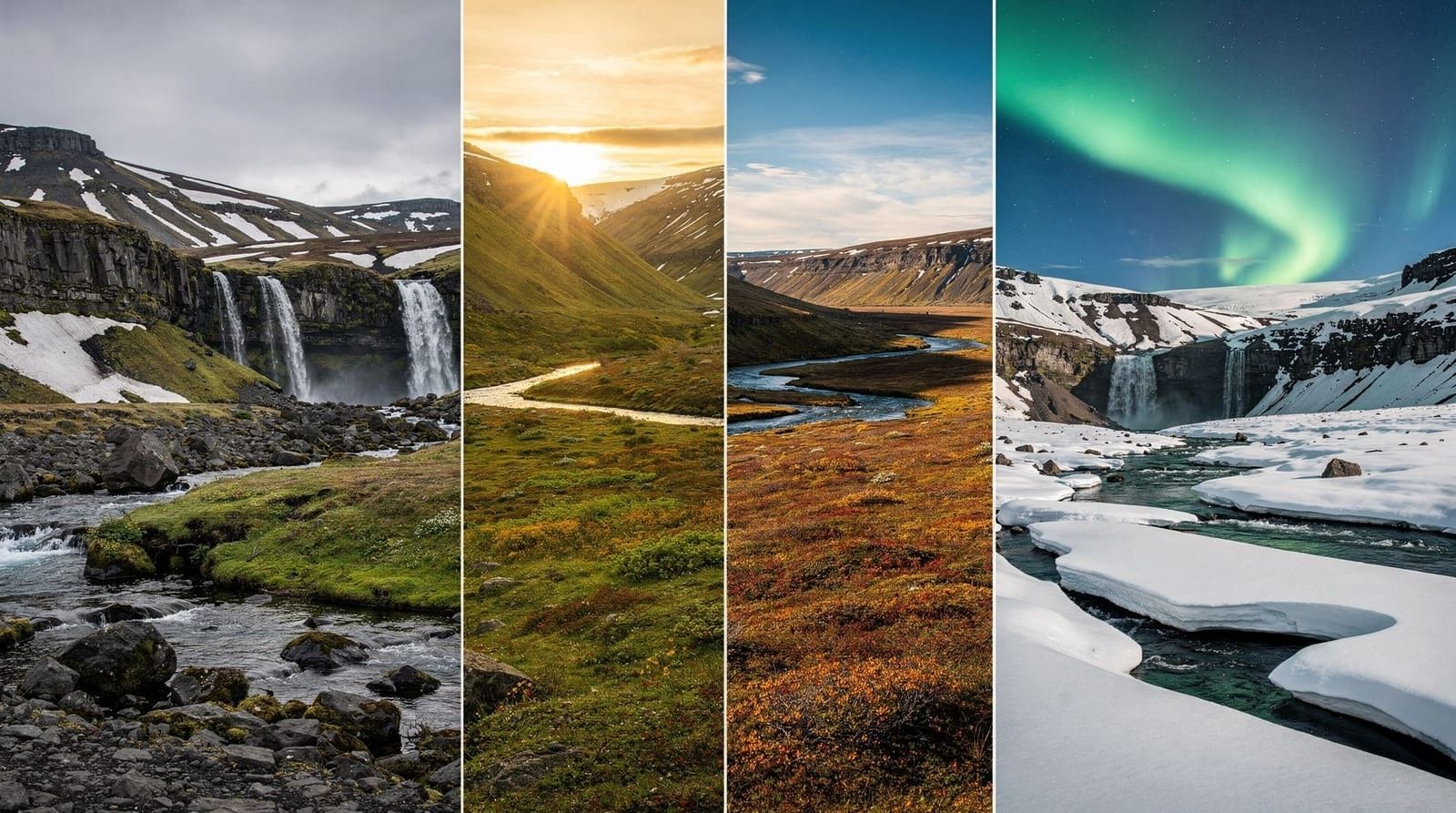
Iceland in summer — what to expect in June, July, and August
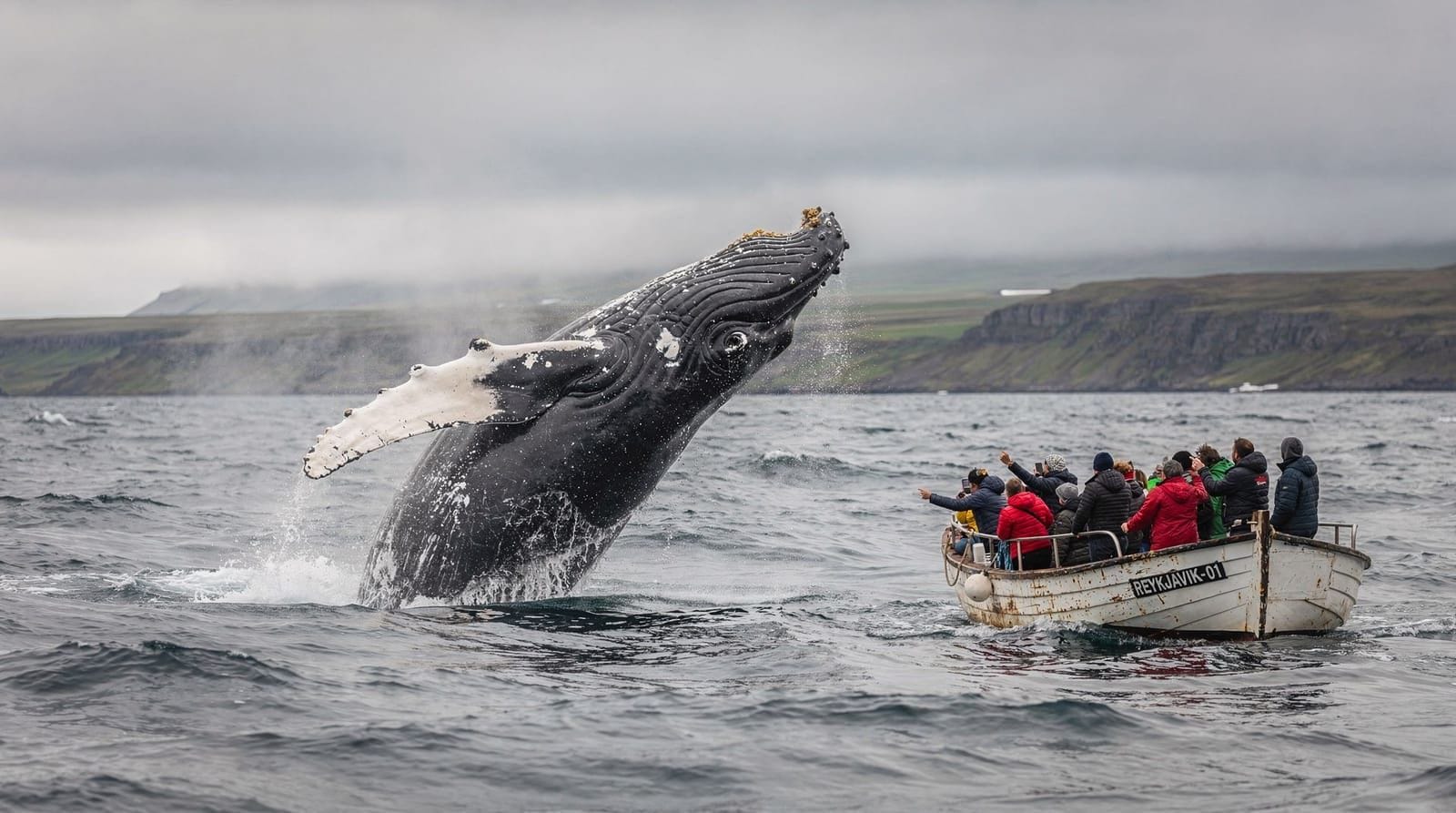
Húsavík: Whale watching cruise and puffins
Duration: 3-3.5 hours, from $134
Is summer a good time to visit Iceland?
Summer (June–August) is Iceland's most accessible season — F-roads open, puffins arrive, and the midnight sun means 20+ hours of daylight. Crowds peak in July and prices are at their highest, but the sheer variety of activities is unmatched any other time of year.
The real character of Icelandic summer
Iceland in June, July, and August is a different country from the winter version most people imagine. The sky stays light around the clock, lupine flowers carpet the lava fields in purple, lambs wobble around every farm, and the interior F-roads unlock access to stark volcanic landscapes that remain completely off-limits for nine months of the year.
It is also the most crowded and most expensive time to visit. At peak season in July, rental car companies run out of inventory, guesthouses book out weeks ahead, and the parking lot at Geysir sometimes looks like a supermarket on a Saturday. That is the honest picture — great experiences are entirely possible if you plan well, but summer is not a hidden gem season.
| Where | Iceland-wide; F-roads and highlands fully open |
| Cost | peak pricing — $300–500/day for two people |
| Time needed | 7–14 days for a full Ring Road circuit |
| Getting there | self-drive (2WD lowlands, 4WD for F-roads) |
| Best for | F-roads, puffins, midnight sun, hiking (Laugavegur) |
| Month | Daylight | Reykjavík temp | F-roads | Puffins | Crowds |
|---|---|---|---|---|---|
| June | 21–22 hrs | 9–13°C | Opening mid-June | Established | Building |
| July | 20–21 hrs | 11–13°C | Fully open | Present | Peak |
| August | 17–18 hrs | 10–13°C | Open, closing late Sept | Departing mid-Aug | Easing after Aug 1 |
Daylight and the midnight sun
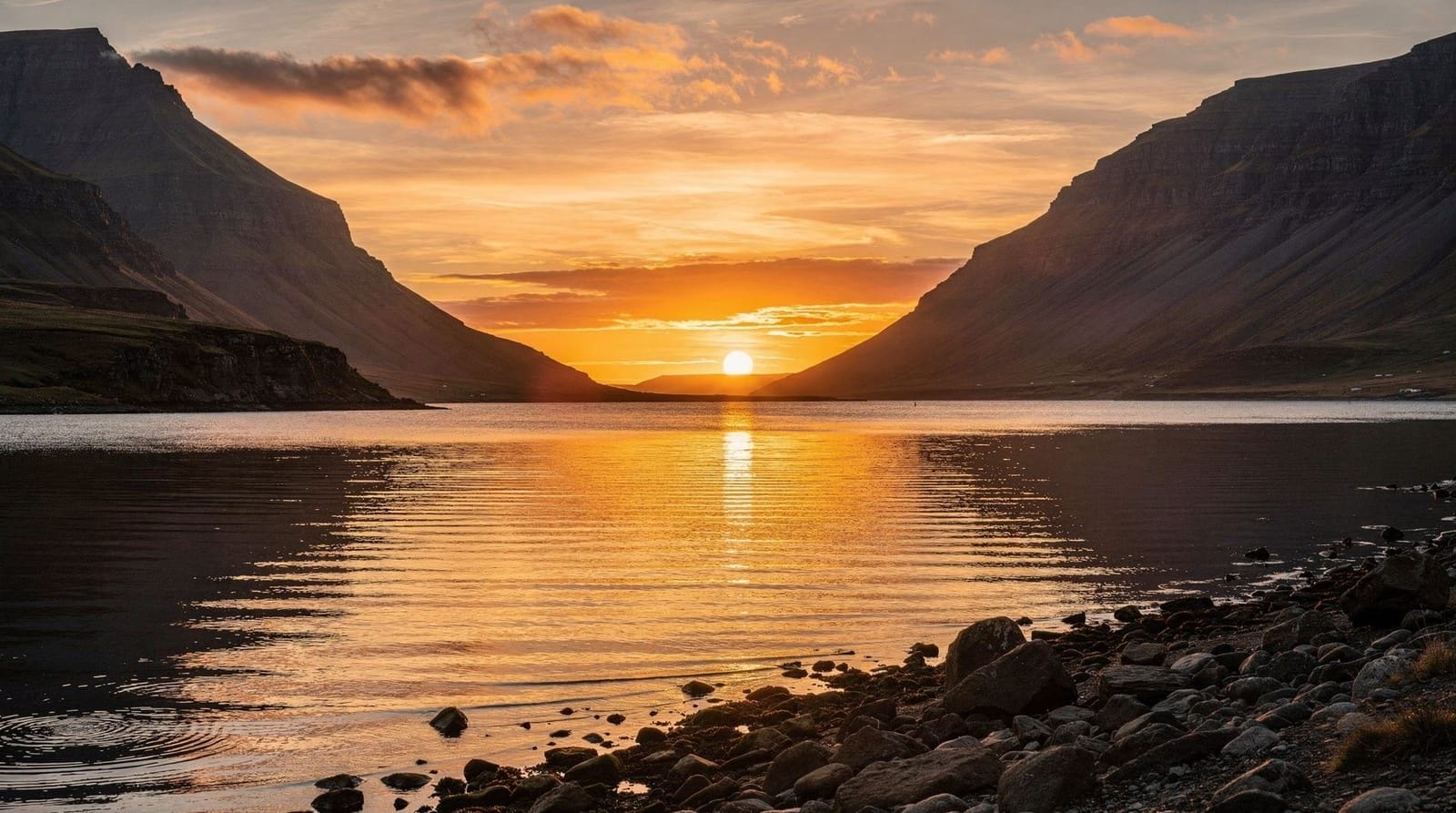
Daylight in Reykjavík peaks around June 21, the summer solstice, when the sun sets around midnight and rises again at 3am. Between roughly June 5 and July 17, the sky never gets fully dark — at “night” it sits at a perpetual golden dusk. The midnight sun is one of Iceland’s most unusual experiences and completely specific to this window.
Practical daylight hours by month:
- June: 21–22 hours of daylight
- July: 20–21 hours
- August: 17–18 hours, darkness returning by late month
The lack of darkness matters for northern lights: the aurora is completely invisible during the midnight sun period. If aurora is a priority, plan for September or later.
One practical effect of endless light: jet lag is significantly worse in summer. Blackout curtains are not optional — pack a sleep mask if your guesthouse does not provide them.
Weather in Icelandic summer
Reykjavík averages 11–13°C (52–55°F) in July, which is Iceland’s warmest month. Inland temperatures can hit 17–20°C (63–68°F) on good days. However, “good days” are not guaranteed. Icelandic summer weather is changeable: a warm morning can turn to horizontal rain by afternoon, wind can gust to 50–70 km/h with no warning, and fog routinely blankets coastal areas.
Packing advice from people who live here: waterproof jacket and trousers, warm layers even in July, and solid hiking boots regardless of what you think the weather will do. Summer clothing in Iceland means layers, not shorts.
F-roads and highland access
The interior F-roads are summer’s biggest exclusive draw. These unpaved mountain tracks require a genuine 4WD with high clearance — not an all-wheel-drive crossover, but a proper raised 4WD like a Toyota Land Cruiser or similar. Most open between June 15–20 and close by mid-September.
Key highland destinations that open in summer:
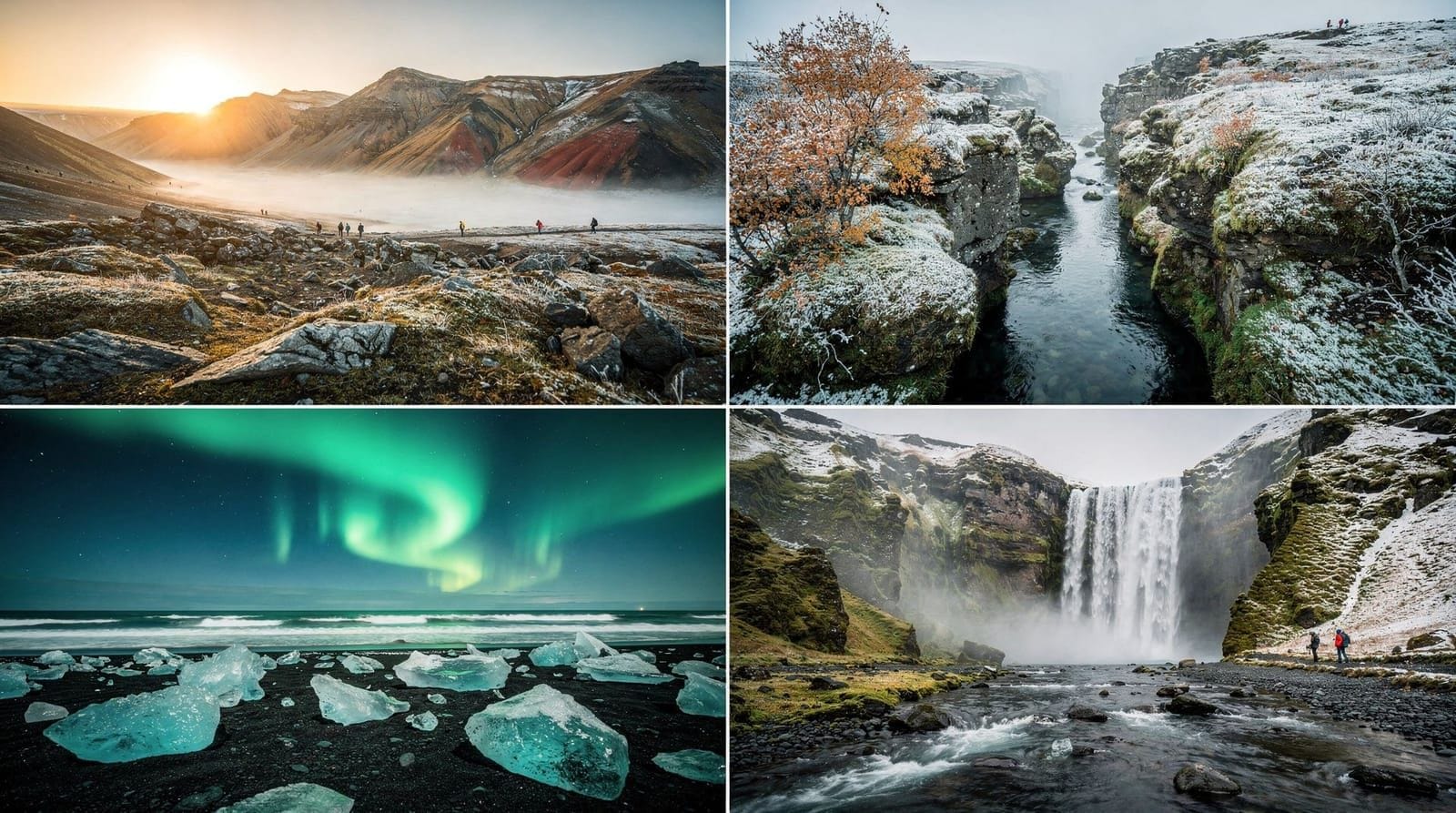
- Landmannalaugar — multicoloured rhyolite mountains, natural hot springs, start of the Laugavegur trail
- Askja caldera — remote volcanic caldera with a warm milky lake
- Kerlingarfjöll — geothermal area with orange and yellow hillsides
- Þórsmörk — river valley at the junction of three glaciers
Never drive an F-road before the official opening — gates are locked and the mud can swallow a vehicle to its axles. Check road.is for current status.
Puffins and wildlife
Atlantic puffins arrive on Icelandic cliffs in late April and gather in huge numbers by May–June. They leave for the open ocean again in mid-August. The main colonies are on the Westfjords cliffs at Látrabjarg (largest in the world), Vestmannaeyjar (Westman Islands), and the cliffs near Dyrhólaey on the south coast.
Húsavík combines whale watching and puffin sightings in a single trip from June through August — humpbacks and minkes are near-guaranteed, plus puffins on the surrounding islands.
Whale watching is at its most reliable June through August. Humpback whales, minke whales, and white-beaked dolphins are regularly spotted from Húsavík, which is Iceland’s most productive whale-watching base, and from Reykjavík harbour.
Golden Circle and south coast in summer
The Golden Circle — Þingvellir, Geysir-Haukadalur, and Gullfoss — runs year-round but July sees its busiest crowds. If you want to visit Geysir without queuing, arrive before 8:30am or after 7pm.
A guided Golden Circle day trip lets a driver handle the roads while you focus on the landscapes — useful in summer when rental cars are expensive and routes are genuinely busy.
The south coast waterfalls — Seljalandsfoss and Skógafoss — are accessible year-round but get wet and slippery in summer rain. The path behind Seljalandsfoss closes in icy conditions, but summer keeps it open.
Jökulsárlón glacier lagoon in summer shows icebergs that have calved from Breiðamerkurjökull glacier, floating in striking blue water. Diamond Beach next to it strews ice chunks across black sand.
Snaefellsnes Peninsula in summer
The Snæfellsnes Peninsula is one of Iceland’s best summer road trips. The road around it stays open year-round, but summer clarity makes Kirkjufell mountain and the glacier on Snæfellsjökull most photogenic.
A full-day tour from Reykjavík covers the peninsula highlights in around 11 hours — a practical option if you do not want to rent a car for the day.
Camping and accommodation
Iceland’s camping culture peaks in summer. The main camping season runs June through August, with most campsites open June 1 to September 15. Campervan and tent pitches fill in popular spots — Þórsmörk and Landmannalaugar pitch reservations are strongly recommended. The Iceland Camping Card gives unlimited camping at 50+ sites for 15,900 ISK (around $115 USD) per person — reasonable value for a week or longer trip.
Budget accommodation in summer is tight. Reykjavík hostels regularly sell out by May. Booking 3–4 months ahead is not excessive for a July trip.
Festivals and events
- Secret Solstice festival (Reykjavík, mid-June): four-day music festival during the midnight sun
- Þjóðhátíð (Westman Islands, first weekend of August): Iceland’s largest outdoor festival, camping and concerts
- Verslunarmannahelgi (first weekend of August): national long weekend — most Icelanders camp, book accommodation well ahead
Practical summer tips
- Rent early: Rental car inventory genuinely runs out in July. Book 2–3 months ahead.
- Expect prices: Budget $300–500/day for two people (car, accommodation, food, one activity).
- Sleep mask essential: Blackout curtains are not universal in guesthouses.
- Fuel stations: Iceland’s interior has no fuel stations. Fill up before entering any F-road.
- Book tours: Popular tours like Jökulsárlón boat tours and highland super-jeep trips fill weeks ahead in summer.
See best time to visit Iceland for a full seasonal comparison.
The Westfjords in summer
The Westfjords are Iceland’s most remote region and receive only a fraction of south coast visitor numbers even in July. The region is genuinely stunning — narrow fjords with mountains rising directly from the sea, Europe’s largest puffin colony at Látrabjarg, Dynjandi waterfall in a tiered cascade down a cliffside, and Ísafjörður as a small city in a remarkable fjord setting.
Getting to the Westfjords takes time. Driving from Reykjavík takes 3–5 hours depending on the route. Flights from Reykjavík to Ísafjörður take 40 minutes (Air Iceland Connect, operates in summer). The roads in the Westfjords are mostly unpaved single-track with passing places.
The Látrabjarg cliffs host Europe’s largest Atlantic puffin colony. In June and July, hundreds of thousands of birds nest in burrows along the 14 km cliff edge. You can walk to within a metre of puffins — they are remarkably indifferent to humans at distance. Do not reach into burrows or block birds’ flight paths.
For a region-specific itinerary, see Westfjords 5-day itinerary.
East Iceland and the Eastfjords in summer
The Eastfjords (Austfirðir) are the least-visited part of the Ring Road circuit despite containing some of Iceland’s most striking fjord scenery. The villages in the Eastfjords — Seyðisfjörður (with its rainbow street and ferry connection to Europe), Neskaupstaður, Eskifjörður — have a distinctly different character from the south coast tourist infrastructure.
Egilsstaðir and Seyðisfjörður is the main hub. Seyðisfjörður, 27 km from Egilsstaðir up a dramatic mountain pass, is a genuinely attractive town in a deep fjord — a regular arts community has grown around the summer arts programmes.
The Stuðlagil Canyon — basalt column formation in a glacial river canyon — requires a 4WD vehicle and a specific access route from Egilsstaðir. It is Iceland’s most photogenic basalt canyon and sees a fraction of Reynisfjara’s visitors.
Ring Road in summer
The Ring Road — Route 1, the 1,332 km circuit that traces Iceland’s coast — is at its most accessible in summer. All sections are paved and open, including the more remote east and north sections that occasionally close in winter.
A minimum of 7 days is needed for a Ring Road circuit if you want more than brief stops. Ten to fourteen days is the realistic budget for doing it with side trips and some hiking. Key decisions:
Clockwise vs counterclockwise: Most visitors go clockwise (east via the south coast first). There is no strong reason to prefer one direction over the other on pure scenery grounds. Counterclockwise means you hit the popular south coast after the north, potentially with lower August crowds at Jökulsárlón if you arrive in late July. Read Ring Road clockwise or counterclockwise for the detailed analysis.
Campervans vs hotels: Summer is the peak season for campervans. The flexibility of camping versus the comfort of guesthouse accommodation is a genuine trade-off. See campervan vs car for the specific Iceland comparison.
South coast itinerary in summer
The south coast from Reykjavík east to Höfn passes Iceland’s most concentrated sequence of dramatic landscapes. In summer, this stretch is most accessible but also most crowded:
- Seljalandsfoss: The path behind the waterfall is open in summer (closes in winter ice). Arrive before 9am.
- Skógafoss: A 15-minute walk up the escarpment behind the falls gives views north toward Eyjafjallajökull.
- Reynisfjara black beach: Dramatic basalt columns and black sand. Sneaker waves are a genuine hazard regardless of season — stand well back.
- Jökulsárlón glacier lagoon: In summer, icebergs floating in the lagoon are at their most numerous. The boat tour (zodiac or amphibious) is worth booking in advance.
- Diamond Beach: Ice chunks from Jökulsárlón wash onto the black sand. The contrast is extraordinary in summer light.
Allow 2 days minimum for the south coast; 3 days with hiking.
Laugavegur trek in summer
The Laugavegur is Iceland’s most famous multi-day hiking route — 55 km across the highland interior from Landmannalaugar to Þórsmörk, through rhyolite mountains, glacial plains, and river crossings. It is exclusively a summer experience, open from approximately June 15 to September 15 (when mountain huts open and F-roads are accessible).
Hut bookings for July and August fill months ahead — reservations for the following summer open in October or November. Camping along the route is also managed and requires specific tent-space bookings.
The trek takes 4–5 days and requires moderate hiking fitness. River crossings can be knee-deep. See Laugavegur trek for the planning specifics.
Travellers who miss out on hut bookings still have options: guided Laugavegur tours sometimes hold blocks of hut space unavailable to independent bookers, and a shorter 2–3 day version covering the most scenic middle section (skipping the full end-to-end route) is achievable with a car shuttle at each end, avoiding the need for a hut reservation at all.
Avoiding summer crowds
The crowds at specific sites are real but manageable with timing:
- Geysir: Before 8:30am or after 6:30pm sees significantly fewer people. The geysers erupt regardless of when you visit.
- Seljalandsfoss: Late evening (9–11pm in June/July) is extraordinary — the golden light on the falls with almost nobody there.
- Blue Lagoon: Midday is peak. Book the first or last time slot of the day.
- Jökulsárlón: Mornings before tour buses arrive from Reykjavík (they typically arrive at 11am–1pm) are quieter.
See avoiding crowds in Iceland for the full strategy guide.
Beyond timing individual visits, the single most effective crowd-avoidance strategy in summer is regional: the south coast and Golden Circle absorb the vast majority of Iceland’s July and August visitors, while the Westfjords, East Iceland, and much of the highland interior see only a fraction of that traffic even at peak season. Travellers willing to trade a bit of driving time and infrastructure polish for genuine solitude will find summer in these regions barely resembles the crowd descriptions associated with Route 1’s most famous stops.
Glacier hiking in summer
Summer is the primary glacier hiking season in Iceland. Sólheimajökull on the south coast is the most accessible glacier for a half-day hike, reachable from Reykjavík as a day trip. Skaftafell glacier tongue in Vatnajökull National Park offers longer hiking options.
Key logistics for glacier hiking:
- All glacier hikes require a certified guide and crampons — walking unguided on a glacier is prohibited and genuinely dangerous due to hidden crevasses
- Sólheimajökull tours run year-round but summer gives the best light and accessibility
- The Vatnajökull ice cave tours are summer-specific for one version: crystal cave tours run in summer (different from the natural blue ice caves of winter)
- The Into the Glacier Langjökull tunnel tour on Langjökull runs year-round and is accessible via a snowcat
The glaciers are actively retreating due to climate change — Sólheimajökull has retreated significantly over the past 30 years. Summer visitors who visited Iceland previously and return now often note the visible change. Guides on Sólheimajökull tours frequently point out marker signs along the approach path indicating where the glacier’s edge sat in previous decades, making the retreat tangible rather than abstract for visitors seeing it for the first time.
Highland F-road highlights
Once F-roads open in mid-June, the highland interior becomes the most extraordinary summer exclusive:
Landmannalaugar: The end of the Laugavegur trail starting point. Colourful rhyolite mountains — green, red, yellow, pink, grey in the same panorama. Hot spring pool at the hut complex. Accessible by F-208 from the Ring Road or by tour bus from Reykjavík.
Askja caldera: A remote caldera with a crater lake (Öskjuvatn) at its base and the warmer Víti explosion crater beside it. The drive on F88 is spectacular. Most visitors combine Askja with a super-jeep tour from Mývatn or take a guided highland tour.
Kerlingarfjöll: Geothermal highland area with orange and yellow hillsides, steaming vents, and a hiking network. Accessible via F35 from the main highland road (Kjölur route, which is unusual in being accessible with a 2WD in summer).
All F-road destinations require checking current conditions on road.is before departure. Even in peak summer, highland roads can be temporarily closed after heavy rain.
Frequently asked questions about Iceland in summer
Is Iceland too crowded in summer?
July is genuinely crowded at main attractions. Geysir, Seljalandsfoss, and the Blue Lagoon see significant queues mid-day. Early morning visits (before 8am) or late evening visits reduce this. Many areas — the Westfjords, the East Fjords, the highlands — remain genuinely uncrowded even in peak season.
Can you see the northern lights in summer?
No. The sky never gets dark enough for the aurora between mid-May and late July. If northern lights are a priority, plan a trip in September or later.
Do you need a 4WD in Iceland in summer?
For the Ring Road and main attractions: no, a 2WD is sufficient. For F-roads to the highlands: yes, a genuine 4WD with clearance is required. Driving a standard car on F-roads voids your insurance and can damage the vehicle.
What should I pack for Iceland in summer?
Waterproof jacket, waterproof trousers, warm mid-layer, hiking boots, thin wool base layer, hat and gloves (still needed for highland hikes). Leave thin summer clothes at home unless you expect a warm spell.
Are campervans a good idea in summer?
Yes, but book very early. Summer is peak campervan season and good vehicles sell out. See the comparison guide campervan vs car in Iceland for a full analysis.
How much does Iceland cost in summer?
July is the most expensive month. Expect $150–250/night for a mid-range guesthouse, $100–200/day for a 4WD rental, and $20–40/person per meal at a mid-range restaurant. Full cost breakdown at how much does Iceland cost.
When does the midnight sun happen?
The sun stays above the horizon (or nearly so) roughly June 5–July 17 in Reykjavík. The peak is around the summer solstice (June 20–21). Read the full midnight sun Iceland guide for viewing tips.
Is June or August the better summer month?
June has the longest daylight and the fullest midnight-sun effect, but crowds and prices are already close to July levels by mid-month. August, especially after the first week, is a genuinely underrated choice: F-roads remain open, whale watching and glacier hiking are unaffected, prices start easing, and the worst of the July crowding at Geysir and Reynisfjara has passed. The trade-off is that puffins depart mid-August and daylight is visibly shortening by month’s end.
Do I need to book everything months in advance for a July trip?
For the specific high-demand items, yes: rental cars, Reykjavík accommodation, Jökulsárlón boat tours, Laugavegur trek huts, and popular highland super-jeep tours. For day tours like Golden Circle or whale watching, 2–4 weeks ahead is usually sufficient even in July, though earlier is safer for a specific date or time slot.
Choosing between June, July, and August
The three summer months are often lumped together, but they have real differences worth planning around. June offers the most daylight and freshest F-road opening but the highest early-season demand for hut bookings on routes like Laugavegur. July is the most crowded and expensive month, with essentially guaranteed good weather odds but also guaranteed queues at the headline sites. August, particularly after the Verslunarmannahelgi long weekend in early August, sees crowds and prices both start easing while F-roads, whale watching, and glacier access remain fully open — arguably the best-value of the three months for travellers who don’t specifically need puffins or the longest daylight.
Top experiences
Bookable activities with verified prices and instant confirmation on GetYourGuide.