North Iceland travel guide
Complete guide to North Iceland — Akureyri, Lake Mývatn, Húsavík whales, Dettifoss, Goðafoss, and the Diamond Circle. Honest tips, real prices, driving times.
Akureyri: From Akureyri Diamond Circle tour with waterfalls
Quick facts
- Best time
- Jun–Aug (midnight sun); Sep–Mar (northern lights)
- Days needed
- 4–6 days minimum
- Getting there
- Flight from Reykjavík to Akureyri 45 min; drive via Ring Road ~5h
- Budget per day
- 18,000–35,000 ISK (€120–€240)
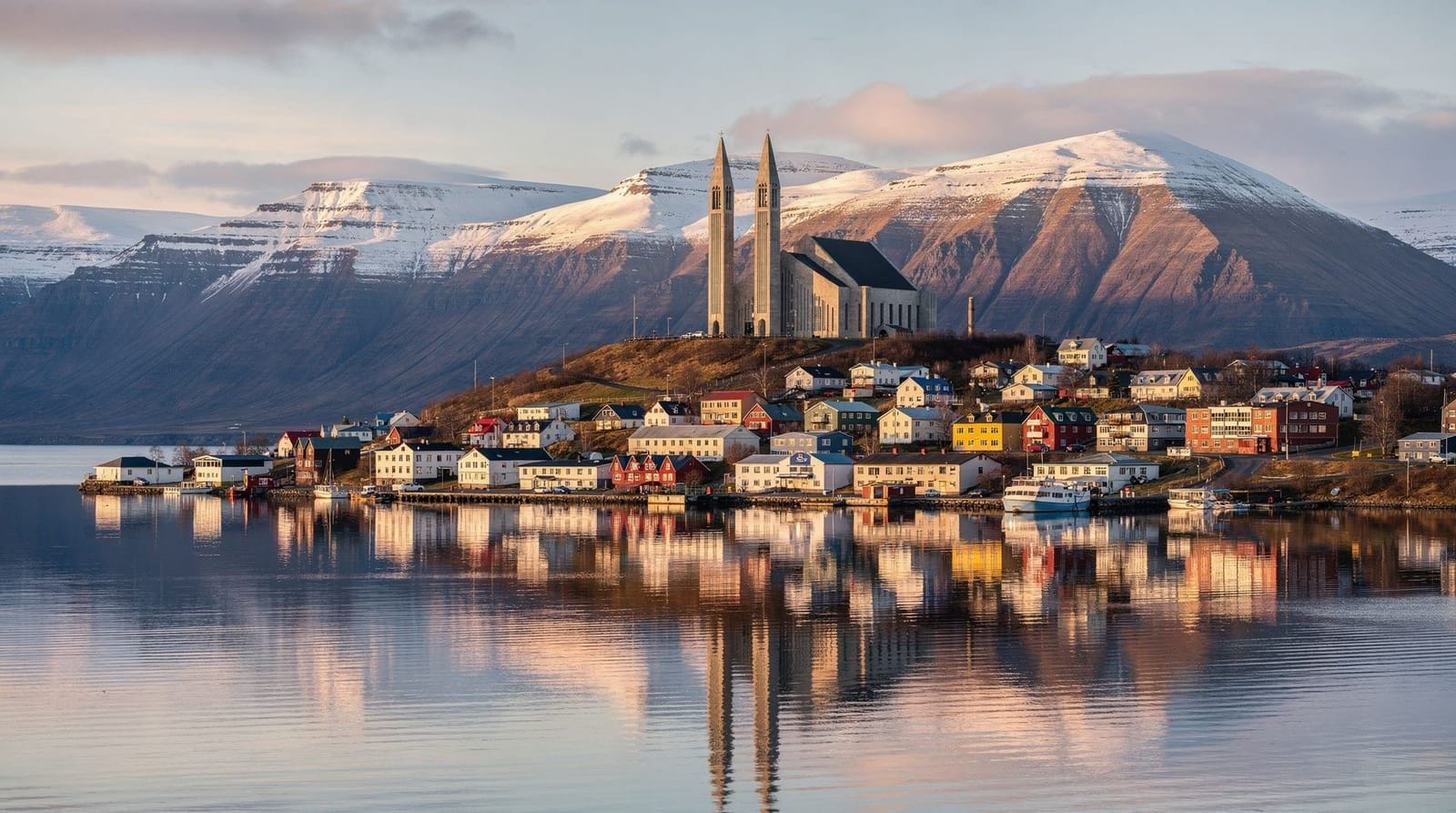
North Iceland rewards travellers who make the effort to get here. The region covers roughly a quarter of the island, centred on Akureyri — a compact city of 20,000 people that feels improbably sophisticated for its latitude. Beyond the city you get volcanic craters, Europe’s most powerful waterfall, geothermal lakes alive with strange geology, and fjord towns that still smell of herring.
What makes the north different from the south
Most Iceland visitors land at Keflavík and spend their time on the Golden Circle and South Coast, which are genuinely spectacular. But North Iceland operates on a different scale. The crowds are thinner, the roads are quieter, and the landscapes are more varied — you move from lava fields to birch forest to arctic fjords within an hour’s drive. The Diamond Circle route alone links four world-class sights in a single loop.
| Regional hub | Akureyri — airport, hospital, car rental, and the widest choice of hotels and restaurants |
| Fuel network | Reliable along the Ring Road and in Akureyri/Húsavík; fill up before smaller side roads |
| Mobile signal | Good on the Ring Road and in towns; patchy on Route 862 to Dettifoss and in the highlands |
| Best regional base | Akureyri for restaurants and flights; Reykjahlíð (Mývatn) for proximity to the Diamond Circle |
| Wheelchair-friendly stops | Goðafoss viewpoint and Akureyri’s botanical garden; Hverfjall and Dettifoss involve uneven terrain |
The flip side is logistics. Reykjavík to Akureyri is a 460 km drive along the Ring Road, taking around five hours with no stops — longer in winter when roads can close. Domestic flights from Reykjavík (Domestic Airport, not Keflavík) to Akureyri run several times daily with Eagle Air and Icelandair and take 45 minutes. Return fares start around 15,000–25,000 ISK (€100–€170) if booked a few weeks ahead.
The five things the north does best
Whale watching from two ports
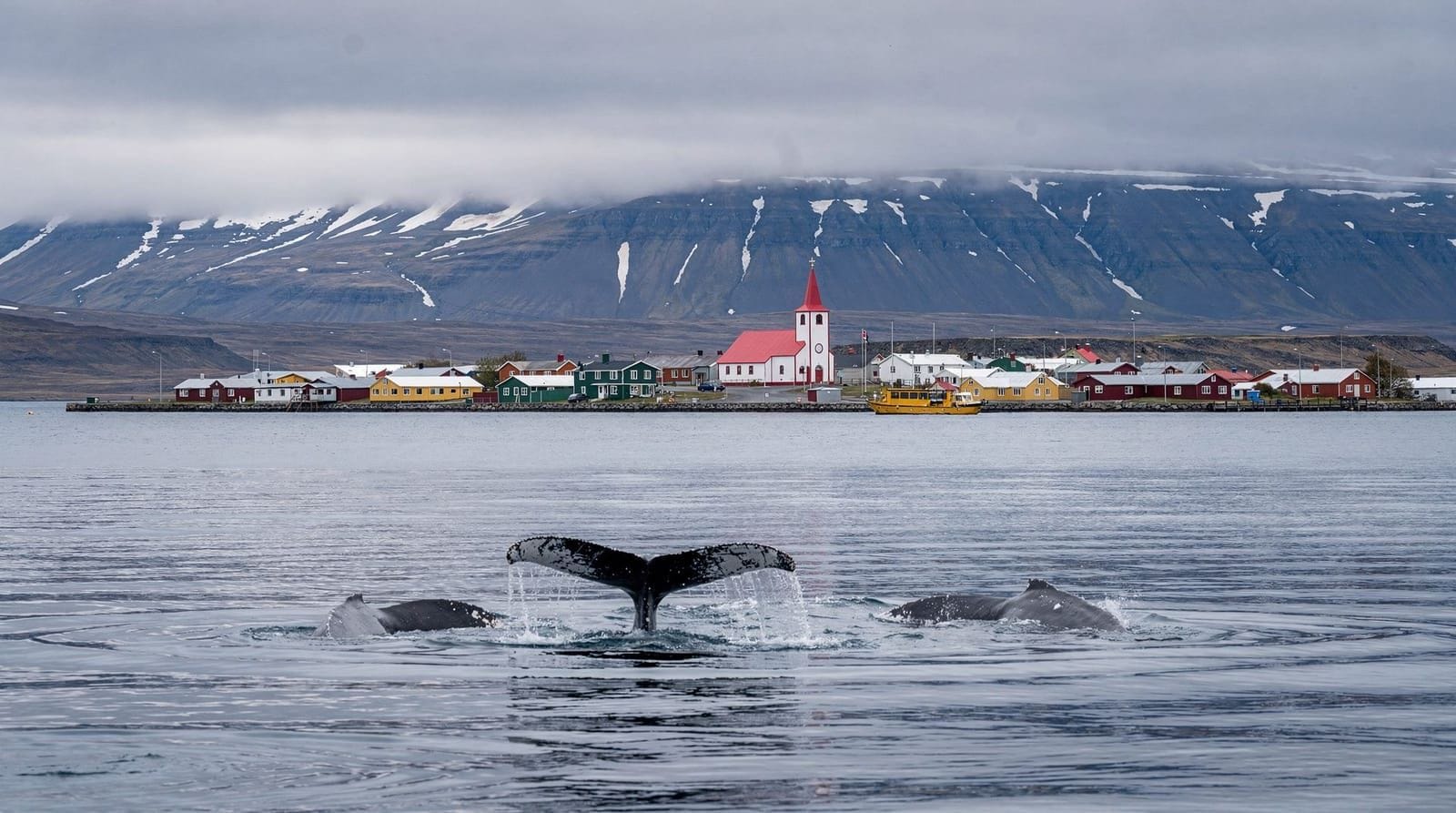
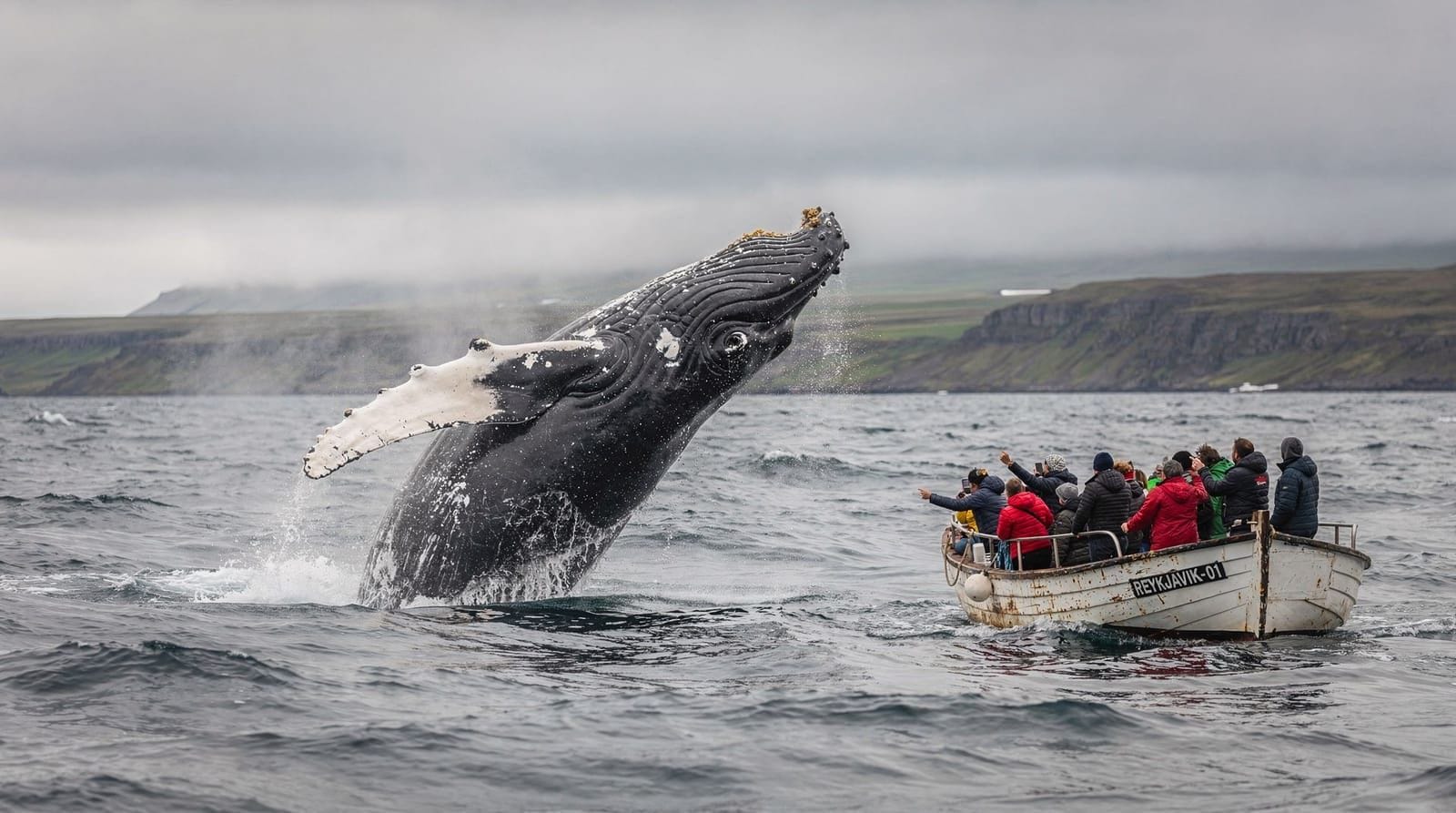
Húsavík is Iceland’s most famous whale-watching port, and justifiably so. Skjálfandi Bay channels humpback whales, minkes, and blue whales close to shore, with sighting rates above 98% in summer. Tours run from June through September; oak-boat operators have worked these waters for decades.
Akureyri also offers whale watching from Eyjafjörður, one of Iceland’s longest fjords. Humpbacks feed here in summer, and the backdrop of snow-capped mountains makes for a different aesthetic than Húsavík. A three-hour classic trip costs around 12,000–14,000 ISK (€80–€95).
Join Húsavík’s original whale-watching operator — 3-hour trip into Skjálfandi Bay.
Lake Mývatn’s geothermal landscape
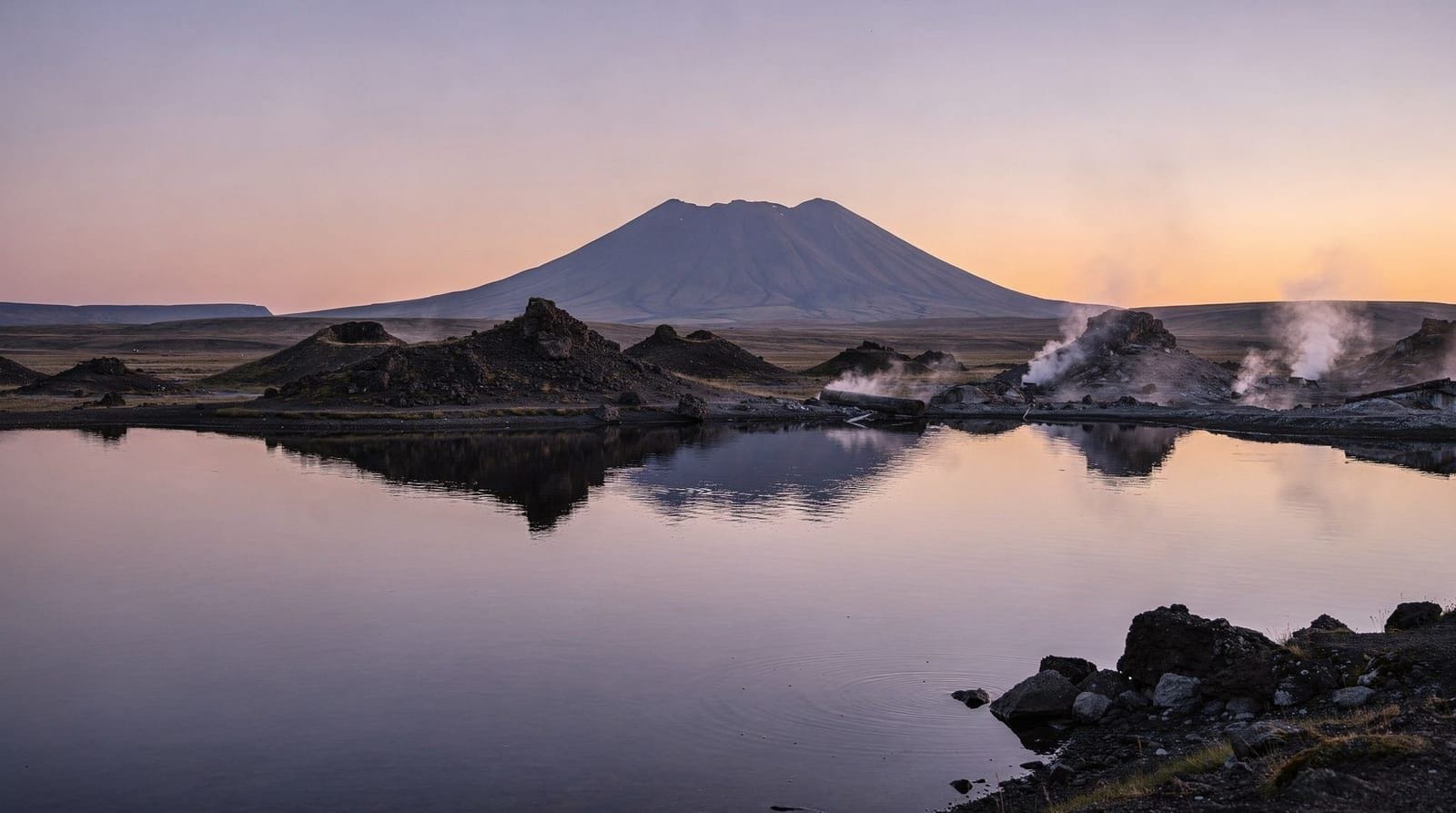
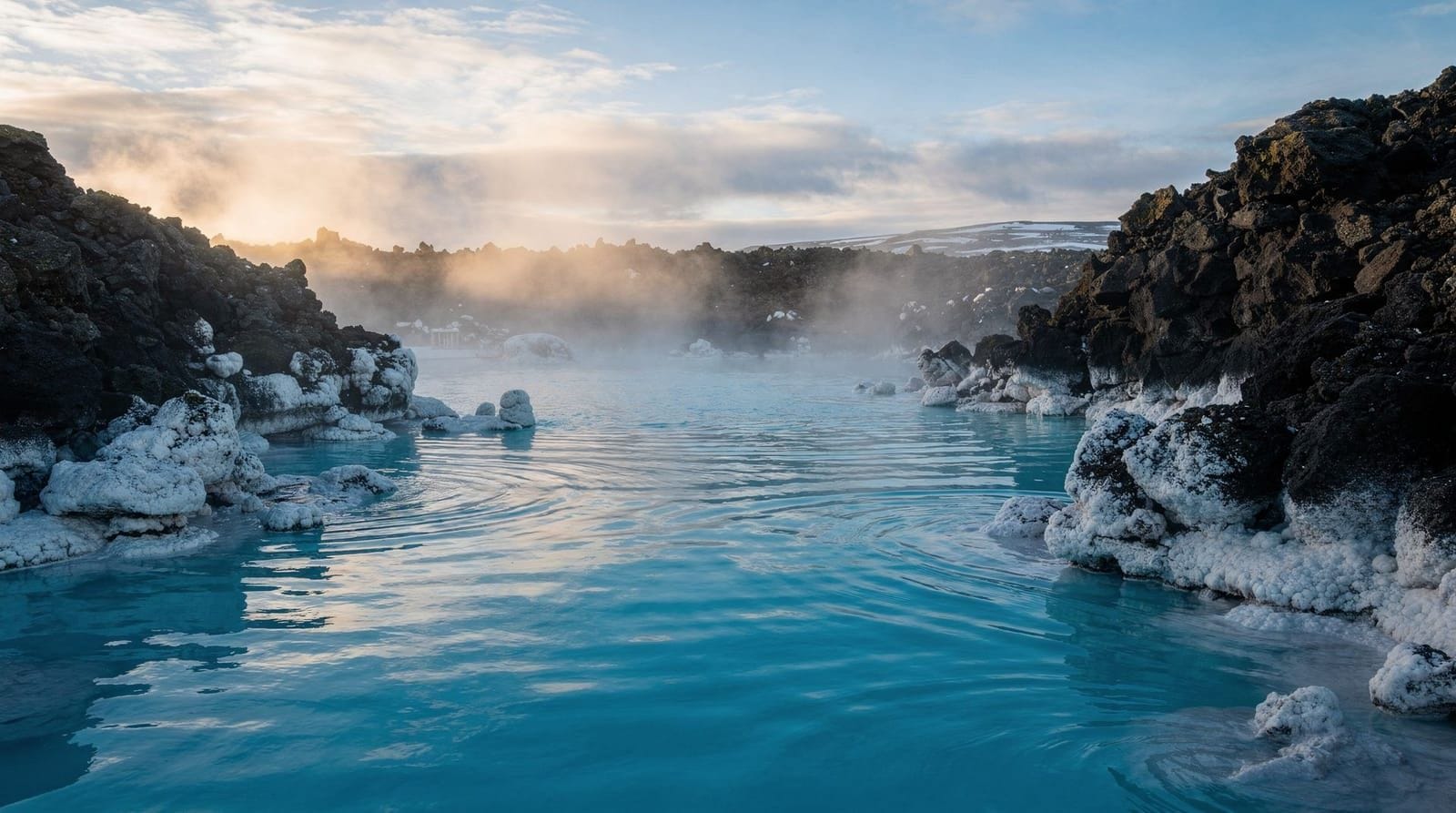
Lake Mývatn is unlike anywhere else in Iceland. The lake itself sits in a rift valley and is ringed by pseudocraters, lava pillars, and bubbling mud pools. The Mývatn Nature Baths — a milky-blue geothermal pool at 1,700 metres altitude — offer a less commercialised alternative to the Blue Lagoon at roughly a third of the price (around 5,200 ISK / €35 for adults). Book ahead in summer.
East of the lake, Dimmuborgir (“dark castles”) is a field of lava formations that eroded into columns, arches, and caves over 2,300 years. Hverfjall, a perfectly symmetrical tephra crater 1 km wide, rises just north of the lake and takes 45 minutes to walk around the rim.
Goðafoss and Dettifoss
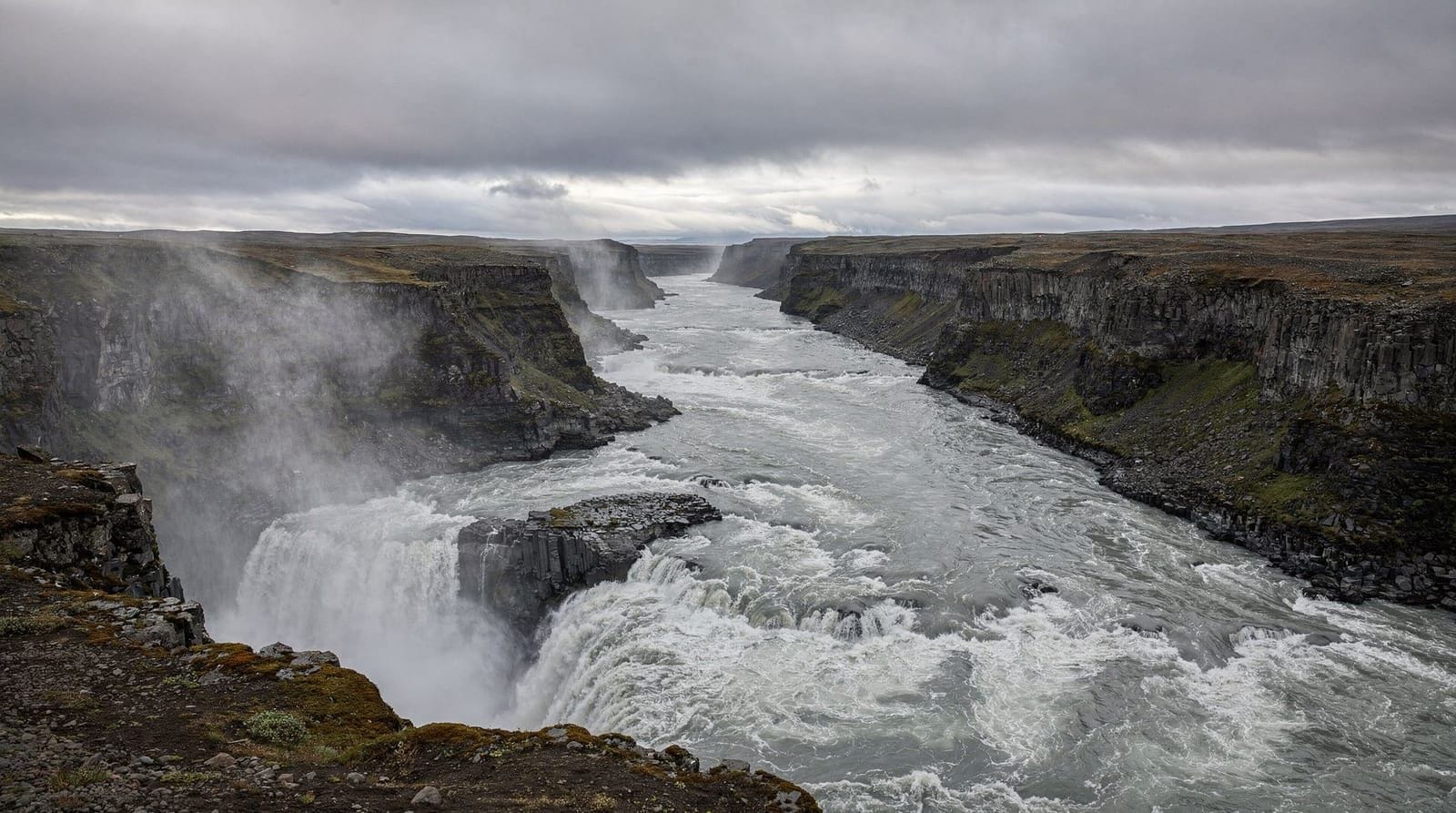
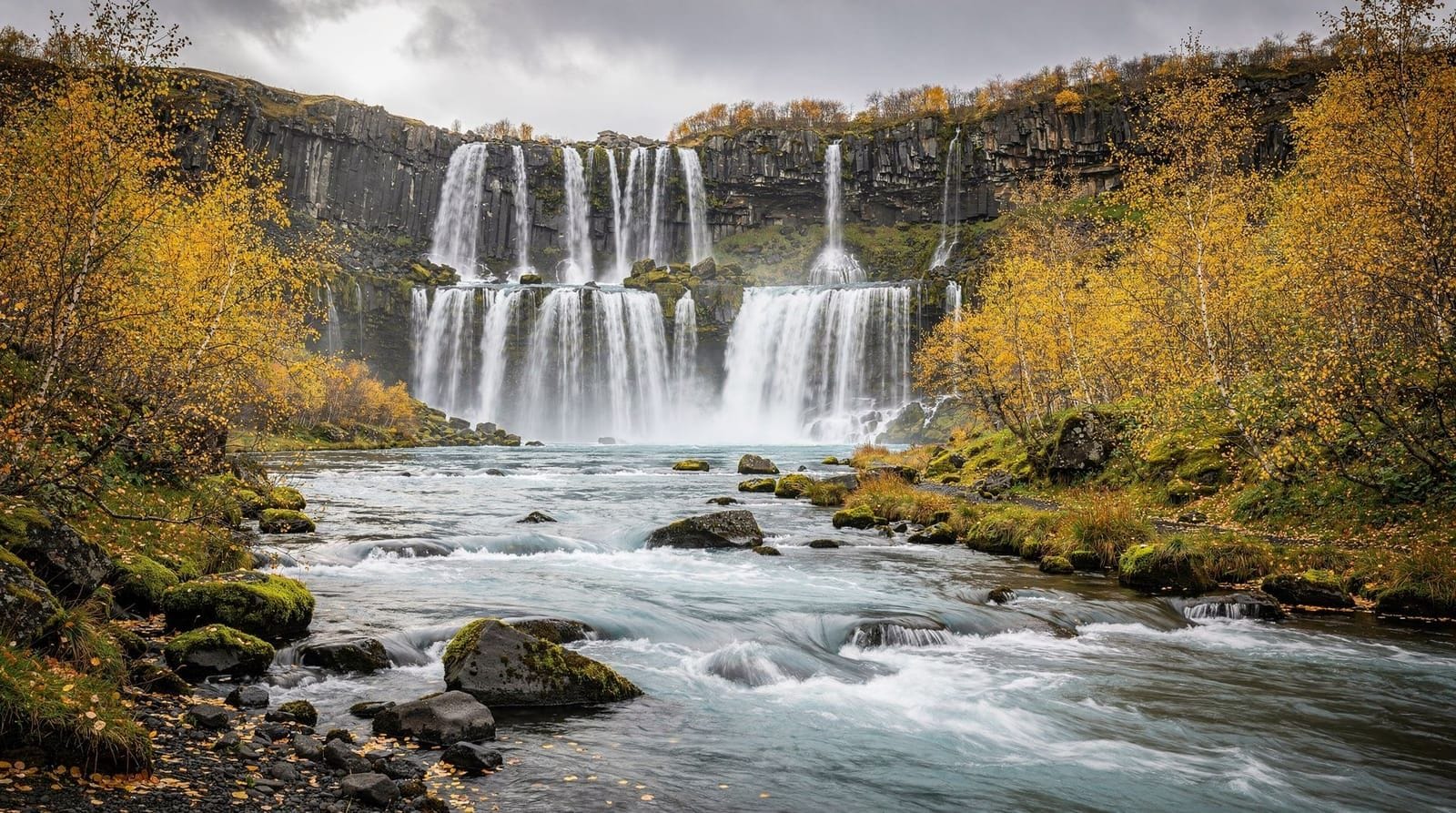
North Iceland has two waterfalls worth a detour on their own merits. Goðafoss — “waterfall of the gods” — is a wide horseshoe 30 metres tall beside the Ring Road east of Akureyri. It’s free to visit, easy to approach, and genuinely photogenic. Dettifoss in Vatnajökull National Park is in a different category: the most powerful waterfall in Europe by flow rate, 100 metres wide and 45 metres tall, with a roar and spray column you feel before you see it.
The Diamond Circle road trip
The Diamond Circle is a 250 km loop from Akureyri that takes in Goðafoss, Mývatn, Dettifoss, Ásbyrgi canyon, and Húsavík. Done in a day it’s rushed; two days is comfortable. A guided full-day version departs Akureyri and covers the main sights with a local driver.
Full-day Diamond Circle tour from Akureyri — Goðafoss, Mývatn, Dettifoss included.
Northern lights in the off-season
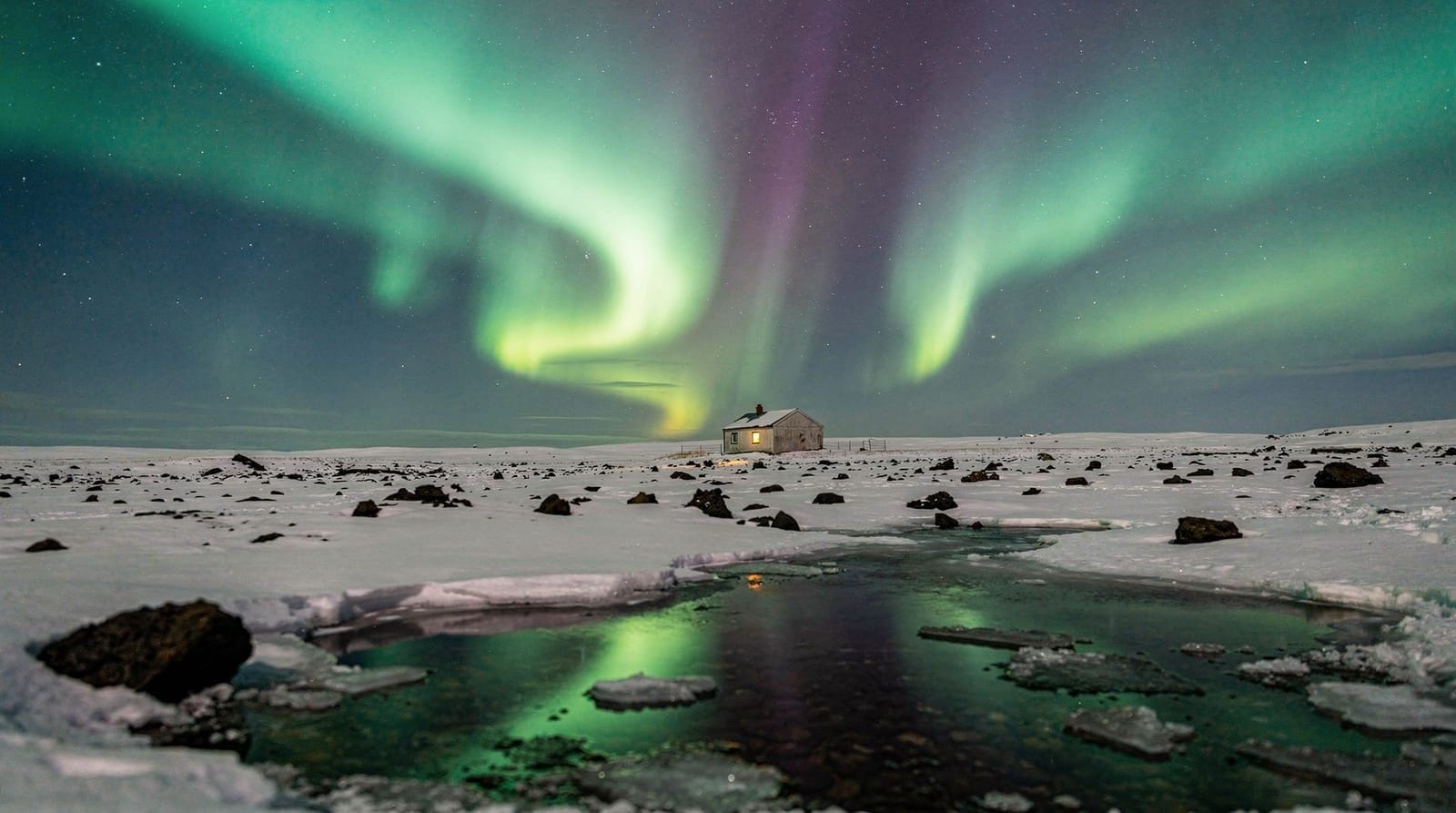
Akureyri sits well inside the auroral zone. From mid-August to mid-April, clear nights bring a realistic chance of seeing the northern lights. The city itself is small enough that you can drive ten minutes from the centre and be in genuine darkness. Organised tours drive south into the mountains or onto higher ground above the fjord clouds. The catch: northern lights require darkness, so June and July (midnight sun) are a washout for aurora hunting.
Northern lights tour from Akureyri — minibus, expert guide, comfort guarantee.
Getting around North Iceland
A hire car is the only practical option for exploring at your own pace. Most roads in the north are sealed; the mountain road to Askja (F88) and the Sprengisandur Highland crossing require a 4WD. Akureyri’s car rental desks (Budget, Hertz, Europcar, local operators) are clustered at the airport and downtown. Summer rates for a small automatic start at around 12,000–15,000 ISK (€80–€100) per day including basic insurance; expect more for 4WD.
The Strætó bus company runs scheduled service between Akureyri and Reykjavík (route 57, 6–7 hours, around 8,500 ISK / €57 one way). Local buses connect Akureyri with Dalvík and a few villages, but not with Mývatn or Húsavík. Organised day tours from Akureyri fill the gap if you are without a car.
Fuel prices are high everywhere in Iceland — around 290–310 ISK per litre (€1.90–€2.10) in 2025. The distance between filling stations in the north is occasionally large; fill up in Akureyri or Húsavík rather than waiting.
Accommodation overview
Akureyri has the widest choice: downtown hotels (Kea Hotels, Icelandair Hotel Akureyri), guesthouses, and several hostels. Rates in July run 25,000–45,000 ISK (€170–€300) for a double room. Book well ahead for July and August.
Mývatn has a handful of hotels and guesthouses around Reykjahlíð village — Hótel Gigur and Vogafjos farm are reliable choices. Húsavík’s accommodation is limited; the North Sailing Guesthouse and Árból Guesthouse are the most practical. Siglufjörður has the charming Sigló Hótel for those wanting somewhere quieter.
Budget travellers use the HI Youth Hostel network, which has outposts in Akureyri and several farmsteads along the Ring Road. Camping is possible at designated sites (around 2,000–2,500 ISK / €13–€17 per person per night at municipal sites); free camping outside designated areas is prohibited.
Where to eat in the north
In Akureyri, Rub23 is the standout restaurant — a sushi and steak hybrid that sources local fish well. Greifinn is the local favourite for Icelandic lamb soup and fish of the day. The Kaffi Ilmur bakery on Hafnarstræti handles breakfast and coffee without the tourist markup. For lunch, the Bonus supermarket on Tengingata is the cheapest option in town.
In Húsavík, Salthúsid is a converted salt warehouse on the harbour serving cod and haddock at fair prices (main courses 3,500–5,500 ISK / €23–€37). Gamli Baukur nearby is the most atmospheric option and popular for whale-watching groups.
Practical information
Mobile coverage: Good on the Ring Road and in Akureyri; patchy in the highlands and some fjord valleys. A local SIM (Siminn or Nova) or international eSIM works better than roaming.
Weather: North Iceland is drier than the south because the Highlands block Atlantic moisture. Summers in Akureyri are the warmest in Iceland — days can reach 20°C. Winter brings snow and ice from November through April; the Ring Road stays open year-round but mountain passes may close temporarily.
Midnight sun: From late May to late July, it never gets fully dark. This is spectacular for photography and hiking but makes sleep difficult without blackout curtains.
Puffins: Atlantic puffins breed on cliffs around Húsavík from late May to mid-August. Several whale-watching operators include puffin viewing as part of the same trip.
Suggested 4-day itinerary
Day 1: Fly or drive to Akureyri. Walk the botanical garden (free, 65°N latitude). Dinner at Rub23.
Day 2: Drive the western Diamond Circle — Goðafoss, then Mývatn (Dimmuborgir, Hverfjall, Mývatn Nature Baths). Stay near Mývatn.
Day 3: Drive to Dettifoss (road 862 west bank for most dramatic viewpoint), then Ásbyrgi canyon. Continue to Húsavík for whale watching. Overnight in Húsavík.
Day 4: Morning in Húsavík (Whale Museum, harbour); drive back via Goðafoss to Akureyri for evening flight or Ring Road onward.
For north Iceland’s complete Diamond Circle itinerary, including accommodation recommendations, see the dedicated page.
How North Iceland fits into a longer trip
Most visitors reach North Iceland as part of a full Ring Road loop rather than a standalone trip, and the region’s position — roughly the midpoint of a clockwise or counter-clockwise circuit — shapes how much time is realistic. A 7-day ring road itinerary typically allows 2 nights in the north; a 10-day version or the 14-day complete loop gives 3–4 nights, enough for the Diamond Circle plus a detour to Lake Mývatn at a comfortable pace.
For visitors who cannot commit a full week, flying to Akureyri and treating North Iceland as a self-contained 3–4 day trip is a legitimate alternative — see the domestic flights guide for schedules and pricing. This skips the South Coast and Golden Circle entirely but delivers whale watching, geothermal bathing, and volcanic landscapes without the long Ring Road drive either direction.
Frequently asked questions about North Iceland
How long does it take to drive from Reykjavík to Akureyri?
The drive along the Ring Road (Route 1) from Reykjavík to Akureyri is approximately 460 km and takes around 5 hours with no stops in good conditions. In winter, the Holtavörðuheiði plateau section can slow progress significantly. If you plan stops at Borgarfjörður or Snæfellsnes along the way, allow 7–8 hours total. The domestic flight is 45 minutes and costs 15,000–25,000 ISK (€100–€170).
Is North Iceland worth visiting in winter?
Yes, for specific reasons. Northern lights are the main draw from September to March. Akureyri itself is fully functional year-round; the Diamond Circle roads are generally passable but check conditions at road.is before driving. Mývatn Nature Baths in winter, with steam rising against a dark sky, is one of Iceland’s more memorable experiences. Whale watching is not available in winter.
Do I need a 4WD car in North Iceland?
For the Ring Road and main attractions (Mývatn, Goðafoss, Húsavík), a standard 2WD is fine from June through September. In winter, studded tyres (mandatory November–April) are required on any car. For highland routes like the road to Askja volcano (F88), a high-clearance 4WD is legally required when the road is open (typically July–August only).
What is the best way to see the Diamond Circle without a car?
Several operators run full-day guided tours from Akureyri that cover the Diamond Circle highlights. These typically include Goðafoss, Mývatn, and sometimes Dettifoss, with lunch included. Húsavík can also be added. Prices run 18,000–25,000 ISK (€120–€170) per person depending on group size and inclusions.
Can I see the northern lights from Akureyri itself?
You can see them from the city if they are strong enough, but light pollution reduces the quality. Most guides drive 10–20 km out of Akureyri to darker locations. The best conditions are a clear sky, an Kp index of 3 or higher, and no moon. The aurora forecast app from the Icelandic Met Office is the most reliable source.
How far is Húsavík from Akureyri?
Húsavík is approximately 90 km from Akureyri via Route 85, taking around 75–90 minutes by car. The road passes through Laugar and Aðaldalur and is in good condition year-round.
What should I know about the Mývatn midges?
Mývatn means “midge lake” in Icelandic, and the name is accurate. In summer (typically late June through August), tiny non-biting midges swarm in large clouds around the lake shore. They are harmless but unpleasant; a fine-mesh head net is genuinely useful and costs around 2,000 ISK (€13) in local petrol stations. The swarms are worse in calm weather and worst at dusk.
Is it better to fly to Akureyri or drive the Ring Road to reach North Iceland?
It depends on what else is on your itinerary. Flying saves roughly 8–10 hours of driving each way and makes sense if North Iceland is a self-contained trip or if time is tight. Driving the Ring Road makes sense if you want to see Snæfellsnes, the western fjords, or Northeast Iceland along the way, and if you plan to have a car for the Diamond Circle regardless — in which case flying just adds the cost of a one-way rental drop-off.
North Iceland beyond the main circuit
Tröllaskagi Peninsula
The Tröllaskagi Peninsula is the triangular landmass between Eyjafjörður (west) and Skagafjörður (east), roughly 60 km long and covered in dramatic mountain terrain. The two main settlements are Dalvík (west coast, 1,300 people, ferry connection to Grímsey) and Siglufjörður (north coast, 1,200 people, herring heritage). A tunnel completed in 2010 connects Akureyri’s orbit with Siglufjörður; the drive takes about 1.5 hours. For travellers who want North Iceland without the Diamond Circle crowds, the Tröllaskagi Peninsula rewards a day or two of exploration.
The ski terrain above Siglufjörður and Ólafsfjörður is serious in winter. The Dalvík municipality operates a ski area on the mountains behind Dalvík, and the Héðinsfjörður valleys see regular backcountry skiing from January to April. Heli-skiing operators have used the Peninsula for decades — the snowpack is reliable and the terrain varied.
Grímsey island
Grímsey is a small island 40 km off the north coast of Iceland, the only part of the country that lies within the Arctic Circle. The island has around 80 permanent residents and a community of Atlantic puffins, razorbills, and guillemots that breed here in summer. A ferry from Dalvík (3 hours each way) runs several times per week in summer; a light aircraft also connects from Akureyri. The experience of literally standing on the Arctic Circle is a niche draw, but genuine: a painted line marks the location of the Circle, which drifts north at about 15 metres per year due to the axial wobble. Visitors receive a certificate. Day trips are possible but tight; an overnight in the island’s small guesthouse is more relaxed.
Eyjafjörður villages
Along the Ring Road approach to Akureyri and on the fjord’s east shore, a string of small farming communities — Grenivík, Laugar, Dalvík, Ólafsfjörður — each has a character worth knowing. Dalvík is the most visited because of the whale-watching operator Árni Marinó, who runs trips into Eyjafjörður from a quieter harbour than Akureyri’s. Grenivík at the fjord’s head offers a turf farmhouse heritage site at Laufás (a well-preserved cluster of 19th-century farm buildings, open in summer, around 1,500 ISK / €10 entry).
Skagafjörður
South of the Tröllaskagi Peninsula, Skagafjörður is the area Iceland most associates with horses. The Icelandic horse breed has been farmed here for over a millennium; several farms offer riding tours and horse shows. The Héraðsbyggð regional museum in Sauðárkrókur covers the fjord’s Viking history. This region is off the standard North Iceland circuit but accessible from Akureyri (90 km south on Route 75, approximately 1 hour 15 minutes).
North Iceland in each season
Summer (June–August): The obvious peak, and for good reason — midnight sun, all roads open, whale watching running daily, and the Diamond Circle fully accessible. It is also the most crowded and most expensive period; book accommodation and the Nature Baths well ahead.
Shoulder season (May, September): A genuinely good compromise. Days are still long, most tours are running, and prices and crowds are noticeably lower than July–August. Whale watching in May can be inconsistent as the season ramps up; September is more reliable.
Winter (October–April): A different trip entirely. Northern lights become the draw, whale watching stops, and some side roads (including parts of the Diamond Circle route) can close temporarily after storms. Akureyri itself functions normally year-round with plowed streets and open restaurants, but self-driving requires winter tyres and a realistic buffer for weather delays — see the iceland in winter driving guide before planning a winter North Iceland trip.
Responsible travel in North Iceland
The north’s landscapes are recovering from decades of overgrazing by sheep, and recent decades have seen significant erosion. The Soil Conservation Service of Iceland (Landgræðslan) has replanting projects along Route 1 and in the highlands. Staying on marked trails, not driving off-road (illegal outside designated areas), and using designated campsites are the core responsibilities.
In Húsavík and Mývatn specifically, overcrowding in peak summer has led to some degradation of viewpoints and trails. Carbon-neutral whale-watching operators and locally owned guesthouses are the better choices for those wanting to ensure their spending circulates in the local economy. Most of the major attractions (Dettifoss, Ásbyrgi, Mývatn) are managed by Vatnajökull National Park, which is generally well-funded and well-run.
North Iceland packing essentials
The north is drier than the south but wind is constant on exposed sections. A windproof outer layer is essential even in summer. For specific packs per season, see the what to pack for Iceland guide. Key items specific to North Iceland:
- Head net for Mývatn (midges June–August)
- Sunscreen and sunglasses for summer (24-hour daylight with UV at altitude)
- Waterproof jacket — spray from Dettifoss and Goðafoss is significant
- Grip-sole footwear for wet basalt paths near waterfalls
- Studded tyres or winter tyres if renting a car November–April
Top experiences
Bookable activities with verified prices and instant confirmation on GetYourGuide.
Top-rated experiences in North Iceland travel guide
Best-rated activities across GetYourGuide and Viator.

Whale Watching from Downtown Akureyri
- Viator

Big Whales & Puffins RIB boat tour from Húsavík
- Viator

East Glacial River – Grade 4 Rafting with Drysuits, North Iceland
- Viator

Top-Rated Family Rafting – Drysuits & Geothermal Hot Cocoa
- Viator

Original Big Whale Safari & Puffins Speedboat Tour from Húsavík
- Viator

Lake Myvatn Day Tour and Godafoss Waterfall for Cruise Ships from Akureyri Port
- Viator