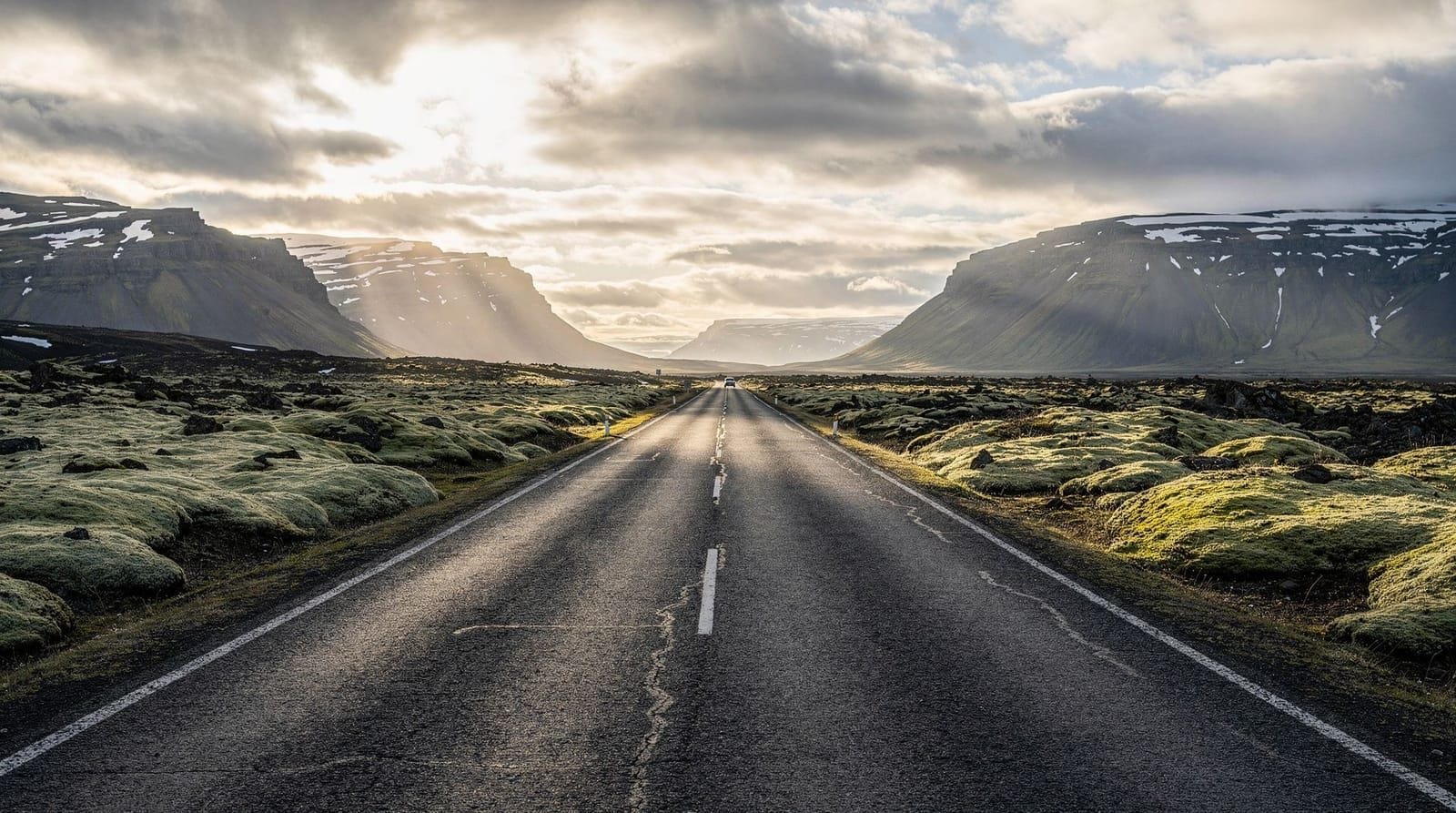
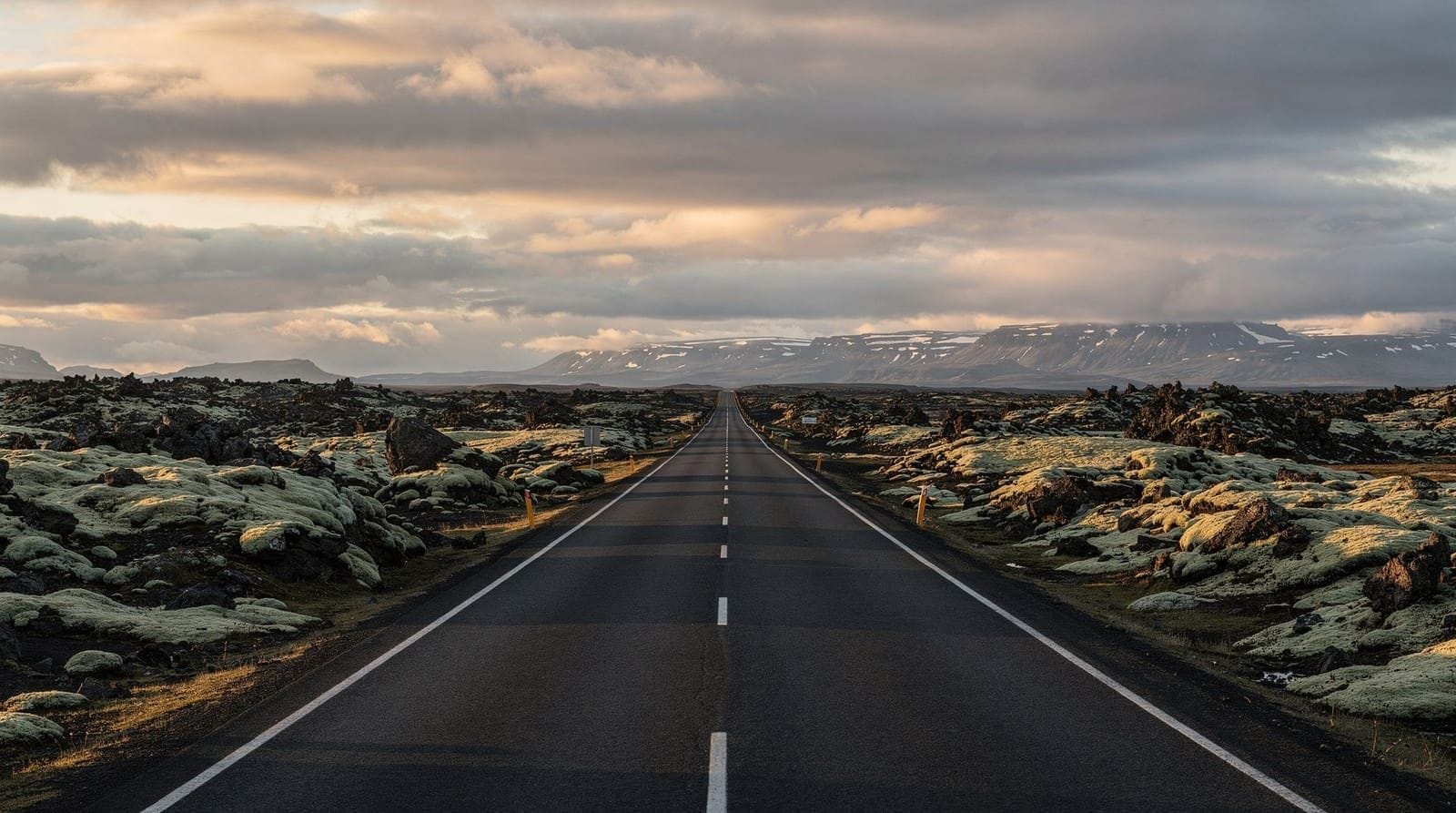
Ring Road in 10 days — the sweet spot Iceland itinerary
Reykjavik: From Reykjavik 7 day around Iceland Ring Road Snaefellsnes
Duration: 7 days
Ten days is the acknowledged sweet spot for the Icelandic Ring Road. Seven days works but forces hard choices; fourteen days adds depth but costs significantly more time and money. At ten days, you can drive the complete circuit, add the best excursions (glacier hike, whale watching, ice cave in season), include a full day in the East Fjords, and return via Snæfellsnes Peninsula without feeling chased.
This itinerary takes the Ring Road clockwise (South Coast first) and adds Snæfellsnes as a return detour — giving the complete circuit plus Iceland’s western peninsula in a single trip.
| Route | Reykjavík clockwise via South Coast, East Fjords, North Iceland, Snæfellsnes |
| Car needed | Yes — 2WD sufficient in summer, 4x4 recommended October–April |
| Total cost (car + fuel + lodging, mid-range) | around 250,000–350,000 ISK per person sharing a car for two |
| Best months | June–August for full access; September for fewer crowds |
| Book ahead | Glacier hike, ice cave and whale watching — all fixed-departure activities |
Overview
- Total distance: approximately 1,600–1,800 km including detours
- Average daily driving: 160–180 km
- Glacier hike: Day 2 (Sólheimajökull) — book in advance
- Ice cave: Day 5 (Vatnajökull, October–March) or Katla cave (year-round)
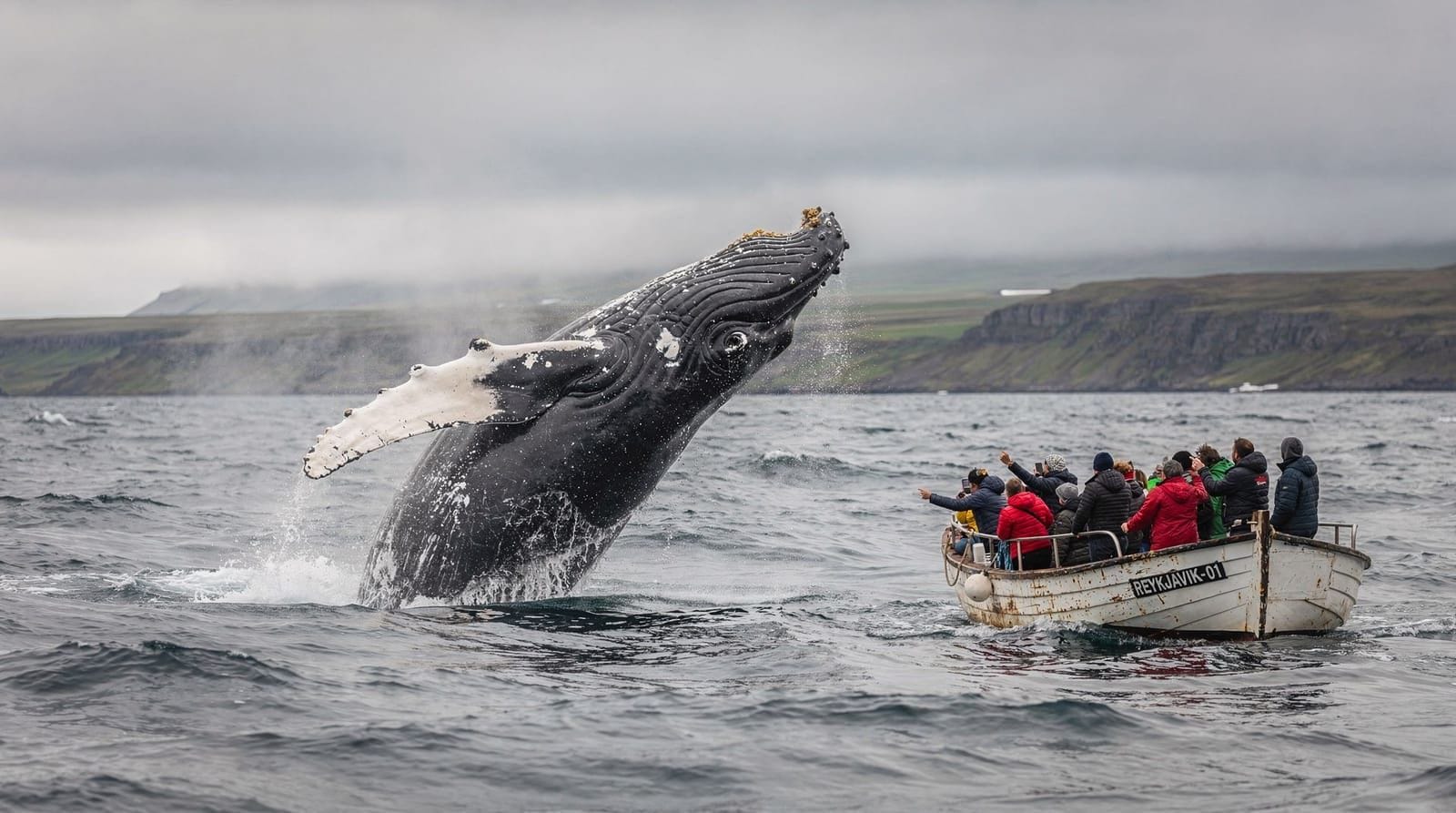
- Whale watching: Day 7 (Húsavík)
- Snæfellsnes: Days 9–10 (on return to Reykjavík)
Day 1: Reykjavík to Vík (188 km, 2h30 driving)
Depart: 08:00
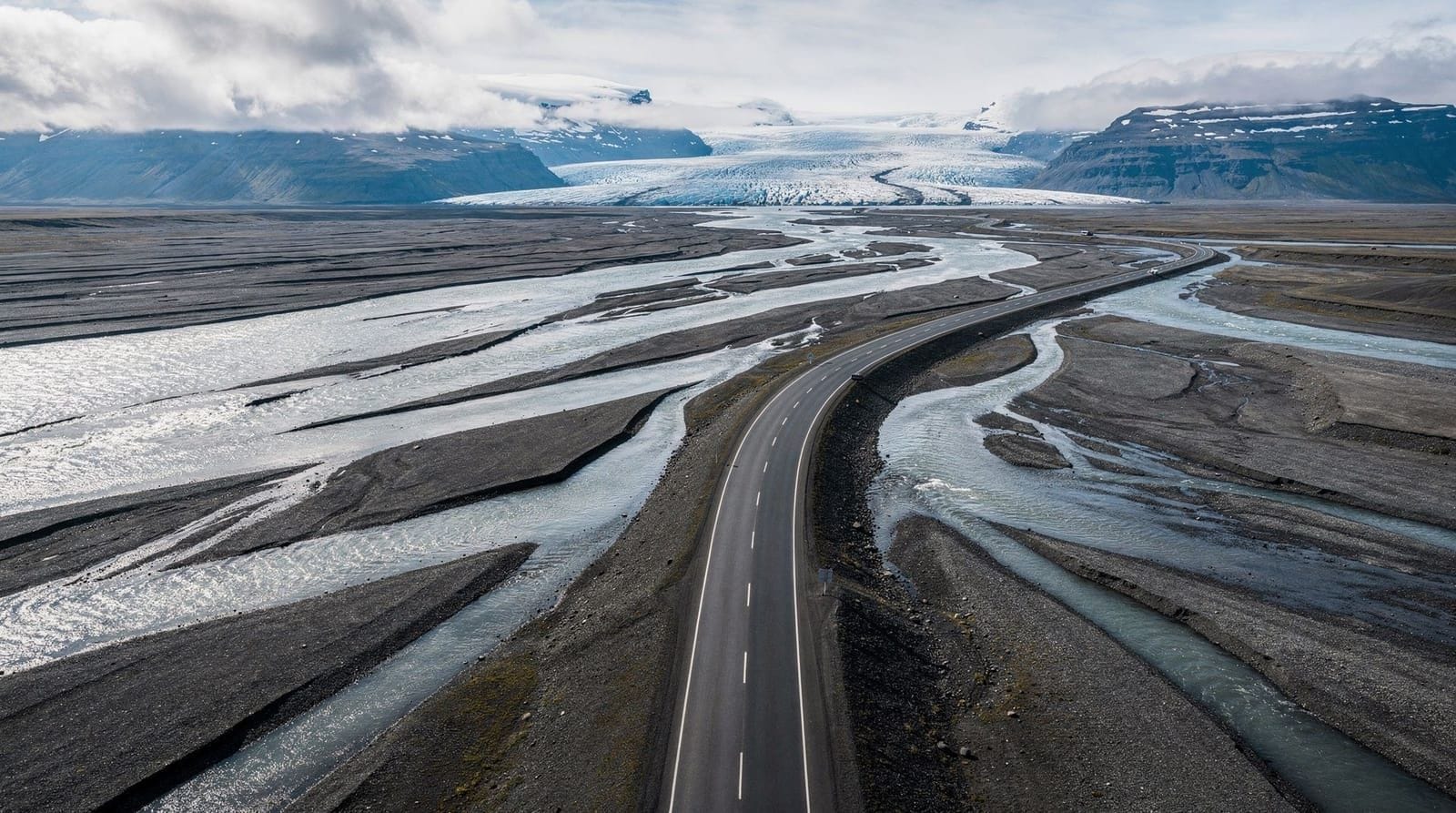
Drive Route 1 east along the South Coast. This is Iceland’s most concentrated scenic stretch — the route lines up major sites in sequence along the same highway.
Stop 1: Seljalandsfoss (09:15 — 60 minutes): the behind-the-falls waterfall. Waterproofs essential. The hidden Gljúfrabúi gorge falls are 200 m north of the car park — walk past the car park to the cliff gap. Most visitors skip this; don’t.
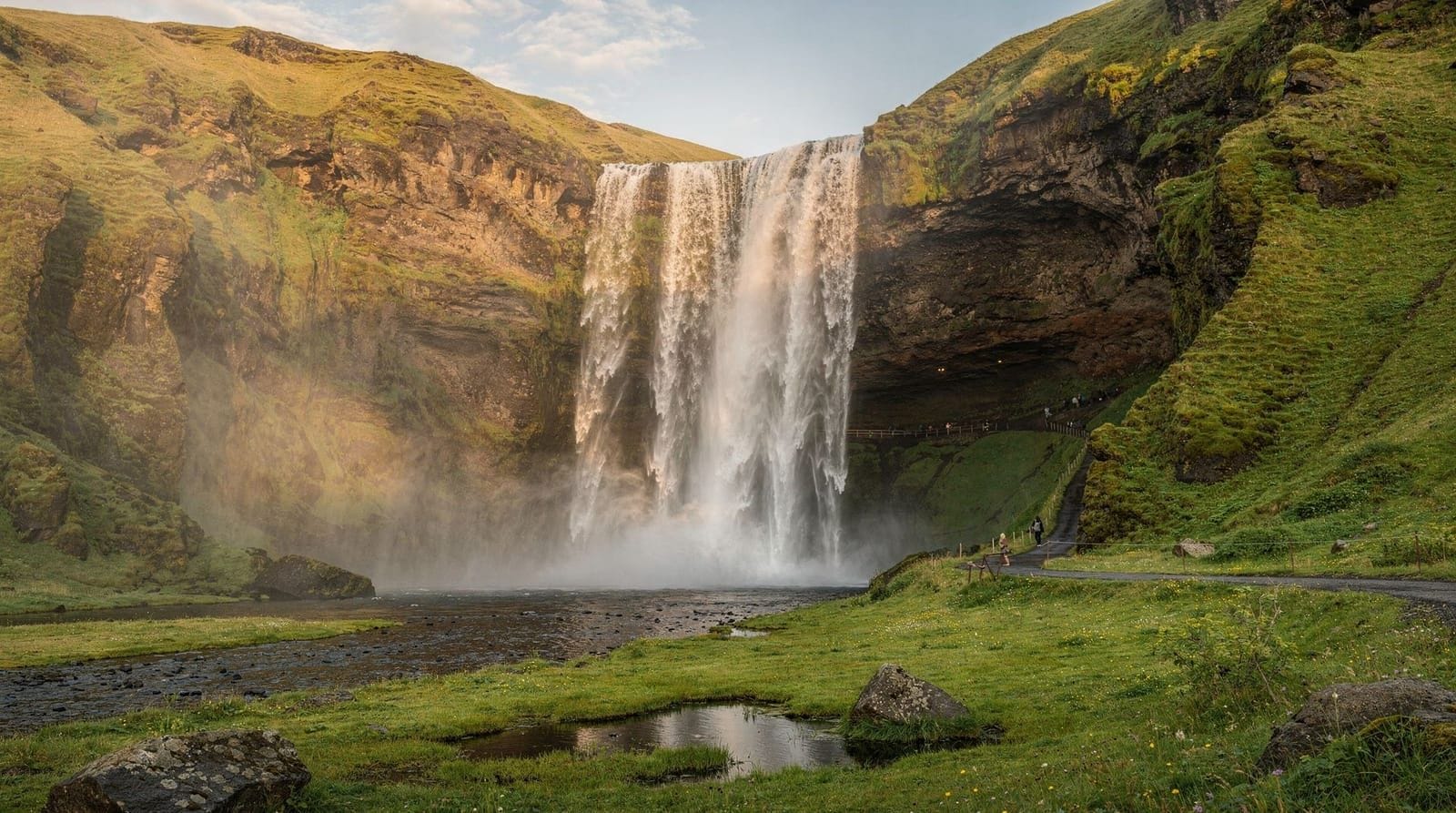
Stop 2: Skógafoss (10:45 — 60 minutes): wide powerful waterfall with 430-step staircase to the top. The view from the staircase over the valley toward Þórsmörk is the best part.
Stop 3: Reynisfjara (12:45 — 45 minutes): black sand beach with basalt columns. Wave safety: stay 30 m minimum from waterline, never turn your back on the sea. Sneaker waves cause fatalities here annually.
Stop 4: Dyrhólaey (14:15 — 45 minutes): basalt headland, lighthouse, puffins in summer (restricted access May 1–June 25).
Arrive Vík: 15:30. Check in. Dinner at Suður-Vík or Halldórskaffi.
Sleep: Hótel Kría (from 25,000 ISK) or Black Beach Suites (from 30,000 ISK). Book months ahead for summer.
Day 2: Glacier hike day at Sólheimajökull
Base: Vík
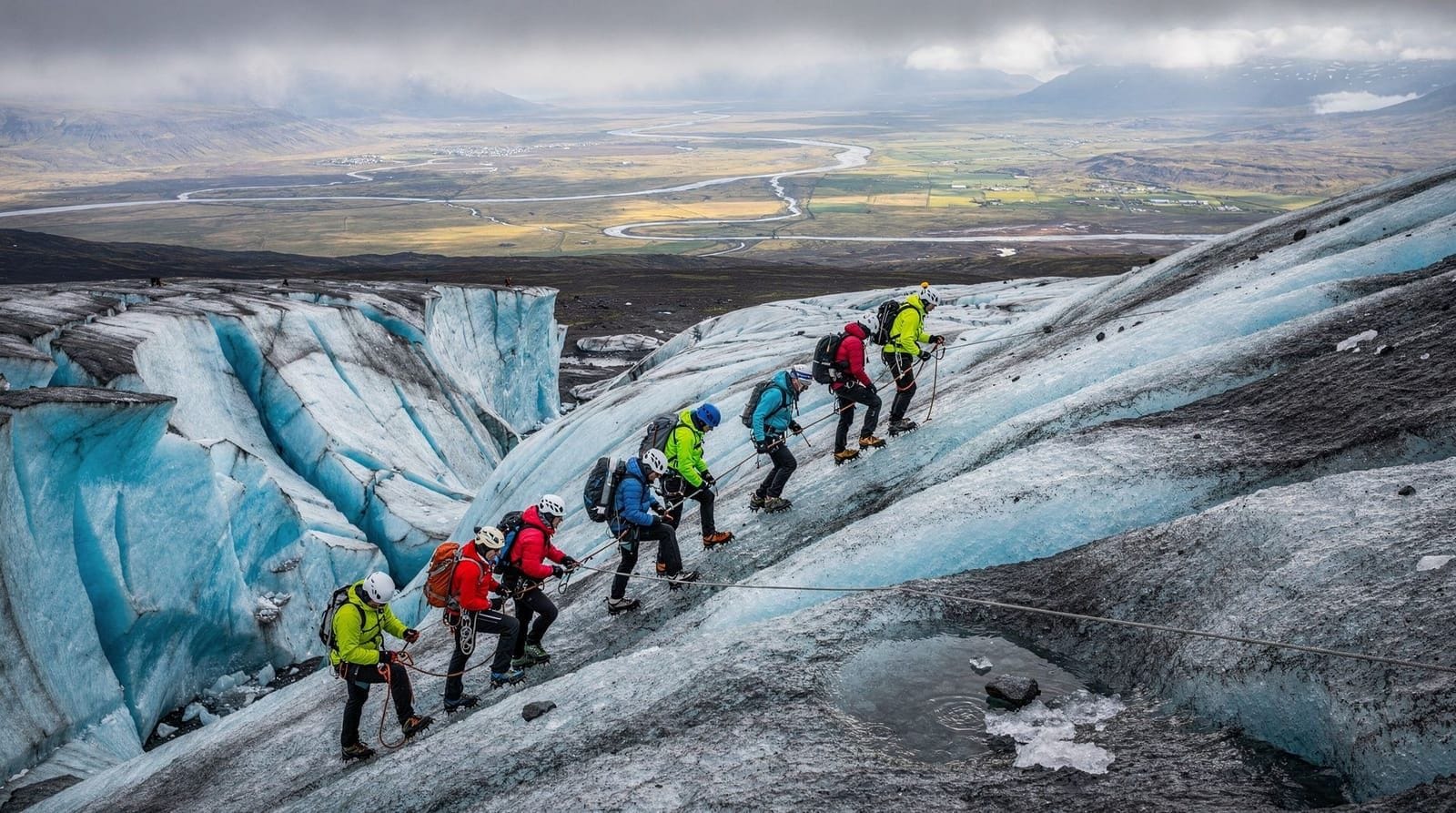
Sólheimajökull is 25 km west of Vík on Route 221 — a 25-minute drive. This glacier tongue of Mýrdalsjökull is the most accessible glacier in South Iceland for guided hikes.
Sólheimajökull glacier hike — guided 3-hour walk, crampons and helmet provided, small group, available year-roundMorning hike: depart Vík 08:30, arrive glacier 09:00, join 09:30 or 10:00 tour. Three-hour guided hike on the ice — crevasse edges, blue ice walls, ash-darkened glacier surface. Return to glacier car park by 13:00.
The standard hike covers the accessible glacier margin. More advanced 5–6 hour tours go deeper onto the ice but require more fitness. The standard 3-hour option is appropriate for most visitors.
Afternoon: Return to Vík and drive east 35 km to Þakgil valley (Route 214 north of Route 1) — a hidden valley in the mountains above Vík with dramatic canyon scenery and almost no visitors. This is one of the most underrated places on the South Coast.
Sleep: Vík again, or Kirkjubæjarklaustur (70 km east, easier departure for Day 3).
Day 3: Vík to Höfn (270 km, 3h15 driving)
Depart: 08:30
Fjaðrárgljúfur canyon (09:15 — 45 minutes): Route F206 south of Route 1, 30 km east of Vík. A 100 m deep canyon cut by the Fjaðrá river over 9,000 years. The 2 km rim walk gives views into the gorge from above — one of the more unusual landscapes on the South Coast.
Kirkjubæjarklaustur (10:15 — 30 minutes): fuel, coffee, Systrafoss waterfall (10-minute walk, free), Kirkjugólf basalt floor (5-minute walk).
Skaftafell (11:30 — 2 hours): Vatnajökull National Park visitor centre, Svartifoss waterfall walk (3 km return), views of Skaftafellsjökull glacier tongue.
Jökulsárlón (14:00 — 1.5 hours): glacier lagoon with boat tour among floating icebergs.
Diamond Beach (15:30 — 45 minutes): clear ice on black sand beach.
Arrive Höfn: 17:30. Dinner at Pakkhús for langoustine.
Sleep: Fosshotel Vatnajökull (Route 1, from 30,000 ISK), Milk Factory guesthouse (Höfn town, from 20,000 ISK), or Hótel Edda Höfn.
Day 4: Höfn area exploration and Stokksnes
Depart Höfn: 09:30
A deliberate slower day — Höfn rewards an extra half-day.
Stokksnes peninsula (09:30 — 2 hours): 10 km east of Höfn. The Vestrahorn mountain backdrop over the black sand spit is one of Iceland’s most dramatic landscape photographs. Entry fee (Viking Café landowner): 1,000 ISK (€6.50). Walk the sand spit toward the mountain for the best angles. Often quieter in the morning.
Vatnajökull National Park is Europe’s largest national park at 14,141 km2. The park information centre in Höfn is good for context on the scale of the glacier and the ecology.
Afternoon drive: begin East Fjords section
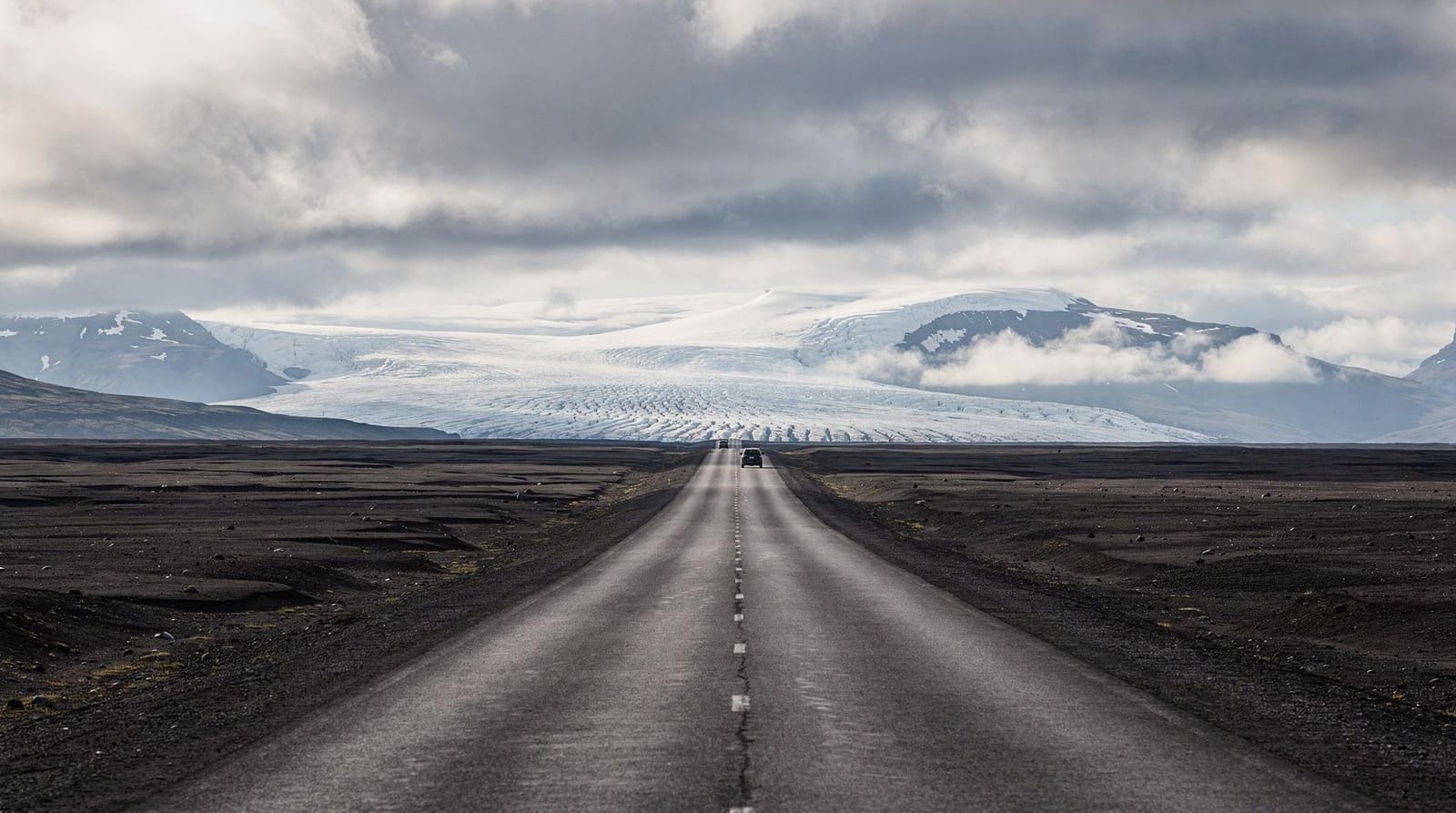
Drive Route 1 east from Höfn toward the East Fjords (Austurland). The road begins climbing almost immediately after Höfn, with views back over the coastal plain and glacier.
Sleep: Djúpivogur (85 km east of Höfn) at Hótel Framtíð — a small fjord town with a harbour and the Eggin í Gleðivík egg-sculpture installation. Or continue to Breiðdalsvík (another 50 km) for a longer Day 4 drive.
Day 5: East Fjords to Egilsstaðir + ice cave (if in season)
Depart Djúpivogur: 08:30
The East Fjords road is winding and slow. The 190 km to Egilsstaðir takes 3.5–4 hours with the fjord road. This is not a day for rushing.
Fjord road stops:
- Fáskrúðsfjörður: a fishing village with French historical connections (19th-century French fishing base). The small museum is worth 30 minutes.
- Reyðarfjörður: Iceland’s deepest fjord. A short detour to the fjord head gives views up the valley.
Seyðisfjörður (13:00 — 2 hours): 27 km east of Egilsstaðir over a mountain pass. The small fjord town has painted buildings in Norwegian style, an artist community, and Iceland’s most photogenic church (Bláa Kirkjan — a blue painted wooden church on the fjord). The ferry to Denmark/Faroe Islands departs from here. The Skaftfell Center for Visual Art is worth 30 minutes.
Ice cave in season (October–March): if visiting in winter, this is the logical day for a Vatnajökull ice cave — drive from Höfn/East Fjords past Jökulsárlón in the morning, join an afternoon ice cave tour, then continue east. The timing is tight but achievable.
Vatnajökull blue ice cave guided tour — small group, expert glacier guide, natural ice cave entry, October to March onlySleep: Egilsstaðir — Lake Hotel Egilsstaðir (Route 1, from 22,000 ISK) or Gistihúsið guesthouse.
Day 6: Egilsstaðir to Akureyri (270 km, 5h with stops)
Depart Egilsstaðir: 08:00
Dettifoss (09:30 — 1.5 hours): Europe’s most powerful waterfall by volume. Detour via Route 862 (paved west bank road). The 2 km walk to the falls is flat. 500 tonnes of water per second at peak flow. The falls are deliberately overwhelming.
Ásbyrgi canyon (11:30 — 1 hour): horseshoe-shaped canyon with vertical 100 m walls and birch forest floor. A 2 km easy walk into the canyon.
Lake Mývatn (13:00 — 2.5 hours): the most geothermally active accessible area in Iceland. Key stops:
- Námafjall (Hverir) geothermal field: boiling mud, sulphur vents, fumaroles — dramatic and smelly (sulphur = rotten egg)
- Hverfjall crater: 40-minute walk around the rim of a 1,000-year-old tephra ring
- Dimmuborgir lava formations: 45-minute walk through twisted lava pillars and arches
Mývatn Nature Baths (optional, 16:00): geothermal pool similar to the Blue Lagoon but calmer, cheaper (~6,200 ISK / €40), and with better views. 1 hour in the pool is enough.
Goðafoss (17:00 — 30 minutes): the “Waterfall of the Gods.” Wide horseshoe falls on the Skjálfandafljót river. The historical significance (Christianity adoption in 1000 AD) is explained on site.
Arrive Akureyri: 18:30.
Sleep: Hótel Kea (central, from 28,000 ISK) or Icelandair Hotel Akureyri (on the harbour, from 25,000 ISK).
Day 7: Húsavík whale watching + Akureyri
Base: Akureyri
Húsavík is 90 km east of Akureyri (1 hour 10 minutes). The town is Iceland’s whale watching capital — the Skjálfandi bay has a consistently high concentration of humpback whales.
Húsavík original whale watching — 3-hour tour on a traditional oak boat, marine biologist guide, carbon-neutral operation, high humpback whale success rateMorning: Depart Akureyri 09:00, arrive Húsavík 10:10. Take the 11:00 whale watching tour (3 hours, returns 14:00). Success rate for humpbacks in summer exceeds 90% on most operators.
Húsavík museum (Hafnarstett 1): the Húsavík Whale Museum is one of Iceland’s best natural history institutions — full whale skeletons, whale biology, the history of whaling in Iceland. Allow 1.5 hours.
Return to Akureyri: 16:30.
Akureyri afternoon and dinner: the city has the best restaurants outside Reykjavík. Rub23 for sushi and Arctic fish; Strikið for traditional Icelandic with harbour views; Greifinn for budget pizza.
Day 8: Akureyri to Blönduós — driving day (235 km, 3h)
Depart Akureyri: 09:00
The drive west from Akureyri on Route 1 moves through a less-visited section of Iceland that rewards slower travel.
Glaumbær folk museum (near Varmahlíð, 80 km west of Akureyri): one of Iceland’s best-preserved turf farm complexes with 19th-century interiors intact. Entry ~2,500 ISK (€16). Allow 1 hour.
Vatnsdalshólar hillocks (near Húnavatnsvegur junction): a field of hundreds of rounded hillocks formed by a massive prehistoric landslide from Vatnsdalsfjall mountain. Visible from Route 1; short walk from the roadside.
Hvammstangi seal colony (20 km northwest via Route 711): Iceland’s best seal-watching site at Illugastaðir, with grey and harbour seals hauling out on rocks. The Selasetur seal museum in Hvammstangi village covers biology and the history of sealing in Iceland. Allow 1.5 hours for the detour.
Arrive Blönduós or Sauðárkrókur: 15:00–16:00
Sleep: Hótel Blönduós (town centre, from 18,000 ISK) or Arness Guesthouse (Sauðárkrókur, traditional guesthouse, from 16,000 ISK).
Day 9: West Iceland — drive to Snæfellsnes Peninsula (220 km, 3h)
Depart Blönduós: 08:30
Drive south on Route 1, then west on Route 54 to Snæfellsnes.
Borgarnes (11:00 — 1 hour): the Settlement Centre (Landnámssetrið) in Borgarnes is Iceland’s best Saga museum — the exhibits on Egils Saga and the settlement period are excellent and presented without clichés. Entry ~2,000 ISK (€13).
Snæfellsnes Peninsula (13:00 onwards): the “Iceland in miniature.” The 90 km peninsula has lava fields, sea cliffs, fishing villages, and the Snæfellsjökull glacier-capped volcano at the western tip (the entrance to Jules Verne’s Journey to the Centre of the Earth).
Key stops on Snæfellsnes:
- Kirkjufell mountain (north coast, near Grundarfjörður): the most photographed mountain in Iceland — a sharp-pointed cone reflected in the Kirkjufellsfoss waterfall below. Best photographed in morning or evening light.
- Arnarstapi (south coast): fishing village at the base of Snæfellsjökull, with dramatic basalt arch formations on the shoreline
- Djúpalónssandur beach (southwest tip): a beach of polished black pebbles where stone-lifting tests of strength were traditionally used to evaluate the fitness of potential fishermen. The rusted anchor chains of a British trawler that wrecked here in 1948 remain on the beach.
Sleep on Snæfellsnes: Hótel Fransiskus (Hellnar, from 20,000 ISK — within walking distance of the Arnarstapi basalt formations); Snæfellsjökull glacier area guesthouses near Hellissandur, or Hotel Búðir (one of Iceland’s most romantic small hotels, from 35,000–50,000 ISK / €228–326 in summer).
Day 10: Return to Reykjavík via Snæfellsnes and Borgarfjörður (180 km, 2h30)
Depart Snæfellsnes: 09:00
Complete the western peninsula if not finished on Day 9 (Djúpalónssandur, Arnarstapi lava arch walk, Snæfellsjökull visitor centre).
Return via Route 54 east, then Route 1 south to Reykjavík.
Arrive Reykjavík: 13:00–14:00
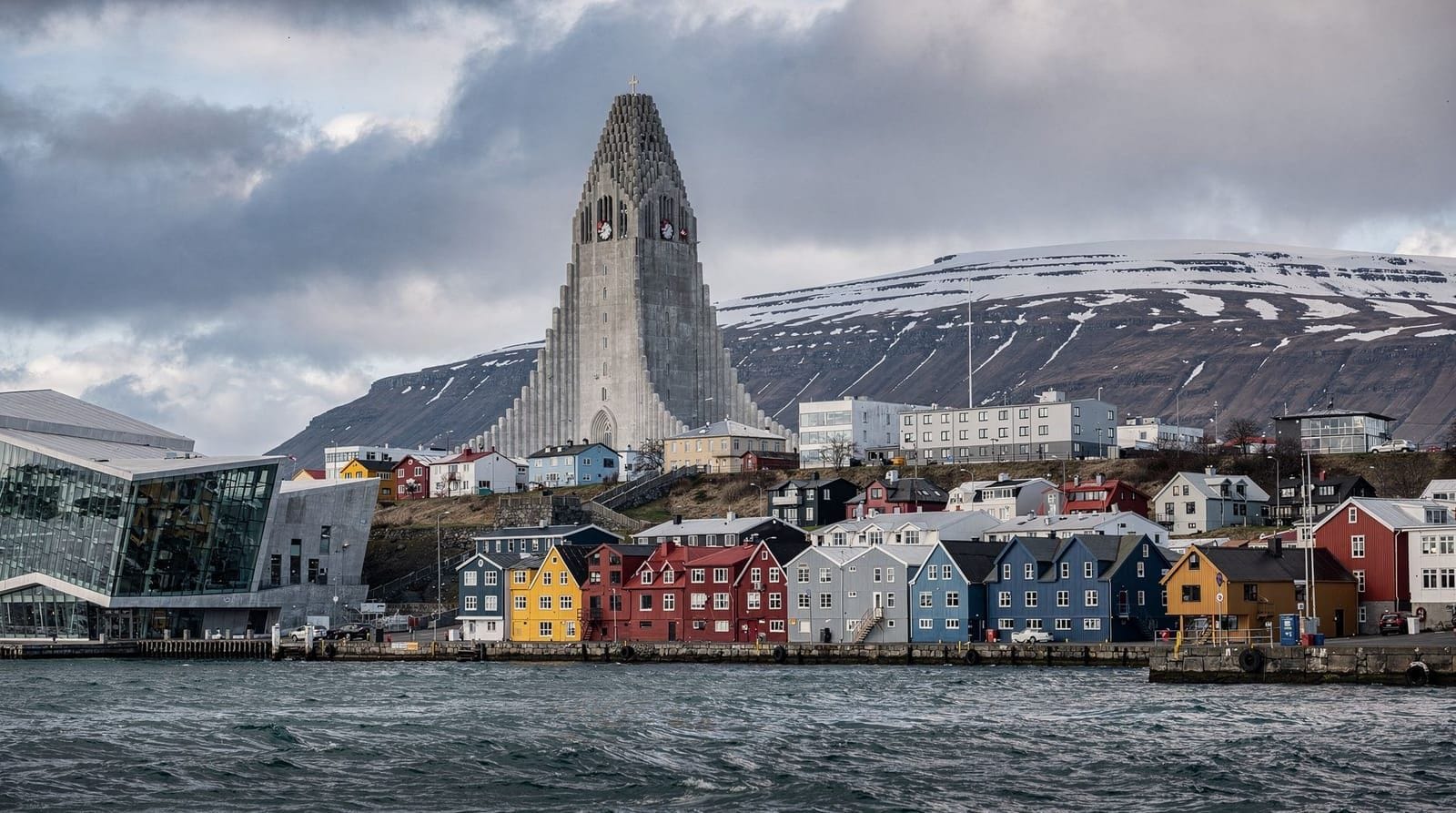
The afternoon is free for any Reykjavík items not covered on arrival day — Hallgrímskirkja tower, Perlan museum, Old Harbour district.
Optional: Blue Lagoon on departure (Day 10 afternoon or Day 11 morning): the Blue Lagoon between Reykjavík and Keflavík is a natural departure-day stop. Book 2+ weeks in advance. Comfort entry: 12,900–15,900 ISK (€84–104).
Accommodation cost summary
At mid-range pricing (18,000–28,000 ISK / €117–182 per night per room), 9 nights totals approximately 162,000–252,000 ISK (€1,054–1,638). Budget travellers using campsites and guesthouses can reduce this to 5,000–12,000 ISK (€33–78) per night.
Fuel budget
1,600–1,800 km total at 8 litres per 100 km = 128–144 litres. At 240 ISK per litre = 30,720–34,560 ISK (€200–225). Budget approximately 35,000 ISK (€228) for fuel.
7 vs 10 vs 14 days: which length actually fits you
The three Ring Road lengths are not just “more of the same” — each drops or adds specific regions, and the honest trade-off is time and money against depth.
| Length | Regions covered | Daily driving pace | Best for |
|---|---|---|---|
| 7 days | South Coast, Jökulsárlón, North Iceland highlights, Golden Circle — East Fjords skipped or rushed | Tight, some 300+ km days | First-timers on a short trip, tight budgets |
| 10 days (this itinerary) | Full circuit + East Fjords + Snæfellsnes, no Highlands or Westfjords | Comfortable, 160–270 km most days | Most complete first Ring Road without rushing |
| 14 days | Everything above plus Westfjords and/or Highland F-roads | Relaxed, room for weather delays | Repeat visitors, photographers, F-road drivers |
If you are choosing between 7 and 10 days, the extra three days buy you the entire East Fjords (genuinely one of the least-visited, most rewarding stretches of the country) plus a properly paced Snæfellsnes rather than a rushed half-day. If you are choosing between 10 and 14, the extra four days buy the Westfjords or a Highlands detour — regions this itinerary deliberately leaves out because they need dedicated time, not a bolt-on day.
Car, fuel and packing for 10 days on the road
A 2WD compact or mid-size car is adequate for this route in summer, since every stop above sits on paved Route 1 or a short, well-maintained gravel spur. From October through April, book a 4x4 — winter storms close sections of the East Fjords road and the mountain pass to Seyðisfjörður with little notice, and a 4x4 with good tyres is the difference between waiting it out safely and being stuck. See the 2WD vs 4x4 guide for the full reasoning, and the car rental insurance guide before you book — gravel and sand-ash excess (SAAP) matters specifically on this route because of Reynisfjara’s black sand and the F206 spur to Fjaðrárgljúfur.
Fuel stations thin out east of Höfn and again between Akureyri and Blönduós — fill up whenever you pass a station below half a tank rather than waiting for empty, and carry cash or a chip-enabled card as some rural pumps are card-only with occasional outages. Pack layered clothing regardless of month (waterproofs are non-negotiable for Seljalandsfoss and Skógafoss), sturdy waterproof boots for the glacier hike and canyon walks, and a swimsuit for the Mývatn Nature Baths stop on Day 6. See the what to pack guide for a full seasonal list.
If the weather changes your plan
Icelandic weather can rewrite a day with little warning, and the honest approach is to build in flexibility rather than fight it. If Reynisfjara or Dyrhólaey are closed for high surf or wind (checked via the safetravel.is warnings), skip ahead to Vík and return the following morning if the schedule allows — do not attempt the beach in a storm. If the Vatnajökull ice cave tour on Day 5 is cancelled for unsafe ice conditions (this happens even in winter), operators normally offer a rebooking or refund; build one buffer day into a 10-day trip if ice caving is a priority, or accept the Katla ice cave as a year-round backup since it does not depend on winter-only natural formations. If the Seyðisfjörður mountain pass closes in early or late-season snow, the East Fjords fjord road itself remains passable at lower elevation — you simply skip the detour rather than the region.
Frequently asked questions about this 10-day Iceland itinerary
Is 10 days enough to do Iceland properly?
Ten days is enough to see all the major regions (South Coast, East Fjords, North Iceland, Snæfellsnes) plus the key activities (glacier hike, whale watching, ice cave in season). It does not include the Westfjords or the Highland interior — both require additional days. See the 14-day Ring Road itinerary if you want to include those regions.
Can I book accommodation on the road for a 10-day trip?
Technically yes, but not recommended in summer (June–August). The Ring Road has finite accommodation capacity at popular stops like Vík, Höfn, and Egilsstaðir. Book the first and last nights in Reykjavík well in advance, and all other nights at least 4–6 weeks ahead in summer.
What is the best month for a 10-day Ring Road?
June and July for the midnight sun, maximum daylight, and most routes accessible. August for slightly fewer crowds (still busy). September for autumn colours, northern lights beginning, and fewer tourists. October–March for ice caves, northern lights, and winter landscape — but roads require more caution and some mountain routes close. See the best time to visit Iceland guide for detailed seasonal breakdown.
Is the East Fjords road slow?
Yes. Allow 4 hours for the 270 km Höfn to Egilsstaðir section. The fjord road winds around each inlet, and the driving requires concentration. It is not a section where you can maintain 90 km/h. The reward is the quality of the landscape — the East Fjords are the least photographed and most beautiful region of the Ring Road.
Can children do this 10-day itinerary?
Yes, with adjustments. The glacier hike has minimum age requirements (usually 8–10 years, varies by operator). Whale watching is suitable for all ages. The driving distances are moderate. The main challenge for families is the concentration of driving days — consider adding an extra day to the East Fjords section to reduce daily distances. See the Iceland with kids guide for family-specific advice.
Do I need a 4x4 for this route?
Not in summer. A 2WD car handles every stop on this 10-day route since it stays on Route 1 and short paved or well-graded spurs. From October to April, book a 4x4 — the East Fjords road and the Seyðisfjörður mountain pass can see sudden snow, and 4x4 with winter tyres gives real safety margin. See the 2WD vs 4x4 guide for a month-by-month breakdown.
Should I drive this route clockwise or counterclockwise?
This itinerary goes clockwise (South Coast first), which front-loads the most famous — and most crowded in peak summer — sights early in the trip while you are fresh, then rewards you with the quieter East Fjords and Snæfellsnes on the way back. Counterclockwise works just as well logistically; the main practical driver is where fixed-departure activities (glacier hike, ice cave, whale watching) have availability on your dates. See the clockwise or counterclockwise guide for the full comparison.
Top experiences
Bookable activities with verified prices and instant confirmation on GetYourGuide.