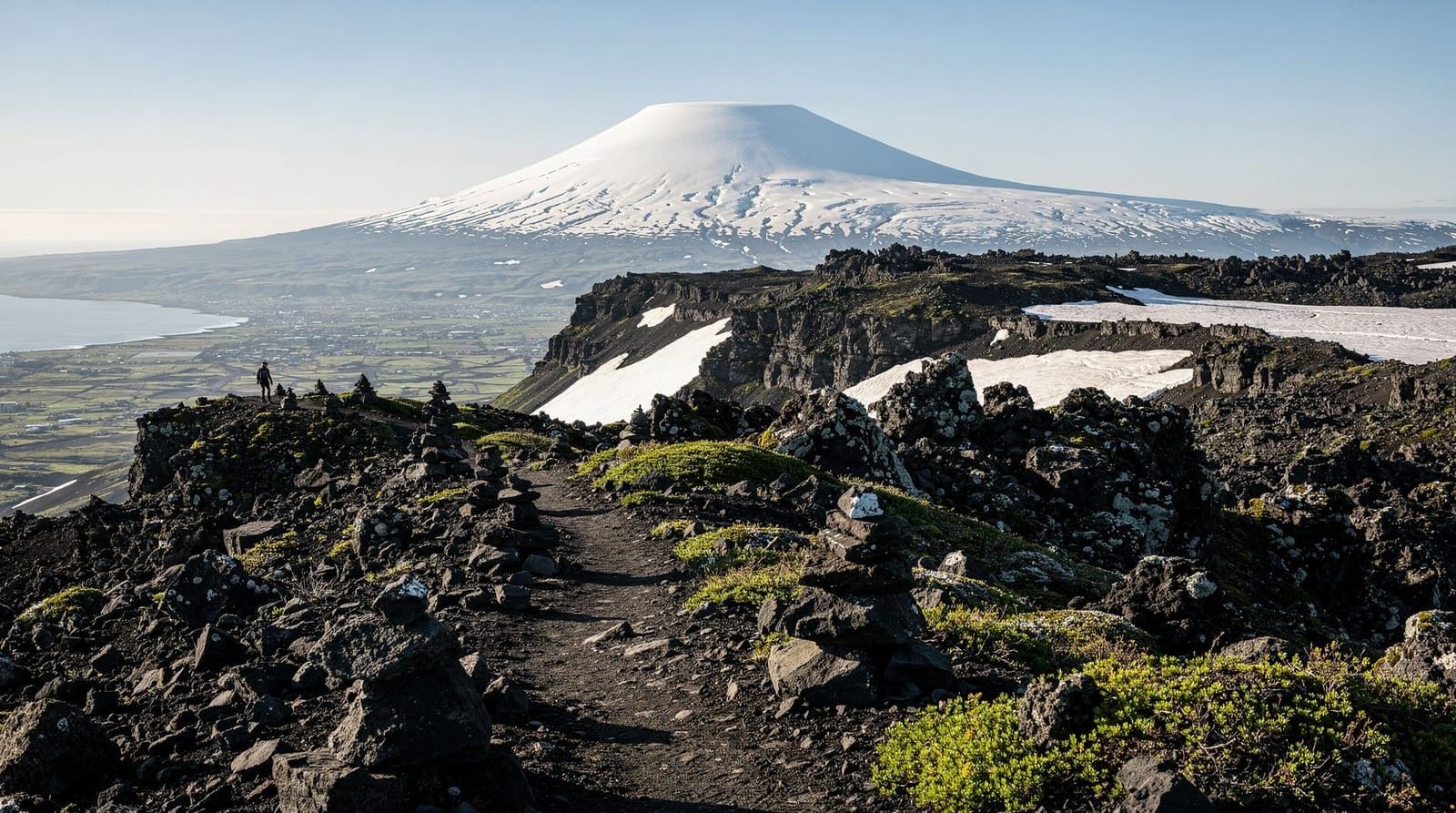
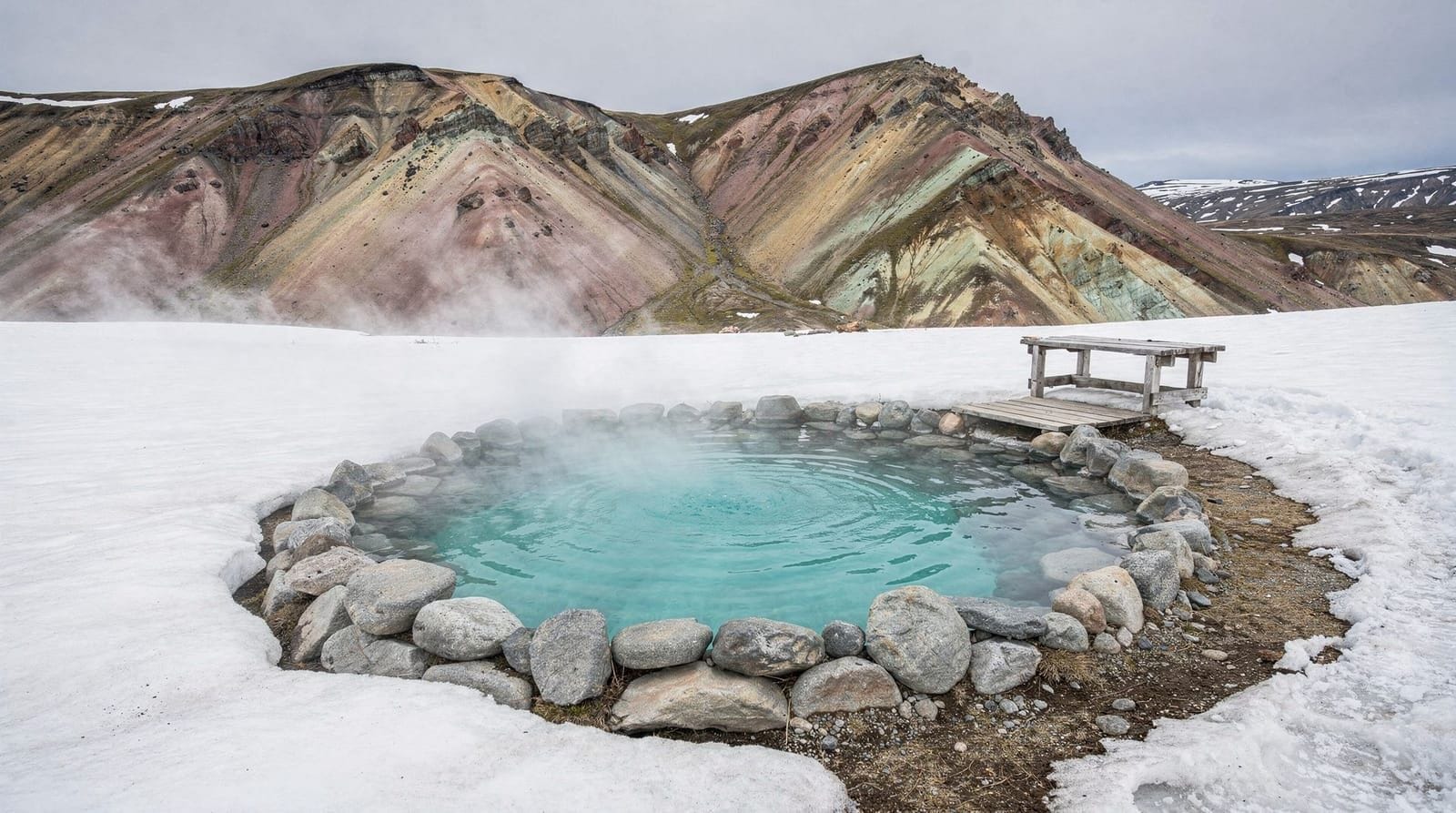
Egilsstaðir and Seyðisfjörður
Egilsstaðir is east Iceland's hub; Seyðisfjörður is its most striking village. Together they anchor Stuðlagil canyon, Vök Baths, and the Smyril Line ferry.
Seyðisfjörður: From Seydisfjordur studlagil canyon shore excursion
Quick facts
- Best time
- June–September for Stuðlagil blue water; July for puffins on Seyðisfjörður headlands
- Days needed
- 1–2 days for the area including Stuðlagil, Seyðisfjörður, and Vök Baths
- Getting there
- 5 hours from Reykjavík on Rte 1 (440 km); or fly (1 hour from Reykjavík domestic airport)
- Budget per day
- 13,000–20,000 ISK / €88–€135; Vök Baths 4,500–6,000 ISK / €30–€41
Egilsstaðir is a practical town rather than a scenic one — Iceland’s eastern hub for services, the domestic airport, and the access point for everything interesting nearby. Seyðisfjörður, 27 km away over a mountain pass, is almost its opposite: a narrow fjord village with 19th-century painted houses, a Smyril Line ferry connection to Europe, and an arts culture that punches well above its population of 700.
The two towns together make for the most productive base in east Iceland. The area’s three main visitor draws — Stuðlagil canyon, Seyðisfjörður village, and Vök Baths thermal pools — are all reachable within a 45-minute drive of Egilsstaðir.
| Where | Egilsstaðir hub, Seyðisfjörður 27km over Route 93 pass |
| Cost | around 13,000–20,000 ISK/day; Vök Baths 4,500–6,000 ISK entry |
| Time needed | 1–2 days for Stuðlagil, Seyðisfjörður and Vök Baths |
| Getting there | 5hrs from Reykjavík on Rte 1, 1hr domestic flight, or Smyril Line ferry |
| Best time | June–September for Stuðlagil’s blue water and clear passes |
Egilsstaðir: the service town
The town was established in 1947 and lacks the historical character of older Icelandic settlements. Its practical value is real: a Nettó supermarket, several cafés, a Bonus discount store, petrol, accommodation ranging from guesthouses to a hotel, and the east’s only domestic airport.
Lagarfljót lake runs along the town’s western edge — a long, shallow, glacially silted lake known in Icelandic legend as the home of the Lagarfljótsormurinn (the Lagarfljót Worm, Iceland’s lake monster equivalent of Nessie). The legend dates to the 14th century. No verified sightings have occurred. The lake is a pleasant walk regardless.
Seyðisfjörður: the fjord village
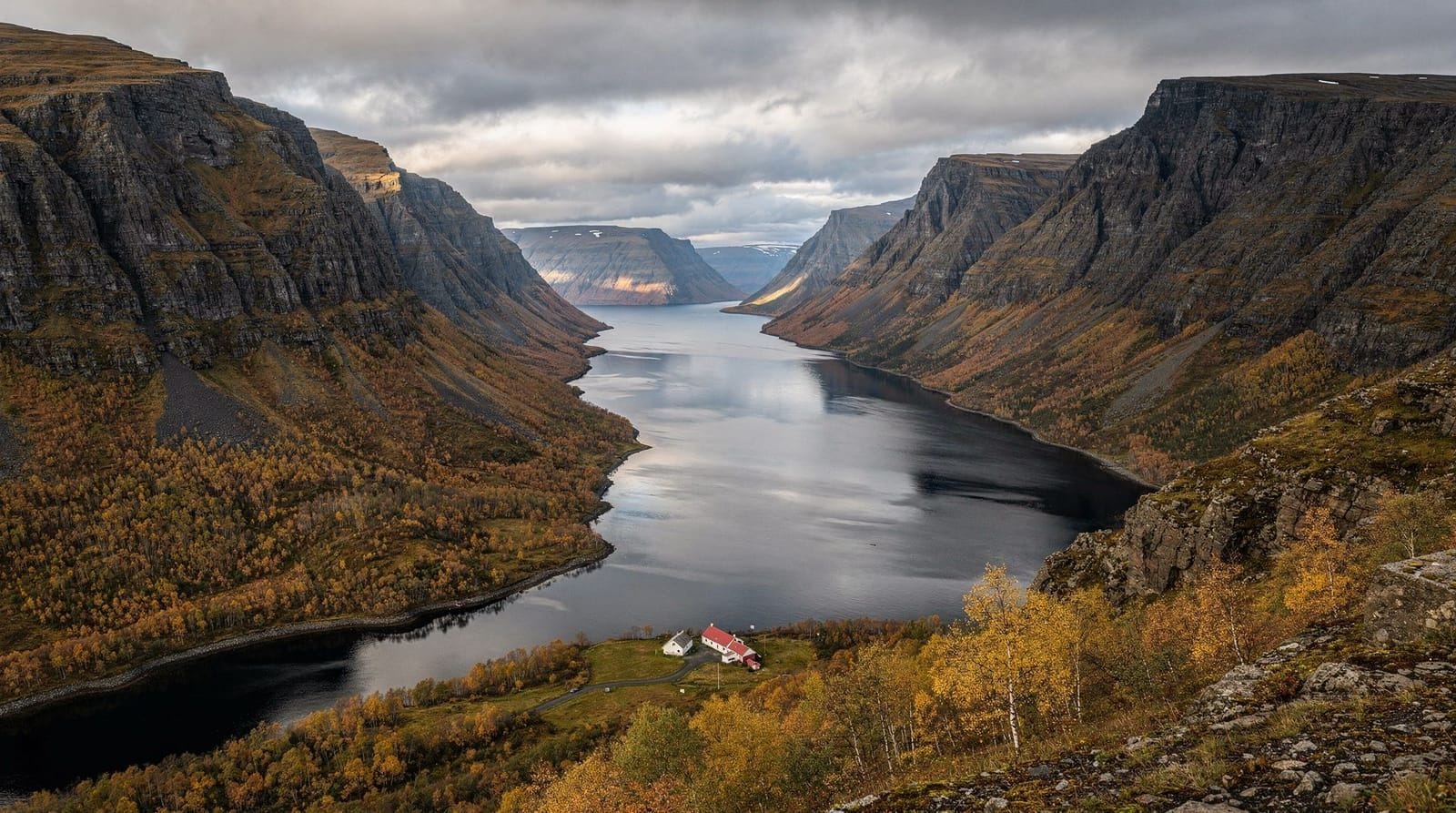
The drive from Egilsstaðir to Seyðisfjörður follows Route 93 up a switchback mountain pass and descends through waterfalls on the north slope of Seyðisfjörður valley. On a clear day, the fjord appears below as you come over the pass — one of the better arrival views in east Iceland.
The town’s painted wooden buildings date to the late 19th and early 20th century, when Seyðisfjörður was the site of Iceland’s first telegraph cable landing and first telephone exchange. The infrastructure of an industrial revolution-era prosperous fishing port is preserved unusually intact.
Bláa Kirkjan (Blue Church): the town’s most photographed building, a blue timber church from 1894 at the harbour end of the rainbow road (Regnbogavegur). The rainbow installation — six coloured lines painted on the road leading from the harbour to the church — has become a widely shared image. The church is simple inside; the exterior and surroundings are the draw.
Skaftfell — Center for Visual Art: an arts centre occupying a 1907 house at the head of the rainbow road. It runs exhibition programmes and a good café-bar (Skaftfell Bistro) — the best coffee in town and a reliable lunch option. The arts centre is one reason Seyðisfjörður has attracted a community of artists, particularly during the Lunga festival in August.
The ferry terminal: the Smyril Line Norröna arrives weekly (sometimes twice weekly in peak season) from Hirtshals, Denmark, via the Faroe Islands. The arrival and departure days create a pulse in the village — accommodation fills on ferry days, empty on other days. If you are arriving by ferry, you will first see Iceland from the Seyðisfjörður fjord approaching by sea, which is a more atmospheric introduction to the country than Keflavík airport.
Stuðlagil canyon shore excursion from Seyðisfjörður — guided, efficientStuðlagil canyon
Stuðlagil became internationally known around 2018 when photographs of its hexagonal basalt columns and turquoise water circulated widely. The canyon is in the Jökla river valley about 40 km south of Egilsstaðir via Route 923. Two viewing options exist:
East bank (accessible by 2WD): a 40-minute walk from the Klaustursel farm car park (signed off Rte 923) takes you to a viewpoint looking down into the canyon. You see the basalt columns and the river from above. The turquoise water is visible. The canyon is dramatic but the view is partially obstructed.
West bank (4WD required): the west bank viewpoint requires either fording the Jökla river (only possible in a 4WD or modified vehicle when water levels are low — typically mid-June to late July) or joining a guided tour that handles the ford. The west bank gives the canonical view: you are level with the canyon floor, the basalt columns rise on both sides, and the river fills the foreground. This is the view in most photographs.
If you do not have a 4WD: the guided tours from Seyðisfjörður handle the logistics and take you to the west bank viewpoint. The east bank walk is worthwhile as a fallback but is not the same visual experience.
Stuðlagil canyon and Vök Baths day tour — combines the canyon with thermal poolsWater levels in the canyon are lower when the upstream Kárahnjúkavirkjun dam releases less water — this is managed by the power company (Landsvirkjun) and varies. The most reliable low-water period for the deepest blue-green colour and accessible west bank is typically mid-June through July. Check recent reports on Icelandic hiking forums before the visit.
Vök Baths
East Iceland’s premium geothermal experience, opened in 2019. Vök Baths (pronounced “voke”) floats on Lake Urriðavatn — the hot pools are literally built on a pontoon extending into the lake, creating a visual effect of warm water against cool lake surface. The lake setting surrounded by birch forest is more natural than either the Blue Lagoon or Sky Lagoon.
Entry: approximately 4,500–6,500 ISK (€30–€44) per adult depending on package. Lockers, towels, and robes available for rent. The facility is smaller and less international than the main Reykjavík-area spas, which most visitors consider an advantage. Book online in advance in peak summer.
Vök Baths is about 14 km east of Egilsstaðir on Route 92. There is also a Vök Baths “Fast Lane” booking option if you plan to arrive directly from Seyðisfjörður or the ferry.
Puffins at Seyðisfjörður
A tour running from Seyðisfjörður harbour to the outer fjord headlands passes the Gufufoss waterfall and the puffin nesting area on the outer islands. This is a 1.5–2 hour boat trip combining wildlife and the fjord scenery from the water — a different perspective on the valley you drove down.
Puffin and Gufufoss waterfall boat tour from Seyðisfjörður harbourPractical notes
Egilsstaðir accommodation: guesthouses cluster around the town centre; Hótel Hérað is the main hotel (around 25,000–35,000 ISK for a double in summer). Camping at the Egilsstaðir campsite on the Lagarfljót lakeshore (around 2,200 ISK per person per night).
Seyðisfjörður accommodation: Hótel Aldan occupies two 19th-century buildings (one is the old telegraph station). Doubles from around 25,000 ISK in summer. Several smaller guesthouses available. Book in advance on ferry arrival/departure days.
Pass closure: Route 93 to Seyðisfjörður crosses a mountain pass at about 600 metres. It closes frequently in winter and can be shut for hours even in spring due to snowfall. Check vegagerdin.is before driving.
Restaurants: Aldan restaurant in Seyðisfjörður serves better food than most east Iceland restaurants (lamb, fish, local ingredients). Skaftfell Bistro is the place for lunch and coffee. Egilsstaðir has multiple options including a Viking-themed restaurant (overpriced, skip it) and a small Thai restaurant that has been consistently better value than the local competition.
Fuel and connectivity: Egilsstaðir has the area’s main petrol stations and is the last reliable fuel stop before the long Eastfjords drive south toward Höfn. Mobile signal is generally good in both towns but drops out over the Route 93 pass and in some of the more remote Eastfjords stretches — download offline maps before setting off if you plan to explore beyond the two main towns.
Stuðlagil: visiting independently vs on a tour
The 2WD east bank option in detail
The Klaustursel farm car park is reached by driving Route 923 south from Egilsstaðir (about 30 km), then a signed gravel track to the farm. From the car park, a 40-minute walk along the canyon rim leads to an elevated viewpoint looking down into the canyon. The turquoise water and basalt columns are visible but from above — you are looking down into the gorge rather than standing level with the columns. The path is mostly flat with one steep section. The view is genuinely impressive but is a different experience from the west bank.
The 4WD west bank ford
The river ford to the west bank is across the Jökla river. Water levels vary significantly: the Kárahnjúkavirkjun hydropower dam upstream manages the flow, and water release schedules change the ford depth considerably. At optimal levels (typically mid-June to mid-July), the ford is 0.4–0.6 metres deep — passable for a modified or genuine 4WD. At higher release levels, the ford depth can exceed 1 metre and becomes unsafe. Guided tours monitor the conditions and will not ford at unsafe levels; independent 4WD drivers should assess from the bank before crossing.
The west bank viewpoint puts you at canyon-floor level. The basalt columns rise on both sides, the turquoise river occupies the foreground, and the canyon walls provide natural framing. This is the view in most Stuðlagil photographs.
Choosing between east and west bank
If you have a 2WD rental: take the east bank walk and accept the view from above. It is genuinely worthwhile, not a consolation prize. Alternatively, take a guided tour.
If you have a 4WD and are comfortable with Icelandic river fords: self-drive to the west bank is feasible in the correct season window. Research current water levels on Icelandic travel forums or ask at the Egilsstaðir information centre before attempting.
If you are arriving on the Smyril Line ferry and have a half-day: the guided tour from Seyðisfjörður is the obvious choice — it handles logistics and guarantees the west bank viewpoint.
Seyðisfjörður in more detail
The arts community
Seyðisfjörður’s arts scene has made the village disproportionately well-known within Iceland’s creative community. The LungA School summer arts programme runs for two weeks in early August, bringing 200+ arts students and practitioners to a village of 700 people — a ratio that concentrates creative energy unusually. During the festival, the town’s cafés and streets take on a character unlike standard Icelandic tourism. The Skaftfell Centre for Visual Art is the permanent infrastructure behind this: it runs exhibitions, a residency programme, and the Skaftfell Bistro café.
Walking in Seyðisfjörður valley
The valley above the town has a series of waterfalls descending from the mountain pass road — Gufufoss being the most impressive, visible from Route 93. A trail from the town centre leads up the valley floor toward the falls (about 2 km, easy walking). The scale of the valley walls and the volume of the waterfalls in spring snowmelt are more impressive than most visitors expect from the village setting.
The outer fjord headlands are accessible on foot from the harbour — a 2–3 km walk to the southern headland gives views back toward the Blue Church and the fjord mouth.
The rainbow road and Blue Church
The Regnbogavegur (rainbow road) is a 200-metre painted road section from the harbour toward the Blue Church. Each time the road is repainted, the colours are renewed in the original sequence. In good light (morning or evening), the coloured lines against the 19th-century wooden houses create a photograph that has become one of east Iceland’s most shared images. The church interior is simple and open during visiting hours — worth 5 minutes inside.
Vök Baths: practical visiting details
Vök Baths opened in 2019 and is consistently described as the best geothermal experience in east Iceland. The floating pool concept — hot pools on a pontoon extending into Lake Urriðavatn — is visually distinctive and feels genuinely natural in a way that the Blue Lagoon’s milky-silica blue does not.
Current prices (2025/26): Comfort entry (pool access, towel) approximately 4,500–5,500 ISK (€30–€37). Premium entry (includes robe, fast-lane access) 6,000–7,500 ISK (€41–€51). Children under 12: free with a paying adult.
What to expect: two hot pools (38°C and 42°C) on the lake pontoon. A cold pool. An indoor warm-water lounge. The lake surrounds the pools on three sides — you swim from the hot pool to the edge of the pontoon and look across the lake from water level. In still weather the lake reflection extends the view horizontally. In winter this experience is quite different from summer — cold air, hot water, birch trees in snow.
Timing: book online in advance for July and August. Weekday mornings are less crowded than weekend afternoons. The facility operates year-round.
Getting there: Route 92 east from Egilsstaðir, 14 km — about 12 minutes driving. Not accessible by public transport; rental car or taxi from Egilsstaðir.
Seasonal considerations
For Stuðlagil blue water
The canyon’s turquoise colour is most intense from mid-June through July, when snowmelt and glacial inputs combine with lower dam releases to create the right water conditions. By August the colour is still good but less vivid. September gives acceptable colour. Outside the June–July window, the west bank ford is more often unfordable due to higher water levels.
For Seyðisfjörður arts and culture
August is the month — the LungA festival fills the town and the Skaftfell programme is at its most active. Outside August, the arts community is still present but quieter.
For ferry arrivals
The Smyril Line schedule means Thursday arrivals create the village’s peak activity. If you are NOT arriving by ferry and want to see Seyðisfjörður at its most natural pace, any day except Thursday and the day before ferry departure is preferable.
Connecting onward: Höfn, Jökulsárlón and the wider east
Most visitors reach Egilsstaðir and Seyðisfjörður as part of a Ring Road loop rather than as a standalone stop, so it is worth planning the onward leg before you arrive. The ring-road-guide covers the full loop logistics; from Egilsstaðir, Höfn is about 230 km south along the Eastfjords coast, and Jökulsárlón glacier lagoon and Vatnajökull National Park sit a further hour or so beyond Höfn. Treat Egilsstaðir/Seyðisfjörður, the Eastfjords towns, and Höfn as one connected multi-day stretch rather than isolated overnight stops — the driving distances between them are long enough that splitting the days evenly matters more here than almost anywhere else on the Ring Road.
If hiking is a priority alongside Stuðlagil and Vök Baths, the best-day-hikes-iceland guide includes the Seyðisfjörður valley walk to Gufufoss among its recommendations, and the best-geothermal-pools guide places Vök Baths in context against the Blue Lagoon, Sky Lagoon and other regional pools.
Choosing where to base yourself
| Base | Best for | Trade-off |
|---|---|---|
| Egilsstaðir | Services, airport, Nettó supermarket, central location | Least scenic of the two towns |
| Seyðisfjörður | Arts scene, Blue Church, ferry arrivals, atmosphere | 27km detour over a pass that can close in poor weather |
| Both (1 night each) | Sees everything without rushing | Costs an extra night versus a single base |
Frequently asked questions about Egilsstaðir and Seyðisfjörður
How do I get to the best Stuðlagil viewpoint without a 4WD?
Take a guided tour from Seyðisfjörður — these use appropriate vehicles to ford the river and reach the west bank. Alternatively, the east bank walk from Klaustursel gives a reasonable view without 4WD, though it is not the canonical photograph location.
Is Seyðisfjörður worth the detour from Egilsstaðir?
Yes. It is 27 km each way — 30 minutes driving if the pass is clear — and the village’s character is genuinely different from anywhere else in east Iceland. The combination of the Blue Church, painted houses, Skaftfell café, and fjord setting rewards an afternoon easily.
What is Vök Baths like compared to the Blue Lagoon?
More intimate, less expensive, and more natural-feeling. The floating pool concept on a lake is visually distinctive. The Blue Lagoon has higher international marketing and more polished facilities; Vök Baths has better scenery and shorter queues. Both require advance booking in summer.
When does the Smyril Line ferry arrive at Seyðisfjörður?
The Norröna arrives in Seyðisfjörður typically on Thursdays (eastbound, from Denmark) and departs westbound on the same or next day. Schedule varies by season; check the Smyril Line website for current sailing dates. Arrival day in summer creates the town’s busiest conditions.
Are there reindeer near Egilsstaðir?
Yes. Reindeer populations graze on the uplands east and south of Egilsstaðir, particularly along the Route 923/934 valley roads leading to Stuðlagil. Sightings from the road are common from May through October. The reindeer park tour from Seyðisfjörður combines a canyon visit with a dedicated reindeer viewing stop.
How far is Egilsstaðir from Höfn and Jökulsárlón?
Höfn is about 230 km south of Egilsstaðir along the Eastfjords coast road — roughly 3.5–4 hours’ driving with stops. Jökulsárlón glacier lagoon is a further 75 km beyond Höfn. Most Ring Road itineraries treat this whole stretch as one long driving day or split it with an overnight in Höfn.
Should I base in Egilsstaðir or Seyðisfjörður?
If you only have one night, Seyðisfjörður gives the more memorable overnight — the fjord setting and arts atmosphere outweigh Egilsstaðir’s practicality. If you’re arriving or departing by ferry, Seyðisfjörður is the natural choice regardless. With two nights, one in each town lets you see both without rushing the mountain pass twice in a single day.
Top experiences
Bookable activities with verified prices and instant confirmation on GetYourGuide.
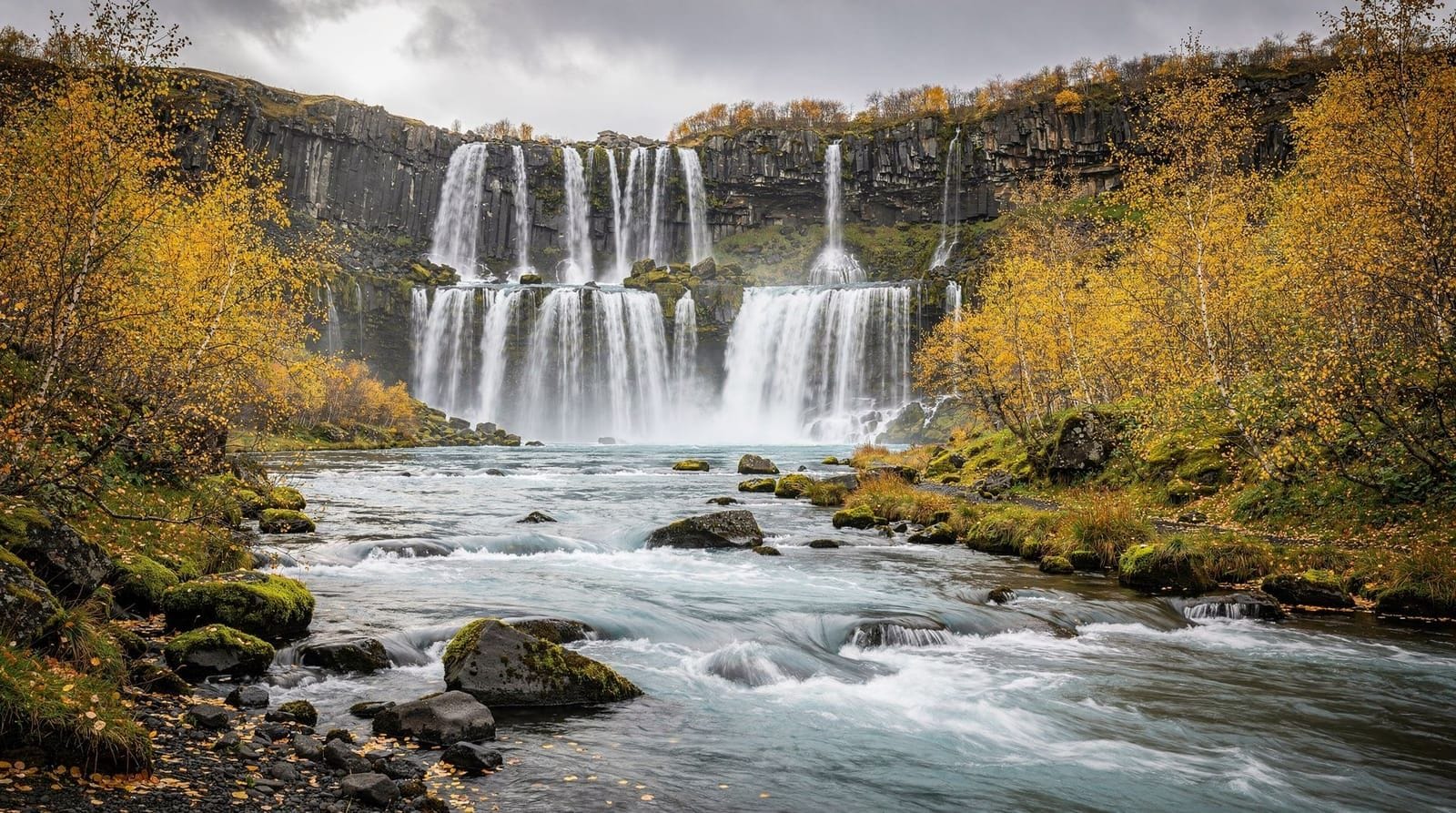
Seyðisfjörður: From Seydisfjordur studlagil canyon shore excursion
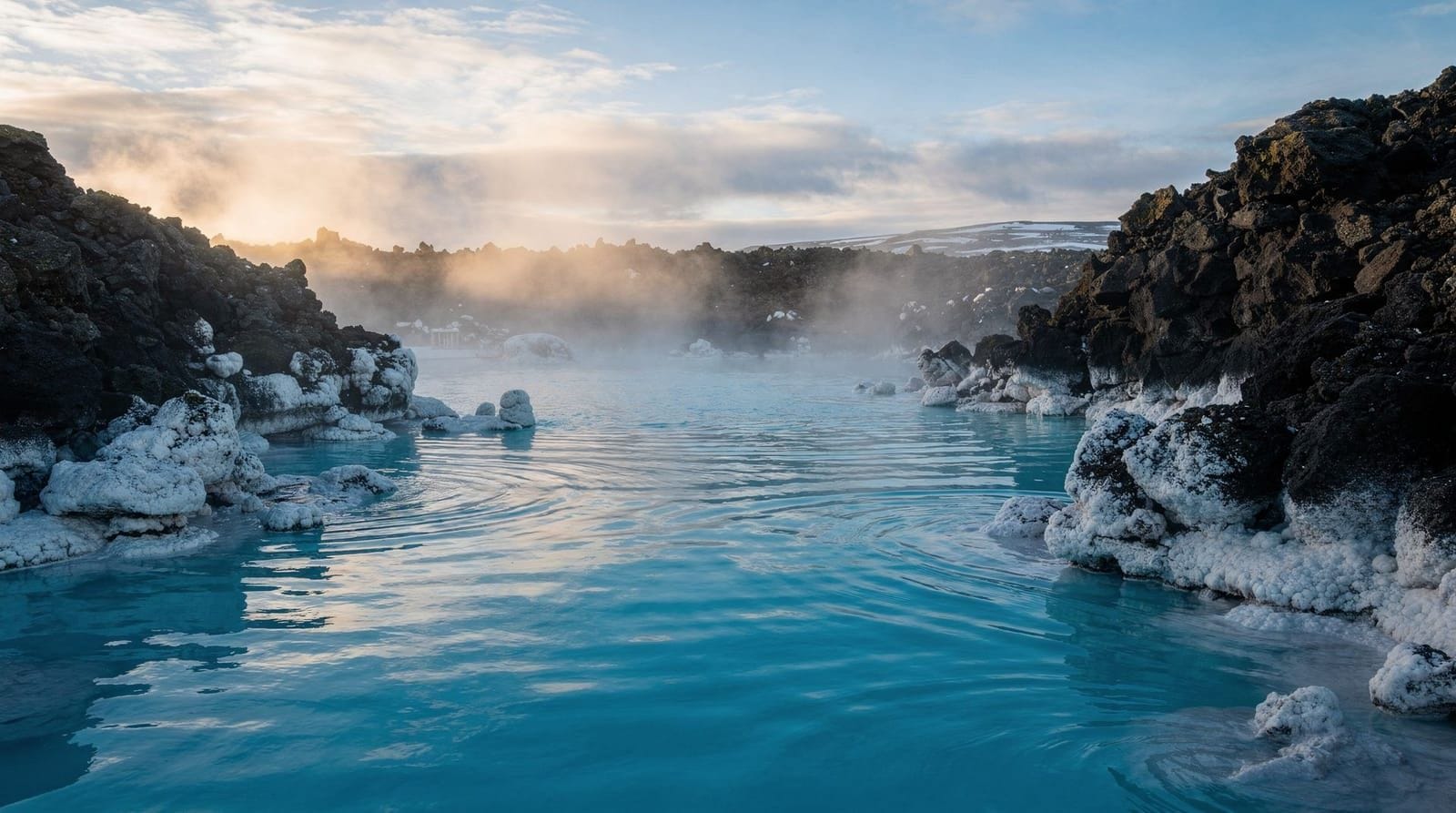
Seyðisfjörður: From Seydisfjordur studlagil canyon and vok baths day tour
Eastern Region Iceland: From Seydisfjordur studlagil canyon and reindeer park
Seyðisfjörður: Puffin and gufufoss waterfall tour Seydisfjordur port
Eastern Region Iceland: From Seydisfjordur studlagil canyon private tour
Top-rated experiences in Egilsstaðir and Seyðisfjörður
Best-rated activities across GetYourGuide and Viator.

Blue Ice Discovery – Guided Glacier Hike from Skaftafell
- Viator

Glacier Hike from Skaftafell - Extra Small Group
- Viator

Skaftafell Glacier Hike 3-Hour Small Group Tour
- Viator

Glacier Adventure From Skaftafell - Small Group Tour
- Viator

Ice Cave Tour in the National Park of Vatnajökull
- Viator

Ice Cave and Glacier Walk into Blue Glacier Canyon
- Viator