Höfn
Höfn is east Iceland's gateway: Iceland's best langoustine restaurants, Vatnajökull glacier filling the horizon, and Jökulsárlón glacier lagoon 80 km west.
Quick facts
- Best time
- Year-round; Jökulsárlón 80 km west is the main driver; June–August for langoustine season
- Days needed
- 1 day in Höfn; 1–2 more if combining with Jökulsárlón and glacier hikes
- Getting there
- 460 km from Reykjavík on Rte 1 (5.5–6 hours); 230 km from Egilsstaðir (3 hours)
- Budget per day
- 14,000–24,000 ISK / €95–€162; langoustine dinner 3,500–6,500 ISK / €24–€44
Höfn (pronounced roughly “hup” — the “f” and final “n” blend into something that confounds most visitors on first attempt) is a fishing town of about 2,200 people on a narrow peninsula in Hornafjörður lagoon, at the southern edge of east Iceland. It is best known for two things: the best langoustine restaurants in Iceland, and a view north across the lagoon to Vatnajökull glacier that, on a clear day, puts a permanent wall of white ice on the entire northern horizon.
For Ring Road drivers, Höfn sits at a natural break point — 460 km from Reykjavík and 230 km from Egilsstaðir, making it a reasonable overnight stop in both directions. It is also the closest large service town to Jökulsárlón glacier lagoon (80 km west) and the Vatnajökull National Park glacier hiking area at Skaftafell.
Langoustines: the honest assessment
Höfn’s Humarhátíð (lobster festival) runs for a week each year in late June or early July and is Iceland’s most food-specific local festival. The langoustines harvested from Hornafjörður are smaller than Norwegian or Scottish langoustines but consistently well-regarded for flavour. The local fishing boats land the catch directly into the harbour.
The most visited restaurant is Pakkhús (in the old warehouse building on the harbour). A main course of langoustine tails runs approximately 5,500–7,500 ISK (€37–€51) at Pakkhús in high season; the soup (humarsúpa) is about 2,500 ISK (€17). The quality is good and the setting is appropriate for a harbour restaurant. It fills every evening in July — reservations are essential.
Hafnarbúðin is a second option on the harbour with a similar menu at slightly lower prices. Otto Matur og Drykkur (on the main street) serves both langoustine and lamb dishes. All three are genuine restaurants rather than tourist traps; the langoustine is fresh and the cooking is straightforward.
A practical note: outside the June–August fishing season, langoustine availability drops. The restaurants stay open but the “fresh today” menus shorten. If langoustines are your primary reason to visit, June through August is the window.
The glacier view
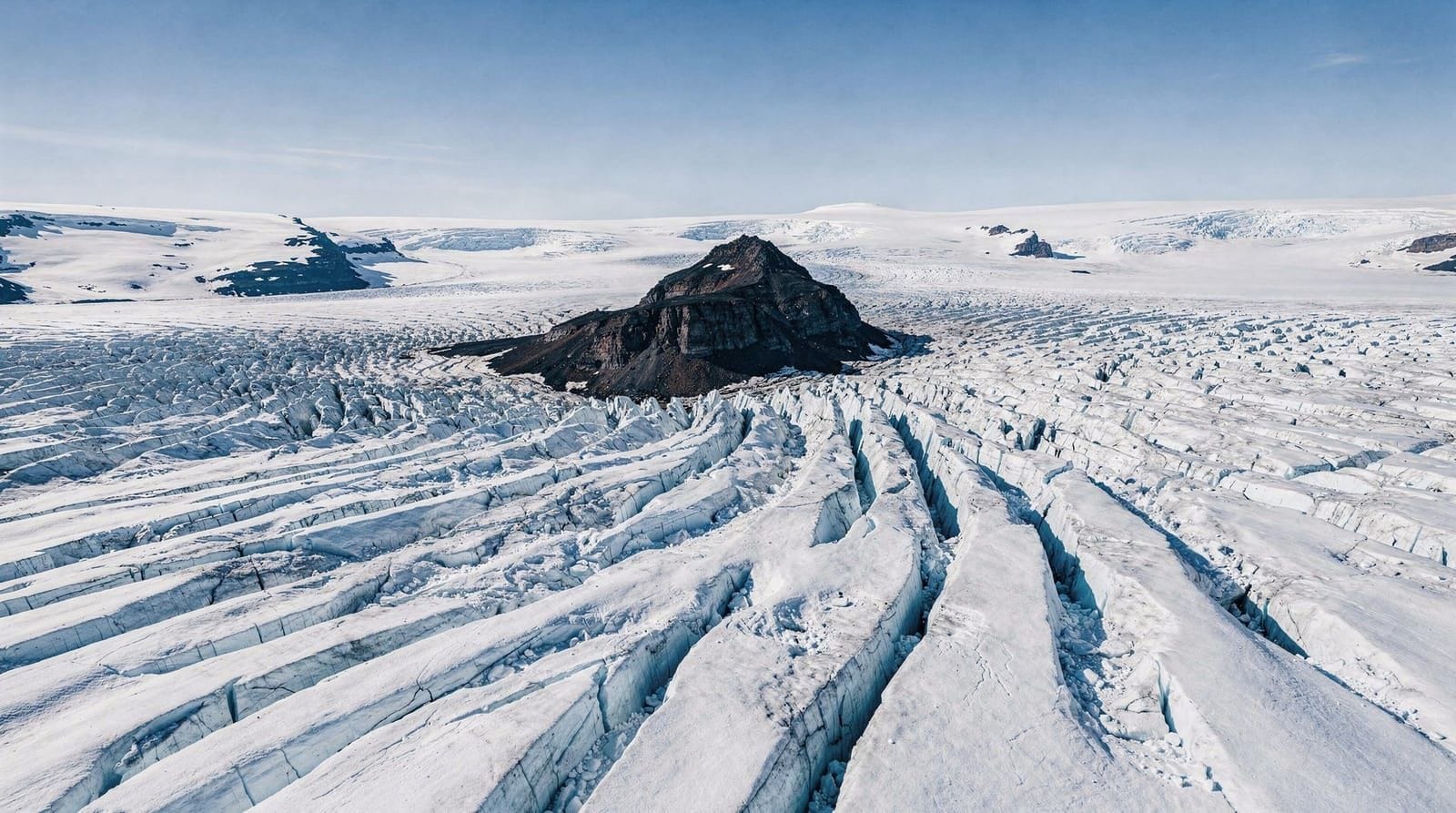
From Höfn’s harbour or the road north on Route 99 toward Ósland, Vatnajökull fills the northern horizon in a way that is difficult to convey in photographs. The glacier — Europe’s largest by volume, covering 8,100 km² — sits roughly 20–30 km north of the town but its scale is such that it appears as a continuous white massif across the entire north. On clear mornings, the glacier reflects the low sunlight before anything else in the landscape is lit.
Route 99 north from Höfn crosses a bridge over Hornafjörður lagoon (where seals haul out on sandbanks below) and continues toward the glacier margin. This road does not lead to any specific attraction but the drive offers uninterrupted glacier views for 20–30 km.
Practical base for Jökulsárlón and Vatnajökull
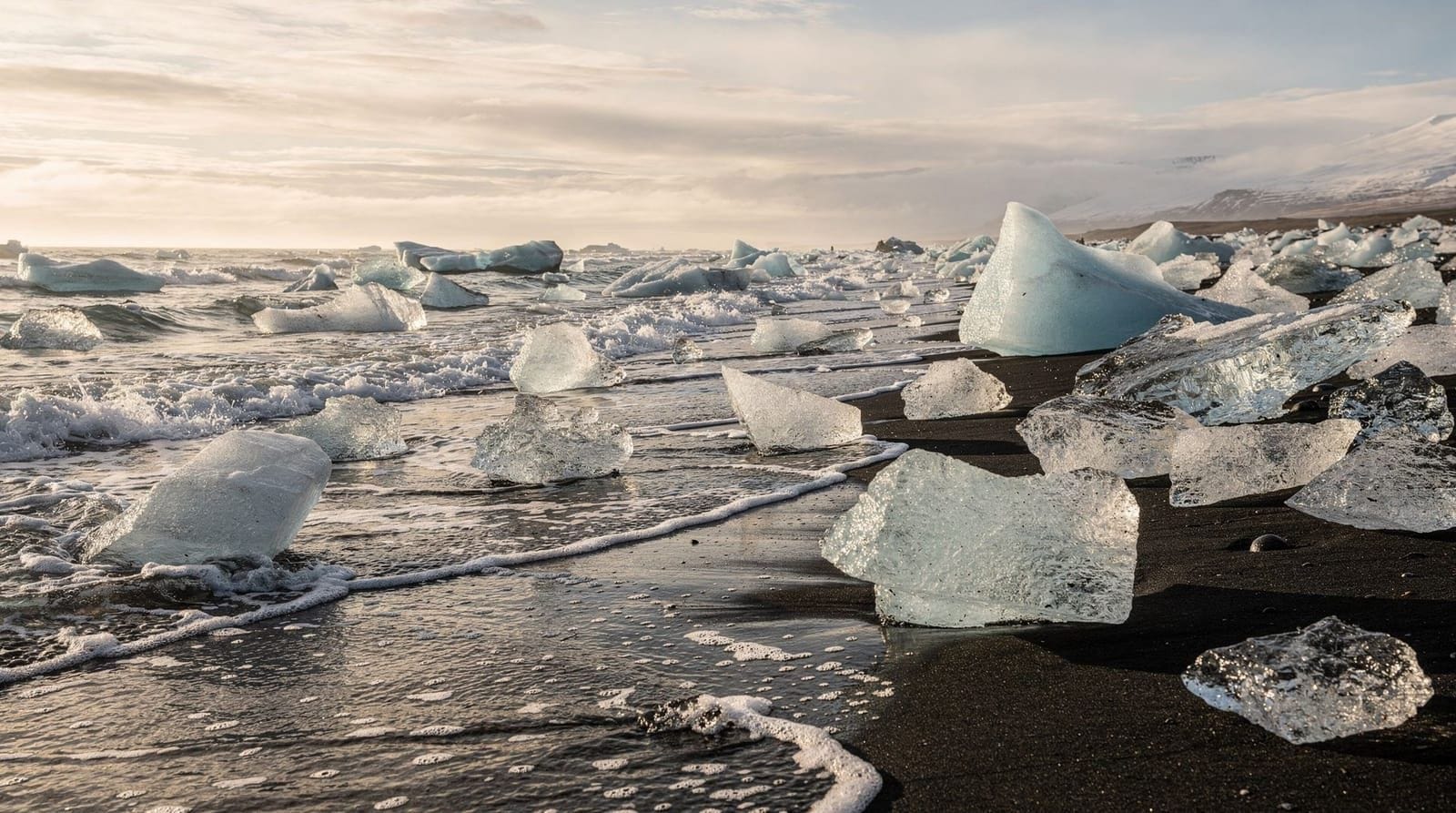
Jökulsárlón glacier lagoon is 80 km west of Höfn on the Ring Road — about 60 minutes driving. Diamond Beach is immediately across the road from the lagoon. Skaftafell (glacier hiking base in Vatnajökull National Park) is 150 km west (approximately 2 hours).
Staying in Höfn and doing Jökulsárlón and Diamond Beach as a day trip (or early morning run before the tour buses arrive at 10 a.m.) is a logical approach. The glacier lagoon is best seen before 9 a.m. or after 6 p.m. in July and August — during the day it is extremely crowded. From Höfn, a 6 a.m. departure reaches Jökulsárlón by 7 a.m. before any tour groups.
Stokksnes and Vestrahorn
About 15 km east of Höfn, Stokksnes headland has a farm (Höfn Hornafjörður) that charges a 1,000 ISK access fee for the road to Stokksnes beach — a black sand beach with the Vestrahorn mountain (with distinctive needle-like ridgelines) as a backdrop. This is one of Iceland’s better photography locations for dramatic mountain-meets-beach compositions.
The road to Stokksnes is gravel but accessible in 2WD. The fee includes a small café at the farm. Arrive before 10 a.m. or after 6 p.m. to avoid the photographer cluster that gathers at the beach in summer.
Eastfjords access
From Höfn, the Ring Road heads north along the coast and then climbs into the Eastfjords section — this section includes some of the Ring Road’s most consistently scenic driving, with the road clinging to narrow fjord edges and occasionally descending to sea level. The Öxi mountain pass shortcut (Route 939, gravel, steep, saves about 50 km vs Ring Road) is 4WD only and often closed in poor conditions. The Ring Road continues all the way to Egilsstaðir in 3 hours on paved road.
Accommodation
Höfn has a range of options for a town of its size. Fosshotel Vatnajökull at the north end of town is the main hotel (doubles around 28,000–38,000 ISK in summer). Several guesthouses cluster around the harbour area. The campsite (Nýibær) is near the harbour with hot showers and basic facilities (around 2,200 ISK per person per night).
Book accommodation in Höfn at least 2–3 months in advance for July. The town’s capacity is limited and it fills from every direction — Ring Road drivers, tour groups on Jökulsárlón day trips, and cruise passengers from ships anchoring off the coast.
Practicalities
Fuel: petrol at the N1 and Orkan stations in the town centre. The next southbound station of note is Kirkjubæjarklaustur, 130 km west (1.5 hours).
Supermarket: Samkaup-Strax supermarket (reasonable range, cheaper than the restaurants).
Hospital: the closest emergency medical facility with consistent capability is in Akureyri or Reykjavík for serious cases. Höfn has a health centre for non-emergency issues.
Mobile data: good coverage in the town; patches on the Ring Road east toward the Eastfjords.
Visiting Höfn across the seasons
| Season | Langoustine | Glacier view | Diamond Beach angle |
|---|---|---|---|
| Summer (Jun–Aug) | Peak season, Humarhátíð festival | Reliable clear-day views | Standard daytime ice |
| Autumn (Sep–Oct) | Restaurants stay open, fewer crowds | Unaffected, lower sun for reflections | Icebergs accumulated over summer — most photogenic |
| Winter (Nov–Mar) | Reduced availability | Flat cold winter light on the glacier | Peak ice accumulation, aurora potential |
Summer (June–August)
Peak season for langoustines and glacier views. The Humarhátíð festival in late June/early July is worth timing a visit around — the town fills with Icelanders and the outdoor eating and music create a character the town lacks on normal days. July is the busiest Ring Road month; accommodation in Höfn should be booked by April.
The Stokksnes/Vestrahorn combination is best in summer morning light (before 10 a.m.) or evening light (after 7 p.m.) when the shadows from the mountain ridges are long and directional.
Autumn (September–October)
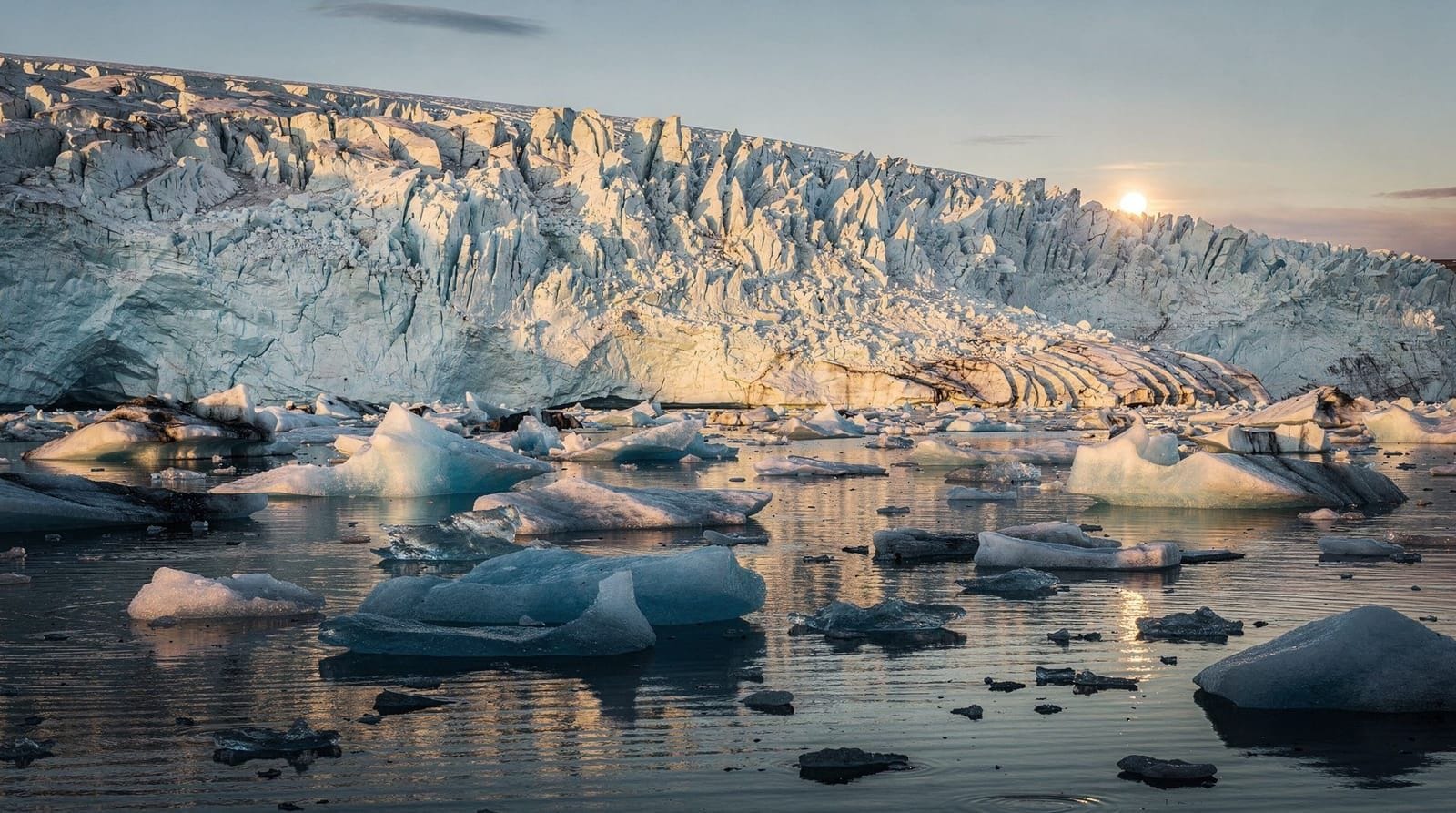
A genuinely excellent window. The glacier views are unaffected by season. The langoustine restaurants stay open into October. The Ring Road remains clear. Visitor numbers drop significantly after the first week of September. The Jökulsárlón glacier lagoon (80 km west) is at its most photographically interesting in autumn — icebergs accumulate over the summer, and the lower sun angle creates dramatic reflections on the calm autumn lagoon surface.
Winter (November–March)
Höfn stays operational year-round. The glacier north of town is most dramatically lit in winter — the low December sun barely clears the horizon and the glacier glows with a flat cold light that is completely different from summer. The Diamond Beach at Jökulsárlón has ice blocks that accumulate through winter; the February/March combination of blue ice on black sand and potential aurora overhead is one of Iceland’s most sought-after winter photography scenarios. Höfn is the natural base for this.
Winter driving: the Ring Road through east Iceland is kept open, but the Eastfjords pass sections can close temporarily. Check vegagerdin.is regularly.
Stokksnes and Vestrahorn in detail
The Vestrahorn massif (736 metres) rises from Stokksnes headland about 15 km east of Höfn. Its multiple needle-like ridgelines are the result of gabbro intrusions — the same igneous rock formation that creates dramatic angular peaks. The black sand beach at Stokksnes extends several kilometres along the base of the mountain.
Access fee: the farm at the Stokksnes road junction charges 1,000 ISK (€7) per vehicle for road access. The fee includes a small café at the farm (coffee and light snacks).
Best photography conditions: low-angle morning light from the east illuminates the ridgelines from the front. Evening light gives similar warm illumination from the west. At midday the ridgelines flatten in overhead light. Overcast conditions are actually usable here because the mountain’s texture survives soft light better than many Iceland subjects.
In summer: the midnight sun in June creates amber light at 11 p.m. that turns the mountain face gold. The beach reflection pools from tide runoff on the flat sand produce mirror images of the mountain. These conditions make June one of the best months for Vestrahorn photography.
In winter: snow on the ridgelines and potential aurora above the mountain make this one of Iceland’s premier winter photography locations. The access road is gravel and may have snow; check conditions. 4WD is useful in winter.
Practical note: the area immediately around the mountain base is protected. Do not drive vehicles onto the beach itself. The access road ends at a car park; the beach is a 5-minute walk.
The Vatnajökull glacier view from Höfn in detail
The view from Höfn northward toward Vatnajökull is one of Iceland’s most remarkable and least-advertised natural scenes. Standing at the harbour or on the Route 99 bridge over Hornafjörður, you see the following:
The lagoon spreads north, its surface at sea level. Behind and above it, the glacier rises to an almost continuous white horizon filling the northern sky from east to west — a 20-km visual span of ice at distances of 20–30 km. The glacier tongues (Heinabergsjökull, Skálafellsjökull, and others) descend toward the lagoon margin. On a clear morning, the glacier reflects the pre-sunrise light before the town is lit, creating a pink-white glow on the horizon.
Route 99 from Höfn toward Ósland (about 15 km north) crosses the lagoon bridge and continues to viewpoints where the glacier-to-sea relationship is clearest. The seals on the lagoon sandbanks are an additional element — harbour seals haul out in groups and are visible from the bridge and the roadside.
Glacier access nearer to Höfn
The glacier tongues accessible from Höfn are smaller and less-visited than Skaftafell (150 km west) but offer a legitimate glacier experience:
Heinabergsjökull: a glacier tongue accessible from a gravel road northeast of Höfn (approximately 20 km). The glacier margin is reachable by foot from a small car park. No guided tours at this location — independent access to the glacier edge (not the ice surface) is possible.
Fláajökull: another glacier tongue accessible from Route 1 east of Höfn. A short walk from the road leads to the ice margin. The glacier has receded significantly in recent decades — historical photographs at the information boards show the extent 50 years ago.
These smaller glacier tongues are genuinely worth visiting for Ring Road travellers who want glacier contact without the tour infrastructure of Skaftafell.
Comparing Höfn to Kirkjubæjarklaustur as a Ring Road stop
Kirkjubæjarklaustur (130 km west of Höfn) is the other main Ring Road stop between Jökulsárlón and Vík. Höfn has significantly more character as a town — the fishing harbour, the glacier view, and the langoustine restaurants give it a genuine sense of place. Kirkjubæjarklaustur is a service stop with limited character. Unless the specific attractions around Kirkjubæjarklaustur (Fjaðrárgljúfur canyon, 20 km away; Eldhraun lava field) are the primary draw, Höfn is the more rewarding Ring Road overnight.
Frequently asked questions about Höfn
Is Höfn worth an overnight stop?
Yes, if langoustines or glacier views matter to you. As a Ring Road overnight, it is one of the more characterful stops — the harbour setting, the glacier backdrop, and the quality of the local seafood make it more memorable than Selfoss or other ring-road service towns.
How far is Höfn from Jökulsárlón?
80 km west on the Ring Road — about 60 minutes driving. Jökulsárlón is covered in detail under Jökulsárlón glacier lagoon.
What is the langoustine festival in Höfn?
The Humarhátíð (Lobster Festival) runs for approximately one week in late June or early July. It features live music, outdoor eating, and langoustine cooking demonstrations. Accommodation in Höfn during the festival fills months in advance.
Can I do glacier hiking near Höfn?
The nearest glacier hiking base is Skaftafell (150 km west, 2 hours) in Vatnajökull National Park. There are also guided glacier hikes on Heinabergsjökull and Fláajökull — glacier tongues northeast of Höfn that are closer (20–30 km) but have fewer operators. Check local tour operators in Höfn for guided options.
Is the Stokksnes beach worth the access fee?
For landscape photographers, yes — Vestrahorn’s dramatic ridgelines above the black sand beach are a distinctive composition. For general visitors, the 1,000 ISK (€7) access fee is modest. The beach itself is beautiful regardless of photography interest.
What is the drive from Höfn to Egilsstaðir like?
Three hours on the Ring Road (230 km), mostly paved, through the southern Eastfjords section. This includes some of the Ring Road’s most dramatic coastal driving — the road drops to sea level at fjord edges and climbs over short mountain sections. Not as fast as it looks on a map, but continuously interesting driving.
Top-rated experiences in Höfn
Best-rated activities across GetYourGuide and Viator.

Blue Ice Discovery – Guided Glacier Hike from Skaftafell
- Viator

Glacier Hike from Skaftafell - Extra Small Group
- Viator

Skaftafell Glacier Hike 3-Hour Small Group Tour
- Viator

Glacier Adventure From Skaftafell - Small Group Tour
- Viator

Ice Cave Tour in the National Park of Vatnajökull
- Viator

Ice Cave and Glacier Walk into Blue Glacier Canyon
- Viator