Diamond Beach — ice on black sand
Guide to Diamond Beach — where Jökulsárlón icebergs wash ashore on black volcanic sand. Best light, tides, photography tips, and what to realistically expect.
Reykjavik: Glacier Lagoon boat ride Diamond Beach
Quick facts
- Best time
- Year-round; winter for larger ice pieces; morning for best light
- Days needed
- 30–60 minutes (combine with Jökulsárlón)
- Getting there
- ~5h from Reykjavík; directly across Route 1 from Jökulsárlón
- Budget per day
- Free entry; combine with Jökulsárlón for 20,000–30,000 ISK / €130–195 total
Diamond Beach is the informal name for the black sand shoreline immediately east of the channel connecting Jökulsárlón glacier lagoon to the Atlantic. Icebergs that calve from the Breiðamerkurjökull glacier float through the lagoon, exit via the tidal channel, and then — some fraction of them — get stranded on the beach before the sea can carry them away. The result is an ever-changing installation of ice pieces, ranging from fragments the size of a hand to occasional multi-tonne slabs, scattered on jet-black volcanic sand.
| Where | South Iceland, directly across Route 1 from Jökulsárlón |
| Cost | Free entry; combine with the lagoon for ~20,000–30,000 ISK total |
| Time needed | 30–60 minutes |
| Getting there | ~5h drive from Reykjavík; a 200m walk from the Jökulsárlón car park |
| Best time | Year-round; winter for larger ice, morning for the best light |
The name “Diamond Beach” is a tourism-industry label, not an Icelandic one. The local name for the area is simply the Jökulsárlón outlet beach. The “diamonds” are the ice pieces, which catch the light in ways that make them resemble — with some imagination — rough-cut gemstones.
What to expect
The ice at Diamond Beach is not static or predictable. Each tidal cycle brings new pieces to shore and removes others. Visiting in the morning after an overnight high tide can yield very different scenes from an afternoon visit on the same day. This variability is part of the appeal: the beach never looks exactly the same twice.
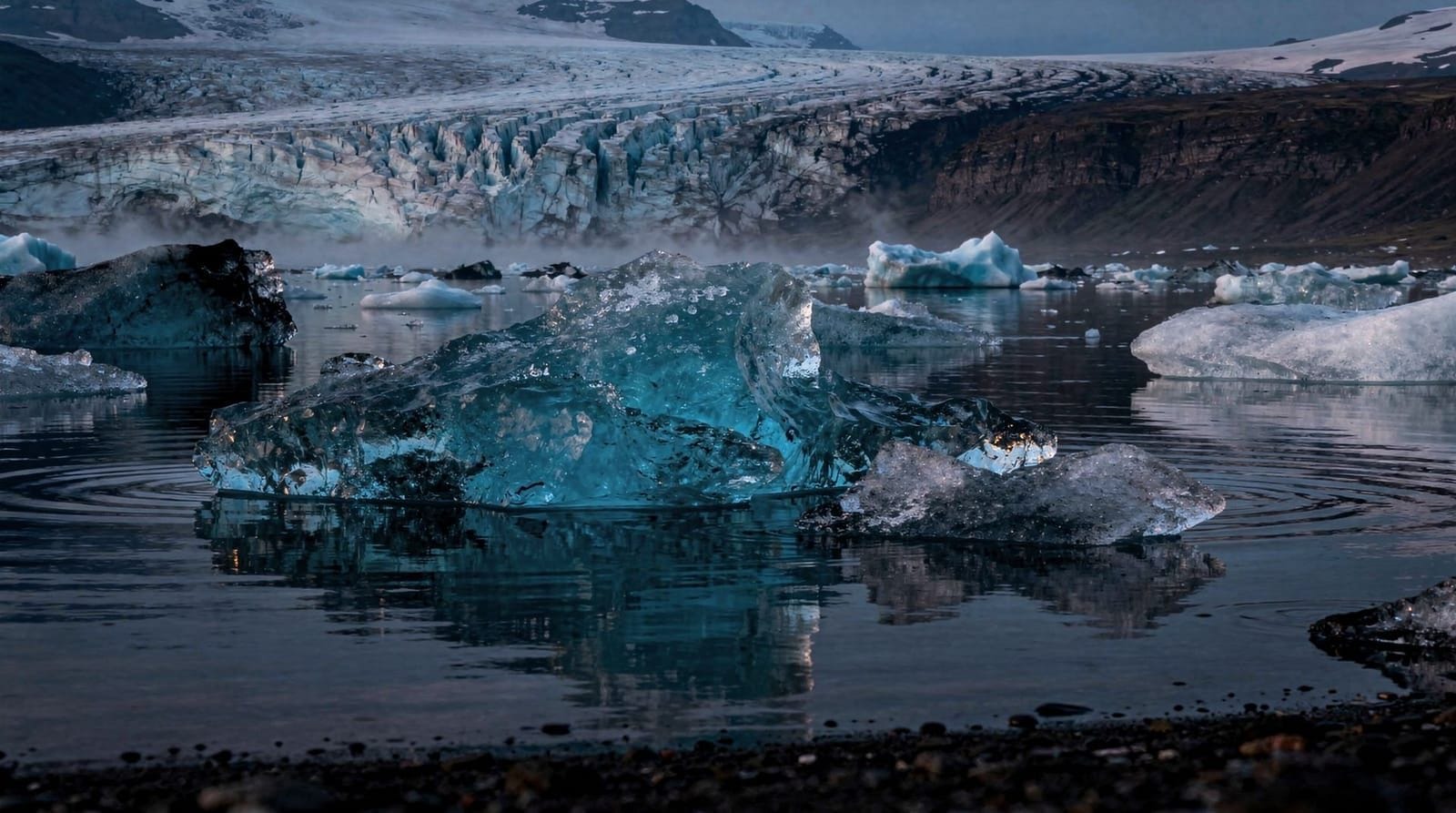
The ice pieces are clear to opaque white, with veins of deep blue where the ice is densest. Volcanic ash trapped in the ice creates dark striping. Some pieces are translucent enough to hold up to the light and see through — this is old glacial ice that began as snowfall centuries ago and was compressed over time. You can touch the ice; taste a small piece if it is clearly clean (most are not, as they have been in the lagoon water for some time).
The combination of elements — white and blue ice on black sand, with the churning Atlantic behind — is graphically striking in a way that photographs well almost regardless of conditions. Overcast flat light reduces glare and allows the internal blue to show. Strong morning sun creates sparkle at the cost of harsh shadows.
Seals occasionally haul out on larger ice pieces on the beach. Do not approach them; they are wild animals and will return to the sea if disturbed.
Waves: The beach is Atlantic-facing and subject to the same sneaker wave risk as Reynisfjara. Stay back from the waterline when waves are active. Several visitors have had close calls at Diamond Beach; exercise the same caution as elsewhere on Iceland’s exposed south-facing shores.
Getting there
Diamond Beach is directly across Route 1 from the Jökulsárlón main car park — cross the road from the lagoon and walk the 200 metres to the beach. There is a small dedicated car park on the south side of Route 1 near the beach access path, but most visitors simply walk from the lagoon car park.
There is no charge to visit the beach.
Photography
Diamond Beach is one of Iceland’s most photographed locations precisely because the elements are so graphic. A few practical notes:
Light: The beach faces roughly south, which means morning light (from the east) illuminates the east-facing facets of the ice; evening light (summer, from the north-west) creates warm tones on the ice surface. Overcast grey skies remove specular highlights and allow the internal blue of the ice to dominate.
Composition: The standard composition — wide-angle with an ice piece in the foreground and the lagoon channel or sea behind — works but has been done thousands of times. More interesting: a telephoto isolating a single translucent piece against the dark sand; or a long-exposure (1–3 seconds) that blurs the wave wash around a stationary ice piece. The retreating wave creates a white fringe around the black sand that reads as depth.
Practicalities: Sand gets into everything. Keep a lens cloth in a pocket, not a bag — you will need it constantly. Keep camera bags closed. The salt spray can reach far up the beach; a rain sleeve for the camera is worth having.
Glacier Lagoon boat tour plus Diamond Beach — combines the lagoon amphibious ride with guided time on the ice beachSeasonal variation
Summer: Ice pieces are smaller on average because melt rates are higher. The beach is active and always has some ice, but the dramatic multi-tonne slabs are less common from June to August. Compensation: better light hours (the sun sets after 11pm in June) and warmer temperatures for exploring.
Winter: Larger ice pieces and dramatic contrast between the white ice and the iron-grey sea. The beach can be icy itself; waterproof boots with grip are important. Northern Lights occasionally visible in the sky above if the aurora is active — photographing the aurora reflected in a large ice piece is possible but requires the right combination of conditions.
Spring and autumn: The sweet spot for many photographers — more ice than summer, better light angles than midday winter, fewer crowds than peak season.
Combining Diamond Beach with Jökulsárlón
Nobody visits Diamond Beach without also visiting Jökulsárlón glacier lagoon — they are the same stop, separated by a road crossing. The logical sequence:
- Park at the Jökulsárlón main car park (north side of Route 1).
- Walk to the lagoon shore for the first views and the boat tour if booked.
- After the boat tour, cross Route 1 to Diamond Beach.
- Spend 30–60 minutes on the beach.
- Return to the car and continue east toward Höfn or west toward Skaftafell.
The south coast glaciers 4-day itinerary allocates a full day in this area, which gives time for both sites plus an ice cave tour in the same day.
Private glacier lagoon and Diamond Beach tour — flexible timing, small group, guided throughoutNearby sites
- Jökulsárlón — directly across the road; the source of the ice.
- Skaftafell — 60 km west, glacier hikes in Vatnajökull NP.
- Vatnajökull National Park — the broader park encompassing the entire area.
- Höfn — 80 km east, the nearest substantial town with accommodation and the famous langoustine restaurants.
The ice lifecycle: understanding what you see
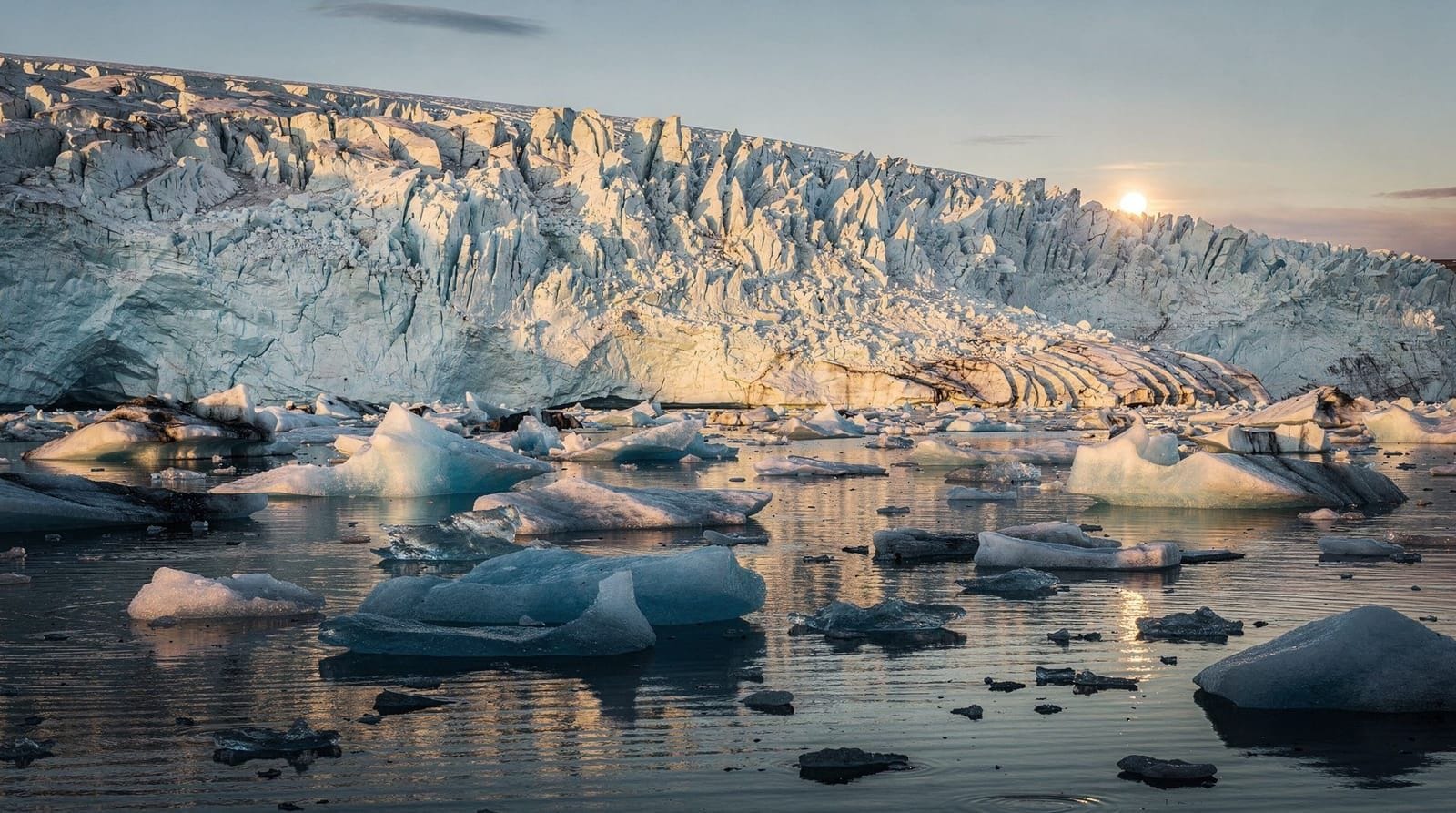
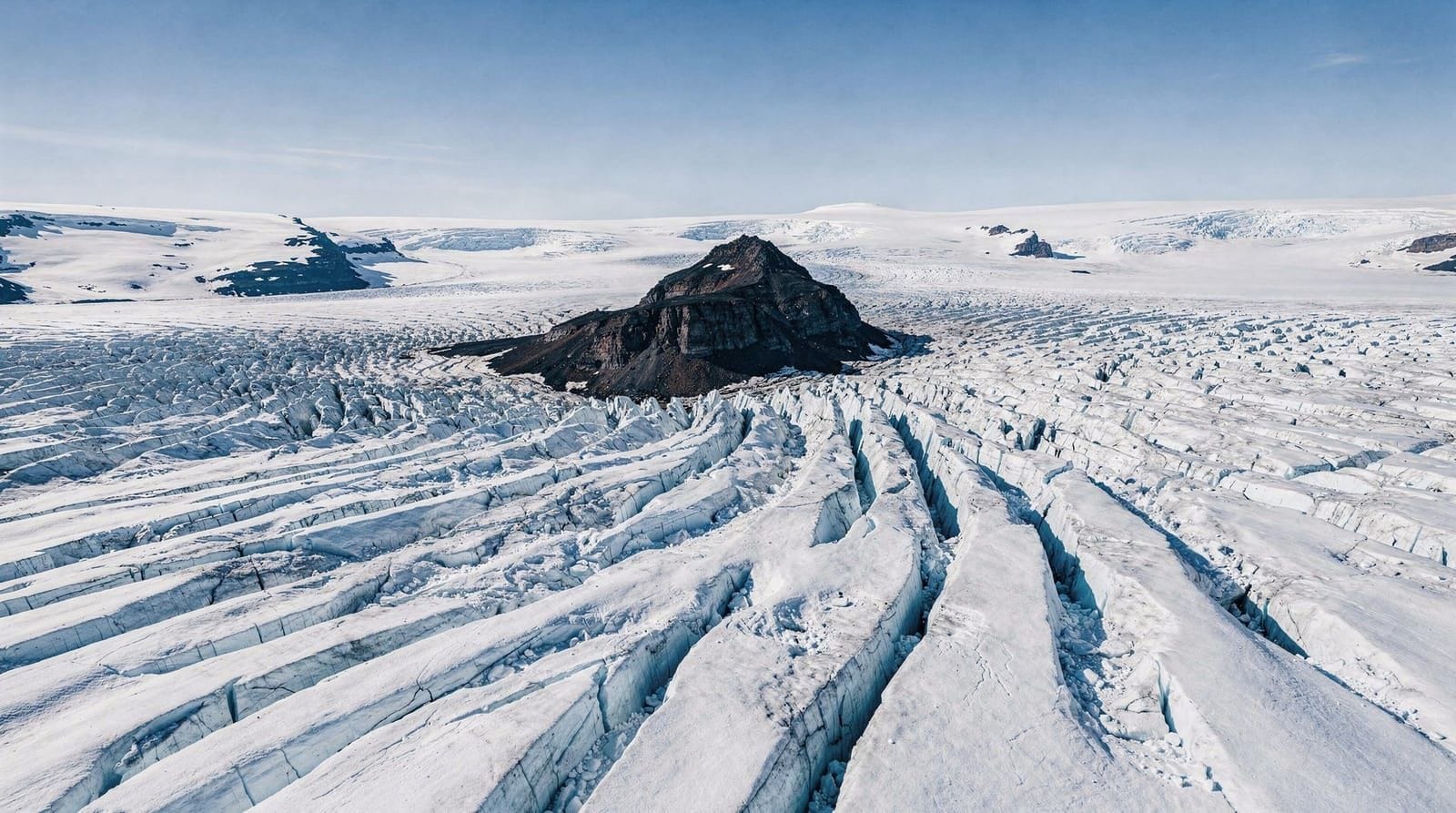
The icebergs on Diamond Beach began as snowfall on the Vatnajökull ice cap, potentially hundreds or thousands of years ago. Over centuries, the compressed snow became glacial ice, travelling slowly down the Breiðamerkurjökull glacier. When the glacier reaches the lagoon, the buoyancy of the water causes the terminal face to calve — chunks break off and float free.
These bergs float in the lagoon for months or years, slowly melting and flipping as their centre of gravity shifts. Eventually, the tidal outlet channel draws smaller pieces toward the sea. Some exit at low tide and strand on the beach; others are carried out to sea and may eventually wash up kilometers away along the South Coast.
The vivid blue colour of denser pieces is a consequence of ice physics: old glacial ice has had all its air compressed out, and pure ice absorbs red wavelengths while transmitting blue. The whiter or cloudier pieces contain more trapped air and are from less-compressed, younger ice.
Practical advice most visitors miss
Timing visits: The volume of ice on the beach varies significantly by day. A full high-tide cycle overnight brings new pieces to shore; an outgoing tide can clear many pieces in the afternoon. The first morning visit after a high-tide night often yields the most ice.
Footwear for the beach: The black sand at Diamond Beach is often wet and the surface unstable near the water. Waterproof footwear with grip is important — regular trainers become completely saturated within five minutes and the beach surface is very uneven near the tide line.
Distance from Reykjavík: At 375 km and 5 hours’ drive, Diamond Beach is not a casual day trip. Most visitors who specifically want to spend quality time here combine it with a multi-day South Coast trip or join a guided 2-day tour from Reykjavík. The south coast glaciers 4-day itinerary is designed for this.
The lagoon kayaking option: In summer, kayaking tours operate on the Jökulsárlón lagoon, paddling among the icebergs at water level. This is a fundamentally different experience from viewing the lagoon and beach from shore — and you can sometimes paddle close to the lagoon channel outlet where the ice transitions from the calm lagoon to the sea. See the Jökulsárlón tour page for current operator details.
What Diamond Beach is not
It is worth calibrating expectations. Diamond Beach is:
Not a beach for relaxing. The Atlantic waves are cold, strong, and unpredictable. The sand is not comfortable to sit on. You are visiting to see ice, not to sunbathe.
Not always spectacular. Some visits, especially after calm weather and an outgoing tide, yield only small fragments. The Instagram impression of wall-to-wall massive ice pieces is real but represents peak conditions.
Not private. In peak season, Diamond Beach has many visitors at any given time. The site is not controlled or gated, and the beach is wide enough that it rarely feels genuinely crowded, but you are unlikely to have it to yourself during the day in July or August.
The beach is genuinely worth visiting — the natural graphic of ice on black sand is unusual and affecting in person, more so than photographs suggest. The combination with the Jökulsárlón lagoon visit makes the whole stop one of the most memorable in Iceland. Managing expectations simply ensures you come away satisfied rather than disappointed.
Northern Lights at Diamond Beach
In winter, Diamond Beach becomes one of the more interesting Northern Lights locations in Iceland, for a specific reason: the ice pieces on the beach act as natural light scatterers. When the aurora is active overhead, the ice catches and reflects the green or pink light, creating a ground-level element that separates aurora photographs taken here from those taken at generic dark-sky locations.
The tidal channel to the west means that on calm nights the channel water also reflects the aurora, giving two distinct reflection elements — the ice pieces on the black sand and the smooth water surface — in the same wide-angle composition.
Realistically: achieving a good aurora-plus-ice photograph requires the right combination of clear skies (common in winter but not guaranteed), active aurora (rated Kp3 or higher on the scale), and enough ice on the beach (variable by tidal cycle). Having two of the three on any given night is relatively common; having all three simultaneously is rewarding but requires patience and potentially multiple attempts.
The northern lights winter 5-day itinerary specifically includes a night at or near Jökulsárlón for this purpose.
Comparing Diamond Beach to Reynisfjara
Both are black sand beaches in South Iceland with dramatic natural elements. The differences:
Diamond Beach: Ice-focused. The primary interest is the icebergs. Less dramatic geology in terms of cliffs or columns, but unique because no other easily accessible location in Iceland has this combination of glacial ice and black sand shoreline.
Reynisfjara: Geology-focused. The basalt columns and sea stacks are the primary visual. No ice (the beach is not near a glacier). More severe wave hazard.
They are not substitutes for each other; both are worthwhile and both are on the standard South Coast itinerary. Reynisfjara is about 210 km west of Diamond Beach and is typically visited on day one or two of a South Coast trip, with Diamond Beach on the final day before heading east or turning back.
Kayaking on the lagoon — the summer option
For visitors in summer who want to experience the ice from water level rather than a large amphibious boat, kayaking tours on the Jökulsárlón lagoon offer an alternative that includes paddling close to the lagoon channel where icebergs transition between the calm water and the sea outlet. The view of the calving glacier face from a kayak — low on the water, at human scale — is more visceral than the lagoon shore view.
Kayak tours require prior kayaking experience in most cases, though some operators offer paddling instruction as part of the experience. Cost is typically 15,000–22,000 ISK (€97–143) for a 2.5- to 3-hour session. Book well ahead in summer as capacity is limited.
See the Jökulsárlón destination page for more on the lagoon itself.
Frequently asked questions about Diamond Beach
Is Diamond Beach free to visit?
Yes. There is no entrance fee. Parking is free in the small car park on the south side of Route 1 adjacent to the beach access path, or in the main Jökulsárlón car park (north side), from which you walk across.
When is the best time to visit Diamond Beach?
Morning light illuminates the east-facing surfaces of the ice most attractively. Larger ice pieces tend to be more common in winter (November–April). The beach has ice year-round, but the quantity and size varies with tidal cycles and melt season.
Is Diamond Beach the same as Jökulsárlón?
No — they are adjacent but distinct. Jökulsárlón is the large glacier lagoon north of Route 1. Diamond Beach is the black sand ocean beach south of Route 1 where lagoon icebergs wash ashore after passing through the tidal outlet channel. Most visitors combine both in a single stop.
Can you walk on the ice at Diamond Beach?
Small fragments are safe to stand near and touch. Do not attempt to climb on large ice pieces — they are unstable and can roll or break without warning. The larger slabs may be on a sloped beach face and can shift into the surf suddenly.
Are there facilities at Diamond Beach?
No facilities at the beach itself. The main facilities (toilets, café, boat tour kiosk) are at the Jökulsárlón car park across the road. Fill up on supplies before reaching this area — the nearest town with a proper supermarket is Kirkjubæjarklaustur (about 75 km west) or Höfn (80 km east).
How long should I budget for Diamond Beach?
30–60 minutes is usually sufficient for a leisurely walk and photography. Dedicated photographers often spend 2–3 hours here, returning at different times of day for different light. If you have time, consider visiting both morning and evening on the same trip.
Is Diamond Beach accessible in winter?
Yes. Route 1 is ploughed and kept passable year-round. The beach itself can have ice and requires care underfoot. Winter visits often yield the most dramatic scenes — larger ice pieces and the possibility of Northern Lights at night. Dress for sub-zero temperatures and strong wind.
Is it safe to bring young children to Diamond Beach?
With supervision, yes for the sand itself, but keep children well back from the waterline — the same sneaker-wave risk that applies at Reynisfjara applies here, and large ice pieces near the surf can shift unexpectedly. Never let a child climb on an ice slab.
Should I do the boat tour or just walk the beach?
They answer different questions. The lagoon boat tour (amphibious or Zodiac) gets you close to the calving glacier face and floating bergs at water level — worth it if that’s your priority. Diamond Beach itself is free and walkable regardless of whether you book a boat, and many visitors find the beach’s graphic ice-on-black-sand scene the more photogenic half of the stop. Doing both, in sequence, is the standard and most complete visit.
Value comparison: boat tour vs beach-only visit
| Option | Cost | Time | What you get |
|---|---|---|---|
| Beach only (no boat) | Free | 30–60 min | Ice on black sand, photography, no lagoon access |
| Lagoon boat tour + beach | ~20,000–30,000 ISK/person | 2–3 hours | Close-up calving glacier face, floating icebergs, plus the beach |
| Kayak tour (summer) + beach | ~15,000–22,000 ISK/person | 3–4 hours | Water-level view of icebergs, more active, plus the beach |
Top experiences
Bookable activities with verified prices and instant confirmation on GetYourGuide.
Top-rated experiences in Diamond Beach — ice on black sand
Best-rated activities across GetYourGuide and Viator.