Northern lights and ice cave — 5-day winter Iceland itinerary
Reykjavik: Northern Lights lifetime guarantee
Winter Iceland is a different country to summer Iceland. The light is low and golden for the brief hours it appears — sometimes only 4–5 hours of true daylight in December. The roads demand respect. And the northern lights, ice caves, and snow-dusted landscapes reward visitors who plan carefully and accept the conditions rather than fighting them.
This 5-day itinerary is built around two specific winter experiences that are only available November through March: the blue ice caves inside Vatnajökull glacier, and the northern lights visible during the long dark nights. It pairs these anchor experiences with the South Coast and Golden Circle — Iceland’s most reliable road-trip corridors, accessible even in winter with proper preparation.
| Where | Reykjavík, Golden Circle, South Coast, Jökulsárlón, Vatnajökull |
| Cost | Ice cave tour around 20,000–30,000 ISK/person; add mid-range 4WD + hotels |
| Time needed | 5 days, 4–5 hours of daylight in Dec/Jan |
| Getting there | 4WD rental with winter tyres, self-drive Route 1 |
| Best time | November–March for ice caves; any clear night for aurora |
Day-by-day summary
| Day | Route | Overnight | Highlight |
|---|---|---|---|
| 1 | Arrive Reykjavík, orientation | Reykjavík | Evening aurora attempt at Grótta |
| 2 | Golden Circle in winter | Reykjavík | Frozen Gullfoss, near-empty Geysir |
| 3 | South Coast to Vík | Vík | Ice formations at Skógafoss and Seljalandsfoss |
| 4 | Jökulsárlón and Vatnajökull ice cave | Kirkjubæjarklaustur/Skaftafell | Inside the blue ice cave |
| 5 | Return to Reykjavík | — | Sky Lagoon soak with aurora over the sea |
Honest assessment of the aurora
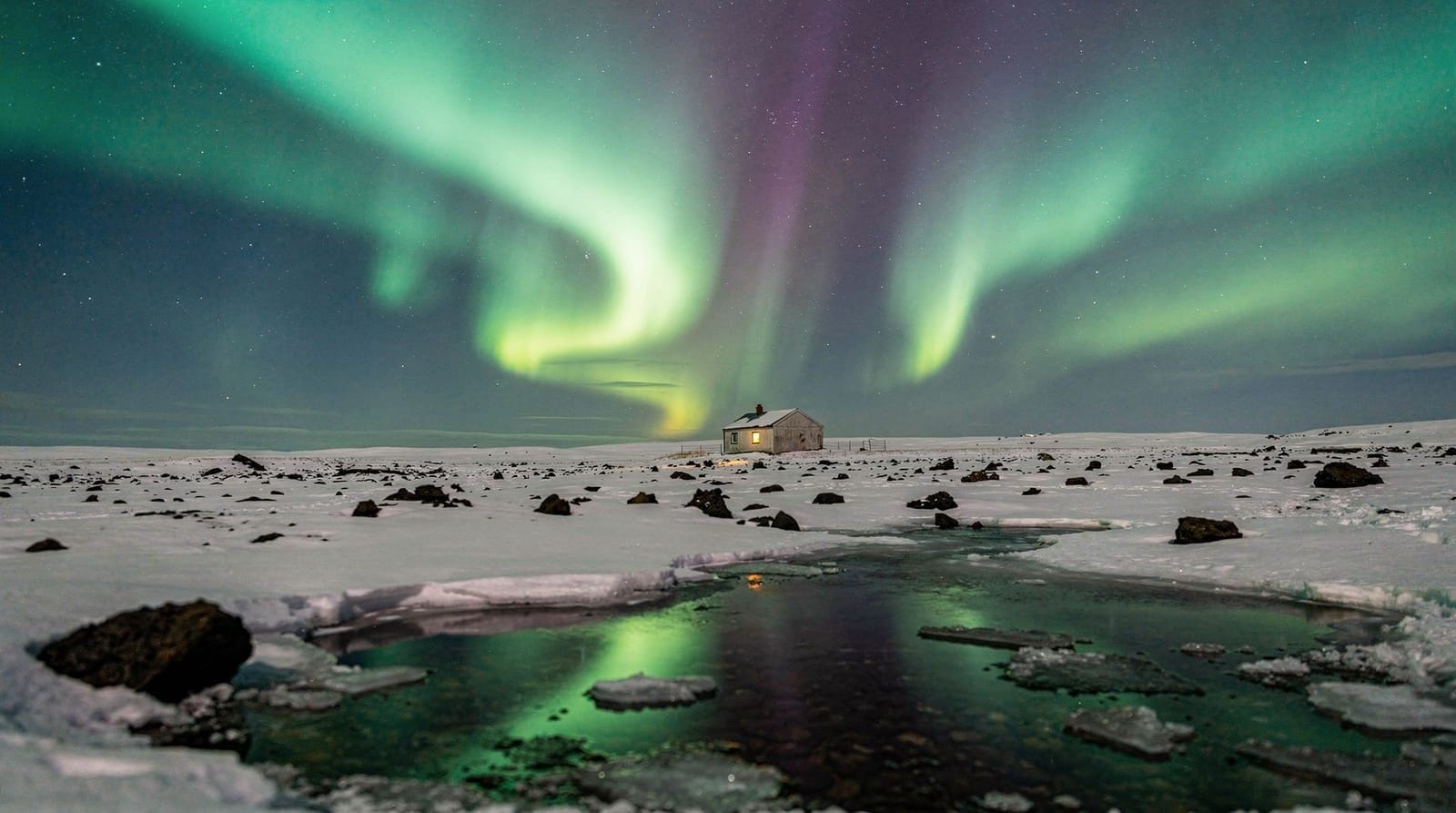
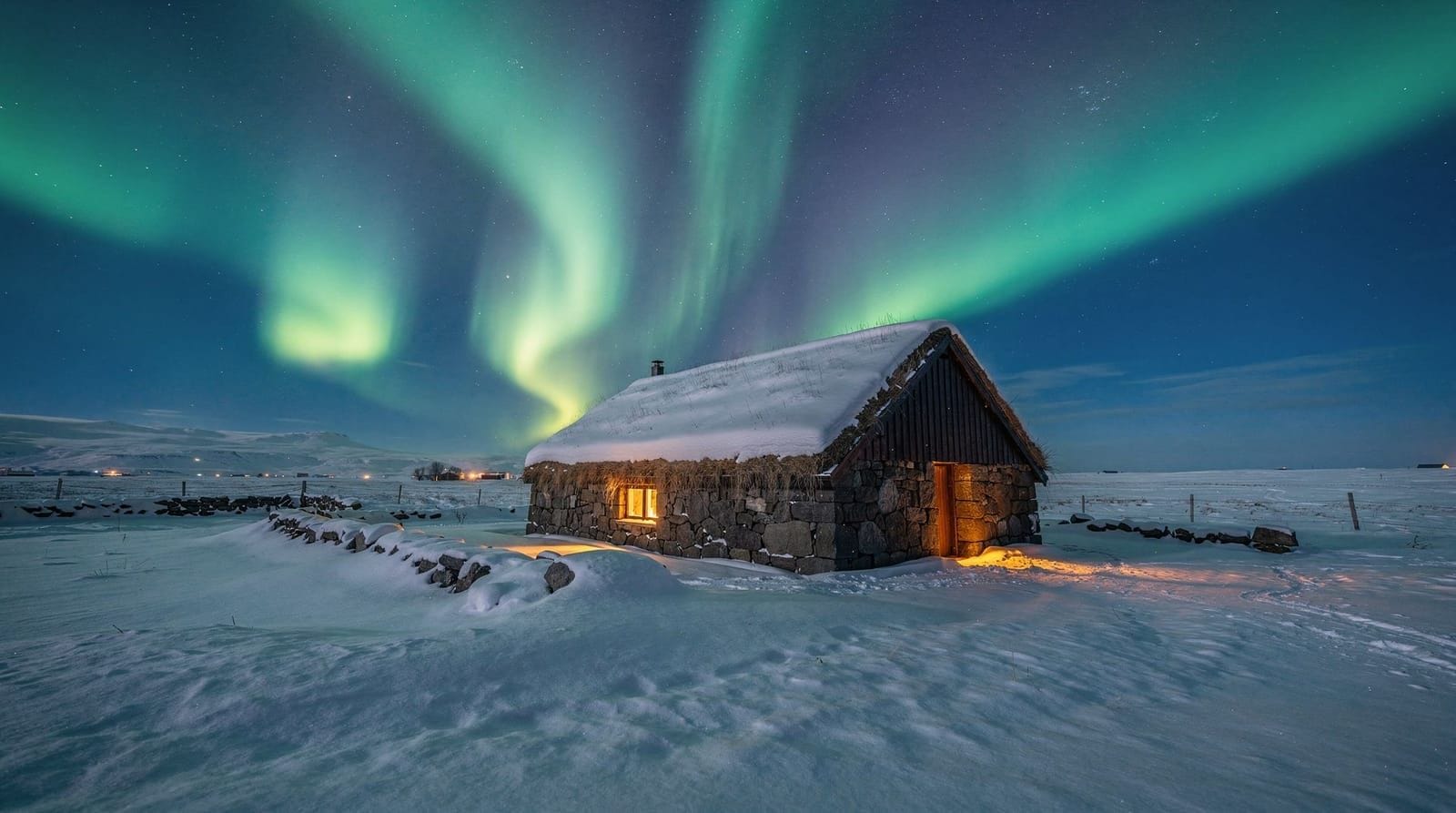
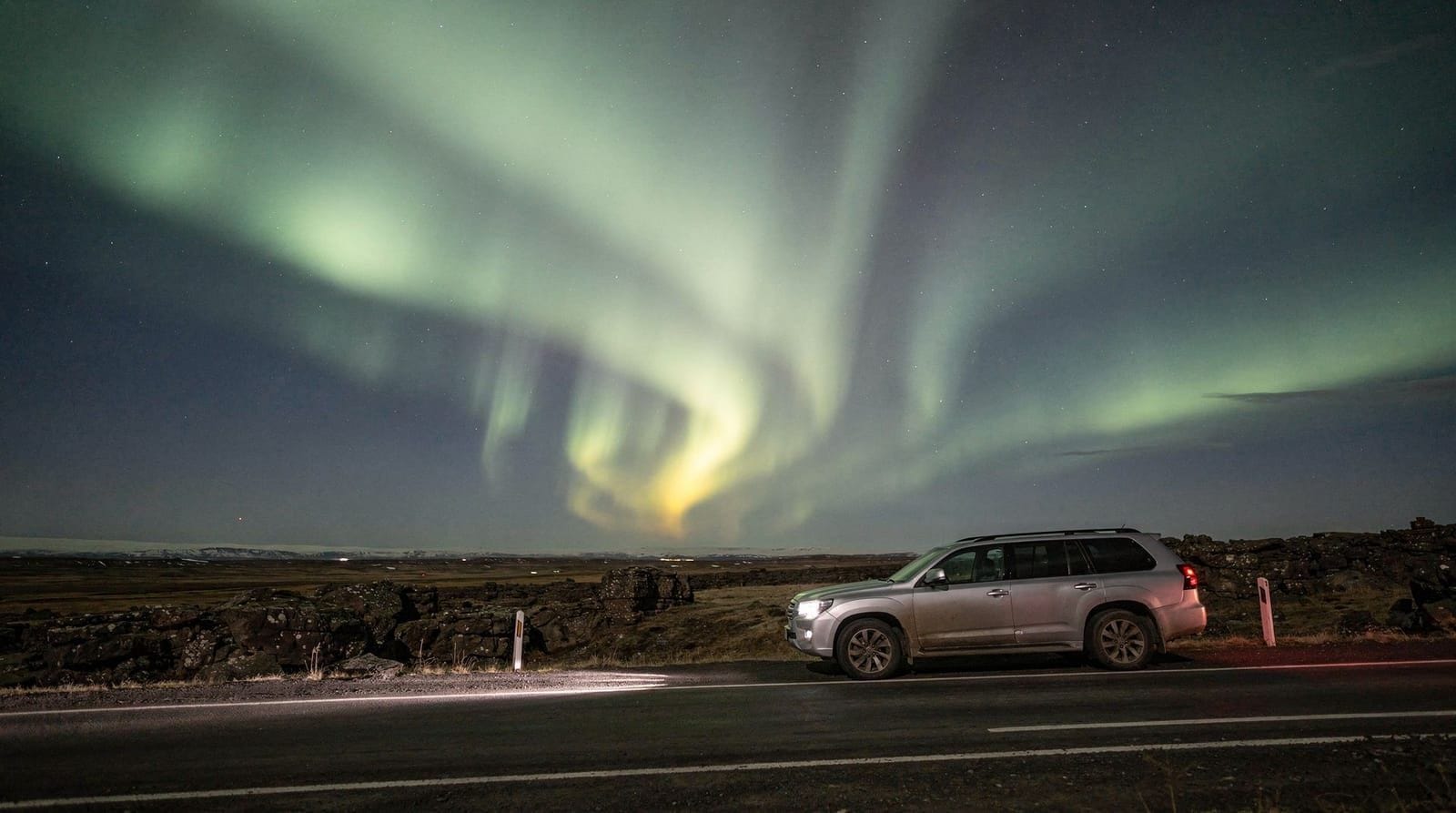
The northern lights are not guaranteed. Iceland’s weather is highly variable and aurora hunting requires clear skies, which the country provides intermittently at best. In winter, you might see the aurora every night for a week, or not once in five days of cloud cover. This is a real possibility that no itinerary can change.
What you can control: staying flexible (moving your schedule around forecast windows), not drinking heavily every evening (you need to be able to wake at 23:00 and drive), and booking accommodation outside of central Reykjavík where light pollution is minimal. The aurora forecast guide explains how to read the Veðurstofa forecast and the KP index — read it before you go.
The lifetime guarantee tours — notably from Reykjavík’s main operators — allow you to rebook for free on any future trip if no aurora is seen. It does not guarantee a sighting on your trip; it guarantees a free future attempt.
Vehicle requirements in winter
A 4WD with winter tyres is legally required in Iceland from November 1 to April 15. Most rental companies automatically provide winter tyres in this period — confirm explicitly when booking. A 4WD adds meaningful safety on black ice and compacted snow, particularly on Route 1 east of Vík and the roads to the Jökulsárlón area. Do not book a 2WD in winter. See driving in Iceland in winter for detail on road closures and conditions.
Day 1 — Arrival in Reykjavík, orientation and aurora attempt
Arriving and settling in
Land at Keflavík airport (KEF). Public bus to Reykjavík: Flybus (4,500 ISK / €30 one way). Private transfer: 14,000–18,000 ISK (€95–€122). Collect your rental car at the airport rather than the city centre — it saves a separate trip and most agencies have airport desks.
Check in at a centrally located hotel. For the northern lights itinerary, the Midgardur by Center Hotels (doubles from 35,000 ISK / €238) is well-positioned and has a knowledgeable concierge. Budget alternative: Storm Hotel (doubles from 25,000 ISK / €170).
Day 1 afternoon: Reykjavík orientation
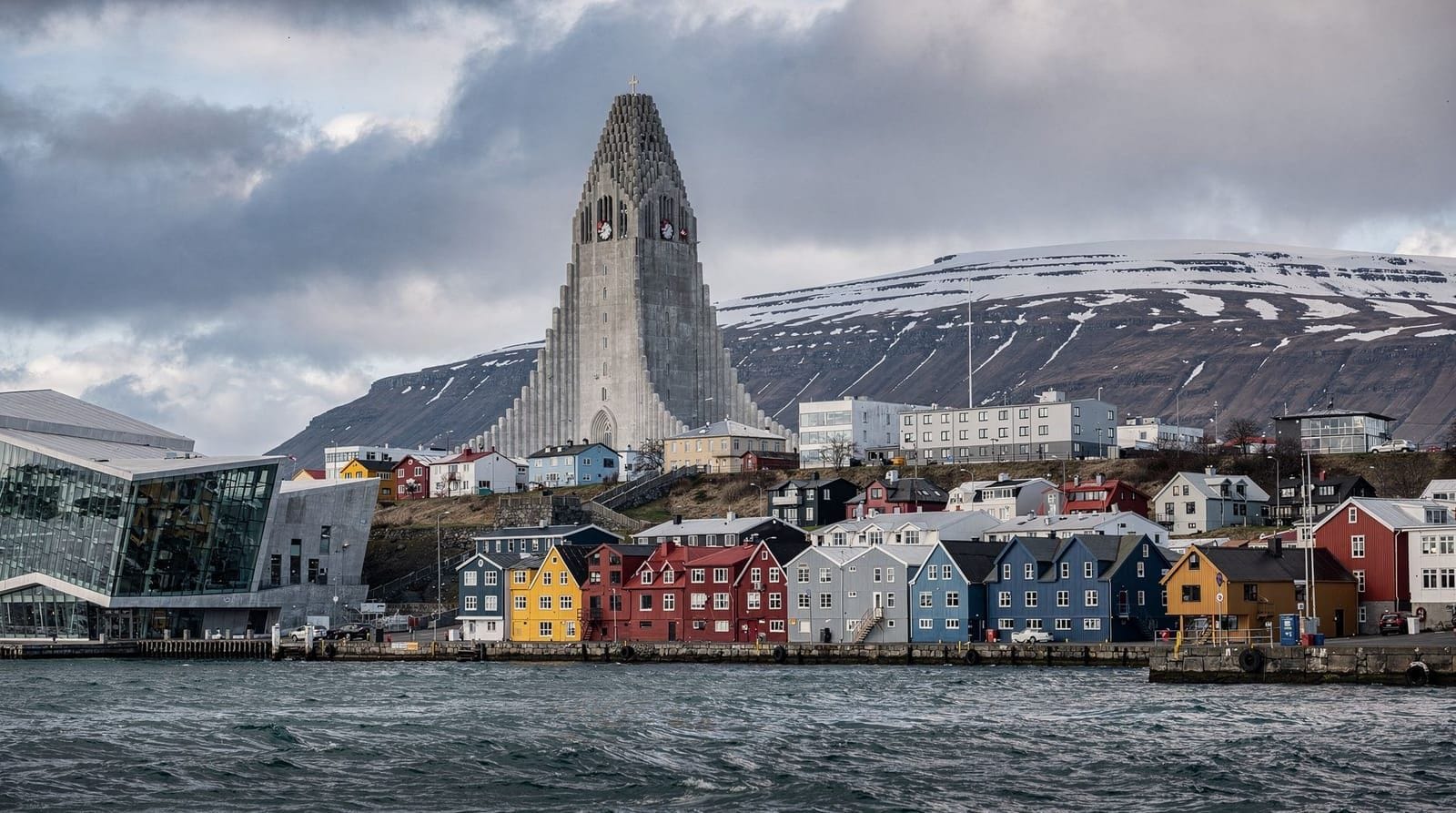
Spend the afternoon walking Reykjavík’s main streets. Laugavegur is the central shopping and restaurant street. Hallgrímskirkja church provides a free panoramic view of the city from its observation tower (1,000 ISK / €7). The Harpa Concert Hall is free to enter and architecturally distinctive — 15 minutes is enough.
Dinner: Matur og Drykkur (Grandagarður 2) serves modern Icelandic food with a focus on traditional recipes — lamb heads, skyr, dried fish elevated to restaurant dishes. Mains from 4,800–7,200 ISK (€33–€49). Book in advance.
Evening: Aurora attempt
Check the Veðurstofa aurora forecast (vedur.is/english) after 18:00. The forecast updates multiple times daily. Cloud cover is the primary blocker — look for the cloud cover map, not just the KP index. If cloud cover shows less than 50% within 1 hour of Reykjavík, drive to Grótta lighthouse on the Seltjarnarnes peninsula (8 minutes from central Reykjavík, free parking) — the reduced light pollution and sea horizon make it the city’s best aurora spot.
If touring by guided bus: tours depart 21:00–22:00 from central Reykjavík and return around 01:00–02:00. Price from 6,500 ISK (€44) to 10,000 ISK (€68) depending on operator and group size.
Day 2 — Golden Circle in winter
Why the Golden Circle works in winter
The Golden Circle route — Þingvellir, Geysir, Gullfoss — is 300 km from Reykjavík and all on paved roads, which are cleared reliably in winter. Visitor numbers are 60–70% lower than summer, meaning you often have Gullfoss and Geysir to yourself in early morning. Þingvellir in snow is extraordinarily beautiful.
Depart Reykjavík by 09:00. In December and January, dawn breaks around 11:00 — driving in darkness is normal. Arrival at Þingvellir in the first light of day (11:00–11:30 in December) is genuinely cinematic if there is snow.
The route:
- Þingvellir: 48 km from Reykjavík (40 minutes). Budget 1 hour 30 minutes. The gorge walk along Almannagjá (free) and the view from the Hakið viewpoint above the park are the highlights. The Silfra snorkeling site is open year-round but requires a 5mm drysuit — most operators provide full equipment.
- Geysir: 60 km from Þingvellir (55 minutes). Strokkur erupts every 6–10 minutes, 15–20 metres high. Free access. Allow 45 minutes.
- Gullfoss: 10 km from Geysir (10 minutes). In winter, the falls are partially frozen and the spray creates ice sculptures on the canyon walls. Dress very warmly — the viewpoint is exposed and windchill can be severe. 45 minutes is adequate.
- Kerið crater: 35 km south of Gullfoss on the return route. Entry 700 ISK (€5). The volcanic crater lake is often frozen in winter — an unusual landscape. 30 minutes.
Return to Reykjavík by 17:00–18:00, giving time to rest before an evening aurora watch.
Day 3 — South Coast to Vík
Daylight management
In December/January, you have roughly 4–5 hours of useful daylight. The South Coast waterfalls and black sand beaches are most visually dramatic in flat winter light anyway — the colour contrast between the black basalt and white snow or spray is more pronounced than in summer. Leave Reykjavík by 09:00.
The route:
- Seljalandsfoss: 116 km from Reykjavík (1 hour 30 min). In winter you cannot walk behind the falls (it is closed due to ice), but the frozen curtains of ice forming around the cave are worth seeing. Free access. 30 minutes.
- Skógafoss: 30 km further east (25 minutes). In winter the spray freezes on the banks and surrounding vegetation, creating elaborate ice formations. Free access. 30–45 minutes. Note: the staircase to the top is often icy and closed — do not attempt it in icy conditions.
- Reynisfjara black sand beach: 30 km east of Skógafoss (25 min). The basalt columns and sea stacks are dramatic in winter light. The Reynisdrangar sea stacks offshore are more visible in winter when vegetation reduces. Free access — but the warning signs about sneaker waves are serious year-round. Stay beyond the marked danger zone.
- Vík: 10 km east of Reynisfjara (10 minutes). Iceland’s southernmost village. Overnight at Hótel Vík (doubles from 38,000 ISK / €258, often includes breakfast in winter) or Guesthouse Carina (doubles from 22,000 ISK / €150).
Dinner: Strondin Bistro in Vík serves solid fish and lamb mains from 3,800–5,400 ISK (€26–€37). It is usually quieter than in summer.
Evening aurora from Vík
Vík’s position away from Reykjavík makes it a better aurora base. Drive 3 km east of the village toward Dyrhólaey to reduce light pollution. The Dyrhólaey cliffs are closed at night for bird protection — park on the roadside approach and watch from there.
Day 4 — Jökulsárlón and the Vatnajökull ice cave
The most important day to plan in advance
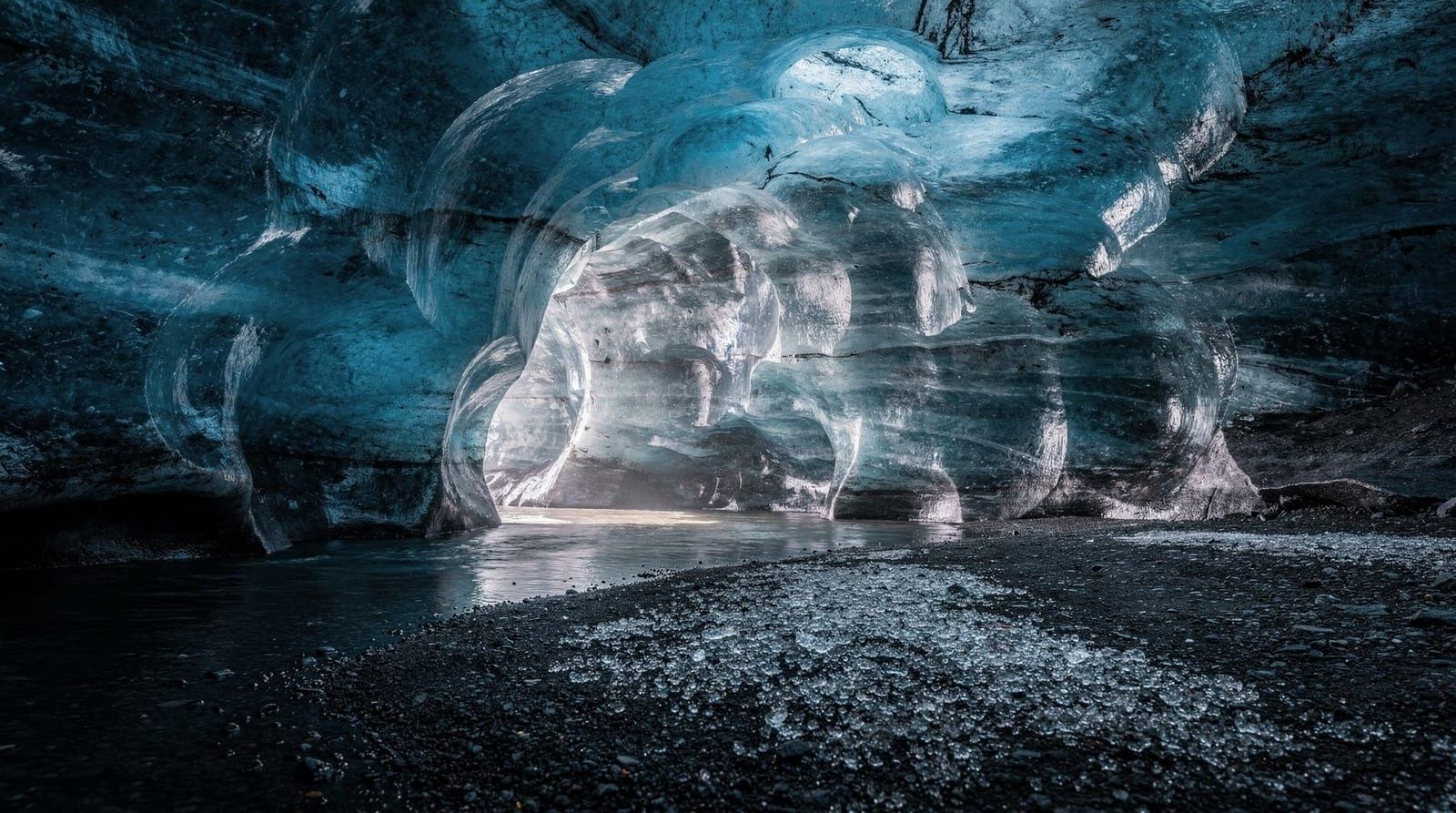
This is the highlight of the itinerary for most visitors and requires advance booking. Ice cave tours into Vatnajökull operate November through March only — the caves require the cold to maintain structural integrity. They are natural formations that collapse or become unstable once temperatures rise in spring.
Jökulsárlón glacier lagoon is 240 km from Vík (2 hours 30 min on Route 1). Leave by 08:00 to arrive by 10:30 and join the earliest available ice cave tour.
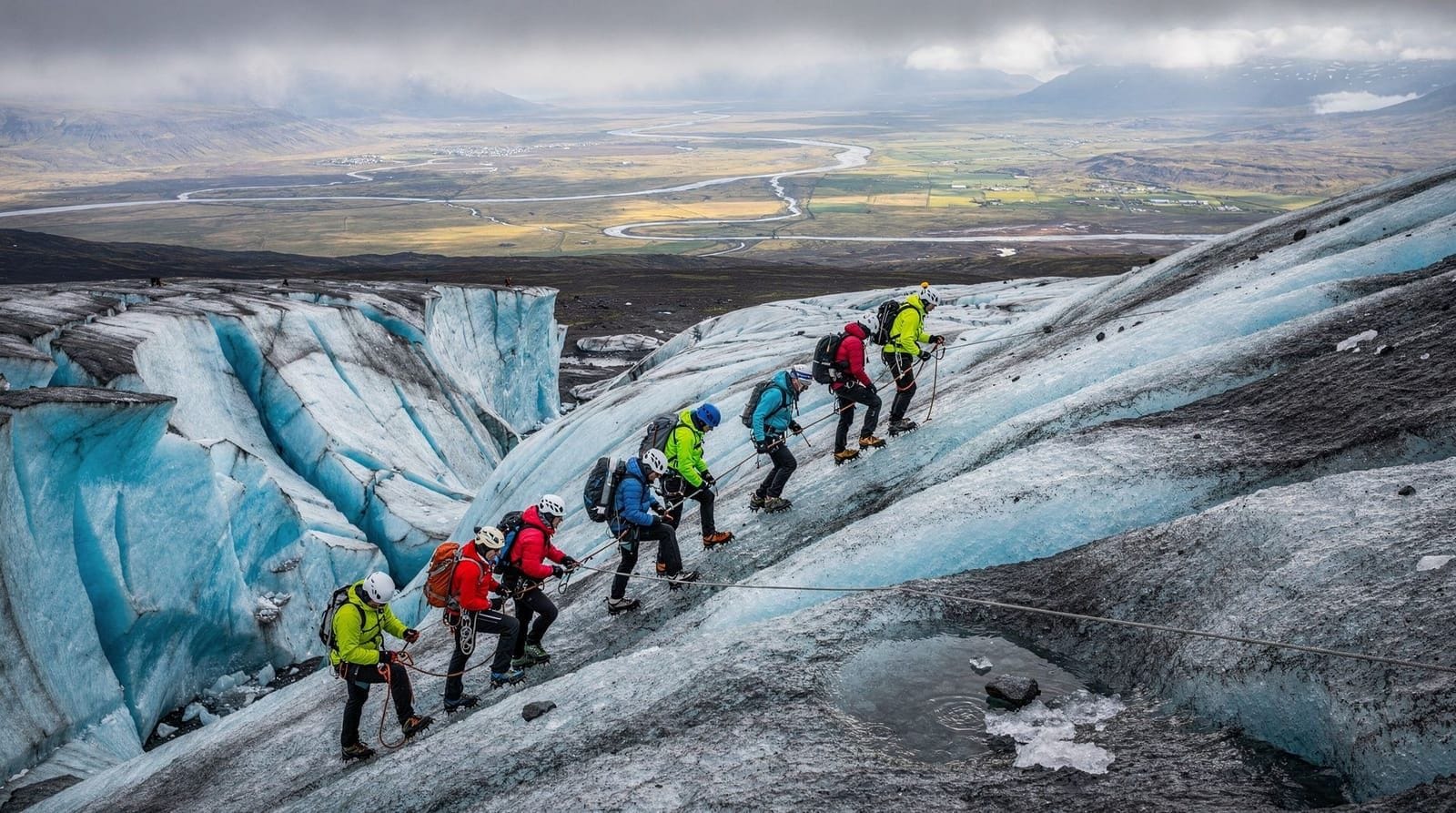
The guided blue ice cave tours from Jökulsárlón take you inside the glacier via a certified guide. Tours run 2–3 hours and require no previous caving experience. Minimum age is typically 8–10 years depending on operator. Crampons and helmets are provided.
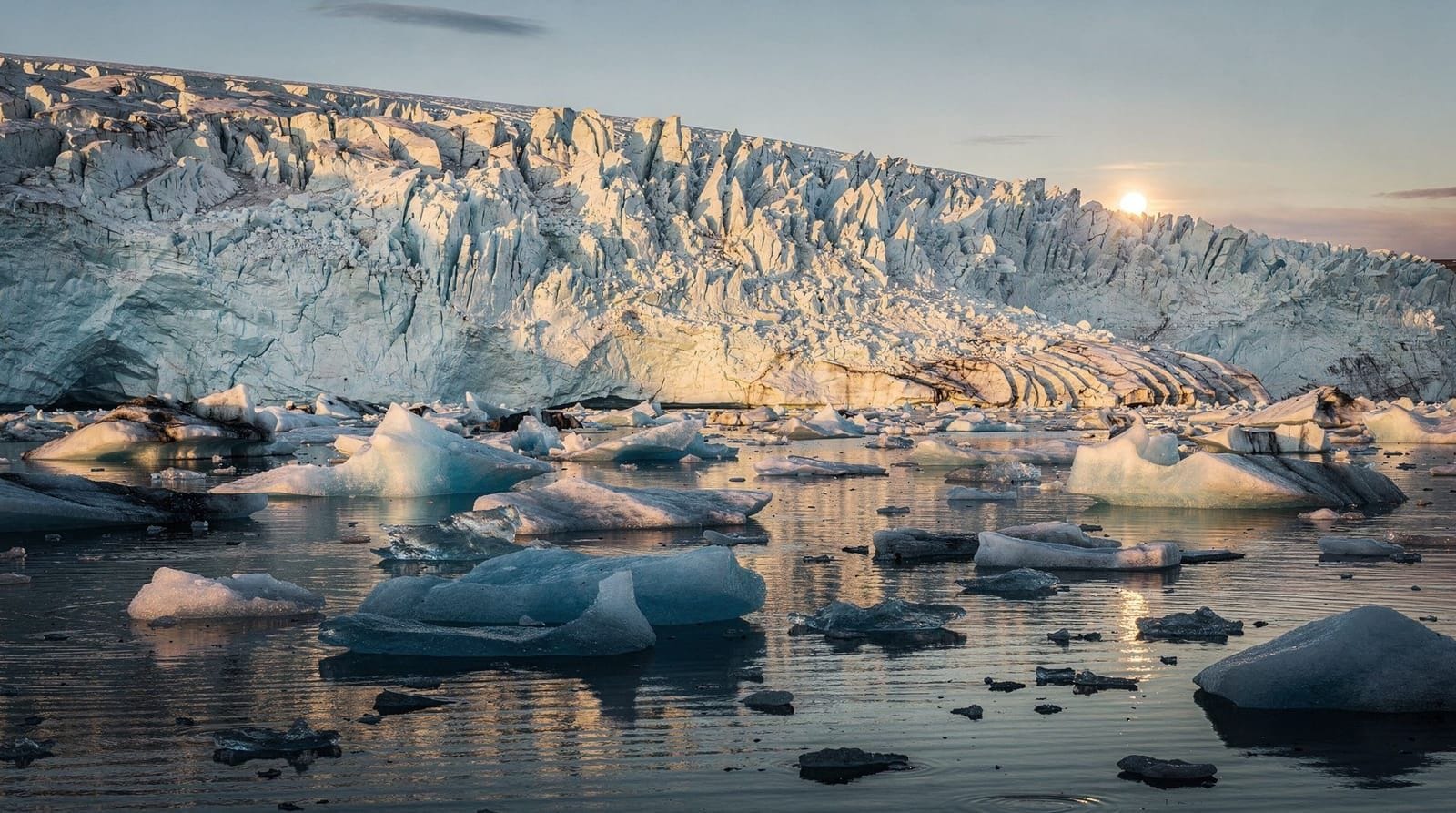
The Jökulsárlón lagoon itself is free to visit and spectacular in winter — icebergs, sometimes coated in snow, float against a grey-white sky. Diamond Beach is the black sand beach directly across the road from the lagoon where the same icebergs wash ashore after passing through the outlet channel. It is one of the most photographed locations in Iceland.
Allow 1 hour 30 minutes at the lagoon and Diamond Beach before the ice cave tour. After the cave tour (approximately 3 hours total including transfer), drive 1 hour back west to stay the night in Kirkjubæjarklaustur or Skaftafell — cheaper and less crowded than Vík. Kirkjubæjarklaustur has a reliable Elda restaurant and the Systrakaffi guesthouse (doubles from 24,000 ISK / €163).
The super-jeep ice cave tours access more remote cave systems beyond the standard glacier entry point. These are for physically active visitors and provide better photography conditions with fewer people inside the cave at once.
Day 5 — Return to Reykjavík, aurora final attempt
Drive west on Route 1 from your overnight base to Reykjavík — allow 3–4 hours depending on starting point and road conditions. In winter, Route 1 can be icy or snowbound east of Vík; check road.is or call 1777 (the road conditions hotline) before departing.
If conditions allow, a final night in Reykjavík gives one more aurora opportunity. The Sky Lagoon geothermal spa west of Reykjavík (6,990–14,990 ISK / €47–€101 depending on package) is open until 23:00 and the outdoor pool faces west — on clear nights the aurora is visible above the sea horizon while you soak. This combination is not a gimmick; it is genuinely one of the better aurora experiences available without driving hours out of the city.
Practical winter notes
Daylight hours:
- December/January: approximately 4–5 hours
- February: approximately 8–9 hours
- March: approximately 12 hours and increasing rapidly
Road warnings: Route 1 can be closed east of Vík after heavy snowfall. This is not rare in January. Build flexibility into Days 3–4 in case the road is closed and you need to wait a day. The safetravel.is 112 Iceland app is essential — download before arrival.
What to pack: Thermal base layers, mid-layer fleece, a proper winter outer jacket (not a lightweight packable one), waterproof trousers, and insulated waterproof boots. The temperature in Iceland in winter is rarely below -15°C, but windchill and moisture make adequate clothing feel like survival equipment. The what to pack for Iceland guide has a complete list.
Frequently asked questions about this 5-day Iceland itinerary
What are the realistic odds of seeing the northern lights in 5 days?
Over 5 winter nights in Iceland with clear skies for at least part of each night, experienced aurora hunters estimate a 60–80% chance of at least one good display. The biggest variable is cloud cover — Iceland’s weather systems move fast, and a clear night can cloud over in 2 hours. Having a car (so you can chase clear skies to a different location) significantly improves your odds versus staying in one place.
Can I see ice caves without a guided tour?
No. The ice cave access points are on private glacier territory managed by certified operators. Solo entry is not permitted and is genuinely dangerous — ice caves can collapse without warning. All certified tours use professional guides, assess conditions daily, and can cancel last-minute if the cave is judged unsafe. Respect those cancellations.
Is Jökulsárlón worth visiting in winter compared to summer?
Many photographers prefer the winter visit. The lower contrast light is actually better for photography of the icebergs, the sky is more dramatic, and visitor numbers are a fraction of summer. The Diamond Beach is at its most photogenic when icebergs are dusted with snow. The summer boat tours on the lagoon do not run in winter, but walking the shore is the better experience anyway.
What happens if roads close and I can’t reach Jökulsárlón?
Build a day of flexibility. The South Coast section of Route 1 is the most likely to close in winter. If it closes, the Golden Circle (which runs on paved roads that are easier to maintain) is always available as an alternative. The ice cave tours book with cancellation conditions for weather — get travel insurance that covers activity cancellations.
How cold is Iceland in winter?
Average temperatures in Reykjavík in January are around -1°C (30°F) at night and 3°C (37°F) during the day. The South Coast is marginally warmer than the interior. Wind makes temperatures feel much colder — a 5°C day with a 40 km/h wind feels like -10°C. Inland areas and the East can drop to -15°C or lower. The key is layering and waterproofing rather than extreme cold-weather gear.
Should I book northern lights tours in advance?
For the lifetime-guarantee tours (which allow rebooking if no lights are seen), book as soon as you arrive — or even before. Popular operators sell out during peak season (September–March). For standard tours without guarantees, same-day booking is usually possible but not guaranteed in December–January.
Is a guided aurora tour or self-driving better for a first-time visitor?
If you’re not confident driving unfamiliar roads at night in winter conditions, a guided tour is the safer and often more effective choice — operators track the forecast professionally and reposition the group toward clear skies. If you already have a rental car for the rest of this itinerary and are comfortable with winter driving, self-driving to a dark spot like Grótta or just outside Vík costs nothing extra and gives you full control of timing.
What travel insurance should I have for this trip?
Beyond standard medical cover, check that your policy covers activity cancellations — ice cave tours and some aurora tours can cancel last-minute for weather or safety reasons, and a policy that reimburses non-refundable bookings in that case is worth the extra cost. See travel insurance for Iceland for what to look for specifically around winter activities.
What makes winter Iceland photography different from summer?
Winter light in Iceland is low-angle and warm-toned for the few hours it exists, producing dramatic shadows and golden tones even at midday. The same waterfall or landscape that looks flat in summer’s overhead light can be extraordinary in December’s 3-hour golden hour. The trade-off is limited shooting time — plan your locations the day before and have backup options for weather changes.
Snow transforms familiar locations: Þingvellir under fresh snow, the Reynisfjara beach with snowflakes on the basalt columns, the Diamond Beach with snow-dusted icebergs — these are photographs that simply do not exist in summer. Photography guides for Jökulsárlón specifically note that January and February are the best months for ice cave interiors because the cold preserves the blue ice colour more intensely.
Long-exposure aurora photography requires a tripod (non-negotiable), a camera with manual exposure settings, and patience. Apps to install: PhotoPills for planning the aurora above specific landmarks, and Vedur.is for the official Icelandic Met Office aurora forecast. The Iceland northern lights photography guide covers technical settings in detail.
Guided tour or self-drive for aurora hunting?
Both work, and the right choice depends on your comfort driving unfamiliar roads in the dark. A guided bus tour removes the driving risk entirely and the guides know current forecast hotspots, but you’re on a fixed schedule and share the experience with a full coach. Self-driving lets you chase a clear-sky pocket the moment the forecast shifts and stay out as long as you want — genuinely useful given how fast Icelandic weather changes. The self-drive aurora hunting guide covers the practical driving and safety side if you go that route.
Premium small-group northern lights minibus tour from Reykjavík — smaller vehicle, more flexible stops than a full-size coachChoosing between the September–March aurora window
Aurora activity itself is present all winter, but the practical viewing conditions differ across the season. Early and late in the window (September–October, March) you get more daylight for sightseeing alongside your evening aurora attempts. Deep winter (December–February) gives the longest, darkest nights — more aurora-viewing hours — at the cost of much shorter sightseeing days and higher odds of road disruption. For ice caves specifically, January and February are considered the best months, since the cold has had the longest time to stabilise and deepen the blue ice colour. See best time to see the northern lights for the month-by-month breakdown.
Top experiences
Bookable activities with verified prices and instant confirmation on GetYourGuide.