Snorkeling in Silfra — the complete honest guide
Reykjavik: Silfra snorkeling between two continents
What is snorkeling in Silfra like?
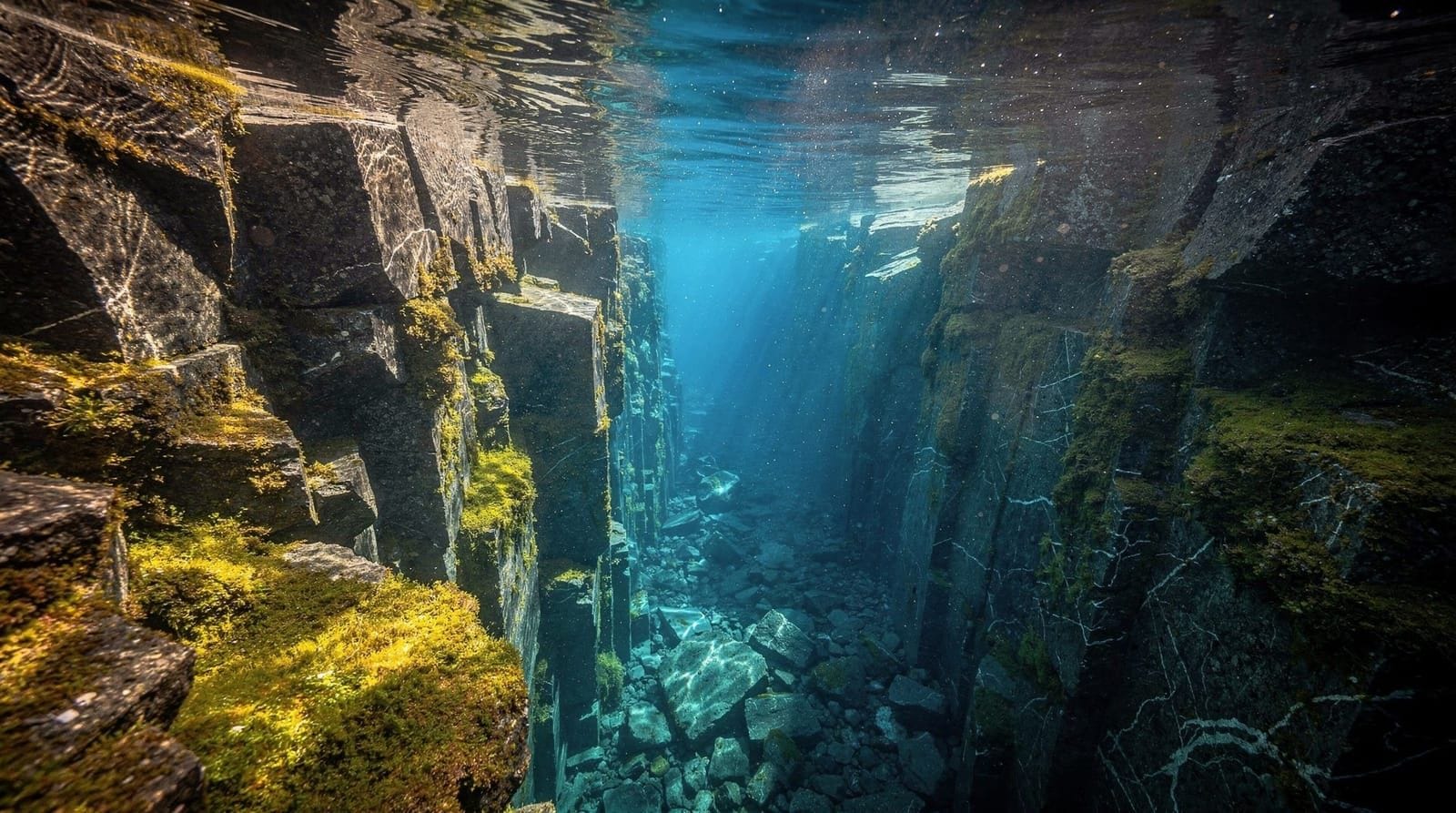
Silfra is a glacial meltwater fissure in Þingvellir National Park where you float between the North American and Eurasian tectonic plates. Water temperature is 2–4°C year-round, so you wear a thick dry suit. Visibility is over 100 metres — among the clearest water on Earth. The experience is extraordinary but physically cold and costs around €100–€150 per person.
Why Silfra is on every Iceland adventure list
| Where | Þingvellir National Park, about 45 km northeast of Reykjavík |
| Cost | Around €100–€145 per person for snorkeling |
| Time needed | 2.5–3 hours total; 30–45 minutes actual snorkeling |
| Getting there | Self-drive on Route 36, or a tour with transfer from Reykjavík |
| Best time | Book weeks ahead in summer; year-round activity, water temp constant |
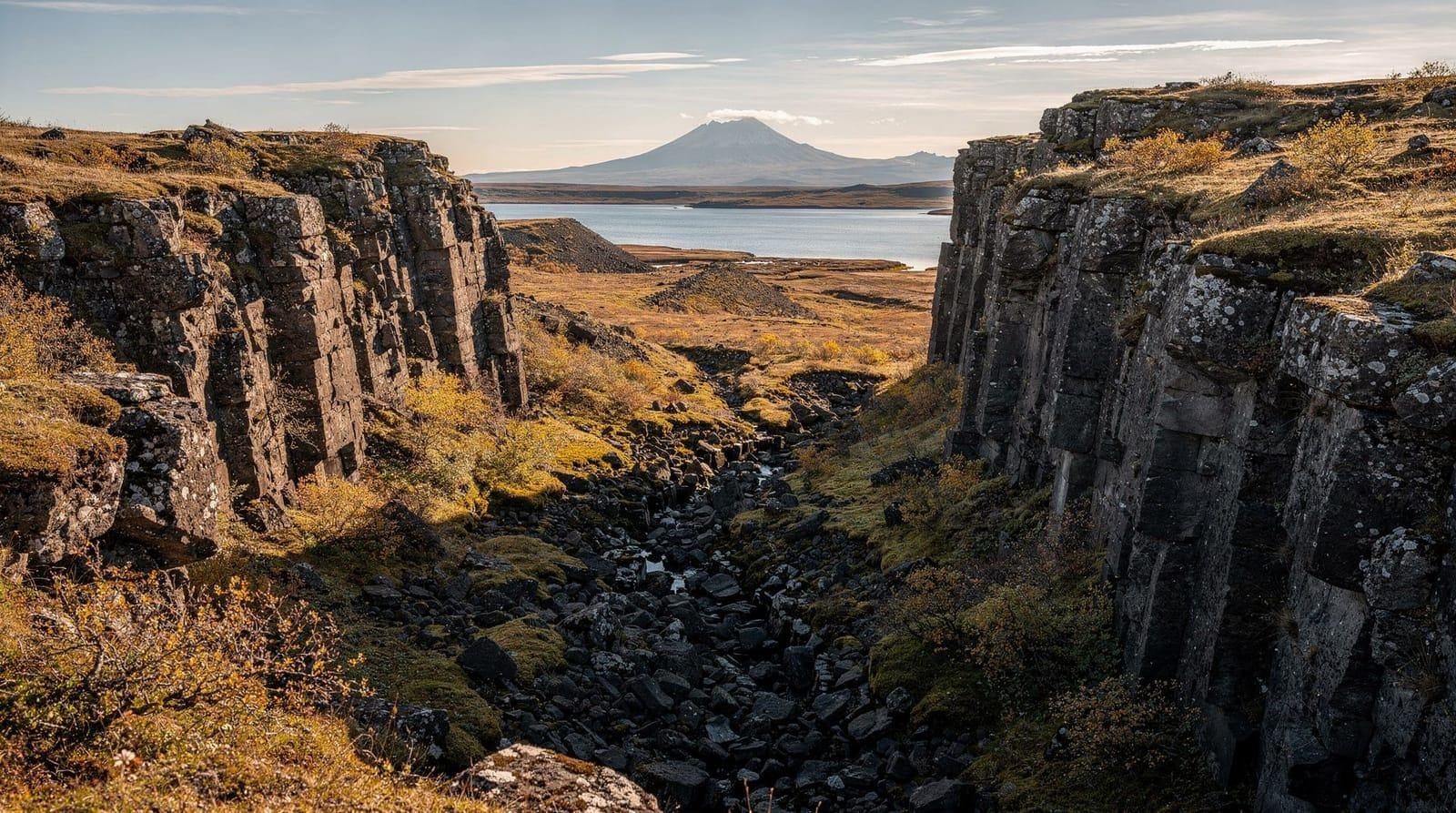
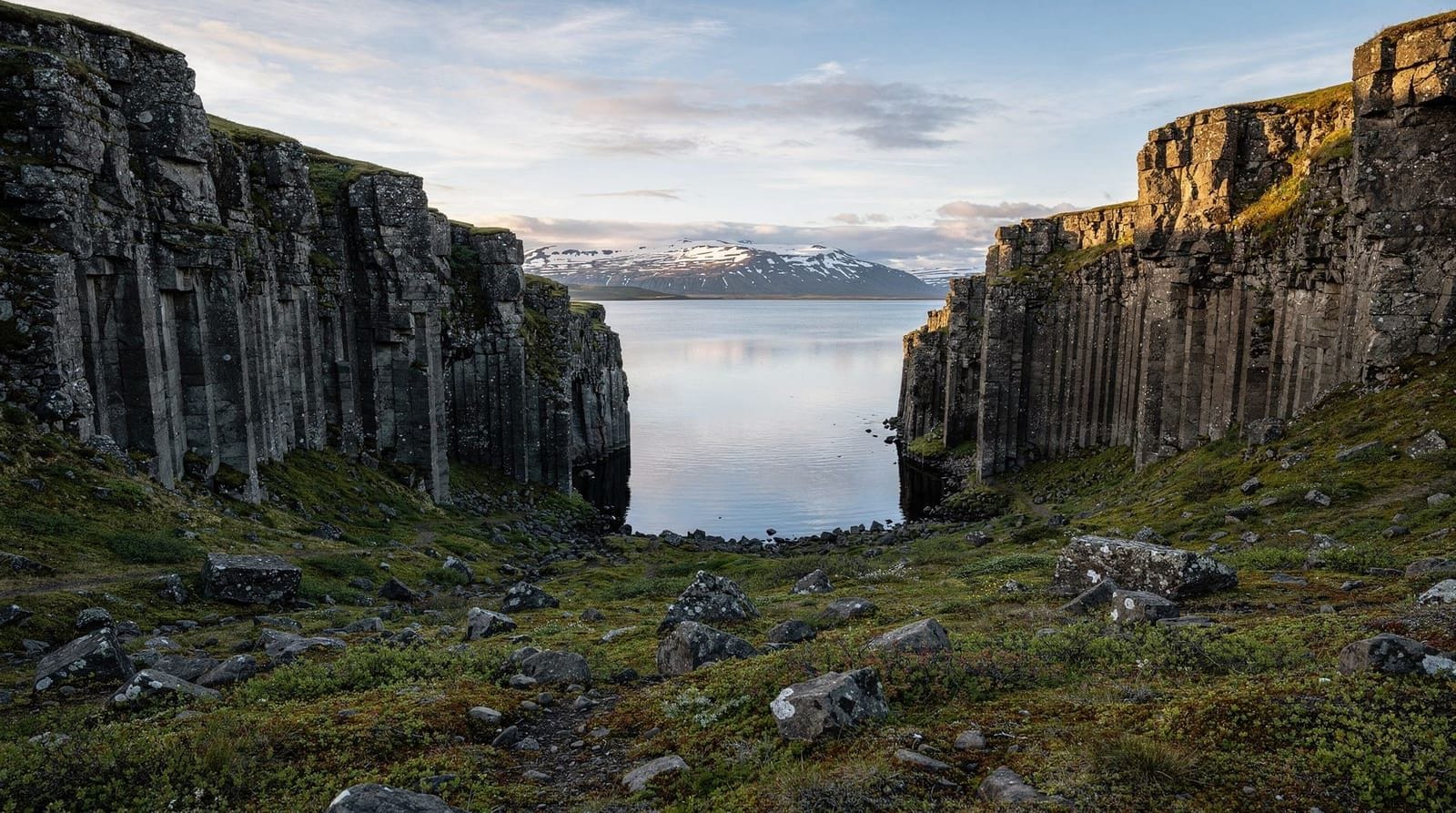
Þingvellir National Park sits on the boundary between the North American and Eurasian tectonic plates. The land on either side of the rift is literally pulling apart — by about 2 centimetres per year — and Silfra fissure is one of the most accessible points where that boundary is visible and swimmable.
The water that fills Silfra originates as glacial meltwater from Langjökull glacier, roughly 50 km away. It percolates slowly through the porous lava rock over decades — filtering to a clarity that rivals laboratory water — and emerges in Þingvellir at a constant 2–4°C. This combination of geological drama and exceptional water clarity has made Silfra one of the most rated dive and snorkel sites in the world.
The experience is not for everyone, and it’s not cheap. But for those comfortable in cold conditions who want something genuinely unusual, snorkeling in Silfra delivers.
The dry suit experience
This is the element that trips up most first-timers. Silfra snorkeling is not wetsuit snorkeling. At 2–4°C, a standard wetsuit would leave you hypothermic within minutes. Instead, operators provide a dry suit — a sealed garment that keeps you completely dry (only your face is exposed to the water). Underneath, you wear a thermal undersuit similar to a ski base layer.
The dry suit is fitted and sealed by your guide before you enter the water. A correctly fitted dry suit allows you to float effortlessly — the sealed air inside provides considerable buoyancy. An incorrectly fitted suit allows water ingress, which is extremely cold and uncomfortable. Guides inspect suits carefully before entry.
What to expect from your face: Your face is in direct contact with the water at all times during snorkeling. At 2–4°C, this is intense for the first 30–60 seconds — a genuine cold shock that many participants find their primary lasting memory of the experience. After initial acclimatisation, most people find it manageable rather than painful, but those with particular cold sensitivity or headache susceptibility should factor this in.
Hands: Most operators provide neoprene gloves. Hands are the second most common complaint — extended time in cold water reduces grip and sensation. Pulling yourself along the ledges occasionally helps circulation.
Silfra snorkeling between the tectonic plates (from Þingvellir)
What you see — the honest version
Silfra has three main sections accessible to snorkelers:
Silfra Hall: The wide, shallow entry section where the fissure widens to 10–20 metres across. The floor is covered in silkweed — vivid green algae formations that look like underwater grass in slow-motion float. The light quality here is exceptional: turquoise blue, extraordinary clarity.
Silfra Cathedral: A wider, deeper section (15–25 metres to the visible floor) where the scale of the fissure becomes most apparent. Looking down into the blue void between the tectonic walls is the visual anchor of the experience.
Silfra Lagoon: The end section where the fissure widens into a shallow lagoon before closing. Exit here.
What you won’t see: Fish, marine life, coral, or any significant aquatic wildlife. The water is too cold for fish populations. Some snorkelers find this disappointing if they’re accustomed to tropical snorkeling with its wildlife component. Silfra is a geological experience, not a wildlife one.
Photography: Many operators offer underwater photo packages. The clarity makes for genuinely excellent underwater photography — cameras capture the turquoise blue and green algae formations well. Your own GoPro in a housing works if you have one.
Getting to Silfra
Silfra is inside Þingvellir National Park, about 45 km north-east of Reykjavík. The drive takes 40–55 minutes on Route 36 (well-paved).
Self-driving: Most practical. Park at the Hakið visitor area. The Silfra parking area is a short distance south. Your operator will specify exact meeting point.
From Reykjavík with a tour: Several operators include transport from Reykjavík. Add 90 minutes total for return transfers. Often combined with Golden Circle sightseeing (Þingvellir is the first stop on the standard Golden Circle route).
Þingvellir entry: A parking fee applies at Þingvellir (750 ISK / €5 per car). The national park itself has no entrance fee. Note: your snorkeling operator’s meeting fee typically doesn’t include parking.
Golden Circle + Silfra snorkeling combo from Reykjavík
Booking — what to look for
Group size matters: The fissure is narrow in sections, and large groups create a queue effect. Operators running groups of 8–10 provide a better experience than those running 15–20. Check the maximum group size before booking.
Photo packages: Many operators offer professional underwater photography for an additional 3,000–6,000 ISK (€20–€40). This is often worth it — your own GoPro is hard to manage in cold gloves, and operators know the light conditions and camera positioning.
Transport included: Tours from Reykjavík are more expensive but add the convenience of not having to find Þingvellir and park. If you have a car and are already visiting Þingvellir (standard Golden Circle), book direct at the site and save the transport markup.
Cancellation: Weather rarely cancels Silfra snorkeling (the fissure is protected from wind and rain doesn’t affect the experience). However, seasonal closure for conservation purposes occasionally applies to specific sections. Check the operator’s current access status.
Is Silfra snorkeling worth the price?
This is the honest question. At €100–€145 per person, Silfra is the most expensive 45–60 minute activity you can do in Iceland. Whether it’s worth it depends on what you’re seeking:
It is worth it if: You want something genuinely unique, you’re comfortable in cold conditions, and you value the geological significance of the location. The visual experience of floating over the tectonic boundary in exceptionally clear water is not reproducible anywhere else in the world.
It may not be worth it if: You want underwater wildlife, you dislike cold water even briefly on your face, or you’re budget-constrained. If you’re already doing glacier hiking and other adventure activities, Silfra might be a luxury addition rather than a must-do.
For context: The equivalent high-visibility snorkeling experience in the Maldives or Caribbean costs comparable amounts and offers more wildlife but zero geological uniqueness. The value proposition is different rather than worse.
Silfra snorkeling with transfer and underwater photos
Safety and physical requirements
Silfra snorkeling is physically accessible to almost all adults. The dry suit buoyancy means even poor swimmers float easily. The main physical requirement is being able to keep your face in cold water for 45–60 minutes — this is a mental comfort threshold as much as a physical one.
Medical conditions: The extreme cold can trigger issues for those with cardiovascular conditions, Raynaud’s phenomenon, or cold urticaria (cold-triggered allergic reaction). Consult your doctor before booking if any of these apply.
Suit fitting: Dry suits come in a range of sizes. Most operators can accommodate most body types, but very tall participants (over 195 cm) should confirm availability of suitable suits. Pregnant participants are excluded for safety.
Minimum age: Typically 10–12 years for snorkeling; some operators require 15+ for diving.
Þingvellir beyond Silfra
Þingvellir National Park is far more than just a snorkeling site. The park holds the Alþingi — Iceland’s parliament, founded in 930 AD and operating continuously (with interruptions) for over 1,000 years. It’s the oldest parliamentary site in the world. The geological rift, the historical parliament grounds, and the lake (Iceland’s largest, Þingvallavatn) combine to make this one of the most layered sites in Iceland.
What to see at Þingvellir:
- Almannagjá gorge: A dramatic kilometre-long rift in the lava rock, walkable on foot. The walls are the exposed edge of the North American plate — the same plate you swim between in Silfra. The tectonic context becomes more tangible when you stand in the gorge and see the 40-metre-high lava wall on each side.
- Þingvallavatn lake: Iceland’s largest natural lake, fed by the same glacial meltwater system that fills Silfra. The lake is home to several unique species found nowhere else, including a landlocked Arctic charr subspecies.
- Öxará river: A small river that runs through the parliament grounds. The Law Rock (Lögberg) where the Lawspeaker recited Iceland’s laws annually is marked along the river.
- The rift walk: A 3 km marked path through the main geological features of the park, suitable for all fitness levels and covered in about 1.5 hours.
If you’re combining Silfra snorkeling with a Golden Circle day trip, arriving at Þingvellir first thing (08:00–09:00) gives you the park before the tour buses arrive. Snorkel, then continue to Geysir and Gullfoss with the day.
How Silfra’s water gets there
The water supply to Silfra is a fascinating long-distance geological process. Langjökull glacier in the highlands, roughly 50 km north-east of Þingvellir, produces meltwater that percolates slowly through the porous lava rock of the highland terrain.
This slow underground journey is what creates Silfra’s extraordinary clarity. The lava rock acts as a natural filter — bacteria and particles are trapped in the rock structure, and the water that eventually emerges at Þingvellir is among the purest freshwater accessible anywhere. Scientists have tested it at bacterial counts near zero. The filtering process takes an estimated 30–100 years; the water you swim in on your visit started its journey before you were born.
The flow rate into Silfra is consistent at around 500–600 litres per second. The temperature is locked at 2–4°C because the source (glacial meltwater) and the underground temperature of the lava aquifer are both consistently near freezing. No amount of summer warming at the surface affects the water temperature — it’s genuinely constant year-round.
Operator selection — what actually matters
The Silfra snorkeling market has consolidated around a few well-established operators, but price variation between them can be 30–40%. Here’s what actually differentiates experience quality:
Guide-to-participant ratio: The best operators run 6–8 snorkelers per guide. Mass-market operators run 12–16 per guide. In a narrow fissure, the difference between a focused small-group experience and a congested queue is significant.
Equipment maintenance: Dry suits that aren’t serviced regularly develop leaks at the seals. This is both uncomfortable and potentially a safety issue. Ask how recently the suits in your size were last checked. Established operators have regular service schedules.
Underwater photography: Operators who offer professional underwater photography (not just a GoPro hand-off) produce genuinely good images. The guide knows the lighting conditions and the right positioning. These packages typically run 3,000–6,000 ISK (€20–€40) additional and are worth it for most visitors.
Cancellation terms: Silfra snorkeling is rarely cancelled for weather (the site is sheltered), but equipment issues or unexpected park access restrictions can cancel tours. Understand the refund policy before booking — it should be full refund or free rebook.
Frequently asked questions about snorkeling in Silfra
How long is the actual snorkeling at Silfra?
The snorkel through the accessible sections of Silfra takes 30–45 minutes. Including equipment fitting, briefing, and exit/changing, total tour time is typically 2.5–3 hours.
Can I wear contact lenses or glasses?
Contact lenses are fine — the face mask seals over your face. Glasses cannot be worn under a snorkel mask. Prescription masks can be rented from some operators; enquire when booking.
Can I do Silfra if I can’t swim?
Technically possible due to the dry suit buoyancy, but operators typically require minimum swimming ability for safety. Discuss your situation directly with the operator. Never attempt to enter the water without a certified guide present.
What if water gets into my dry suit?
It’s very cold — immediately signal your guide. A small amount of water ingress is uncomfortable but manageable. Significant ingress would require exiting the water and changing equipment.
Can I do both snorkeling and diving at Silfra on the same day?
Some operators offer combined snorkel + dive packages, but this is physically demanding given the cold exposure. Most participants find one or the other sufficient for a single day. If doing both, do diving first (lower exhaustion risk when fresh and alert) and snorkeling after.
How far in advance should I book?
Summer (June–August): 2–3 weeks minimum. Popular time slots (9:00 and 11:00 departures) fill quickly. Winter: 1 week is usually sufficient, though December–January has more demand than autumn. Same-day booking is occasionally possible in shoulder season.
Is Silfra snorkeling better than scuba diving Silfra?
They’re different experiences of the same site. Snorkeling is shorter, cheaper, and requires no certification; scuba diving Silfra requires a dry suit certification (or a short refresher course some operators offer) and gets you deeper into the Cathedral section, but at roughly double the price and a longer time commitment. Most first-time visitors choose snorkeling; certified divers with dry suit experience often prefer diving for the extra depth.
What should I eat or avoid before snorkeling Silfra?
Eat a normal meal beforehand — cold exposure burns more energy than you’d expect, and arriving hungry makes the cold feel worse. Avoid alcohol before the activity; most operators explicitly prohibit it for safety reasons given the cold-water risk. A warm drink afterward (many operators or the nearby Golden Circle cafés) is the traditional way to finish the experience.
Combining Silfra with the rest of the Golden Circle
Silfra sits directly on the standard Golden Circle route, since Þingvellir is its first stop heading from Reykjavík. This makes combining the two straightforward logistically, though it does mean planning your day around a fixed snorkeling time slot rather than a flexible sightseeing pace.
A workable sequence: book the earliest available Silfra slot (often 08:00 or 09:00), snorkel first while you’re fresh and the car park is quiet, then dry off, warm up with a hot drink, and continue to Geysir and Gullfoss for the rest of the Golden Circle. Doing it in this order avoids arriving at Silfra cold and tired after a full day of sightseeing, and avoids rushing the snorkel to make an afternoon tour departure.
If you’re self-driving, this sequencing is easy to control. If you’re on a combined Golden Circle and Silfra tour, check the itinerary order before booking — some operators do Silfra last, which works less well if you’d rather not finish a long day already damp and cold.
What to actually pack
Beyond the swimsuit that goes underneath your thermal undersuit, the packing list for Silfra is short but specific. Bring a warm change of clothes for after — you will be genuinely cold when you exit the water, even with the dry suit having kept you dry, and standing around in wet hair and a damp base layer in the Þingvellir wind is unpleasant. A hat and warm socks make a bigger difference than most people expect.
A towel is essential and not always provided — check with your operator. If you wear contact lenses, bring your usual case and solution, since the mask seals directly over your face and lens irritation is more noticeable in cold conditions. A thermos or the cash for a hot drink afterward (some meeting points have a small kiosk, others don’t) rounds out a comfortable exit from the experience.
If you’re combining Silfra with the rest of the Golden Circle same day, pack for a full day out — layers for Þingvellir, Geysir, and Gullfoss on top of the snorkeling gear, since Iceland’s weather can shift substantially between stops even within a single morning.
Top experiences
Bookable activities with verified prices and instant confirmation on GetYourGuide.
Top experiences
Best-rated activities across GetYourGuide and Viator.

Ice Cave by Katla Volcano Super Jeep Tour from Vik
- Viator

Sólheimajökull Glacier Hike – Adventure in a Small Group
- Viator

Ice Cave Tour from Vík
- Viator

Blue Ice Discovery – Guided Glacier Hike from Skaftafell
- Viator

Glacier Hike from Skaftafell - Extra Small Group
- Viator

East Glacial River – Grade 4 Rafting with Drysuits, North Iceland
- Viator