Into the Glacier — Langjökull ice tunnel guide
Reykjavik: Perlan Glacier and ice cave exhibition
What is Into the Glacier at Langjökull?
Into the Glacier is a 500-metre artificial tunnel system excavated into Langjökull, Iceland's second-largest glacier. It's the only glacier interior in Iceland (and one of very few in the world) accessible year-round. You walk through carved ice chambers inside a living glacier at 1,200 metres elevation, above the Icelandic highlands.
| Where | Langjökull, western highlands (via Húsafell or Golden Circle) |
| Cost | Around €125–€165 per person |
| Time needed | 3.5–4.5 hours from the highland base, including transfer |
| Getting there | Own transport to the operator’s base, then their monster trucks only |
| Best time | Year-round — the one glacier interior open outside winter |
Langjökull and the Into the Glacier project
Langjökull — “Long Glacier” in Icelandic — is Iceland’s second-largest ice cap, covering approximately 920 square kilometres in the western highlands at elevations between 1,100 and 1,400 metres. Unlike Vatnajökull in the south-east, Langjökull sits in Iceland’s interior and is not immediately adjacent to the Ring Road, which has historically made it less visited.
The Into the Glacier project changed this. Over several years beginning around 2015, a local operator excavated a 500-metre tunnel system into Langjökull’s interior, creating a series of ice chambers, passages, and a chapel space. The project required engineering solutions for the moving glacier — the tunnel advances approximately 1–2 metres per year as the ice flows, requiring continuous maintenance and adaptation.
The result is the only place in Iceland (and one of very few globally) where you can walk inside a glacier at any time of year without mountaineering skills, special certification, or winter-season timing.
How it differs from natural ice caves
This distinction is worth being clear about, especially if you’ve seen both options in Iceland marketing:
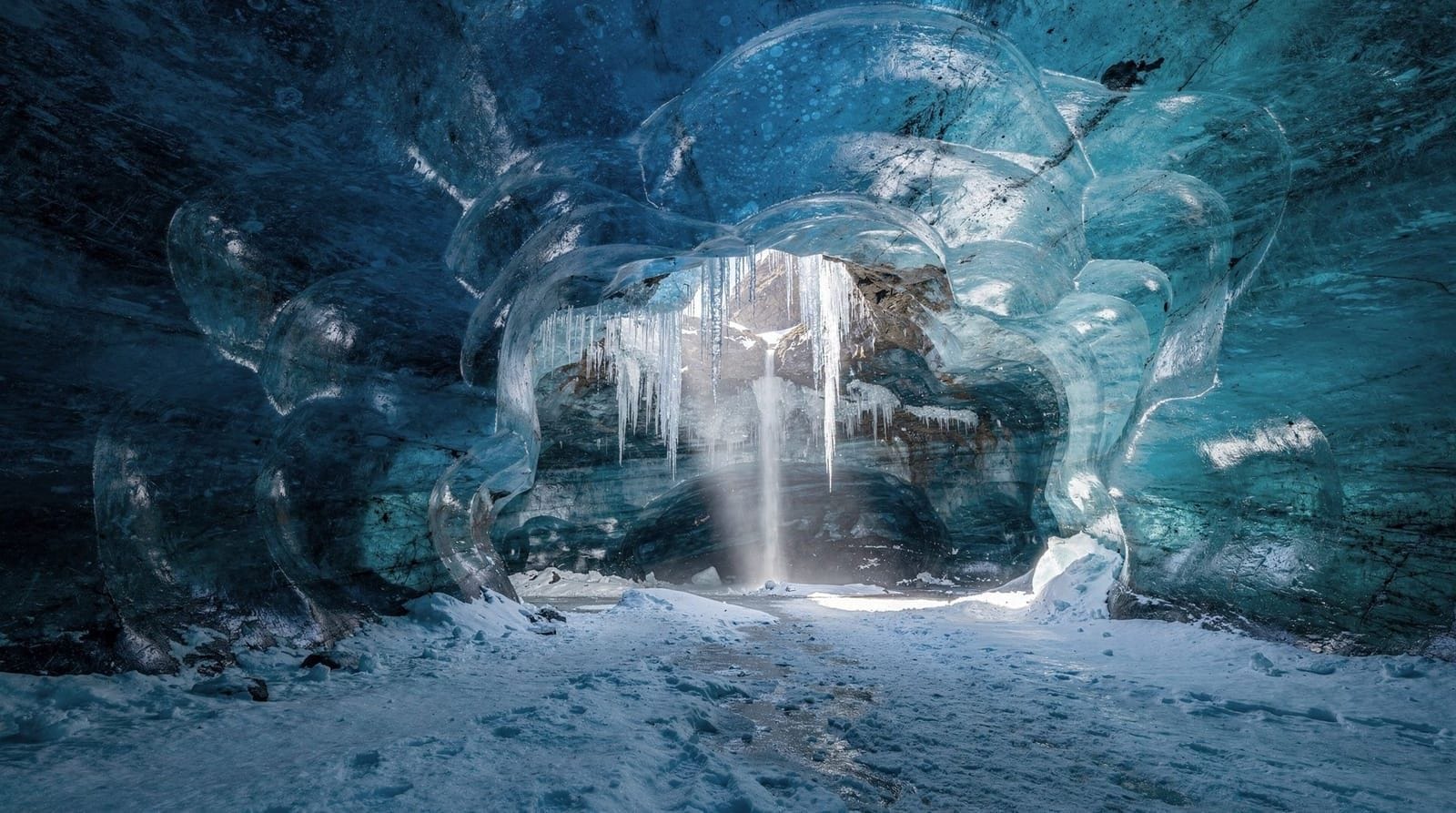
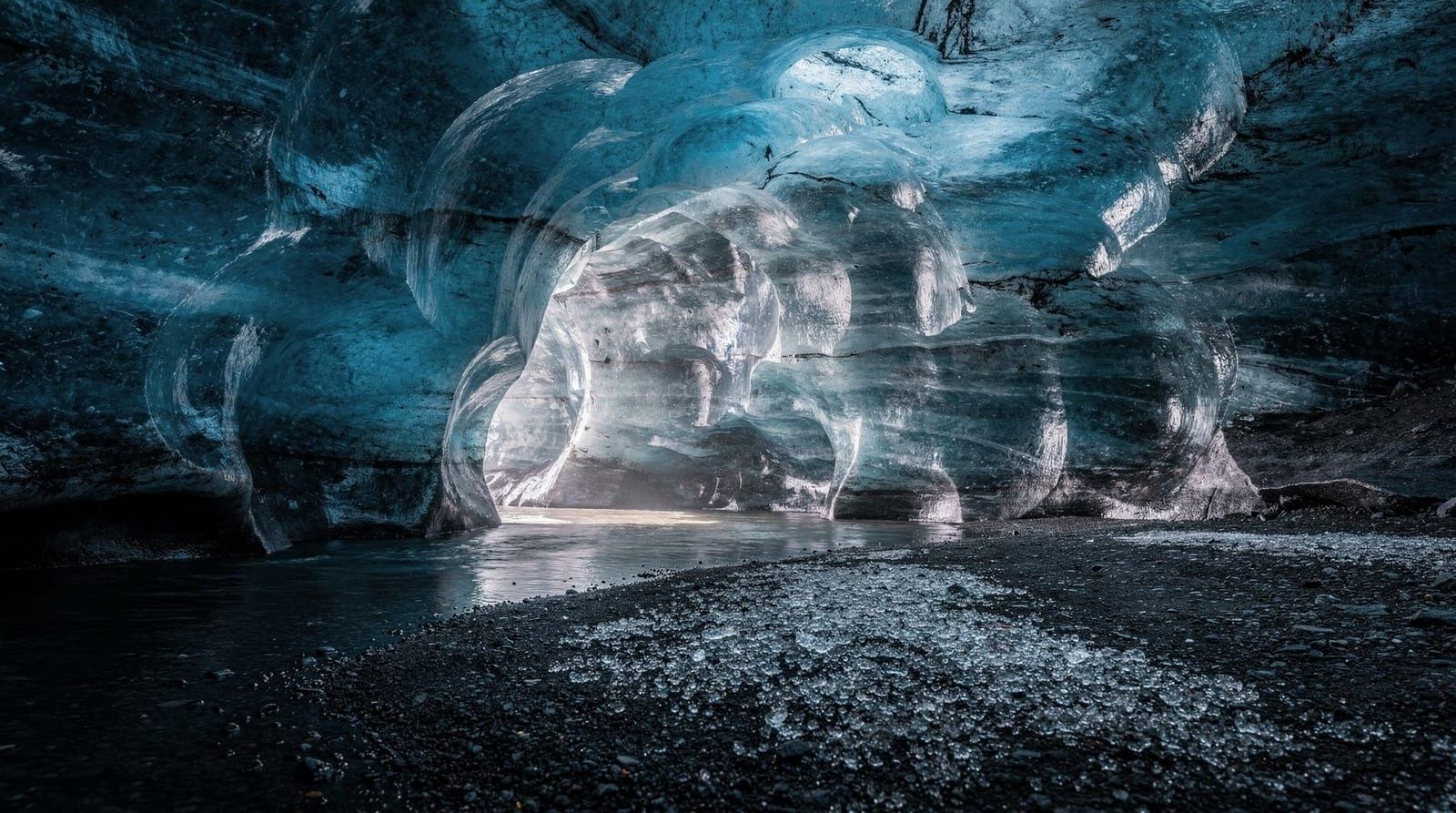
Natural ice caves (Vatnajökull): Formed by meltwater erosion inside the glacier over years. Change shape annually, some disappear entirely. Accessible only November–March for safety. Visual character is organic — irregular chambers, varying ceiling heights, translucent blue ice walls.
Into the Glacier (Langjökull): Excavated and maintained by human engineering. Consistent and predictable. Open year-round. The ice is genuinely ancient glacial ice (centuries to thousands of years old), but the spaces were cut rather than formed naturally. The visual character is more uniform — you can see the machinery marks in some sections.
Neither is superior — they’re different products for different needs. Natural caves deliver the unpredictable sublime; the artificial tunnel delivers consistent access and year-round availability.
Side by side:
| Into the Glacier (Langjökull) | Natural ice cave (Vatnajökull) | |
|---|---|---|
| Availability | Year-round | November–March only |
| Access | Operator’s monster trucks only | Guided super-jeep or on foot |
| Visual character | Consistent, some machinery marks visible | Organic, unpredictable, changes yearly |
| Physical demand | Low — walking on a maintained floor | Low to moderate, depending on operator |
| Best for | Summer visitors, families, guaranteed access | Winter visitors wanting the more dramatic natural aesthetic |
The monster truck experience
Getting to the tunnel is itself an event. The glacier sits above the road network at 1,200 metres, across highland terrain that no standard vehicle can navigate. Into the Glacier operates their own fleet of heavily modified monster trucks — vehicles with tyres over a metre in diameter, built to traverse snow and soft highland terrain.
The 20–30 minute monster truck ride from the highland base to the glacier entrance is a physical experience — the vehicles bounce and tip on uneven terrain in ways that feel precarious but are well within their design limits. Guides on board provide commentary on the landscape. Views from the elevated vehicles over the Icelandic interior are excellent.
For many visitors, particularly those travelling with children, the monster truck ride is one of the most memorable elements of the day.
Inside the tunnel
The tunnel system comprises roughly 500 metres of passages in a loop configuration, allowing entry and exit at the same point without backtracking. Key features:
Ice walls: The primary visual. The carved walls expose ancient glacier ice — layers visible from different periods of accumulation, ranging from white to pale blue where density is highest. You can see how the glacier is constructed over time: layer by layer of compacted snowfall.
Rooms and chambers: The tunnel includes wider chambers where guides can gather groups for explanation. The most notable is a small chapel space — a purely aesthetic addition that benefits from the acoustics of the ice.
The ice itself: Touch is permitted in specified areas. The ice is surprisingly cold to the touch even with gloves — a reminder that you’re inside a functioning glacier. The walls can feel slightly damp where surface water migrates.
Geological displays: The tunnel includes educational panels explaining glacier formation, the Into the Glacier project, and Iceland’s glaciological history.
Getting there
Langjökull is accessible from the south (via Route 518 from Route 35, the Kjalvegur highland road) or from the west (via Húsafell, a small resort area in western Iceland). The most common approach:
From Reykjavík: Approximately 2–2.5 hours by road to the operator’s highland base. Route 1 north, then Route 520 or through Borgarnes toward Húsafell. The operator runs scheduled departures that include the transfer to the glacier.
From the Golden Circle area: Route 35 passes the junction for Langjökull access. Visitors driving the Golden Circle self-drive can add Langjökull in the same day — it extends the day significantly but keeps the geography sensible.
Important: All access to the tunnel must be through the Into the Glacier operator. You cannot drive to the glacier entrance independently — the highland road requires the operator’s specific vehicles.
Perlan glacier and ice cave exhibition — Reykjavík (alternative for non-drivers)
Combining with snowmobiling
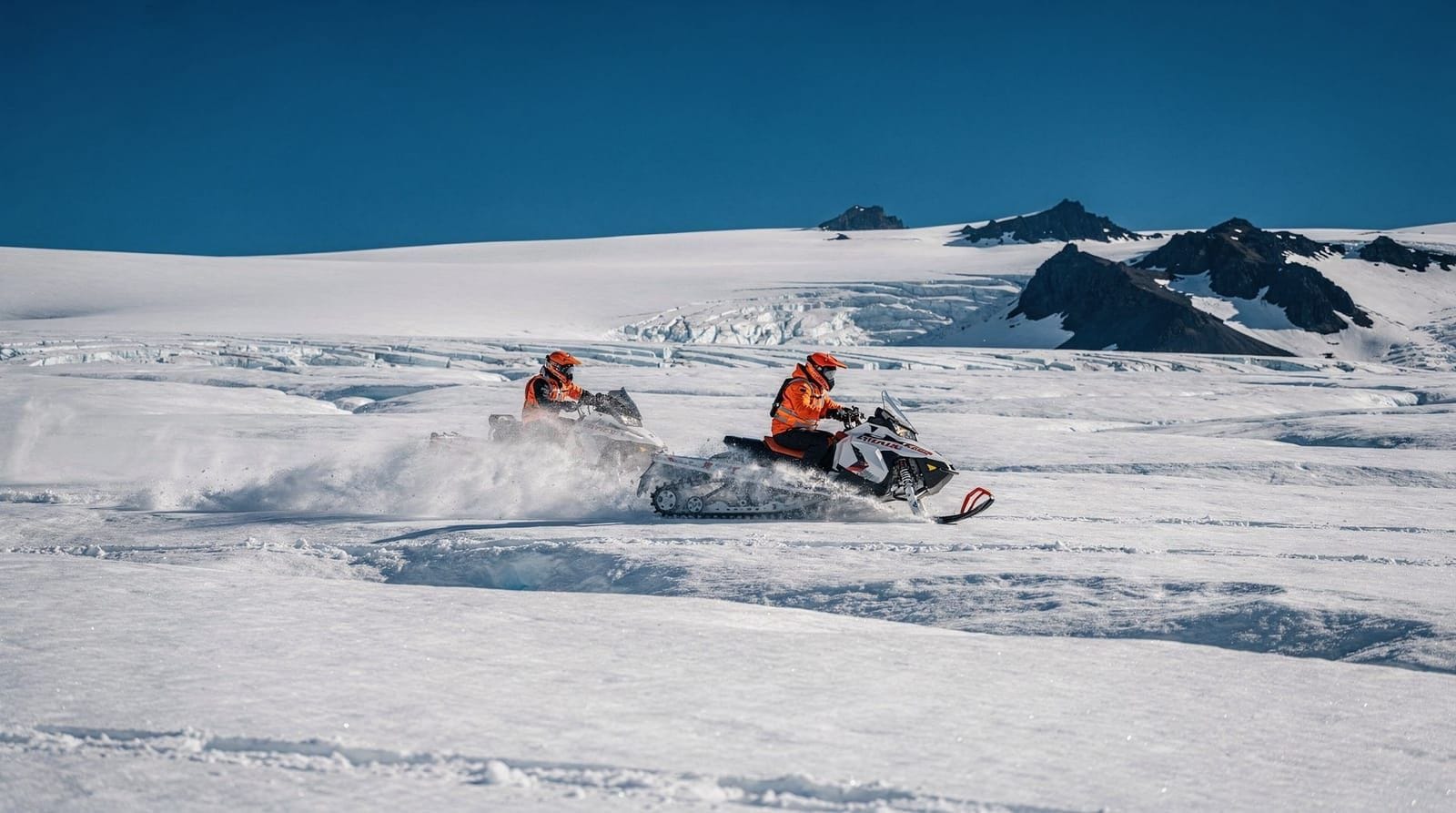
Langjökull is one of Iceland’s primary snowmobiling locations, and the Into the Glacier operation offers snowmobile tours on the glacier surface as a complement to the tunnel visit. Combined tunnel + snowmobile packages are available and represent good value compared to booking separately.
The sequence is typically: monster truck transfer to glacier → snowmobile tour on the surface → tunnel visit. This makes for a 5–6 hour activity block. See snowmobiling in Iceland for more on what glacier snowmobiling involves.
Who this is best suited for
Into the Glacier is ideal for:
- Families with children (monster trucks + glacier interior is genuinely thrilling for kids)
- Summer visitors who want glacier interior access but can’t access natural ice caves
- Those unable to do strenuous glacier hikes (no crampons required, manageable terrain inside)
- Anyone for whom predictability and guaranteed access are important
Consider alternatives if:
- You’re visiting in November–March and can access natural Vatnajökull ice caves — the natural cave aesthetic is more spectacular for most visitors
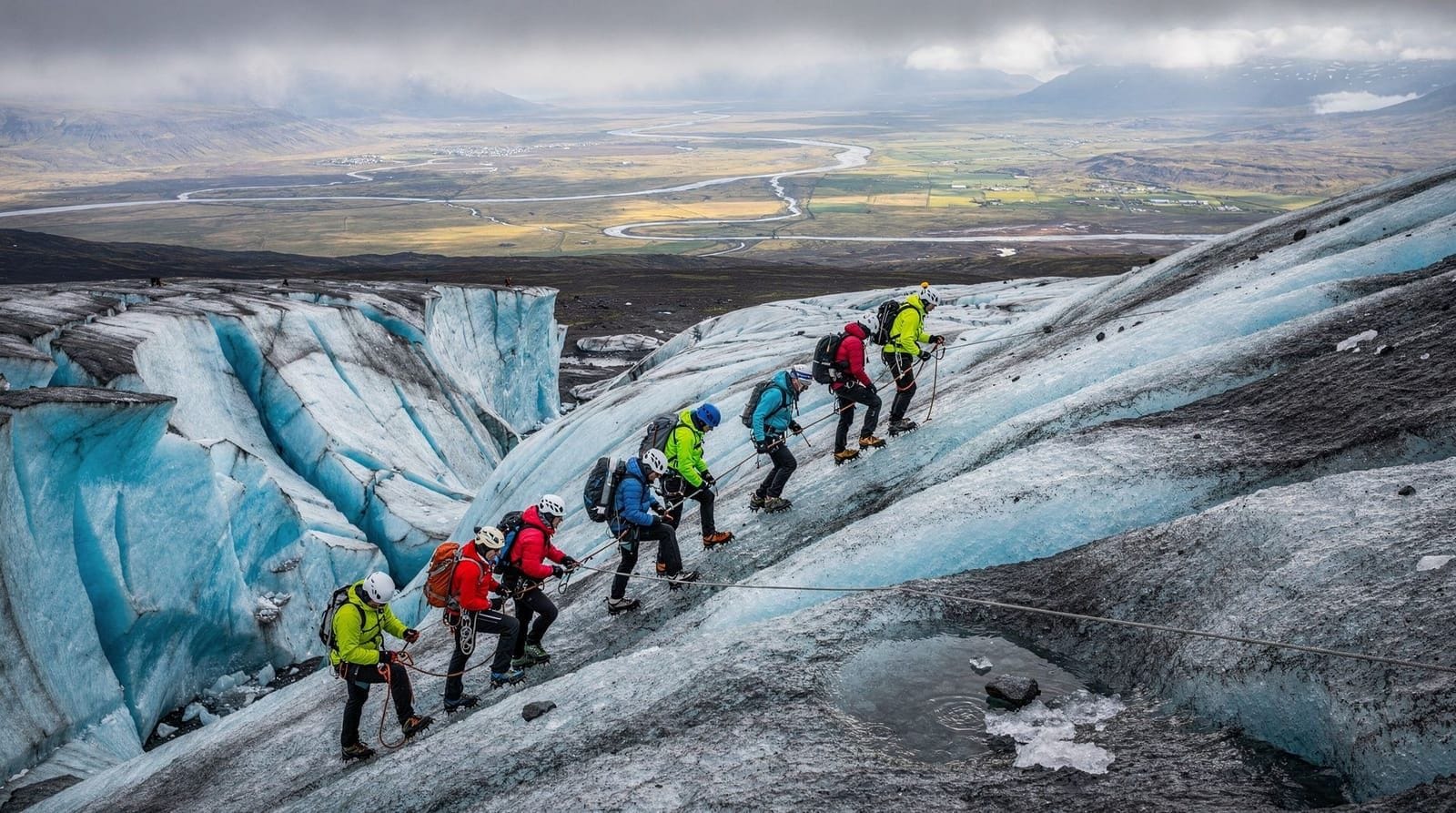
- You specifically want glacier surface hiking — the Into the Glacier tour doesn’t include surface hiking in the way that Sólheimajökull or Skaftafell tours do
- Budget is the primary constraint — at €125–€165, it’s among the more expensive single activities in Iceland
The glacier’s geology and movement
Langjökull is Iceland’s second-largest ice cap, covering approximately 920 square kilometres at elevations between 1,100 and 1,500 metres above sea level. Unlike some glacier tourism that treats the ice as simply frozen water, the Into the Glacier experience is partly educational about what a glacier actually is.
How glaciers form: Iceland’s glaciers formed over centuries of accumulated snowfall. At depth, the weight of accumulated snow compresses lower layers progressively — first into firm (partially compacted snow), then into glacial ice. The ice visible in the tunnel is centuries old at the surface layers and potentially much older deeper inside. The compaction process removes air bubbles, creating the distinctive blue or milky-white appearance of glacial ice.
Glacier movement: Langjökull flows outward from its highest point at roughly 1 metre per day in the most active sections — faster than you might expect. The tunnel moves with the glacier; the entire structure advances approximately 1–2 metres per year in the direction of ice flow. This is why the tunnel requires annual maintenance — the ice moves around and through the excavated space, requiring reshaping.
Meltwater: In summer, meltwater from the glacier surface percolates through the ice and emerges at the glacier margins. Some of this meltwater recharges the aquifer system that feeds Silfra and Þingvallavatn lake. The water you swim in at Silfra spent time inside a glacier like Langjökull decades to centuries ago.
Glacial retreat: Langjökull, like all of Iceland’s glaciers, is retreating measurably. Satellite imagery shows the glacier losing area annually. The retreat is less visually dramatic than at Sólheimajökull (which has a lagoon at its terminus), but the volume loss is significant. The Into the Glacier tunnel operators monitor the ice ceiling regularly and adjust the route as conditions change.
Driving to Langjökull independently
While all access to the glacier requires the operator’s vehicles, the drive to the highland base is accessible in a standard rental car — at least in summer when the approach road is open and dry.
The main route from Reykjavík:
- Route 1 north from Reykjavík to Borgarnes (75 km, 50 minutes)
- Route 50 east from Borgarnes toward Húsafell (70 km, 1 hour)
- Húsafell and the operator’s base is the end of standard road access
From here, only the operator’s monster trucks continue to the glacier. Independent vehicles cannot proceed.
Route via the Golden Circle: Alternative approach from the south via Route 35 (Kjalvegur — northern highland road from the Golden Circle area). This route requires a 4x4 in most conditions and is effectively a super-jeep/highland route that passes between Þingvellir and Gullfoss before reaching the Langjökull area. It’s scenic but adds complexity.
Winter access: The approach road to Húsafell may be impassable or require 4x4 in winter. Operators run the glacier tours year-round using their own vehicles from their base, but confirm road conditions before attempting the drive in winter months (November–March).
Practical information
Season: Year-round. Summer (June–August) is peak demand — book 3–4 weeks ahead. Winter has fewer visitors and better snowmobile conditions.
Temperature inside: -1°C to 0°C year-round. Dress as if for outdoor winter conditions regardless of the date.
Physical requirements: Walking approximately 500 metres on uneven tunnel floor, with some ducking in lower sections. No crampons required. Suitable for most adults and children above about 6 years.
Duration: 1 hour inside the tunnel. Monster truck transfer each way: 25–30 minutes. Total excursion: 3.5–4.5 hours from the highland base.
Photography: Wide-angle lens (16–24mm) for the tunnel passages. Ice walls photograph well with ISO 1600–3200 and slow shutter speeds. The operator’s lighting is subtle but usable.
West Iceland — making the most of the Langjökull area
Langjökull sits in western Iceland, an area that receives considerably fewer visitors than the south coast despite offering genuinely excellent landscapes. Building a Langjökull glacier visit into a West Iceland loop is one of Iceland’s best-value itinerary choices:
Húsafell: The small resort area near the Langjökull approach road. This has a geothermal swimming pool, camping, and several guesthouses. The Hraunfossar waterfall (river water emerging from a lava field over a 900-metre wide stretch) is 15 minutes from Húsafell and one of Iceland’s most unusual waterfall formations.
Snæfellsnes Peninsula: 90 minutes north-west of the Langjökull area. The Snæfellsnes Peninsula includes Snæfellsjökull glacier (the Jules Verne volcano), the town of Grundarfjörður, Kirkjufell mountain (the most photographed mountain in Iceland), and dramatic west coast scenery. A circuit combining Langjökull glacier + Snæfellsnes + return to Reykjavík via Borgarnes makes a 2-day loop that covers some of Iceland’s best-value, less-crowded landscape.
Glymur waterfall: Iceland’s second-tallest waterfall (196 metres), a 1.5-hour hike from the car park in the Hvalfjörður area, about 50 km north of Reykjavík and directly en route to the Langjökull area. Often missed by visitors who take Route 1 rather than the coastal road.
The ice tunnel experience vs. natural caves — final comparison
After reading about both options, visitors frequently ask directly: should I do Into the Glacier or a natural ice cave?
Do Into the Glacier if:
- You’re visiting April–October (natural Vatnajökull caves are closed)
- You have children or participants with limited physical mobility
- You want guaranteed access regardless of conditions
- You’re already in west Iceland or combining with Langjökull snowmobiling
- You want to understand glacier formation through educational content
Do a natural Vatnajökull cave if:
- You’re visiting November–March
- You’re based in south-east Iceland or can reach the area
- Authentic geological experience (caves formed naturally) is important to you
- You prefer the visual unpredictability of natural formations over the consistency of excavated tunnels
Do Katla ice caves if:
- You want year-round natural cave access
- You’re on the south coast anyway (Vík area)
- You’re interested in volcanic geology specifically
- Budget is somewhat constrained (Katla is slightly less expensive)
None of these are objectively superior — they’re different products that serve different itineraries and preferences.
Frequently asked questions about Into the Glacier Langjökull
Is the ice inside the tunnel the same as natural ice cave ice?
Yes — the ice is genuinely ancient glacial ice, the same material that forms natural ice caves. The difference is that the tunnels were excavated through it rather than formed naturally by meltwater. The ice’s physical properties (density, colour, age) are identical to what you’d find in Vatnajökull’s natural caves.
How old is the ice inside?
The tunnel passes through sections of glacier that were formed hundreds to several thousand years ago, depending on depth. Guides provide specific dates for the ice layers visible in certain sections based on glaciological analysis.
Can I do Into the Glacier in bad weather?
The tunnel itself is entirely protected from weather — inside is the same regardless of outside conditions. The monster truck transfer can be modified or delayed in extreme weather. The operator manages scheduling around weather proactively.
Is Into the Glacier suitable for people with claustrophobia?
The tunnel is spacious in most sections — roughly 3–4 metres high and 2–3 metres wide. Some narrow connection passages exist. Visitors with significant claustrophobia may find specific sections uncomfortable; discuss this with the operator before booking.
Is there a gift shop or café on-site?
The highland base has basic facilities. There’s no café on the glacier itself. Bring water and a snack for the full excursion.
Is Into the Glacier worth it if I’ve already done a glacier hike elsewhere?
Yes, arguably more so — a surface glacier hike (like Sólheimajökull) and Into the Glacier’s interior tunnel are genuinely different experiences. The hike shows you the glacier’s surface and crevasses; the tunnel shows you its interior structure and layered history. Doing both gives a more complete picture of what a glacier actually is, rather than being redundant.
Can I visit Into the Glacier as a day trip without a rental car?
Some tour operators run combined coach transfer plus tunnel packages from Reykjavík, though these are less common than for south coast attractions given the distance and the operator’s own vehicle requirement past Húsafell. Check current departure options directly with the operator, since scheduled coach transfers to Langjökull specifically are more limited than for the Golden Circle or south coast.
Building Langjökull into a wider itinerary
Because Langjökull sits in western Iceland rather than directly on the Ring Road, it rewards a bit of upfront planning more than south coast attractions do. The two realistic approaches: a long day trip from Reykjavík (feasible but adds up to 5 hours of driving on top of the glacier activity itself), or an overnight in the Húsafell/Borgarnes area that turns the visit into a relaxed two-day West Iceland loop alongside Hraunfossar, Glymur, and the Snæfellsnes Peninsula.
For visitors trying to decide whether the detour is worth it: Langjökull earns its place on an itinerary for anyone visiting outside the November–March natural ice cave season who still wants a genuine glacier-interior experience, and for anyone building a West Iceland loop who would otherwise be driving past the turn-off regardless.
Top experiences
Bookable activities with verified prices and instant confirmation on GetYourGuide.
Top experiences
Best-rated activities across GetYourGuide and Viator.

Ice Cave by Katla Volcano Super Jeep Tour from Vik
- Viator

Sólheimajökull Glacier Hike – Adventure in a Small Group
- Viator

Ice Cave Tour from Vík
- Viator

Blue Ice Discovery – Guided Glacier Hike from Skaftafell
- Viator

Glacier Hike from Skaftafell - Extra Small Group
- Viator

East Glacial River – Grade 4 Rafting with Drysuits, North Iceland
- Viator