Glacier hiking in Iceland — the complete guide
Reykjavik: Solheimajokull Glacier hike ice climbing intro
Do you need a guide to hike on a glacier in Iceland?
Yes — stepping onto any Icelandic glacier without a certified guide is both illegal in most areas and genuinely dangerous. Crevasse fields, unstable ice, and sudden weather changes make solo glacier travel extremely hazardous. Licensed operators supply crampons, ice axes, and helmets, and they know current ice conditions daily.
Why glacier hiking is Iceland’s standout adventure
Iceland sits on top of more glacial ice per capita than almost anywhere on earth. Roughly 11% of the country’s surface — about 11,000 square kilometres — is covered by ice, and that figure has been shrinking measurably since the 1990s. Hiking on a glacier isn’t a gimmick here; it’s direct engagement with one of the defining features of Icelandic geography.
| Where | Sólheimajökull (south coast) or Skaftafell/Vatnajökull |
| Cost | ~8,000–18,000 ISK per person, 2–4 hours |
| Time needed | Half-day from the glacier car park, full day from Reykjavík |
| Included | Crampons, helmet, ice axe, guide |
| Best time | Year-round; ice caves only Oct–Apr |
What makes glacier hiking in Iceland particularly compelling is accessibility. You can park your car at Sólheimajökull glacier on the south coast, join a guided group, and be walking on blue-grey ice within 30 minutes. No mountaineering background required. No multiday expedition necessary. Just a reasonable level of fitness and waterproof boots.
That said, glaciers are not theme parks. The same features that make them spectacular — crevasses, moulins, unstable seracs, flash meltwater channels — make independent walking genuinely life-threatening. Every year, emergency services rescue tourists who ignored barriers and walked onto glacier tongues unguided. This guide covers how to do it properly.
The main glaciers open to hikers
Sólheimajökull is the outlet glacier of Mýrdalsjökull volcano on the south coast, accessible from the Ring Road (Route 1) roughly 180 km from Reykjavík. It’s the most popular glacier hike in Iceland by sheer volume — dozens of operators run tours here daily, which means a range of prices and group sizes. The glacier surface is heavily crevassed in places, with dark volcanic ash layers visible in the ice. These ash bands are historical records of eruptions, particularly from Katla, which sits directly beneath.
Skaftafell (part of Vatnajökull National Park) offers hikes on Falljökull and Svínafellsjökull, two outlet glaciers of Vatnajökull, Europe’s largest glacier. Tours here tend to run in smaller groups, and the landscape is more dramatic — towering nunataks and the Hvannadalshnjúkur peak visible on clear days. This is also where many operators run their blue ice cave tours in winter.
Langjökull, Iceland’s second-largest glacier, is where the Into the Glacier tunnel experience is located — an entirely different kind of glacier visit, but worth mentioning as an alternative for those not keen on surface hiking.
Snæfellsjökull on the Snæfellsnes Peninsula crowns a dormant stratovolcano. Hikes here are less common but available through specialist operators. Weather on the peninsula is famously unpredictable even by Icelandic standards.
Choosing the right tour
The glacier hike market in Iceland is large and variable in quality. Here’s what actually matters when comparing operators:
Certified glacier guides: Look for guides with certification from the Association of Glacier Guides or a similar body. Reputable operators — Arctus (formerly Extreme Iceland), Local Guide, and Tröll Expeditions among others — all employ certified guides. Budget operations sometimes run large groups with a single guide who has limited formal training.
Group size: The most common complaint in reviews isn’t the glacier itself — it’s being in a group of 25 people where you spend more time waiting than walking. Groups of 8–12 are standard; anything above 16 should be a red flag for a glacier hike (vs. a guided walk near a glacier).
Duration on the ice: A “glacier hike” that includes 3 hours of bus travel from Reykjavík and only 1.5 hours of actual ice time is different from a 3-hour technical hike from the car park. Read the breakdown carefully. If you’re driving yourself, book directly with operators based at or near the glacier.
What’s included: Crampons, helmets, and harnesses should be standard inclusions. Ice axes are typically provided for intermediate-level hikes. If an operator charges separately for safety equipment, walk away.
Sólheimajökull glacier hike + ice climbing intro (from Reykjavík)
What the experience is actually like
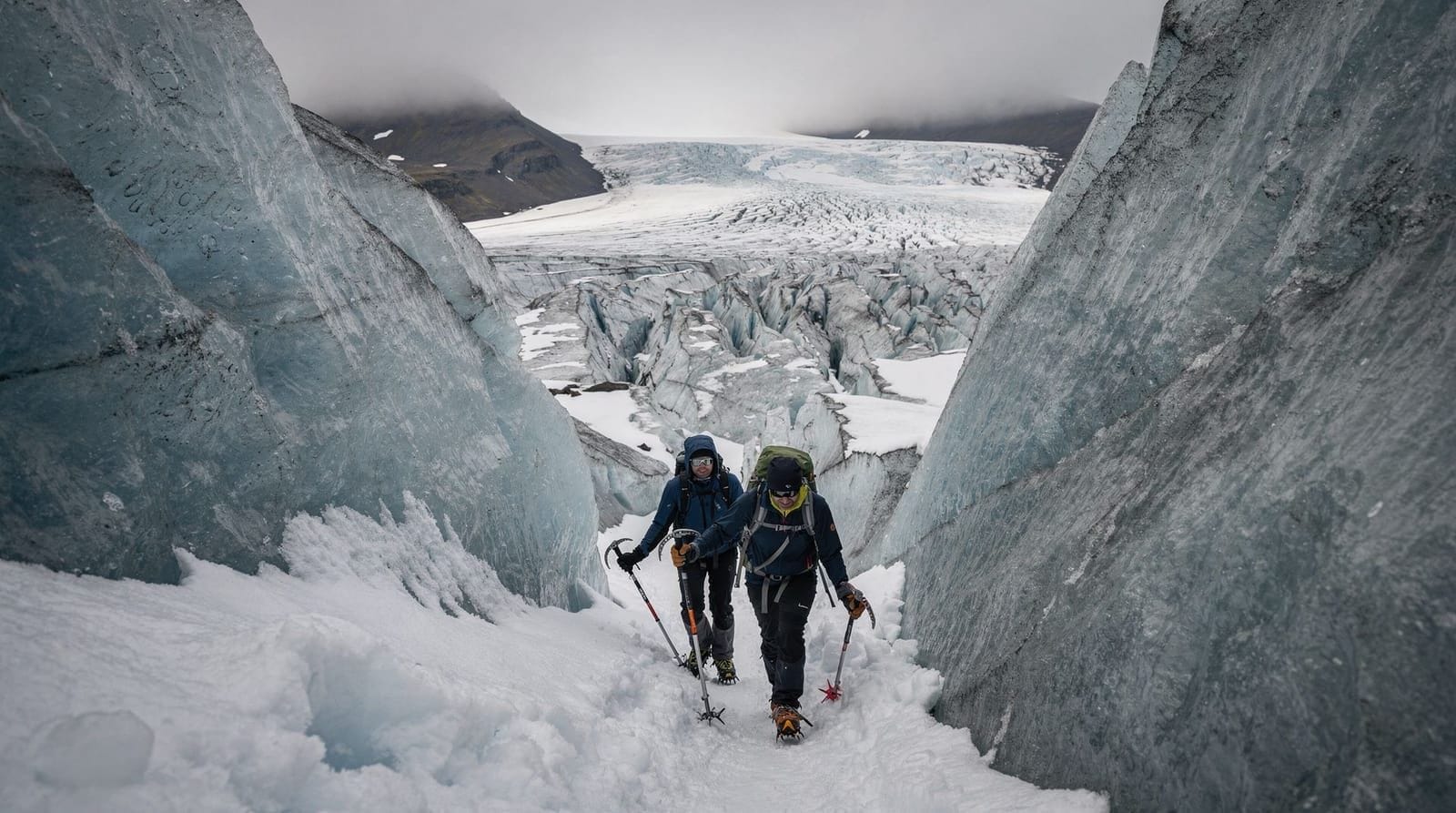
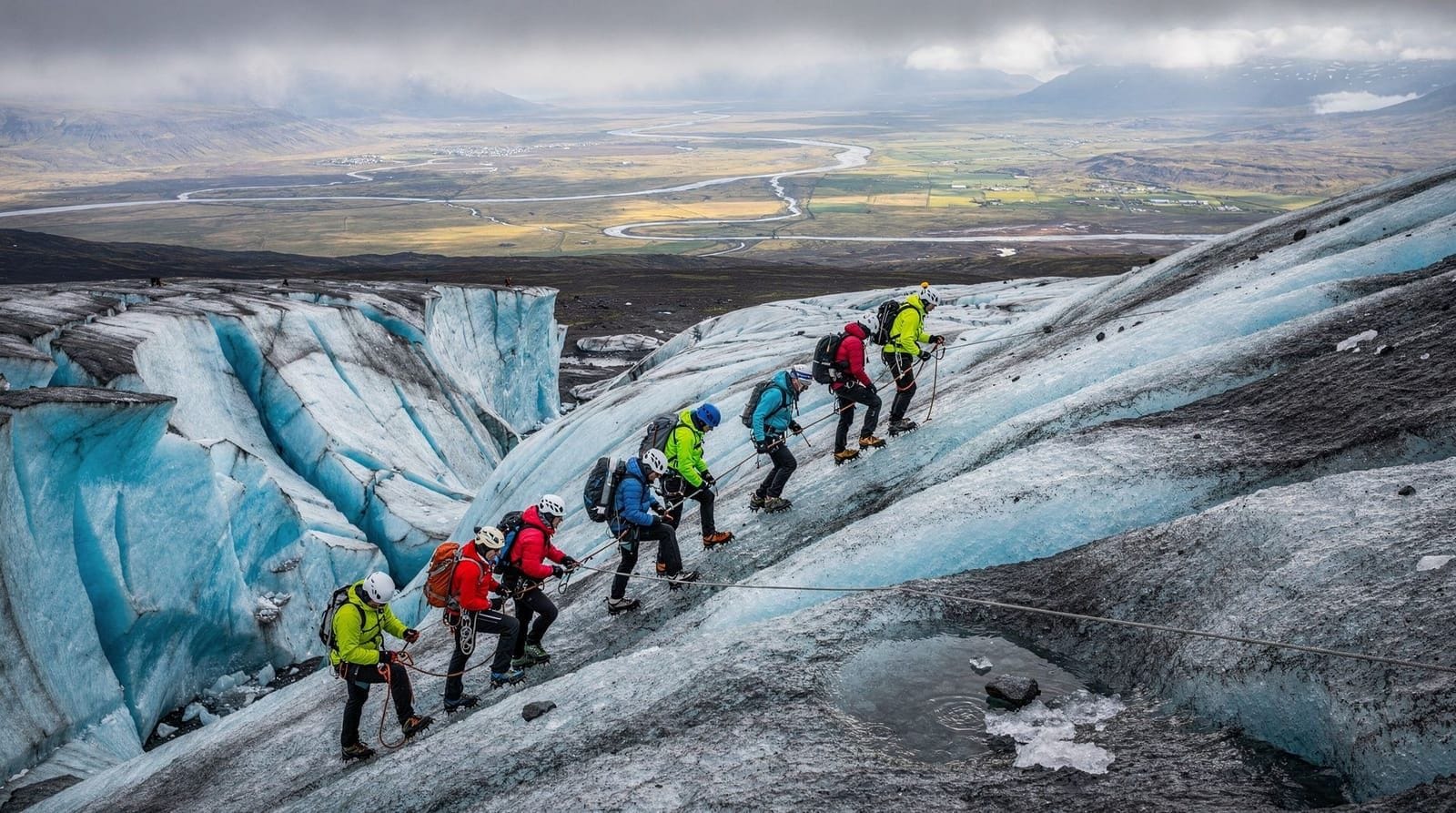
Arrive at the car park, which for Sólheimajökull is a 15-minute walk from the glacier terminus. Your guide briefs the group on safety: stay together, don’t step off the marked path, fall with your ice axe if you slip. Crampons go on at the glacier edge — the technique for walking with them (flat-footed, deliberate steps) takes about 10 minutes to feel natural.
The first 20 minutes of most south coast glacier hikes involves navigating the lower terminus, which tends to be rubble-covered ice with exposed meltwater streams. It’s not particularly scenic, but it transitions quickly into cleaner blue ice as elevation increases.
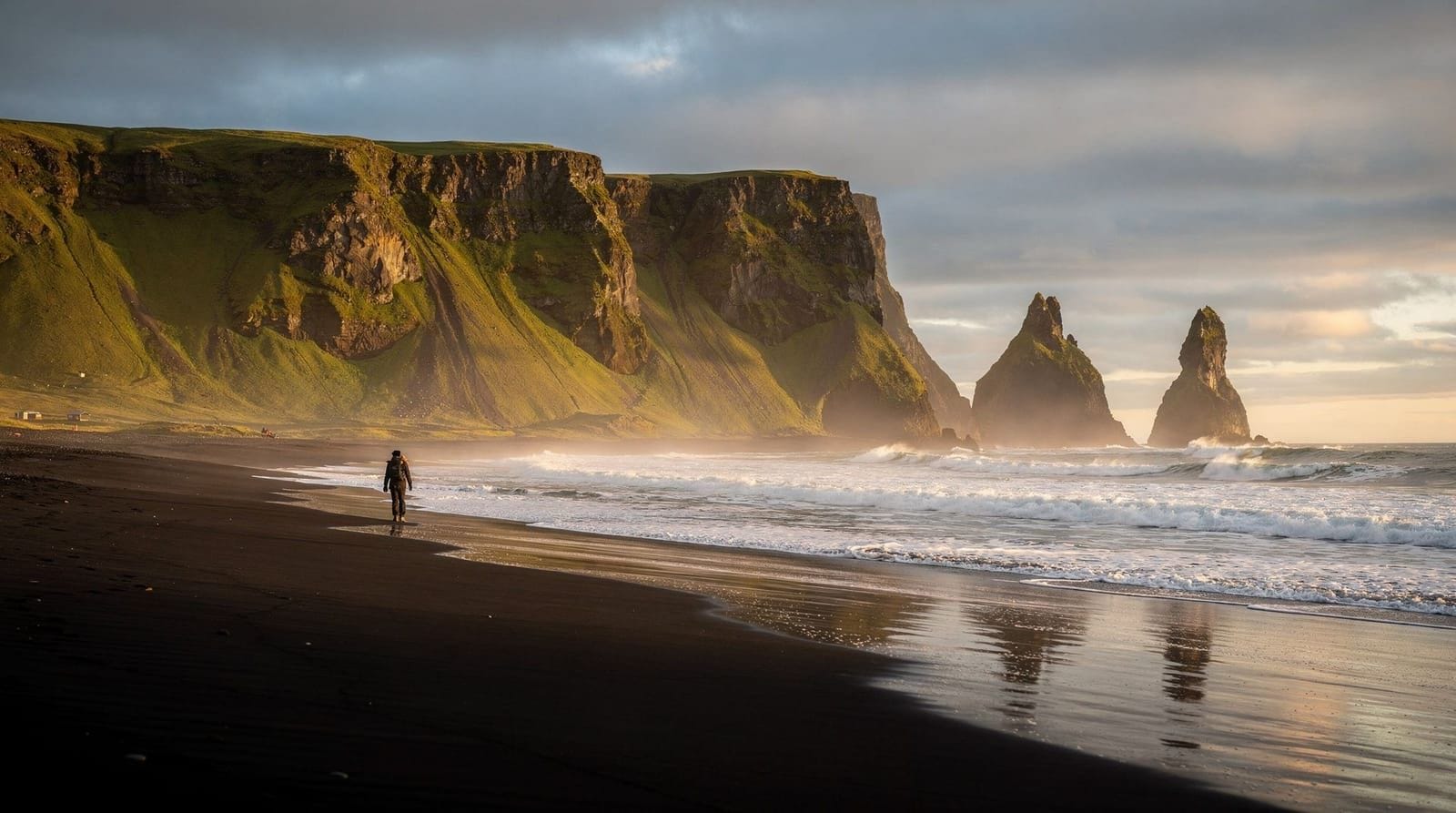
At mid-elevation, guides typically stop to show the group specific features: a moulin (a vertical meltwater shaft that can drop dozens of metres into the glacier), a crevasse that’s safe to look into from a distance, or the visible ash layers from historical eruptions. On a clear day, the views back toward the coast — black sand, the Atlantic, steam plumes from Katla — are exceptional.
The return route usually follows the same path, though some guides vary it to show different features. Total time on ice: 1.5–2.5 hours depending on tour length.
Self-drive vs. tour from Reykjavík
If you have a car, driving to Sólheimajökull and booking directly with a local operator is almost always better value than booking a full-day bus tour from Reykjavík. The Reykjavík departure tours bundle glacier hiking with south coast sightseeing, which is convenient but means 6–8 hours of the day involve a bus rather than the glacier.
Direct booking at the glacier typically costs 8,000–12,000 ISK (€55–€80) per person for a 2-3 hour hike. Bus tours from Reykjavík run 20,000–30,000 ISK (€135–€200), but they include transport, and you’d cover Seljalandsfoss, Skógafoss, and Reynisfjara in the same day.
For Skaftafell, self-driving makes even more sense — it’s 5+ hours from Reykjavík, so day-trip bus tours are extremely long days. Staying overnight near Kirkjubæjarklaustur or Höfn and joining a morning glacier hike is a far better experience.
South coast + glacier hike day trip from Reykjavík
Seasonal considerations
Summer (June–August): Peak season, most tours running, long daylight. The glacier looks greyer from surface dust and ash at lower elevations, but conditions are stable and weather is most likely to cooperate. Book weeks in advance.
Autumn (September–October): Good light quality, smaller crowds, occasional northern lights possible. Some operators reduce frequency. Daylight window shortens noticeably by October.
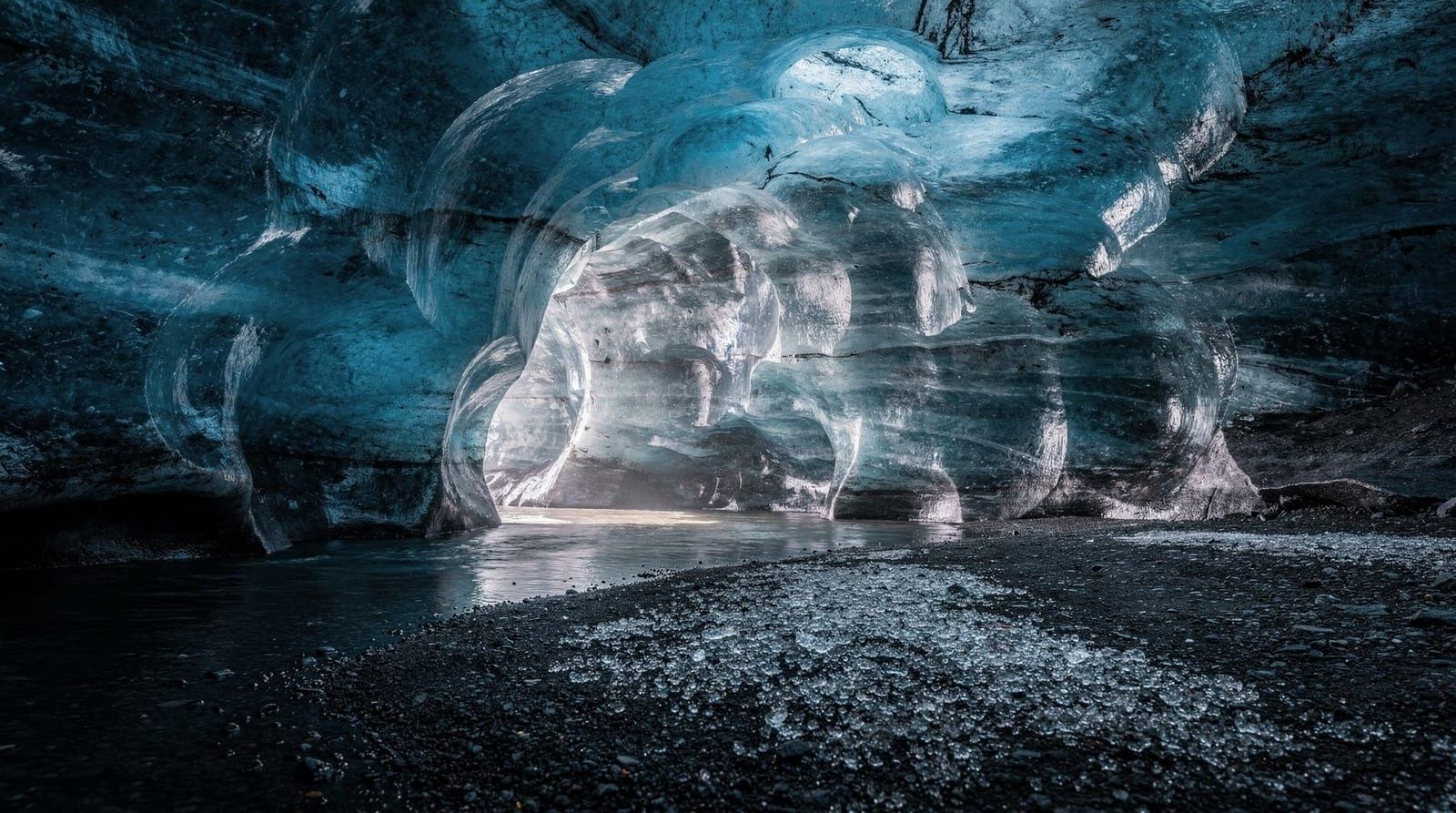
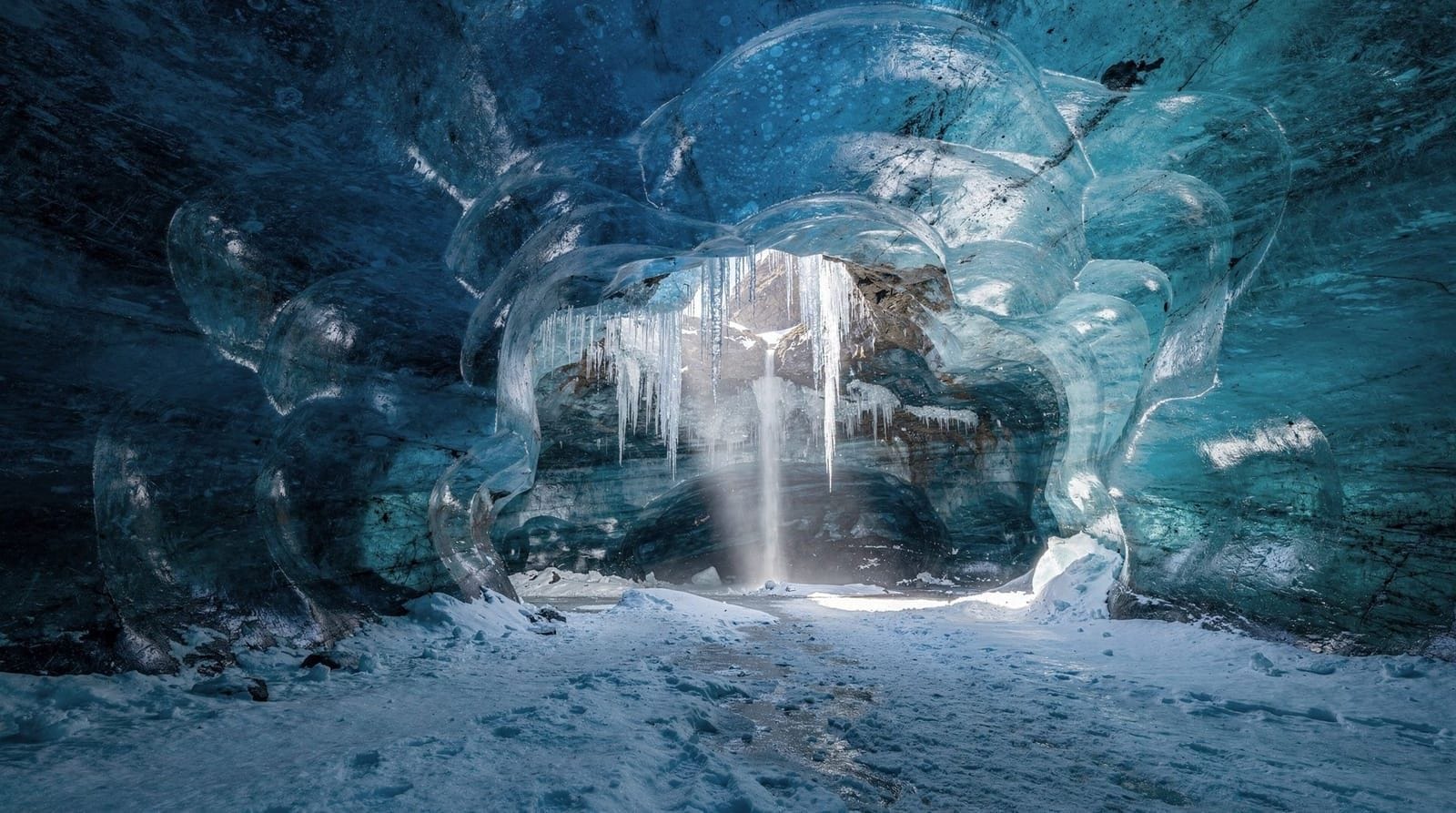
Winter (November–March): Glacier hikes run year-round, but tours are shorter due to limited daylight. The ice caves at Skaftafell and Vatnajökull are accessible only in winter (typically November–March) when ice is stable enough. If your primary interest is ice caves rather than surface hiking, see ice caving in Iceland.
Spring (April–May): Often overlooked but excellent — snow-covered glaciers look cleaner, fewer tourists, and improving daylight. Snowfall can make some areas temporarily inaccessible; guides assess conditions daily.
Vatnajökull — the serious option
For those wanting more than a 2-hour tourist walk, Vatnajökull offers longer and more technical hikes from Skaftafell. These run 4–6 hours and cover significantly more crevassed terrain, often including rope techniques. Guides carry full crevasse rescue equipment.
The approach to Skaftafell from Reykjavík takes roughly 5 hours; most participants on longer hikes overnight locally. Skaftafell itself has a campsite, and there’s accommodation in Kirkjubæjarklaustur (about 65 km west) and Höfn (about 90 km east). The Skaftafell area also serves as the starting point for some multi-day glacier traverse expeditions, though those require prior mountaineering experience.
Skaftafell – Vatnajökull moderate glacier hike (small group)
What not to do
Don’t walk onto the glacier without a guide. The barriers at Sólheimajökull and other glacier access points exist because people have fallen into crevasses doing exactly this. The 2023 season saw several search-and-rescue operations involving tourists who bypassed signs.
Don’t wear regular hiking shoes. Crampons require stiff-soled boots with ankle support. If you show up in trail runners or sneakers, reputable operators will refuse to take you. Some offer boot rentals; confirm this before booking if your footwear is borderline.
Don’t assume the glacier looks the same as photos from 5 years ago. Icelandic glaciers are retreating visibly — Sólheimajökull has retreated hundreds of metres in recent decades. The ice cave at a location that was accessible last year may not be this year. Always book through operators who assess conditions in real time.
Don’t underestimate the cold. Even in July, temperatures on the glacier surface can be 5–10°C cooler than the car park, and wind chill on exposed ice is significant. A summer t-shirt tour will make for a miserable hike.
Glacier hiking with children
Most operators set a minimum age of 8–10 years for standard glacier hikes. Children generally handle the experience well — crampons are available in small sizes, and kids often adapt to the walking technique faster than adults. The main concern is physical stamina: a 2-hour hike on crampons tires young legs more than flat walking.
If travelling with children, the south coast glacier hike day trip format works well — the glacier portion is structured as a relatively short activity within a longer day. Dedicated family-oriented glacier walks are also available from some operators, with slower pacing.
Equipment guide — what’s provided vs. what to bring
Every glacier hike includes certain provided equipment. Understanding exactly what you get — and what gaps you need to fill yourself — prevents both over-packing and arriving underprepared.
Provided by operators:
- Crampons (fitted at the glacier edge)
- Helmet
- Ice axe (for intermediate and advanced hikes)
- Harness (for hikes with vertical ice sections)
- Safety briefing and guide expertise
You must bring:
- Waterproof, stiff-soled ankle boots (non-negotiable — if in doubt, ask your operator before the day)
- Wool or synthetic base layer (cotton retains moisture and cools you rapidly when wet)
- Fleece or insulated mid-layer
- Waterproof outer jacket and trousers
- Gloves (ideally waterproof)
- Buff or hat (wind chill at glacier elevation is significant)
Optional but recommended:
- Sunglasses (sun reflecting off ice in summer is intense)
- Sunscreen (altitude + ice reflection)
- Small backpack with water and a snack
- Camera (protect from meltwater splashes)
Most operators at glacier sites have a basic equipment check at the start of tours. If your boots are genuinely inadequate, some operators have rental options. Call ahead to confirm if you’re uncertain about your footwear.
Iceland’s glaciers — an overview
Understanding which glacier you’re visiting and why it’s where it is improves the experience. Iceland’s major glaciers:
Vatnajökull: Europe’s largest ice cap by volume, 7,700 km² in south-east Iceland. Covers 5 active volcanic systems. The outlet glaciers — Breiðamerkurjökull, Skeiðarárjökull, Falljökull, Svínafellsjökull — are where most tours operate. The ice here is ancient — centuries deep in the oldest sections.
Langjökull: Second largest, 900 km² in western Iceland. More plateau-like than Vatnajökull, with fewer volcanic systems beneath. Best known for the Into the Glacier tunnel and snowmobiling.
Mýrdalsjökull: 600 km² in south Iceland, covering Katla volcano. Sólheimajökull is its most-visited outlet. The volcanic geothermal heat beneath creates a complex subglacial hydrology and the black ash layers visible in the ice.
Eyjafjallajökull: Smaller (100 km²) but famous globally for the 2010 eruption that paralysed European air traffic. The glacier lies on the south coast between Seljalandsfoss and Sólheimajökull. Limited public glacier hiking access, but jeep tours cross it.
Snæfellsjökull: 100 km² on the Snæfellsnes Peninsula, covering a dormant stratovolcano. Jules Verne set his “Journey to the Centre of the Earth” entrance point here. Accessible by guided glacier hike with specialists.
Frequently asked questions about glacier hiking in Iceland
Do I need special insurance for glacier hiking?
Standard travel insurance with adventure activities coverage usually covers guided glacier hikes. Check your policy specifically for “guided glacier activities” — some exclude unguided mountaineering but include guided tours. If your policy is unclear, dedicated travel insurance with adventure sports coverage (World Nomads, for example) is worth the marginal additional cost.
How far in advance should I book?
For summer (June–August), book at least 2 weeks ahead for popular slots. For winter ice cave + glacier hike combos, book 4–6 weeks ahead. Tours at Sólheimajökull are available with shorter notice in spring and autumn.
Can I book on the day?
Technically yes, especially in shoulder season. But glacier tours operate with fixed guide-to-participant ratios, and last-minute spots fill quickly in peak season. Same-day booking is more reliable for self-drive visitors going directly to the glacier car park.
What happens if weather is bad?
Guides make go/no-go decisions on the morning of departure based on current ice conditions and forecast. Legitimate operators cancel for safety reasons and offer full refunds or rebooking. Budget operators may run in conditions that better operators would cancel. If in doubt, ask explicitly what their cancellation policy is for weather.
Is there a weight limit for glacier hiking?
Most operators don’t have explicit weight limits for standard glacier hikes. Equipment (crampons, harnesses) is sized up to around 140 kg. Some rope work on technical hikes has implicit weight-bearing limits — check directly if relevant.
Can I do a glacier hike and ice cave on the same day?
Yes — combined glacier hike plus ice cave tours exist (typically at Skaftafell in winter) running 5–7 hours. These are among the most popular full-day activities in south Iceland. See Vatnajökull ice cave for more detail on the ice cave portion.
Are glacier hikes environmentally damaging?
The glaciers are retreating due to climate change regardless of tourist visits. Guided hikes follow established routes and cause minimal additional impact. The more significant environmental concern is the carbon cost of flights to Iceland — something individual travellers can offset but not eliminate.
Which glacier hike should a first-timer book?
For most visitors, a standard 2–3 hour Sólheimajökull hike is the right starting point — it’s the most accessible, has the largest choice of operators and time slots, and gives a genuine sense of walking on ice without the logistics of a full-day Skaftafell trip. See Sólheimajökull glacier hike for a dedicated breakdown of that specific tour.
Do glacier hikes run in bad weather?
Light rain and wind are normal operating conditions — Icelandic glacier guides are used to them. Hikes are cancelled or rescheduled only for genuinely unsafe conditions: heavy wind that makes footing hazardous, dense fog that removes visual navigation on crevassed terrain, or unstable ice reported by the guide team that morning. Refunds or rebooking are standard when an operator cancels.
Comparing the main glacier hiking options
| Glacier | Distance from Reykjavík | Typical duration | Best for |
|---|---|---|---|
| Sólheimajökull | 180 km (2.5 hrs) | 2–3 hours on ice | First-timers, day-trippers |
| Skaftafell/Vatnajökull | 320 km (4.5–5 hrs) | 3–6 hours on ice | Longer hikes, more dramatic terrain |
| Langjökull (Into the Glacier) | 100 km (1.5 hrs + super-jeep) | ~1 hour inside tunnel | Non-hikers, year-round access |
| Snæfellsjökull | 190 km (2.5 hrs) | Snowmobile-based | Combining with Snæfellsnes sightseeing |
What operators don’t always tell you upfront
A few practical realities that rarely make it into marketing copy but affect the actual experience:
The bus ride can be longer than the hike. On a Reykjavík-departure south coast tour, it’s common to spend 3+ hours in transit for 1.5–2 hours of glacier time. If maximising ice time matters more than convenience, driving yourself to the glacier car park and booking directly with a local operator gets you more time on ice per hour spent.
Crampon fit matters more than most people expect. Ill-fitting crampons (too loose, or boots too flexible) cause more discomfort on a glacier hike than cold or wind. If your boots feel loose in the crampon straps during the fitting, say so before setting off — adjustments take two minutes and prevent a miserable hike.
Group photos slow everyone down. Guides generally accommodate photo stops, but a group of 12 each wanting individual photos at every ice formation can add 20–30 minutes to a tour. If photography is a priority, ask about smaller group or private options.
Not every “glacier tour” puts you on the ice. Some marketed “glacier experiences” are viewpoint drives or boat tours near a glacier terminus rather than actual guided walking on the ice surface. Read the description carefully — “glacier hike” or “glacier walk” with crampons listed as included is the language to look for.
Top experiences
Bookable activities with verified prices and instant confirmation on GetYourGuide.
Top experiences
Best-rated activities across GetYourGuide and Viator.

Ice Cave by Katla Volcano Super Jeep Tour from Vik
- Viator

Sólheimajökull Glacier Hike – Adventure in a Small Group
- Viator

Ice Cave Tour from Vík
- Viator

Blue Ice Discovery – Guided Glacier Hike from Skaftafell
- Viator

Glacier Hike from Skaftafell - Extra Small Group
- Viator

East Glacial River – Grade 4 Rafting with Drysuits, North Iceland
- Viator