Ice caving in Iceland — the complete guide for 2026
Jokulsarlon: Vatnajokull Blue ice cave guided tour
When is the best time for ice caving in Iceland?
For natural blue ice caves at Vatnajökull, the season runs roughly November through March — the ice is only stable enough for safe access during winter. Katla's geothermal ice caves are accessible year-round. The Langjökull ice tunnel is open all year. Each type offers a different experience.
The different types of ice caves in Iceland
Before booking anything, it helps to understand that “ice cave” in Iceland covers several genuinely different products:
| Where | Vatnajökull (Jökulsárlón/Skaftafell) or Katla (near Vík) |
| Cost | around ISK 14,000–20,000 per person |
| Season | Vatnajökull: Nov–Mar only; Katla: year-round |
| Time needed | half a day, plus long drive from Reykjavík |
| Booking | 4–8 weeks ahead for peak winter dates |
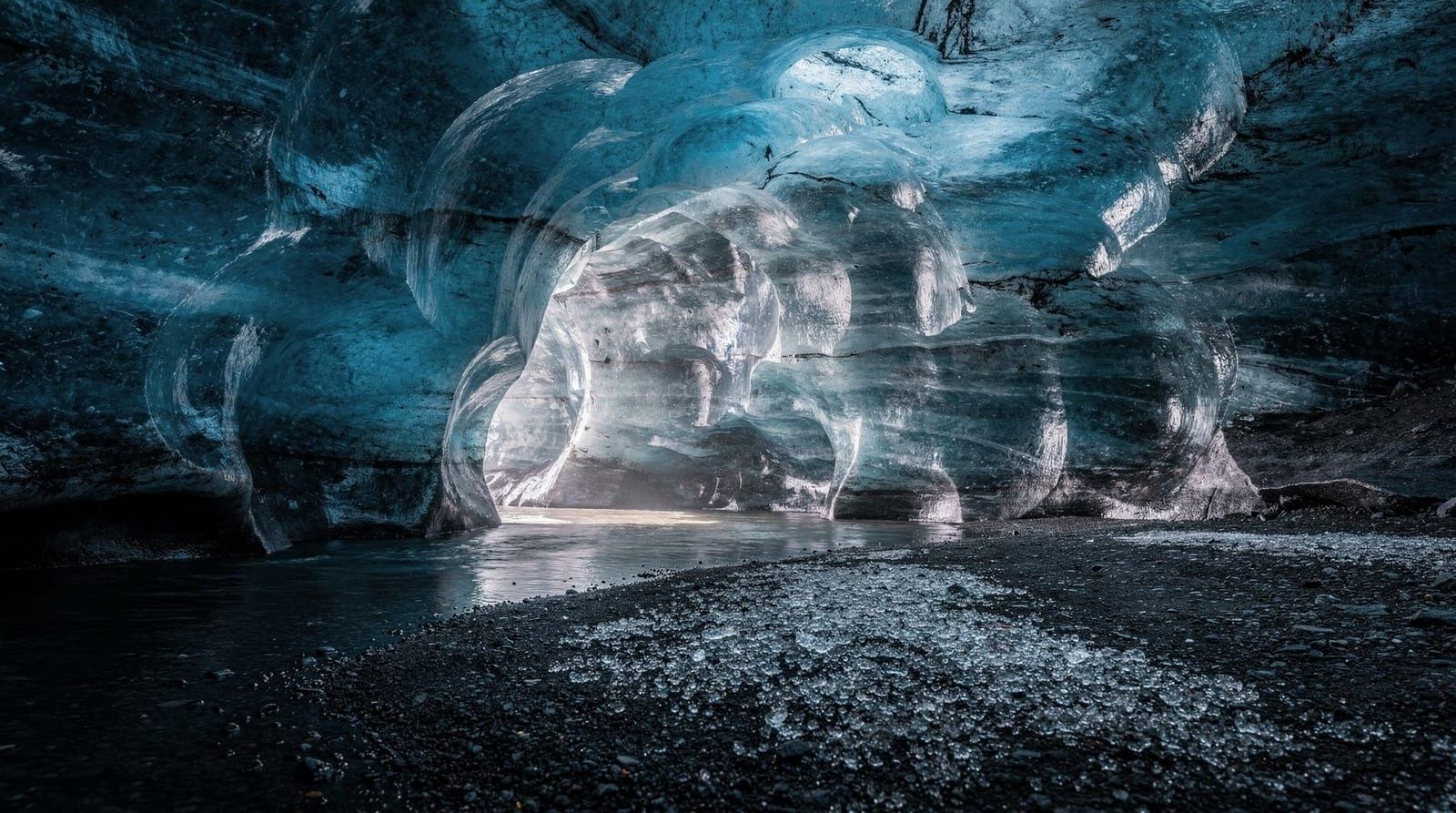
Natural blue ice caves at Vatnajökull: Formed inside Europe’s largest glacier by meltwater erosion over decades. These are the caves that appear in every photo from Iceland travel accounts — translucent walls of blue and white ice, cathedral-like chambers, and a complete absence of any artificial development. They exist only in winter (roughly November–March) because the ice becomes structurally unstable in warmer months. Guides assess stability each morning; some days tours are cancelled for safety reasons.
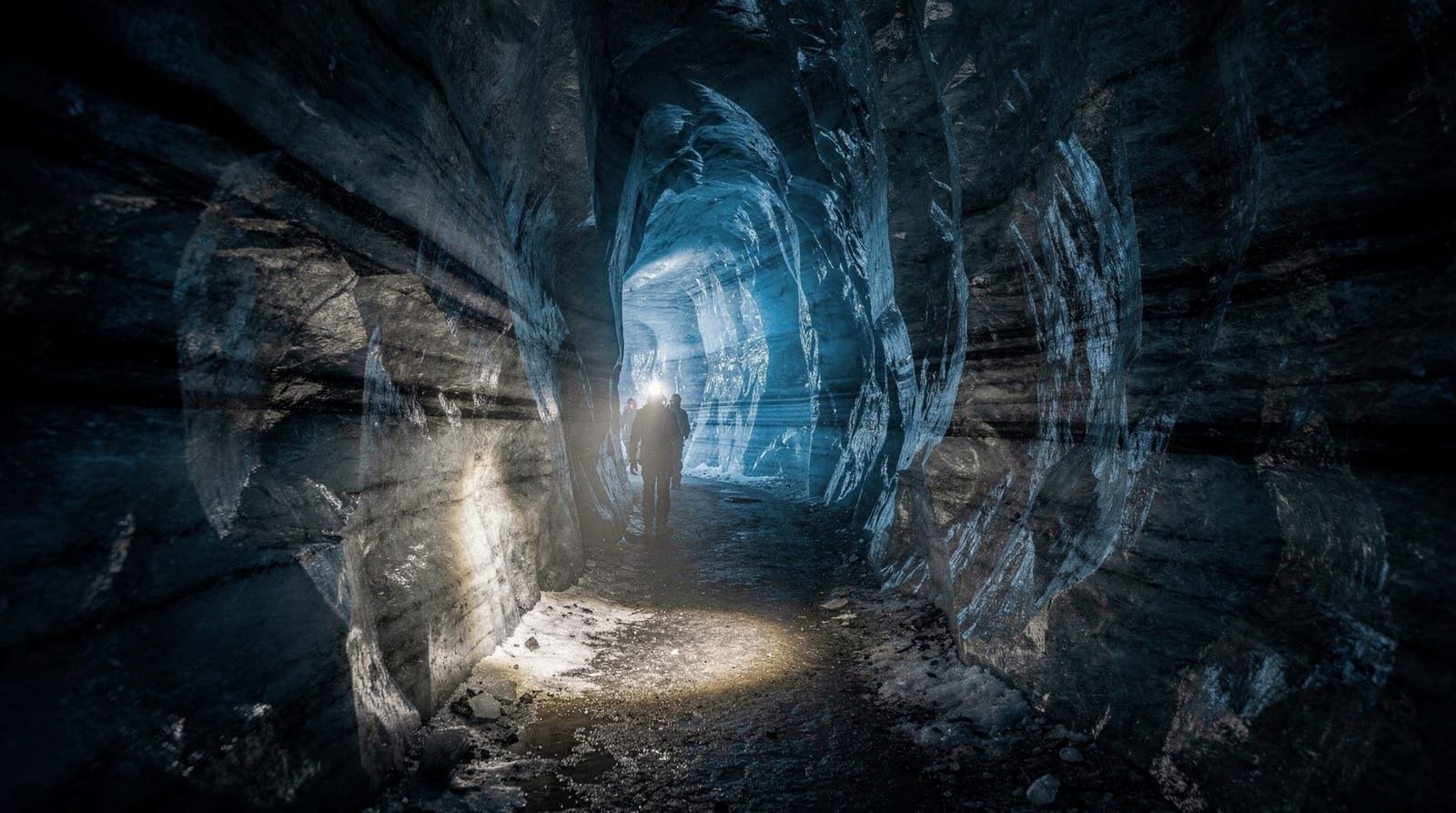
Katla geothermal ice caves: These form where geothermal heat from beneath Katla volcano meets the base of Mýrdalsjökull glacier. The heat erodes channels and chambers into the ice from below, creating caves that are warmer and more stable than Vatnajökull’s natural caves — and accessible year-round. The ice is darker due to volcanic ash, which creates a different aesthetic: black and grey ice rather than blue, but with extraordinary textures.
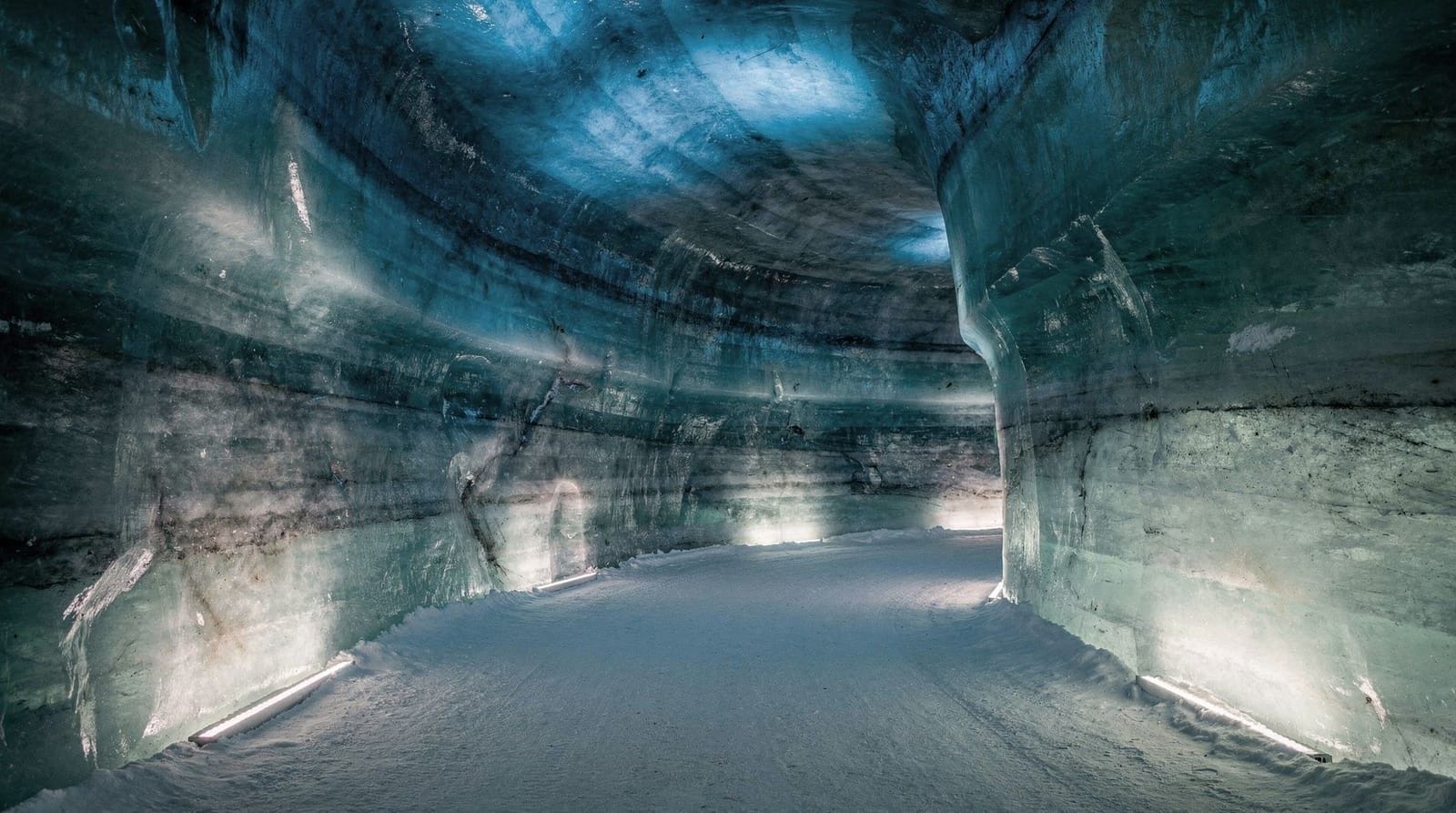
Manmade ice tunnels: The Into the Glacier project at Langjökull is a permanently excavated tunnel system deep inside Iceland’s second-largest glacier. It’s open year-round, predictable, and suitable for all ages. It’s a legitimate and impressive experience — just a fundamentally different kind from a natural cave.
Lava tube caves: Technically not ice caves at all — these are underground tunnels formed by lava flow, such as Raufarhólshellir near Reykjavík. Some contain ice formations at their far ends in winter, but the primary material is black lava rock. See caving in a lava tunnel.
Vatnajökull blue ice caves
This is what most people mean when they say they want to do an ice cave in Iceland. The caves near Jökulsárlón glacier lagoon and in the Skaftafell area of Vatnajökull National Park are accessible from November to March.
How they form: Each summer, meltwater cuts channels through the lower sections of Vatnajökull’s outlet glaciers. As temperatures drop in autumn and winter, these channels freeze over and the water drains, leaving hollow cavities within the glacier. The ice around these cavities is extremely dense (thousands of years old in some cases) and appears vivid blue due to light physics.
The season problem: No two seasons are identical. Guides and operators explore the glacier each October and November to locate new caves and assess which ones are accessible. A cave that was spectacular in December 2024 may have partially collapsed by December 2025. This uncertainty is part of the authentic experience — but it also means you can’t book a specific cave. You book a guided ice cave tour and trust that your guide is directing you to the best available option.
Operators to know: Guide to Iceland, Arctic Adventures, Glacier Guides, and Extreme Iceland (rebranded to Arctus) are among the established operators. Look for guides with blue ice cave certification specifically, not just general glacier guide certification.
Vatnajökull blue ice cave guided tour (from Jökulsárlón)
Katla ice caves — the year-round alternative
Katla’s ice caves are formed under Mýrdalsjökull glacier by the same volcanic heat system that powers Katla. Tours typically depart from Vík — Iceland’s southernmost village and a significant south coast stop in its own right.
The experience differs from Vatnajökull in key ways:
- Accessible any month: No winter-only limitation. Summer visitors who miss the Vatnajökull season can access Katla.
- Volcanic aesthetics: The ice is infiltrated with black and grey ash, creating alien-looking textures. Some sections look almost like frozen smoke.
- Shorter: Most Katla cave tours run 2.5–3 hours total including transport from Vík. Vatnajökull tours are typically longer.
- More stable: The geothermal environment means the cave structure doesn’t depend on the same freeze-thaw dynamics as cold-meltwater caves.
Tours from Vík are the most convenient. Tours from Reykjavík bundle the Katla cave with south coast sightseeing — useful if you’re not driving, but adds significant bus time. See Katla ice cave guide for detailed logistics.
South coast + Katla ice cave small group tour from Reykjavík
Logistics: getting to the ice caves
Vatnajökull (Jökulsárlón area): The glacier lagoon is roughly 5 hours from Reykjavík. Almost no one does Vatnajökull ice caves as a day trip from Reykjavík — it’s an exhausting 10-hour drive plus tour time. The practical approach is to stay overnight in the area (Höfn is 80 km east, Kirkjubæjarklaustur is 140 km west) and join a tour from the glacier lagoon car park in the morning.
Vatnajökull (Skaftafell area): Also a long drive from Reykjavík. Skaftafell has a campsite and a small visitor services building. Ice cave tours here depart from the Skaftafell car park.
Katla (from Vík): Much more accessible — Vík is about 185 km from Reykjavík, roughly 2 hours on Route 1. Day trips from Reykjavík that combine the south coast with a Katla cave are feasible but long (10–12 hours).
From Reykjavík without a car: Multi-day tours that combine south coast sightseeing with ice cave access exist and are the main option for those not renting a vehicle. These are genuine two-day trips, not something achievable in a single day from Reykjavík.
What the experience is like inside
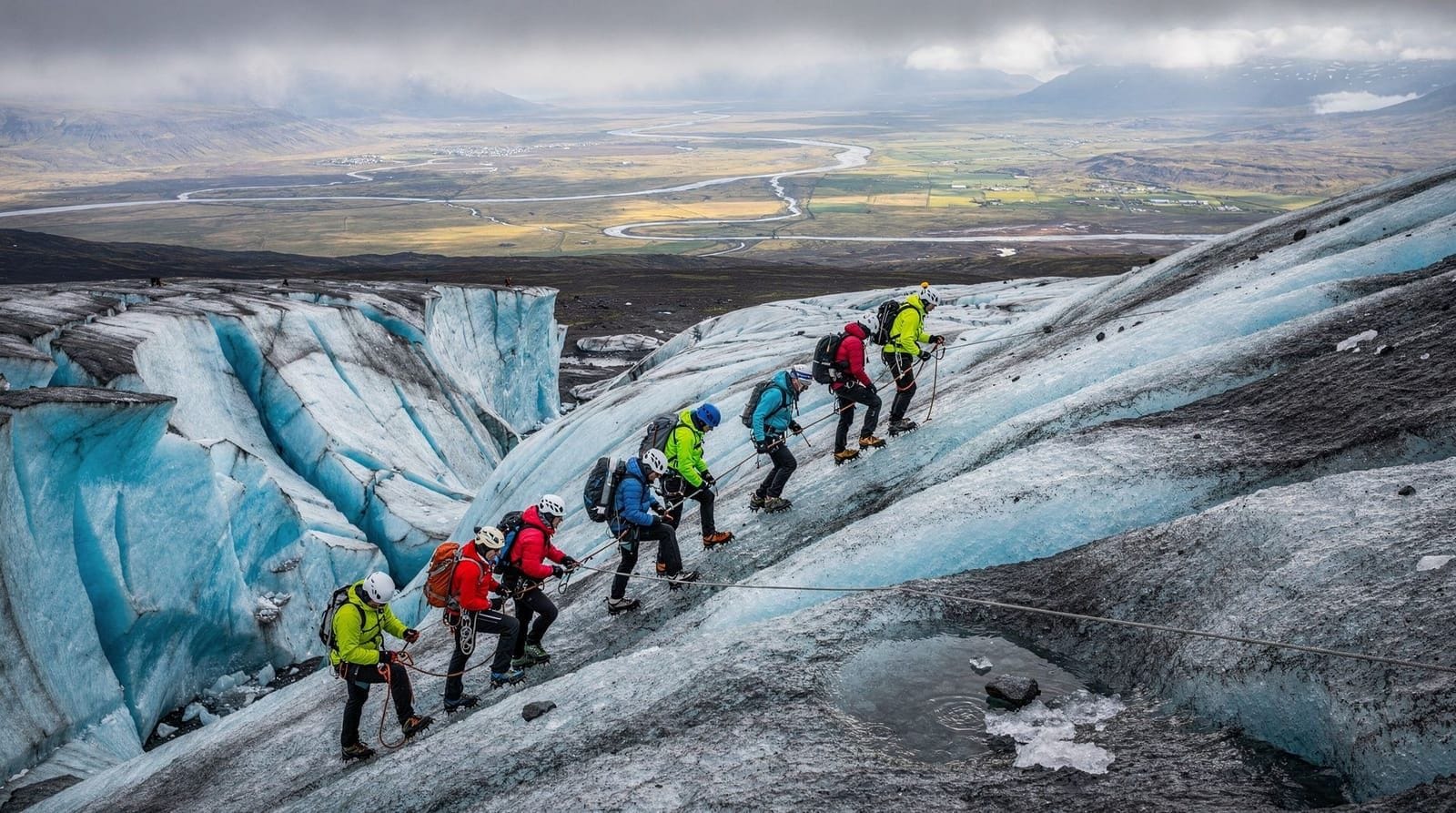
The walk to the cave entrance varies by location — some involve a significant glacier surface hike first, which means you need full ice gear (crampons, helmet). The cave entrance is often low; ducking or crouching is standard. Once inside, the scale opens up unexpectedly.
Most natural Vatnajökull caves have chambers 3–10 metres high and 5–20 metres across. The floor is ice — typically safer than walls since it’s compressed from above — but crampons are essential throughout. Your guide will show you where to stand and what not to touch: pressure on ice formations can cause micro-fractures.
The light quality inside depends on conditions. Overcast winter days can still produce extraordinary blue tones — the colour comes from the ice physics, not direct sunlight. On bright days with low-angle winter sun reaching the entrance, the effect is most intense. Photography in this environment is genuinely rewarding.
Choosing between Vatnajökull and Katla
This isn’t a question with a single right answer — it depends on timing and priorities:
Choose Vatnajökull blue ice caves if: You’re visiting November–March, you’re staying in the south-east, and you want the visually purest ice cave experience. The blue ice is genuinely extraordinary.
Choose Katla if: You’re visiting April–October, you’re basing yourself near the south coast, or you want to combine a glacier cave with Sólheimajökull glacier hiking in the same area. The volcanic aesthetics of Katla are more unusual than Vatnajökull’s classic blue caves.
Consider both: Some itineraries include Katla on the way east and Vatnajökull ice caves on the return — this works well on a ring road route.
Ice cave science — why the blue colour
The blue colour in Vatnajökull ice caves is one of the most frequently asked about features, and the explanation is straightforward physics:
Standard ice — ice in your freezer, surface glacier ice with trapped air — looks white because the trapped air bubbles scatter light randomly across all wavelengths. It’s the same reason why snow looks white: millions of small interfaces scatter all wavelengths equally.
Deep glacial ice, formed under pressure over centuries, has had virtually all its air squeezed out. The resulting ice is pure, dense, and transparent. When light enters this ice, it travels through the crystal structure. The ice molecules absorb red and orange wavelengths more readily than blue wavelengths — blue light passes through; red light is absorbed. The result is that ice which is deep blue when light has to travel through metres of it.
The effect is most intense when:
- The ice is densest (most ancient, deepest in the glacier)
- Light enters at a shallow angle (winter, low-angle sun through cave entrance)
- The ice is viewed against a dark background (the cave walls)
This is why winter ice cave photos look more dramatic than photographs taken in shoulder season — the combination of available blue ice formations and winter light quality is specific.
The Skaftafell area ice cave season in depth
Skaftafell’s position within Vatnajökull National Park gives it advantages over Jökulsárlón-area caves for some visitors:
Less crowded: The Jökulsárlón area is the most photographed ice cave location and draws the largest operator volumes. Skaftafell caves see fewer participants, typically running in groups of 6–10 rather than 15–20.
Combined activities: Skaftafell has excellent hiking infrastructure (the Skaftafell trail system includes paths to viewpoints of Svínafellsjökull and Falljökull). Combining a morning glacier hike on the glacier surface with an afternoon ice cave tour is logistically cleanest at Skaftafell.
The Skaftafell campsite: For budget-conscious visitors, staying at Skaftafell campsite allows consecutive-day glacier and ice cave activities without the cost of nearby hotel accommodation. The campsite is in a beautiful location in the glacier valley.
Accessibility by self-drive: The Skaftafell car park is directly off Route 1, about 330 km from Reykjavík (5 hours). It’s a long drive from the capital but straightforward. Höfn (80 km east) provides hotel accommodation for those not camping.
Month-by-month: what’s actually accessible
| Month | Vatnajökull blue caves | Katla ice caves | Notes |
|---|---|---|---|
| Nov | Opening, conditions variable | Open | Early season, fewer confirmed caves |
| Dec–Jan | Peak, best formations | Open | Book 4–8 weeks ahead |
| Feb–Mar | Reliable, closing late Mar | Open | Good balance of light and access |
| Apr–Oct | Closed (unsafe) | Open | Katla and Langjökull are the only options |
Ice cave booking strategies
The ice cave market in winter is genuinely competitive. Here’s how experienced visitors approach booking:
Book the operator, not the specific cave: Good operators assess caves daily and direct you to the best formation accessible that morning. Booking a “Crystal Cave tour” based on a specific photo is misleading — the cave shown in marketing photos may not be the cave you access. Book with operators whose track record indicates they find good formations; don’t book based on marketing images of specific caves.
Flexible dates pay off: If your Iceland schedule is flexible by 1–2 days, this flexibility is valuable for ice cave quality. December and January consistently produce the best conditions; arriving in mid-to-late November or early February is lower risk than committing to an early November date when the season is just opening.
Check reviews from the same season: Ice cave reviews from previous years are partially relevant (operator quality is consistent) but not relevant for specific cave formations (which change annually). Look for reviews from the current or immediately prior season when assessing what to expect.
Group size is a proxy for quality: Operators running groups of 8–10 consistently receive better reviews than those running 20+. Check the maximum group size before booking — it’s a reliable indicator of the operator’s business model.
What not to book
Avoid tours advertising year-round “natural blue ice caves” at Vatnajökull. If a tour claims to access natural Vatnajökull caves outside the winter season (i.e., April–October), it’s either accessing a constructed attraction or misrepresenting the product. The natural caves are genuinely unstable and closed in summer for legitimate safety reasons.
Avoid operators that can’t tell you which cave you’ll visit. A good operator will be honest: “We’ll access the best cave available on your date, which we assess each morning.” A bad operator will show you photos from a spectacular cave from two seasons ago and imply that’s what you’ll see.
Don’t confuse the Perlan glacier exhibition with a real ice cave. The Perlan museum in Reykjavík has a recreated ice cave exhibition inside the museum — an interesting experience, but obviously not a real glacier cave. It’s sometimes marketed ambiguously.
Vatnajökull natural ice cave tour (2.5–3 hours on the glacier)
Safety and conditions
Ice cave safety hinges on guide judgment and the morning assessment of structural stability. Reputable operators cancel tours when cave conditions are uncertain. If you arrive and a tour is cancelled on safety grounds, accept the cancellation — it’s the right call.
Falling ice is the primary risk inside natural caves. Guides direct visitors away from unstable ceiling sections and actively monitor for changes. Physical impacts from visitors (touching ice formations, leaning on walls) are prohibited for exactly this reason.
Hypothermia risk is lower inside the cave than outside in winter, since the cave temperature is roughly constant near 0°C and there’s no wind. But wet clothing from meltwater contact cools rapidly — stay dry and move steadily.
Frequently asked questions about ice caving in Iceland
How far in advance should I book?
For winter Vatnajökull tours (November–March), book 4–8 weeks ahead, especially for December and January. Popular dates sell out quickly, and the number of accessible natural caves is limited. Katla tours can be booked 1–2 weeks ahead except during peak summer.
What should I wear?
Thermal base layer, fleece mid-layer, waterproof outer jacket and trousers. Warm waterproof boots with ankle support (operators rent boots if needed). Gloves, hat. The guide provides crampons and helmet.
Is ice caving suitable for children?
Vatnajökull natural ice cave tours typically require minimum age 8–10 years. Katla cave tours are similar. The Langjökull ice tunnel has no minimum age and is excellent for families — see Into the Glacier.
Can I do an ice cave without glacier hiking?
Yes — some Vatnajökull caves are accessed via snowcat vehicle (tracked snow vehicle) rather than on foot, making them more accessible for those who can’t manage a glacier hike. These are typically the tours departing from Jökulsárlón. The Langjökull tunnel is accessed by modified snowcat-truck, requiring no physical exertion.
Are there ice caves near Reykjavík?
Not natural ones. Raufarhólshellir lava cave is 30 minutes from Reykjavík and has some ice formations in winter. The Perlan museum has a constructed ice cave exhibit. For the real thing, the minimum drive is to Katla (2 hours) or Vatnajökull (5 hours).
What happens if the cave collapses?
Natural cave collapses do occur, typically between seasons as the summer melt cycle progresses. Guides conduct morning assessments and will not take groups into caves showing signs of instability. During a guided tour, if a guide indicates an immediate need to exit a cave, exit immediately without question. This is rare but not impossible.
Is ice caving worth combining with the glacier lagoon boat tour?
Yes, and many visitors base a full day around both. A Jökulsárlón glacier lagoon boat ride in the morning followed by an afternoon ice cave tour (or the reverse) makes efficient use of the long drive out to the south-east, since both activities depart from car parks within a few minutes of each other. Check timing carefully, as tour operators run on their own schedules and a tight connection between the two can be stressful in winter daylight hours.
What if my ice cave tour gets cancelled for weather or safety?
Reputable operators refund or reschedule cancelled tours — check the specific policy before booking, since terms vary. Build a buffer day into your itinerary near Jökulsárlón, Skaftafell, or Vík if ice caving is a trip priority, since winter weather (and the safety assessments it triggers) genuinely can cancel a booked slot with little notice.
Combining ice caves with the rest of the south-east
Because both Vatnajökull and Katla ice caves require a substantial drive from Reykjavík, most visitors build the cave visit into a longer south-coast or ring road itinerary rather than treating it as a standalone day trip. Near Jökulsárlón, the glacier lagoon and Diamond Beach sit a few minutes from the ice cave car parks, making a natural half-day pairing of lagoon photography and cave tour. Travellers basing themselves in Vík for Katla caves are also well placed for Reynisfjara black sand beach and the Sólheimajökull glacier hike, letting a two- or three-night south coast stay cover ice, glacier, and beach in one loop rather than three separate trips.
For visitors following the ring road guide clockwise or counter-clockwise, timing the ice cave stop for whichever direction puts the south-east in winter daylight hours (limited to 5–7 hours in December) is worth planning around — arriving at a cave car park after the light has faded wastes the drive.
Katla ice cave and south coast day tour from Reykjavík
Top experiences
Bookable activities with verified prices and instant confirmation on GetYourGuide.
Top experiences
Best-rated activities across GetYourGuide and Viator.

Ice Cave by Katla Volcano Super Jeep Tour from Vik
- Viator

Sólheimajökull Glacier Hike – Adventure in a Small Group
- Viator

Ice Cave Tour from Vík
- Viator

Blue Ice Discovery – Guided Glacier Hike from Skaftafell
- Viator

Glacier Hike from Skaftafell - Extra Small Group
- Viator

East Glacial River – Grade 4 Rafting with Drysuits, North Iceland
- Viator