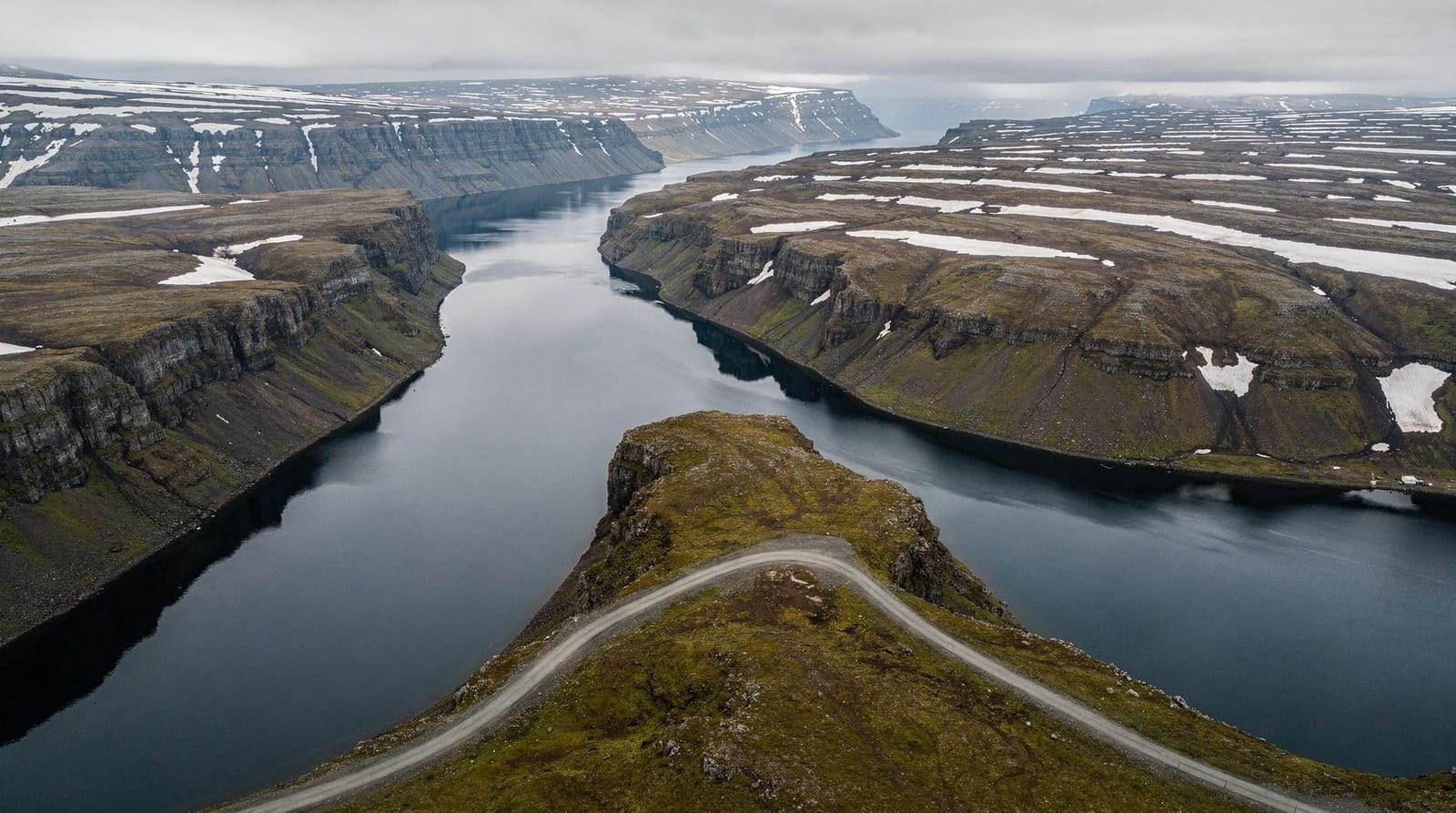
Snæfellsnes peninsula
Snæfellsnes packs glacier volcanoes, lava fields, bird cliffs, Kirkjufell, and black beaches into 90 km — Iceland's best self-drive day or overnight loop.
Grundarfjörður: From Reykjavik full day Snaefellsnes peninsula
Duration: ~11 hours
Quick facts
- Best time
- May–September for full access; October for autumn light and quiet
- Days needed
- 1 long day from Reykjavík; 2 days if staying on the peninsula
- Getting there
- 1 hour Reykjavík to Borgarnes, then 60–90 min on Rte 54 to Grundarfjörður or Arnarstapi
- Budget per day
- 13,000–20,000 ISK / €88–€135 (fuel, cave entry, meals)
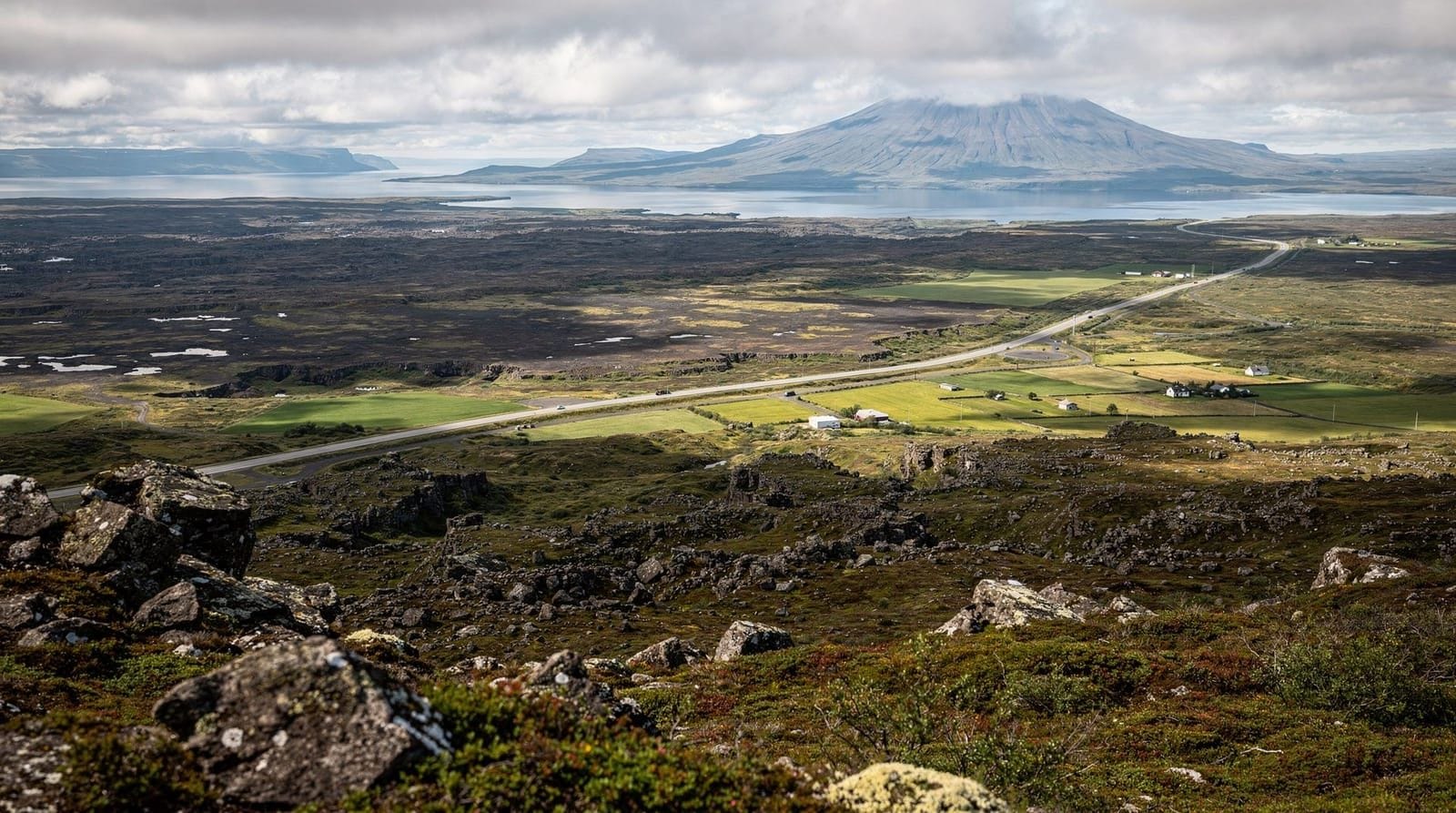
Snæfellsnes is called “Iceland in miniature” because the 90-km peninsula contains most of what Iceland is known for — a glacier-capped volcano, lava fields, black sand beaches, bird cliffs, fishing villages, geothermal pools, and a mountain so perfectly shaped it has become one of the country’s most photographed landmarks. All of this sits within a two-hour drive of Reykjavík and on fully paved roads.
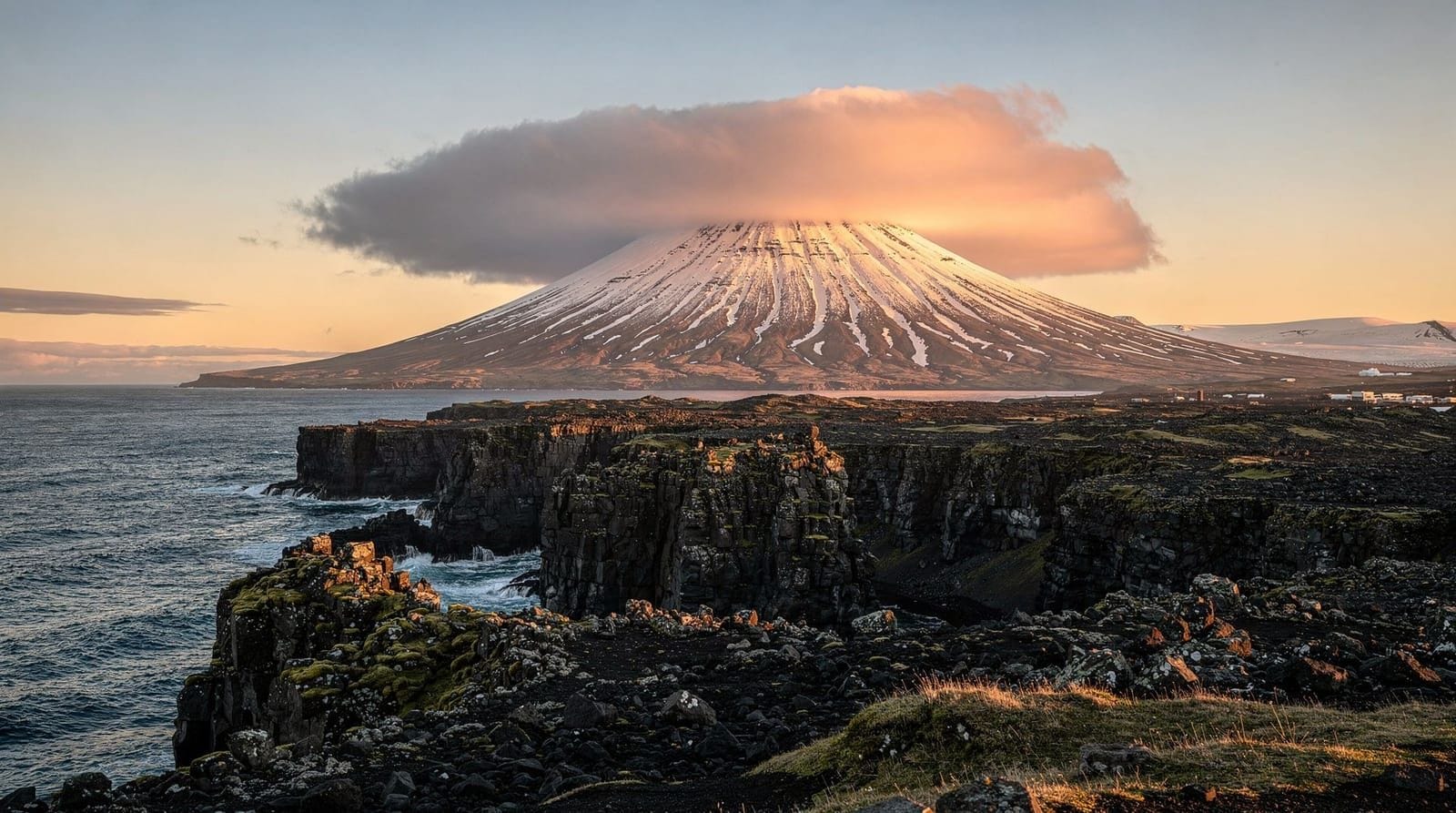
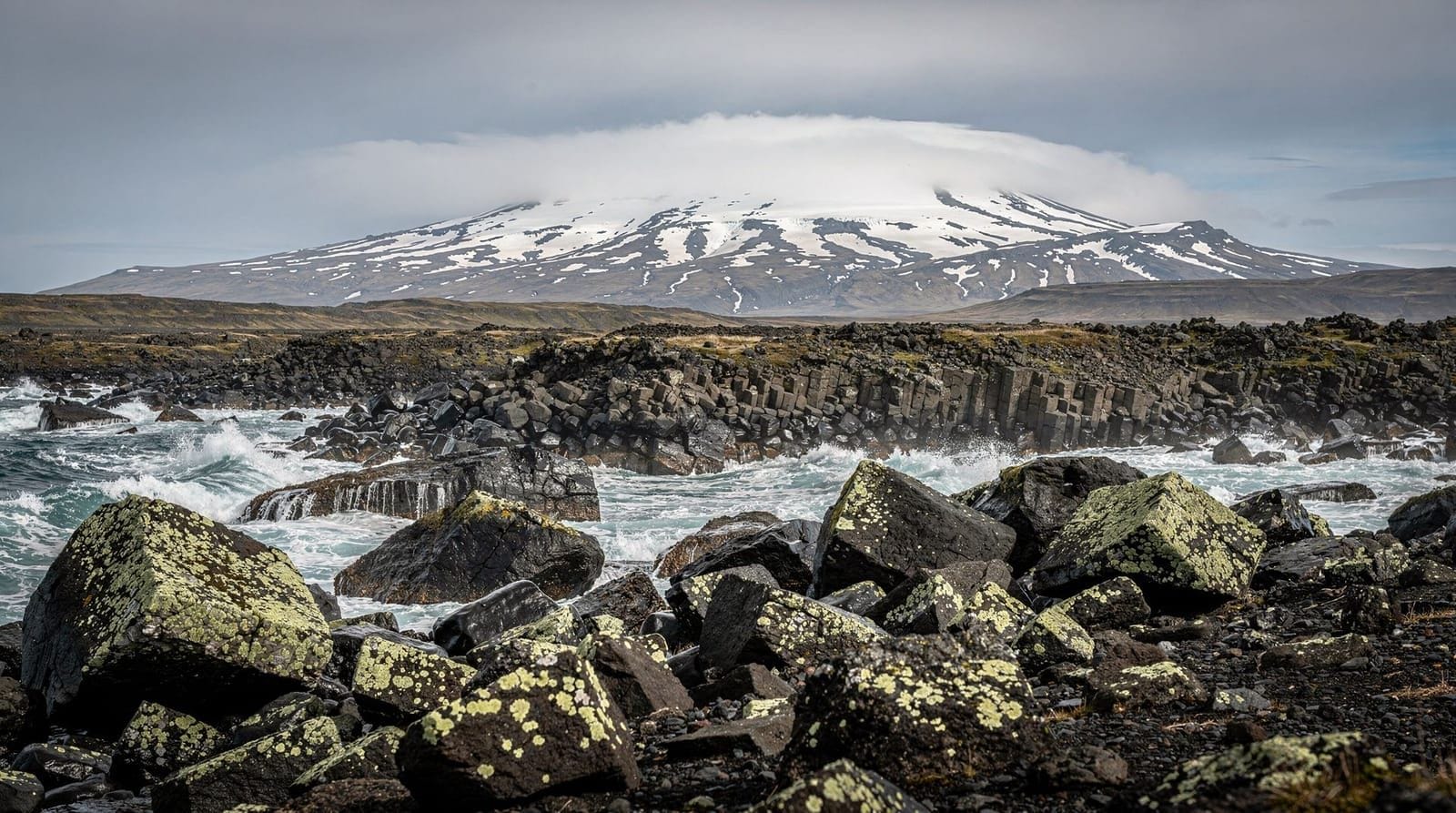
Jules Verne used Snæfellsjökull glacier as the entry point to the centre of the earth in his 1864 novel. The glacier still sits there, visible from Reykjavík on clear days across the bay, a white dome above the peninsula’s western tip. Getting to it takes about 2.5 hours from the capital.
| Where | 90 km peninsula west of Reykjavík, fully paved access |
| Cost | 13,000–20,000 ISK/day (fuel, cave entry, meals) |
| Time needed | 1 long day from Reykjavík; 2 days if staying on the peninsula |
| Getting there | 1 hour to Borgarnes, then 60–90 min on Rte 54 |
| Best time | May–September for full access; October for autumn light and quiet |
The peninsula layout and driving order
The peninsula extends westward from Borgarnes on the main Ring Road. Route 54 runs along the south coast, Route 574 circles the glacier tip, and Route 56 covers the north coast before connecting back to Stykkishólmur and Grundarfjörður. Driving the full loop from Borgarnes adds about 200 km; driving from Reykjavík and back makes the total around 350–380 km for the day.
Most self-drivers go anti-clockwise from Borgarnes: south coast (Búðir, Arnarstapi, Hellnar, glacier tip) then up the north coast (Kirkjufell, Grundarfjörður, Stykkishólmur). This puts Kirkjufell and the Snæfellsjökull area in the best afternoon light. If starting early from Reykjavík, go clockwise — Kirkjufell in morning light, glacier in late afternoon.
Full-day guided Snæfellsnes tour from Reykjavík — covers north and south coastsSouth coast highlights
Búðir black church — a solitary 19th-century church on a lava field at the edge of a bay, one of Iceland’s most photographed locations for good reason. Five minutes to stop, ten if you walk the beach. Free.
Arnarstapi and Hellnar — two small fishing hamlets 3.5 km apart connected by a signed coastal trail (easy, 1–1.5 hours return). The trail passes sea arches, nesting fulmars, and basalt column formations. Arnarstapi has a small café and toilets. This walk is the single best hour you will spend on the peninsula.
Snæfellsjökull National Park — the glacier volcano at the tip. Covered in detail under Snæfellsjökull National Park. The key activity here is either glacier hiking (guided tours only, around 7,000–9,000 ISK per person from the glacier car park) or walking the lower slopes and lava formations around the Djúpalónssandur black sand beach.
Djúpalónssandur — a black sand beach in the national park with a ship wreck (cargo vessel Epine, stranded in 1948 — the rusted hulk is still scattered on the rocks) and lifting stones used by historical fishermen to test their strength. Free. Car park on Rte 574, 10-minute walk to the beach.
North coast highlights
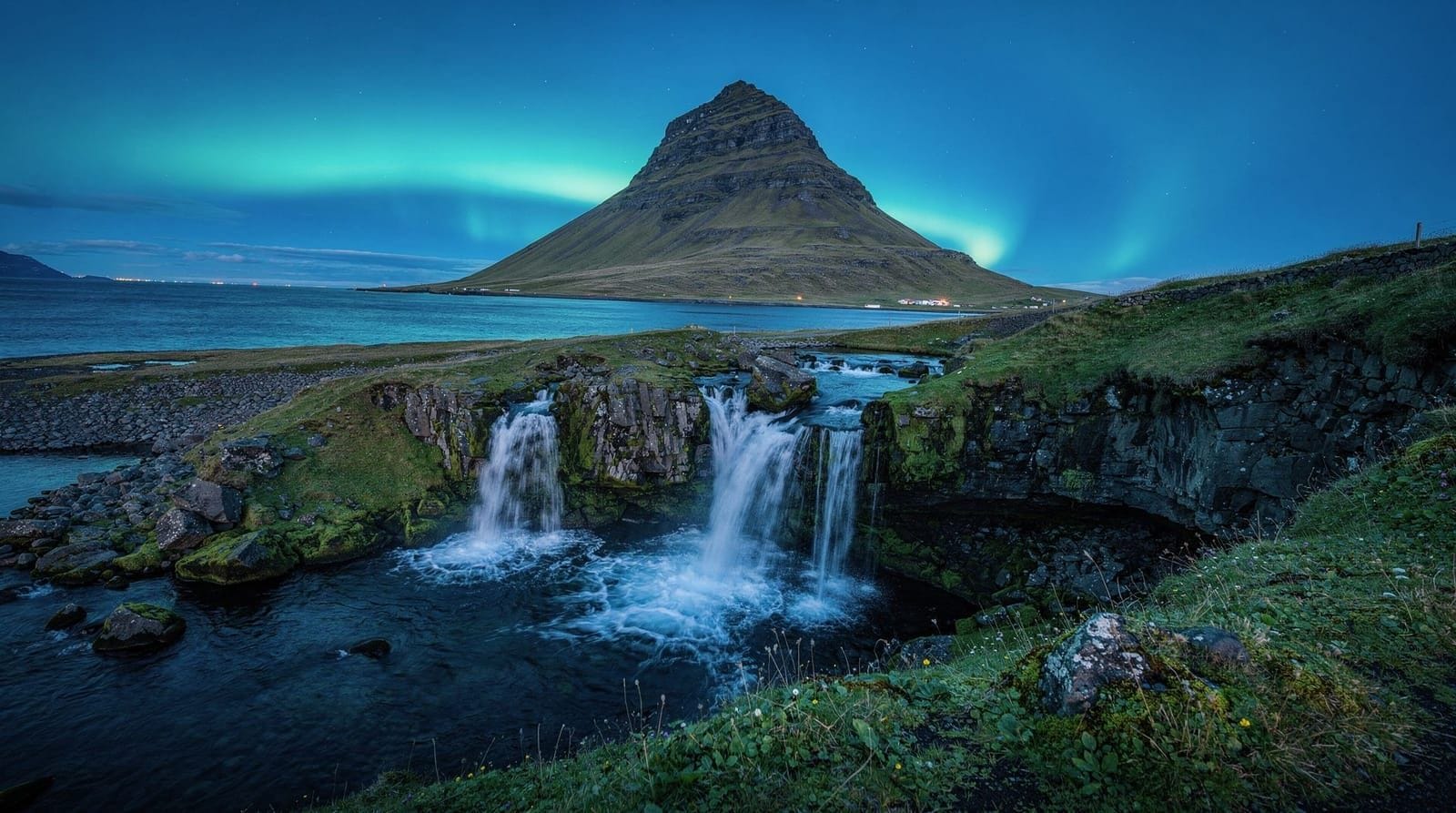
Kirkjufell — the pyramid-shaped mountain above Grundarfjörður, Iceland’s most-photographed mountain and a Game of Thrones filming location. Full details under Kirkjufell. The combination of mountain and Kirkjufellsfoss waterfall below makes for a straightforward but genuinely rewarding photograph. Arrive before 8 a.m. in summer to beat tour buses.
Grundarfjörður — a small town of around 900 residents with a petrol station, supermarket, and modest accommodation. It is the practical base for Kirkjufell.
Stykkishólmur — the peninsula’s largest town (around 1,100 residents), with proper hotel options, a small harbour museum, and the Baldur ferry departure for the Westfjords. The harbour area has a fish restaurant (Narfeyrarstofa) and a bakery. Worth a brief stop.
Vatnshellir lava tube cave — 8,000-year-old lava tube cave in the national park, accessible only on guided tours (around 3,000 ISK per adult, departing every hour, 45 minutes). Genuinely interesting if you have not done a lava cave elsewhere. Torches provided, descent into darkness about 35 metres.
Practical logistics
Fuel: Fill in Grundarfjörður or Stykkishólmur before heading west toward the glacier. The 70-km stretch between these towns and Hellissandur has no petrol.
Food: Arnarstapi has a small café (Snjófell). Hellnar has Fjöruhúsið, a café in a cottage above the shore that serves fish soup and pancakes. Grundarfjörður has a grocery store and a small restaurant. None of these are cheap by European standards — fish soup runs 2,500–3,000 ISK (€17–€20).
Weather: Snæfellsjökull creates its own microclimate. The glacier can be entirely cloud-wrapped for days in a row, even when Reykjavík is sunny. Check the forecast on veður.is the morning you plan to go; clear glacier visibility is not guaranteed on any given day.
Snæfellsnes and Kirkjufell day trip — small group, guidedGuided tours vs self-driving
Guided day tours from Reykjavík typically run around 15,000–20,000 ISK (€100–€135) per person and cover Kirkjufell, Arnarstapi, the glacier area, and usually one other stop. They use 4WD minibuses and handle all logistics. The limitation is pace — you get about 20–30 minutes at each location.
Self-driving costs less per person in a group of 2+ (car rental plus fuel), allows arbitrary stop times, and lets you skip the glacier if it is cloud-wrapped and spend longer at Kirkjufell instead. If you are solo or want a guarantee of reaching the main sites without navigation effort, a guided tour is reasonable value.
Snæfellsnes with children
The Arnarstapi–Hellnar coastal walk is easy enough for children aged 7+. Vatnshellir cave is popular with older children but can be cold (5°C) and dark — dress appropriately. The beach at Djúpalónssandur has enough room to run and interesting wreck debris to examine. The drive itself is long from a child’s perspective; planning a two-day stay on the peninsula rather than a single day from Reykjavík is more comfortable for families.
Seasonal visiting guide
June (early season, recommended)
June is the best month for the glacier. Snæfellsjökull is more likely to be free of cloud in June than in July or August — the Atlantic moisture that creates the characteristic cloud cap builds through the summer. The light in June is remarkable: the sun sets barely at all around the solstice, and the 11 p.m. golden hour light on Kirkjufell and the glacier creates photographs that are not available in any other month. June crowds are lighter than July.
July–August (peak)
Peak season brings tour buses, full car parks, and noon-hour queues at Vatnshellir cave. The Kirkjufell car park can be full before 9 a.m. on summer weekends. Accommodation must be booked months in advance. The upside: best wildflower coverage on the lava fields, maximum light hours, and whale-watching boats operating at full schedule from Stykkishólmur.
September–October
A genuinely excellent window. Visitor numbers fall sharply after the first week of September; the heather on the lava fields turns burnt-orange; the northern lights begin appearing in clear sky windows. The glacier is still accessible. Weather becomes more variable — pack rain gear and check veður.is each morning.
Winter (November–March)
The glacier car park road (Route 570) is closed. Route 574 around the tip stays open but can be icy. Kirkjufell in snow and winter twilight is dramatically different from its summer version — fewer visitors and better aurora odds. Many peninsula guesthouses reduce capacity or close December–February.
What to skip on the Snæfellsnes peninsula
The shark museum at Bjarnarhöfn: 2,500 ISK (€17) to smell hákarl (fermented shark) and see a small shed of shark memorabilia. Genuinely interesting only to people with a specific interest in traditional Icelandic food processes. Not recommended as a general stop.
Berserkjahraun lava field drive (the unmarked version): the lava field between Stykkishólmur and the south coast road is photogenic from the road but not worth leaving the main route for unless you have extra time. The marked viewpoints are sufficient.
Ingjaldshóll church: historically significant (first church in Iceland to have electricity) but unremarkable visually. Worth a note as you pass but not a dedicated stop.
The Snæfellsjökull glacier summit if cloud-covered: given the glacier’s habit of generating its own cloud, there is a meaningful chance of arriving at the Route 570 car park to find the glacier invisible above 400 metres. In this case, spend the time at Djúpalónssandur and the Arnarstapi–Hellnar walk instead. Do not feel obliged to force a glacier visit if conditions make it pointless.
Accommodation on the peninsula: specific options
Grundarfjörður area
- Kirkjufell Guesthouse: doubles from 20,000–28,000 ISK in summer; rooms face toward the mountain.
- Grundarfjörður Guesthouse: slightly cheaper at 18,000–24,000 ISK; more basic facilities.
- Campsite at Grundarfjörður: around 2,000 ISK per person per night; basic facilities, good location.
Stykkishólmur
- Fosshotel Stykkishólmur: the main hotel; doubles from 30,000–40,000 ISK in July. Best option if you want hotel-standard facilities on the peninsula.
- Hotel Fransiskus: a converted 19th-century building with a more personal feel; doubles from 24,000–30,000 ISK.
- Several guesthouses in the 16,000–22,000 ISK range.
Arnarstapi/Hellnar area
- Guesthouse Arnarstapi: closest to the south coast walk start; doubles from 18,000–25,000 ISK.
- Hótel Hellnar: small hotel directly at the Hellnar café end of the coastal walk; doubles from 22,000–30,000 ISK.
All peninsula accommodation needs to be booked by March for July dates. Camping is a genuinely practical option on the peninsula — the campsites are well-positioned and the summer evenings are light enough to make canvas accommodation comfortable.
The peninsula compared to other Iceland destinations
Snæfellsnes is often described as “Iceland in miniature,” but this needs unpacking. The glacier is smaller than Vatnajökull; Kirkjufell is less imposing than Snæfell at a distance; the black beaches are less dramatic than Reynisfjara. What the peninsula offers that the south coast does not is variety within a compact circuit — glacier, mountain, lava field, bird cliffs, geothermal area, and fishing villages — all reachable in a single day with a car, on paved roads, with no requirement for a 4x4. For visitors with limited time who want multiple Iceland environments, the peninsula is more efficient per driving hour than most alternatives.
Compared to the Westfjords, Snæfellsnes is more accessible, more crowded, and has better-maintained tourist infrastructure. The Westfjords have more dramatic fjord scenery and far fewer people. The two are complementary — the logical sequence is Snæfellsnes first, then the Westfjords via the Baldur ferry from Stykkishólmur if time allows.
Whale watching from Stykkishólmur and Ólafsvík
Two peninsula towns run whale-watching boat tours in summer, offering an add-on that most South Coast or Golden Circle circuits can’t match. Stykkishólmur’s tours work Breiðafjörður bay, an area known for minke whales and harbour porpoise, with white-beaked dolphins appearing less predictably. Ólafsvík, on the north-west coast near the glacier, has similarly productive waters and the advantage of shorter transit times to open sea.
Trips typically run 2.5–3 hours and cost 12,000–15,000 ISK (€80–€100) per person. Sightings are not guaranteed on any single trip — like Húsavík in the north, success rates are good but weather-dependent, and operators generally offer a free repeat trip if nothing is spotted. Combining whale watching with a Snæfellsnes day extends an already long day considerably, so it fits more comfortably into a two-day peninsula visit than a single-day loop from Reykjavík.
Snæfellsnes without a car
Guided full-day tours from Reykjavík are the standard option for visitors without a car, typically covering Kirkjufell, Arnarstapi, and the glacier area in 15,000–20,000 ISK (€100–€135) per person. These use 4WD minibuses and manage the whole 350–380 km round trip so you don’t need to navigate or worry about fuel stops.
Small-group Snæfellsnes peninsula adventure tour from ReykjavíkScheduled buses reach Borgarnes and Stykkishólmur but do not loop the peninsula itself, so they are not a practical way to see Kirkjufell or the glacier area independently. For travellers without a car who want more time than a guided tour allows, renting for a single day (even a compact 2WD, since all main roads are paved) remains the most flexible option.
Frequently asked questions about Snæfellsnes peninsula
Is Snæfellsnes worth visiting if the glacier is cloudy?
Yes. The peninsula’s other attractions — Kirkjufell, the Arnarstapi–Hellnar walk, Búðir, Djúpalónssandur — are not dependent on glacier visibility. The glacier being cloud-wrapped is common and does not ruin a visit. Check conditions on arrival and adjust your priorities accordingly.
How do I get to Snæfellsnes without a car?
Scheduled buses from Reykjavík reach Borgarnes and Stykkishólmur but do not loop the peninsula. Your practical options without a car are guided day tours from Reykjavík (reasonable, depart daily in summer) or renting a car for a day or two specifically for this route.
What is the best base for exploring Snæfellsnes?
Grundarfjörður gives the best access to Kirkjufell and the north coast. Arnarstapi is the most scenic base and closest to the glacier and south coast. Stykkishólmur has the most accommodation options and is the ferry gateway to the Westfjords. All are within 30–40 minutes of each other on paved roads.
Can I see the northern lights from Snæfellsnes?
Yes. The peninsula has minimal light pollution outside Stykkishólmur and Grundarfjörður, and the dark sky to the north toward the Westfjords is excellent. The aurora season runs approximately September to April. The north-iceland region and the Westfjords have slightly better conditions in terms of cloud patterns, but Snæfellsnes is a valid northern lights destination in a clear-sky winter night.
How long is the drive from Reykjavík to Kirkjufell?
Approximately 2 hours to Grundarfjörður via Route 1 and Route 54. The distance is around 160 km. In summer, expect heavier traffic on weekend mornings. The drive is straightforward on paved highway the entire way.
Is the Arnarstapi to Hellnar walk suitable for all fitness levels?
Yes. The 3.5-km coastal path between the two hamlets is well maintained, mostly flat, and clearly marked. It takes 45–75 minutes each way depending on pace and how much time you spend looking at the coastline. Sturdy shoes are recommended (the path has some uneven sections), but waterproof boots are not required in dry weather.
Should I do Snæfellsnes as a day trip or stay overnight?
A day trip from Reykjavík works if you’re comfortable with 4–5 hours of driving and want to see Kirkjufell, the glacier area, and one or two coastal stops. An overnight — basing in Grundarfjörður, Stykkishólmur, or Arnarstapi — gives more relaxed timing, better odds of catching the glacier in clear weather at a different hour, and time for the full Arnarstapi–Hellnar walk without rushing back to the car for the return drive.
Top experiences
Bookable activities with verified prices and instant confirmation on GetYourGuide.
Top-rated experiences in Snæfellsnes peninsula
Best-rated activities across GetYourGuide and Viator.