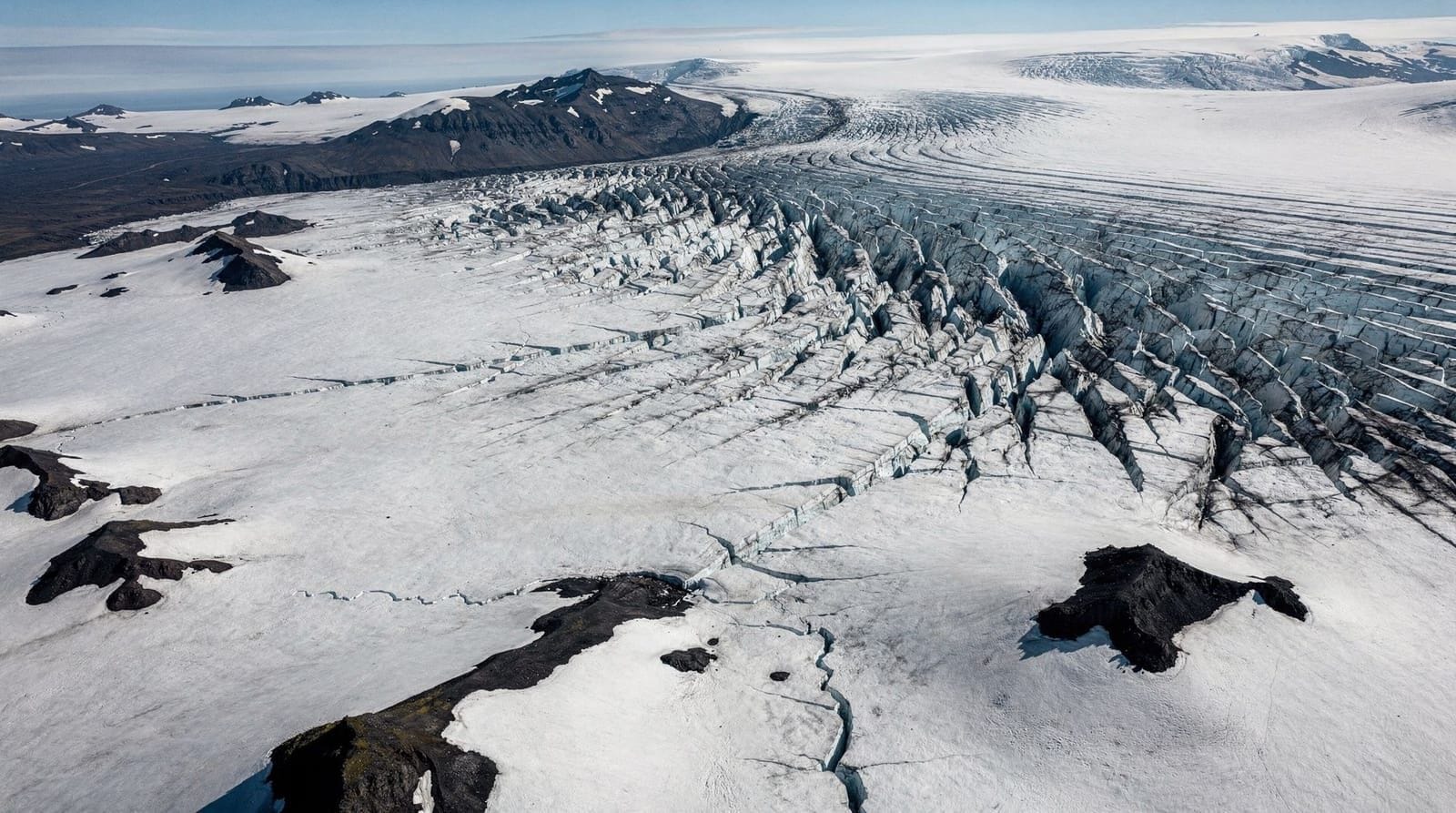
Snæfellsjökull National Park
Iceland's westernmost national park centres on the Snæfellsjökull glacier volcano. Guide to glacier hikes, lava beaches, lava tubes, and park logistics.
Snæfellsnes: Snaefellsnes snaefellsjokull Glacier and Volcano hike
Duration: 5-6 hours hike
Quick facts
- Best time
- June–September for glacier access; May and October for quiet shoulder season
- Days needed
- Half day to full day within the park; combine with Kirkjufell for a full peninsula day
- Getting there
- 2.5 hours from Reykjavík (200 km via Rte 1 and Rte 54/574)
- Budget per day
- Free park entry; glacier hike 7,000–10,000 ISK / €47–€68; lava tube cave 3,000 ISK / €20
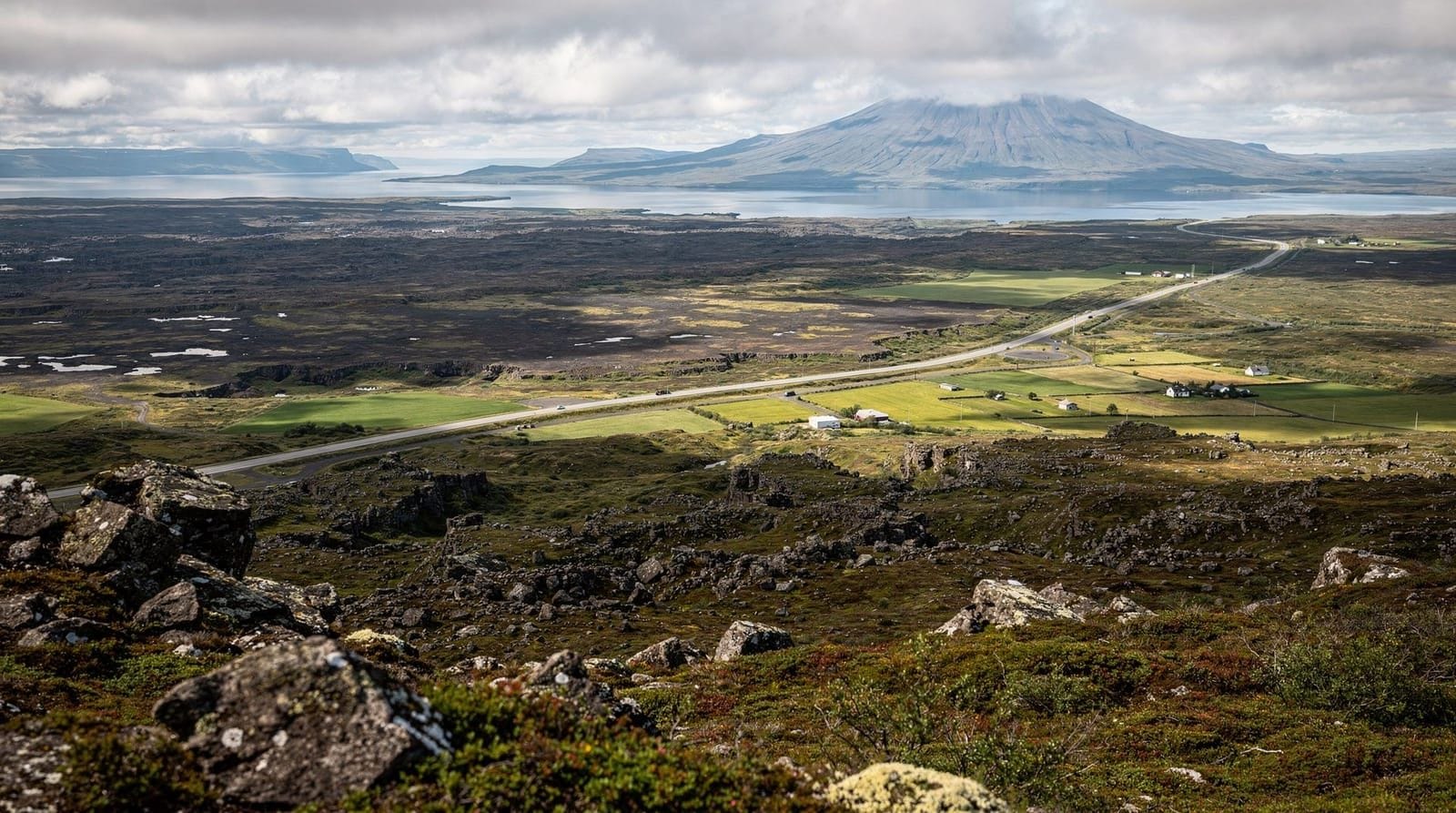
Snæfellsjökull National Park occupies the western tip of the Snæfellsnes peninsula and is centred on the Snæfellsjökull glacier volcano — a 1,446-metre stratovolcano whose summit is permanently ice-capped. The park was established in 2001 and covers 170 km², taking in not just the glacier but the lava fields at its base, the coastal section from Hellnar to Dritvík, lava tube caves, and bird-inhabited sea cliffs.
Jules Verne sent his Professor Lidenbrock into the crater of Snæfellsjökull in “Journey to the Centre of the Earth” (1864), choosing it as the entry point to the earth’s interior. The glacier has been visible from Reykjavík on clear days for as long as the city has existed — it is the white dome on the western horizon, roughly 120 km away across Faxaflói bay.
| Where | Western tip of the Snæfellsnes peninsula, 200 km from Reykjavík |
| Cost | Free park entry; glacier hike 7,000–10,000 ISK; lava tube 3,000 ISK |
| Time needed | Half day to full day; combine with Kirkjufell for a full peninsula day |
| Getting there | 2.5 hours via Route 1 and Route 54/574 |
| Best time | June–September for glacier access; May and October for quiet shoulder season |
The glacier and what to do there
The glacier itself is not accessible without a guide. Route 570, a summer-only gravel road, climbs from the Route 574 junction to a car park at about 600 metres altitude (roughly 900 metres from the glacier edge). From the car park, walking onto the glacier ice requires crampons, an ice axe in some conditions, and a guide — both for safety and because crevasses are present at the margins.
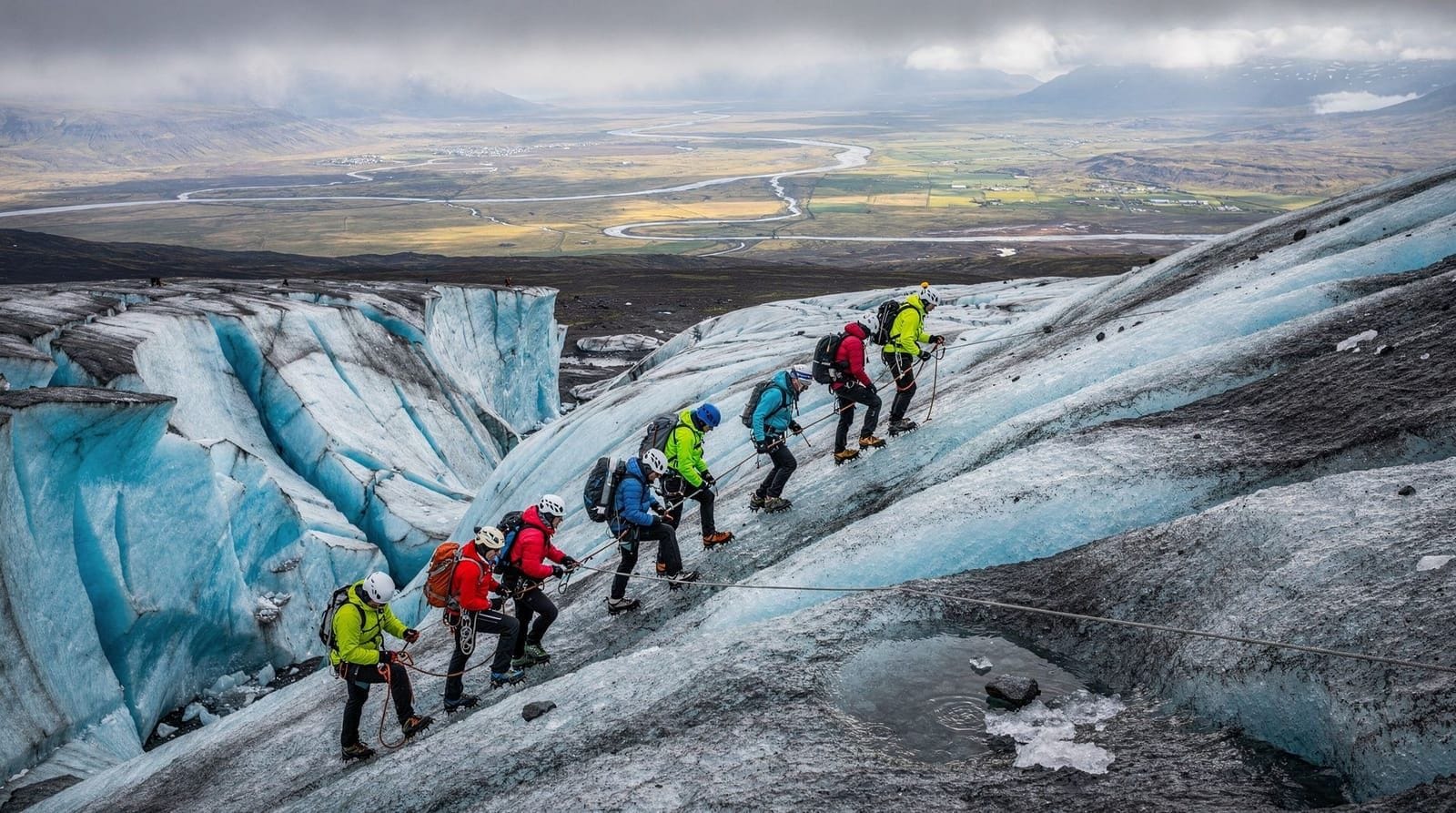
Guided Snæfellsjökull glacier and volcano hike — 5–6 hours on the iceGuided glacier hikes from the car park run approximately 5–6 hours and cover about 6 km on the glacier surface. Prices are typically 7,000–10,000 ISK (€47–€68) per person. Equipment (crampons, harness) is provided. The Snæfellsjökull glacier is smaller and less crevassed than Vatnajökull, making it a good first glacier experience. The views from the summit area — south to Reykjavík, north to the Westfjords, west across open ocean — are significant on clear days.
Important caveat: the glacier is cloud-wrapped for extended periods in all seasons, including summer. The chance of summit visibility on any given day is roughly 40–60% in July and August. Check the veður.is forecast specifically for Snæfellsnes before driving. Even with a cloud cap, the lower glacier area around 600–700 metres is often clear and walkable.
Route 570 to the car park is gravel and steep; a 2WD car can handle it in summer, but it is slow and narrow. 4WD is more comfortable. The road closes in winter and during poor conditions.
Djúpalónssandur beach
The most visited point in the park after the glacier area. A signed car park on Route 574 leads down a short lava field path (10 minutes) to Djúpalónssandur — a black sand and pebble beach in a sheltered cove. The beach has four lifting stones (Amlóðasteinn) ranging from 23 kg to 154 kg, used historically by Grundarfjörður fishermen to test physical fitness. Attempting to lift the largest (Fullsterkur, 154 kg) is a tradition.
More striking than the stones: the wreck of the British trawler Epine, stranded in a storm in March 1948. The rusted iron fragments are spread across the rocks above the beach — twisted hull sections, gearwheels, and a winch. It is a genuinely moving historical remnant. Do not remove any metal fragments — this is prohibited and has become a significant management problem.
The beach itself is a protected area. No vehicle access. Do not drive vehicles onto the beach.
Arnarstapi and the south coast trail
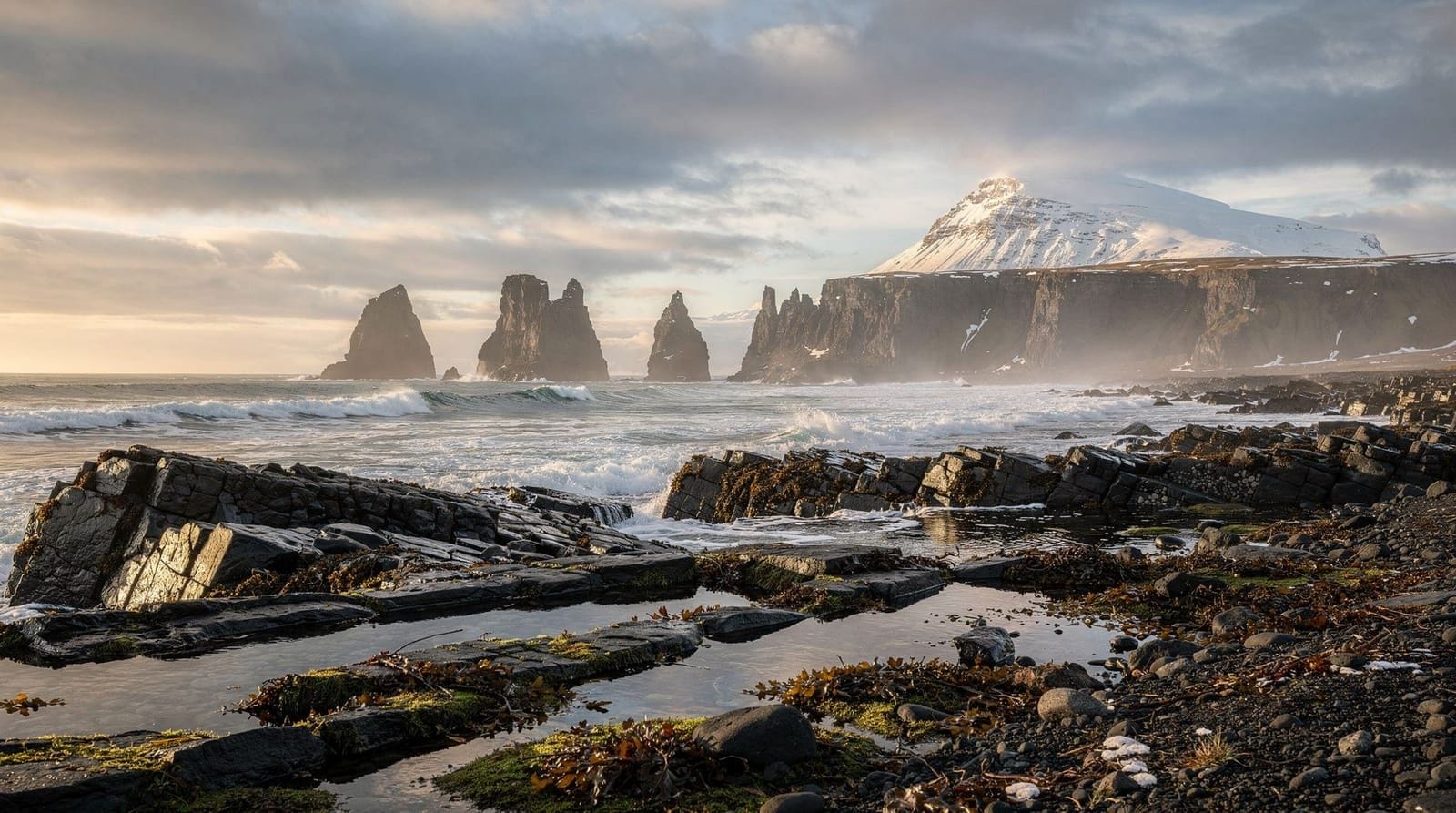
Arnarstapi is a small fishing hamlet at the southern edge of the park with a small café (Snjófell) and a landing area. The main attraction is the 3.5-km coastal path to Hellnar, which runs along sea cliffs and arches formed in ancient basalt. Fulmars nest in the cliff ledges in summer, and the rock formations are more dramatic here than anywhere else on the peninsula. The walk is detailed under Snæfellsnes peninsula.
Hellnar has a café (Fjöruhúsið, noted for fish soup and cakes) in a converted farmhouse above the shore, and a small natural sea arch viewable from the café terrace. The two hamlets are linked by the coastal path in one direction and Route 574 in the other — walk one way, drive back, or arrange to be picked up.
Vatnshellir lava tube cave
An 8,000-year-old lava tube cave in the park, accessible only on guided tours (mandatory, not optional). The cave is run by a single local operator — tours depart on the hour from the car park signposted off Route 574. Cost: approximately 3,000 ISK (€20) per adult, 1,500 ISK (€10) for children.
The tour takes about 45 minutes and descends about 35 metres underground through two chambers. Lighting is from torches provided at the entrance. Temperature inside: around 4–6°C year-round, regardless of surface conditions. Bring a warm layer even in summer.
The cave is genuinely interesting if you have not walked a lava tube before — the geology is well explained, and the stalactite-equivalent formations (lava cicles) in the lower chamber are unusual. If you have already done lava tubes (Raufarhólshellir near Reykjavík, for example), this is a shorter and less dramatic version.
ATV adventure around Snæfellsjökull glacier baseLóndrangar basalt plugs
Two basalt columns rising from the sea at Lóndrangar — one 61 metres, one 75 metres — are the exposed cores of a volcanic cone eroded by the sea. A short walk from a car park on Route 574 brings you to viewpoints above the columns. Fulmars and guillemots nest on the ledges. This is a 15-minute stop that rewards anyone with an interest in volcanic geology; skip if you are in a hurry.
Park logistics
Entry: free, no permit needed to visit the park. Driving: Route 574 around the glacier tip is paved and 2WD accessible. Route 570 to the glacier car park is gravel and steep — 2WD possible in dry summer conditions, 4WD more comfortable. Ranger station: at the Hellnar visitor centre (seasonal opening). Maps and trail information available. Weather: the glacier creates its own weather system. Conditions can change rapidly. Mountain weather forecasts from the Icelandic Met Office are more useful than general Reykjavík forecasts. Mobile data: moderate coverage on Route 574; dead spots around the glacier car park approach.
Seasonal visiting patterns and what they mean
Early season (May–June)
Route 570 to the glacier car park typically opens in late May or early June when snow conditions allow. Early June is statistically among the better months for glacier visibility — before the summer moisture patterns that generate the cloud cap become established. Bird life at the sea cliffs is active from May; fulmars are at their nesting peak in the Arnarstapi–Hellnar area.
Peak summer (July–August)
The highest visitor numbers. The Djúpalónssandur car park fills before noon on sunny weekends. The Vatnshellir cave tours sell out; arrive at opening (typically 10 a.m.) or book in advance if possible. Guided glacier hikes are in highest demand — book the day before at minimum, a week ahead for peak July dates. The advantage of peak summer: maximum daylight (glacier hikes running until 9 p.m.), best weather odds, and whale-watching from Arnarstapi and Hellnar operating at full schedule.
Shoulder season (September–October)
Dramatically quieter. Route 570 typically closes in late September or October. September is the last reliable month for a glacier hike. The park’s coastal sections — Arnarstapi, Hellnar, Djúpalónssandur — are accessible until the first significant autumn storms. October often brings early snowfall at higher elevations.
Specific accommodation close to the park
Hótel Hellnar: the closest hotel to the glacier area and the Arnarstapi–Hellnar trail start. 12 rooms in an old farmhouse at the Hellnar hamlet, doubles from approximately 22,000–30,000 ISK in summer. Book well ahead. The hotel’s proximity to the Fjöruhúsið café (different operator, same hamlet) and the coastal path start makes it the most useful base for extended park exploration.
Guesthouse Arnarstapi: at the eastern end of the coastal trail; doubles from approximately 18,000–25,000 ISK. Simple rooms, useful location.
Camping at Arnarstapi: informal camping near the hamlet, around 2,000 ISK per person. No formal facilities beyond a toilet block in high season.
Grundarfjörður (35 km from the park’s glacier area): better facilities and more options; better base if Kirkjufell is also a priority. The drive from Grundarfjörður to the glacier area on Route 574 takes about 40 minutes on paved road.
Eating near the park
Fjöruhúsið, Hellnar: a converted stone cottage directly above the shoreline at Hellnar. Open May–September. Fish soup (2,500–3,000 ISK), cakes (800–1,200 ISK), coffee (600–800 ISK). Genuinely good — the fish soup is consistently better than comparable offerings in the region. The terrace above the sea arch viewpoint is the place to eat it.
Snjófell café, Arnarstapi: smaller and more basic than Fjöruhúsið, but open similar hours and useful for a pre-walk coffee. Sandwiches around 1,500–2,000 ISK.
Hellissandur village: the main service stop near the western park boundary. Fuel station, small grocery. Not a restaurant destination.
Wildlife in and around the park
Seabirds at Arnarstapi and Hellnar: fulmars nest on every horizontal surface of the basalt sea cliffs from May through August. Their habit of spiralling in from the ocean and landing at nest sites on the cliffs makes the coastal walk visually active in bird terms even for non-birders. Oystercatchers, red-throated divers, and Arctic terns are common along the shore.
Seals: grey seals use the rocky coastal sections near the park — most commonly spotted from the Arnarstapi–Hellnar path in the early morning or evening, when fishing activity brings them close to shore.
Arctic foxes: occasional sightings on the open lava fields of the glacier base. Not a reliable sighting as on Hornstrandir, but possible in the quieter corners of the park away from main car parks.
Minke whales: whale-watching boats operate from Arnarstapi in summer. The offshore waters around the Snæfellsnes tip are productive for minke whale sightings.
The Jules Verne connection: what it means in practice
Verne chose Snæfellsjökull in his 1864 novel because its remoteness and reputation made it feel genuinely like the edge of the world. In 1863 when he was writing, the glacier was almost inaccessible to most Europeans. Visiting the glacier today with this in mind adds a layer of context that repays some reading. The Hellnar visitor centre (seasonal) has a small display on the literary history. The Arnarstapi–Hellnar walk area and the glacier car park are both described in the novel’s approach scenes — the landscape has not changed recognisably since 1864.
Visiting without a car
There is no scheduled public bus service into the park itself, so a car or a guided tour are the two practical options. Full-day guided tours from Reykjavík cover Snæfellsjökull National Park alongside Kirkjufell and the rest of the Snæfellsnes peninsula, which is the most efficient way to see the park without driving yourself.
Full-day Snæfellsnes and Snæfellsjökull tour from Reykjavík — covers the national park plus KirkjufellThe trade-off with a guided tour is the same as elsewhere on the peninsula: you get 20–40 minutes at each stop rather than the flexibility to linger at Djúpalónssandur or wait out a cloud-capped glacier summit. For visitors without a car who specifically want more time in the park, renting a car for a single day just for this route, or basing at Hótel Hellnar or a Grundarfjörður guesthouse for a night, gives considerably more control over timing.
Snæfellsjökull glacier hike vs Vatnajökull glacier hike
| Snæfellsjökull | Vatnajökull (Skaftafell) | |
|---|---|---|
| Distance from Reykjavík | 2.5 hours | 3h 45min |
| Hike duration | 5–6 hours | 3–4 hours (Falljökull) or full-day options |
| Terrain | Higher-altitude stratovolcano summit, less crevassed | Lower outlet glacier tongue, more heavily crevassed |
| Cost | 7,000–10,000 ISK | 12,000–18,000 ISK |
| Cloud risk | High — 40–60% summit visibility odds even in summer | Lower — Skaftafell’s glacier tongues are visible more consistently |
| Best for | Visitors without time for the full South Coast | Visitors doing the full South Coast/Ring Road route anyway |
Neither is objectively better; the practical decision usually comes down to itinerary logic. If Snæfellsnes is your only glacier stop, book it here. If you’re driving the Ring Road or South Coast regardless, Skaftafell fits more naturally into the route and has a more reliable clear view of the ice.
Frequently asked questions about Snæfellsjökull National Park
Can you hike the glacier without a guide?
No. Walking on the glacier surface requires a guide — both for safety (crevasse risk) and as park policy. Solo access to the ice is prohibited. The Route 570 car park is the highest point you can reach independently; from there, all glacier activities are guided.
Is the glacier visible from Reykjavík?
On clear days, yes. Snæfellsjökull is visible from the Reykjavík waterfront (Harpa, the old harbour area) as a white dome on the western horizon, about 120 km across Faxaflói bay. Conditions need to be clear and visibility excellent — this is not an every-day occurrence.
How does Snæfellsjökull compare to Vatnajökull for glacier hiking?
Snæfellsjökull is smaller and higher (the glacier covers the summit of a stratovolcano rather than spreading across a plateau). Glacier hikes here are shorter (5–6 hours vs full-day for Vatnajökull) and the approach is closer from Reykjavík. The experience is comparable for first-time glacier walkers. Vatnajökull has more extensive options including ice cave tours. Both are worth doing if Iceland is your primary trip destination.
What is the entry fee for the national park?
There is no entry fee. Vatnshellir cave and guided glacier hikes have separate charges. Parking throughout the park is currently free.
When does Route 570 open to the glacier car park?
Typically late May or early June, depending on snow conditions. It closes when winter conditions arrive, usually October. Check vegagerdin.is for current road status. The road is not ploughed in winter.
How crowded is the park in summer?
Djúpalónssandur and the Arnarstapi–Hellnar trail area receive high visitor numbers in July and August, particularly between 10 a.m. and 4 p.m. The glacier car park is less crowded because the road is less convenient. Arriving early (before 9 a.m.) or staying later (after 5 p.m.) gives significantly better conditions at the main parking areas.
Is the park worth visiting if I’ve already done Vatnajökull?
Yes, but for different reasons — the park’s coastal sections (Djúpalónssandur, Arnarstapi–Hellnar, Lóndrangar) and the Vatnshellir lava tube stand on their own regardless of whether you’ve done a glacier hike elsewhere. If a second glacier walk isn’t a priority, treat Snæfellsjökull National Park as a coastal-and-lava-field stop on a Snæfellsnes peninsula day rather than a repeat glacier destination.
Top experiences
Bookable activities with verified prices and instant confirmation on GetYourGuide.
Top-rated experiences in Snæfellsjökull National Park
Best-rated activities across GetYourGuide and Viator.