Golden Circle — Þingvellir, Geysir, and Gullfoss in one day
Complete guide to the Golden Circle: Þingvellir National Park, Geysir geothermal field, and Gullfoss waterfall. Driving times, tour options, and real
Reykjavik: From Reykjavik Golden Circle full day guided trip
Quick facts
- Best time to visit
- Year-round; summer for long daylight, spring/autumn for smaller crowds
- Days needed
- 1 day (self-drive or guided); 2 days if adding Silfra diving, Secret Lagoon, or Kerið
- Getting there
- Þingvellir 45 km / 45 min from Reykjavík; Geysir 120 km / 1.5 hrs; Gullfoss 125 km / 1.5 hrs
- Budget per day
- ISK 8,000–20,000 / EUR 52–130 (self-drive fuel + entry fees; guided tour ISK 13,000–18,000)
Iceland’s most-visited day trip
The Golden Circle is a roughly 230-kilometre loop from Reykjavík that visits three of Iceland’s most significant natural landmarks: Þingvellir National Park (a UNESCO World Heritage site where two tectonic plates meet), the Geysir geothermal field (the origin of the word “geyser”), and Gullfoss (a tiered glacial waterfall on the Hvítá river). The circuit is Iceland’s most popular tourist route — on a summer day, thousands of visitors make this loop — and for good reason. Each of the three sites is genuinely impressive and represents something different. The challenge is managing the crowds.
| Where | 230km loop from Reykjavík — Þingvellir, Geysir, Gullfoss |
| Cost | around ISK 8,000–20,000/€52–130 self-drive; guided from ISK 13,000 |
| Time needed | 1 full day; 2 days with Silfra, Secret Lagoon, or Kerið added |
| Getting there | self-drive (paved roads year-round) or guided coach/small-group tour |
| Best time | year-round; before 08:00 start avoids the worst midday crowds |
The route is doable in a single day (8–10 hours if self-driving, allowing time at each site), accessible year-round on paved roads, and works both as a guided tour from Reykjavík and as a self-drive itinerary. This guide covers practical logistics and honest assessments of each stop, plus the worthwhile add-ons that most tour buses skip.
Þingvellir National Park
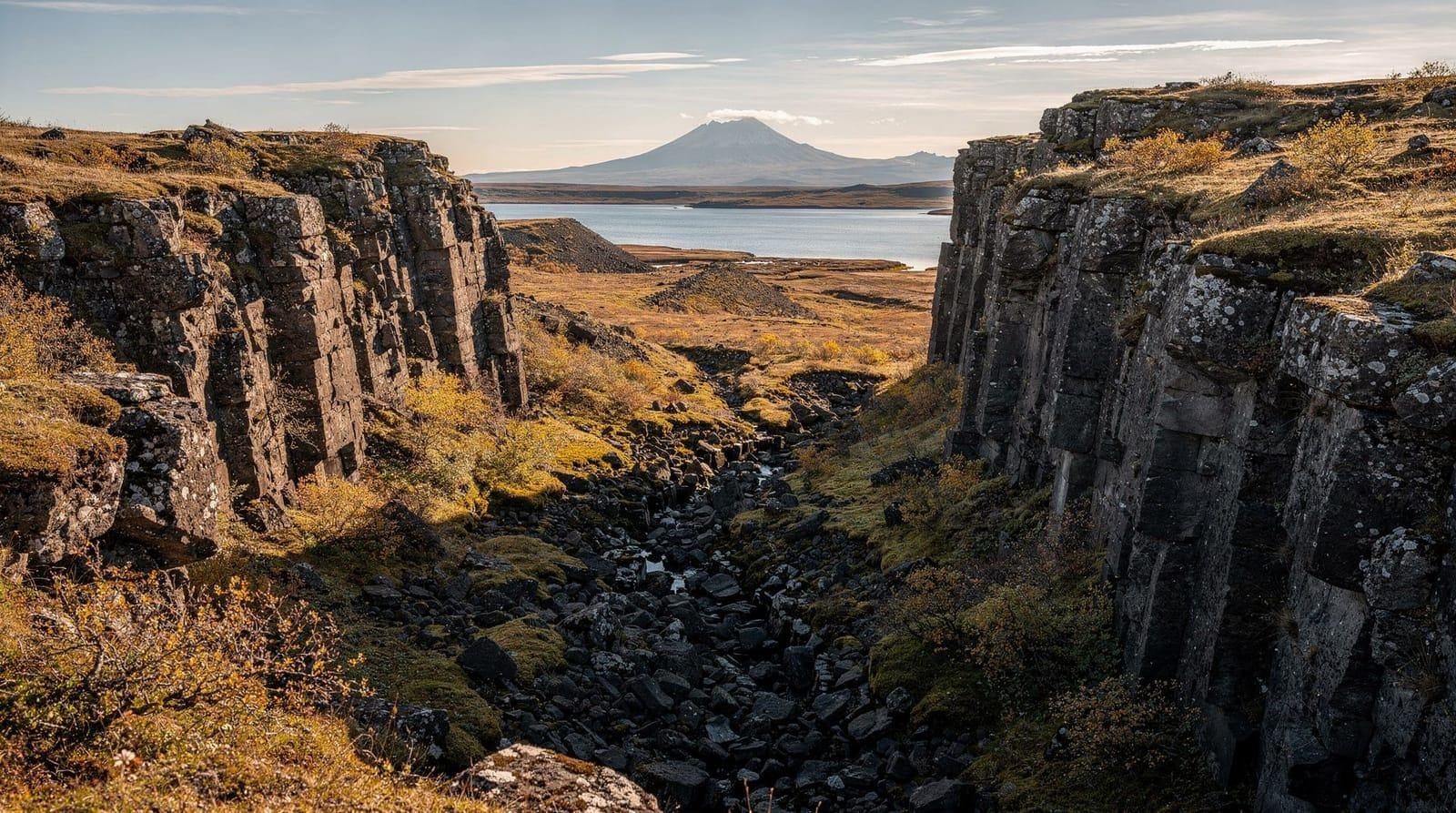
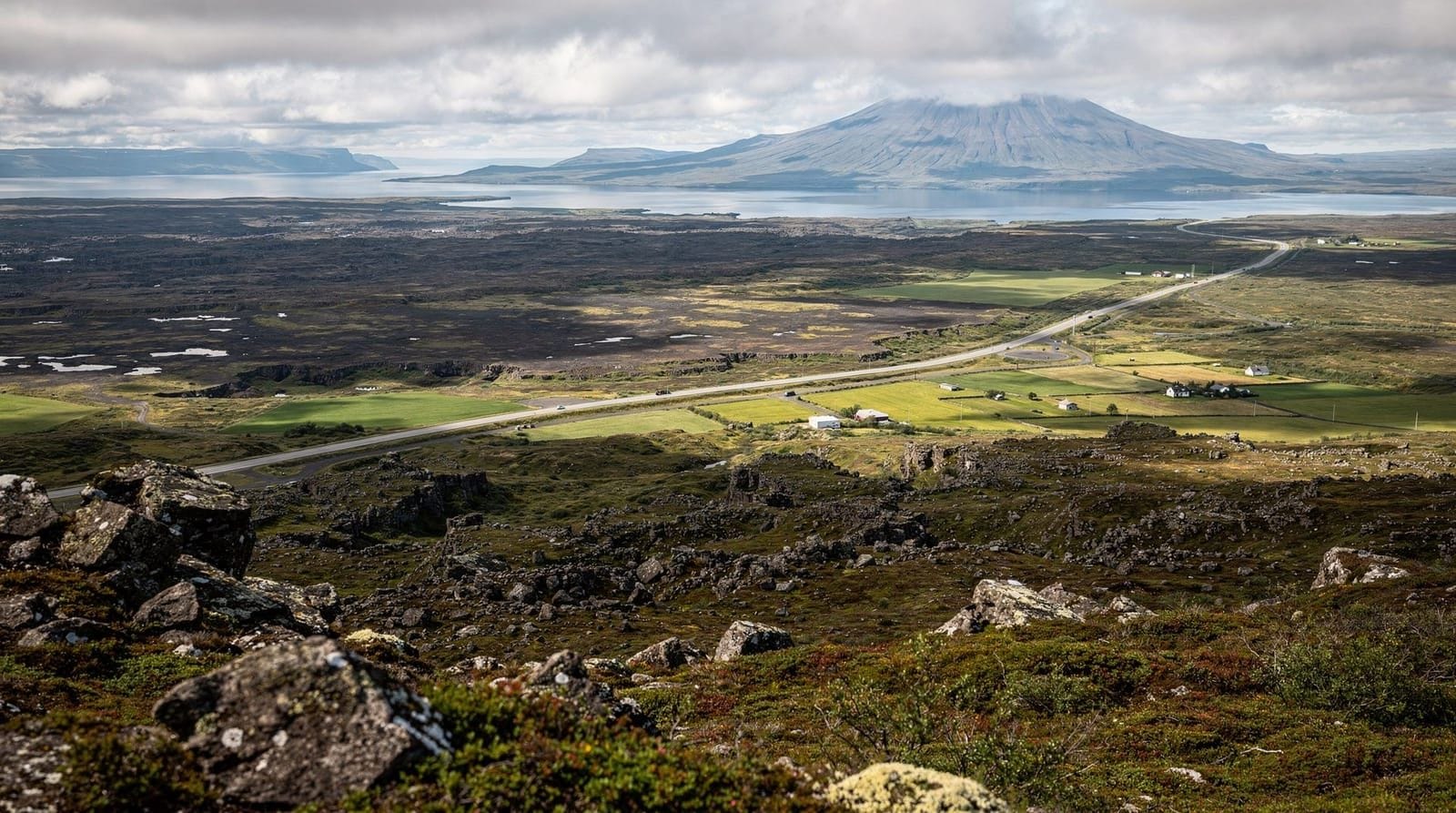
Þingvellir is 45 km east of Reykjavík. The Almannagjá rift — a dramatic canyon formed where the North American and Eurasian plates are pulling apart at about 2 cm per year — runs through the visitor area. You can walk through the rift on a flat path: it is genuinely strange to be standing in a gap between two continents with sheer basalt walls on either side.
The national park is also Iceland’s founding parliament site. The Alþingi (parliament) first met here in 930 CE — making it one of the world’s oldest parliamentary assemblies. The historical significance and the geology together justify the UNESCO listing. There is no charge to enter the park or walk the Almannagjá gorge, though parking costs ISK 750 (EUR 5).
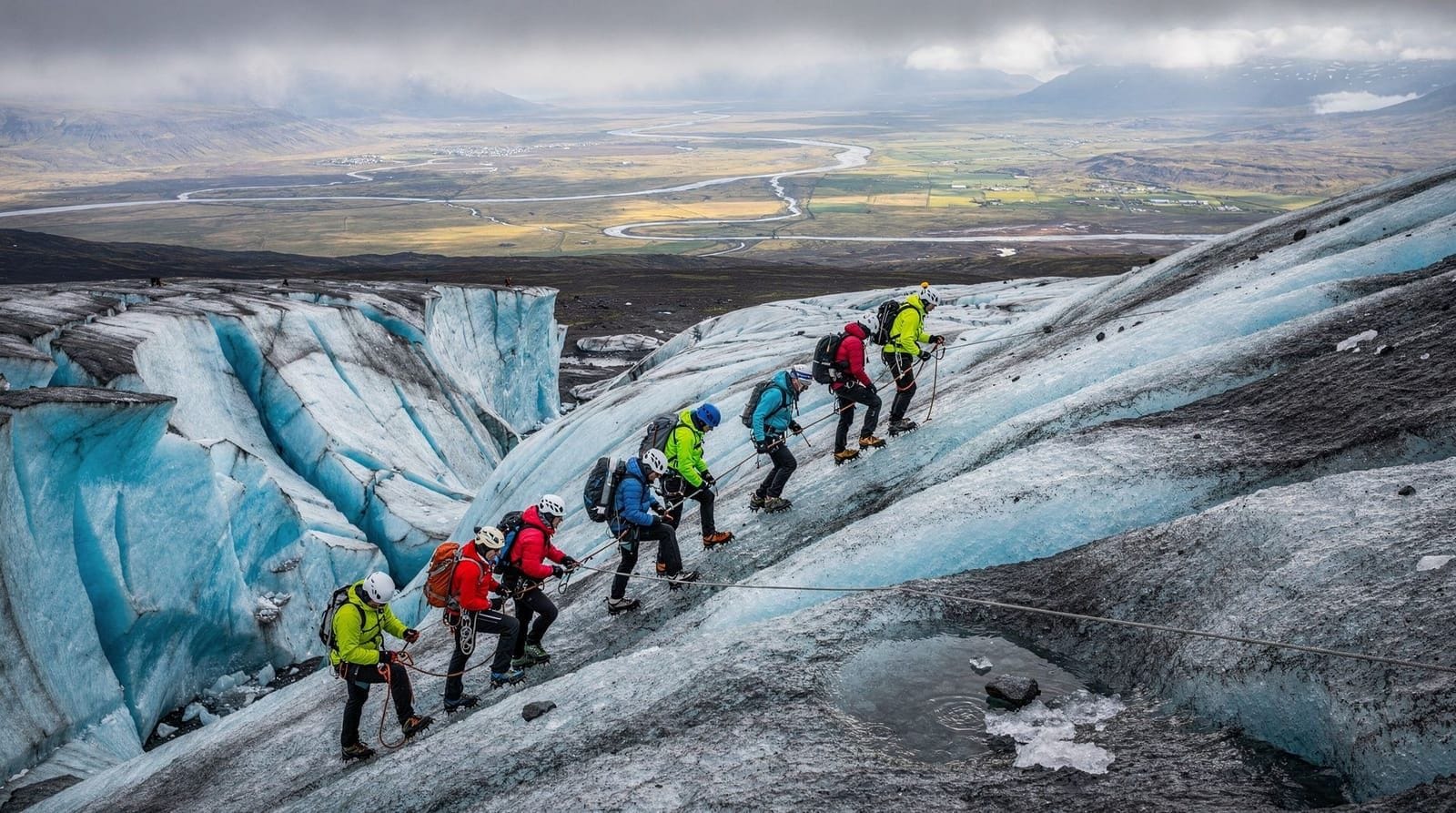
The Silfra fissure, a water-filled crack in the rift between the plates, is one of the world’s clearest snorkelling and diving sites. Visibility exceeds 100 metres. The water temperature is a constant 2–4°C year-round, which is cold enough that drysuits are required on all tours. This is a niche activity — you need to be a competent swimmer and comfortable in cold conditions — but the underwater visibility is otherworldly.
Golden Circle and Silfra snorkelling combo from Reykjavík — combines the full Golden Circle loop with a guided Silfra drysuit snorkel. Around ISK 35,000–45,000 (EUR 230–295). Only worthwhile if you actually want to snorkel; the combination day is long. Snorkelling experience required; scuba diving requires a certification.
Nearly every coach leaves at half past eight, which is why the three stops feel crowded before noon: a Golden Circle afternoon departure arrives behind the wave and gets Gullfoss in lower, better light.
Geysir geothermal field
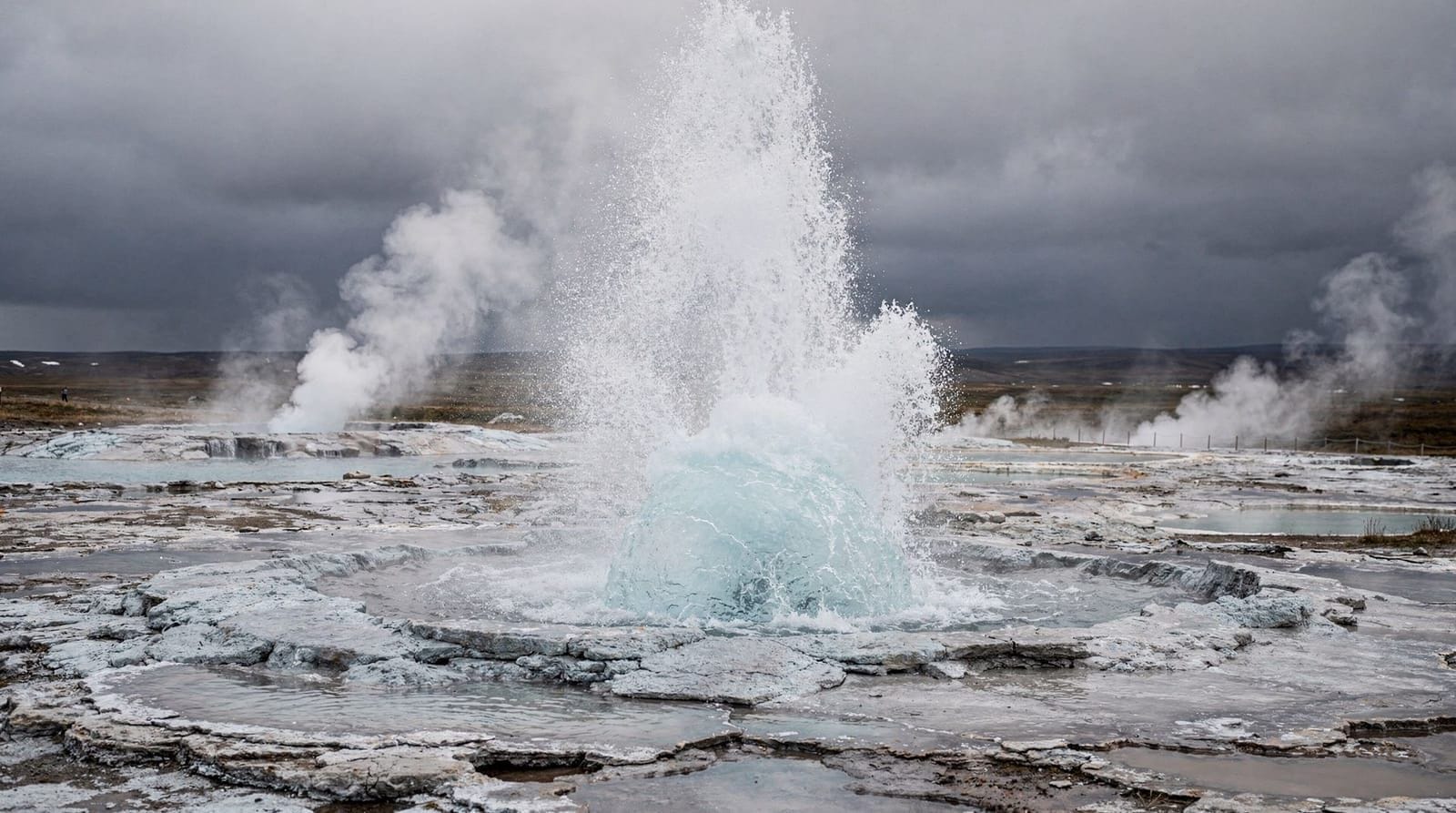
Geysir, the original geyser from which the term derives, is largely dormant now — it erupts infrequently and unpredictably. But Strokkur, 50 metres away, erupts reliably every 4–10 minutes to a height of 20–40 metres. It is genuinely impressive, and catching it mid-eruption is satisfying regardless of how many Instagram shots you have seen.
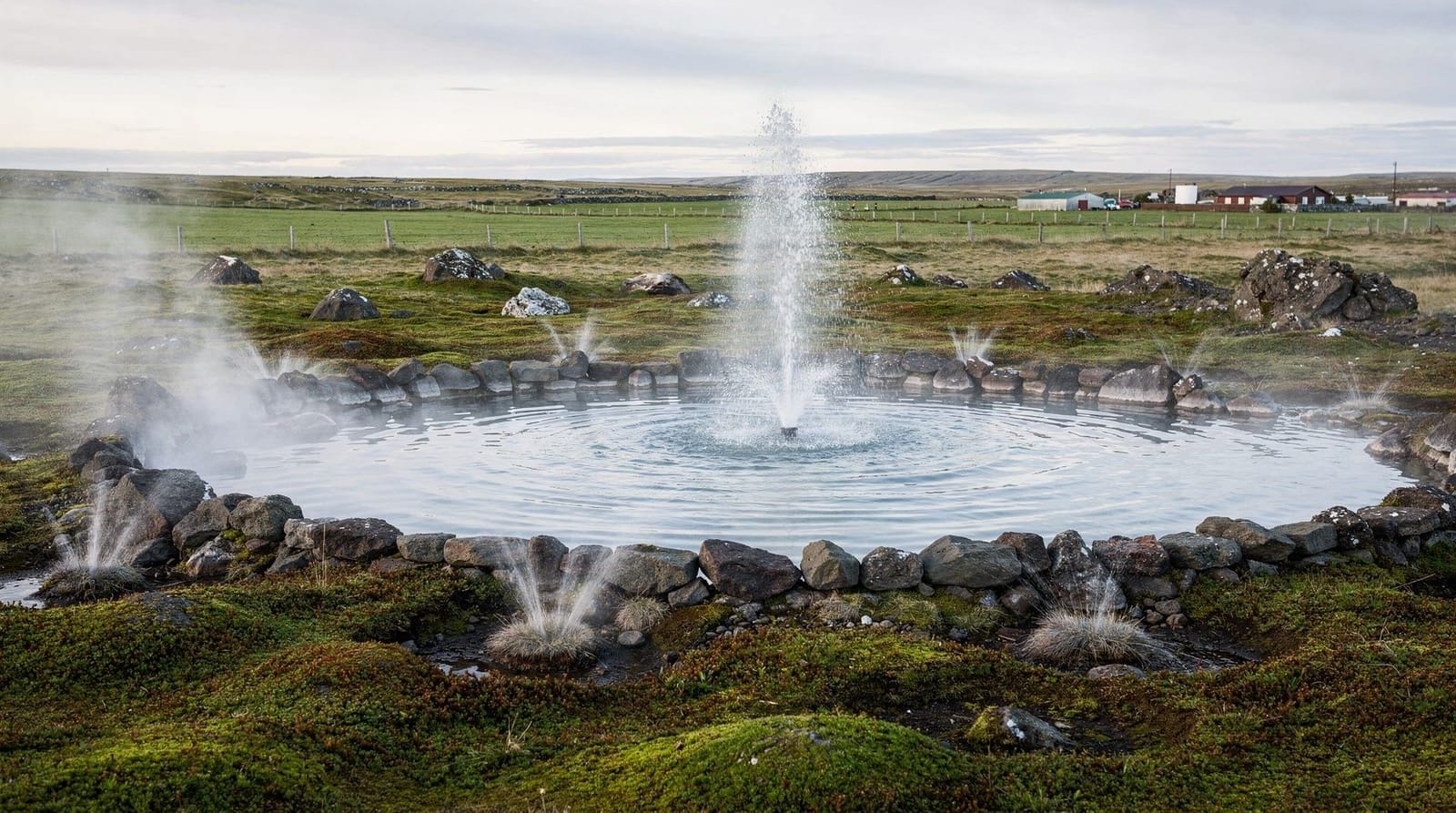
The wider Haukadalur geothermal field includes sulphurous mud pools, smaller vents, and hot springs — the area sits over a shallow magma intrusion that heats groundwater to boiling. There is no charge to walk the geothermal trail, though parking is ISK 800 (EUR 5) and the adjacent café and tourist centre charge café prices (soup ISK 2,500 / EUR 16).
There are no guardrails between visitors and the active geothermal features — the ground temperature immediately adjacent to some vents is lethal. A tourist was seriously burned here in 2016 by stepping on what appeared to be solid ground that turned out to be a thin crust over boiling mud. Stay on marked paths.
Gullfoss
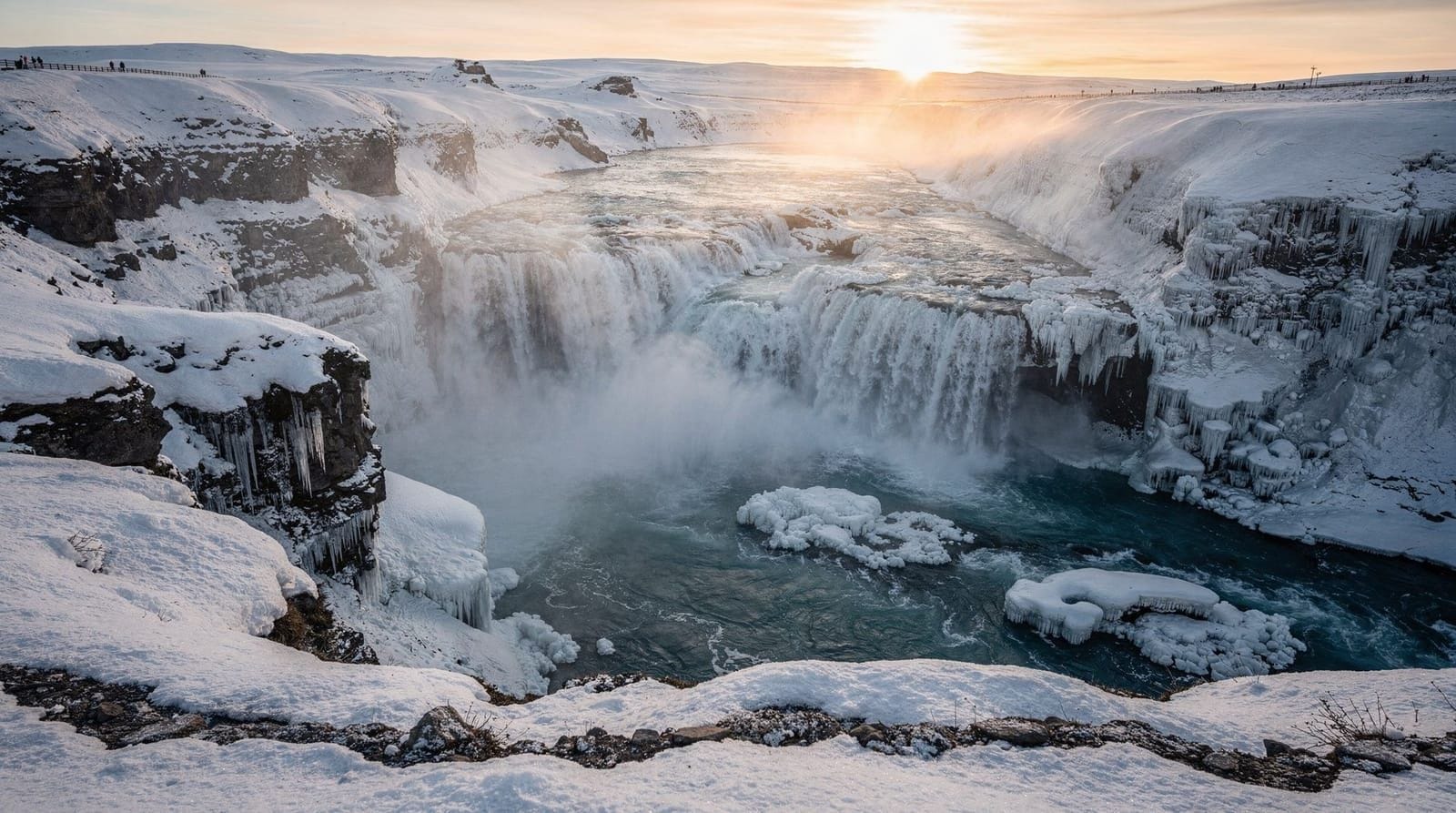
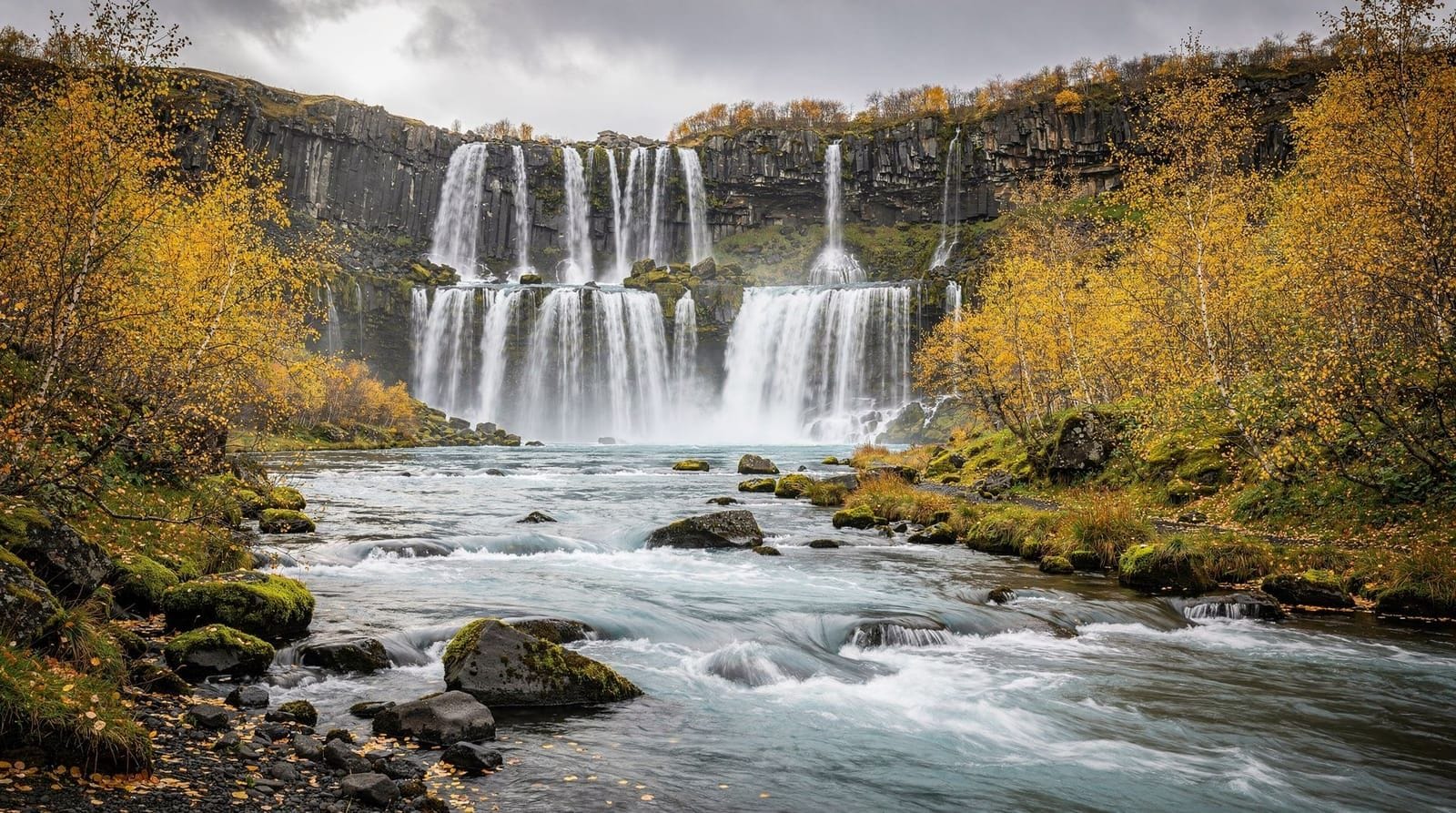
Gullfoss (“Golden Falls”) is a two-tiered waterfall on the Hvítá river, 120 km from Reykjavík. The upper fall drops 11 metres; the lower falls drop 21 metres into a canyon. The combined effect — a huge volume of glacial meltwater disappearing into a narrow gorge — is more dramatic than the statistics suggest. On bright days, rainbows form in the mist at the canyon edge.
The waterfall was nearly developed as a hydroelectric project in the early 20th century; the landowner’s daughter Sigríður Tómasdóttir is credited with leading the campaign against the dam that eventually preserved it. There is a monument to her at the viewpoint. Admission to the waterfall is free; parking costs ISK 800 (EUR 5).
The trail system offers several viewpoints at different levels. The lower path (closest to the falls) is spectacular but can be very wet from mist — waterproof jacket recommended. The upper platform gives the panoramic view.
Golden Circle full day guided tour from Reykjavík — covers all three sites with an English-speaking guide, typical group size 40–50 on large coaches. ISK 13,000–16,000 (EUR 85–105). The standard format works well for first-timers; the downside is limited time at each site and no flexibility to linger.
Golden Circle small group tour with 7 stops — smaller bus (max 19) covering additional stops including Kerið crater and Friðheimar tomato farm. ISK 18,000–22,000 (EUR 118–145). The smaller group allows more flexibility and the extra stops add genuine variety.
Self-driving the Golden Circle
The standard route from Reykjavík:
- Þingvellir (Route 36 east): 45 km / 45 minutes
- Geysir (Route 365 and 37 east): 65 km / 50 minutes from Þingvellir
- Gullfoss: 9 km east of Geysir
- Return via Route 35 west to Selfoss, then Route 1 to Reykjavík: 130 km / 1.5 hours
Total driving: approximately 230 km. In good conditions, 8 hours is sufficient to see all three sites without rushing. In summer, leave early (before 08:00) to reach Geysir before the bus tour crowds arrive around 10:30–11:00.
The entire route is on paved roads and is accessible in a 2WD sedan throughout the year, though winter driving requires care: ice and snow can form on elevated sections, and Þingvellir sees snowfall from October through April. Check road.is (the Icelandic road authority) before driving in autumn or winter.
Add-ons worth considering
Kerið crater: 55 km south of Gullfoss on Route 35. A volcanic crater lake with vivid red and ochre scoria walls and a shallow teal lake. Admission ISK 700 (EUR 5). Genuinely worth a 30-minute stop; most bus tours skip it or charge extra.
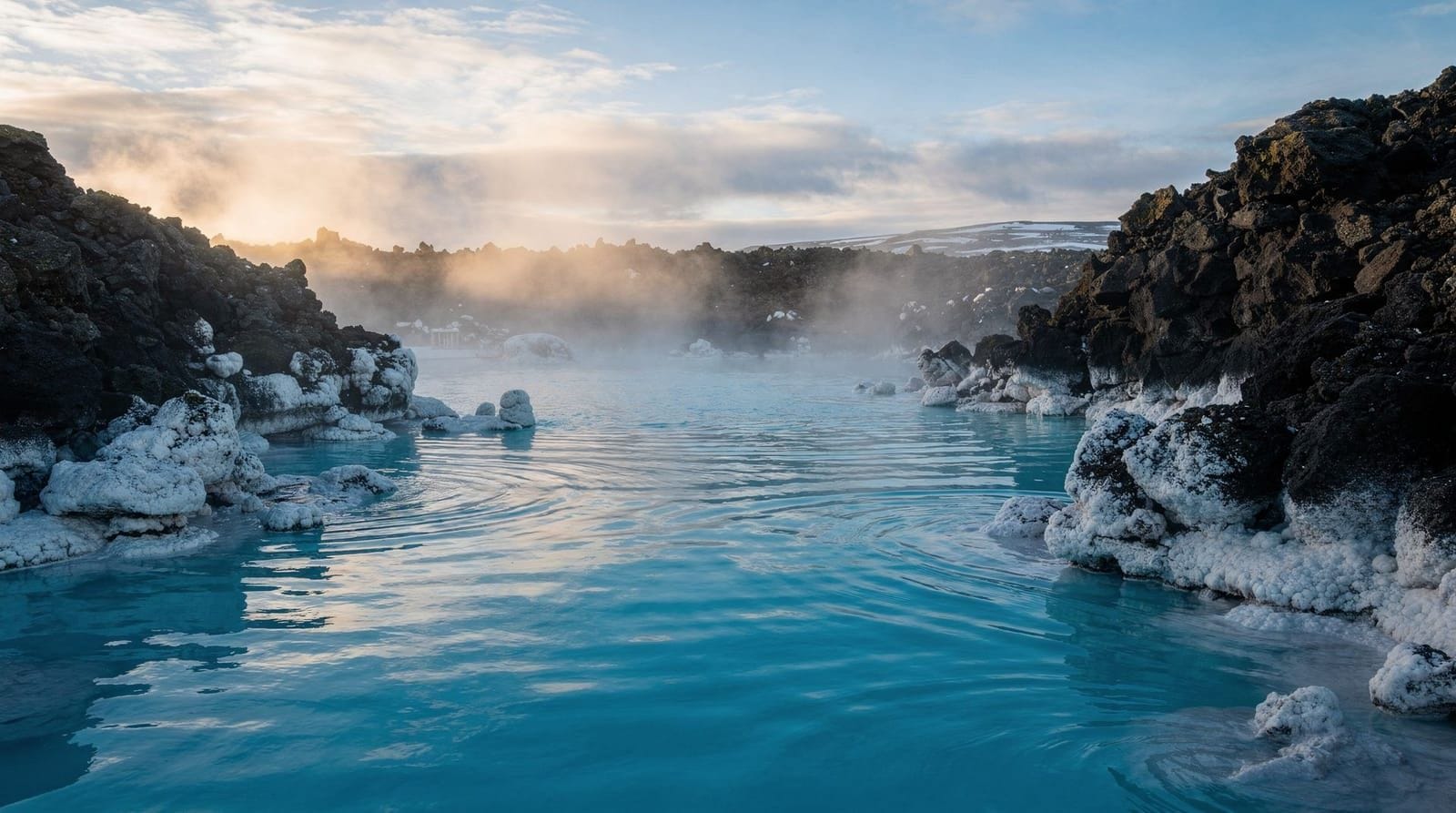
Secret Lagoon at Flúðir: 15 km west of Geysir. Iceland’s oldest swimming pool (est. 1891), fed by natural geothermal water at 38–40°C. Less crowded and more authentic than the Blue Lagoon; no prebooking required most of the year (ISK 3,500 / EUR 23 admission). A natural hot spring in a garden setting — considerably more interesting than it sounds.
Friðheimar tomato farm: On the route between Selfoss and Geysir. Year-round greenhouse producing tomatoes in geothermal heat; attached restaurant serves tomato soup and Bloody Marys. Lunch runs ISK 5,000–6,000 (EUR 33–40). Genuinely a novel experience; reservations recommended.
Golden Circle and Secret Lagoon day tour from Reykjavík — adds the Flúðir soak to the standard circuit. ISK 17,000–21,000 (EUR 110–138). The combination is the most popular of the extended formats for good reason: a geothermal soak ends the day well.
Practical notes on crowds
The Golden Circle is Iceland’s busiest tourist route. Peak congestion occurs:
- At Geysir between 10:30 and 14:00 (when multiple coach tours overlap)
- At Gullfoss viewpoint from 11:00 to 15:00
- At Þingvellir Almannagjá walk on weekend afternoons in July and August
Self-drivers can sidestep most of this by starting at 07:30–08:00 and doing the loop in reverse (Gullfoss first, then Geysir, then Þingvellir). The crowds at Gullfoss at 09:00 are a fraction of those at 12:00.
Weekday visits are consistently less crowded than weekends, particularly at Þingvellir, which draws Icelandic day-trippers from Reykjavík on Saturdays and Sundays in addition to the international tourist traffic. If your schedule allows any flexibility, a Tuesday or Wednesday Golden Circle day sees noticeably fewer people at all three stops than the same itinerary run on a Saturday.
The Golden Circle in historical context
The three Golden Circle sites are connected not just geographically but historically. The Þingvellir parliament site reflects the founding of Icelandic society after the Settlement Era (874–930 CE). The Geysir field is documented in medieval sagas and European scientific literature from the 13th century onward. Gullfoss carries the conservation story of a 20th-century landowner’s daughter protecting a natural feature from industrial exploitation.
These are real historical connections, not tourism marketing. The sagas written in the 13th century (Njáls saga, Egils saga) reference landmarks and places along what is now the Golden Circle route. The Alþingi at Þingvellir is explicitly described in multiple saga texts. Reading a simplified summary of Icelandic medieval history before visiting adds context that enriches all three sites.
Horse riding and the Golden Circle
The Golden Circle area is also one of the main centres for Icelandic horse riding experiences. The Icelandic horse is a breed specific to Iceland — descended from horses brought by Norse settlers in the 9th century, isolated for over 1,000 years, and developed with a distinctive smooth gait called the “tölt.” Several farms along the Golden Circle route offer rides ranging from 1-hour introductory sessions to full-day riding experiences.
Specifically relevant: horse riding farms between Selfoss and Geysir along Route 35/30, and near Þingvellir along Route 36. Combining a morning Golden Circle visit with an afternoon horse riding session at Friðheimar area or Haukadalur is possible with careful scheduling.
Sustainable travel considerations
The Golden Circle receives an estimated 1 million visitors per year, making it Iceland’s most visited tourist route. The environmental pressure on the three sites — particularly Geysir’s geothermal field and Þingvellir’s sensitive ecosystem — is real and increasing.
Practical steps that help: staying on marked paths (off-path walking at Geysir damages the silica formations; at Þingvellir it damages the slow-growing moss and lichen); using the official car parks rather than parking on verges; visiting in shoulder season if possible; and choosing small-group tours over large coaches, which concentrate visitor impact at narrower time windows.
The Icelandic Environment Agency (Umhverfisstofnun) monitors all three sites continuously. Visitor capacity limits at Silfra and some Þingvellir access points already exist; further restrictions may apply in coming years if visitor numbers continue to grow.
Costs summary
- Guided day tour: ISK 13,000–22,000 / EUR 85–145 depending on format and group size
- Self-driving: petrol ISK 4,000–5,000 (EUR 26–33) for the 230-km loop + parking fees ISK 2,000–2,500 (EUR 13–16) total + car rental (from ISK 8,000 / EUR 52/day for a basic compact)
- Silfra snorkelling add-on: ISK 16,000–20,000 (EUR 105–130) extra per person
- Secret Lagoon admission: ISK 3,500 (EUR 23)
- Kerið crater admission: ISK 700 (EUR 5)
Which Golden Circle format fits your trip
There isn’t one “correct” way to do the Golden Circle — the right format depends on your time, budget, and appetite for driving. The golden-circle-day-trip guide and the itineraries/golden-circle-one-day plan both break this down in more depth; the short version:
| Format | Best for | Trade-off |
|---|---|---|
| Large coach tour | Budget, no driving required | Least flexible, largest crowds at each stop |
| Small-group tour (7 stops) | Extra sites (Kerið, Friðheimar) with some flexibility | Higher cost than the standard coach |
| Self-drive | Full control of timing and pace | Requires a driving licence and comfort on Icelandic roads |
| Self-drive reversed (Gullfoss first) | Avoiding the worst Geysir/Gullfoss crowds | Requires an early start regardless |
If you’re weighing the Golden Circle against other South Iceland options entirely, the golden-circle-vs-south-coast guide compares the two routes directly for travellers who can only fit one into a short trip.
Frequently asked questions about the Golden Circle
Can I do the Golden Circle in one day?
Yes. One day is the standard format and is sufficient to visit all three main sites (Þingvellir, Geysir, Gullfoss) without rushing, plus one add-on like Kerið or the Secret Lagoon. Guided tours are all one-day formats. Self-driving allows more flexibility in pacing.
Is the Golden Circle worth it?
Yes, for most first-time visitors to Iceland. The three sites are genuinely distinct — a UNESCO tectonic rift, an active geothermal field, and a major glacial waterfall — and represent three different aspects of Iceland’s geology. That said, if you have limited time and have to choose between the Golden Circle and the South Coast, the South Coast (Seljalandsfoss, Skógafoss, Reynisfjara, Vík) offers more visual variety over a longer route.
Is a guided tour better than self-driving?
Guided tours handle logistics (no need to navigate or park) and include commentary on geology and history. Self-driving gives flexibility to spend more time at sites you like and to leave early to beat crowds. Neither is objectively better; the right choice depends on whether you have a driving licence, your comfort driving on Icelandic roads, and whether you want flexibility or simplicity.
What is the Golden Circle in winter?
Fully doable. The Ring Road and Route 36 to Þingvellir are treated and generally passable, though snow and ice occur. Þingvellir is stunning under snow. Geysir is undimmed — the steam is even more dramatic in cold air. Gullfoss is surrounded by ice formations in deep winter. Bring appropriate clothing (boots, waterproofs, layers). Check road.is for conditions on the day.
How crowded is the Golden Circle?
Very crowded in peak summer (June–August), particularly from 10:00 to 15:00 when coach tours concentrate at Geysir and Gullfoss. Starting early (before 08:00) or visiting in shoulder season (April–May, September–October) significantly reduces the crowds. Þingvellir tends to be less bottlenecked than Geysir.
Does the Golden Circle include the Blue Lagoon?
No. The Blue Lagoon is near Keflavík airport, west of Reykjavík — it is a separate attraction and is not geographically part of the Golden Circle loop. Some combined tickets include both, but this makes for a very long day and the two experiences feel disconnected.
Can I add the Secret Lagoon to the Golden Circle in one day?
Yes. The Secret Lagoon at Flúðir is 15 km from Geysir and fits naturally into the Golden Circle loop with a 30-minute detour. Budget 1–1.5 hours for the soak. Several guided tours include it as standard, or you can add it independently on a self-drive.
Is a large coach tour or a small-group tour better for the Golden Circle?
Both cover the same three sites, but a small-group tour (max ~19 passengers) generally adds extra stops like Kerið and Friðheimar and allows more flexibility at each site, for a higher price. A large coach is the cheaper, no-frills option and works fine if your priority is simply seeing the three main sites without extras.
What should first-time visitors NOT skip on the Golden Circle?
Don’t skip the Almannagjá rift walk at Þingvellir — it’s free, short, and the most tangible way to physically stand in the gap between two tectonic plates. Also don’t rush past waiting for at least one Strokkur eruption cycle at Geysir; arriving, snapping one photo, and leaving misses the point of watching it perform.
Top experiences
Bookable activities with verified prices and instant confirmation on GetYourGuide.
Reykjavik: From Reykjavik Golden Circle full day guided trip
Reykjavik: From Reykjavik Golden Circle express full day
Reykjavik: Golden Circle small group 7 stops
Reykjavik: From Reykjavik Golden Circle and Secret Lagoon day tour
Reykjavik: Golden Circle Silfra snorkeling combo
Reykjavik: Golden Circle kerid small group
Top-rated experiences in Golden Circle — Þingvellir, Geysir, and Gullfoss in one day
Best-rated activities across GetYourGuide and Viator.