Golden Circle vs South Coast: which day trip from Reykjavik is better?
Reykjavik: South Coast waterfalls black sand Glacier
Golden Circle or South Coast from Reykjavik?
The South Coast has more dramatic scenery per km — two major waterfalls, a black sand beach, cliffs, and glaciers. The Golden Circle covers Iceland's geological and historical highlights: a geyser, a massive waterfall, and the original parliament site. With one day, most visitors find the South Coast more visually impactful. With two days, do both.
The real choice you’re making
If you have one full day in or near Reykjavik and want to understand why Iceland matters, you are choosing between two different versions of the country:
Golden Circle: Geological and historical. A geyser erupting every 5 minutes, a massive double-cascade waterfall, and the site where Icelanders gathered to make laws for 900 years. UNESCO World Heritage Site (Þingvellir). More variety in what you see.
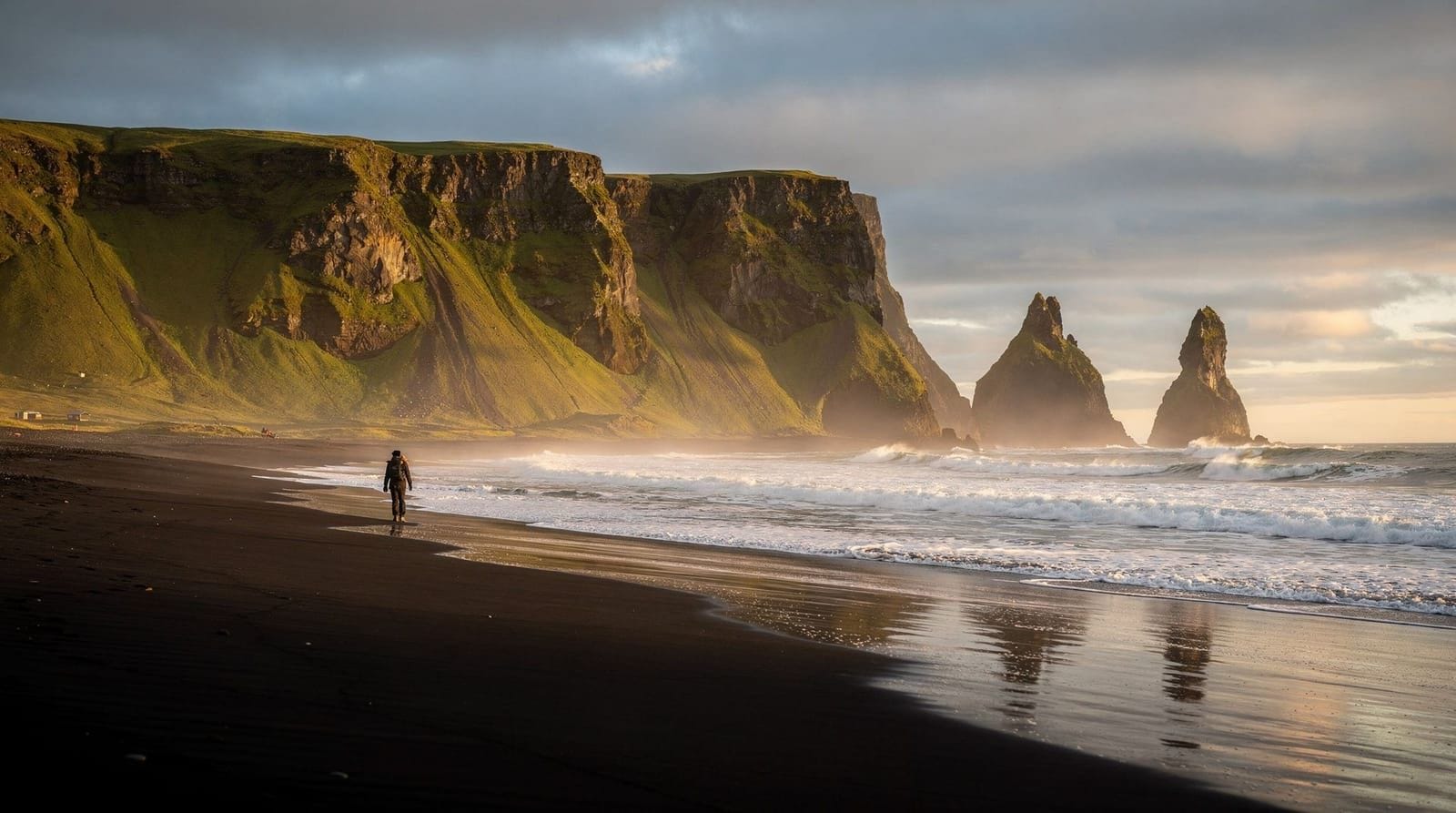
South Coast: Visual impact. Back-to-back waterfalls you can walk behind, a black sand beach backed by basalt sea stacks, an ancient glacier, and if you extend the day, Europe’s most powerful waterfall. Pure landscape drama.
Neither is “better” in absolute terms. They suit different travel styles.
| Golden Circle | 230–300 km, 7–9 hrs, geology + history + geyser |
| South Coast | 400 km, 8–10 hrs, waterfalls + black sand + glacier |
| With one day | South Coast edges ahead on visual impact |
| With two days | Do both — different directions from Reykjavik |
| Both | Depart Reykjavik by 07:30–08:00 for either |
What the Golden Circle offers
The Golden Circle covers approximately 230–300 km from Reykjavik (depending on which route and additions you include). Core stops:
Þingvellir National Park: The rift valley where North American and Eurasian tectonic plates meet above ground. Walk the Almannagjá gorge along the plate boundary. Historically significant — Iceland’s original parliament (Alþingi) convened here from 930 AD. UNESCO listed. Minimum 1.5–2 hours to do justice to the gorge walk.
Geysir Geothermal Area: Strokkur geyser erupts every 4–8 minutes to 15–20 m. The surrounding area has active hot springs, mud pools, and the original Geysir (which gave all geysers their name, rarely active now). 30–45 minutes is typical; photographers often stay longer.
Gullfoss: A two-tiered 32 m waterfall that drops into a narrow canyon. One of Iceland’s most famous waterfalls. Accessible from two platforms. 30–45 minutes.
Optional add-ons: Kerið crater (+1 hour), Secret Lagoon in Flúðir (+2 hours), Friðheimar tomato farm restaurant (+1.5 hours with lunch).
Total driving: ~230 km (core circle). Approximately 2.5–3 hours driving, 6–7 hours stops.
See our detailed Golden Circle self-drive guide.
What the South Coast offers
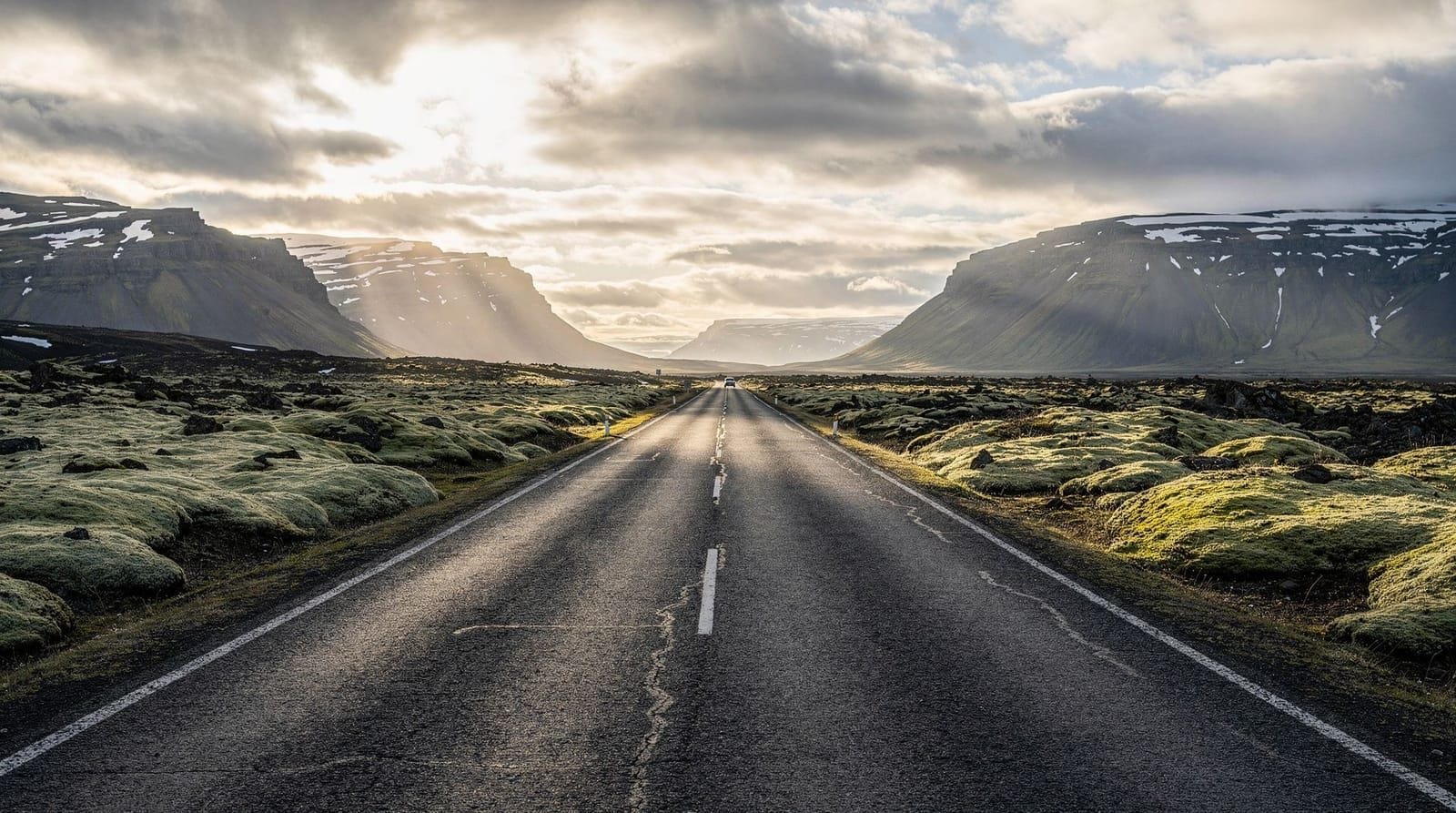
The South Coast day trip from Reykjavik follows Route 1 east, covering approximately 400 km return (Reykjavik–Vík–Reykjavik). Key stops:
Seljalandsfoss: A 60 m waterfall you can walk behind — a 2-minute path through the cave behind the curtain of water. Gets you wet. Worth it. Adjacent Gljúfrabúi waterfall is hidden in a narrow canyon 5 minutes’ walk further — most visitors miss it.
Skógafoss: 60 m wide, 60 m drop. Frontal view from a 1-minute walkway. Also accessible from a staircase that climbs 370 steps to a clifftop trail above the waterfall. The Fimmvörðuháls hiking trail starts here. 30–45 minutes minimum.
Reynisfjara black sand beach: Sea stacks (Reynisdrangar) rising from the North Atlantic, basalt columns forming a honeycomb wall, and powerful surf with no warning — waves here have killed tourists who stood too close. Read the warning signs and stay back from the water. One of Iceland’s most dramatic viewpoints. 30–45 minutes.
Dyrhólaey: A 120 m arch headland with puffin nesting (May–August), views east to Mýrdalsjökull glacier, and the most expansive view of Reynisfjara. 20–30 minutes.
Vik: The southernmost village in Iceland, with a black sand beach (Víkurfjara) on the east side of town. A useful break point with basic services (petrol, coffee, N1).
Optional extension to Jökulsárlón glacier lagoon: +240 km round trip from Vík. Adds 3–4 hours. Creates a very long day (12–14 hours total) but Jökulsárlón is genuinely one of Iceland’s most spectacular sights. See our Jökulsárlón day trip guide.
Total driving (Reykjavik–Vík–Reykjavik): ~400 km. Approximately 5 hours driving, 4–5 hours stops.
Direct comparison
| Category | Golden Circle | South Coast |
|---|---|---|
| Visual drama | High | Very high |
| Driving distance from Reykjavik | 230 km loop | 400 km return |
| Hours needed | 7–9 hours | 8–10 hours |
| Crowd levels | High (Geysir, Gullfoss busy) | High (waterfalls and beach very busy) |
| Historical/cultural depth | High (Þingvellir) | Low |
| Winter accessibility | Good | Good |
| Photography variety | Geyser, waterfall, geology | Waterfalls, ocean, cliffs, glaciers |
Crowd comparison
Both routes are Iceland’s two most-visited day-trip corridors. In peak season (July–August):
- Geysir car park is full by 10:00
- Skógafoss is crowded 09:00–18:00
- Reynisfjara is dangerous when crowds compress people toward the surf zone
Early start (leave Reykjavik by 07:30) or late return (14:00+ at the final site) reduces crowd impact at both. Neither route has a genuinely quiet time in July.
Who should choose the Golden Circle
- Visitors who want variety: geology (geyser), hydrology (waterfall), ecology (geothermal), history (Þingvellir) in one day
- Travelers who are interested in Icelandic sagas and the country’s history
- Those who want to add the Secret Lagoon or Blue Lagoon to a single day trip
- Visitors with limited mobility (the core Golden Circle sites have paved access, unlike some South Coast viewpoints)
- First-time Iceland visitors who want a primer on the country’s different landscape types
Who should choose the South Coast
- Visitors for whom visual impact is the priority
- Photographers — waterfalls, black sand, basalt columns, and sea stacks are more photogenic per stop than the Golden Circle equivalents
- Travelers extending toward Jökulsárlón who want to use the day trip as a Ring Road start
- Hikers — the Fimmvörðuháls trail starts at Skógafoss
- Anyone who is considering only one day outside Reykjavik
South Coast guided tour: If you prefer not to drive, guided tours cover the South Coast route.
South Coast day tour: waterfalls, black sand beach, and glacierIf you have two days
Day 1: South Coast (Seljalandsfoss → Skógafoss → Reynisfjara → Dyrhólaey). Overnight in Vík if possible. Day 2: Golden Circle (Þingvellir → Geysir → Gullfoss → Kerið → Reykjavik).
This covers Iceland’s two most celebrated day-trip routes with adequate time at each.
The photography case for each route
Both routes are exceptionally photographed, but they reward different equipment and timing strategies.
Golden Circle photography specifics
Þingvellir: The Almannagjá gorge is best in the morning when side light hits the rock walls at an angle. The Öxará river bridge and the autumn foliage (September–October) make this exceptional for landscape photography. Wide-angle lens for the gorge; telephoto for compression of the fissure walls.
Strokkur: The challenge is the burst — you need to anticipate the eruption. Experienced geyser photographers use burst mode and focus pre-set on the cone rather than autofocusing. A fast shutter (1/1000s minimum) is needed to freeze the water column. The steam in colder weather creates a more dramatic column.
Gullfoss: Spray and mist make filters essential (ND10 or polariser to cut glare). The lower viewpoint provides intimate access but gets extremely wet. Drone photography is prohibited within the national park boundaries, which include Þingvellir.
South Coast photography specifics
Seljalandsfoss cave: The walk-behind provides a unique photography angle. Inside the cave looking out, with the waterfall as a frame, is one of Iceland’s most distinctive shots. Requires a waterproof camera cover or willingness to get equipment wet. Circular polariser eliminates the worst glare from the water veil.
Reynisfjara: The basalt column wall (Reynisfjall) provides texture and pattern for abstract photography. The sea stacks at different zoom levels give layered compositions. The black sand contrasted with white foam creates strong graphic images. Best in overcast conditions that reduce harsh shadows — this is one of the few Iceland sites that doesn’t require good weather to photograph well.
Skógafoss: The 60 m frontal face is best photographed straight-on with a wide lens in the morning (sun is to your back, illuminating the face). Climbing the stairs for the top view gives a different perspective but requires a longer lens to pull the valley into frame.
Combining with a geothermal spa
Both routes can be logically combined with a geothermal spa stop:
Golden Circle + Secret Lagoon (Flúðir): The Secret Lagoon is 35 km off the Golden Circle route, near the end (coming from Gullfoss direction). Adding it makes the day 10–11 hours but ends on a relaxing note. See our Secret Lagoon guide for timing.
Golden Circle + Sky Lagoon: Sky Lagoon is 7 km from Reykjavik, making it a natural end-of-day stop before returning to the city. The Sky Lagoon guide covers evening availability.
Golden Circle + Blue Lagoon: The Blue Lagoon is on the Reykjanes Peninsula — somewhat out of the Golden Circle route direction (adds ~80 km). Some visitors manage it as a very long day but most find it exhausting. Better as a separate day.
South Coast + Blue Lagoon: The Blue Lagoon is on the way back from the South Coast if you return via Reykjanes rather than the direct Route 1. The detour adds 40–50 km but allows you to end the day in the lagoon. Logistics require booking the Blue Lagoon for late afternoon (16:00–18:00 slot).
Guided tours for each route: what to look for
Golden Circle guided tours: The main differentiators are stop duration at Þingvellir (many tours give only 30–45 minutes), addition of Kerið crater (not all include it), and add-on activities (Silfra snorkelling, Secret Lagoon). Ask specifically about Þingvellir time allocation before booking — it is consistently the most undersold site.
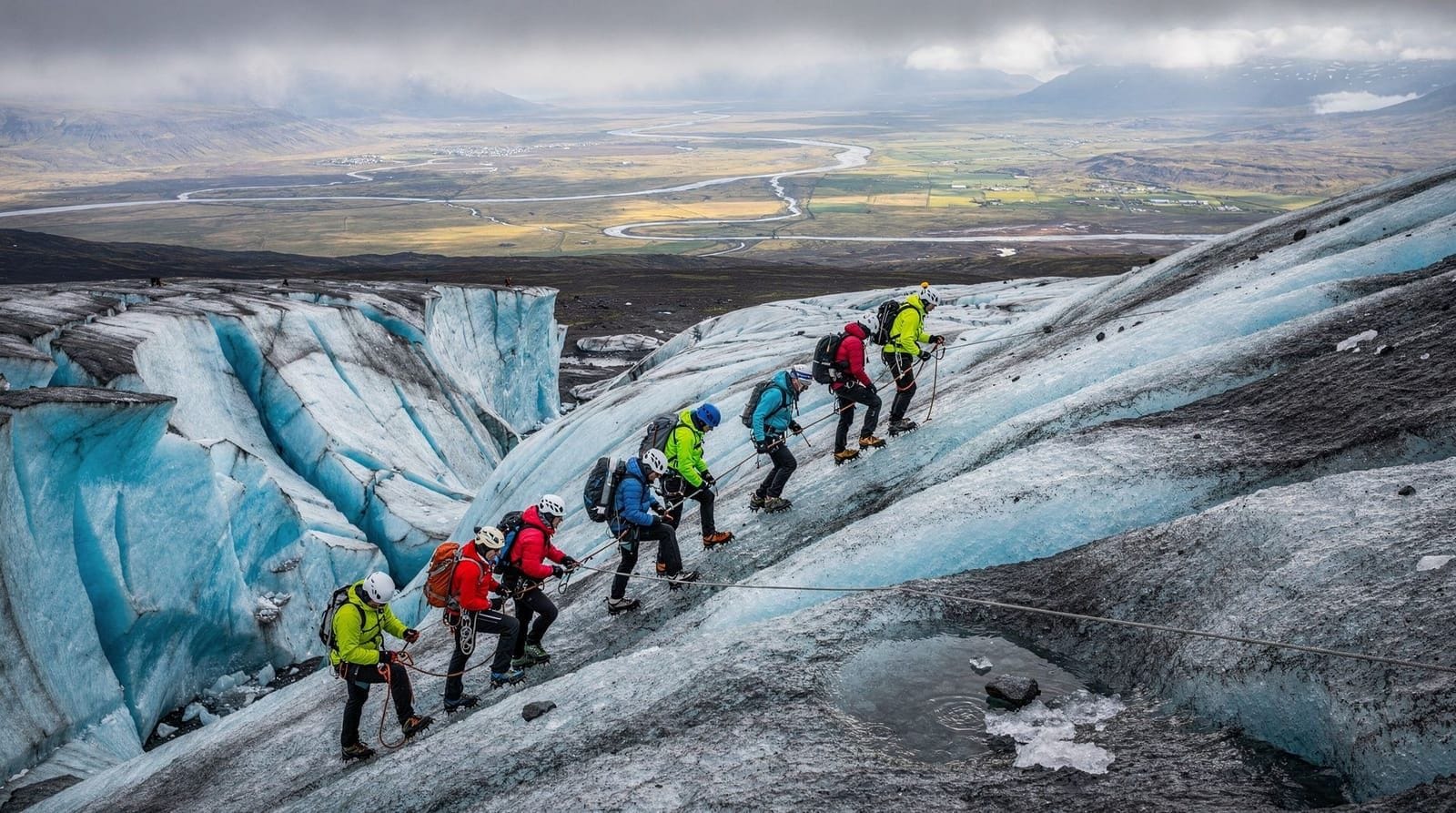
South Coast guided tours: Differentiators are glacier access (glacier hike add-ons are worth every króna), group size (private vs large coach affects Reynisfjara crowd experience), and whether Jökulsárlón is included or an optional extension.
For those who prefer a guided experience on the South Coast:
South Coast day trip with glacier hike from ReykjavikSafety notes specific to each route
Reynisfjara safety
Reynisfjara black sand beach is Iceland’s most dangerous tourist site by fatality count. The “sneaker waves” — large unexpected waves that arrive with no warning — have killed visitors who stood near or at the waterline. The danger is not limited to storm conditions: even on calm summer days, the Atlantic swell produces unexpected high waves.
Rules at Reynisfjara:
- Maintain a minimum 30 m distance from the waterline at all times
- Never turn your back to the sea at the waterline
- Do not go behind the basalt rock formations at the sea’s edge
- Children must be held when near the water area
The waves at Reynisfjara are caused by deep-water Atlantic swell hitting shallow beach topology — this creates tall, fast waves that extend far up the beach. The sand appears dry and safe; the wave arrives in 2–3 seconds covering 20–30 m. There is no warning, no rescue, and no second chance.
Seljalandsfoss waterfall safety
The walk-behind path at Seljalandsfoss is manageable but has specific hazards:
- The path is wet, slippery, and narrow — use trekking poles if you have them
- In winter, ice forms on the path and on the handrail — this section closes when icy
- In high wind, the spray from the waterfall can blast horizontally — this makes the cave section uncomfortable at wind speeds above 15 m/s
- Adjacent Gljúfrabúi waterfall requires wading through a shallow stream to enter the narrow canyon (knee-deep at most). The wading point is not signposted; follow the path 5 minutes north of Seljalandsfoss
Þingvellir safety
The rift valley has unguarded drops along sections of the Almannagjá gorge walk. The gorge path is safe on the main marked route but venturing off-path near the cliff edges is the primary risk. The Öxará river is not tidal but spring flooding can raise levels rapidly — the main valley floor is safe but river crossing points should be avoided after heavy rain.
The seasonal contrast between routes
The Golden Circle and South Coast offer dramatically different visual experiences depending on season:
Summer Golden Circle: Green valley at Þingvellir, wildflowers around the geothermal area, full Gullfoss flow with rainbow in the mist, and relatively crowded at all sites.
Winter Golden Circle: Snow-covered Þingvellir rift valley with ice on the Öxará, possible frozen sections of Gullfoss creating extraordinary blue ice formations, and significantly smaller crowds (particularly on weekdays).
Summer South Coast: Black sand contrasting with blue sea, glaciers gleaming white, waterfalls at full volume from snowmelt, puffins at Dyrhólaey from May to August.
Winter South Coast: Glaciers with snow cover creating blue-grey textures, potentially frozen sections of smaller waterfalls, aurora possible on clear nights near dark South Coast plains, and atmospheric moody light from November through March. The storm energy at Reynisfjara in winter — waves larger and more frequent — is genuinely dramatic if you stay at the safe distance.
Frequently asked questions about Golden Circle vs South Coast
Can I combine both in one day?
Not properly. Attempting both in a single day from Reykjavik means 500+ km of driving and under 20 minutes at each site. It’s physically possible but produces a worse experience than doing either one properly.
Which route has better infrastructure for guided tours?
Both have dozens of guided tour operators based in Reykjavik. The South Coast has slightly more tour variety (glacier hike add-ons, ice cave extensions). Golden Circle tours vary in quality more widely — some include Secret Lagoon or Silfra, others are pure driving with minimal stops.
Which is better for children?
Golden Circle: Geysir is universally exciting for children. Þingvellir has safe walking paths. Gullfoss has good viewpoint fencing.
South Coast: Reynisfjara beach is genuinely dangerous for unsupervised children — the sneaker waves that claim adults are more dangerous for smaller children near the waterline. Skógafoss and Seljalandsfoss are safe. The black sand beach can be experienced from a safe distance.
Slight edge to the Golden Circle for families with young children due to safety logistics.
Which is better in winter?
Golden Circle: All three main sites are accessible in winter with standard winter driving preparation. Gullfoss with ice formations is spectacular in February–March.
South Coast: Winter driving near Vík is more exposed to closures and sandstorms than the Golden Circle route. However, South Coast landscapes in winter (snowy glaciers, grey Atlantic) are visually dramatic.
Both are worth doing in winter with road condition awareness.
Are both routes accessible by public transport from Reykjavik?
Yes. Reykjavik Excursions and Strætó operate buses to both routes. The Golden Circle has several daily departures in summer and 1–2 in winter. South Coast buses are less frequent and typically cover only Seljalandsfoss and Skógafoss, not Reynisfjara, in a single trip. Self-driving gives access to all South Coast stops in one day; public buses require 2+ days to cover the same ground.
Does it matter which one I do first?
No strong preference. Many travelers do the Golden Circle first (shorter distance, builds familiarity with Iceland roads) and South Coast second (longer drive once confident). Equally valid in reverse.
Which route is more accessible for visitors with limited mobility?
The Golden Circle has a slight edge. Þingvellir has a paved accessible path along the Almannagjá gorge. Geysir has flat paths to the eruption area. Gullfoss has a paved accessible viewing platform at the upper level.
Which route is cheaper for a self-driving day?
The South Coast has no paid admissions at its main stops, making the bare-bones day slightly cheaper than the Golden Circle’s parking and Kerið fees. However, the South Coast’s natural extension — Jökulsárlón — costs considerably more than any Golden Circle add-on if you choose to include it.
Is one route better if I only have a short rental car booking?
The Golden Circle’s tighter 230–300 km loop is the lower-commitment option and more forgiving if your day runs short. The South Coast’s 400 km round trip rewards travellers who have more days and aren’t choosing between it and other single-day activities.
The South Coast is more challenging: Reynisfjara black sand is physically difficult for wheelchairs, Seljalandsfoss cave path is uneven and wet, and Skógafoss lower platform is accessible but the stairs (370 steps) are obviously not. Overall, both routes have at least one highly accessible stop per site, but the Golden Circle’s main attractions are more uniformly wheelchair-friendly.
What return visitors do differently
Travellers on a second or third Iceland trip who’ve already done both routes tend to make different choices than first-timers:
They skip the Golden Circle’s crowded core and go straight to Bruarfoss or Kerlingarfjöll — quieter sites reachable from the same general direction that don’t appear on standard tour itineraries.
They do the South Coast in reverse (Vík to Reykjavik) to catch Reynisfjara and Dyrhólaey in morning light before the coach groups arrive mid-morning, then work backward toward Seljalandsfoss in the afternoon.
They treat Jökulsárlón as its own overnight trip rather than a South Coast day-trip extension, allowing time for both the lagoon and Diamond Beach in better light and without the exhausting 12–14 hour round-trip day.
They combine partial versions of both routes — for example, Þingvellir and Geysir on the way out, continuing south rather than looping back via Gullfoss, picking up the South Coast waterfalls on the same day instead of returning to Reykjavik first. This unconventional routing sacrifices doing either “circuit” in its textbook order but reduces total backtracking for a longer, more efficient day.
Budget comparison for both routes
For a self-driving couple, both routes cost roughly the same in fuel and parking, but the South Coast has fewer paid attractions along the way:
| Cost item | Golden Circle | South Coast |
|---|---|---|
| Fuel (round trip) | 4,000–5,000 ISK | 6,000–7,500 ISK |
| Parking/admission fees | 1,500–2,500 ISK (Þingvellir, Geysir, Kerið) | Free at all main stops |
| Lunch | 3,500–5,500 ISK/person (Friðheimar) | 2,500–4,500 ISK/person (Vík cafés) |
| Optional extension | Secret Lagoon ~3,500 ISK/person | Jökulsárlón boat tour ~14,000–17,000 ISK/person |
The South Coast is cheaper for a bare-bones day (no paid admissions at the main stops), but its natural extension — Jökulsárlón — is a significantly pricier add-on than anything on the Golden Circle side.
Which route suits a rental car with limited range or a tight schedule
If you’re renting a compact car for a short Iceland stay and want to conserve driving time, the Golden Circle’s tighter loop (230–300 km vs. 400 km) is the lower-commitment option. It’s also more forgiving if your schedule slips — turning back from Gullfoss loses you less time than turning back from Vík.
The South Coast rewards a longer stay: if you’re only spending one full day outside Reykjavik on a short trip, the Golden Circle’s compactness reduces the risk of a rushed, exhausting day. If you have a rental car for several days regardless, the South Coast’s extra distance matters less because you’re not choosing between it and other activities on the same day.
Top experiences
Bookable activities with verified prices and instant confirmation on GetYourGuide.