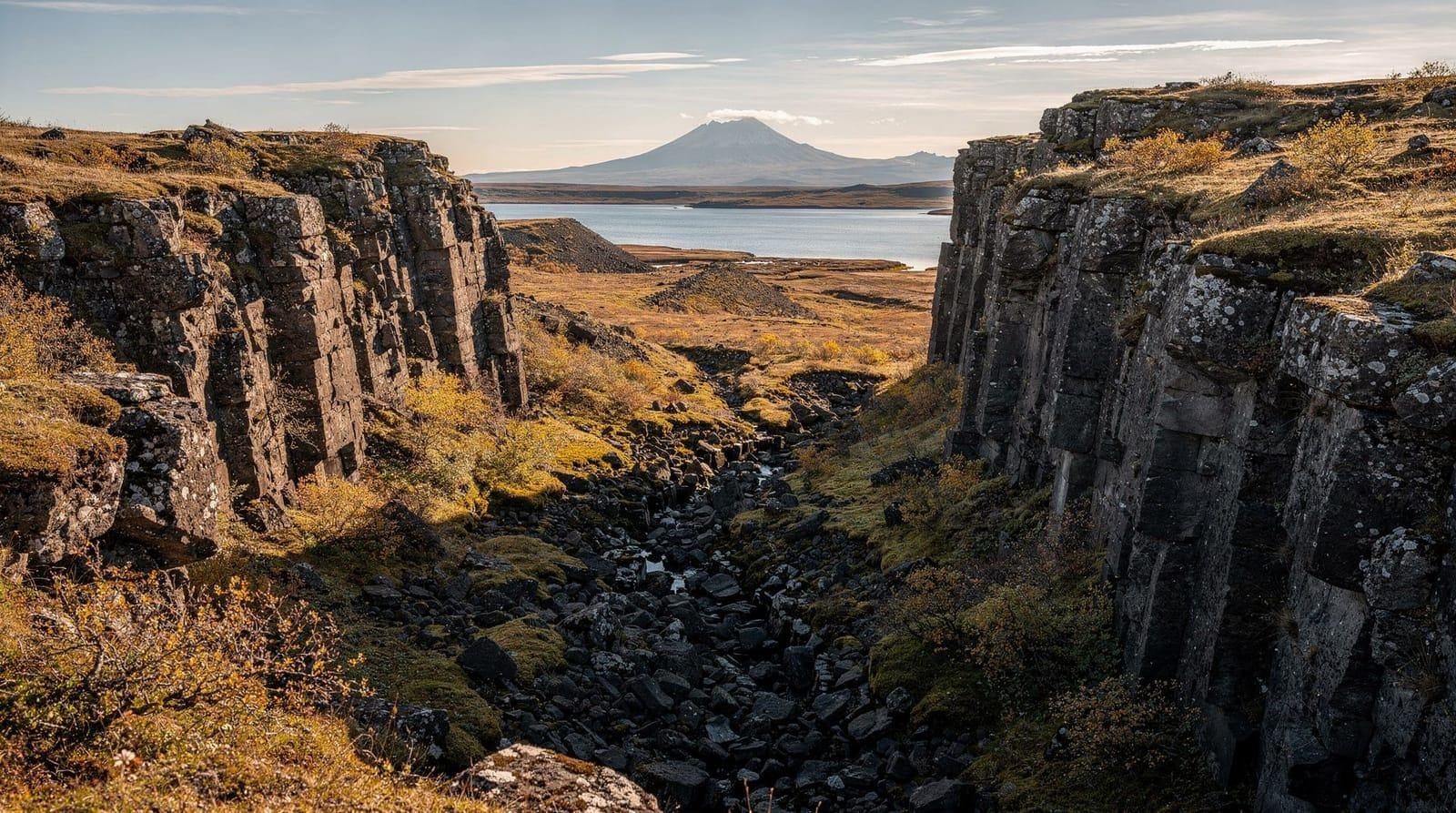
Golden Circle in one day — self-drive itinerary with timings
Reykjavik: Golden Circle small group 7 stops
The Golden Circle is a 300 km roughly circular route from Reykjavík that connects three of Iceland’s most significant sites: Þingvellir National Park, the Geysir geothermal area, and Gullfoss waterfall. It is Iceland’s most visited single-day route and, despite being heavily touristed in summer, the sites earn their status.
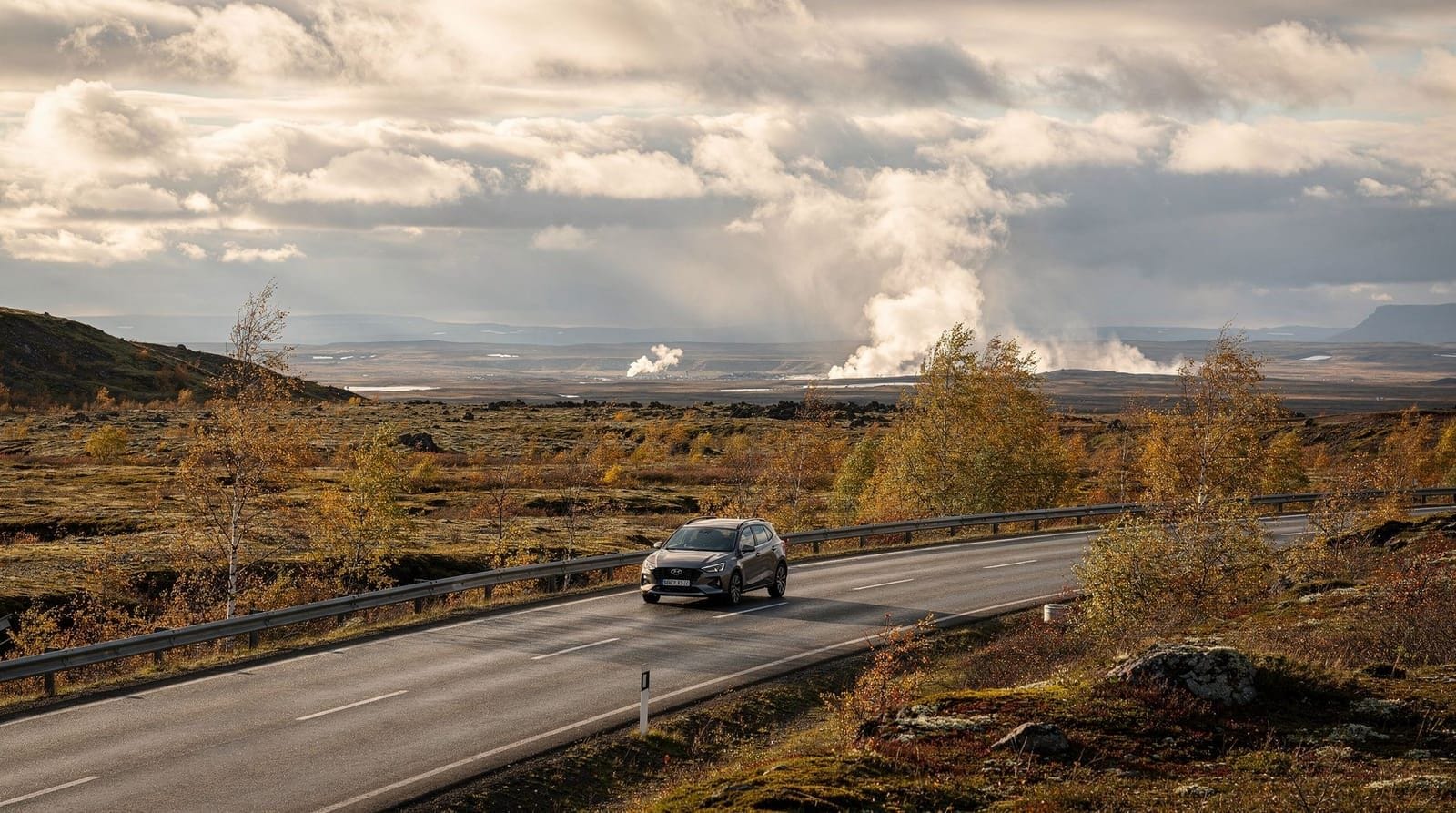
This self-drive itinerary is designed for a car-rental day trip. The route is almost entirely on paved roads (Route 1, 36, and 35), requires no 4WD in any season except in severe winter weather, and the driving is straightforward.
| Where | Þingvellir, Geysir, Gullfoss — 300 km loop from Reykjavík |
| Time needed | 7–9 hours door to door |
| Cost | Fuel + car rental only; add-ons 400–3,000 ISK each |
| Getting there | Self-drive, Route 1/36/35, 2WD sufficient in summer |
| Best time | Year-round; May–September for long daylight and Friðheimar produce |
Self-drive vs guided tour — which is better?
Self-driving the Golden Circle offers complete control over timing and the ability to linger at the places that interest you. The downsides: no local knowledge, no historical context at Þingvellir beyond what you read, and you need to drive back after dark if staying late.
Guided tours offer expert context (particularly valuable at Þingvellir), handle logistics, and allow you to read, sleep, or stare out the window on the coach. The downsides: fixed timetable, large groups at peak season, limited ability to extend stops that interest you.
If you want depth at Þingvellir and genuine geological understanding at Geysir, a guided tour with a good guide is worth it. If you want freedom and the option to add Kerið crater, Friðheimar farm, or the Secret Lagoon, self-drive wins.
Golden Circle small-group tour — 7 stops, maximum 19 passengers, full geological and historical commentary, departs Reykjavík 09:00The self-drive route
Option A: Standard clockwise route (recommended)
Total driving: ~260 km including return to Reykjavík. Allow 7–9 hours.
Clockwise — Þingvellir first, then Geysir, then Gullfoss — is the standard order and makes logical geographic sense. You start with the historical and geological context at Þingvellir before the more visceral experiences at Geysir and Gullfoss.
Option B: Counter-clockwise (Gullfoss first)
Starting with Gullfoss means you arrive early before coach tours, then hit Geysir mid-morning when the crowds are building but not yet peak. You reach Þingvellir in the early afternoon. This works if you want Gullfoss in morning light. See the ring road clockwise or counter-clockwise guide for the general logic applied to longer routes.
Stop-by-stop with driving times
Depart Reykjavík: 07:30–08:00
An early departure beats the coach tour departures that leave between 08:30 and 10:00. At Þingvellir, you will have the Law Rock area largely to yourself before 09:30.
Route: Take Route 1 east from Reykjavík, then Route 36 northeast to Þingvellir. Distance: 49 km. Driving time: 45 minutes.
Stop 1: Þingvellir National Park (09:00–10:30)
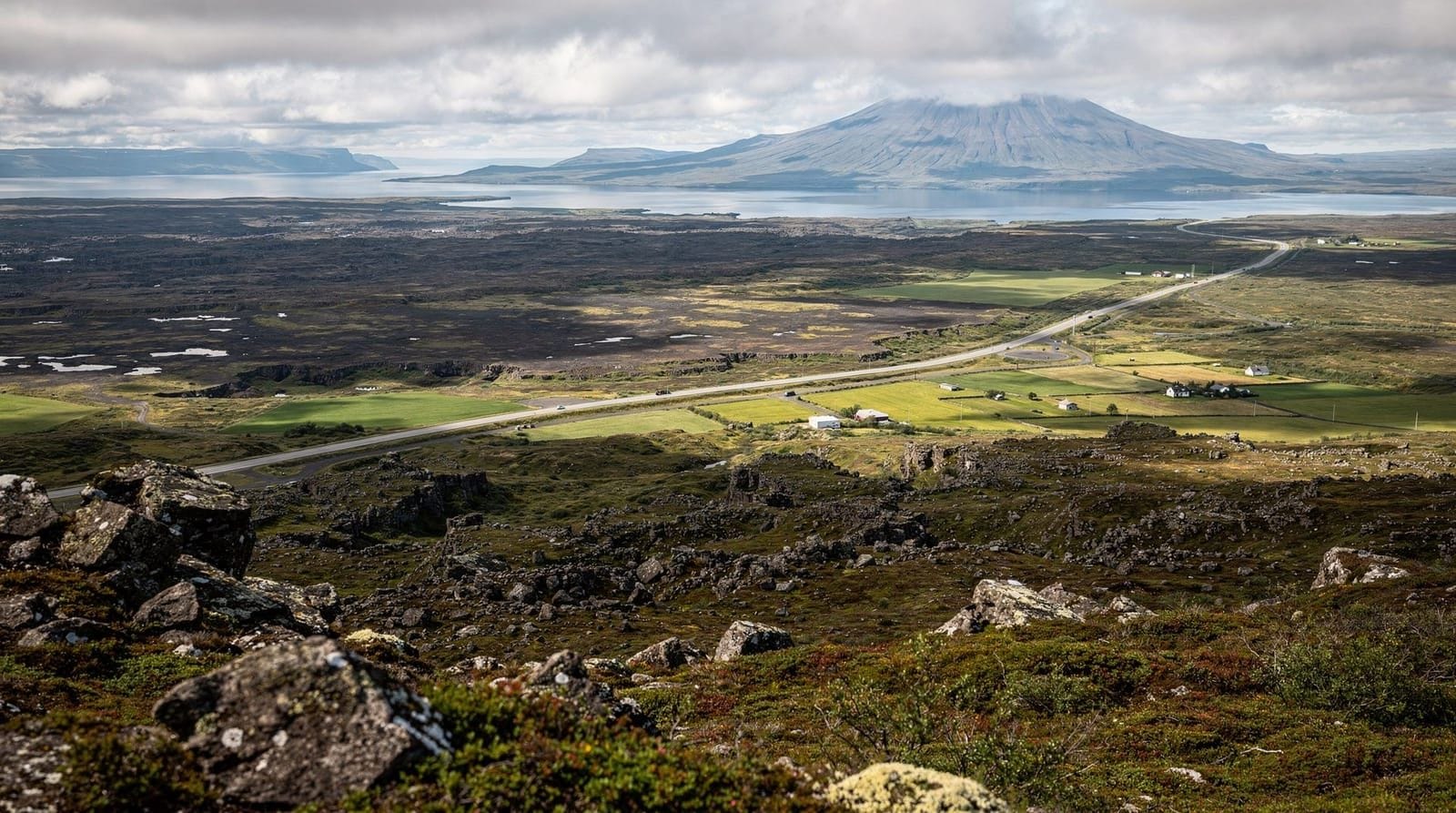
Þingvellir occupies a rift valley formed by the spreading of the North American and Eurasian tectonic plates. The valley floor sinks approximately 2 cm per year; the rift scarps are 30–40 m high in places and clearly visible as you drive in.
Historical site: The Althing, founded in 930 AD, is the world’s oldest parliamentary assembly still in use (in a different building in Reykjavík). The Lögberg (Law Rock) is where the Lawspeaker recited the laws from memory every year for three days. Standing there, the acoustic of the natural amphitheatre is striking.
What to do: Walk from the Hakið visitor centre down the Almannagjá gorge (the main rift fault) to the river and Lögberg. This takes 30–40 minutes at a leisurely pace. The Öxará river at the bottom of the gorge is where many of Iceland’s most famous historical drownings and executions occurred during the Althing. The church (1859) and farm buildings are at the far end of the valley floor.
Parking: The main Hakið car park (P5) charges 750 ISK (€5) per vehicle. There are several car parks; P5 at the top of the gorge is the most convenient starting point.
Allow: 1.5 hours minimum; 2.5 hours if you want to walk the full valley floor and possibly approach the Silfra fissure (snorkelling with pre-booked tours only, but the fissure itself is viewable from the path).
Drive: Þingvellir to Geysir (10:30 → 11:30)
Route 36 east from Þingvellir to Route 365, then Route 35 south to Geysir. Distance: 65 km. Driving time: approximately 55 minutes. The route crosses a plateau with views of the Langjökull glacier to the north. No fuel stations on this stretch — fill up in Þingvellir village if needed.
Stop 2: Geysir geothermal area (11:30–13:00)
Geysir and Haukadalur is the most immediately entertaining stop. Strokkur erupts every 5–8 minutes to heights of 20–30 m. Position yourself upwind and within 20 m for the best view. The eruption itself lasts about 2 seconds before the column collapses; the build-up (the water dome forming above the surface) is visible for a few seconds before the eruption, making it possible to photograph if you’re ready.
The wider geothermal field is accessible on a footpath loop. Look for:
- Blesi: a pair of hot spring pools, one opaque blue, one clear — the blue colour comes from fine silica particles suspended in the water
- Litli Geysir: a smaller geyser near the main area that activates irregularly
- Konungshver: a large, still hot spring near the car park — the temperature at the surface is boiling
The tourist café/restaurant at the main car park is functional but overpriced. Better to picnic (supermarket in Reykjavík before departure) or wait for lunch at a smaller stop.
Allow: 1–1.5 hours.
Drive: Geysir to Gullfoss (13:00 → 13:15)
Gullfoss is only 10 km northeast of Geysir on Route 35. Driving time: 10–12 minutes. This is the shortest leg of the circuit.
Stop 3: Gullfoss waterfall (13:15–14:15)
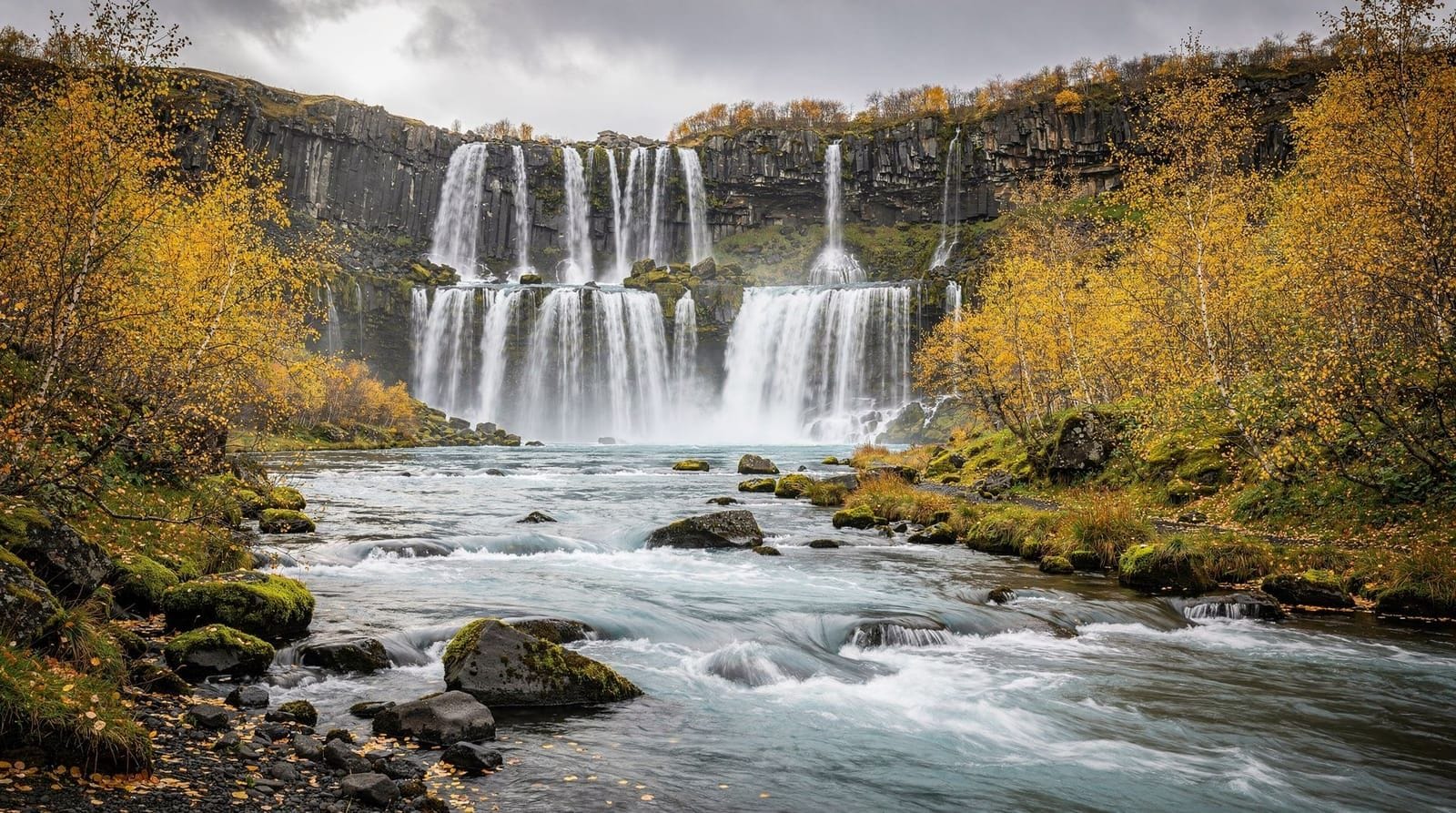
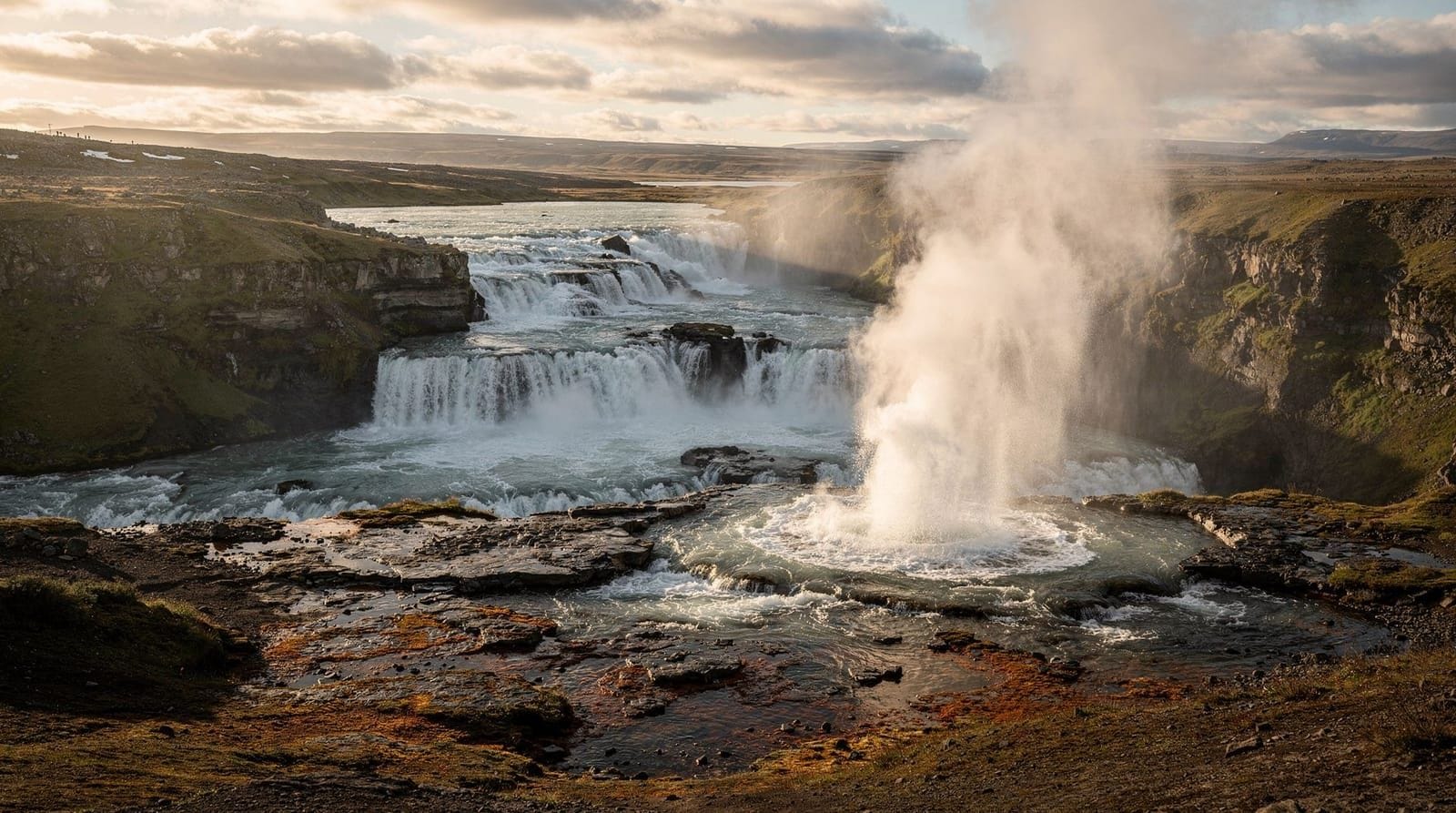
Gullfoss is a two-tier waterfall where the Hvítá river drops 11 m then 21 m into a 2.5 km canyon. The combined visual effect — a large river falling and then apparently disappearing into the earth — is distinctive from the upper viewing platform. On windy days the spray reaches the viewing area heavily; a waterproof layer is genuinely necessary.
A lower path gets within 30 m of the falls and gives a sense of the physical volume of water. The gorge walls are basalt, stained black and orange by mineral deposits. In spring (May–June) the volume of water from snowmelt is at maximum.
Historical note: Sigríður Tómasdóttir, who owned the land with her father, famously opposed plans to dam Gullfoss for hydroelectric power in the early 20th century, reportedly threatening to throw herself into the falls. The land was eventually purchased by the Icelandic state. A small monument to her stands near the upper viewing platform.
Allow: 45–60 minutes.
Optional add-ons (14:15 → 16:00)
Kerið crater (Route 35 south, 37 km from Gullfoss, 20 minutes): a 6,500-year-old volcanic explosion crater with an acidic crater lake at the bottom. Entrance fee: 400 ISK (€2.60) — the only spot on the Golden Circle with an entrance fee payable directly. The walk around the rim takes 20–25 minutes; it is possible to descend to the lake via a marked path on the south side. The lake colour (vivid green-blue depending on season) is from minerals in the water. This is one of the more underrated stops.
Golden Circle and Secret Lagoon day tour — Þingvellir, Geysir, Gullfoss, plus bathing in the natural hot spring at Fludir, 11 hoursSecret Lagoon, Flúðir (Route 35 south, 30 km from Gullfoss): the oldest public swimming pool in Iceland (established 1891). A natural hot spring pool at around 38–40°C, simpler and less designed than the Blue Lagoon, with none of the crowds or the premium pricing. Entry: 3,000 ISK (€19). Bring a towel; swimwear required. A genuine alternative to the Blue Lagoon for people who want a geothermal bathing experience without the performance.
Friðheimar tomato farm (10 km south of Geysir on Route 35): a geothermally heated greenhouse producing tomatoes year-round. The restaurant inside serves tomato soup, tomato pizza, tomato cake — all good. It is also genuinely unusual to eat lunch inside a working commercial greenhouse. Reservation recommended for lunch; worth booking ahead in summer.
Return to Reykjavík (16:00–17:15)
Route back: From Kerið, take Route 35 south then Route 1 west to Reykjavík. Distance: approximately 90 km. Driving time: 1 hour 10 minutes. Return to the city by 17:15–18:00.
Alternatively: if you want the Blue Lagoon experience, Route 35 → Route 1 west → Route 41 south → Route 426 to the Blue Lagoon is a natural detour on the way back to Keflavík or Reykjavík. Add 1 hour for a basic session; pre-booking mandatory.
Fuel and practical driving notes
- Fuel stations: fill up in Reykjavík before departure. The N1 station at Selfoss (Route 1, midway through the circuit) is the most useful midday stop. Fuel in Iceland: 230–250 ISK per litre (€1.50–1.63).
- Road conditions: Route 36 and Route 35 are fully paved and suitable for 2WD. No Highland tracks on the standard Golden Circle. In winter (November–March) check road conditions at road.is before departure.
- Speed limits: 90 km/h on open roads, 50 km/h through villages, 30 km/h in school zones. Speed cameras are common. The police are serious about limits.
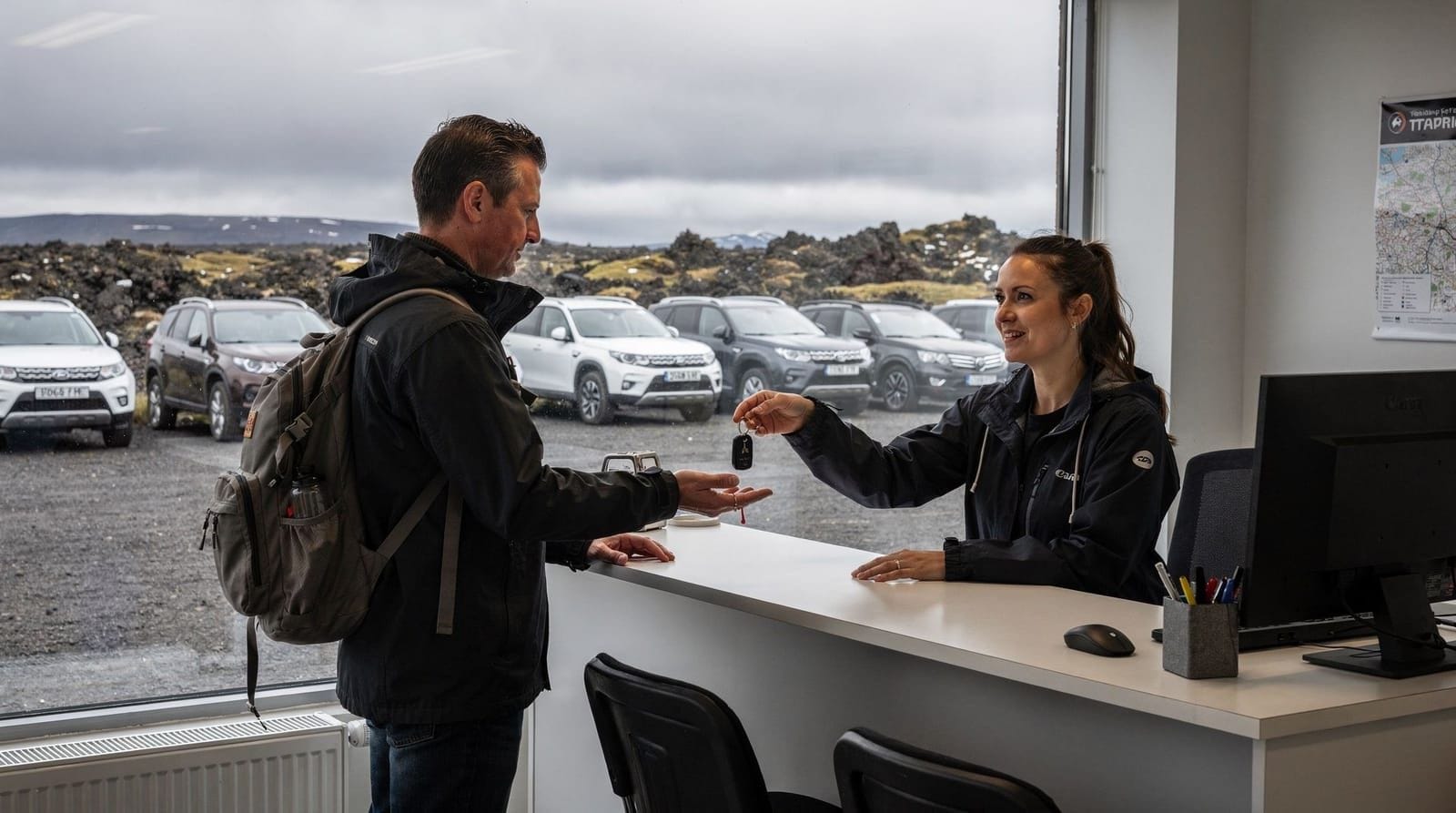
- Car rental: expect to pay 12,000–18,000 ISK (€78–117) per day for a basic hatchback with CDW insurance in summer. Book at least 2–3 weeks ahead. For car rental advice: renting a car in Iceland guide.
Where to eat on the Golden Circle
Breakfast before departure: N1 petrol station bakeries in Reykjavík serve serviceable pastries and coffee. For a sit-down option: Café Loki (Lokastigur 28) near Hallgrímskirkja for traditional Icelandic breakfast.
Lunch: Friðheimar tomato farm (see above) or the café at Geysir (acceptable, overpriced). Alternatively, bring a packed lunch from a Reykjavík Bónus or Krónan supermarket — cheaper and more flexible.
Afternoon coffee: the Kerið visitor area has a small café serving soup and sandwiches. Basic but useful.
What to pack for a Golden Circle day
Weather changes fast at all three sites, and the wind at Gullfoss in particular is stronger than it looks in photos. Bring: a proper waterproof/windproof outer layer (not just an umbrella), sturdy shoes with grip for the gravel paths at Þingvellir and Geysir, a hat that won’t blow off, sunglasses (the low-angle light off water and snow is bright even in cloud), and a swimsuit and towel if you’re adding the Secret Lagoon or Blue Lagoon. A reusable water bottle and some cash or a card for the Kerið entrance fee round it out. For the fuller seasonal packing list see what to pack for Iceland.
Frequently asked questions about this 1-day Iceland itinerary
How long does the Golden Circle take by car?
Driving only, without stops: approximately 4 hours for the full circle. With the three main stops (Þingvellir 1.5h, Geysir 1h, Gullfoss 1h), add-ons (Kerið 45 min), and travel from/to Reykjavík: 7–9 hours for a full day.
Do I need a 4WD for the Golden Circle?
No. All roads on the standard Golden Circle are paved and suitable for a standard 2WD car in summer. In winter (November–March), studded tyres or winter tyres are legally required. A 4WD is not necessary unless you are extending into the Highlands.
Can I walk behind any of the Golden Circle waterfalls?
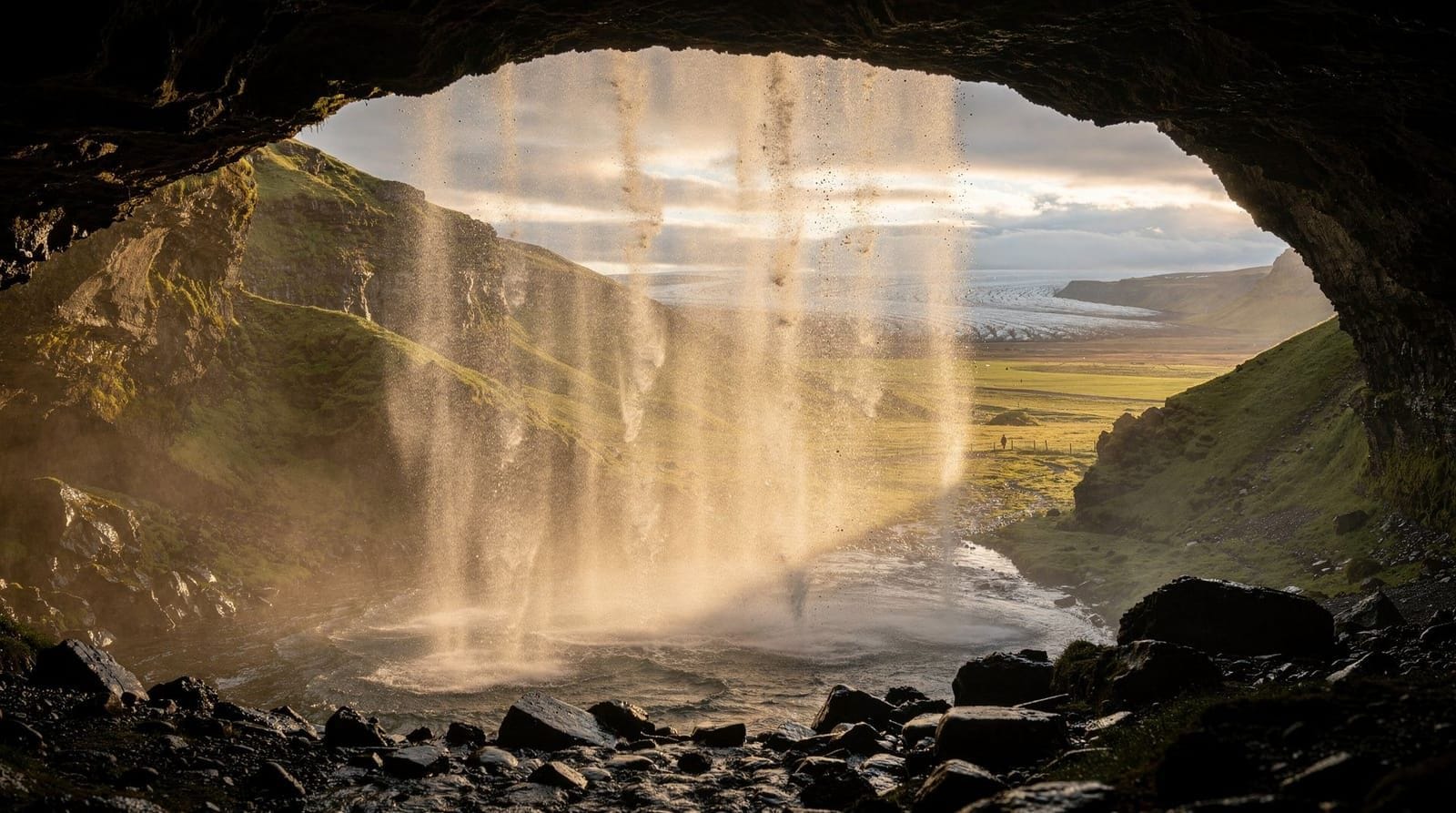
No. Gullfoss does not have a path behind the falls. Seljalandsfoss (on the South Coast, not the Golden Circle) has the famous behind-the-falls path. If that is a specific priority, the South Coast 3-day itinerary covers it.
Is the Golden Circle worth it for a second-time visitor to Iceland?
The three main sites are worth seeing once thoroughly. For a return visitor, the add-ons (Kerið, Secret Lagoon, Friðheimar, snorkelling at Silfra) provide more novelty than the main sites. Alternatively, move on to Snæfellsnes Peninsula or South Iceland for less-visited scenery.
What if it rains on the Golden Circle day?
The Golden Circle works in rain. Þingvellir in low cloud has a melancholy historical atmosphere; Gullfoss in rain is actually more dramatic (spray is heavier, the gorge feels more powerful). Geysir is unchanged by rain — eruptions continue regardless of weather. Bring waterproofs, not an umbrella (the wind makes umbrellas useless).
Is there an entrance fee for the Golden Circle?
Þingvellir: 750 ISK (€5) car park fee, no site entrance fee. Geysir: no entrance fee, car park fee 750 ISK. Gullfoss: no entrance fee, car park. Kerið crater: 400 ISK (€2.60). Secret Lagoon: 3,000 ISK (€19) if you add it.
Can I do the Golden Circle without renting a car?
Yes. Scheduled coach tours and small-group minibus tours run the loop daily year-round, and a private driver-guide tour gives similar flexibility to self-driving without needing to navigate or worry about winter tyres. It’s a reasonable choice if you’re not driving elsewhere in Iceland.
Is one day enough, or should I slow the Golden Circle down?
One day is enough to see the three main sites properly and add one extra stop. If you want to linger at Þingvellir’s hiking trails, bathe unhurried at the Secret Lagoon, and eat a relaxed lunch at Friðheimar, consider splitting it across an overnight near Selfoss instead of a single long day from Reykjavík.
The Golden Circle for photographers
The three main sites each have specific shooting conditions worth planning for:
Þingvellir: the Almannagjá gorge has north-facing walls that catch good diffused light throughout the day. Morning light from the east illuminates the Öxará river and the church well (09:00–11:00). The gorge itself is shaded in the afternoon. Wide angle lens captures the scale of the rift; telephoto works for the church against the mountains.
Geysir/Strokkur: shoot into the light for the geyser eruption — backlighting makes the water column translucent and luminous. Overcast days reduce glare and make the mineral-stained terrain more saturated. A fast shutter speed (1/2000 or faster) freezes the eruption at peak height. Watch three or four eruptions to predict the timing before attempting to capture the peak.
Gullfoss: the most complex to photograph well. The viewing platform gives a head-on view that flattens the gorge. Descend to the lower path for a more dynamic angle with the gorge cutting diagonally. In strong sunlight, a polarising filter reduces glare on the water surface. The best light is early morning from the east or evening from the west.
How the Golden Circle compares to the South Coast
Both routes are 300+ km from Reykjavík. Both can be done in a day. They have almost no overlap in character:
Golden Circle: geological (active tectonics, geothermal field), historical (Þingvellir), and scenic in a large-scale way (Gullfoss). Best understood with some geological or historical background. Less viscerally dramatic but more intellectually rewarding.
South Coast: visually arresting (waterfalls, black beaches, sea stacks), relatively simple to appreciate without background knowledge, more physically varied (you can walk behind Seljalandsfoss, climb Skógafoss, get close to the wave safety zone at Reynisfjara). Better for photography and for travellers who prefer landscape over history.
For the debate on which is better: see the Golden Circle vs South Coast guide.
Combining Golden Circle with a geothermal lagoon
The Golden Circle sits geographically between two excellent geothermal bathing options:
Secret Lagoon, Flúðir (30 km south of Gullfoss): the oldest public pool in Iceland, 1891. Natural hot spring pool at 38–40°C, with no luxury infrastructure — changing rooms, a small cafe, and the pool. Entry 3,000 ISK (€19). No tourist performance; you’re just in a hot spring with a handful of other people in a field. Highly recommended as an add-on.
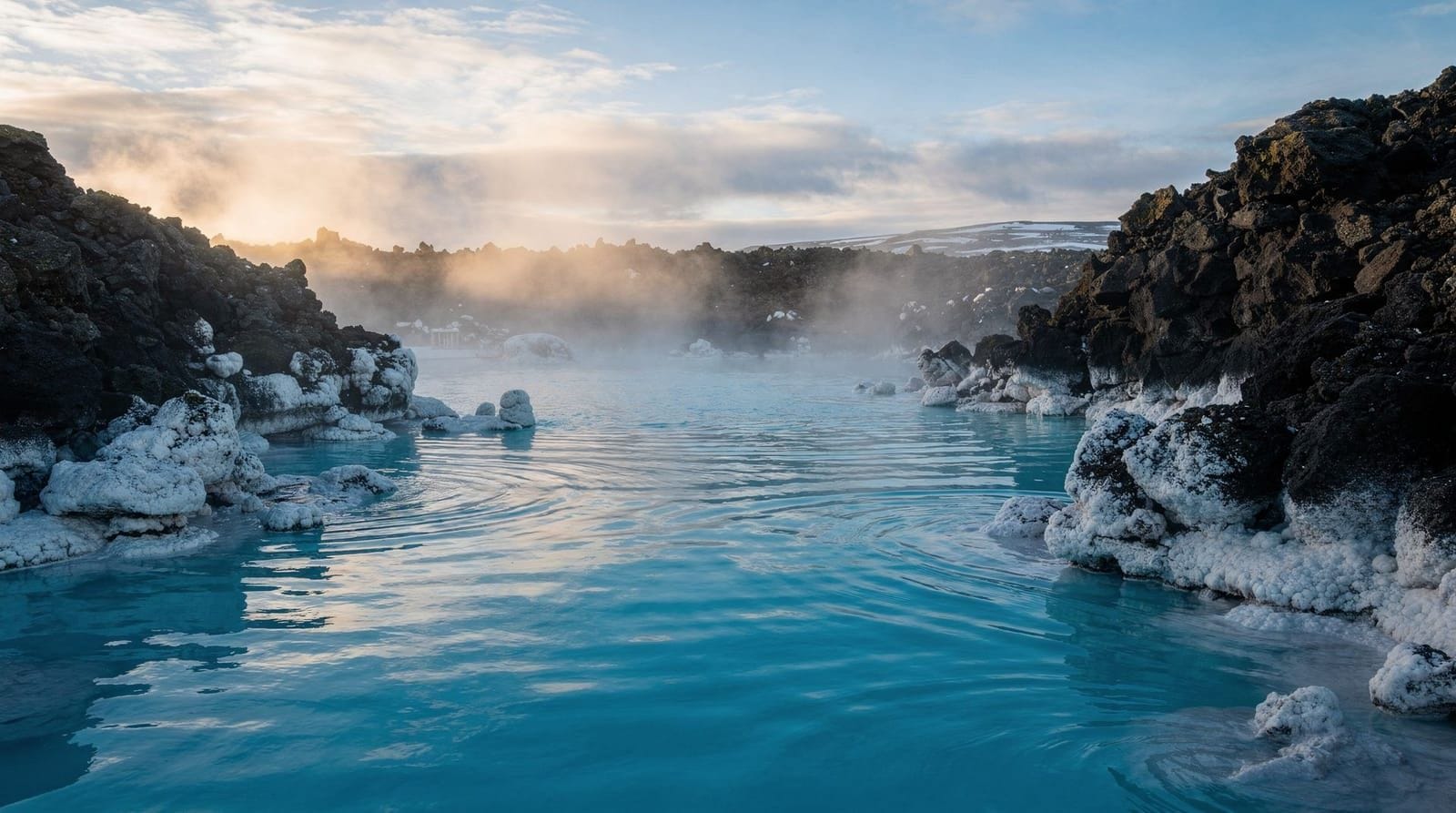
Blue Lagoon (on the way back to Reykjavík via Route 41 and 426): the famous geothermal spa near Keflavík. 50 km from the city, 23 km from the airport. More expensive (12,900–15,900 ISK / €84–104 for Comfort entry), more crowded, more designed. The water is genuinely unusual — the silica-blue colour is real — but sharing it with 300+ tourists in peak season is a different experience from the Secret Lagoon’s intimacy. Pre-booking is mandatory.
For a self-drive Golden Circle day, the logical combination is: Golden Circle + Secret Lagoon (same route, modest extra cost), or Golden Circle + Blue Lagoon on departure day (airport-route logic). See the Blue Lagoon guide for the honest assessment of both options.
Golden Circle by season
Daylight and road conditions change the day dramatically depending on when you go. The route itself never closes, but the experience of it does.
| Season | Daylight | Roads & driving | Crowds |
|---|---|---|---|
| Winter (Nov–Mar) | As little as 4–5 hours around the solstice | Studded/winter tyres required; check road.is before departure | Lightest, but daylight limits how much you fit in |
| Spring (Apr–May) | Lengthening fast, 12–16 hours | Paved roads clear, occasional late-season ice | Building, still manageable |
| Summer (Jun–Aug) | Near-24-hour daylight | Easy 2WD driving, no timing pressure from darkness | Heaviest — coach tours from 08:30 onward |
| Autumn (Sep–Oct) | Shortening, 9–12 hours | Generally clear, first snow possible late October | Thinning out again |
Winter changes the plan more than any other factor: with only a few hours of daylight, plan the three main stops only and drop the add-ons, or split the loop over two shorter outings. For the practicalities of driving after dark and in snow, see the driving in Iceland guide and Iceland in winter driving.
Doing it without a rental car
Self-drive is not the only option. Scheduled coach tours run the same route daily year-round and are a reasonable substitute if you would rather not drive, especially in winter. A private guided day trip gives the same freedom as self-driving but with a driver who knows the road and the weather.
Private Golden Circle day tour — your own vehicle and driver-guide, flexible stops and timingIf you are combining the Golden Circle with more of the country afterwards, it is worth deciding early whether you want a car for the whole trip — see self-drive vs guided tour for the wider decision beyond just this one day.
Top experiences
Bookable activities with verified prices and instant confirmation on GetYourGuide.