Blue Lagoon guide — what to expect, costs, and honest advice
Blue Lagoon: Admission with drink towel mask
Is the Blue Lagoon worth visiting in 2026?
The Blue Lagoon is a genuine geothermal experience with striking milky-blue water, but it costs ISK 14,990–29,990 (roughly EUR 100–210) depending on package. It gets extremely crowded in peak season. If budget matters, the Secret Lagoon or Sky Lagoon offer comparable soaking for a third of the price.
The Blue Lagoon is Iceland’s most famous paid attraction, and one of its most debated. This guide covers what it actually costs, what each ticket tier gets you, the honest crowd picture, and whether it’s worth it compared to Iceland’s other geothermal options.
| Where | Reykjanes Peninsula, 50km from Reykjavík, 20km from Keflavík Airport |
| Cost | ISK 14,990–29,990 depending on tier |
| Time needed | 2.5–3 hours, plus travel |
| Getting there | Bus (~60 min from Reykjavík), transfer coach from Keflavík (~20 min), or self-drive |
| Booking | Mandatory in advance; no walk-ins accepted |
What the Blue Lagoon actually is
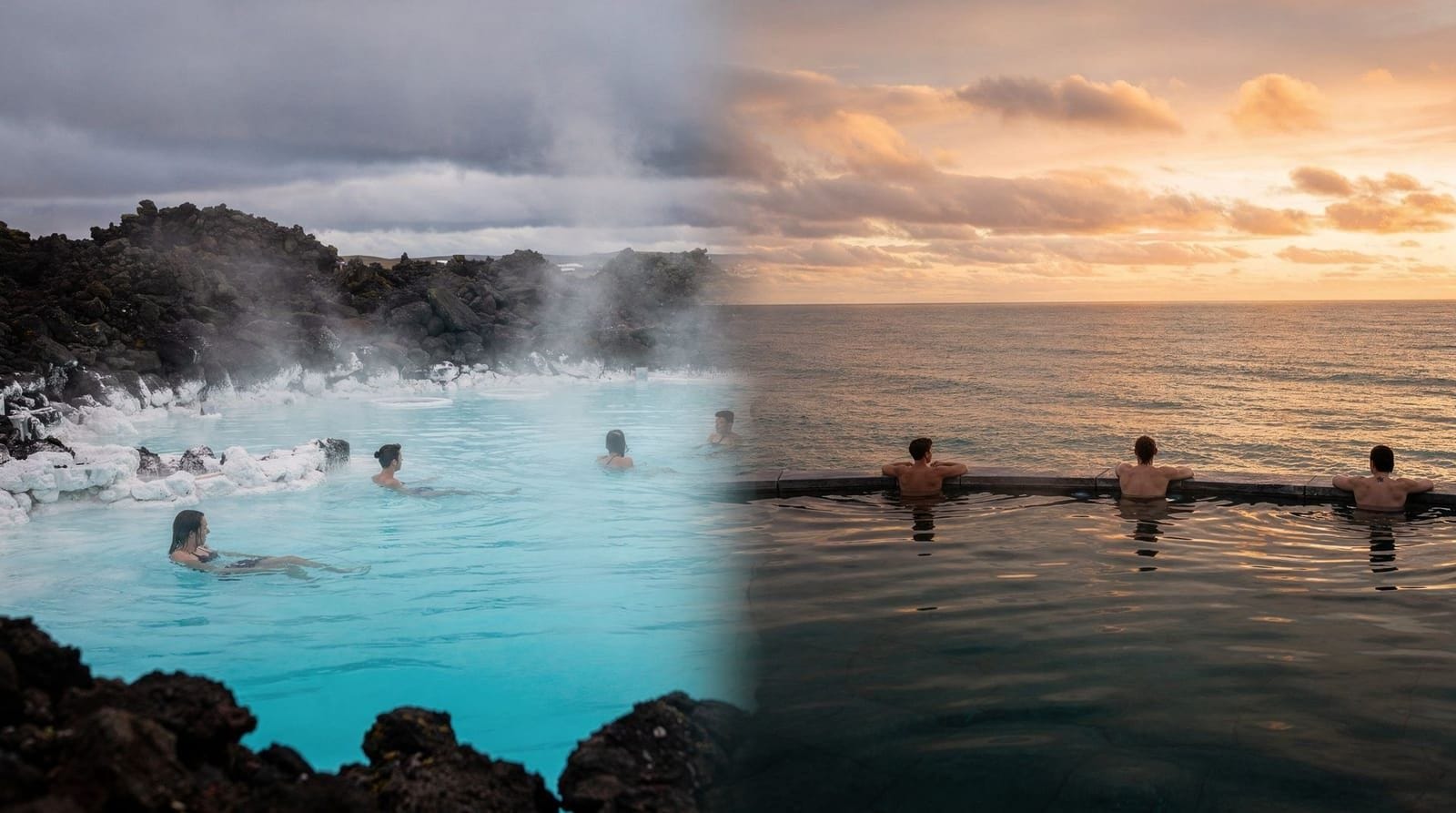
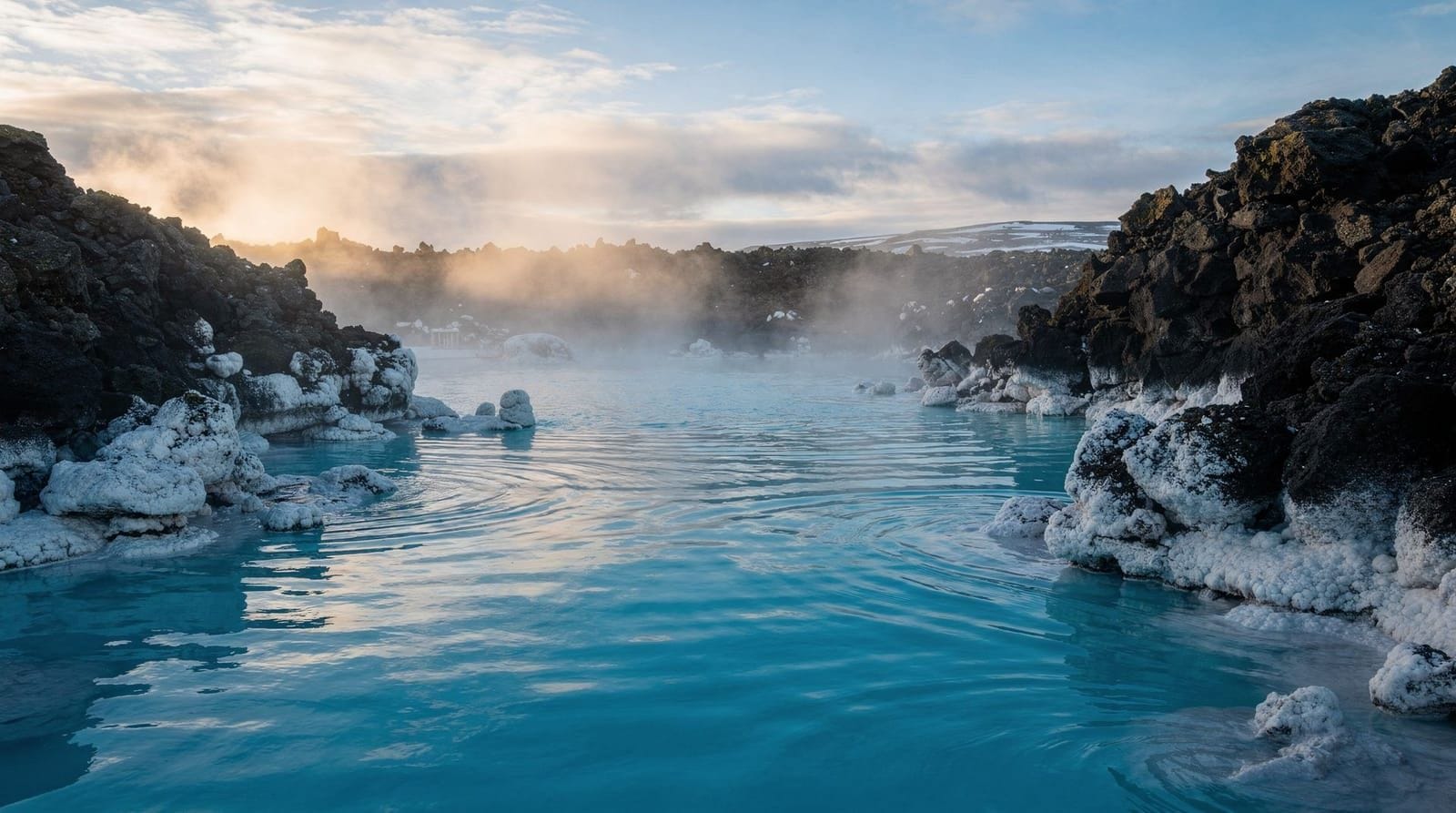
The Blue Lagoon is a geothermal spa on the Reykjanes Peninsula, about 50 km south of Reykjavík and 20 km from Keflavík International Airport. It sits in a lava field between Grindavík and Hafnarfjörður, occupying a surreal volcanic landscape that makes the water’s milky-blue colour look almost artificial — though it is entirely natural.
The water is a by-product of the nearby Svartsengi geothermal power plant. Seawater and freshwater mix at around 240°C underground, rise through porous lava, and cool to roughly 37–39°C in the outdoor bathing area. The signature colour comes from silica and algae suspended in the water, not added chemicals. Average salinity is about 2.5 percent — lower than ocean water, comfortable to swim in without stinging.
The facility was significantly rebuilt after the 2023–2024 Grindavík volcanic eruptions forced repeated closures. It reopened in early 2024 and has since undergone infrastructure reinforcement, though Reykjanes Peninsula volcanic activity remains ongoing. Before booking, check official Blue Lagoon announcements for any closure alerts.
Ticket prices and what each tier includes
As of 2026, the Blue Lagoon sells three main admission tiers. Prices below are for adults; children under 13 are free when accompanied by an adult, and ages 13–17 pay a reduced rate.
Comfort (ISK 14,990 / approximately EUR 100): Entry, silica mud mask, one drink (alcoholic or non-alcoholic), towel, use of lockers and changing facilities.
Premium (ISK 22,990 / approximately EUR 155): Everything in Comfort plus two extra drinks at the swim-up Lava Bar, algae mask, reserved seating in the changing rooms, and a bathrobe.
Retreat (ISK 29,990 / approximately EUR 210): Premium benefits plus access to the exclusive Retreat Spa section, which has separate pools, steam rooms, and in-water massage tables.
There is also a Signature Restaurant and Lava Restaurant for meals, but these are separate add-ons, not included in any standard tier.
Prices climb further when you add transfers from Reykjavík — budget roughly ISK 5,000–8,000 extra for return bus, or more for private van.
Blue Lagoon Comfort admission — includes drink, towel, and silica maskThe honest crowd reality
The Blue Lagoon receives around 1.3 million visitors per year — more than Iceland’s entire population. Timed entry was introduced to manage flow, which helps, but “busy” remains the default setting from May through September and on most weekends year-round.
Peak congestion occurs between 11:00 and 15:00. The swim-up bar queue can stretch 10–15 minutes mid-afternoon. Lockers fill quickly and the changing rooms can feel chaotic.
If you have flexibility, book a slot at 08:00 when doors open, or after 17:00 in summer when tour groups thin out. Shoulder months — April and October — are noticeably quieter. January through March is the least crowded but requires booking several weeks ahead because slots fill despite cold weather.
Coming from Keflavík Airport on departure day is a popular strategy: check bags at the hotel, head to the Blue Lagoon, soak for 2–3 hours, then catch an evening flight. If you do this, pre-book the specific departure window that gives you realistic buffer time.
Getting there without a car
From Reykjavík: Reykjavik Excursions and Flybus both run scheduled buses from the BSÍ bus terminal and from major hotels. Journey time is about 60 minutes. Return tickets run ISK 4,500–6,000. Book online in advance, especially in peak season.
From Keflavík Airport: The airport is 20 km away. Airport transfer coaches take roughly 20–25 minutes. Several operators run door-to-door service from the arrivals hall. Taxi costs are high — expect ISK 15,000–20,000 one way.
By rental car: The Blue Lagoon has a free car park. The access road (Route 43) is paved and straightforward from either direction. Satellite navigation will find it without issue.
On a guided tour: Many Golden Circle or South Reykjanes Peninsula tours include a Blue Lagoon stop. These sometimes cover entry, sometimes not — confirm before booking.
Blue Lagoon admission with round-trip transfer from ReykjavíkWhat to bring and what to leave behind
Pack your swimsuit, flip-flops, and a hair tie if you have long hair. The provided towels are decent quality. Avoid wearing jewellery — the silica-rich water can discolour silver, and loss in the pool is common.
Contact lens wearers should use a case and leave lenses out during bathing, as the mineral water is irritating. The changing rooms have hairdryers but bring your own brush.
Lockers accept a small fee for a digital lock (charged via your wristband), so no coins needed. Valuables beyond a credit card and phone should stay at the hotel.
Photography is allowed but dedicated underwater cameras tend to get coated in residue. Waterproof phone pouches work well for casual shots of the steam and colour.
The price debate — is it worth it?
This is where honest travel planning matters. At ISK 14,990 for the base tier, the Blue Lagoon is more expensive than virtually all other geothermal bathing options in Iceland. Several direct alternatives exist:
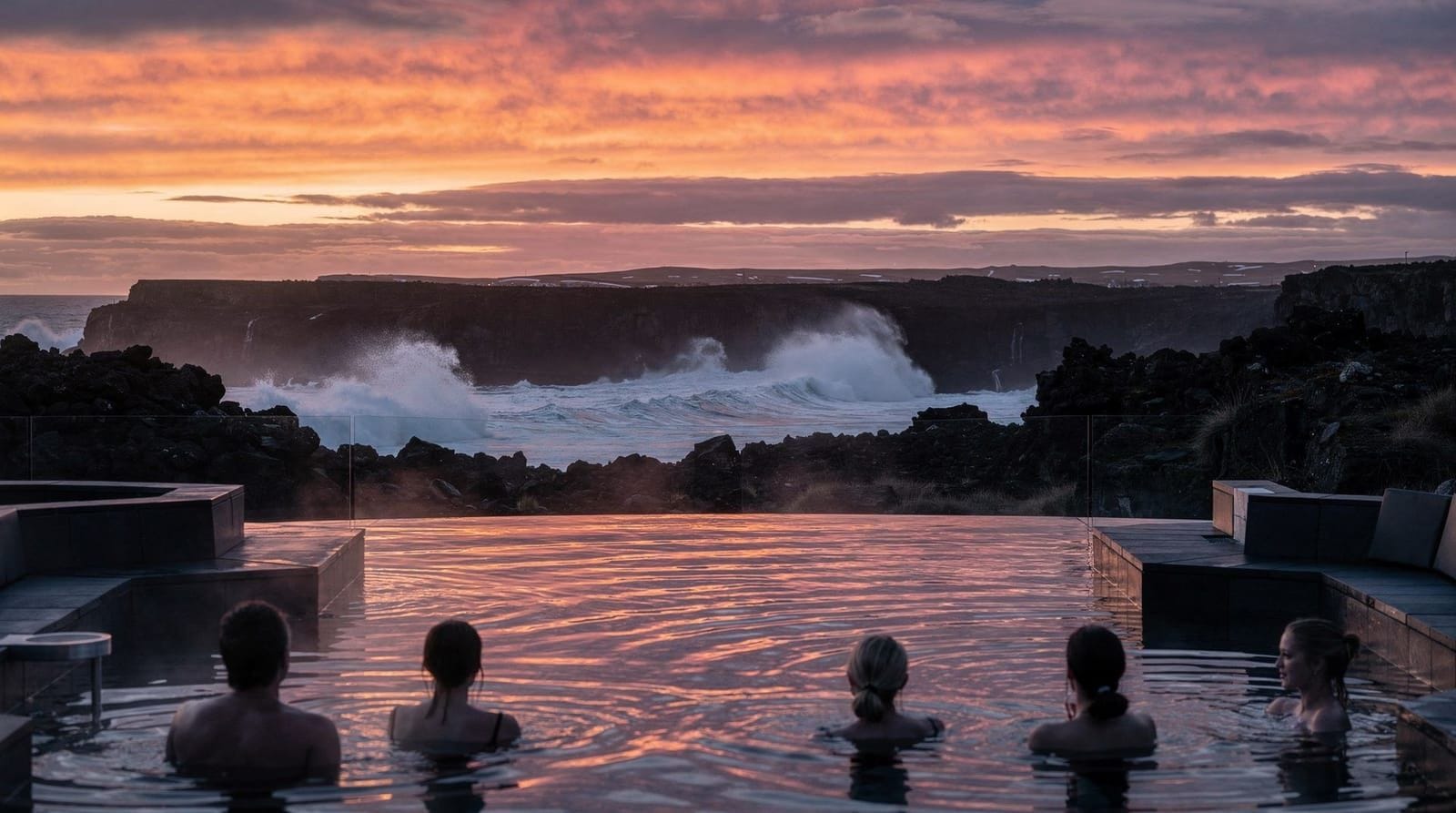
- Sky Lagoon in Reykjavík costs ISK 9,490–13,490 and offers ocean views, a 7-step ritual spa experience, and a far less manufactured atmosphere.
- Secret Lagoon in Flúðir costs ISK 3,500 and is the oldest natural pool in Iceland, operating since 1891.
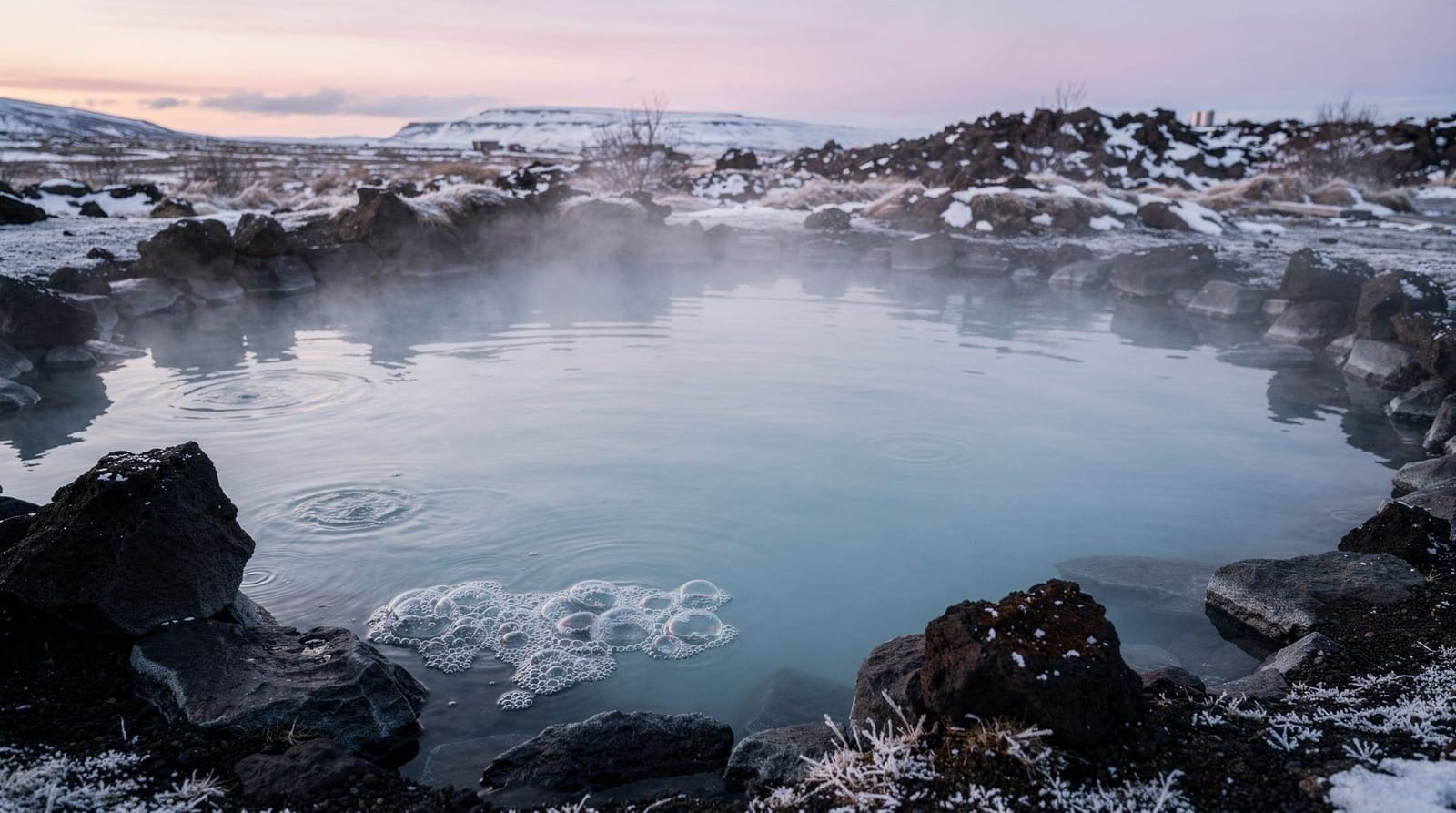
- Mývatn Nature Baths in the north costs ISK 6,900 and sits in a genuinely remote volcanic landscape with far fewer crowds.
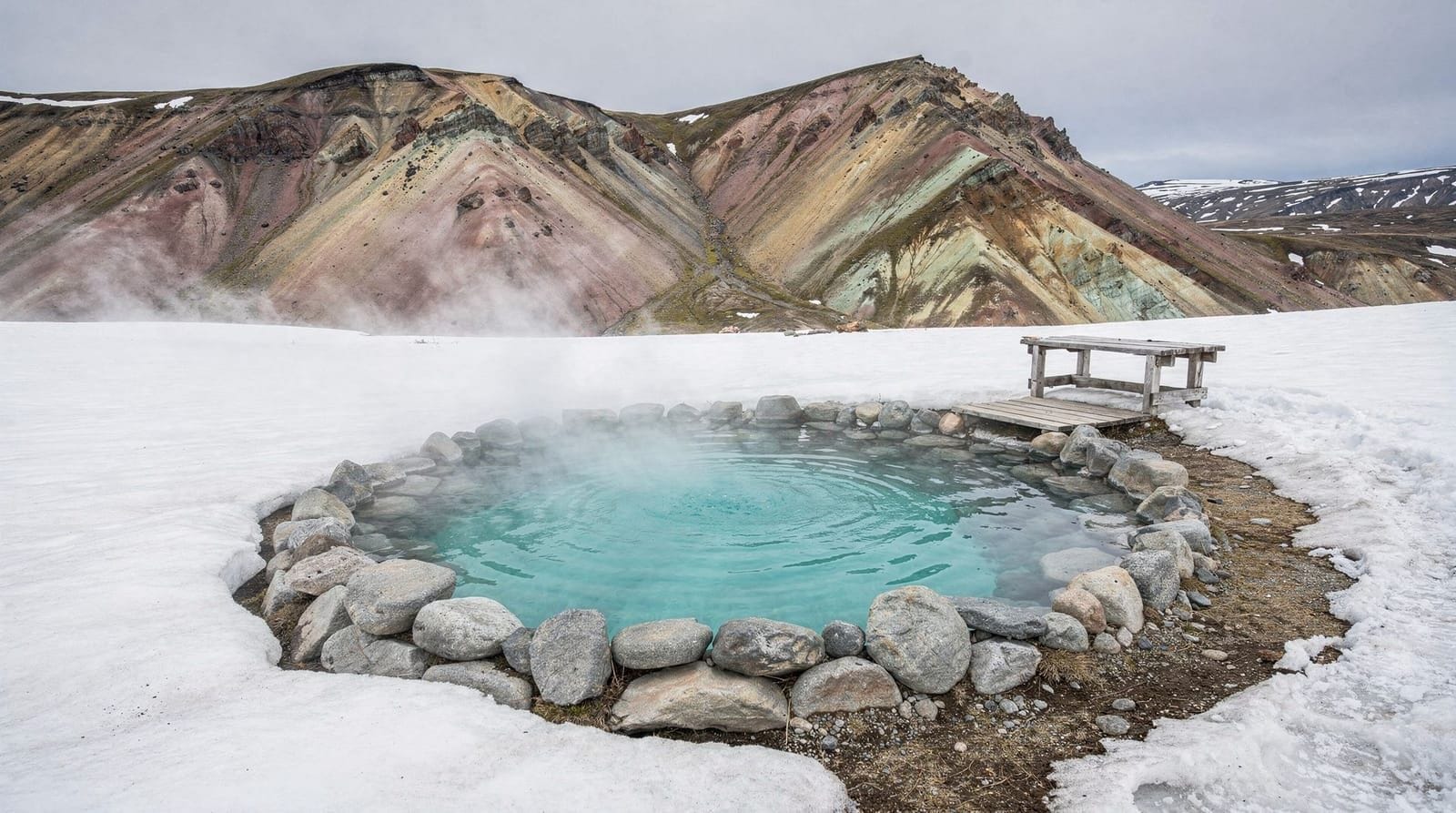
- Reykjadalur hot river near Hveragerði is free to bathe in after a 3 km hike.
The Blue Lagoon is worth visiting if: you have the budget, you want a polished resort-style experience, the silica spa treatments appeal to you, or you are passing through Keflavík anyway. It is harder to justify if budget is tight or if you dislike crowds — in that case, explore Iceland’s wider geothermal pool scene.
Combining with other stops
The Reykjanes Peninsula has more to offer than just the Blue Lagoon. Reykjanes Peninsula itself covers volcanic craters, a lighthouse, bird cliffs, and the Bridge Between Continents. Adding these to a Blue Lagoon day creates a proper half-day programme.
From the other direction, combining Blue Lagoon with the Golden Circle in a single day is doable but long. Most tours bundle both; if self-driving, allow 7–8 hours. See also the south Iceland overview for context on how the Reykjanes Peninsula fits within a wider route.
Arriving or departing via Keflavík makes the Blue Lagoon a natural stopover. Getting from Keflavík airport covers all the logistics for that combination.
Practical details
Opening hours: 08:00–22:00 daily in summer; reduced hours in winter. Always check the official site on the day — closures have occurred at short notice due to volcanic activity in the area.
Advance booking: Mandatory. The Blue Lagoon does not accept walk-in visitors. Book online at least 2–4 weeks ahead in summer, or as soon as your travel dates are confirmed. Fully booked time slots cannot be joined at the gate.
Age rules: Under-13 free; 13–17 at child rate; adults from 18+. Pregnant guests are permitted to soak at their own discretion, but the facility recommends consulting a doctor beforehand.
Accessibility: The facility is largely wheelchair-accessible. There is a dedicated accessible changing room and pool entry ramp. Call ahead to arrange specific accommodations.
Alcohol: Available at the swim-up bar and restaurant. Included in Premium and Retreat tiers (2 and 4 drinks respectively). Additional drinks are charged to your wristband. Iceland’s alcohol prices are high — a beer at the swim-up bar runs ISK 1,500–2,000.
Blue Lagoon Premium admission — extra drinks, algae mask, and robeFrequently asked questions about the Blue Lagoon
How far in advance should I book Blue Lagoon tickets?
Book at least 3–4 weeks ahead in summer (June–August) and 2 weeks ahead in other months. August is the busiest period — popular time slots sell out 6–8 weeks out. Early morning (08:00–10:00) and late evening (17:00+) slots tend to stay available longer.
Can I visit the Blue Lagoon without a car?
Yes. Bus services from Reykjavík take about 60 minutes and return transfers can be booked as a package with your admission. From Keflavík Airport, transfer coaches take 20–25 minutes. Taxis are available but expensive.
What is included in the basic Comfort ticket?
Comfort includes entry, one drink (alcoholic or non-alcoholic), a silica mud mask, a towel, and locker access. Bathrobe and extra drinks are Premium or Retreat tier only.
Is the Blue Lagoon open year-round?
Normally yes, but the Reykjanes Peninsula has had ongoing volcanic eruptions since 2021. The Blue Lagoon closed three times between 2023 and 2024 due to lava flow risk near Grindavík. Check the Blue Lagoon website before you travel for any emergency closure notices.
How long should I plan for a Blue Lagoon visit?
Most visitors spend 2–3 hours in the water. Add 30–45 minutes for changing, locker setup, and getting oriented. If dining at the Lava Restaurant, plan an additional 90 minutes. A 3–4 hour total window is comfortable for Comfort and Premium tiers.
Is the Blue Lagoon silica water safe for hair?
Exposure to silica-rich water can make hair feel tangled or brittle. The facility provides conditioner in the showers specifically to counteract this. Apply conditioner to your hair before entering the water — a tip that is mentioned on the ticket confirmation. Avoid dunking long hair repeatedly.
Is the Blue Lagoon actually a natural phenomenon?
Partially. The water is genuinely geothermal and the mineral composition is natural, but the lagoon itself is artificial — it formed in 1976 from run-off from the Svartsengi power plant that workers began bathing in. The spa facility was developed commercially from the 1980s onward. The water is changed completely every 40 hours, keeping bacterial levels low without heavy chlorination.
How does the Blue Lagoon compare to Sky Lagoon?
Sky Lagoon is newer (opened 2021), closer to Reykjavík, costs about 30–40 percent less, and offers ocean views and a structured 7-step ritual. The Blue Lagoon is larger, more famous, and more resort-like, but also considerably pricier and more crowded. For a full breakdown, see the Blue Lagoon vs Sky Lagoon comparison guide.
Can I visit the Blue Lagoon as part of a Golden Circle day?
Yes, but it makes for a long day — allow 8+ hours total if combining both, since the Blue Lagoon adds a separate detour south of the Golden Circle loop. Confirm whether your tour includes Blue Lagoon admission or just transport, as the two are often sold separately.
Is the Blue Lagoon suitable for a quick stop of under 2 hours?
Not comfortably. Changing, entering the water, and getting value from the ticket typically takes at least 2–2.5 hours. If your schedule is genuinely tight, a shorter geothermal stop like the Secret Lagoon suits a rushed itinerary better.
The Blue Lagoon and Iceland’s volcanic context
Understanding the Blue Lagoon’s existence requires understanding the Reykjanes Peninsula as a geological system. The peninsula straddles the Mid-Atlantic Ridge, where the Eurasian and North American tectonic plates pull apart. This separation creates constant volcanic activity — the Fagradalsfjall system has erupted multiple times since 2021, and the Sundhnúkur fissure system near Grindavík erupted in November 2023, January 2024, and February 2024.
The Blue Lagoon sits between these active volcanic systems and the Svartsengi geothermal power plant. The plant itself taps superheated groundwater at around 240°C, runs it through turbines to generate electricity and hot water, and then releases the cooled (but still geothermally warm) brine into the lava field where the Blue Lagoon forms. So the lagoon is, in practical terms, the exit water from a geothermal power operation.
This context matters for two reasons. First, it explains the water quality: the silica content that gives the water its colour is a natural mineral from the deep geothermal system. Second, it explains the closure risk: when lava flow approached Grindavík in late 2023, the Blue Lagoon was evacuated and closed because the same lava threatened the power plant infrastructure it depends on.
The Reykjanes Peninsula destination guide covers the full geological and historical context of this area, including the Fagradalsfjall volcano and Grindavík.
What the Blue Lagoon’s silica mud actually does
The silica mud masks distributed at poolside stations are the spa’s signature treatment element. The logic is sound: silica (silicon dioxide) is an abrasive mineral that, when suspended in the geothermal water, gently exfoliates the skin’s surface. Applying the white mud and leaving it on for 10–15 minutes before rinsing is a mechanical exfoliation treatment.
The dermatological claims beyond exfoliation are less well-supported by clinical evidence. Marketing materials for the Blue Lagoon have historically cited blue-green algae (Arthrospira) in the water as having various skin benefits, and silica as a skin-healing mineral. Independent dermatologists tend to be more cautious about these claims. What is generally agreed: people with psoriasis and some other skin conditions have reported improvement after soaking in the silica-rich water, and the Blue Lagoon has a facility specifically targeted at psoriasis treatment (the Blue Lagoon Psoriasis Centre, which operates separately from the public spa).
For the average visitor without skin conditions, the treatment is an enjoyable novelty. Apply the mud, stand in the warm water, rinse off. Your skin will feel noticeably smoother immediately afterward. Whether this effect persists significantly beyond a day is not scientifically established.
Booking strategy for different travel scenarios
Arriving from Keflavík Airport on day 1: Book the 09:00 or 10:00 slot. You collect your bags, reach the Blue Lagoon by 09:30–10:00, soak for 2–3 hours, then take the transfer or a taxi directly to Reykjavík by early afternoon. This eliminates the common mistake of arriving in Reykjavík, then having to drive back to the Reykjanes Peninsula the next day.
Departing via Keflavík: Book the Blue Lagoon slot 4–5 hours before your flight departure. After soaking, you have time to shower thoroughly (the silica smell can be noticeable), change, and reach the airport without rushing. The Blue Lagoon is 20 km from Keflavík — a 20-minute drive or 15-minute bus transfer. Most airlines recommend being at the airport 2.5–3 hours before international departures.
As a dedicated day trip from Reykjavík: Book afternoon slots (14:00–16:00) and combine with a morning on the Reykjanes Peninsula — the Bridge Between Continents, Reykjanesviti lighthouse, and Gunnuhver geothermal area are all within a 20-km radius. This turns a single-purpose spa visit into a fuller day.
In winter: Availability is better than summer, but the Blue Lagoon is still popular year-round. Book 2–3 weeks ahead for winter visits. The experience is arguably better in winter — steam rises more dramatically in cold air, the contrast is more theatrical, and the crowds are lower.
The Blue Lagoon’s dining options
The Lava Restaurant is the Blue Lagoon’s main restaurant, set on the edge of the pool overlooking the lava field. Mains run ISK 5,500–8,500 and the menu leans toward Icelandic ingredients — Arctic char, langoustine, lamb, skyr-based desserts. The setting is genuinely good; the food is competent but not remarkable for the price.
The Moss Restaurant is the Retreat Spa tier’s exclusive dining option — a tasting menu only, ISK 20,000–25,000 per person. Worth it if you are already paying for the Retreat tier and want the full evening.
The Lava Bar (the swim-up bar) and a more casual kiosk serve drinks and simple snacks. Included drinks in the Premium and Retreat tiers cover this bar.
Eating before arriving (there are good cafés in Reykjavík) and skipping in-lagoon dining is a reasonable budget decision. The Lava Restaurant adds significant cost without dramatically improving the overall experience.
Skincare and preparation
Before arriving:
- Remove makeup before entering the water. Silica and algae react with cosmetic products unpredictably.
- If you have long or colour-treated hair, apply conditioner before getting in and tie it up. The silica water is hard on hair.
- Remove jewellery. Rings, earrings, and necklaces can be lost in the pool and the silica content can discolour silver.
During:
- Apply the silica mud mask first (closest to the mask stations), move to the steam caves, then rinse.
- Test the temperature of different pool sections before settling — the water is not uniform throughout.
- The steam caves built into the lava formations are among the most atmospheric elements — spend time in them.
After:
- Use the conditioner provided in the showers — it is specifically formulated to counteract the silica.
- Drink water. Prolonged time in warm water dehydrates you, and Iceland’s tap water (which the Blue Lagoon uses in its showers) is excellent.
How the Blue Lagoon compares to the alternatives at a glance
| Option | Cost | Distance from Reykjavík | Distinctive feature |
|---|---|---|---|
| Blue Lagoon | ISK 14,990–29,990 | 50 km | Iconic milky-blue water, largest resort scale |
| Sky Lagoon | ISK 9,490–13,490 | 7 km | Ocean-view infinity edge, 7-step ritual |
| Secret Lagoon | ISK 3,500 | 115 km (Golden Circle) | Oldest pool in Iceland, no-frills |
| Mývatn Nature Baths | ISK 6,900 | 480 km (North Iceland) | Similar water to Blue Lagoon, far fewer crowds |
Fitting the Blue Lagoon into a wider itinerary
Because of its location on the Reykjanes Peninsula, the Blue Lagoon works best paired with something else rather than as a standalone day. The Reykjanes Peninsula guide covers the volcanic craters, lighthouse, and bird cliffs within a 20-minute radius. Travellers doing the Golden Circle sometimes tack the Blue Lagoon onto the same long day, though this makes for a full 8+ hour circuit — see golden circle day trip for realistic timing. For visitors who decide the price doesn’t suit their budget, Iceland’s wider geothermal pool scene covers cheaper alternatives in every region, and the Sky Lagoon guide is the closest direct comparison for anyone staying in Reykjavík itself.
Top experiences
Bookable activities with verified prices and instant confirmation on GetYourGuide.
Top experiences
Best-rated activities across GetYourGuide and Viator.

Top-Rated Family Rafting – Drysuits & Geothermal Hot Cocoa
- Viator

Skip the Line: Secret Lagoon Entrance Ticket
- Viator

Landmannalaugar Guided Hike & Hot Springs - From Reykjavík
- Viator

Goðafoss Waterfall & Forest Lagoon from Akureyri Port
- Viator

Vök Baths Admission Ticket
- Viator

Day Trip to Lake Mývatn And The Nature Baths from Akureyri
- Viator