Reykjadalur hot river — how to hike to Iceland's free hot spring bath
Reykjavik: Hiking in reykjadalur hot springs
What is the Reykjadalur hot river hike?
Reykjadalur is a geothermal valley near Hveragerði, about 45 minutes from Reykjavík. A 3 km hike from the trailhead reaches a naturally heated river where you can bathe for free. The water runs at 38–42°C in the main bathing section. The hike gains 200 m of elevation and takes about 1–1.5 hours one way.
What makes Reykjadalur worth the hike
Reykjadalur (“Steam Valley” in Icelandic) is the standard reference point when people ask whether there are free hot springs near Reykjavík. The answer is yes, with caveats: it requires a 3 km hike each way, the trail has some uphill, it can be crowded in summer, and conditions vary significantly by season. But the bathing itself — in a naturally heated river in a steaming geothermal valley — is genuinely different from any commercial spa experience in Iceland.
| Where | Reykjadalur valley, above Hveragerði, ~45 min from Reykjavík |
| Cost | Free; trailhead parking around 800–1,000 ISK |
| Time needed | 4–5 hours round trip including bathing |
| Getting there | Self-drive, Strætó bus 51 to Hveragerði, or guided hike |
| Best time | May–September for easy footing; avoid midday July–August for crowds |
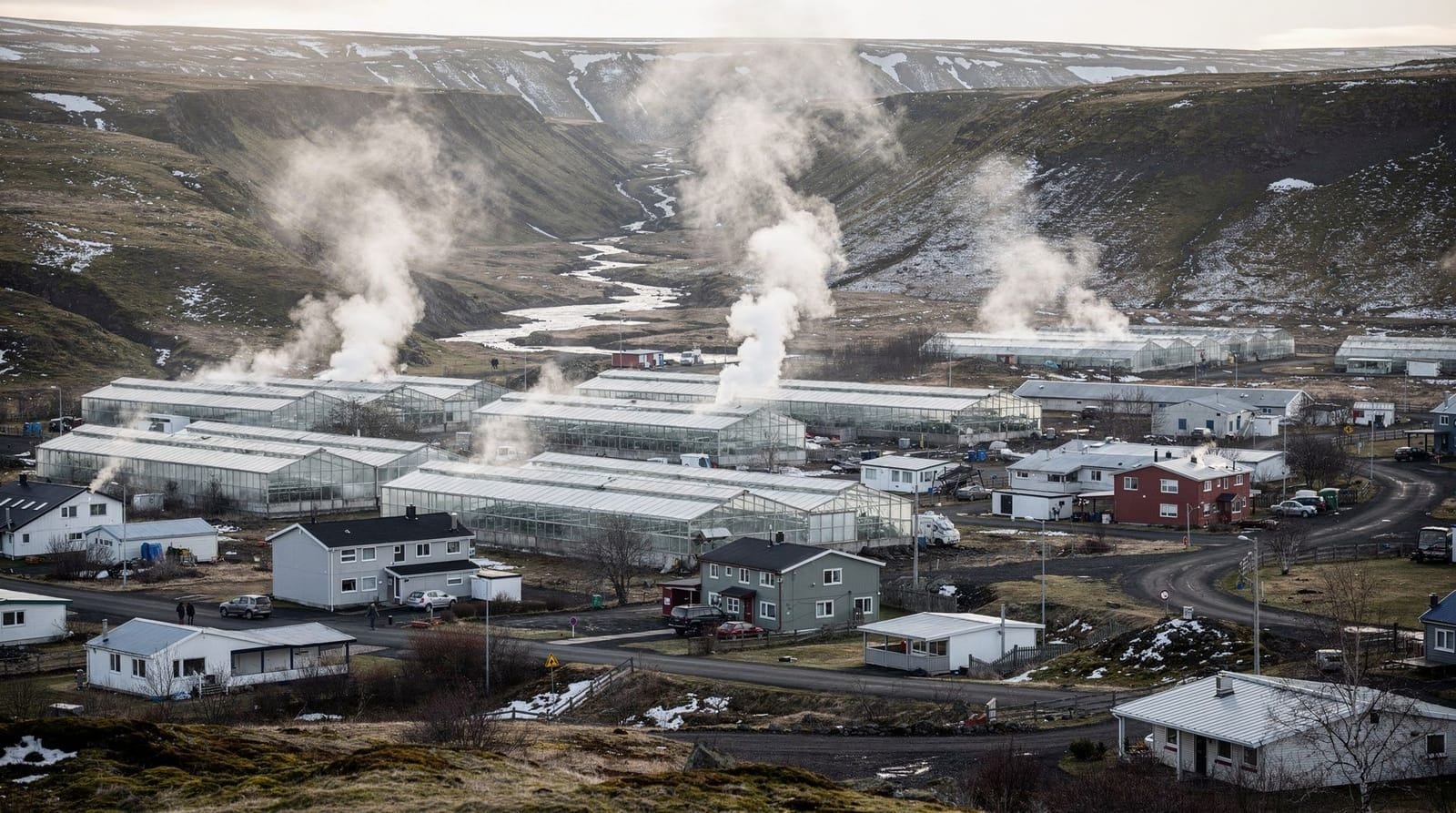
The valley is in Hveragerði, a small town on Route 1 about 45 km southeast of Reykjavík. Hveragerði sits directly above an active geothermal field and its greenhouses are heated by steam from underground. The valley behind the town rises into the Hengill volcanic system, and Reykjadalur is one of several geothermal valleys accessible by trail from the town.
There is no entry fee for the trail or the hot spring river. The trailhead has a paid car park (ISK 800–1,000 per car). That is the only cost.
The trail: distance and elevation
Trailhead to bathing river: 3 km one way, approximately 1–1.5 hours. Return trip: 6 km total, approximately 2.5–3 hours including bathing time. Elevation gain: 200 m uphill from trailhead to bathing area. Surface: Well-worn earth and gravel path. Can be muddy after rain. Some wooden boardwalks over geothermal ground.
The trail is marked with a wooden sign at the trailhead and well-trodden enough to be obvious. There are no significant forks or route-finding challenges in good conditions. The path crosses several small streams on stepping stones and planks — these can be high after rain.
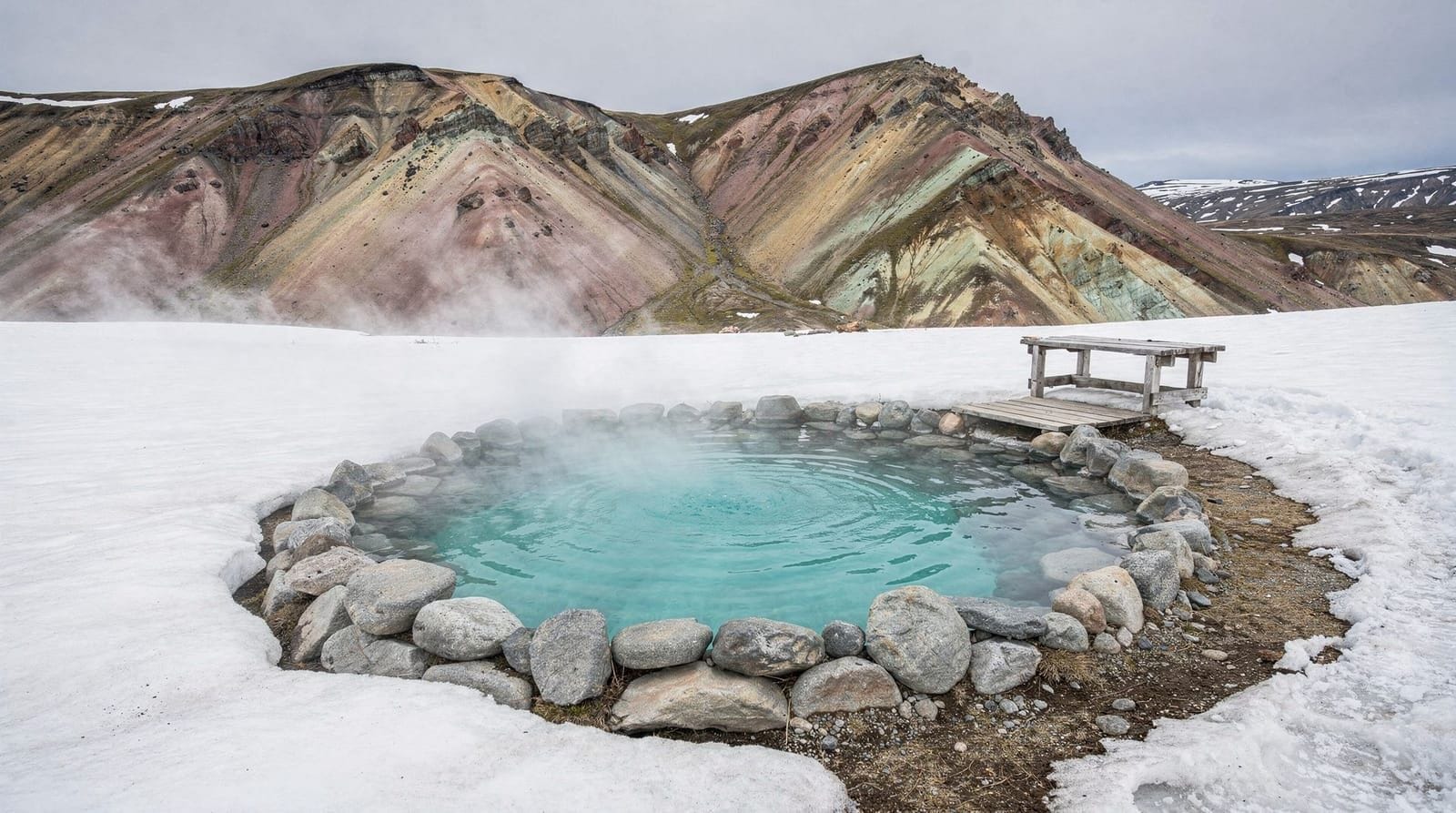
The first 2 km climbs steadily through open moorland with steam vents visible on the hillsides. Hot springs occasionally bubble alongside the path. After the main ascent, the valley opens into the Reykjadalur basin and the river appears.
Guided hiking tour to Reykjadalur hot springs from ReykjavíkThe hot spring river itself
The hot river enters the valley from a geothermal source upstream and flows downhill, cooling as it mixes with cold stream water. This creates distinct temperature zones:
Upper section (near steam vents): Too hot for bathing, often 60°C+. Do not enter.
Main bathing section (approximately 1 km above the trailhead): 38–42°C at the primary bathing area, marked by wooden changing screens. This is where most visitors stop.
Lower section (further downstream): As more cold water mixes in, temperatures drop to 28–34°C. Less popular but still comfortable in summer.
The river is shallow — 30–60 cm deep in most places. You sit or lie in the current rather than swimming. Rocks and gravel underfoot. There is no smooth artificial pool surface; this is a natural riverbed with some sharp rocks.
Basic wooden changing screens are positioned at the main bathing area — enough privacy to change without full exposure. No lockers. Bring a dry bag for your valuables and leave them with your clothes near the screens.
Getting there from Reykjavík
By car: Take Route 1 southeast from Reykjavík toward Selfoss. After 42 km, exit at Hveragerði. Follow the main road through town and turn toward the valley — signs say “Reykjadalur.” The trailhead car park is at the end of the valley road, about 2 km from the town centre. Journey time from Reykjavík: 40–50 minutes.
Car park fee: ISK 800–1,000, paid at a machine on-site. The car park is free during off-peak hours (early morning/evening) at some periods — not guaranteed.
By bus: Strætó bus 51 runs from Mjódd bus station in Reykjavík to Hveragerði. Journey time approximately 40 minutes, fare around ISK 490. From the Hveragerði bus stop, the trailhead is about a 20-minute walk via the town’s main road. Buses run several times daily.
On a guided hike: Several operators offer guided Reykjadalur hiking tours from Reykjavík with hotel pickup. These include transport, a guide for the trail, and sometimes additional stops at the Hellisheiði geothermal plant or other sights.
Guided hiking day tour to Hengill and Reykjadalur hot springsCrowd management
Reykjadalur appears in most “free things to do near Reykjavík” lists and receives tens of thousands of visitors per year. In July and August midday visits, the bathing area can hold 80–120 people simultaneously. The trail itself becomes narrow in these conditions and can feel congested.
To avoid the worst crowds:
- Arrive before 09:30 or after 17:00 on summer weekdays.
- Visit on a weekday rather than a weekend.
- April, May, September, and October are significantly quieter than July–August.
Winter visits (November–March) offer the best crowd conditions but require preparation. The trail is often icy. Bring micro-crampons or traction devices — the downhill return on a frozen path is hazardous without them. Snow can cover the trail markers, though the main route is usually identifiable from footprints.
What to bring
- Swimsuit (worn under clothes for ease)
- Towel
- Dry bag for valuables and phone
- Hiking boots or sturdy trail shoes — not sandals for the approach
- Water (no clean drinking water at the river)
- Snacks (no facilities at the bathing area)
- Micro-crampons in winter
- Midge repellent in summer (midges are less severe here than at Mývatn but present)
Do not bring soap, shampoo, or sunscreen into the water. The valley is an environmentally sensitive geothermal area and the hot spring chemistry should not be contaminated with chemicals. This is not a rule enforced by staff — there are no staff — but it is consistent with Iceland’s safetravel guidelines for geothermal areas.
After flooding: conditions and safety
The streams that run alongside the Reykjadalur trail drain from the valley slopes. After significant rainfall, they rise quickly. In August 2023, flash flooding closed the trail temporarily after a storm. Subsequent visits reported significant mud and changed river temperatures where cold water had flooded in.
If rain has been heavy in the preceding 24 hours, check the Safetravel.is website or local Hveragerði social media for conditions. Visiting within 6 hours of significant rainfall is inadvisable.
The valley itself occasionally experiences minor geothermal shifts — a new steam vent opens, the river temperature changes. Treat conditions as variable rather than fixed.
Reykjadalur versus commercial spas — honest comparison
| Feature | Reykjadalur hot river | Secret Lagoon | Blue Lagoon |
|---|---|---|---|
| Price | Free (ISK 800–1,000 parking) | ISK 3,500 | ISK 14,990+ |
| Getting in | 3 km hike | Walk from car park | Walk from car park |
| Infrastructure | None (screens only) | Basic | Resort |
| Crowds | Moderate-high in summer | Moderate | Very high |
| Atmosphere | Raw geothermal valley | Natural village pool | Resort spa |
| Booking required | No | No | Yes |
If you are comfortable with a hike and do not need changing rooms or a bar, Reykjadalur is the best free experience near Reykjavík. If you want more comfort for a similar price, the Secret Lagoon in Flúðir costs ISK 3,500 and includes changing rooms. For a full overview of all bathing options, see best geothermal pools in Iceland.
Frequently asked questions about Reykjadalur hot river
Is the Reykjadalur hike difficult?
The hike is moderate. The 200 m elevation gain over 3 km is consistent but not steep. Most reasonably fit people complete it without difficulty. In wet conditions, the terrain is slippery in sections, which makes trekking poles useful. The return journey downhill on a muddy trail is often harder than the ascent.
Can I get to Reykjadalur without a car?
Yes, via Strætó bus 51 from Mjódd to Hveragerði (about 40 minutes, ISK 490), then a 20-minute walk to the trailhead. This works well for day trips from Reykjavík. Check current bus schedules at straeto.is.
How long does the full Reykjadalur trip take?
Allow 4–5 hours for the round trip from the trailhead: 1–1.5 hours each way plus 60–90 minutes bathing. If coming from Reykjavík by bus, the round trip including travel takes a full day.
Is there parking at the Reykjadalur trailhead?
Yes. The trailhead car park charges ISK 800–1,000 per vehicle, payable at a machine. In peak summer, the car park fills by 11:00 on weekends. An overflow area exists further down the valley road.
What is the best time of year to visit Reykjadalur?
May through September for comfortable hiking conditions. June–August for the best trail surface, but these months are the busiest. April and October for a balance of good conditions and fewer people. Winter (November–March) for solitude and the dramatic experience of hot water in snow — but bring traction aids.
Is Reykjadalur suitable for children?
The hike is doable for children aged 8 and above who are comfortable with a steady 1.5-hour walk. Younger children may find the elevation gain tiring. The river itself is shallow but the rocky bottom and current require supervision for young children. There are no facilities, toilets, or services on the trail.
The Hengill volcanic system
Reykjadalur sits within the Hengill volcanic system, one of the most geothermally active areas in Iceland. Hengill is a central volcano — a type of Icelandic volcano characterised by a shallow magma chamber feeding a series of fissure eruptions and geothermal fields. The last eruption at Hengill was approximately 2,000 years ago, but the geothermal activity remains intense.
The Hellisheiði and Nesjavellir geothermal power plants, both in the Hengill area, together supply most of Reykjavík’s electricity and hot water. Hellisheiði specifically is visible from Route 1 heading south — a large industrial facility that taps the same geothermal system that heats Reykjadalur’s river.
If you are interested in the energy context, the Hellisheiði Geothermal Plant has a visitor centre with an exhibition on geothermal energy production. It is 10 minutes off Route 1, close to the Hveragerði junction.
Hveragerði town as a base
Hveragerði (population about 2,500) is worth more than just the trailhead parking. The town sits directly above an active geothermal field, and its commercial greenhouses grow tomatoes, cucumbers, and flowers heated by geothermal steam. Several greenhouses are visible from the main road.
Geothermal Park (Hveragarðurinn): A small park in the town centre with boiling springs, steam vents, and geothermally heated ground. Free to walk through. Geysir activity occurs occasionally. One of the few places you can see active geothermal features from the main street of a town.
Eden Geothermal Centre: A commercial facility in the town with a hot tub, swimming pool, and restaurant. Entry is cheaper than commercial spas (ISK 2,000–3,000) and includes changing rooms. An alternative for those who want warm water with facilities but without the Reykjadalur hike.
Bakeries and cafés: Hveragerði has a good bakery (Hveravöllum) with hot buns fresh daily, useful for pre-hike fuel.
Alternative trailheads and less-crowded approach routes
While the main Reykjadalur car park is the standard starting point, a lesser-known variation exists for hikers willing to walk slightly further for a quieter approach. Some hikers park in Hveragerði town itself and walk the extra 20 minutes to the trailhead rather than paying for the main car park, which also spreads out the departure times of different groups and reduces the bottleneck effect at the busiest access point. The trail itself has no meaningful alternative route once you’re on it — the single path to the bathing area is the only sanctioned way in — but staggering your start time by parking in town, arriving on the early Strætó bus, or simply setting off before 08:00 all achieve a similar effect of avoiding the mid-morning surge of tour groups and day-trippers.
Combining Reykjadalur with the Golden Circle and South Coast
The geographical position of Hveragerði makes it a natural waypoint on routes to both the Golden Circle and the South Coast:
Reykjadalur + Golden Circle combination: Drive from Reykjavík to Hveragerði, hike Reykjadalur in the morning, then continue east on Route 1 to Selfoss and north on Route 30 toward the Golden Circle. This extends a standard Golden Circle day by 4 hours (the hike) but creates a fuller experience. The Golden Circle day trip guide covers the rest of the route.
Reykjadalur + South Coast: Reykjadalur in the morning, then continue east toward Seljalandsfoss and Skógafoss on the South Coast. The South Coast day trip guide covers the remaining route from Hveragerði east.
Reykjadalur as a dedicated half-day: If Reykjavík is your base and you want a half-day activity that is free and genuinely outdoor without driving far, Reykjadalur is the obvious choice. Depart by 08:00, complete the hike before crowds build, return to Reykjavík by 13:00.
The Reykjadalur experience through the seasons
Spring (April–May): The best conditions for avoiding crowds while maintaining reasonable trail quality. Some snow may remain on higher sections in April. Wildflowers begin appearing in May. The valley’s green colour is most vivid in spring.
Summer (June–August): The most popular and crowded period. The bathing area can feel like a public pool on a warm Saturday afternoon. The upside: the trail is dry, the valley lush, and daylight extends to midnight in June. The midnight sun makes a 22:00 arrival at the trailhead for a quiet evening hike entirely feasible.
Autumn (September–October): Fewer people, cooler air (which makes the warm water feel better), and the valley’s vegetation taking on yellow and brown tones. October can bring first frost and early snow on higher ground.
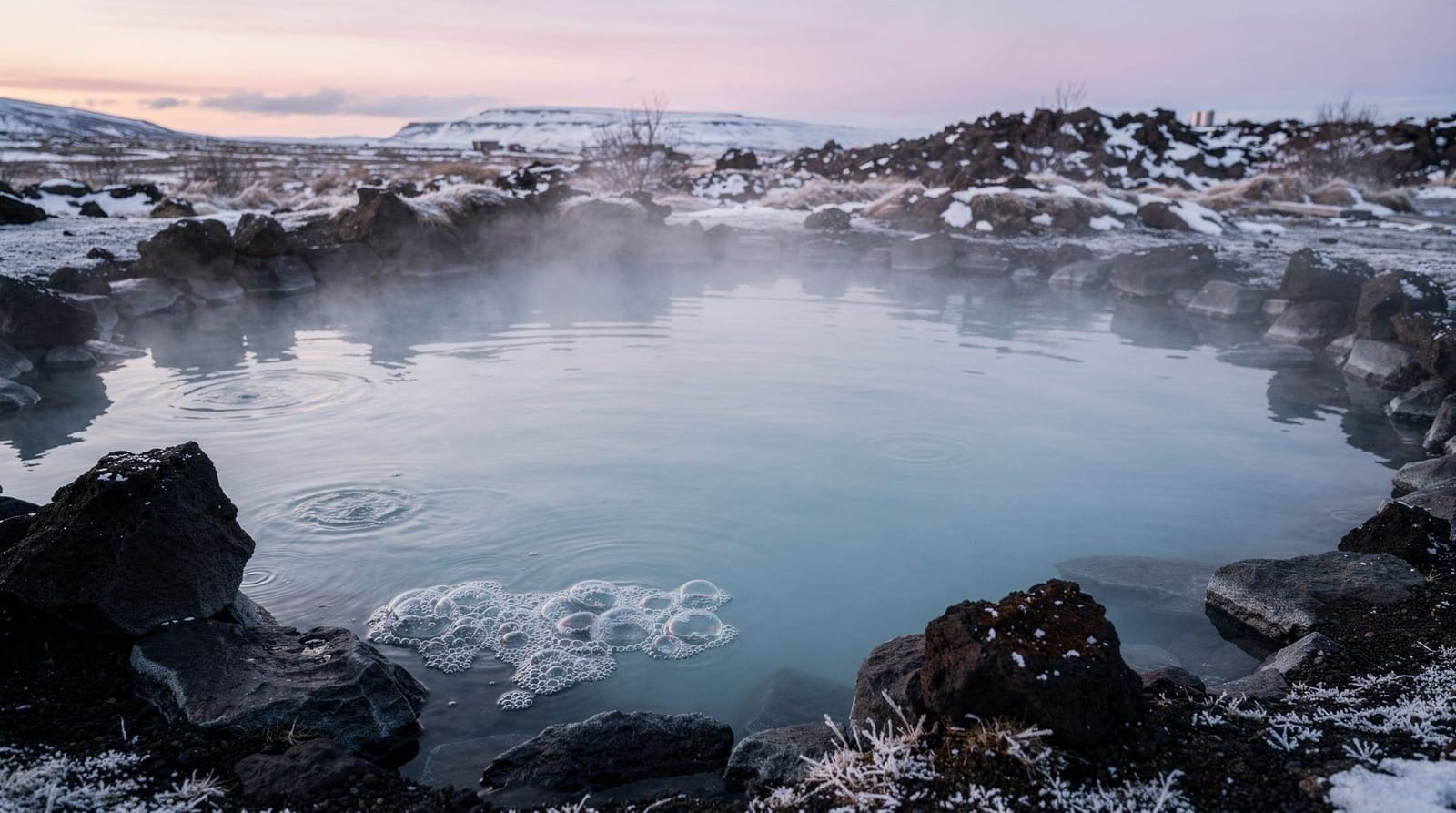
Winter (November–March): The most physically demanding season. Snow covers the trail in most winters from December through February. Micro-crampons or yak-traks are essential for the icy sections on descent. The reward: bathing in steam and warmth surrounded by snow with no other people is one of the more unusual experiences available in Iceland for free. Allow 2–2.5 hours one way in winter conditions.
Photography at Reykjadalur
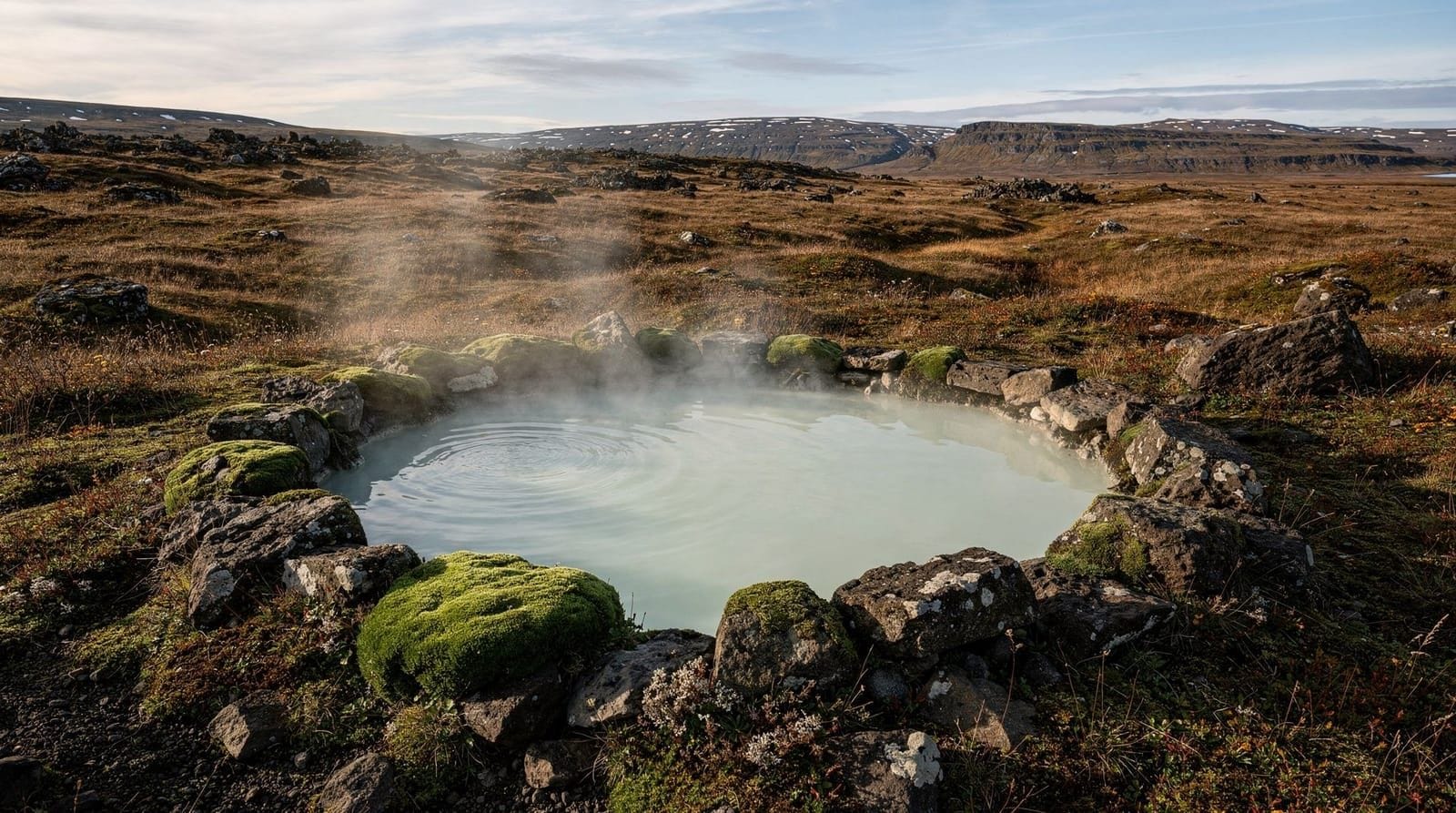
The valley and river are photogenic in conditions that are difficult to reproduce: steam rising from the water against a backdrop of green tundra and basalt ridges. A few practical photography notes:
Best light: Early morning (07:00–09:00) in summer for low-angle light across the valley floor. Late afternoon in autumn when the sun is lower in the sky.
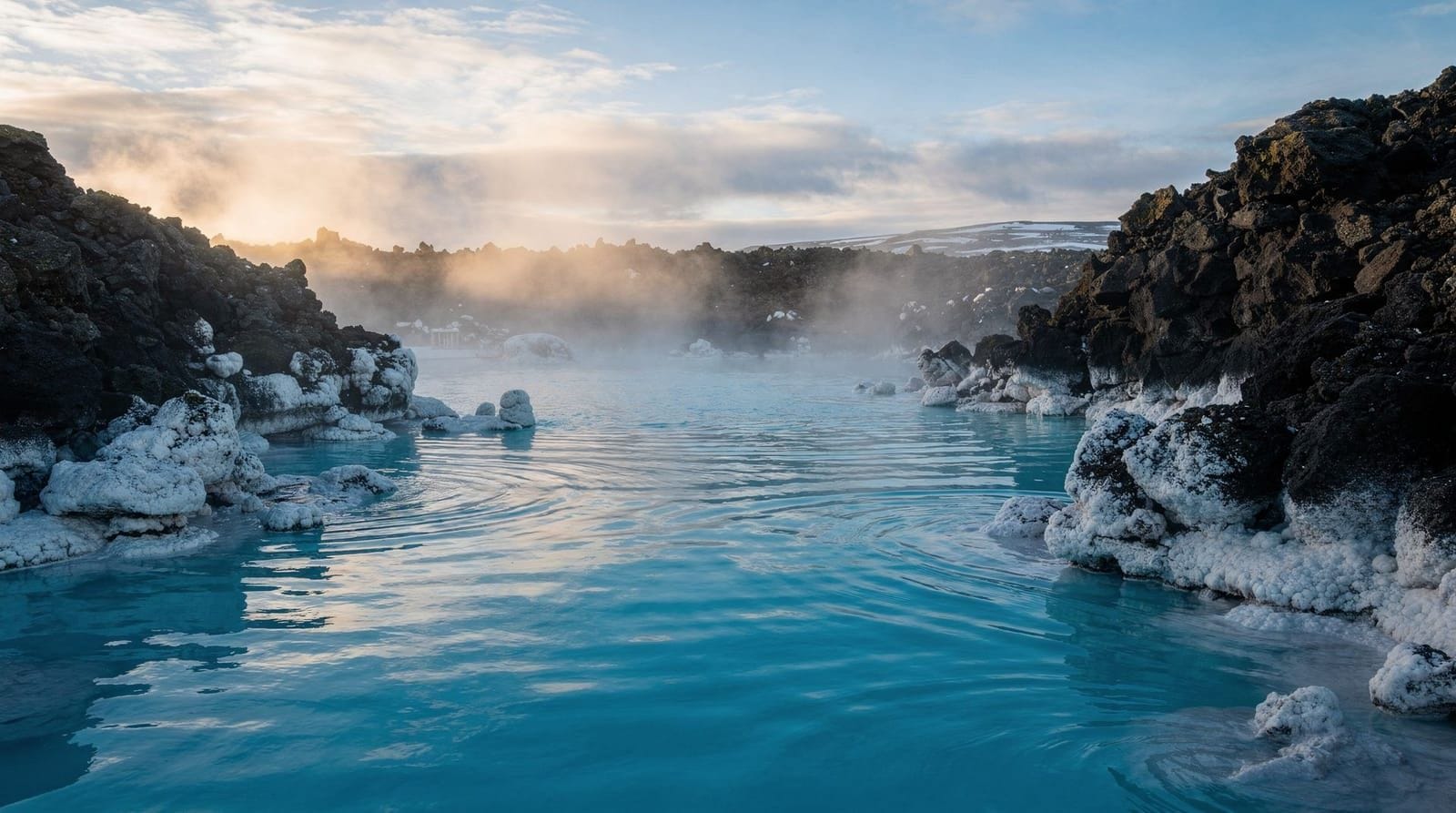
Steam and fog: On cold or overcast days, steam from the hot river creates atmospheric effects that are difficult to replicate artificially. These conditions are often photographically better than clear sunny days.
Phone in water: The hot spring water is not particularly corrosive to phones, but waterproof cases or dry bags are sensible. The humidity from steam can affect lens elements over time.
Other visitors: The bathing area is public. Photographing strangers without consent is a social norm violation regardless of legality. In summer crowding, isolating a shot of the river without other people in frame requires careful framing — position yourself above the main bathing area for views down the valley.
For wider photography context in Iceland, the Iceland photography guide covers equipment, locations, and techniques across different seasons.
Reykjadalur versus Hvammsvik and other newer geothermal options
Since Reykjadalur established itself as the default “free hot spring near Reykjavík” answer, several commercial alternatives have opened that occupy a middle ground between a free hike and a full resort. Hvammsvik hot springs, on the Hvalfjörður fjord about an hour from Reykjavík, offers ocean-view geothermal pools with paid admission, changing rooms, and zero hiking required — the opposite trade-off to Reykjadalur. If the 3 km approach walk is the deciding factor against Reykjadalur for your group (small children, limited mobility, poor weather), Hvammsvik or the Secret Lagoon are the honest paid alternatives that remove the hike entirely while keeping the price well under Blue Lagoon territory.
Top experiences
Bookable activities with verified prices and instant confirmation on GetYourGuide.
Top experiences
Best-rated activities across GetYourGuide and Viator.

Top-Rated Family Rafting – Drysuits & Geothermal Hot Cocoa
- Viator

Skip the Line: Secret Lagoon Entrance Ticket
- Viator

Landmannalaugar Guided Hike & Hot Springs - From Reykjavík
- Viator

Goðafoss Waterfall & Forest Lagoon from Akureyri Port
- Viator

Vök Baths Admission Ticket
- Viator

Day Trip to Lake Mývatn And The Nature Baths from Akureyri
- Viator