Midnight sun in Iceland — when, where, and what to actually expect
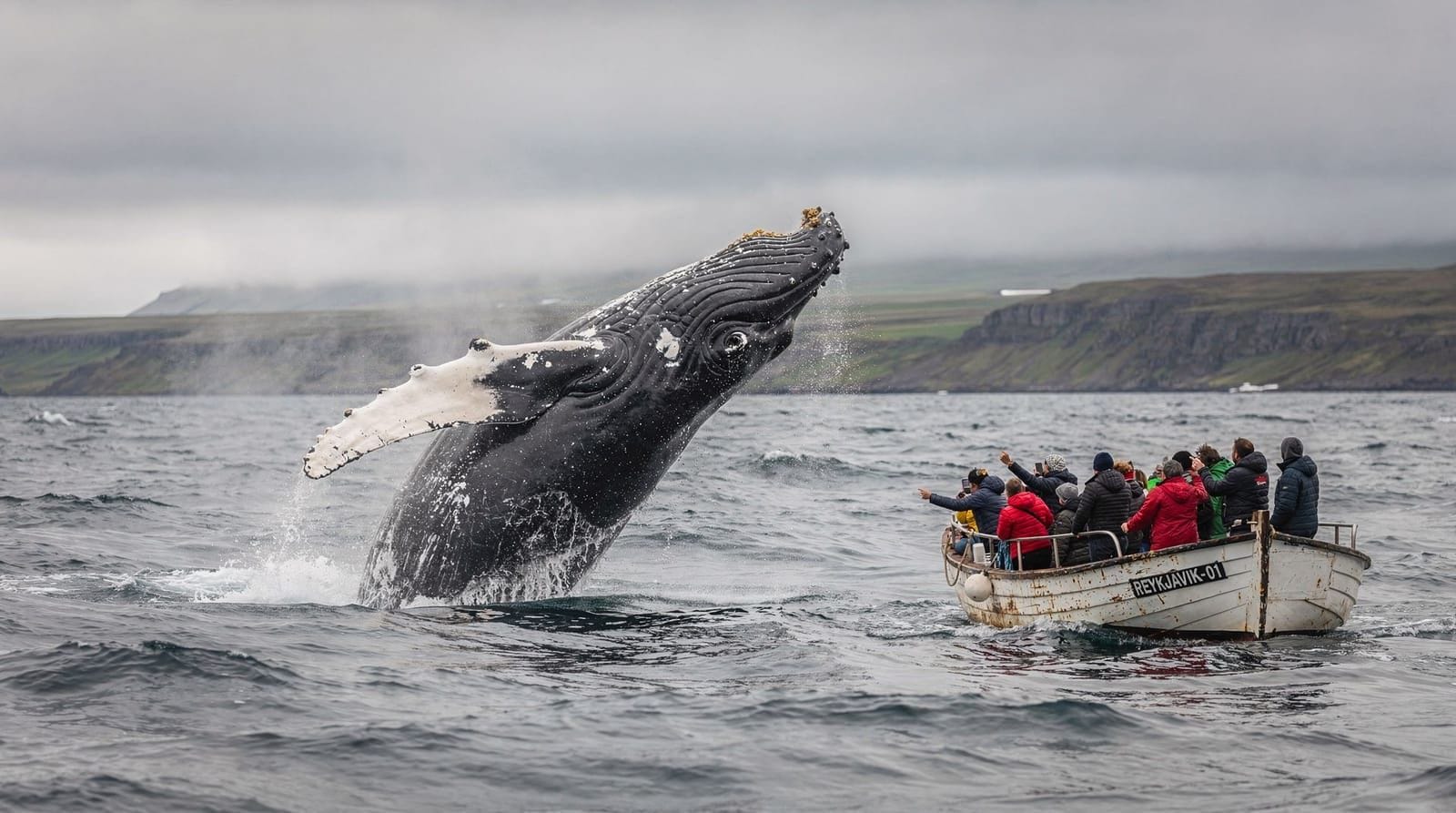
Akureyri: Whale watching in the midnight sun
When is the midnight sun in Iceland?
The sun stays above the horizon around the clock from approximately June 5 to July 17 in Reykjavík. The peak is the summer solstice, around June 20–21, when sunset is around midnight and sunrise around 3am. The sky never gets fully dark during this window.
| When | Sun above horizon roughly June 5 – July 17 in Reykjavík |
| Peak | Summer solstice, June 20–21 |
| Best places | Reykjavík, Snæfellsnes, Akureyri, Grímsey Island, Diamond Circle |
| Main challenge | Sleep disruption — blackout curtains or a mask are essential |
| Trade-off | No northern lights visible during this window |
What is the midnight sun and why does Iceland have it?
The midnight sun occurs in regions close enough to the Arctic Circle that, during summer months, the sun’s path through the sky never dips below the horizon. Iceland sits just south of the Arctic Circle (the circle passes through Grímsey island, north of the mainland), so the mainland does not technically experience true 24-hour sun, but comes close enough that the sky never darkens to night-level during peak summer.
At Reykjavík’s latitude (64°N), the sun on June 21 sets around 11:54pm and rises around 3:04am. The period between those times is a prolonged civil twilight — the sky stays a luminous gold, orange, and deep blue rather than going black. For practical purposes, it is never dark.
Further north — in Akureyri (65.7°N) or on Grímsey island (66.5°N, above the Arctic Circle) — the midnight sun is more dramatic still.
Exact dates for the midnight sun in Iceland
These are approximate dates when Reykjavík has fewer than 30 minutes of astronomical twilight (essentially, never fully dark):
- Starts: approximately May 25–June 1 (sky stops getting properly dark)
- Sun never sets: approximately June 5–July 17 (sun above horizon at midnight)
- Peak: June 20–21 (summer solstice)
- Ends: sky starts getting properly dark again by mid-August
For nights with over 20 hours of daylight: roughly May 12 to July 29 in Reykjavík.
Akureyri, in north Iceland, has slightly longer midnight sun periods due to its more northerly latitude. Grímsey island, which straddles the Arctic Circle, sees the sun fully above the horizon at midnight for around two weeks in June.
What it actually looks like
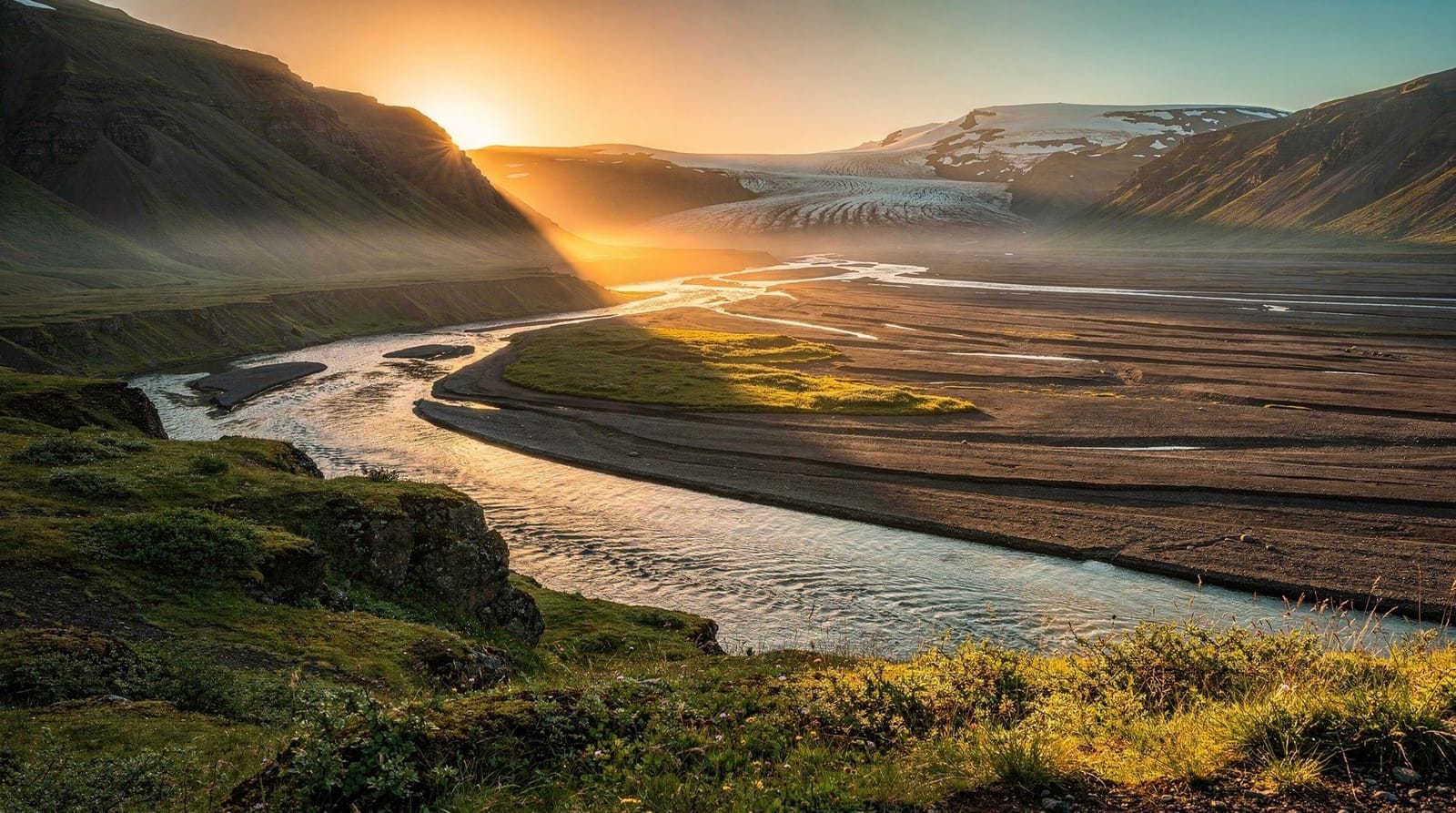
The midnight sun is simultaneously more and less dramatic than photographs suggest. The “golden hour” light from 10pm to 2am during peak midnight sun is genuinely extraordinary — the low sun angle creates long shadows and warm tones that landscape photographers specifically travel for.
However, the sky during the midnight sun period is not the dramatic orange and red of a normal sunset. It often stays in a muted golden-yellow-blue range, cycling slowly. You will not necessarily notice a visual moment of “oh, there’s the midnight sun” — it is more a steady, strange awareness that the world should be dark and is not.
For the most dramatic visible effects, position yourself on a hilltop or coastal headland at 11pm–12am during the solstice week. The best photo spots guide includes specific midnight sun viewpoints.
Sleep disruption — the honest reality
The midnight sun disrupts sleep significantly for most visitors. The human circadian rhythm responds to light, and a sky that looks like 4pm at actual midnight does not naturally induce sleep. Common visitor experiences:
- Feeling wide awake at 11pm and not understanding why
- Difficulty waking up at 8am when the room has been light since before you went to sleep
- Sleeping later and later each day as the trip progresses
Practical solutions:
- Blackout curtains: Essential. Many guesthouses and hotels have them; confirm before booking. Budget accommodation may not.
- Sleep mask: Pack your own as a backup. A cheap fabric mask solves the problem entirely.
- Earplugs: Less relevant for the light itself, but if you are camping you may encounter seabirds, wind, and other outdoor noise.
- Melatonin: A low-dose melatonin supplement (0.5–1mg, not the 10mg common in North America) helps reset sleep timing. Check legality in your home country before travel.
Some travellers find the midnight sun enhances the trip — watching the sunset-that-is-not-a-sunset from a hot tub at midnight is one of Iceland’s distinctive experiences. Others find the sleep disruption genuinely exhausting. Plan accordingly.
Best places to experience the midnight sun
Reykjavík
The most accessible option. Standing at Hallgrímskirkja or on Öskjuhlíð hill (Perlan) at midnight gives a clear view of the luminous northern sky. The city’s rooftop bars and harbour area come alive in late-evening light.
Snæfellsnes Peninsula
The west-facing coastline of the Snæfellsnes Peninsula gives views of the sun dropping to the horizon and rising again in the space of an hour — remarkable from Arnarstapi or the cliffs near Snæfellsjökull glacier.
Akureyri
Iceland’s second city in the north experiences a slightly longer midnight sun window. The amphitheatre-like fjord setting means you can watch the sun trace its low path across the mountains from midnight onwards.
A midnight sun whale watching tour from Akureyri combines two unusual experiences — whales and the 10pm–midnight golden light — in a single outing.
Grímsey Island
The only point on Icelandic territory that lies above the Arctic Circle (at 66°33’N). The Arctic Circle monument is on the island. Ferries run from Dalvík; flying from Akureyri is also possible. The midnight sun here is the “real” version with the sun genuinely above the horizon at midnight.
Diamond Circle and north Iceland
Lake Mývatn, Dettifoss, and Ásbyrgi all benefit from the midnight sun light in ways that south Iceland does not — the longer light windows mean you can photograph these landscapes in extraordinary evening light well after 10pm.
Midnight sun and hiking
One of the practical benefits of the midnight sun is that hiking does not need to be scheduled around sunset. Many hikers on the Laugavegur trek report 2am hiking sessions under clear golden skies. Huts close their doors at certain hours, but the light means trail navigation is possible at any hour.
For popular hikes near Reykjavík — Reykjadalur hot river hike or Glymur waterfall — visiting after 8pm gives quiet trails and extraordinary light.
Photography during the midnight sun
The window from roughly 10pm to 2am during the solstice is Iceland’s best landscape photography period. The extremely low sun angle — barely above the horizon — creates:
- Long golden shadows
- Warm amber tones on lava fields and waterfalls
- Dramatic sidelight on cliffs and rock formations
- Reflection light on glacial lakes
Popular photo sites like Jökulsárlón glacier lagoon and Kirkjufell mountain with the midnight sun light have become iconic. The practical challenge is that everyone else knows this — these spots are busy at midnight in July.
For specific spots and techniques, see Iceland photography guide and midnight sun spots.
Golden Circle in midnight sun light
A Golden Circle tour in June or July can be structured around the evening light — starting at 3–4pm and finishing after 10pm gives you the highlights in warm, dramatic late-evening sun that midday tours miss.
Midnight sun festivals and events
- Secret Solstice (Reykjavík, mid-June): Four-day music festival taking full advantage of the midnight sun. International acts perform at midnight under daylight.
- Midnight Sun Run (Reykjavík, June): Annual running event at midnight.
- Midsummer bonfire celebrations: Various communities hold midsummer events around the solstice (June 20–21), including bonfires and outdoor gatherings in the endless light.
The science behind the midnight sun
Iceland sits between 63°N and 67°N latitude. The Arctic Circle is at 66°33’N — only Grímsey island, at 66°32’N, is at or above it on Icelandic territory.
The midnight sun occurs because Earth’s axis is tilted at 23.5° relative to its orbital plane. In summer, the Northern Hemisphere tilts toward the sun, and at latitudes above approximately 60°N, the sun’s path at its lowest point — midnight — stays at or above the horizon rather than dipping below it.
At Reykjavík’s latitude (64°N), the sun’s maximum altitude above the horizon at noon reaches about 49° at the summer solstice. At midnight, it dips to approximately -1° to -3° — barely below the horizon, which is why the sky never fully darkens to true night.
Further north, the effect is more extreme. At Akureyri (65.7°N), the midnight sun period is slightly longer. On Grímsey island (66.5°N, above the Arctic Circle), the sun remains above the horizon around the clock for approximately 3 weeks around the solstice.
The same axial tilt produces the opposite effect in winter: at the winter solstice (December 21), Reykjavík gets only 4–5 hours of low-angle sunlight.
What to actually see at midnight
First-time midnight sun visitors sometimes underestimate how active 11pm–1am in Iceland can be during the midnight sun period.
What you will see: Golden light, long shadows from everything — trees, rocks, people. The sky in a range of amber, pink, and luminous blue without ever reaching darkness. On the northern horizon, a specific phenomenon: the sun appears to hover just above or at the horizon for 1–2 hours rather than either setting or staying high.
What you will not see: The dramatic red-orange fireball sunsets that you might imagine from photographs. Those happen — but they happen quickly, and most of the midnight period looks more like a sustained golden hour than a spectacular climax.
The practical experience: Standing somewhere with a long view at 11:30pm feels uncanny rather than spectacular. The light is clearly wrong for the time — you know intellectually it should be dark, and the lingering light creates a specific cognitive dissonance. That feeling, more than any particular visual, is what people remember.
Midnight sun on the Ring Road
Driving the Ring Road during the midnight sun period changes the entire character of the trip. There is no “darkness to navigate by” — you can drive at 11pm with clear road visibility and warm light. This means:
- Longer effective driving days (though fatigue still accumulates without sleep)
- The ability to visit major sites in the late evening with empty parking lots
- Landscape photography at any hour, not just “golden hour” which lasts all night
Key Ring Road stops in midnight sun light:
Jökulsárlón glacier lagoon (south Iceland): The lagoon in midnight sun light has an otherworldly blue-white quality as the icebergs catch the low sun. The lagoon’s boat tours run during the day, but the walk around the shore at 11pm–midnight in June is extraordinary with almost no other visitors.
Kirkjufell (Snæfellsnes): Iceland’s most photographed mountain is on the north side of the Snæfellsnes Peninsula. The midnight sun hits it from the northwest in June, lighting the waterfall in front and the mountain’s distinctive summit. This is a specific photography target that professional landscape photographers time around the June solstice.
North Iceland (Lake Mývatn area): Mývatn is further north than Reykjavík and gets even more extreme midnight sun effects. Steam rising from geothermal features in pink-gold midnight light is a north Iceland specific experience.
Sleep strategies for the midnight sun
Based on consistent visitor reports and the physiology of circadian disruption:
The blackout curtain check: Before booking any accommodation for a summer Iceland trip, check whether blackout curtains are provided. Many guesthouses confirm this on their booking page or respond promptly to email inquiries. If not provided, a sleep mask is a simple solution.
The melatonin approach: Melatonin in low doses (0.5–1 mg) taken at the time you want to sleep helps reset the circadian rhythm when ambient light prevents natural melatonin production. It is widely available without prescription in many countries and legal to carry in Iceland. The dosing matters — the 5–10 mg doses sold in North America are often too high; 0.5 mg is sufficient.
The schedule anchor: Eating meals at fixed local times (breakfast 7–8am, dinner 7–8pm) helps maintain a daily rhythm regardless of light. The circadian disruption is less severe when mealtimes are consistent.
The nap approach: Some visitors abandon the idea of a full 8-hour night sleep during the midnight sun and instead sleep in two segments — 11pm–3am and then a 1–2 hour afternoon nap. This accommodates the light conditions without fighting them.
Midnight sun swimming
Iceland’s outdoor geothermal pools take on a specific character during the midnight sun. Swimming at Laugardalslaug (Reykjavík’s main outdoor pool) at 11pm in June, with the sky pink-gold and the air at 10°C, is a specific local experience. The pool is genuinely open until midnight in summer.
Sky Lagoon offers evening packages specifically timed for the midnight sun window, giving access to the infinity-edge pool with the sun at its lowest point over the sea.
Reykjavík’s night scene in the midnight sun
Reykjavík’s social life shifts in summer. Bars and restaurants stay open until 4–5am on weekends. The queue for some bars begins after midnight. The standard Scandinavian approach of “let’s go out at 11pm” takes on a slightly different character when the sky looks like 4pm when you leave your hotel at 11pm to head out.
The Laugavegur strip (Laugavegur, Austurstræti, and the surrounding streets) is the main nightlife zone. Avoid expecting a quiet night — the midnight sun and an influx of international visitors means the summer weekend atmosphere is noticeably different from the winter version.
Midnight sun and mental health
This is not mentioned in most travel guides but is worth being aware of: the midnight sun has documented effects on mood and mental wellbeing for people who are sensitive to light-dark cycles. The continuous light suppresses melatonin production, which can cause:
- Elevated mood and energy that feels positive but makes rest difficult
- In some individuals, hypomanic-adjacent states — very high energy, reduced need for sleep, racing thoughts
- After several days, accumulated sleep debt that presents as irritability, poor decision-making, or emotional lability
Visitors prone to mood sensitivity should be aware of this. The solutions are the same as for jet lag: sleep mask, consistent mealtimes, low-dose melatonin if used to regulate sleep, and accepting that you may feel unusually energetic but need rest anyway.
Most visitors experience the midnight sun as mildly disorienting but not distressing. A minority find it significantly difficult. Knowing in advance that this is a physiological response rather than a personal failing makes it easier to manage.
Midnight sun practical calendar 2026
Specific sun data for Reykjavík in 2026 (approximate, based on solar declination):
| Date | Sunrise | Sunset | Hours above horizon |
|---|---|---|---|
| June 1 | 3:23am | 11:44pm | 20h 21m |
| June 10 | 3:10am | 11:56pm | 20h 46m |
| June 21 (solstice) | 3:04am | 11:54pm | 20h 50m |
| July 1 | 3:14am | 11:47pm | 20h 33m |
| July 15 | 3:38am | 11:23pm | 19h 45m |
| August 1 | 4:12am | 10:40pm | 18h 28m |
| August 15 | 4:43am | 10:01pm | 17h 18m |
True darkness (civil twilight deeper than -6°) does not occur in Reykjavík between approximately May 5 and August 7. The sun does not set at all (remains above horizon at midnight) from approximately June 5 to July 17.
For Grímsey Island (above the Arctic Circle): the sun does not set from approximately June 10 to July 2.
Frequently asked questions about the midnight sun in Iceland
Does Iceland have 24-hour daylight in summer?
Not quite in Reykjavík — the sun dips very briefly below the horizon at its lowest point (around midnight) but the sky stays luminous. Above the Arctic Circle on Grímsey island, the sun is genuinely above the horizon at midnight around the solstice.
When exactly does the midnight sun happen in 2026?
In Reykjavík, the sun never fully sets from approximately June 5 to July 17 in 2026. The solstice is June 21. For exact sunrise and sunset times, check timeanddate.com with Reykjavík as the location.
Is it hard to sleep during the midnight sun?
Yes, for most people. The light significantly disrupts natural sleep rhythms. Blackout curtains or a sleep mask are essential. Budget guesthouses may not have blackout curtains — check before booking or bring your own.
Can you see northern lights during the midnight sun?
No. The sky is too bright for the aurora to be visible during the midnight sun period. Northern lights require darkness. Aurora viewing season runs late August to mid-April.
Is the midnight sun only visible in Iceland?
No — it occurs throughout the Arctic and subarctic, including Norway, Sweden, Finland, Greenland, Canada, and Alaska. Iceland’s position just south of the Arctic Circle means it experiences near-midnight sun rather than the full 24-hour version found further north.
What should I do at midnight during the midnight sun?
Standing at a high point (a hilltop, cliff edge, or rooftop) and watching the sun trace its low path across the horizon around midnight is the classic experience. Many restaurants and bars in Reykjavík are open until 1–2am. Hiking, photography, and open-air swimming (in hot pools) at midnight are all popular.
Combining midnight sun with a Ring Road trip
Drivers on a full Ring Road itinerary during the midnight sun period benefit from a genuinely different daily rhythm than a winter trip. Because there’s no fixed “end of daylight,” it’s practical to build flexible driving days that pause for extended stops at scenic points rather than racing to reach the next town before dark. Many experienced Ring Road drivers deliberately schedule their most photogenic stops — Jökulsárlón, Kirkjufell, the Diamond Circle waterfalls — for the 9pm–midnight window specifically, since parking lots that are packed at 2pm are often nearly empty three hours before midnight, even in peak July.
Midnight sun for families with children
Families travelling with children face a specific version of the sleep disruption problem, since young children are typically more sensitive than adults to light-driven schedule disruption. Portable blackout blinds designed for travel (suction-cup or static-cling window covers) pack small and set up in minutes — worth bringing for children under 6–8 in particular, since hotel and guesthouse blackout provisions vary widely and cannot be relied upon. Keeping mealtimes and bedtime routines as close to the usual schedule as possible, even though the light outside makes it feel wrong, helps children adjust faster than letting the schedule drift entirely. Many families find that after two or three nights, children settle into a workable rhythm regardless of the light — the first nights are the hardest part. See the Iceland with kids guide for broader family trip planning.
A sample midnight sun evening itinerary
For visitors who want to make the most of a single peak-season evening rather than treating the midnight sun as background scenery, a structured plan helps: start dinner around 9pm at a restaurant with a west or north-facing view (several Reykjavík harbour restaurants qualify), head to a viewpoint like Öskjuhlíð hill or Grótta lighthouse by 11pm to watch the light shift toward its lowest angle, and finish with a late soak at a geothermal pool that stays open into the night. Sky Lagoon and several municipal pools extend hours specifically for this window in summer. This sequence — dinner, viewpoint, pool — turns the abstract idea of “the sun doesn’t set” into a concrete, memorable evening rather than something you simply notice in passing.
Top experiences
Bookable activities with verified prices and instant confirmation on GetYourGuide.