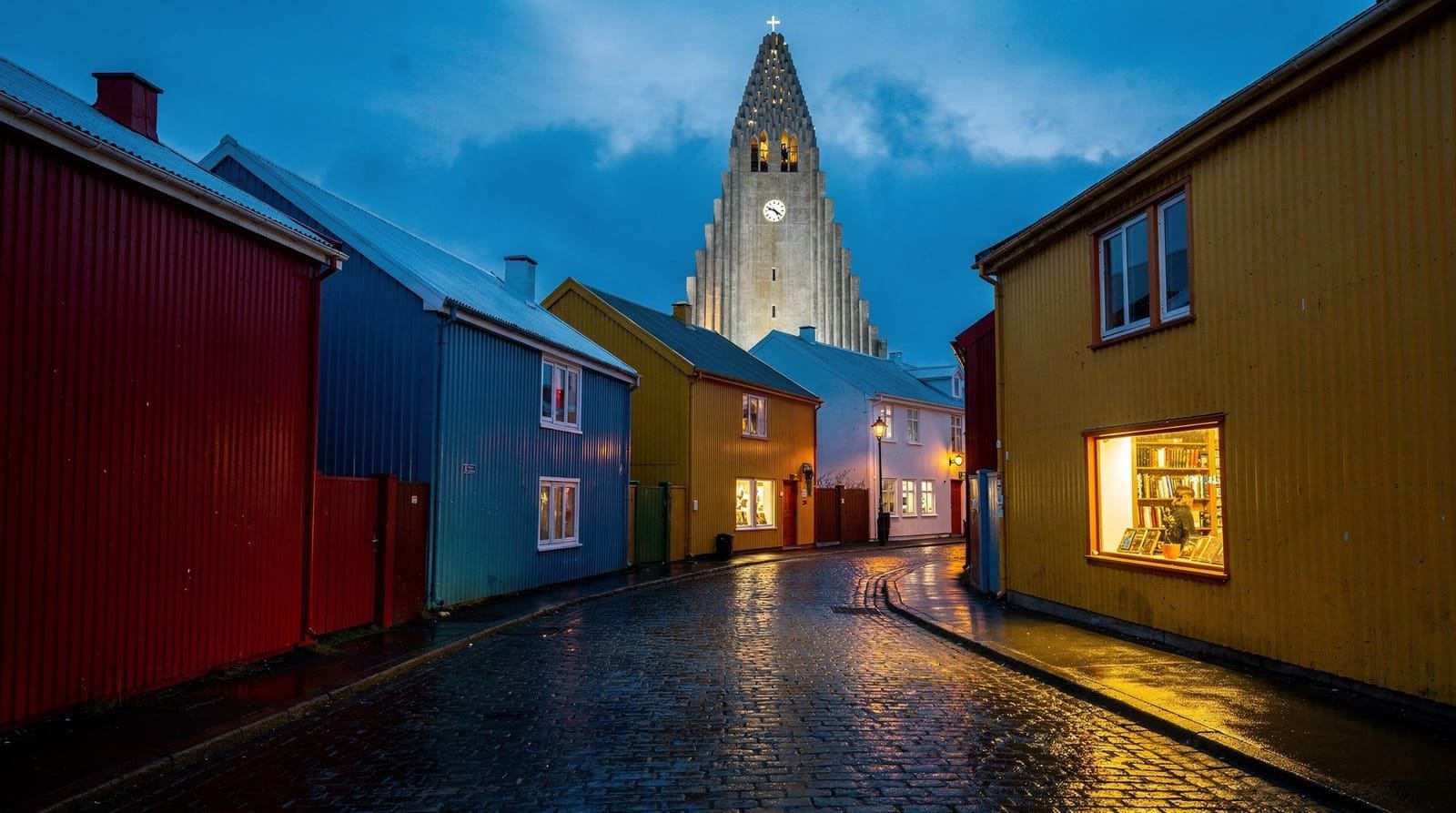
Hallgrímskirkja and Reykjavík's landmark buildings
Reykjavik: City walking tour
Is Hallgrímskirkja worth visiting?
Yes — the tower elevator gives the best free-standing view of Reykjavík and the mountains. The church interior is austere Lutheran; the main draw is the view, not the ecclesiastical decoration. Allow 30–45 minutes including the tower queue.
Reykjavík’s landmark buildings are compact enough to cover on foot in a single day, but visitors who rush between them on a checklist tend to miss the context that makes each one interesting — the geothermal engineering under Perlan, the deliberate basalt-column reference in Hallgrímskirkja’s tower, the actual meaning behind the Sun Voyager sculpture. This guide covers the honest visitor information (prices, hours, what’s worth the queue) alongside that context.
| Where | Central Reykjavík, all within walking distance |
| Cost | Hallgrímskirkja tower ~1,400 ISK; Perlan ~3,900–5,900 ISK; Harpa/Sun Voyager free |
| Time needed | Half a day for the core landmarks, a full day with Old Harbour and Viðey |
| Best time | Morning for Hallgrímskirkja tower queue; late afternoon for Sun Voyager light |
| Getting there | Entirely walkable, or hop-on hop-off bus |
Hallgrímskirkja — what you need to know
Hallgrímskirkja (Hallgrims Church) is the Lutheran parish church at the top of Skólavörðustígur, Reykjavík’s most photographed street. It is the tallest building in Iceland at 74.5 metres, built over 38 years between 1945 and 1986.
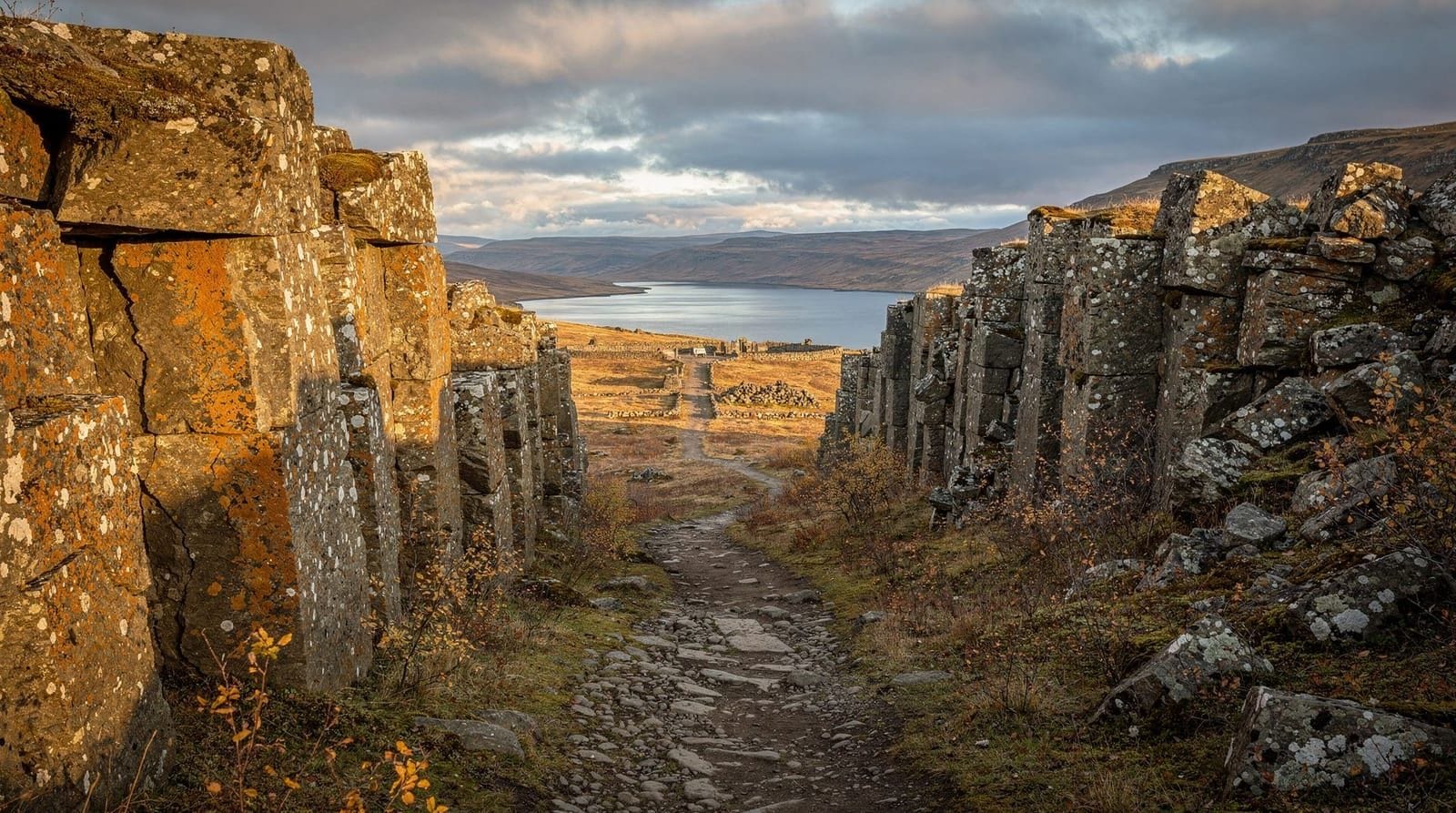
The architect Guðjón Samúelsson designed the tower to reference the basalt column formations found at Svartifoss waterfall in the south and on the Reynisfjara black beach near Vík. The visual resemblance is deliberate — the hexagonal column flanks that rise from the base to the tower represent the geological formations that define Iceland’s landscape character.
Tower elevator: prices and practical details
Cost: Approximately 1,400 ISK (about $10 USD) per adult; children under 7 free. Hours: Daily 9am–9pm (summer), 9am–5pm (winter, approximately October–March). Queue: 15–45 minutes on busy summer days. Going at 8:30am or after 6pm cuts wait time significantly.
The view from the tower is the genuine reason to go. Reykjavík is compact and low-rise, so from 73 metres you see the entire city, the harbour, Mt. Esja across the fjord (914m), and on clear days the Snæfellsjökull glacier 120 kilometres away to the northwest.
Church interior
The interior is a working Lutheran church — white walls, minimal decoration, an enormous pipe organ (5,275 pipes, built 1992 by Johannes Klais of Bonn). Organ concerts are held periodically; check the church website for the schedule. Services are in Icelandic.
The interior does not have the ornate religious art of Catholic cathedrals. If you are expecting Romanesque frescoes or Gothic stained glass, you will be disappointed. If you appreciate functional austerity in a well-proportioned space, it is worth a few minutes inside.
The Leifr Eiríksson statue
The large statue in front of the church is Leifr Eiríksson (Leif Eriksson), given to Iceland by the United States in 1930 to commemorate the 1,000th anniversary of the Alþingi (Iceland’s parliament). The sculptor was Alexander Stirling Calder (father of the mobiles artist Alexander Calder). The statue faces away from the church — toward the West, toward North America, which Leifr is credited in the sagas with reaching around 1000 CE.
Harpa Concert Hall
Austurbakki 2, harbour front. Open daily (lobby accessible without ticket during performance hours).
Harpa is Iceland’s principal concert and conference venue, opened in 2011. The architect was Henning Larsen (Danish) with the facade concept by artist Olafur Eliasson. The geometric honeycomb glass panels change colour through the day and light up at night in patterns — it is genuinely architecturally significant, one of the few recently built concert halls to have won the EU Mies van der Rohe architecture prize.
The interior has free public access to the lobby and viewing areas during non-event hours. The restaurants and bars inside are expensive relative to quality. The building itself is more interesting than eating there.
For concerts: the Iceland Symphony Orchestra performs at Harpa, and the Iceland Airwaves festival uses it as a main venue. Check the Harpa schedule before visiting.
A Reykjavík city walking tour from the harbour typically passes Harpa and the Sun Voyager before heading to the old town and up Skólavörðustígur to Hallgrímskirkja — covering the main architectural landmarks with context.
Sun Voyager — Sólfar
Sæbraut, harbour area.
The Sun Voyager (Sólfar) is a stainless steel sculpture by Jón Gunnar Árnason, installed 1990. It is a boat-like form facing west toward the mountains across the bay. It is not a Viking ship — despite how it photographs, Árnason described it as a dream boat representing the voyage toward the setting sun, not a historical Viking vessel.
It is on the harbourside walking path along Sæbraut, about 400 metres east of Harpa. It photographs well in the golden hour light with Mt. Esja behind it. As a sculpture in public space it is elegant and well-situated.
Visitor notes: the surrounding path is busy with joggers and cyclists; watch for bikes. There is no entry fee or facility; it is simply public art on a path.
Perlan
Öskjuhlíð hill, accessible by bus from the city centre.
Perlan (The Pearl) sits on top of six massive geothermal storage tanks that hold hot water for Reykjavík’s heating system. The architect Ingimundur Sveinsson designed the glass dome structure built on top of the tanks in 1991. It is one of Iceland’s more successful examples of utilitarian infrastructure becoming an architectural landmark.
The museum inside — Wonders of Iceland — covers Iceland’s geology, northern lights, and glaciers with hands-on and immersive exhibits. The artificial ice cave (real ice, artificially created) is a reasonable substitute for the natural ice caves for visitors who cannot reach Vatnajökull in winter. The planetarium-style northern lights show is better than average.
Admission: Full adult ticket approximately 3,900–5,900 ISK ($28–43 USD) depending on selected exhibits. The observation deck has a smaller charge (around 1,100 ISK / $8 USD) if you just want the view.
Observation deck: 360-degree view of Reykjavík, better in some directions than Hallgrímskirkja but less famous. On a clear day you see south to the Reykjanes Peninsula.
Restaurant: Expensive. Bring your own food or eat before coming.
The Old Harbour area
The old working harbour (Gamla Höfn) and the adjacent Grandi district are worth a dedicated few hours. Key things to see:
Fiskislóð 39: The Old Harbour area’s revitalised commercial and creative zone, with studios, small businesses, and food vendors.
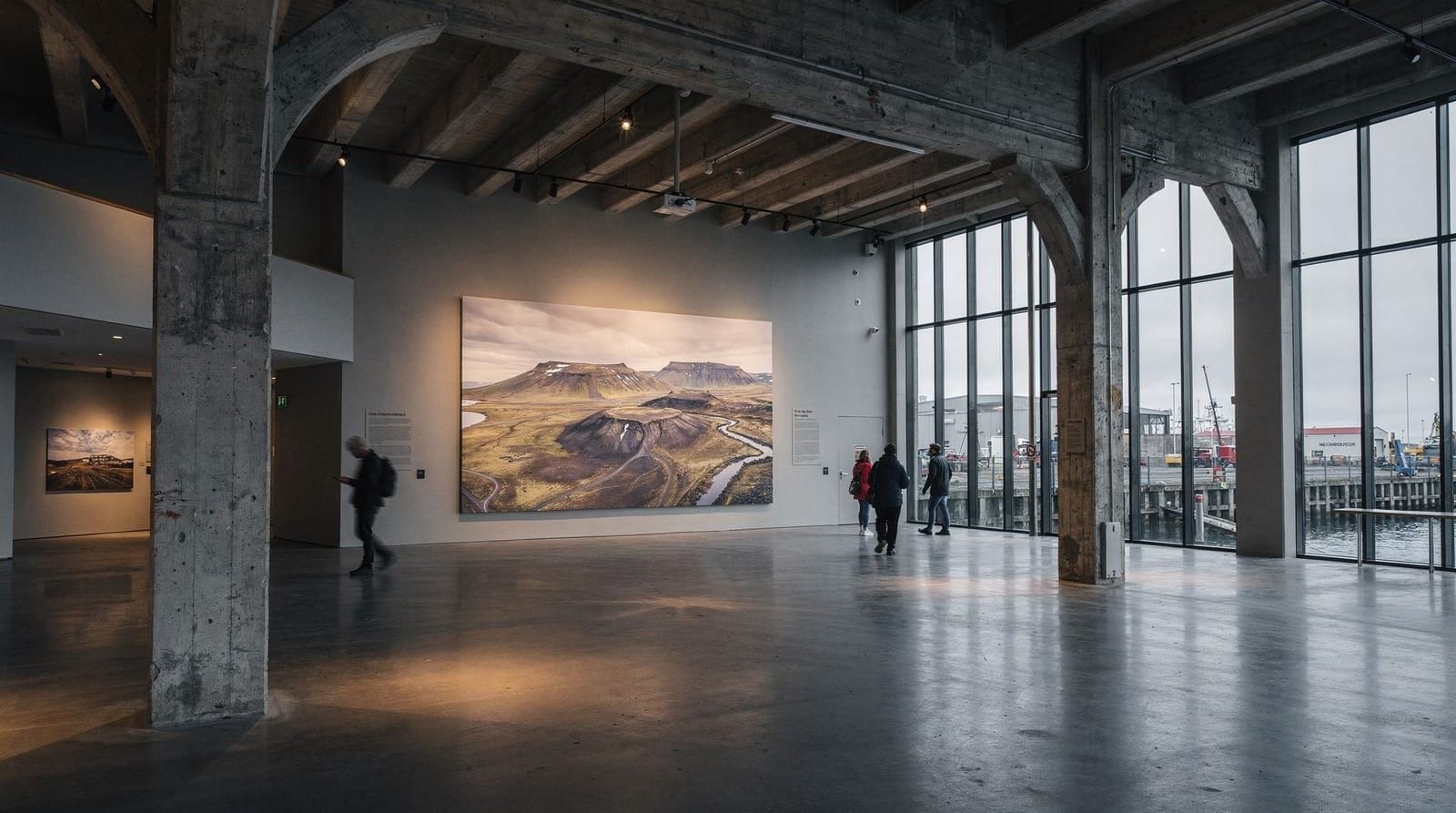
Reykjavík Maritime Museum (Grandagarður 8): The coast guard vessel Óðinn is moored outside — you can board it as part of the museum ticket. The harbour history and cod industry exhibits are interesting in the context of Iceland’s economic history.
Whales of Iceland (Fiskislóð 23–25): Life-size whale models of all species found in Icelandic waters. Admission around 4,300 ISK ($31 USD) per adult. Worth it for young children; borderline for adults without kids.
A guided walking tour of central Reykjavík is a practical way to connect the scattered landmarks — harbour area, old town, up to Hallgrímskirkja — with the contextual information that makes each site meaningful rather than just a building to photograph.
Tjörnin — The Pond
Central Reykjavík, adjacent to City Hall.
Tjörnin is the small lake in central Reykjavík, bordered by the City Hall (Ráðhúsið) on one side and the old residential streets on the other. It is a genuine urban lake with ducks, Arctic terns, and a nesting population of various waterfowl. In winter it partially freezes and locals skate on it.
The City Hall (Ráðhúsið) has a free-access ground floor with a large three-dimensional relief map of Iceland — useful for understanding Iceland’s topography before a driving trip.
The National Theatre and Austurvöllur
The Þjóðleikhúsið (National Theatre) on Hverfisgata is Iceland’s main theatre venue. Performances are in Icelandic; some productions have surtitles for Icelandic visitors but rarely for foreign tourists. The building (1950) is architecturally ordinary.
Austurvöllur square, in front of the Alþingi (Parliament Building), is Reykjavík’s central civic space — site of political demonstrations, summer markets, and the central Christmas tree. The Parliament building itself (1881) is the oldest public building in Reykjavík and small by capital city standards, reflecting Iceland’s modest population and parliamentary tradition.
A hop-on hop-off bus covers Reykjavík’s main landmarks in a continuous loop with audio commentary — a practical option for visitors with limited mobility or very limited time who want an efficient orientation.
Reykjavík neighbourhoods beyond the tourist centre
Visitors who spend time only on Laugavegur and the immediate tourist centre miss Reykjavík’s residential character. Several neighbourhoods within walking distance have distinct identities:
Vesturbær (West Quarter): The oldest residential area west of the city centre. Quiet streets, the Vesturbæjarlaug outdoor pool (genuinely local, rarely touristy), and views of the Esja mountain. The National University Hospital area has mature trees — unusual in Iceland.
Laugardalur: The recreational heart of the city. The large outdoor swimming pool (Laugardalslaug), Reykjavík Botanical Garden, zoo and family park, the Ásmundarsafn museum, and sports facilities. Less tourist-facing but entirely welcoming to visitors.
Grandi (harbour district): The fastest-changing neighbourhood, former fishing industry warehouses now converted to restaurants, galleries, and creative businesses. The Marshall House (Hús listamanna) is the art world hub.
Breiðholt: Large eastern suburb with a significant immigrant community. The diversity of food options here — not on the standard tourist circuit — is greater than in the old town.
Kópavogur: Adjacent municipality south of Reykjavík, largely indistinct from the capital visually, with Iceland’s second-largest shopping centre and the Natural History Museum of Kópavogur (focused on geology and natural history).
The changing Reykjavík skyline
Reykjavík’s skyline is shifting as new buildings rise on the harbour area and in the expanding residential districts. The most significant recent additions:
Harpa Concert Hall (2011): Discussed above. The most architecturally significant building in Iceland.
Reykjavík District Court Building (Þinghúsið): A recent civic building that has received criticism for its departure from the low-rise character of the adjacent old town.
Smáralind (Kópavogur) and Kringlan (east Reykjavík): Iceland’s two main shopping centres, both well outside the tourist centre. Functional and useful for practical purchases (outdoor gear, electronics) at lower tourist-markup prices than Laugavegur shops.
The ongoing harbour development on the east side of the old harbour, including the proposed Reykjavík Concert and Conference Centre expansion, is the major pending change to the city’s character. Planning permission debates have run for years.
Walking the Skólavörðustígur hill
The street that climbs from the city centre to Hallgrímskirkja — Skólavörðustígur — is worth walking for its own sake. Independent shops, bookstores, galleries, and a couple of good coffee options line both sides. It is one of the few streets in central Reykjavík where the tourist commercial strip gives way to genuine mixed-use local character.
The Alþingi building and Iceland’s democratic tradition
The Alþingi (Parliament) building on Austurvöllur square is a small but historically significant structure. The current building (1881) is modest in scale — appropriate for a parliament serving 380,000 people — but the institution it houses is the continuation of the world’s oldest parliament, established at Þingvellir in 930 CE.
The Alþingi is directly accessible to citizens in a way that reflects Iceland’s egalitarian political culture. Parliamentary sessions are open to the public when the chamber is in session (check althingi.is for session dates). The formal guards and barriers common around legislatures in larger countries are minimal here.
Iceland’s political history includes specific milestones worth knowing:
- 1944: Iceland declared independence from Denmark during Germany’s occupation of Denmark — a declaration made at Þingvellir on June 17
- 1980: Vigdís Finnbogadóttir became the world’s first democratically elected female president — and was re-elected three times
- 2009–2013: The “Hrun” (collapse) following the 2008 financial crisis led to what became known as the Kitchenware Revolution — protests outside the Alþingi with cookware percussion that forced a new election
Reykjavík’s geothermal infrastructure
The city’s visible infrastructure reveals Iceland’s unusual energy character. The hot water towers on Öskjuhlíð hill (on which Perlan sits) store heated water from geothermal sources. Nearly all Reykjavík buildings are heated geothermally — there is no central heating burning fossil fuel in the city.
Hot water runs from every tap in Iceland. The slight sulphurous smell in some taps (particularly in older buildings or in certain areas) is from hydrogen sulphide in geothermal water — harmless but unmistakable. Cold water comes from mountain springs and is often described as some of the best drinking water in the world.
The Hellisheiðarvirkjun geothermal power plant on the Reykjanes Peninsula is Iceland’s largest. It powers significant portions of the country’s electricity demand and heats Reykjavík. Guided tours of the plant are available (admission around 2,500 ISK / $18 USD) for those interested in the mechanics of geothermal energy.
Reykjavík’s architectural layers
Reykjavík’s architecture reflects the rapid development of the 20th century more than any pre-modern tradition. Most Icelandic buildings before the 20th century were turf houses, which have not survived at scale. The oldest surviving buildings in Reykjavík date to the 19th century.
Notable architectural layers:
Concrete functionalism (1920s–1950s): Reykjavík’s post-World War I expansion produced utilitarian concrete buildings with relatively little decoration. The old town’s side streets contain examples.
Post-war expansion (1950s–1970s): Rapid development tied to fishing industry wealth and American military presence. Practical but not architecturally distinguished.
Contemporary period (1990s–present): Harpa Concert Hall represents the high-water mark of recent architectural investment. Various residential and commercial developments have raised standards significantly in the last decade.
Turf house traces: The National Museum has reconstructed examples of traditional Icelandic turf buildings — the actual form of domestic architecture that housed most Icelanders until the early 20th century.
Videy Island — a half-day from the harbour
Viðey Island sits in Kollafjörður bay, visible from Reykjavík, accessible by ferry (Skarfabakki ferry pier, adjacent to Sundahöfn harbour). The 10-minute ferry runs several times daily in summer.
On the island:
- Iceland’s oldest stone building (Viðeyjarstaður, 1755) — former home of the governor
- Richard Serra’s large-scale sculpture Áfangar
- John Lennon and Yoko Ono’s Imagine Peace Tower — a column of light projected from Viðey each October 9 (Lennon’s birthday) through December 8 (date of his death)
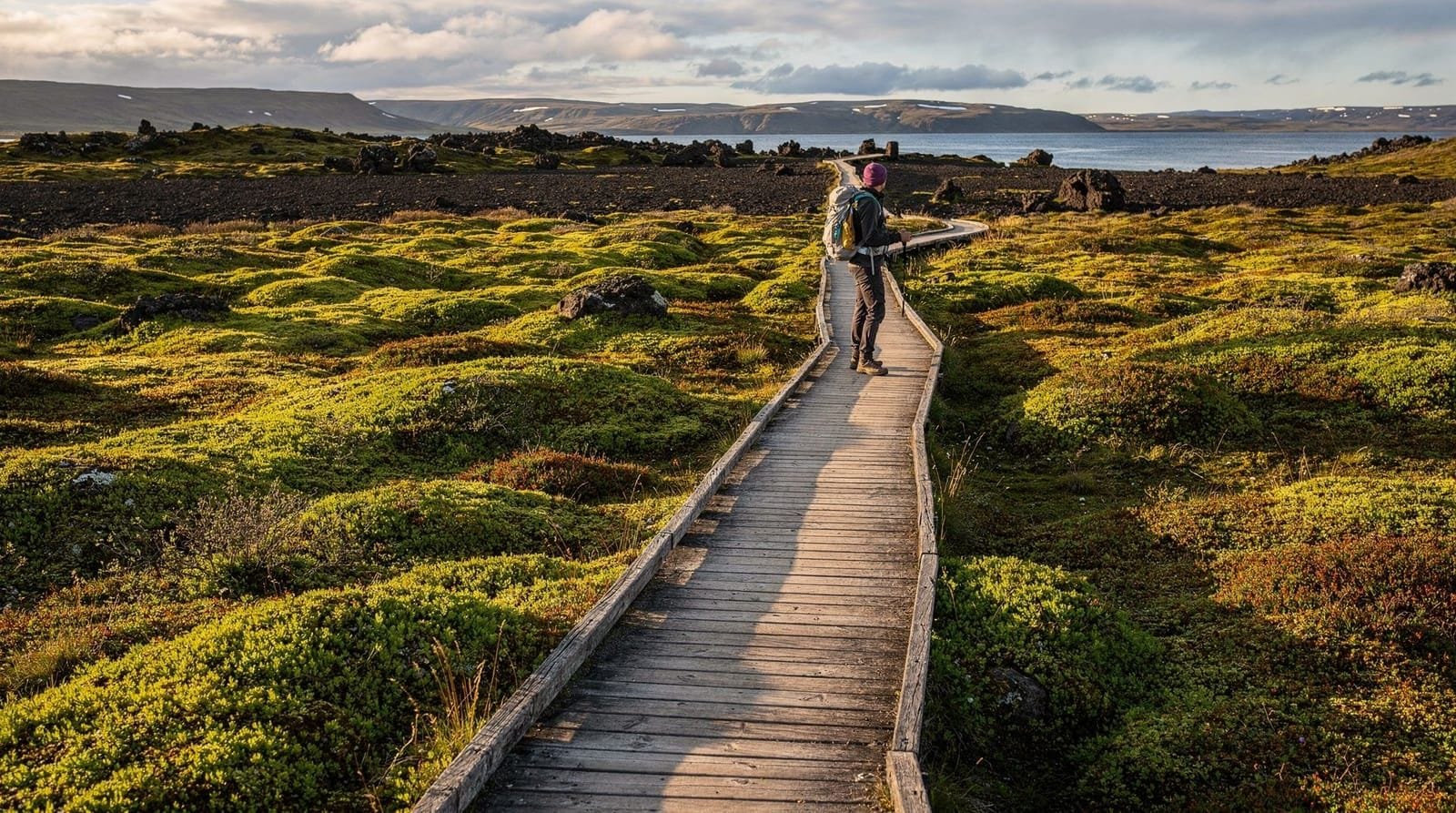
- Walking paths, seabirds, and harbour seal sightings possible
Viðey is a 2–3 hour side trip that most visitors to Reykjavík skip. It is genuinely worthwhile for the peace, the art, and the perspective on the city from the water.
Selfoss and south Iceland town centres
Most visitors drive through south Iceland towns without stopping beyond fuel and coffee. Several have specific cultural interest:
Hveragerdi: The geothermal greenhouse town 45 minutes south of Reykjavík. The town’s heating and horticulture are entirely geothermal — tomatoes, cucumbers, and flowers grown in greenhouses heated by earth heat. The Reykjadalur hot spring river hike starts here. A small earthquake exhibition in the town covers the seismic activity the area experiences.
Selfoss: The main service centre for south Iceland. Unremarkable architecturally but worth knowing as the location of the main services (supermarkets, banks, fuel) before the more remote south coast stretch.
Vík: The southernmost village in Iceland, a remarkably positioned small town under a black sand hillside. The church on the hill above Vík is architecturally simple but visually prominent — featured in many Vík photographs. The town survives largely on tourism now; it has a strong concentration of guesthouses, restaurants, and outdoor equipment rental for the south coast.
Höfn: The largest town in southeast Iceland, at the base of the Vatnajökull glacier expanse. Höfn’s langoustine fishery makes it genuinely the best place to eat langoustine in Iceland — local restaurants serve fresh catches that are more expensive when freighted to Reykjavík. The Langoustine Festival (Humarhátíð) in late June is a local event with limited tourist overlay.
The Ring Road’s architectural character
The Ring Road passes through Iceland’s main architectural variety — from Reykjavík’s urban concentration to the scattered farmsteads of the interior. Notable architectural features:
Turf house remnants: A few restored turf houses (torfbæir) survive along the Ring Road circuit. The most accessible is at Keldur on the south coast (signposted), which has an original medieval turf farm structure.
Farm architecture: Icelandic farm buildings are functional concrete structures from the 20th century — not picturesque by European standards but specific to the Icelandic agricultural character.
Petrol stations as cultural markers: Iceland’s N1 stations are architectural constants of the Ring Road — identical design, reliable coffee, usually the only commercial building for many kilometres. They function as community centres in remote areas.
Frequently asked questions about Reykjavík landmarks
How long does Hallgrímskirkja take to visit?
Allow 30–45 minutes including the tower elevator queue and ride. If you attend an organ concert or spend time in the area, budget longer.
Is Harpa free to enter?
The lobby and public areas of Harpa are free during operational hours. Concerts and events have their own ticket prices. Check the Harpa website (harpa.is) for the current schedule.
Is Perlan worth visiting for adults without children?
The observation deck gives good views and is worth the smaller entry fee. The full museum ticket is primarily aimed at visitors who want an introduction to Iceland’s geology and aurora — if you will see those things in person during your trip, the museum exhibits are less necessary.
Can you go inside the Parliament building?
The Alþingi is open to the public for scheduled tours during non-session periods. Check the Alþingi website (althingi.is) for current tour availability.
Is street art worth seeking out in Reykjavík?
Yes, particularly along Hverfisgata and in the streets between the main bus terminal (BSÍ) and the old town. The Reykjavík Street Art Map (streetartreykjavik.is) documents current pieces. Some of the larger murals are internationally commissioned and significant.
How much time should I budget for Reykjavík’s landmarks overall?
Half a day covers Hallgrímskirkja, Harpa, and the Sun Voyager comfortably on foot. A full day adds Perlan, the Old Harbour museums, and time to walk Skólavörðustígur properly. Add a half-day more for Viðey Island if it’s included.
Can I see the main landmarks without walking much?
Yes — the hop-on hop-off bus loop covers Hallgrímskirkja, Harpa, the harbour area, and Perlan with minimal walking, which suits visitors with limited mobility or very tight schedules.
Reykjavík’s landmarks in winter vs summer
Summer (June–August): Hallgrímskirkja tower queues are longest, but the near-24-hour daylight means an 11pm visit gets you the view with almost no one else around. Harpa’s honeycomb facade is at its most photogenic in the long golden-hour light. Sun Voyager is busy with joggers and cyclists on the harbour path.
Winter (November–March): Shorter daylight (as little as 4–5 hours around the solstice) compresses sightseeing into a tighter window, but the tower view over a snow-covered city and fjord is genuinely striking. Harpa’s lit facade is more dramatic against the dark winter sky. The Old Harbour area is quieter, and Perlan’s observation deck gives a good vantage for spotting aurora activity if conditions align, though it isn’t a dedicated aurora-viewing site.
Shoulder seasons (September–October, April–May): A reasonable middle ground — daylight is workable, crowds at Hallgrímskirkja are noticeably thinner than peak summer, and outdoor walking between sites remains comfortable with a proper jacket.
Practical costs for a landmarks day
Budgeting for a Reykjavík landmarks day is straightforward since most sites are free or low-cost:
| Site | Cost |
|---|---|
| Hallgrímskirkja tower | ~1,400 ISK per adult |
| Harpa lobby | Free |
| Sun Voyager | Free |
| Perlan observation deck only | ~1,100 ISK per adult |
| Perlan full museum ticket | 3,900–5,900 ISK per adult |
| Whales of Iceland | ~4,300 ISK per adult |
| Reykjavík Maritime Museum | ~2,300 ISK per adult |
| Viðey Island ferry | ~2,000–2,500 ISK return |
A full landmarks day covering the tower, Perlan’s observation deck, and the Maritime Museum runs approximately 4,800–5,500 ISK per adult — modest compared to most guided tours or nature-based excursions elsewhere in Iceland.
Building a one-day Reykjavík landmarks itinerary
For visitors with a single day in the city before or after the Ring Road, a practical order that minimises backtracking:
Morning (9–11am): Hallgrímskirkja tower first, before the queue builds — walk down Skólavörðustígur toward the centre, browsing shops on the way.
Late morning (11am–1pm): Old Harbour area — the Maritime Museum, Whales of Iceland if travelling with children, and lunch at one of the harbour food vendors.
Early afternoon (1–3pm): Harpa and the Sun Voyager along the waterfront path, then Tjörnin and the City Hall relief map for orientation before a Ring Road trip.
Late afternoon (3–5pm): Perlan for the observation deck and, if time allows, the Wonders of Iceland exhibition — golden hour light from the dome is a good way to end a walking day.
This order follows the natural geography of central Reykjavík (hill to harbour to hill) and avoids the common mistake of crossing back and forth across the city centre multiple times.
Top experiences
Bookable activities with verified prices and instant confirmation on GetYourGuide.
Top experiences
Best-rated activities across GetYourGuide and Viator.

Airport Transfer: Keflavik Airport to Reykjavik Center in Iceland
- Viator

From Reykjavik: Snaefellsness Peninsula small group day tour
- Viator

Ice Cave and Glacier Walk into Blue Glacier Canyon
- Viator

Small-Group South Coast & Glacier Hike Tour from Reykjavik
- Viator

Sólheimajökull Ice Climbing and Glacier Walk
- Viator

From Reykjavik: Katla Ice Cave and South Coast Day Tour
- Viator