Viðey Island — Reykjavík's quiet island retreat
Guide to Viðey Island near Reykjavík: ferry access, Imagine Peace Tower, bird watching, Iceland's oldest stone building, and practical visit planning.
Reykjavik: Guided city walking tour
Quick facts
- Best time to visit
- May to October (ferry season); Oct 9 for Imagine Peace Tower lighting
- Days needed
- 2–4 hours
- Getting there
- 5 min ferry from Skarfabakki pier (7 km from central Reykjavík)
- Budget per day
- Ferry ~2,200 ISK / €15 return; island entry free
Viðey at a glance
Viðey (pronounced roughly “vith-ay”) is a small island of about 1.7 square kilometres in Kollafjörður Bay, visible from Reykjavík’s waterfront and a 5-minute ferry ride from Skarfabakki pier in Kópavogur — approximately 7 kilometres from central Reykjavík. The island is uninhabited year-round (a caretaker lives there seasonally) and is owned by the City of Reykjavík, which maintains it as a nature reserve and public green space.
It is not a dramatic destination in the way that Iceland’s waterfalls, glaciers, and volcanic landscapes are dramatic. Viðey is instead a quiet, historically layered place to walk, watch birds, look at modern public art, and hear less noise than the city. For visitors spending multiple days in Reykjavík, it makes a good half-day that differs fundamentally in character from city sightseeing.
| Where | Kollafjörður Bay, 5-min ferry from Skarfabakki pier, ~7 km from central Reykjavík |
| Cost | Ferry around 2,200 ISK / €15 return (adult); island entry free |
| Time needed | 2–3 hours for a relaxed visit; add an hour for birdwatchers |
| Getting there | Ferry only — no bridge or causeway; 10-min taxi or bus 16 to Skarfabakki |
| Best time | May–September for ferry service; October 9 for the Imagine Peace Tower lighting |
Getting there: ferries
Elding whale watching company and the City of Reykjavík jointly operate the Viðey ferry service. The ferry departs from three locations:
- Skarfabakki pier (Kópavogur, 7 km from city centre) — runs year-round in summer season, most frequent departures
- Harpa Concert Hall pier (city centre waterfront) — summer only, fewer departures
- Sundahöfn harbour — summer only
Check the current schedule on the Viðey ferry website (videy.com) as schedules vary significantly by season. Outside the main tourist season (approximately May to October), ferry service is reduced or suspended; the island has been accessible in winter via special events only. The ferry crossing takes approximately 5 minutes.
Return ticket price is approximately 2,200 ISK (€15) for adults and 1,100 ISK (€7.50) for children. Note that this is a round-trip ticket; there is no accommodation on the island, and you must take a return ferry before service ends. Check the last departure time carefully — missing the last ferry back means a problem.
Imagine Peace Tower
The island’s most internationally recognised feature is the Imagine Peace Tower — a wishing-well monument commissioned by Yoko Ono as a memorial to John Lennon. It was inaugurated on October 9, 2007, which would have been Lennon’s 67th birthday.
The monument is a white stone tower with the words “Imagine Peace” engraved in 24 languages. At its base are two wells — one accepting wishes written on paper, one containing water. When lit, the monument projects a column of white light skyward from a specially designed apparatus, visible on clear nights for considerable distances across the Reykjavík sky.
The light is activated on John Lennon’s birthday (October 9) and remains lit for approximately 3 weeks, typically through late October. It is also lit for the winter solstice period. The lighting ceremony on October 9 draws visitors to both the island and the Reykjavík waterfront, where the beam is visible from the city. See the official schedule on imaginepeacetower.com for exact lighting dates each year.
Outside the lighting periods, the tower itself is present as a structure and garden but does not project light. The stone tower and the wells are still worth seeing — Yoko Ono designed the installation as a permanent garden, and the surrounding stones and inscriptions have their own presence.
Viðey’s historical buildings
Viðeyarstofa (the main house on the island) was built in 1755 as the residence of the first Sheriff of Iceland, Skúli Magnússon, who chose Viðey as the location for his official residence and a new monastery-adjacent administrative centre. It is now considered the oldest surviving stone building in Iceland — a distinction that gives it genuine architectural significance for a country where most historic structures were built from turf.
The building currently functions as a café (open on days when ferries run), serving coffee, skyr, and light food at prices comparable to Reykjavík city cafes (coffee 600–900 ISK / €4–€6, light meals 1,500–2,800 ISK / €10–€19). Sitting in an 18th-century stone building on a small island while looking across the water to Reykjavík is an unusual experience by any standard.
Viðey Church, adjacent to Viðeyarstofa, was completed in 1774 and is the second-oldest stone church in Iceland. Services are occasionally held here; during regular visit hours it can be entered (donations accepted). The interior is plain but proportionate.
Nature and bird watching
Viðey is a significant bird area during summer. Arctic terns nest on the island in considerable numbers from May to August — visitors walking the northern paths will encounter dive-bombing adults protecting nests. This is entirely predictable and the terns are not dangerous (the dive feels more alarming than it is), but a hat is practical. Do not approach nests directly.
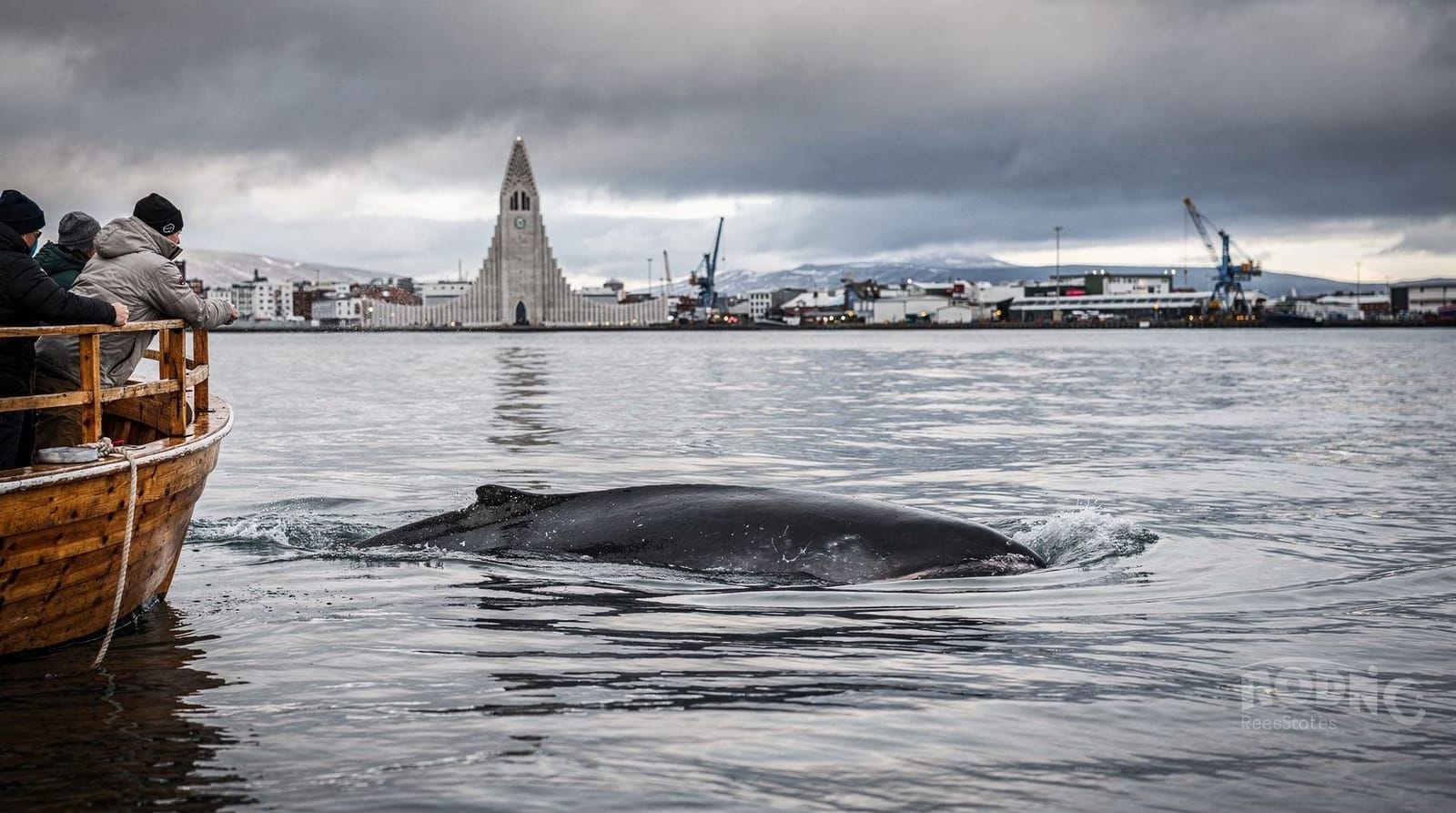
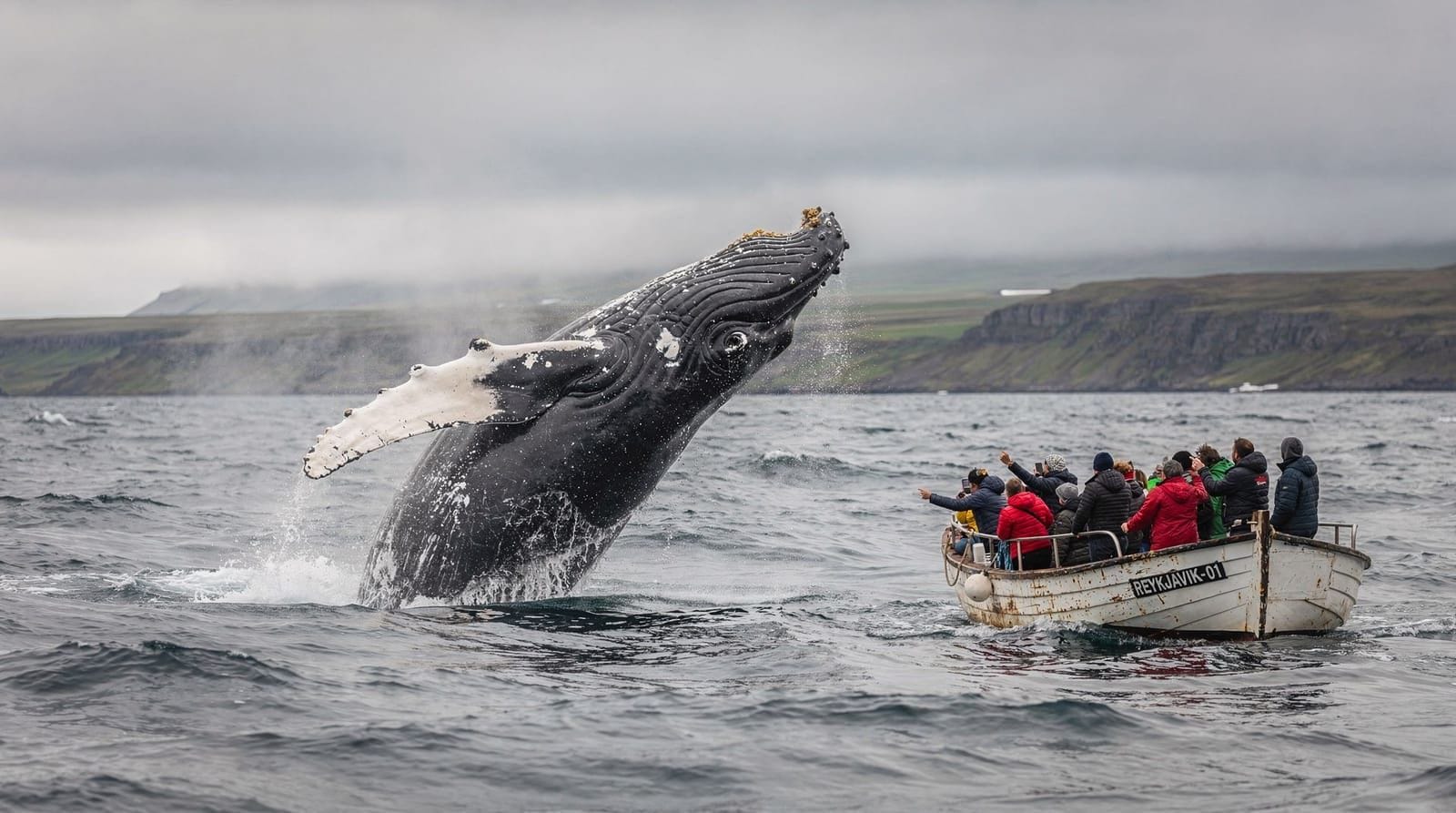
Eider ducks use the sheltered coves; oystercatchers and various waders are common on the shoreline. The island sits on the edge of Faxaflói Bay, which is one of the prime whale watching zones used by tour operators departing from Reykjavík’s Old Harbour. From the northern shore, minke whale sightings are occasionally possible, though whale watching tours from the Old Harbour are a more reliable option — see the whale-watching-reykjavik guide.
Puffin watching boat tour from Reykjavík harbourWalking the island
Viðey is small enough to walk entirely in 2–3 hours. Marked paths (mostly unpaved gravel and grass tracks) circle the main island and cross through the central valley. There are no difficult sections — this is flat island walking, not a hike. The Richard Serra sculptures (created in 1990) are positioned along the main walking axis: nine pairs of tall basalt columns arranged in two parallel rows across the western part of the island. Serra created them specifically for the Viðey landscape.
The eastern part of the island (Vesturey) is connected by a land bridge and is primarily flat grassland used by nesting birds. Access to nesting areas may be restricted in spring and early summer.
Waterproof footwear is practical — the grass paths can be muddy depending on recent rain.
What to bring and practical tips
The island has no shops. The café in Viðeyarstofa is the only food option. Bring water, snacks if you need them, and sun protection in summer. In midsummer, the sun is intense despite the northern latitude.
Wind is the constant variable. Even on calm Reykjavík days, the island is exposed to open water on three sides. A windproof outer layer is advisable in any season. Check the weather forecast for Reykjavík before going; if a storm is forecast, the ferry may not run and visibility will be poor.
The island is appropriate for children who can walk comfortably for 2–3 hours — no technical terrain, but no playground facilities either. The bird diving (terns) can be startling for small children.
Accessibility: The ferry boarding involves a standard gangway. Paths on the island are generally passable for most mobility needs on dry days, though they are not paved. The café in Viðeyarstofa is ground-floor accessible. Check with ferry operators about specific accessibility needs before booking.
Combining Viðey with other Reykjavík activities
Viðey pairs naturally with a morning in central Reykjavík followed by an afternoon ferry (ferries typically run multiple times from 11:30–17:00 in peak season), or with a visit to the Sky Lagoon (located 2 km from Skarfabakki pier) as part of a combined afternoon-evening. See the reykjavik-48-hours itinerary for a suggested structure.
The reykjavik-culture-guide lists Viðey among the recommended activities for visitors interested in art, history, and public space rather than outdoor adventure.
Art on the island: the Richard Serra installation
In 1990, American minimalist sculptor Richard Serra created a permanent installation on Viðey specifically designed for the island’s landscape. The work — titled Milestones — consists of nine pairs of columnar basalt stones positioned in two parallel east-west rows across the western portion of the island. Each pair stands about 1.5 metres tall.
Serra worked with the existing landscape topology to determine the placement: the rows are positioned to interact with the horizon and to create a changing visual sequence as you walk along and between them. The basalt used is the same geological material as the island itself, sourced locally.
For visitors familiar with Serra’s large-scale steel sculptures in urban settings (including the controversial Tilted Arc in New York), Milestones is a quieter, less confrontational work. The stones almost disappear into the landscape on a grey day, which is arguably the point — they become more visible as your eyes adjust to the island rather than announcing themselves. Allow time to walk the full length of both rows, and observe from different angles.
Fishing and maritime history
Viðey has a long pre-tourist history as a fishing and administrative centre. The island was inhabited continuously from the Viking age through the 20th century. The Viðey monastery — an Augustinian house founded in 1225 — was one of Iceland’s wealthiest religious institutions before it was dissolved during the Reformation in 1539, when its properties and wealth were confiscated by the Danish crown.
The monastery site is not visible above ground today, but archaeological excavations have identified its location on the northeastern part of the island. The Viðeyarstofa house built in 1755 by Sheriff Skúli Magnússon used stone from the medieval monastery in its construction — a continuity of material across five centuries.
Small-scale fishing continued on the island through the 20th century; the last full-time residents left in 1943. The harbour structures and some outbuildings visible near the ferry landing date from the farming and fishing period of the island’s history.
When the island is quiet
The most genuinely peaceful times to visit Viðey are early morning (first ferry, mid-week) or late afternoon on weekdays in shoulder season (May, early June, September). At these times, you may have large sections of the walking paths entirely to yourself. The bird life is more active and visible early morning; the light quality late afternoon can be very good for photography looking back toward Reykjavík’s skyline.
In peak summer (mid-July to mid-August), the mid-day ferries from Harpa bring large numbers of city visitors. The island is large enough to accommodate these numbers without feeling congested, but the café can have a queue and the bathing areas on the rocky shore can be occupied.
The best-day-trips-from-reykjavik guide puts Viðey in the context of other half-day options accessible without a car or major logistics from the city.
The view back to Reykjavík
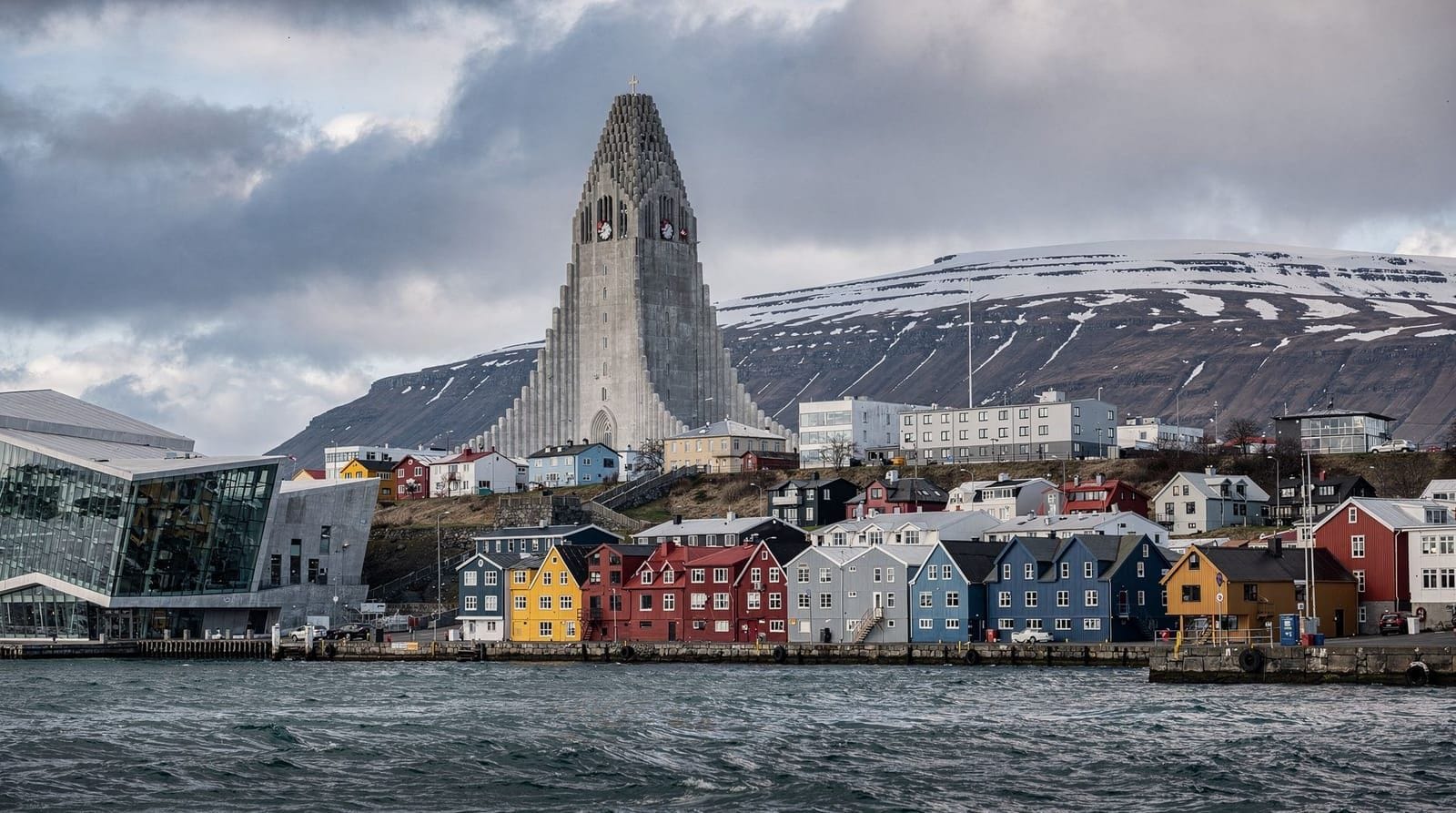
One underappreciated aspect of a Viðey visit is the view from the island back toward the Reykjavík skyline. From Viðey’s southern shore, the capital is spread across the opposite side of the bay: Hallgrímskirkja tower, Harpa Concert Hall’s glass facade, the Perlan dome, and the dense residential pattern of the city’s hillside. In the late afternoon, this view is well-lit and the distance (roughly 3 kilometres across the water) flattens the urban noise into something more visually coherent.
This is one of the few vantage points where Reykjavík reads as a city rather than a series of street-level impressions. Photographers shooting the skyline from the island in clear morning or evening light will get results that differ entirely from any city-based viewpoint. The iceland-photography-guide notes Viðey as a less-visited but effective location for Reykjavík skyline photography.
Getting to and from Viðey: practical logistics
The ferry schedule (check videy.com for the current season timetable) typically runs first departures from Skarfabakki at around 11:30, with the last return before 19:00 or 20:00 in peak season. Departures from Harpa run only in summer with fewer daily sailings.
Getting to Skarfabakki from central Reykjavík: a 10-minute taxi (typically 1,500–2,500 ISK / €10–€17), bus line 16 from Hlemmur to Eiðistorg and a 15-minute walk, or cycling on Reykjavík’s bike-sharing infrastructure. The pier is not particularly convenient without a vehicle — budget 30–40 minutes from central Reykjavík to the ferry departure.
Tickets can be purchased at the pier or online (recommended in peak season). The ferry itself is a small vessel — weather can affect operations. If conditions are rough (Beaufort 5 or above in the bay), check with the operator before making the journey to the pier.
Viðey compared to other Reykjavík half-day options
Viðey is one of several ways to fill a spare half-day around Reykjavík, and it is worth knowing how it stacks up before committing the time.
| Option | Time needed | Cost (approx.) | Best for |
|---|---|---|---|
| Viðey Island | 2–3 hours | 2,200 ISK ferry | Quiet walking, art, history, birdwatching |
| Sky Lagoon | 2–4 hours | From ~14,900 ISK | Geothermal bathing, ocean views |
| Blue Lagoon | 3–5 hours incl. transfer | From ~13,000 ISK | Iconic geothermal spa, near the airport |
| Reykjavík whale watching | 3 hours | From ~13,000 ISK | Wildlife, open-water experience |
Viðey is the cheapest of these by a wide margin and the only one that rewards silence rather than activity — it suits travellers who want a genuine change of pace rather than another paid attraction. If your half-day budget only stretches to one of these, choose Viðey when you have already done a Golden Circle or South Coast day and simply want a slow morning; choose the Sky Lagoon or Blue Lagoon if physical relaxation matters more than scenery. The reykjavik-stopover-3-days itinerary shows how Viðey fits alongside these options across a longer city stay.
Frequently asked questions about Viðey Island
When does the Imagine Peace Tower light up?
The tower is lit annually on October 9 (John Lennon’s birthday) and remains active for approximately 3 weeks, typically through late October. It is also lit for the winter solstice and related dates. The beam is visible from Reykjavík city centre on clear nights. Check imaginepeacetower.com for the exact schedule each year.
Is the island accessible in winter?
Ferry service is reduced significantly outside the May–October tourist season and may be suspended in winter. The Imagine Peace Tower lighting in October is a special event that typically triggers ferry runs. For current winter access, check with the City of Reykjavík’s ferry operator directly. The island itself is not open for general visiting in deep winter.
How long should I plan for a Viðey visit?
Two to three hours is comfortable for most visitors: the walk around the island, time at the Viðeyarstofa café, the historical buildings, and the Imagine Peace Tower. If you’re a birdwatcher or interested in the Serra sculptures in detail, add another hour. The last ferry back determines your maximum time.
Is there food on Viðey Island?
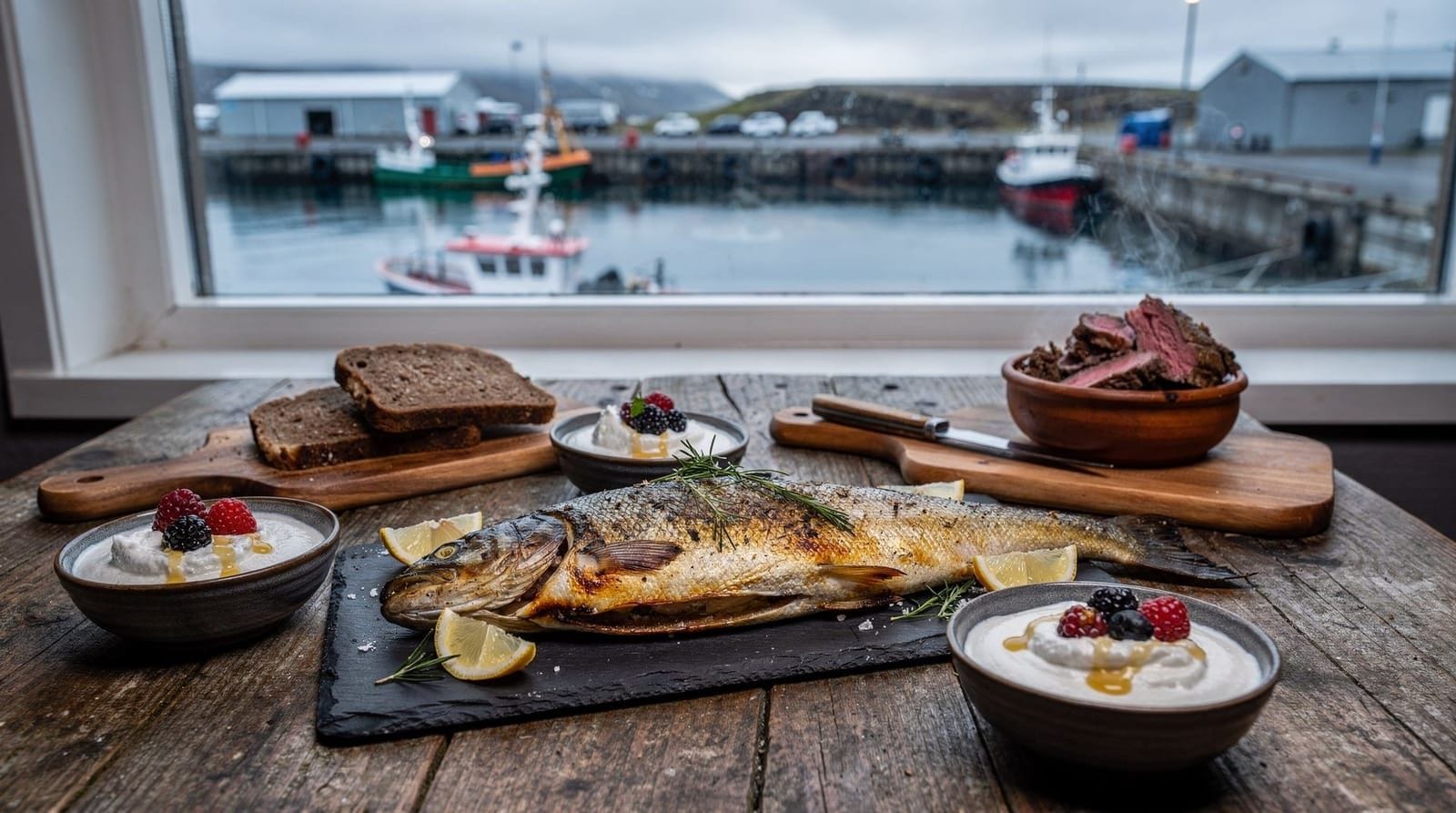
Only the café in Viðeyarstofa, which opens when ferries run. It serves coffee, skyr, soup, and light Icelandic food. It is not a restaurant where you’d plan a main meal. Bring snacks if you need more than light refreshment.
Is Viðey worth visiting for most Iceland tourists?
For first-time Iceland visitors with limited time, Viðey is probably not a priority — it does not offer the natural dramatic landscapes most people come to Iceland to see. For visitors spending several days in Reykjavík, repeat visitors, or those interested in art, history, and peaceful walking rather than geothermal or adventure activities, it is a genuinely rewarding few hours.
Can I see puffins from Viðey?
Puffins nest in several areas around Reykjavík, including Lundey island (visible from Reykjavík’s harbour). Viðey does not have a major puffin colony. For reliable puffin sightings, dedicated puffin watching boat tours from the Old Harbour (May–August) are more effective.
Top experiences
Bookable activities with verified prices and instant confirmation on GetYourGuide.
Top-rated experiences in Viðey Island — Reykjavík's quiet island retreat
Best-rated activities across GetYourGuide and Viator.

Private Silfra Snorkeling 6 p. group - Meet on Location - with Underwater Photos
- Viator

Private Jökulsárlón Glacier Lagoon 2 Day Tour & Glacier Hike
- Viator

Private 2-Day Glacier Lagoon, Ice Cave and Northern Lights
- Viator

Reykjavík All In One Food Tour - Eat, Drink & Explore with Locals
- Viator

Reykjavik Private Northern Lights Tour with Pro Photographer
- Viator

Reykjanes Peninsula Private Day Tour - up to 9 passengers
- Viator