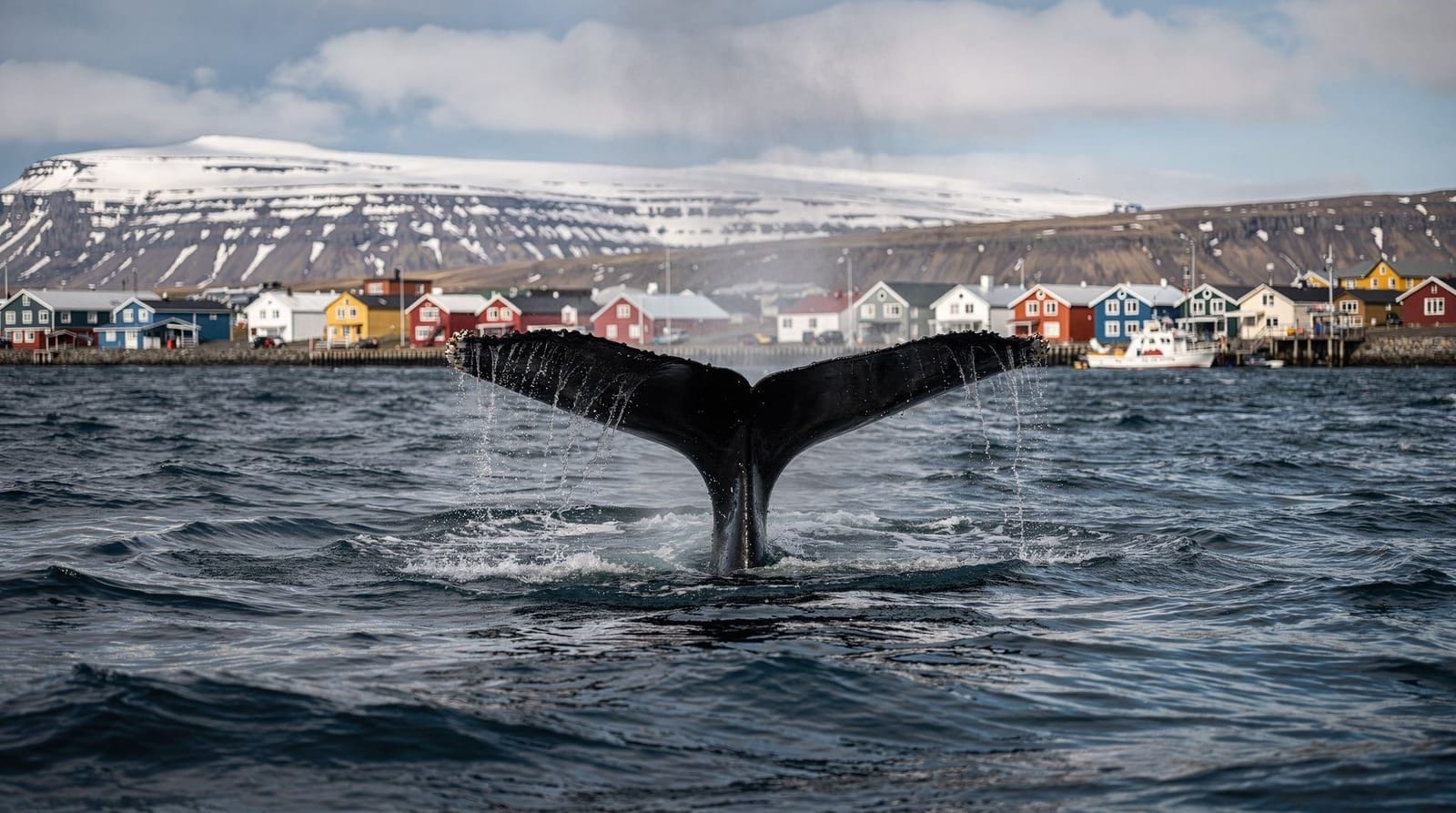
Whale watching from Reykjavík — tours, tips and honest expectations
Reykjavik: Original 3 hour whale watching
Duration: 3 hours
Is whale watching from Reykjavík worth doing?
Yes, particularly from May to September when success rates are 85–90%. You will most likely see minke whales, white-beaked dolphins, and harbour porpoises. Humpbacks appear but less reliably than in Húsavík. The big advantage is convenience — boats leave from the Old Harbour, a 10-minute walk from the city centre.
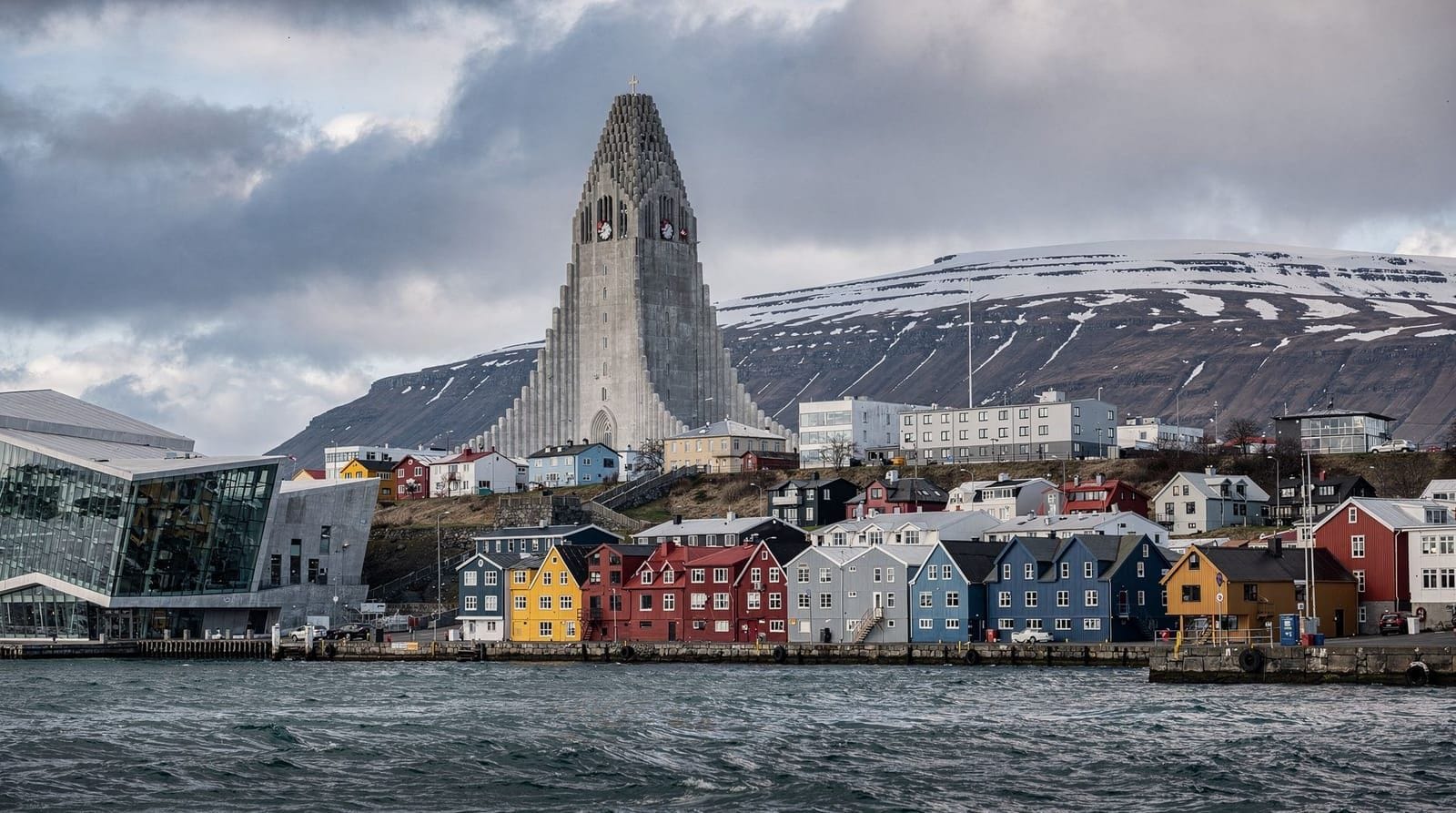
The departure point for whale watching from Reykjavík is the Old Harbour (Gamli Höfnin), a working harbour of fishing boats, seafood restaurants, and tour operator kiosks. It is genuinely close to the city centre — 10 minutes on foot from Tjörnin pond or 15 from Hallgrímskirkja — which makes whale watching here one of the easiest wildlife activities to add to a Reykjavík itinerary.
Faxaflói bay, where tours operate, is a sizeable open bay on Iceland’s southwest coast. It is not the whale hotspot that Húsavík’s Skjálfandi Bay is, but it holds minke whales, dolphins, and occasionally humpbacks throughout the summer. For many visitors, a Reykjavík whale tour delivers a genuinely satisfying wildlife experience without requiring any additional travel.
| Where | Old Harbour (Gamli Höfnin), 10 min walk from city centre |
| Cost | around ISK 12,900–14,500 (€84–95) per adult |
| Time needed | 2–3 hours on the water |
| Success rate | around 85–90% in summer |
| Best time | May–September; evening tours for golden-hour light |
What you will actually see
Minke whales are the core expectation. These small baleen whales (7–10 m) are regularly present in Faxaflói from April through October. They are curious and will often approach boats, surfacing alongside at close range. Their characteristic white flipper patches and arched backs are distinctive.
White-beaked dolphins are a summer highlight — they travel in groups of 20–200 and frequently race alongside boats at high speed. When a pod intercepts the vessel, it is one of the more exhilarating wildlife moments available on a whale tour.
Harbour porpoises are in the bay year-round but are small (1.5–2 m) and inconspicuous. They are easy to miss unless the sea is flat calm and you know what to look for — a small dark fin rolling briefly at the surface.
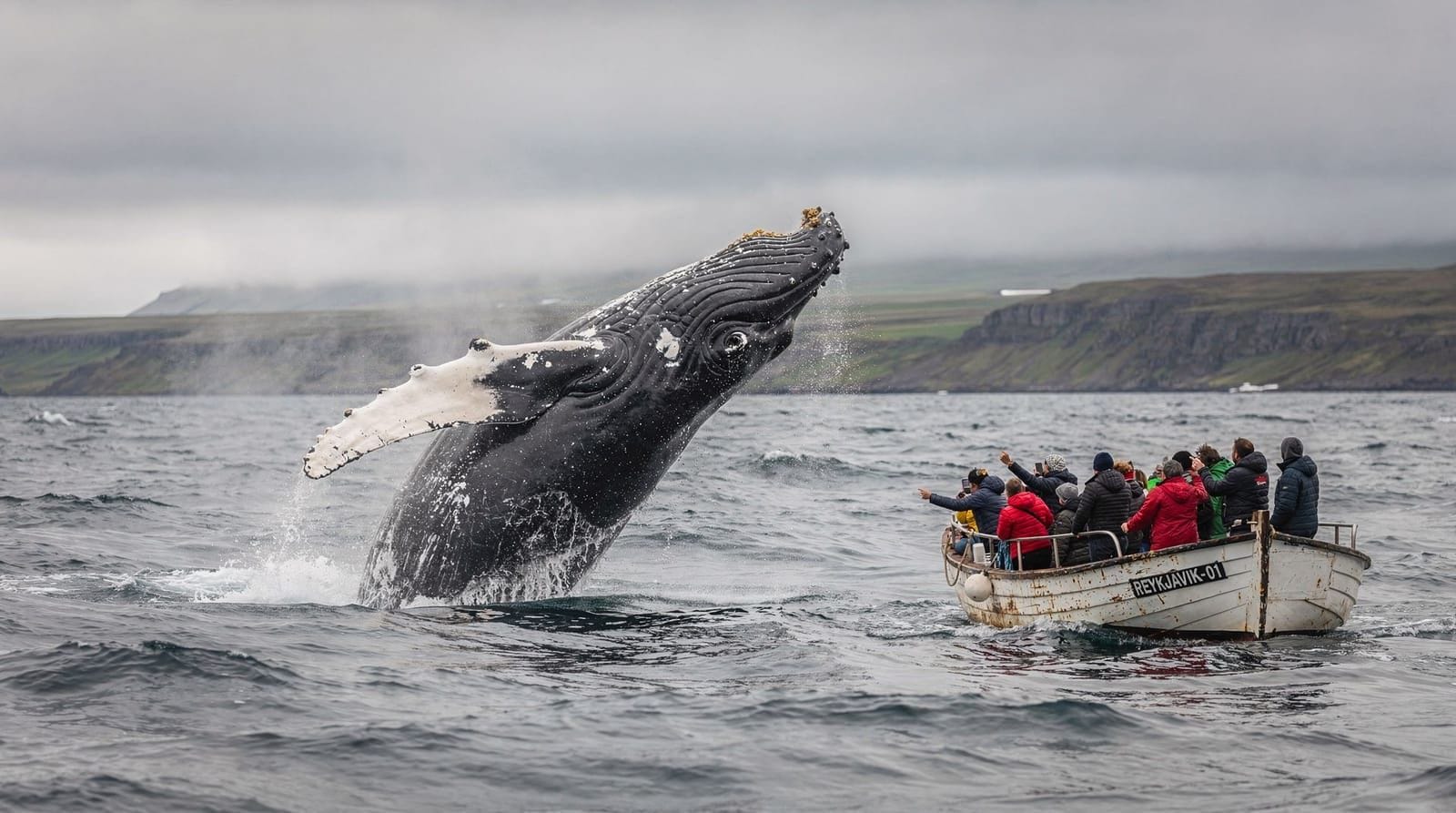
Humpback whales appear irregularly. In a good summer week, boats may see humpbacks every 2–3 trips; in quieter periods, they might go several days without one. If seeing humpbacks is your primary goal, Húsavík is the more reliable choice.
Other species: minke sightings sometimes include fin whales in Faxaflói. Killer whales are extremely rare on summer Reykjavík tours.
The main operators
Elding is the dominant Reykjavík operator, with four vessels and multiple daily departures. The original Elding boat has been running tours since 1999. Their marine biologists on board explain cetacean biology and identification in real time. The 3-hour classic tour departs from Ægisgarður pier and costs around 12,900 ISK (€84). Elding also runs the Puffin Express and a combo whale-and-puffin tour.
Reykjavík original 3-hour whale watching — departs Old Harbour, marine guide on board, guaranteed sighting or free returnWhale Safari runs smaller-boat tours with higher guide-to-passenger ratios. They emphasise educational content and are well-reviewed for guide quality on TripAdvisor and Google. Tours cost around 13,500–14,500 ISK (€88–95). A good option if you want a more intimate experience.
Special Tours runs RIB speedboat tours — 2-hour high-speed format with a maximum of 12 passengers per boat. Full floatation suits provided. The speed allows them to chase sightings across a wider area. Prices are similar to traditional boats, around 13,000–14,000 ISK (€85–91). Good for dolphin watching specifically.
Reykjavík speedboat whale watching — 2-hour RIB tour, max 12 passengers, full floatation suit includedWhale and puffin combo tours
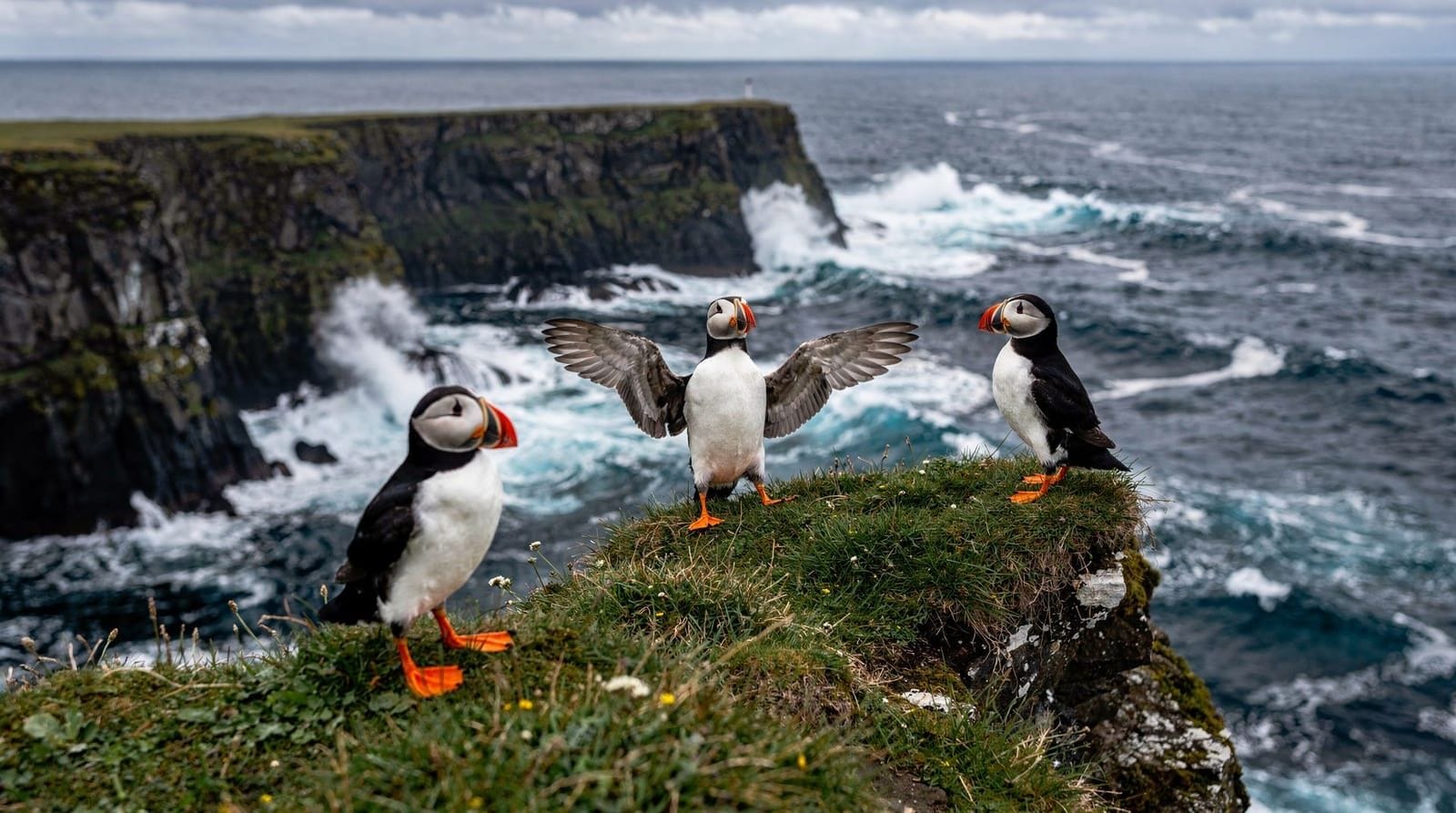
Several Reykjavík operators combine whale watching with a stop at Akurey (Puffin Island), a small island 4 km offshore that hosts a large Atlantic puffin colony. The combo tours are 2.5–3 hours and add meaningful value in the April–August puffin season.
If you are visiting in summer and interested in both species, the combo tour is clearly the better value choice over two separate bookings. See our dedicated puffin watching guide if puffins alone, rather than whales, are the priority.
Reykjavík whale watching and puffin excursion — 3-hour combo tour, Akurey puffin colony included, guides explain both speciesSuccess rates and seasonal expectations
| Season | Whale/dolphin sighting chance | Notes |
|---|---|---|
| May–June | ~85% | Minke arrivals, dolphins active |
| July–August | ~88–90% | Best conditions, humpbacks more likely |
| September | ~80% | Good conditions, some species departing |
| October–April | ~50–60% | Winter tours viable, higher weather risk |
Most operators offer a free return trip guarantee if no cetaceans are sighted. Elding and Whale Safari both honour this.
Booking and logistics
Tours depart from Ægisgarður pier at the Old Harbour. Most operators have booking kiosks at the pier, but online booking is cheaper and secures your preferred departure time. Peak July and August: book 2 days ahead for popular morning times (9:00–10:00). Other times: same-day booking is usually fine.
Classic tours run at 9:00, 13:00, and 17:00 in summer, with some operators adding an 11:00 departure on busy days. Evening tours in summer (17:00) are atmospheric — the golden light on the water is excellent for photography.
Dress for cold even in July — sea temperatures are around 10–12°C and wind chill is significant. Operators provide overalls; bring a thermal layer underneath. Waterproof shoes are useful.
From the Old Harbour to your tour
The Old Harbour is a destination in its own right — FlyOver Iceland (an immersive aerial experience), Saga Museum, Aurora Reykjavík, and Whales of Iceland are all within 200 m of the whale tour departure points. The harbour also has a concentration of good seafood restaurants including Sægreifinn (Sea Baron), famous for lobster soup and grilled fish skewers at very fair prices (around 1,700–2,800 ISK / €11–18 per dish).
For more things to do in Reykjavík, see our Reykjavík destination guide and the Reykjavík culture guide for museums and neighbourhoods beyond the harbour.
Should you do Reykjavík or Húsavík?
The honest summary:
- Already in Reykjavík and short on time → Reykjavík whale watching, absolutely worthwhile
- Wildlife is a trip priority and you have transport → Húsavík is substantially better
- Travelling with young children → Reykjavík is easier logistically; traditional boats work well for families
- Want to see humpback whales specifically → Húsavík in June–July is the correct choice
Frequently asked questions about whale watching from Reykjavík
Where exactly do the boats depart from?
Elding and most operators depart from Ægisgarður pier at the Old Harbour (Gamli Höfnin). GPS: 64.1538° N, 21.9380° W. There is a car park immediately adjacent (paid), and bus stops within 200 m. Walk west along the waterfront from downtown.
How far offshore do tours go?
Tours typically venture 10–25 km into Faxaflói bay, depending on where the cetaceans are located. In good conditions, the bay is flat and blue; in rougher weather, swells of 1–2 m are common. The trip out takes 20–40 minutes each way.
Is the Whales of Iceland exhibition worth visiting?
Whales of Iceland (near the Old Harbour) features 23 life-size blue-lit whale models at 1:1 scale — including a 25 m blue whale model hanging from the ceiling. It is visually impressive and well-suited to children. Admission around 3,200 ISK (€21). Elding offers a combo ticket (whale tour plus exhibition) at a discount.
Can I buy tickets at the dock on the day?
Yes — kiosks are open from around 08:00 in peak season. You may pay a slight premium over online prices (typically 500–1,000 ISK difference). In high summer, morning tours sometimes sell out at the dock.
What if the tour is cancelled due to weather?
Operators contact you by email/phone if conditions are unsafe. You can rebook or receive a refund. Light rain and moderate wind are not grounds for cancellation — only gale-force conditions (Beaufort 7–8+) prompt suspension.
Which departure time gives the best sightings?
There is no strong evidence that one departure time consistently outperforms another for sighting rates — cetacean activity in Faxaflói is driven more by tide and feeding conditions than time of day. What does vary reliably is light quality and comfort: morning departures (9:00) tend to have calmer seas before afternoon wind picks up, and evening tours (17:00) in June and July benefit from long, low, golden light that is noticeably better for photography than the flatter light of a midday tour.
Do I need to bring my own seasickness medication?
Most pharmacies in Reykjavík (Lyfja and Apótekarinn chains, both within walking distance of the city centre) sell over-the-counter motion sickness tablets without a prescription. Take them 30–60 minutes before boarding, as they are far less effective once symptoms have started. If you know you are prone to seasickness, sitting mid-vessel and keeping your eyes on the horizon rather than a phone screen also helps meaningfully. Ginger sweets, available at most Reykjavík supermarkets and petrol stations, are a mild supplementary option some travellers find helpful alongside (not instead of) proper medication.
The Old Harbour area beyond the whale tour
The departure point for Reykjavík whale watching is the Old Harbour (Gamli Höfnin), and the surrounding area warrants more than the 10 minutes most visitors spend walking to and from the boat.
FlyOver Iceland: an immersive aerial film experience using a motion-enhanced seated platform and spherical screen. You are “flown” over Iceland’s landscapes. Best pre- or post-tour activity for first-timers. Around 3,800 ISK (€25) per adult.
Whales of Iceland exhibition: the indoor 1:1 scale whale exhibition described above. Spending 45 minutes here before a tour dramatically improves your ability to recognise species and understand scale on the water.
Reykjavík Maritime Museum (Sjóminjasafn Íslands): exhibits the Coast Guard vessel Óðinn — a vessel with real history in the Cod Wars with Britain — and the history of Icelandic fishing. Admission around 1,900 ISK (€12). Worth 45 minutes for those interested in Icelandic maritime culture.
Sægreifinn (Sea Baron): the most recommended casual food on the Old Harbour — a small lobster soup and fish skewer kiosk that has been operating since 2003. Lobster soup is 1,600 ISK (€10); a fish skewer on a skewer (lambhúsar, minke whale, or catch of the day) is 1,200–1,600 ISK. The minke whale skewer is on the menu — a personal decision for each visitor given the whaling context discussed elsewhere on this site.
Íslenski Barinn: Icelandic street food restaurant 5 minutes’ walk from the harbour with excellent fish and chips, lamb soup, and Icelandic hot dogs at reasonable prices (1,200–2,400 ISK / €8–16 per dish). Better value than the Grandi area restaurants.
Understanding your sighting expectations
Guides on Reykjavík whale watching tours sometimes over-promise on what a sighting means. A realistic assessment:
A “minke whale sighting” typically means: the animal surfaces briefly (3–5 seconds visible), shows its back and dorsal fin, then dives. It may surface 2–4 times at unpredictable intervals over 20–30 minutes before disappearing. Close approaches (10–20 m) do happen, particularly when minkes are curious.
A “harbour porpoise sighting” may be: a brief dark fin rolling at the surface, visible for 1–2 seconds before submerging. Most people do not find this satisfying on its own. Porpoises are present on most trips but do not define the experience.
A “dolphin sighting” (white-beaked dolphins) is genuinely exciting — pods of 20–100 animals riding the bow wave or milling around the boat. When dolphins appear, the energy on the boat changes dramatically.
A “humpback sighting” from Reykjavík is unpredictable but when it occurs — fluke raises, potential breach, proximity — is the trip highlight. These are genuine bonus sightings rather than reliable expectations.
Knowing this helps calibrate the experience appropriately: a trip with minkes and dolphins is a good wildlife trip; a trip with a humpback is an exceptional one.
Reykjavík whale watching versus a day trip to Húsavík
The practical comparison for a visitor with limited time:
Reykjavík tour (3 hours, from the city centre, ~12,900 ISK):
- Convenient: no extra travel
- Species: minke, dolphin, porpoise (humpback occasional)
- Success rate summer: ~85–90%
- Suitable for: limited-time visitors, families staying in Reykjavík
Húsavík day trip (1 day including 4–5 hours driving + tour, ~25,000–35,000 ISK total):
- Requires planning and transport or a tour bus
- Species: humpback (reliable June–July), minke, dolphin, potential blue whale
- Success rate summer: 97–99%
- Suitable for: wildlife-focused travellers willing to make the trip
If you have two full days for activities from Reykjavík, consider using one for a whale watching day from Reykjavík and one for the South Coast or Golden Circle. If you are specifically prioritising whale quality, add a north Iceland leg and go to Húsavík.
See our whale watching in Iceland overview and Húsavík guide for comparative detail.
Whale watching for photography from Reykjavík
The technical considerations for whale photography from Reykjavík boats:
Lens choice: a 200–400mm zoom lens gives the most flexibility — long enough for decent fill when whales surface 20–40 m away, wide enough to capture close-range approaches. A 100–400mm equivalent (or a mirrorless camera with 5x optical zoom on a phone) is workable.
Shutter speed: whales surface and dive in 2–5 seconds. A minimum of 1/800s is needed to freeze motion; 1/1600s or faster is better on overcast days when the autofocus is challenged by flat contrast.
Where to position yourself on the boat: the bow is the best photography position — the angle allows you to photograph ahead of the boat’s direction, toward where the guide is watching. Avoid the stern (other passengers and exhaust). Mid-deck is a reasonable compromise.
When to expect the best sightings: the guide on a well-run tour is constantly communicating cetacean positions on a handheld radio network shared between all Reykjavík boats. When a sighting is confirmed, the boat will turn toward it. Stay alert during the 15–20 minutes before each surfacing sequence — this is when the guide’s body language signals incoming contact.
Photography in poor light: overcast Reykjavík days produce flat, unflattering light. A RAW file gives more recovery latitude than JPEG. Many visitors are disappointed by their phone photos from overcast whale tours — the scene looks better in person than in photographs under these conditions.
Child-friendly aspects of Reykjavík whale watching
The Reykjavík whale watching experience is particularly accessible for families:
Elding’s main vessels have fully enclosed heated salons, allowing children to stay warm while watching through large windows. This is the feature most parents appreciate — the ability to alternate between outdoor deck and indoor comfort as conditions change.
The 3-hour duration is manageable for children aged 6 and up. For younger children (3–5), the 1.5-hour puffin tour is more appropriate. Combination whale and puffin tours at 2.5–3 hours are the sweet spot for families wanting both species.
The Whales of Iceland exhibition (near the Old Harbour) is specifically well-designed for children — the 1:1 scale blue whale model is genuinely awe-inspiring for younger visitors, and the interactive touch-screen elements hold attention.
Most operators accept children aged 3+ on traditional boats. Children under 6 typically ride free or at significant discount; ages 6–12 receive a 30–50% discount on adult prices.
Pairing a whale tour with the rest of your Reykjavík day
Because the Old Harbour is so close to the centre, a whale watching tour slots naturally into a half-day city itinerary rather than requiring its own dedicated day. A workable pattern for a first Reykjavík morning or afternoon:
- Before the tour: walk the harbour front, grab coffee at one of the small kiosks near Ægisgarður pier, and check in 15–20 minutes early.
- During the tour: 2–3 hours on the water, most of it spent scanning and waiting between sightings — bring a book or simply enjoy the bay scenery if activity is quiet.
- After the tour: lunch at Sægreifinn or Íslenski Barinn, then either the Whales of Iceland exhibition or a walk into the city centre toward Hallgrímskirkja and the main shopping streets.
- If time allows: combine with the Reykjavík culture guide for museum recommendations that fit the rest of the afternoon.
This makes the whale tour one component of a full Reykjavík day rather than a trip in itself — useful if you only have one or two days in the capital before heading out to the Golden Circle or South Coast.
Booking tip: comparing Elding, Whale Safari and Special Tours side by side
If you’re choosing between the three main operators purely on logistics, a quick comparison helps: Elding has the most frequent departures and the largest fleet, so it’s the most flexible if your schedule is uncertain. Whale Safari’s smaller boats and higher guide-to-passenger ratio suit travellers who want more personal interaction with the marine biologist on board. Special Tours’ RIB speedboats suit those specifically chasing dolphins or wanting a faster, more adrenaline-driven format over sustained whale watching. None of the three is meaningfully cheaper than the others — the decision should be based on boat type and schedule fit rather than price.
Top experiences
Bookable activities with verified prices and instant confirmation on GetYourGuide.
Top experiences
Best-rated activities across GetYourGuide and Viator.