Puffin watching in Iceland — where to go, when, and how
Reykjavik: 1 hour puffin watching tour
Duration: 1 hour
When and where is the best place to see puffins in Iceland?
Puffins are present in Iceland from late April to mid-August. The Westman Islands (Vestmannaeyjar) hold the world's largest Atlantic puffin colony — around 8–10 million birds. Inland, the Látrabjarg cliffs in the Westfjords are the most accessible shore-based viewpoint for close-up encounters.
Atlantic puffins (Fratercula arctica) are the mascot animal of Iceland in the same way penguins belong to Antarctica or kangaroos to Australia. For a country of 380,000 people, Iceland supports a disproportionate fraction of the global puffin population — around 60% of all breeding Atlantic puffins return to Icelandic colonies each spring.
The good news: puffins are genuinely accessible. Unlike many seabird spectacles that require special expedition travel, Iceland’s puffin colonies range from a quick boat ride from central Reykjavík to cliff-edge encounters you can reach by road in the Westfjords.
| Where | Westman Islands, Látrabjarg, Reykjavík boat tours, Borgarfjörður Eystri |
| Season | Late April–mid August, peak mid-June–mid-July |
| Cost | Free at shore sites; boat tours around 6,900–14,900 ISK |
| Time needed | 1 hour (boat) to a full day (Látrabjarg, Westman Islands) |
| Booking | Same-day fine outside July peak; book ahead in high summer |
Atlantic puffins — a brief natural history
Atlantic puffins spend most of the year at sea, ranging across the North Atlantic from Newfoundland to Norway. They come ashore only to breed, nesting in burrows dug into cliff-top turf or under rocks. Adults pair for life and typically return to the same burrow each year.
In Iceland, puffins arrive from late April. Each pair raises one chick (a “puffling”) over a 40–45 day incubation and 45-day fledging period. Adults make hundreds of round trips bringing fish — primarily sand lance (lodda) and capelin — to feed the chick. By mid-August, the chick fledges and within days the cliff colony begins to empty as adults return to the open ocean.
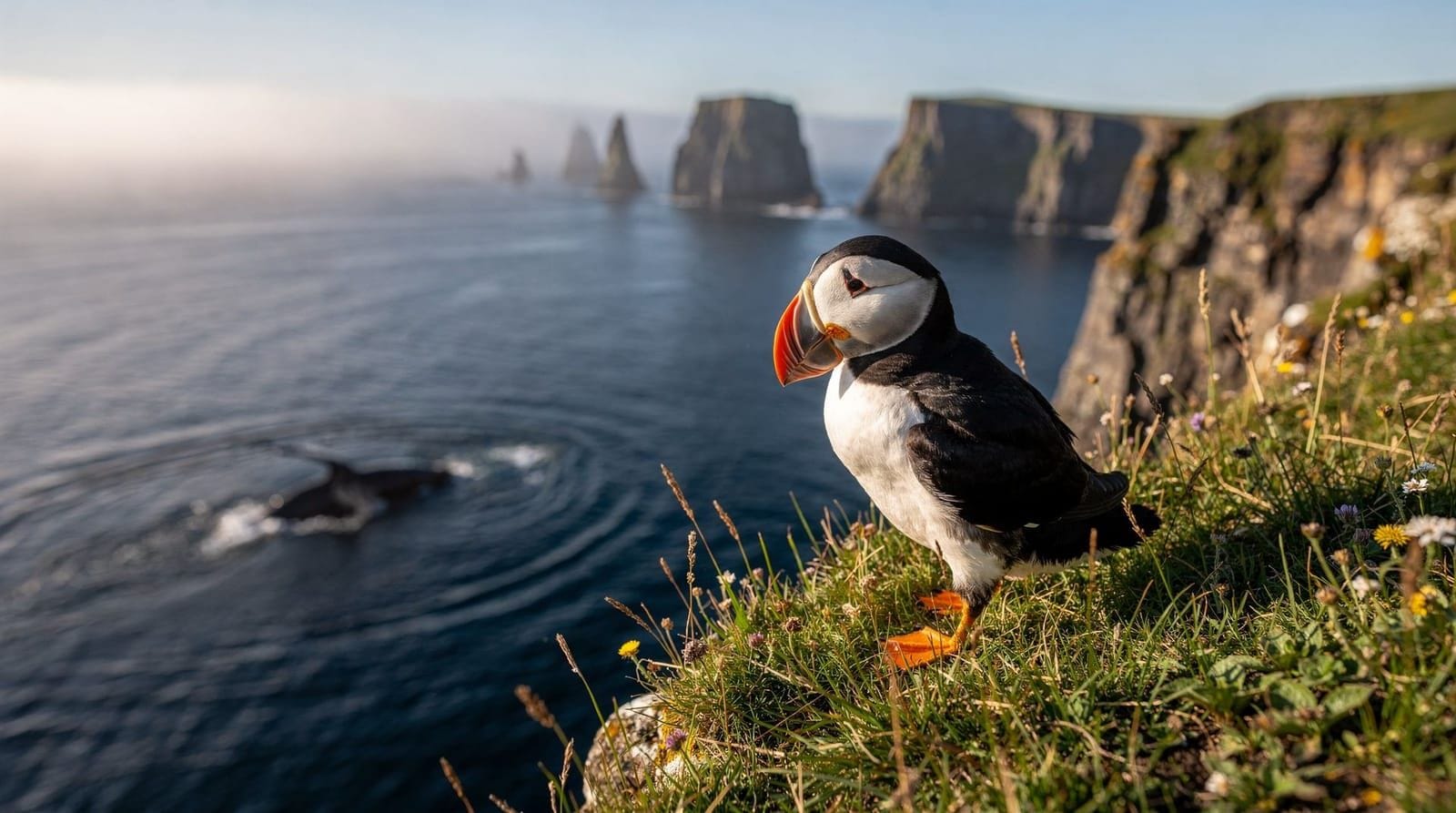
Adult puffins in breeding plumage are distinctive: black and white body, bright orange-red beak with yellow stripe, and orange feet. The beak fades to grey in winter at sea. In flight they look comically aerodynamic for their rotund body shape — rapid wingbeats of 400 per minute.
Best locations for puffin watching
Westman Islands (Vestmannaeyjar)
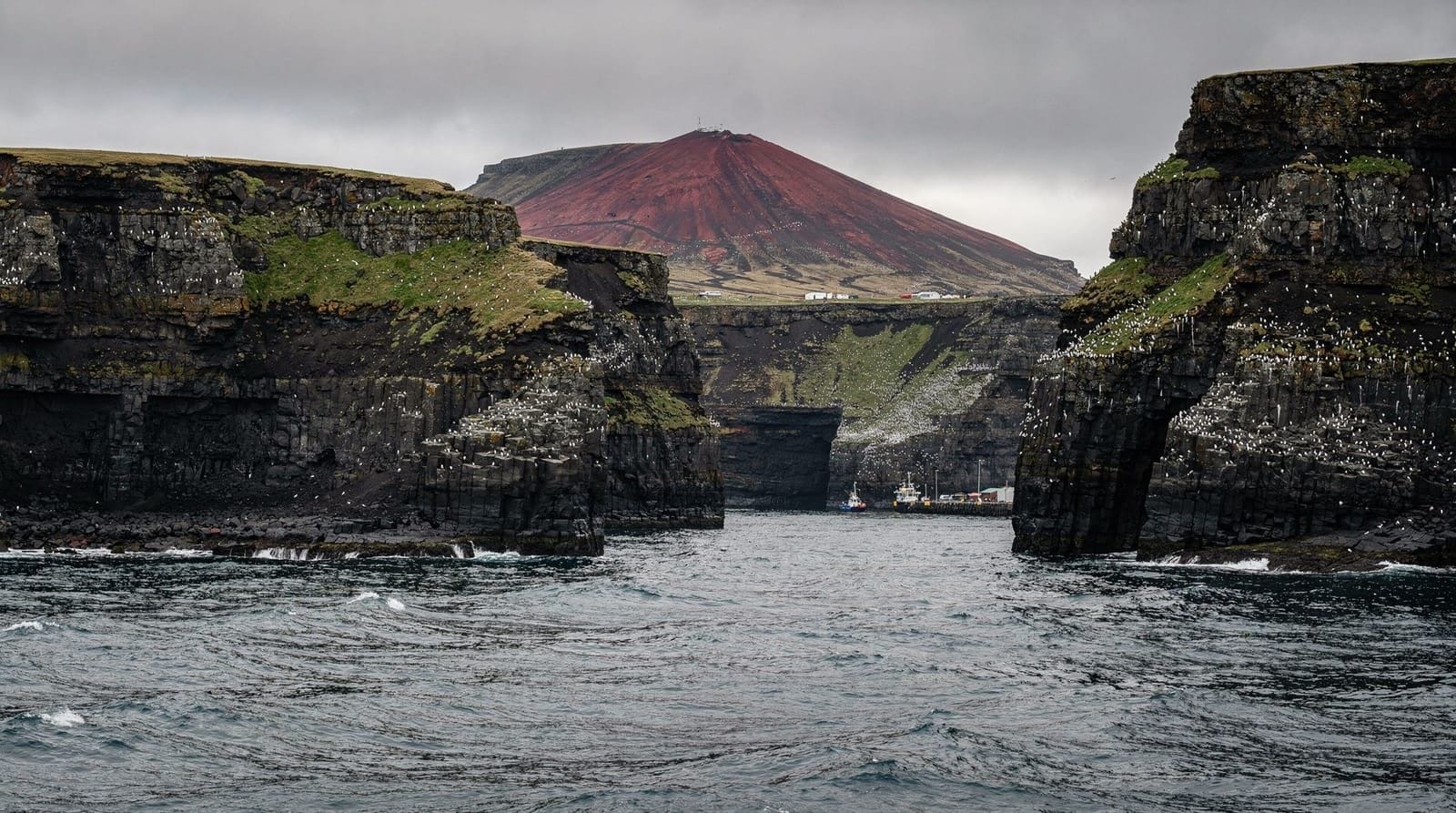
The archipelago 7.5 km off Iceland’s south coast holds the world’s largest Atlantic puffin colony — an estimated 8–10 million birds. Heimaey, the only inhabited island, has puffin colonies visible from the town itself. The puffin rescue tradition (August “puffling patrols”) is most active here.
Getting there: ferry from Landeyjahöfn harbour (30 min, from 2,200 ISK / €14 one way) or flight from Reykjavík domestic airport (20 min). The island is worth at least one overnight — Eldfell volcano, the 1973 eruption lava field, and the excellent Eldheimar museum make it a full destination.
Látrabjarg (Westfjords)
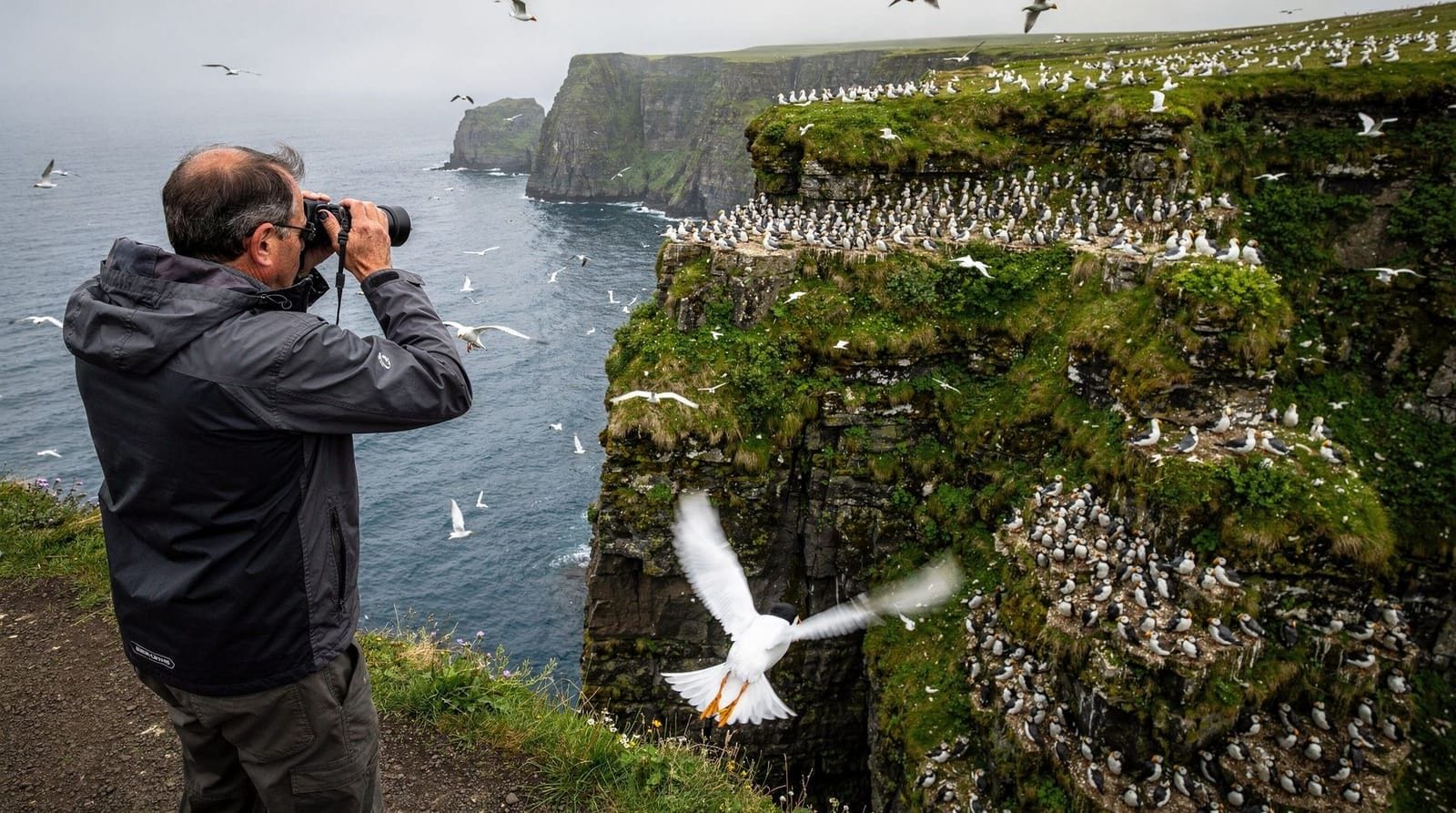
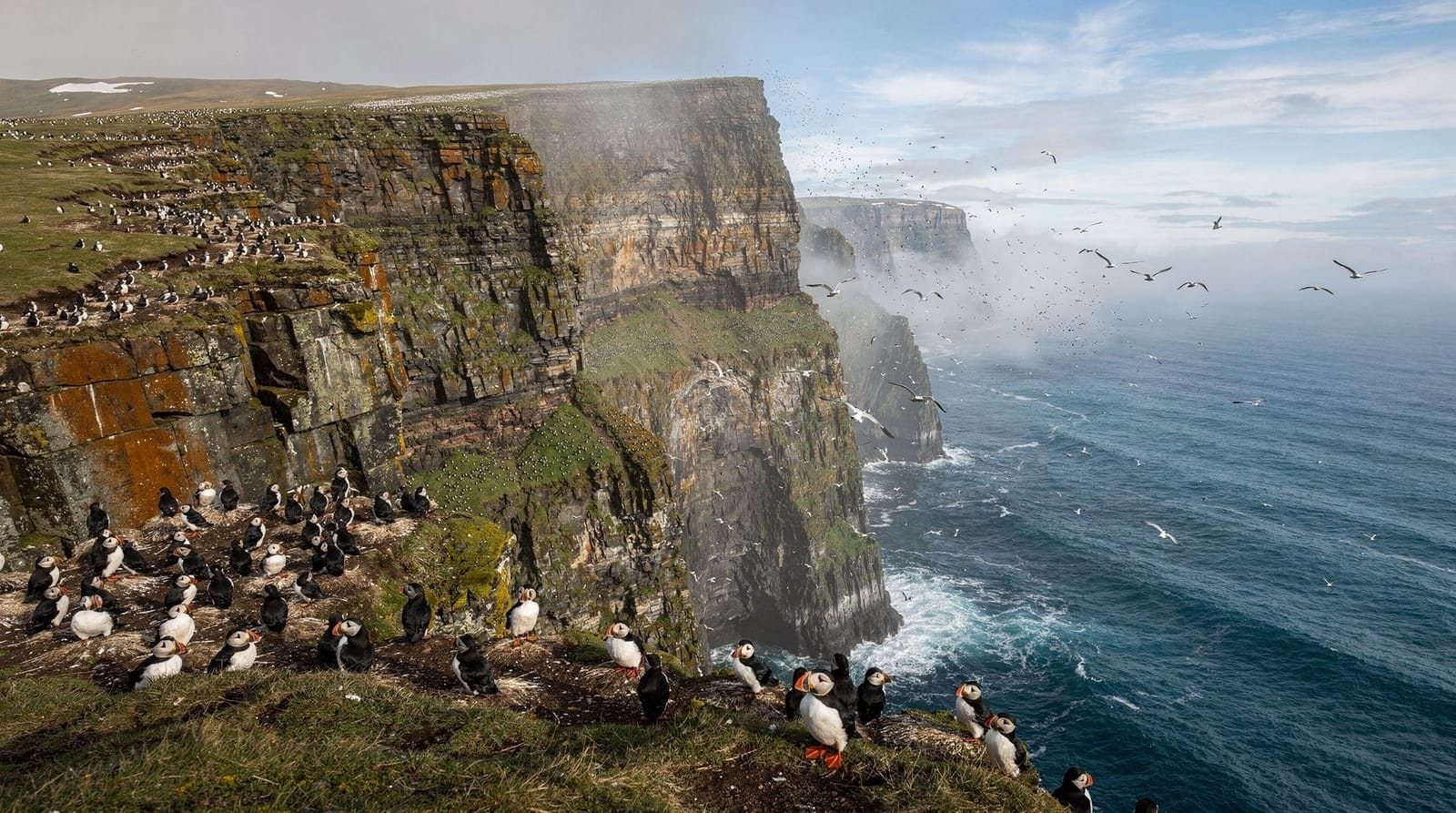
The Látrabjarg peninsula is Iceland’s westernmost point and home to one of the world’s great seabird cliffs — 14 km long and up to 441 m high. Puffins, razorbills, guillemots, and fulmars nest here in their millions. The cliff-top path allows you to approach puffin burrows within 1–2 m in June–July. The birds sit, stare, and occasionally waddle toward curious photographers.
Getting there requires commitment — Látrabjarg is a 3-hour drive from Ísafjörður, the main Westfjords town. See our Látrabjarg guide for full logistics. For a focused puffin trip, the effort is worthwhile, particularly in mid-June.
Akurey and Lundey (Reykjavík)
Two small islands 3–4 km offshore from central Reykjavík host substantial puffin colonies accessible by boat tour. Tours from the Old Harbour run 1 hour (puffin-specific) or 2.5–3 hours (combined with whale watching). Close approaches to the nesting ledges allow clear views.
Reykjavík puffin watching — 1-hour boat tour to Akurey island, puffin colony approach, expert marine guideIngólfshöfði (south coast)
A striking cape on the south coast between Kirkjubæjarklaustur and Jökulsárlón, Ingólfshöfði rises to 76 m above sea level and is home to a large puffin colony plus the most accessible great skua nesting area in Iceland. Access is by tractor-drawn trailer across tidal flats — tours depart from the farm Meðalland, May to August. Tours cost around 7,900 ISK (€52) and include a guided 3-hour walk on the cape. Puffin photography here is excellent.
Borgarfjörður Eystri (east Iceland)
The fjord town of Borgarfjörður Eystri in the East Fjords is a gem of Icelandic birding — a small, well-designed puffin viewing platform sits right at the harbour where puffins nest among the boulders directly below. You can watch birds arriving with beaks full of fish from 5 m away. This is the most comfortable and reliable shore-based puffin encounter in Iceland, and the town itself is one of the less-visited but most rewarding stops on an east Iceland itinerary. See Egilsstaðir-Seyðisfjörður for east Iceland context.
Dyrhólaey (south coast)
The dramatic basalt arch at Dyrhólaey, near Vík, has a restricted-access puffin nesting area on the western headland. The cliff path above the arch offers good views of puffins in breeding season. Note that the nesting area itself is closed from May to late June to protect breeding birds.
Boat tours from Reykjavík
The easiest entry point to Iceland puffin watching is a boat trip from the Old Harbour. Options:
- 1-hour puffin express: dedicated puffin trip to Akurey or Lundey, from ~6,900 ISK (€45). Suitable for families and those with limited time.
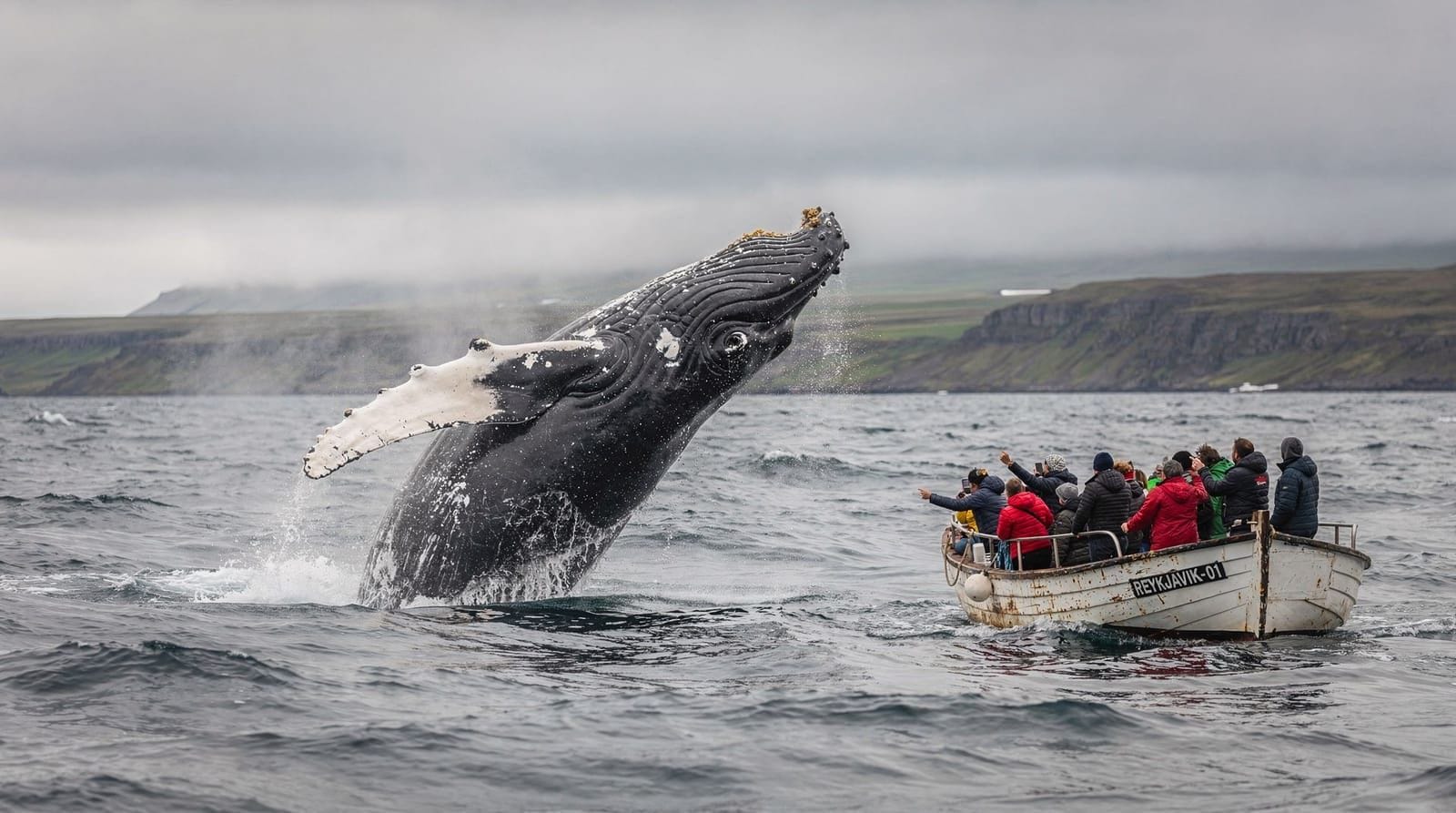
- 3-hour whale and puffin combo: combines whale watching in Faxaflói with a stop at the puffin colony. Better value, more experience, recommended for most visitors.
From Húsavík, whale tours naturally pass puffin islands in Skjálfandi Bay — a combo approach that works particularly well if you are in north Iceland.
What to bring for puffin photography
Puffins are small (about 25 cm tall) and fast-moving on land. Shore-based photography at locations like Látrabjarg is straightforward — a smartphone at 1–2 m distance produces good images. For boat-based photography, a 300–500mm lens gives the best results.
The most compelling images show puffins landing with beaks full of sand lance — this happens every few minutes at active feeding colonies in June–July. Position yourself near a burrow entrance and wait rather than chasing flying birds.
Golden-hour light (08:00–10:00 and 20:00–23:00 in summer) gives a warm quality to puffin images that flat midday light cannot match.
Puffin conservation context
Atlantic puffin populations across the North Atlantic have declined by around 30–40% since the 1970s due to climate-driven shifts in forage fish distribution. Iceland’s population remains the world’s largest and is considered “vulnerable” rather than endangered. The Westman Islands colony has shown significant year-to-year variation tied to sand lance availability.
Iceland imposed a temporary hunting moratorium on puffins in 2020 that has since been extended annually. Traditional puffin hunting (fleyg — using a large hand net to catch birds in flight) was once common in the Westfjords and Westman Islands but is now suspended. The conservation message is increasingly central to responsible whale and puffin watching operators.
Planning a puffin-focused Iceland trip
If puffins are a primary reason for visiting Iceland, your itinerary should be structured around the season and the best locations.
Optimal timing: mid-June through mid-July. This period gives peak colony activity, the longest daylight hours for photography, and the best overlap with whale watching (most visitors combine both).
Best single experience: Látrabjarg in the Westfjords, mid-June, early morning. The combination of zero crowds, extraordinary proximity to multiple species including puffins and razorbills, and the spectacular cliff setting is unmatched. The trade-off is the commitment required to reach the Westfjords.
Most convenient experience: Akurey boat tour from Reykjavík Old Harbour. A 1-hour tour, departing multiple times daily from May to mid-August, brings you within metres of a large nesting colony. No planning, no driving, manageable for a single afternoon in the city.
Borgarfjörður Eystri (east Iceland) is a favourite among photographers specifically because the puffins nest among boulders at harbour level — no boat needed, no cliff-top balance required. A dedicated puffin photography trip to the east fjords in June is popular among serious wildlife photographers.
Puffin watching and children
Puffins are excellent wildlife for children — they are small, colourful, visually distinctive, and behave comically (ungainly landings, rapid wingbeats, beaks full of fish). The boat tours from Reykjavík are accessible for children aged 3 and up. The 1-hour puffin express is better for young children than a 3-hour whale tour.
At shore-based sites like Látrabjarg, the cliff edge requires supervision of children — the terrain is rough and unguarded. Ytri Tunga (seal beach) and the Borgarfjörður Eystri harbour puffin platform are both safe for children with normal supervision.
The Westman Islands puffin rescue tradition in August — where locals and visitors find disoriented fledgling puffins in streets and walk them to the sea — is a genuinely special experience for children.
How puffins compare to other Icelandic wildlife
Iceland’s wildlife offering is unusually strong for a small country:
- Puffins: seasonal (May–August), highly accessible at multiple sites, suitable for all ages. No tour required at the best shore sites.
- Whales: year-round from Reykjavík, peak humpback season June–August. Boat tour required. Different experience to puffins — more uncertain, more dramatic when successful.
- Arctic terns: ubiquitous summer presence, no special effort needed. Aggressive near nests.
- Icelandic horses: year-round, guided tours available from Reykjavík.
- Seals: year-round at Ytri Tunga (Snæfellsnes) and Vatnsnes Peninsula.
- Gyrfalcon and white-tailed eagle: specialist birding effort required; rewarding for dedicated birdwatchers.
For most visitors, puffins and whale watching are the two wildlife priorities that shape summer itinerary planning. See our guide on best time for whales and puffins for the overlap calendar.
Puffin watching costs and booking
The cost of puffin watching in Iceland varies significantly by location and approach:
Reykjavík 1-hour boat tour: approximately 6,900–8,500 ISK (€45–55) per adult. Children typically half price, under-5 free. Departures every 1–2 hours during daylight in May–August. No advance booking required outside July peak — same-day booking is fine.
Whale and puffin combo (Reykjavík): approximately 11,900–13,900 ISK (€78–91) per adult. Better value than booking whale watching and puffin watching separately. The combo adds only 30–45 minutes to the whale watching tour.
Húsavík combo: approximately 12,900–14,900 ISK (€84–97). Worth more than the Reykjavík tour given the higher wildlife density and more dramatic setting.
Shore-based sites (Látrabjarg, Ytri Tunga, Borgarfjörður Eystri, Dyrhólaey, Ingólfshöfði): free entry at most locations. Ingólfshöfði charges ~7,900 ISK (€52) for the guided tractor tour.
Photography print worth: of all the wildlife encounters in Iceland, the puffin photograph is among the most reliably achievable — frame-filling images of individual birds in characteristic poses are possible on any boat tour or at Látrabjarg. Many visitors value this specifically.
Puffin watching ethics
A few points worth raising:
Do not touch puffins. They appear unafraid and may come within arm’s reach at Látrabjarg. They can be picked up — but should not be. Handling habituates them to predator contact and causes unnecessary stress.
Do not block burrow entrances. Puffins need to enter and exit their burrows freely. If you position yourself too close to a burrow entrance, the occupant will not be able to leave to fish. Step back.
The puffin rescue tradition (Westman Islands, August): if you find a disoriented young puffin on a street or beach, the correct action is to carry it to the water’s edge after dark (puffins navigate by moonlight and stars, and are confused by artificial light). In Vestmannaeyjar, the local fire station accepts disoriented puffins found by visitors.
Fledgling puffins on the water: if you see a small puffin sitting on the sea near Reykjavík in late August, it is likely a fledgling. Do not rescue it — puffins are seabirds and are entirely capable of surviving on the open ocean from their first day at sea.
Combining puffin sites with the rest of your itinerary
Few visitors plan a trip around puffins alone, so it helps to know how each major puffin site fits into a broader Iceland route.
Dyrhólaey and Ingólfshöfði sit directly on the South Coast, meaning a standard South Coast 3-day itinerary already passes within a short detour of both — no extra overnight required. The Westman Islands need a dedicated ferry crossing or short flight and at least one overnight to feel worthwhile, so they suit travellers who can add a day rather than a quick stop. Látrabjarg, in the Westfjords, is the biggest commitment: it only makes sense as part of a Westfjords-focused trip of several days, not a detour from the Ring Road. Borgarfjörður Eystri similarly rewards travellers already doing a slower East Iceland loop rather than a rushed Ring Road pass-through.
For travellers on a standard 7–10 day Ring Road trip who want at least one strong puffin encounter without restructuring the whole route, the Reykjavík boat tours or a South Coast stop at Dyrhólaey/Ingólfshöfði are the practical choices; save Látrabjarg and Borgarfjörður Eystri for a trip with real time in the Westfjords or East Iceland.
Frequently asked questions about puffin watching in Iceland
Can I see puffins in September?
Very few remain in Iceland after mid-August. Stragglers occasionally remain into early September, but colonies will be largely empty by then. If you are visiting in September, puffins should not be your main wildlife expectation.
Is the Westman Islands ferry reliable?
The ferry from Landeyjahöfn runs multiple times daily in summer and is generally dependable in good weather. In strong southerly swells, crossing can be cancelled or uncomfortable. Check weather forecasts. The alternative access is by plane from Reykjavík domestic airport (20 min, from ~15,000 ISK / €98).
Are puffins dangerous or aggressive?
No. They are small birds and not aggressive toward people at close range. They may peck if you put your hand near a burrow — which you should not do. Skuas, which sometimes nest near puffin colonies, are aggressive and will dive-bomb anyone who walks near their nests.
Where do I see puffins on a self-drive route?
On a Ring Road circuit, Dyrhólaey and Ingólfshöfði on the south coast are the best stops for puffins without a detour. On a north Iceland loop, the Húsavík boat tours naturally include puffin islands. The Westfjords detour (particularly for Látrabjarg) requires a dedicated loop off the Ring Road.
How many puffins will I see on a tour from Reykjavík?
The Akurey colony has several thousand nesting pairs — you will see dozens to hundreds of birds on any summer boat visit. Landing is not permitted, but close-range approaches give clear views of birds on the cliff ledges and at water level.
Is it worth combining puffin watching with whale watching on the same trip?
Yes, for most visitors. The combo tours from Reykjavík and Húsavík add only 30–45 minutes to a standard whale watching trip and cost noticeably less than booking both separately. The exception is if you specifically want the closest possible puffin encounter — in that case, a dedicated shore-based visit to Látrabjarg or Borgarfjörður Eystri beats any boat tour, since boats cannot land and views are from open water at a defined minimum distance.
Weather and cancellation realities for boat-based puffin tours
Puffin boat tours from Reykjavík’s Old Harbour operate in open water, and Faxaflói bay can turn choppy with little warning even on an otherwise clear summer day. Most operators will run in moderate swell — the boats are built for it — but cancel or reschedule in genuinely rough conditions or dense fog that would make the colony unviewable. If your Iceland trip is short and puffins matter to you, book your boat tour for an early day rather than your last full day, giving yourself a fallback date if the first attempt is cancelled. Shore-based sites like Látrabjarg and Borgarfjörður Eystri are far less weather-dependent, since you are standing on solid clifftop rather than a moving boat, making them a more reliable backup if your schedule allows the extra driving.
Top experiences
Bookable activities with verified prices and instant confirmation on GetYourGuide.
Top experiences
Best-rated activities across GetYourGuide and Viator.