Westman Islands
Vestmannaeyjar holds the world's largest puffin colony, the 1973 Eldfell eruption site, and Iceland's most characterful island town — 45 minutes by ferry.
Quick facts
- Best time
- May–August for puffins; year-round accessible by ferry (daily service)
- Days needed
- 1–2 days; day trip possible from Reykjavík but overnight rewards more
- Getting there
- 45-min ferry from Landeyjahöfn port (2 hours from Reykjavík) or 3-hour ferry from Þorlákshöfn; flight from Reykjavík domestic airport (30 min)
- Budget per day
- 12,000–20,000 ISK / €81–€135 (ferry costs: around 2,800 ISK per adult; car rates vary)
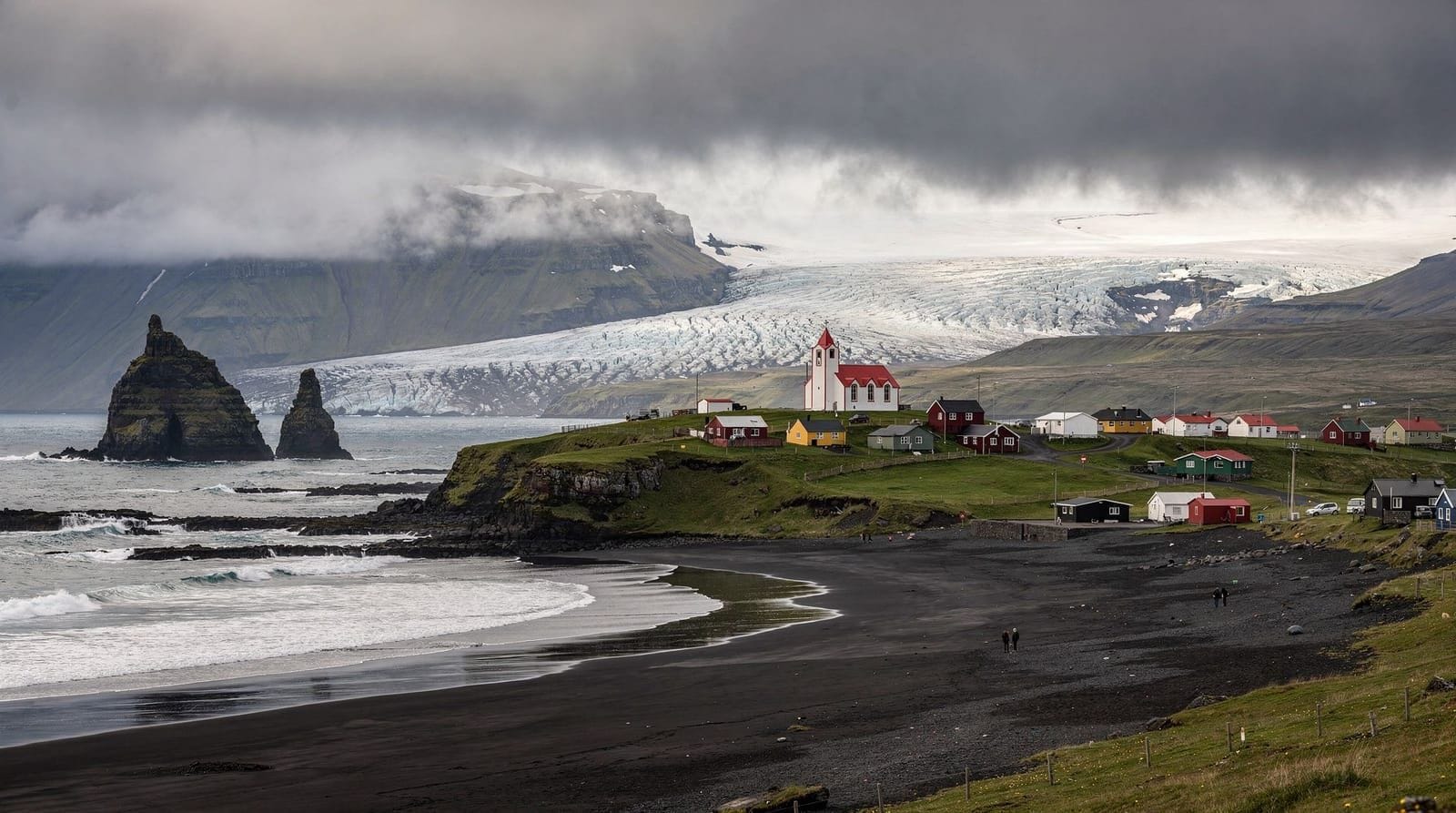
The Westman Islands (Vestmannaeyjar in Icelandic) are a volcanic archipelago off Iceland’s south coast — 15 islands and about 30 rock stacks, of which only one, Heimaey, is inhabited. Heimaey’s 4,200 residents live on an island that experienced one of the most dramatic volcanic events in modern history: in January 1973, a fissure opened 200 metres from the edge of town and erupted for five months. A third of Heimaey was buried under lava and ash; the entire population was evacuated by fishing boat to the mainland. Then, almost everyone came back.
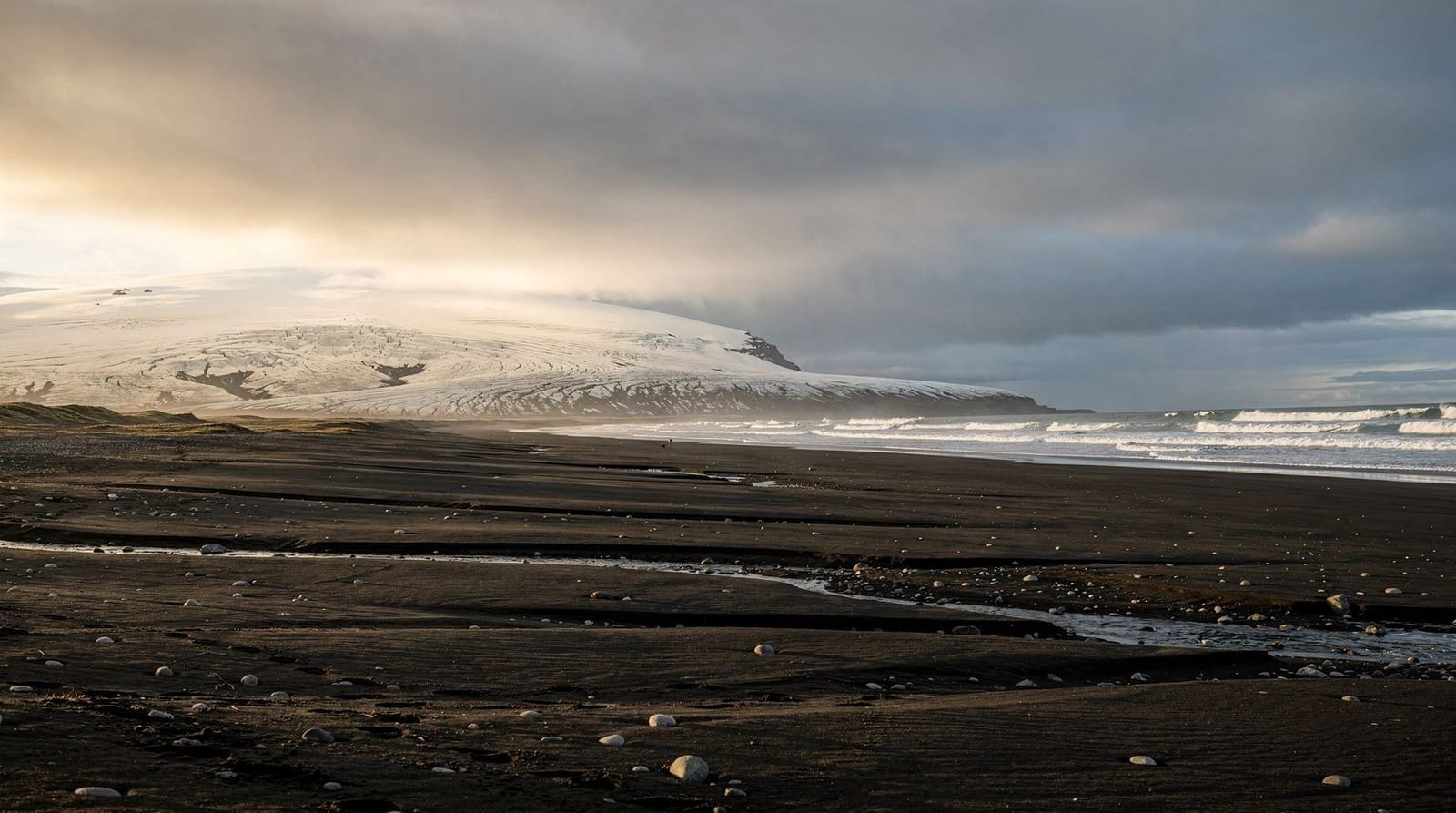
The 1973 eruption created a new volcano (Eldfell) and extended the island’s land area. The lava that buried the eastern quarter of town is still there — a black hardened field from which chimneys, rooftops, and walls occasionally protrude. Walking through it is an unusual experience that has no equivalent elsewhere in Iceland.
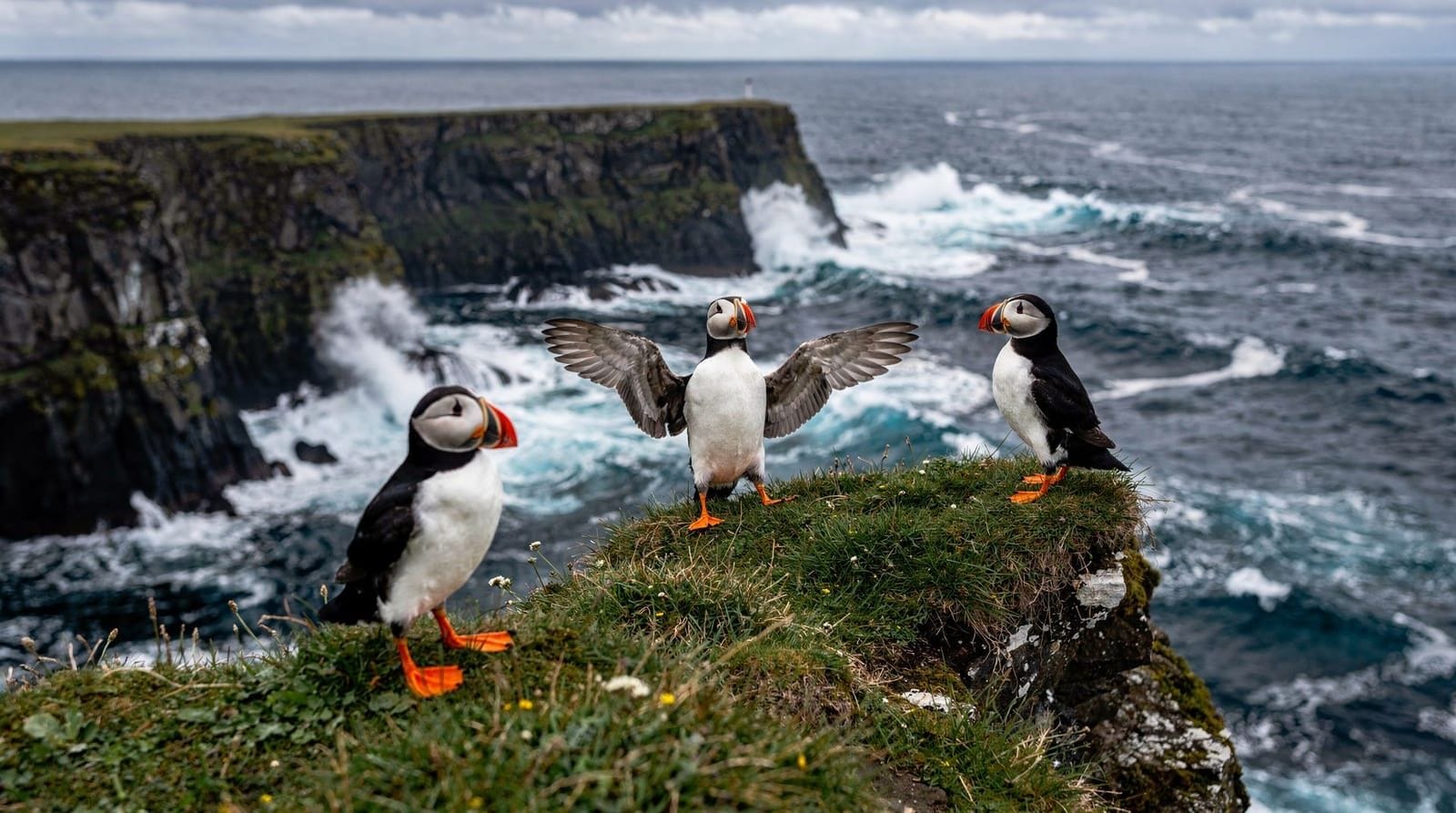
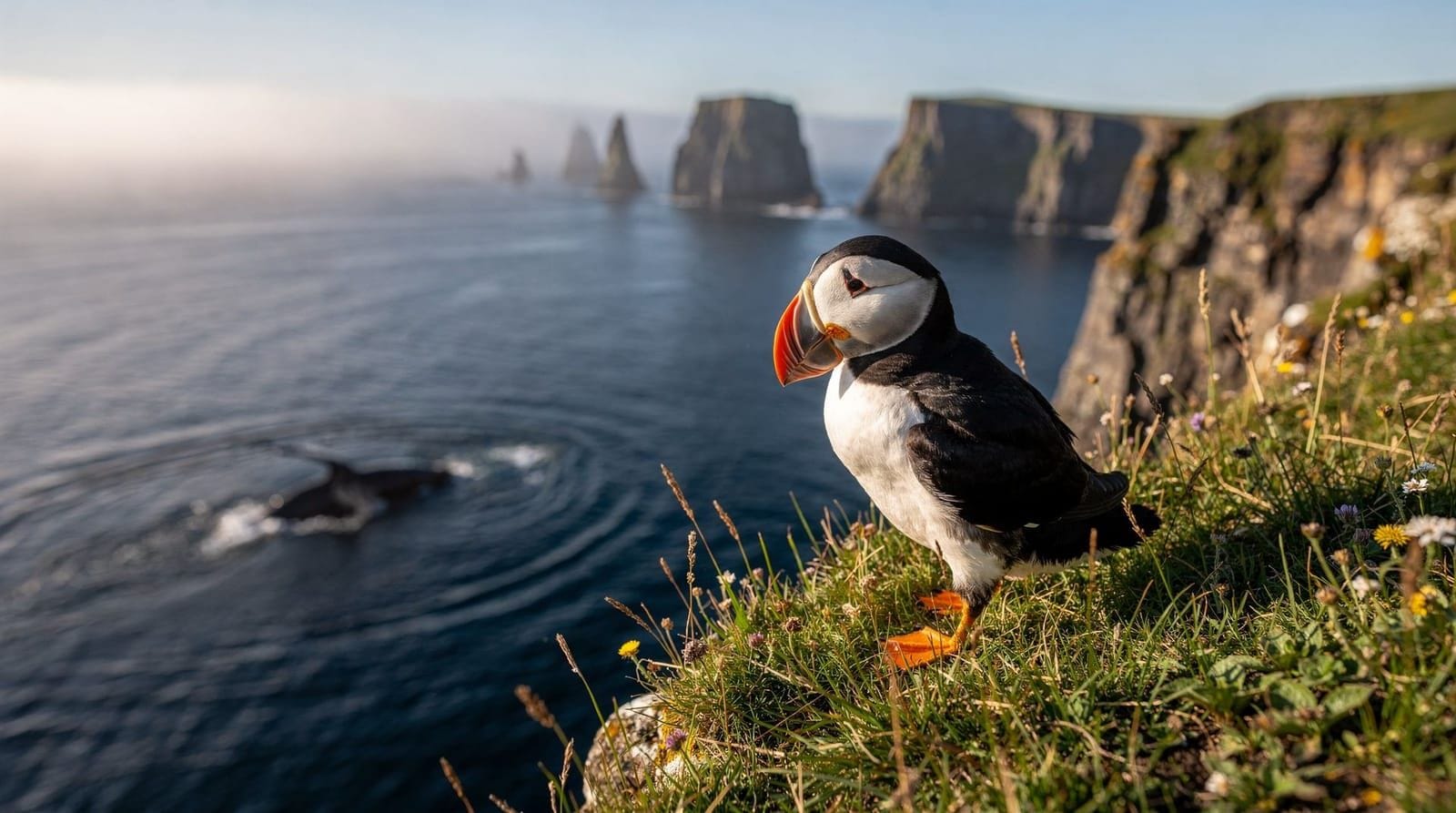
The other thing the islands are famous for: the world’s largest Atlantic puffin colony. Approximately 8–10 million puffins use the Westman Islands and surrounding ocean annually, nesting in burrow colonies on sea cliffs and headlands throughout Heimaey and the outer uninhabited islands. In August each year, puffin chicks disorient on their first flight to sea and land in the town. Heimaey residents, especially children, collect them and release them toward the ocean — a tradition called the puffin patrol.
| Where | Vestmannaeyjar archipelago off the south coast; Heimaey is the only inhabited island |
| Cost | Around 12,000–20,000 ISK / €81–135 per day |
| Time needed | 1–2 days; day trip possible, overnight rewards more |
| Getting there | 45-min ferry from Landeyjahöfn (2h from Reykjavík), 3h ferry from Þorlákshöfn, or a 30-min flight |
| Best time | May–August for puffins; year-round accessible by daily ferry |
Getting to Heimaey
Ferry from Landeyjahöfn (the most used option): Herjólfur ferry runs multiple times daily; the crossing takes approximately 35–45 minutes. Landeyjahöfn port is about 2 hours south of Reykjavík (140 km via Hella). Adult passenger fare: approximately 2,800 ISK (€19) one way; vehicle rates from around 7,500 ISK one way. Book vehicle space in advance for summer weekends.
Ferry from Þorlákshöfn: the older route, still operating as an alternative. Þorlákshöfn is about 45 km southeast of Reykjavík. The crossing takes about 3 hours. Less convenient than Landeyjahöfn but useful if southern roads are closed in winter conditions.
By air: Eagle Air flies from Reykjavík City Airport, about 30 minutes. Practical for day trips where ferry timing is tight; adds cost and removes the sea approach experience.
The sea approach matters: arriving by ferry, the islands appear from the ocean as black volcanic cliffs rising directly from the water, with the town visible in a natural harbour protected by the 1973 lava extension on one side. This is a more atmospheric arrival than the airport road.
The 1973 eruption
The Eldheimar museum (opened 2014) is built around an excavated house buried by the 1973 eruption — the kitchen, living room, and bedroom are visible through glass floors and walls. The exhibition covers the eruption and evacuation in detail. Entry around 3,000 ISK (€20), 90 minutes for a thorough visit. This is the most effective volcanic museum in Iceland for emotional and historical impact; it does what Pompeii does but at a scale that one family’s house can convey.
Eldfell volcano is walkable from the town centre — a 30–40 minute hike up the flanks to the crater rim. The summit gives views across Heimaey town and harbour, the surrounding ocean, and the outer island group. The lava is still warm close to the surface in places (the interior of Eldfell retains heat for decades after an eruption).
The lava field itself — Kirkjubæjarhraun — extends from the base of Eldfell east across what was the eastern residential area. A walking path through the lava (from the Eldheimar museum) takes you past buried house remains and the 1973 boundary of the flow. The contrast between the preserved western town and the buried eastern quarter is visceral.
Puffins
The Westman Islands puffin colony is the world’s largest for Atlantic puffins. The birds nest on every cliff-edge and headland on Heimaey and the outer islands. Best viewing on Heimaey itself: the Stórhöfði peninsula (southwestern tip of the island), where you can walk to within metres of nesting puffins on the cliff edges. Conditions are similar to Látrabjarg — burrow-nesting birds at accessible cliff edges that tolerate quiet observers.
Season: puffins arrive in April and begin departing in late August. Peak density at the nesting sites is June through late July. August is the puffin patrol month, when chicks appear in town.
Boat tours from the Heimaey harbour tour the outer islands and sea stacks, where the puffin and gannet colonies are at their most concentrated. These tours run approximately 1–2 hours and cost around 5,000–7,000 ISK (€34–€47). They also pass sea stacks and the outer island geology that is not otherwise accessible.
Other Heimaey attractions
Sæheimar Aquarium and Natural History Museum: a small but good natural history museum on the main street, with a working seal pool (orphaned puffins and a resident seal named Sproti are the most-photographed residents). Entry around 1,500 ISK (€10). Worth 45 minutes.
Skansinn: a 15th-century fortification on the harbour — one of Iceland’s oldest standing structures, used by English merchants during the Iceland cod wars. A short walk and a context plaque.
The puffin rescue: in August, Heimaey schoolchildren walk the streets after dark collecting disoriented puffin chicks (attracted by town lights) and take them to the beach for release the following morning. Visitors can participate by walking the streets in the right areas after midnight. The tourist information office gives maps of the best locations each season.
Swimming pool: Vestmannaeyjar swimming pool has outdoor geothermal pools with ocean views — among Iceland’s most scenically sited public pools, around 1,200 ISK (€8) entry.
Practical logistics
Accommodation: Guesthouse Hamar and Guesthouse Hvíld are the most used visitor options. Hótel Vestmannaeyjar is the main hotel (doubles 22,000–32,000 ISK in summer). Several self-catering apartments available. The town has a small scale — you can walk everywhere from any accommodation.
Food: Slippurinn (in the old boat repair slip building) is Heimaey’s landmark restaurant, repeatedly noted in Icelandic food journalism for using local and foraged ingredients. Main courses run 4,500–7,500 ISK (€30–€51). Reservation essential in July and August. Gott restaurant is the practical alternative for straightforward fish and lamb at more accessible prices.
Supermarket: Krónan on the main street.
Fuel: one station in the town. Fill before the ferry crossing if arriving with a vehicle to avoid the island premium.
Day trip or overnight?
A day trip from Reykjavík is possible (ferry at 7:30 a.m., back by 6 p.m.) but requires efficient use of time — Eldheimar, the Eldfell hike, and the Stórhöfði puffin cliff take most of 8 hours. An overnight stay allows morning light for puffin photography, exploration at a more comfortable pace, and the evening character of the town (the August puffin patrol, the harbour in evening light).
For puffin photography specifically, an overnight in July or August is considerably better than a day trip.
Seasonal guide to the Westman Islands
Spring (April–May)
Puffins begin arriving in April. Early May has established puffin presence at the Stórhöfði cliffs but fewer visitors than summer. The ferry crossings can be rough in April — Atlantic swells in spring are more variable than in midsummer. A May visit offers a good puffin experience in a quieter context.
Summer (June–August)
Peak season. The puffin colonies are at maximum density from mid-June through late July. The Eldheimar museum is at its most crowded in July. The outdoor geothermal pool is a morning-or-evening visit in July to avoid the midday crush. The puffin patrol tradition runs through August — if participating is a priority, the first two weeks of August are the most active period.
The Slippurinn restaurant requires reservations 2–3 weeks ahead in July and August. Hotel and guesthouse accommodation fills quickly — book 3+ months ahead for July dates.
Autumn (September–October)
The puffins depart rapidly through August; by mid-September most are gone. The island in September is quieter, the ferry crossing more variable, and the Eldfell volcano landscape in autumn light is compelling. The Eldheimar museum is open year-round. For visitors whose priority is the volcanic history rather than puffins, September is a valid and quieter alternative.
Winter (November–March)
Heimaey operates year-round — it is a functioning fishing town, not a seasonal tourist destination. The Landeyjahöfn ferry runs daily (occasionally redirected to Þorlákshöfn in bad weather). The volcano landscape, the working harbour, and the Eldheimar museum are all accessible. No puffins. Hotel options are reduced in winter.
The 1973 eruption: historical depth
The January 23, 1973 eruption began in the middle of the night, with a fissure opening just 200 metres from the nearest houses in the eastern Heimaey residential district. The entire population of approximately 5,300 people was evacuated by fishing boat to the mainland within a day — the fishing fleet was in harbour due to a storm the previous day, a coincidence that probably saved most lives.
Over five months, the eruption produced approximately 0.25 km³ of lava and 0.07 km³ of tephra (ash and cinders). The lava flow threatened to close the harbour entrance — the loss of the harbour would have made the island unviable. In a remarkable operation, US military pumps were shipped from Hawaii and used to spray seawater on the advancing lava front, cooling it and slowing the advance. The harbour survived; in a twist, the lava extension actually improved the harbour’s natural shelter.
About 360 homes were buried. The town returned to near-normal operations within two years. The social resilience of Heimaey’s population — the choice to return and rebuild rather than abandon the island — is part of what makes the Eldheimar museum more than just a geology exhibit.
The lava field today (Kirkjubæjarhraun) covers the eastern third of the pre-1973 town. Walking through it with a map of the former street grid gives a visceral sense of what was lost. Several houses have been partially excavated; their roofs and upper walls protrude from the solidified lava surface. A guided walk through the lava field (available from the tourist information office) adds historical context that the Eldheimar museum exhibits only partially convey.
Detailed puffin visiting guide
Where to go on Heimaey
The Stórhöfði peninsula at the southwestern tip is the premier land-based puffin site. From the car park near the Stórhöfði weather station, the cliff edge path leads to burrow colonies at accessible height. The birds nesting here are habituated to the observation platform and the researchers who work at the weather station — they tolerate close approach from sitting or crouching visitors.
A second colony area is on the southern slopes of Eldfell — less visited than Stórhöfði but accessible on foot from the town. These birds are equally approachable.
What to bring
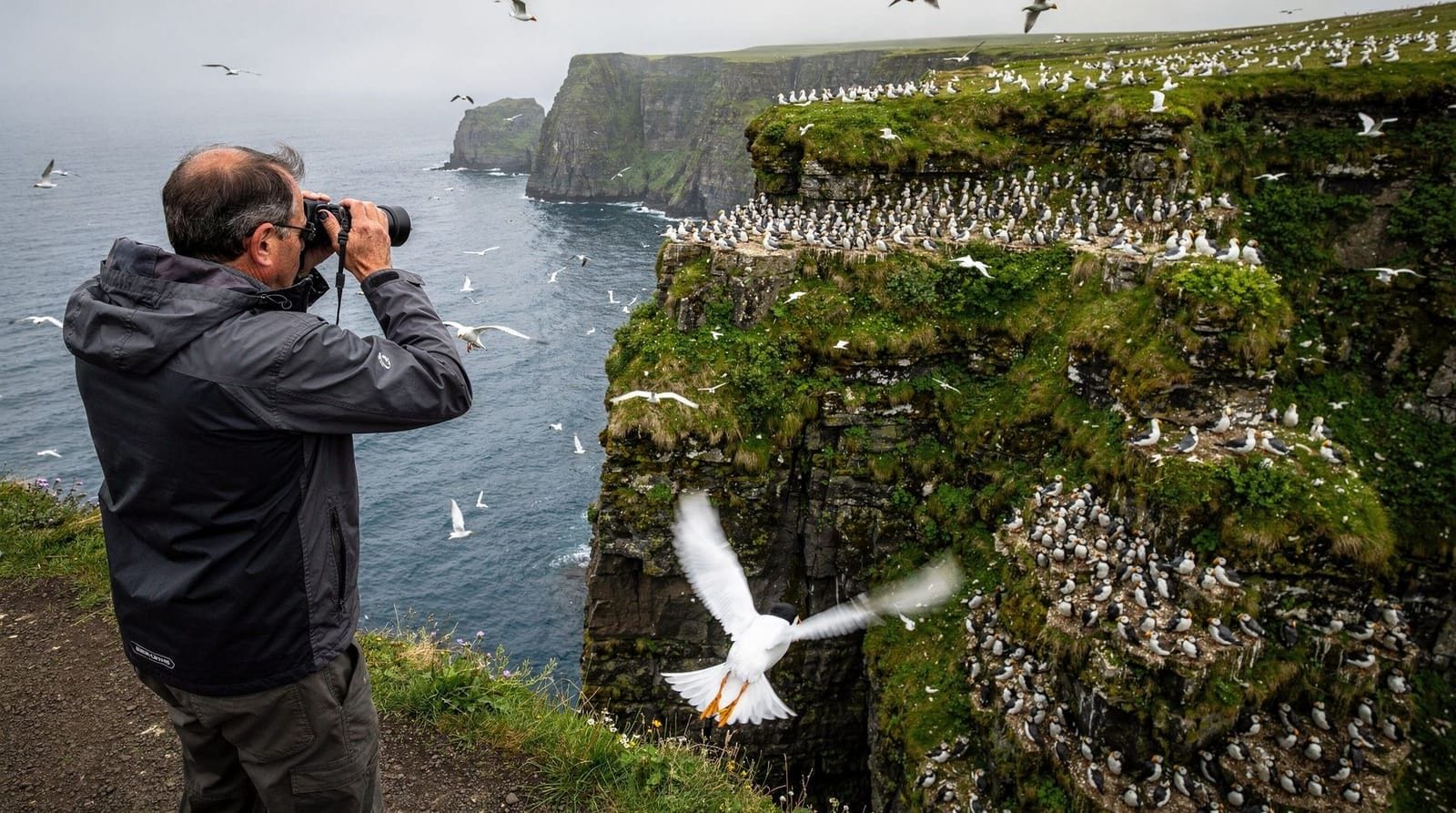
A 50–200mm zoom is the useful range. A 100mm at close range gives a frame-filling puffin portrait from 2 metres. A 200mm is useful for birds in flight over the colony. Fast autofocus helps for birds in flight; for settled birds at burrows, any focusing mode is adequate. A low shooting position (sitting on the ground, eye level with a standing puffin) produces more interesting images than shooting down at the bird.
The puffin boat tours
Boat tours from the harbour tour the outer sea stacks and island coast where the puffin colonies are even larger than on Heimaey itself. On the outer stacks, puffins are visible in numbers that exceed any land-based site in Iceland. The tours run approximately 1–2 hours and cost around 5,000–7,000 ISK per adult. They also pass the gannet colony and the geological stacks that are part of the same volcanic island formation as Heimaey.
Comparing Westman Islands to other Iceland destinations
As a puffin destination vs Látrabjarg
The Westman Islands have vastly greater puffin numbers — the colony is the world’s largest for the species. Látrabjarg in the Westfjords offers easier close-up land access without a ferry crossing. For pure puffin density and the boat tour option, the Westman Islands win clearly. For logistics (no ferry, accessible from Reykjavík on a day drive, combined with wider Westfjords trip), Látrabjarg is more convenient.
As a volcanic history site vs the south coast
The south coast has Eyjafjallajökull (the 2010 eruption visible in the form of the glacier, but no visitor access to the actual eruption site) and the Fagradalsfjall eruption area on the Reykjanes Peninsula (a genuine recent lava field with hiking access). The Westman Islands offer the Eldheimar museum — the most emotionally effective volcanic history presentation in Iceland — plus the actual buried town and walkable lava field. For volcanic human history, the Westman Islands are unmatched in Iceland.
As an island escape
Heimaey is a functioning Icelandic fishing town that receives visitors rather than existing for them. The contrast with purpose-built tourist experiences elsewhere in Iceland is significant. The working harbour, the fishing boats, the geothermal pool used by locals, the school and hospital — this is a complete community that happens to have unusual attractions. For visitors who want to experience Iceland as it actually functions rather than as it presents for tourism, a night or two on Heimaey is more instructive than most Ring Road stops.
Practical notes for a two-day Westman Islands visit
Day 1: arrive on the 8 a.m. ferry from Landeyjahöfn, check in, walk the Kirkjubæjarhraun lava field (2 hours), Eldheimar museum (90 minutes), Eldfell volcano hike (1 hour each way), Slippurinn dinner (reserve before arrival). Overnight.
Day 2: Stórhöfði puffin cliffs early morning (before 10 a.m. for best conditions), harbour boat tour (10:30 a.m. departure if available), Sæheimar aquarium and seal pool (45 minutes), swimming pool (1 hour), return ferry in the afternoon.
This two-day structure fits the main attractions without rushing and includes morning puffin photography in the best light. Accommodation: book Hótel Vestmannaeyjar or one of the main guesthouses at least 6–8 weeks ahead for July dates.
Combining the Westman Islands with a South Coast trip
The Landeyjahöfn ferry terminal sits close enough to the South Coast route that a Westman Islands detour fits naturally into a South Coast itinerary rather than requiring a separate trip. Travellers based in Vík or driving the South Coast can divert to Landeyjahöfn (about an hour west of Vík) for the morning ferry, spend the day on Heimaey, and return the same evening or the next morning.
This pairing works especially well for puffin-focused itineraries: the best-time-for-whales-and-puffins guide and the puffin-watching-iceland guide both flag the Westman Islands as the single best puffin destination in the country, ahead of Látrabjarg and the Reykjavík boat tours, for anyone willing to add the ferry crossing. Building one extra night into a South Coast trip specifically for Heimaey is a better use of time than a rushed day trip squeezed between waterfalls.
Frequently asked questions about the Westman Islands
Is the ferry crossing rough?
The Landeyjahöfn crossing (35–45 minutes) is usually smooth. In strong south winds or heavy swells, the ferry may be cancelled or diverted to the longer Þorlákshöfn route (3 hours). Check ferry status on herjolfur.is before driving to the port. Cancellations are uncommon in summer but do happen in winter conditions.
When is the best time to see puffins in the Westman Islands?
June to early August for the most accessible nesting sites with birds consistently present. August for the puffin patrol tradition. Puffins begin arriving in April and are present through late August. September sees rapid departure and most birds are gone by mid-September.
Is the 1973 eruption site accessible?
Yes. The Eldfell volcano is a 30–40 minute walk from the town centre with no technical difficulty. The Eldheimar museum is in the eruption zone. The lava field with buried houses extends east of the museum. All are freely accessible (museum charges entry; the outdoor areas are free).
How many of the outer islands can you visit?
The outer uninhabited islands (Surtsey, the newest island in Europe, formed in an eruption 1963–67; Elliðaey; and others) are not open to general visitors. Surtsey is a UNESCO World Heritage Site and strictly controlled for scientific reasons. Boat tours around the outer island group give views from the sea. Elliðaey has a single hunting lodge and is privately controlled. The puffin and gannet colonies on the outer stacks are best seen from boat tours.
What is the puffin patrol?
In August, young Atlantic puffins making their first solo flight to sea sometimes disorient on town lights and land in streets. Heimaey residents — particularly children — collect them in shoeboxes and release them from the beach the next morning. Visitors can join this by walking residential streets after dark in August and collecting any puffins found on the ground. The tourist information office on the main street provides maps and guidance each season.
How does the Westman Islands puffin experience compare to Látrabjarg?
Both allow close-up puffin viewing at cliff edges. Látrabjarg is more accessible from Reykjavík without a ferry crossing and has consistently good ground-level viewing. The Westman Islands have vastly larger numbers and the added boat tour option for the outer colony stacks. For sheer puffin density, the Westman Islands are superior; for ease of access and overall Westfjords trip combination, Látrabjarg has advantages.