Látrabjarg bird cliffs
Látrabjarg is Europe's largest bird cliff and Iceland's best puffin spot: 14 km of coastal cliffs at the Westfjords' western tip, home to millions of
Reykjavik: From Reykjavik 3 day tour of the wild Westfjords
Duration: 3 days, from $1,133, includes Látrabjarg cliffs (puffins)
Quick facts
- Best time
- Mid-May to mid-August for puffins; June–July for peak breeding and closeness
- Days needed
- 2–3 hours at the cliffs; allow a full day including the drive from Patreksfjörður
- Getting there
- 60 km west of Patreksfjörður (1.5 hours on mixed gravel road); 350 km from Reykjavík (5–6 hours)
- Budget per day
- Free; budget fuel costs and accommodation in Patreksfjörður (15,000–25,000 ISK / €102–€170)
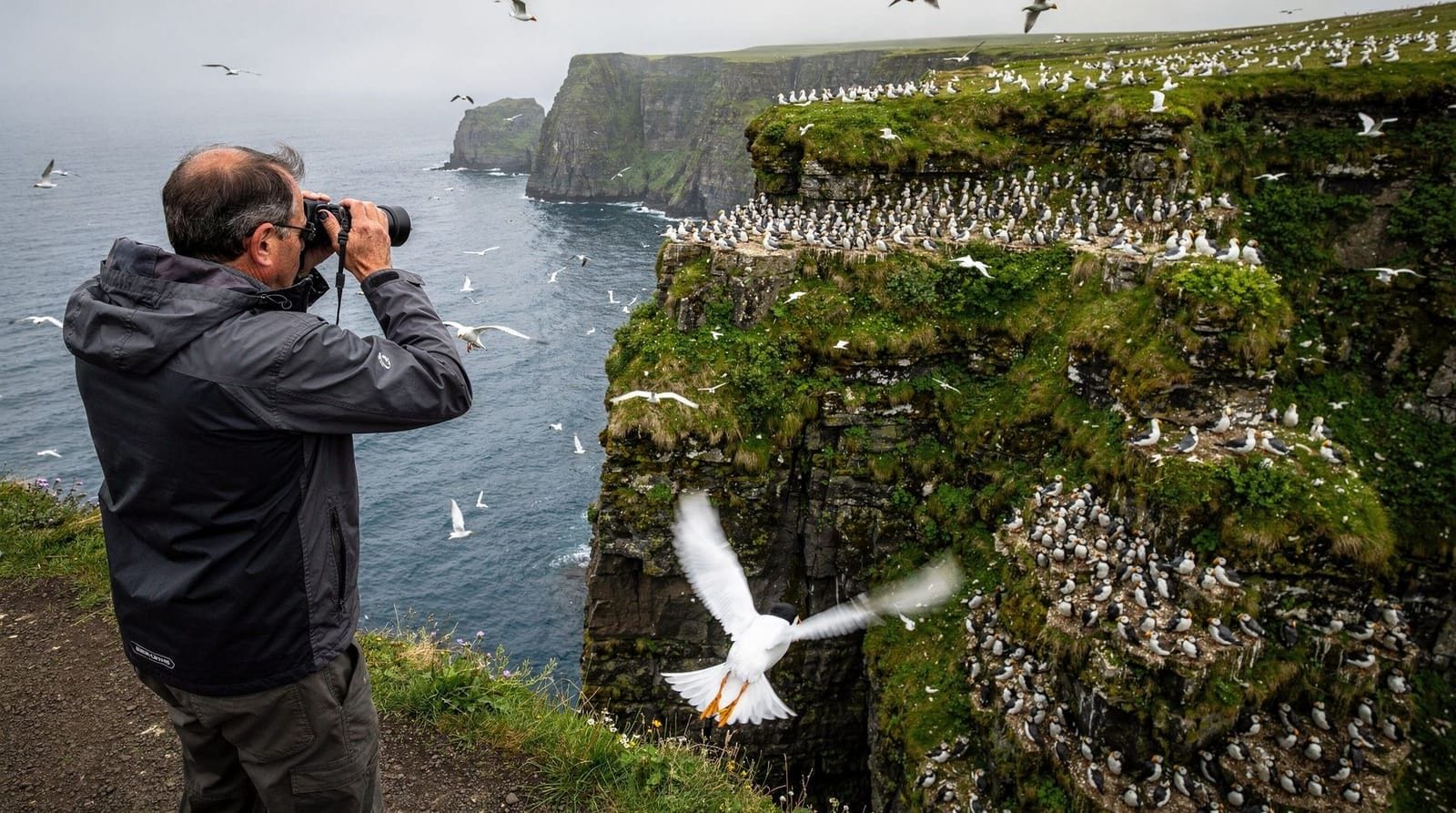
Látrabjarg extends 14 km along the western tip of the Westfjords — and because the Westfjords reach further west than any other part of Iceland, this is also the westernmost point of Europe. The cliffs rise between 40 and 440 metres above the Atlantic. In the breeding season (May to August), they host one of the world’s most concentrated seabird colonies: puffins, razorbills, guillemots, kittiwakes, fulmars, and gannets in numbers that make comparable sites elsewhere feel underpopulated.
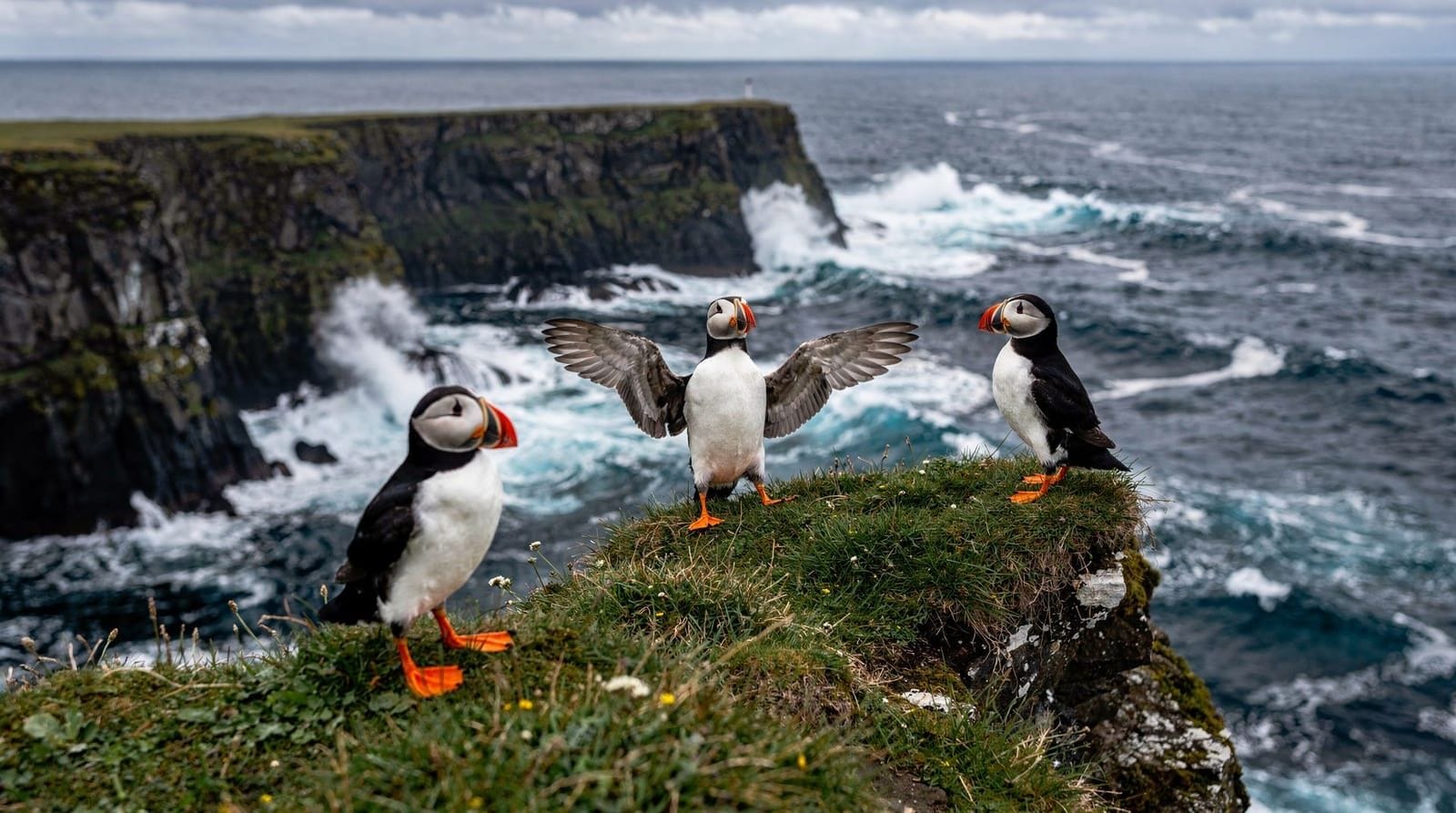
What makes Látrabjarg specifically famous to wildlife photographers is the puffin behaviour. The birds nest in burrows immediately at the cliff edge and have limited natural wariness of humans — they will often remain within 1–2 metres of a person sitting quietly. This is not because they are tame; it is because the cliff edge they choose for nesting is inaccessible from below and they have learned that the large animals at the top do not present a threat. The result is close-up photographs that require nothing more than patience and a mid-range zoom lens.
| Facilities at the cliffs | None beyond a car park; no toilets, café, or signal beyond the Bjargtangar lot |
| Fuel & supplies | Last fill-up and supermarket in Patreksfjörður, 60 km east |
| Mobile signal | Patchy to absent along the final gravel stretch and at the cliffs themselves |
| Road surface | Sealed to within 15–20 km of the cliffs, then single-track gravel |
| Families | Manageable for older children who can be trusted near unfenced edges; not suitable for toddlers |
Getting to Látrabjarg
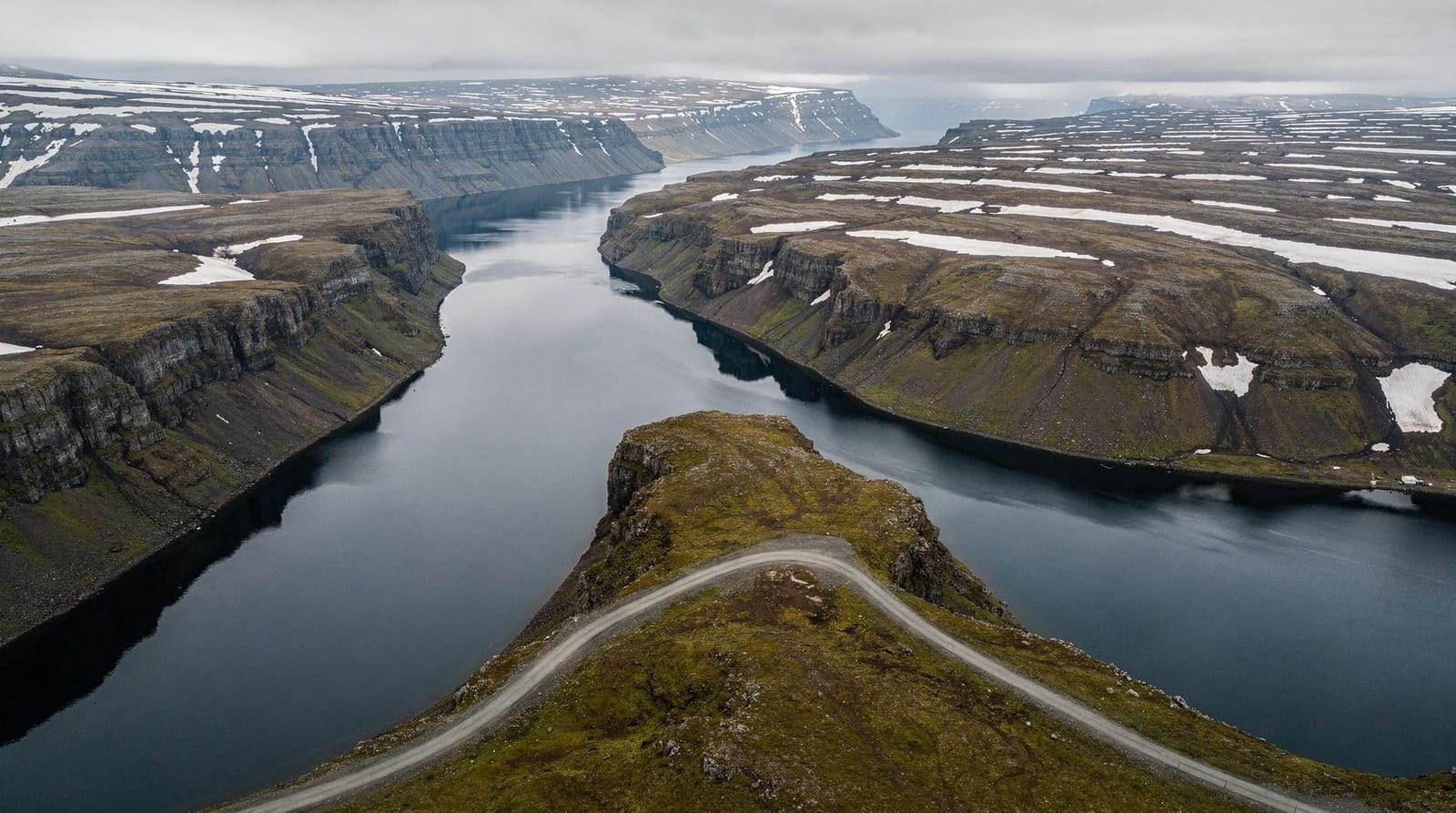
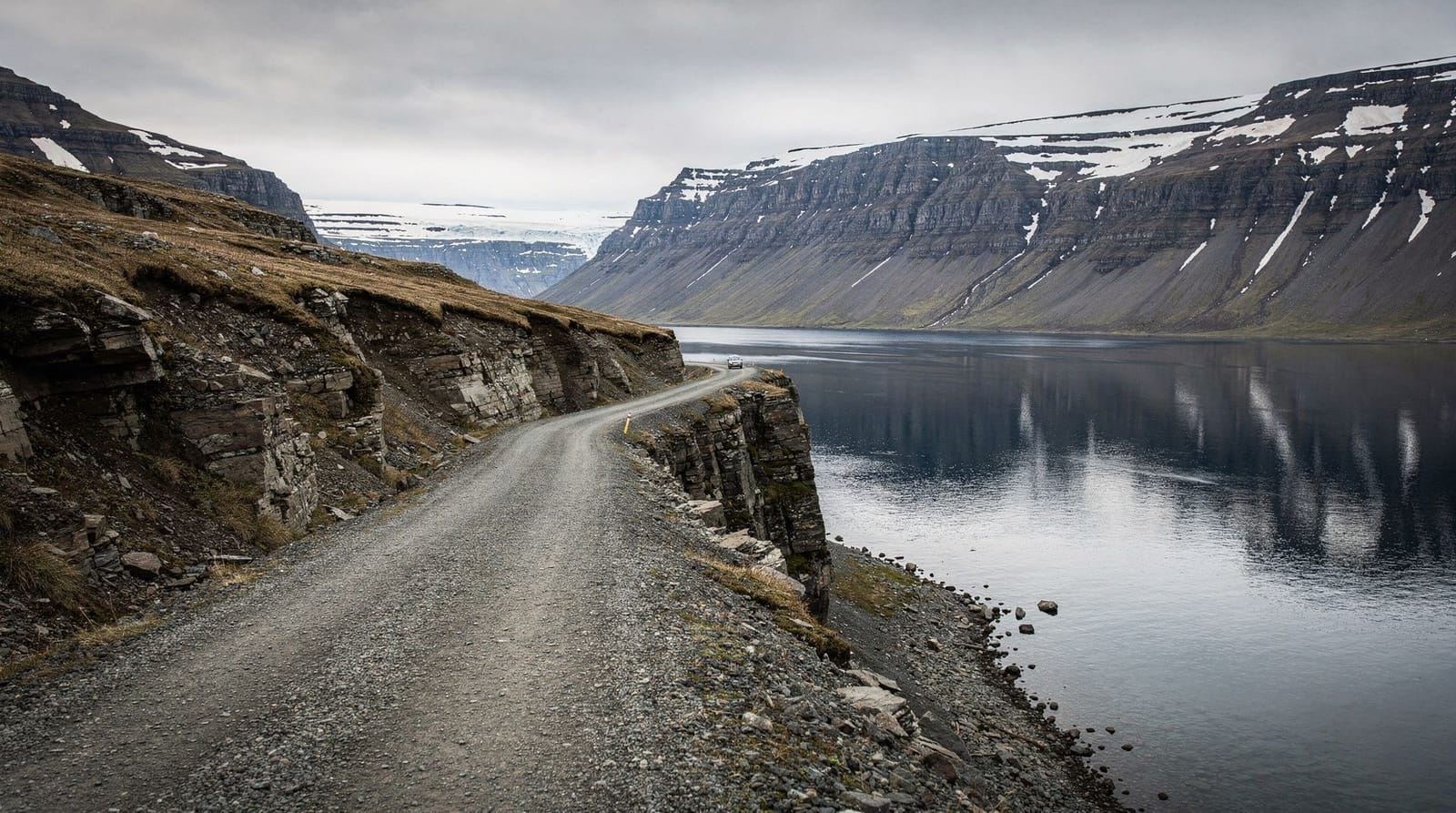
The cliffs are at the far western end of the southern Westfjords, about 60 km from Patreksfjörður on a road that is partly gravel. The last 15–20 km are on a single-track gravel road. This is passable in a 2WD car in summer with careful driving but becomes slow on the rough sections. 4WD is more comfortable and less likely to scrape the underside on ruts. There is no public transport.
From Reykjavík: approximately 350 km via Borgarnes and the Route 60 Westfjords road — minimum 5 hours, realistically 6 with fuel stops and road conditions.
From Brjánslækur (ferry from Stykkishólmur): Route 62 west to Patreksfjörður, then Route 612 to the cliffs — about 100 km (2 hours). This makes the ferry from Snæfellsnes the most logical approach for a Látrabjarg-plus-Dynjandi loop.
The car park at Látrabjarg (Bjargtangar lighthouse end) is the standard starting point. A signed trail follows the cliff edge for several kilometres — walk as far as you like and return the same way.
What to see and when
Puffins: the Atlantic puffin is the primary attraction. They arrive at the cliffs from approximately mid-May, breed through June and July, and begin departing in late August. Peak close-up access is typically mid-June to late July. Earlier in the season (May) the birds are present but often further from the path edge; by late July they are at maximum density and accessibility.
Puffins at Látrabjarg sit at the cliff edge or in their burrow entrances with their bills full of sand eels — which makes for a classic image of the bird most associated with Iceland. The bird’s direct gaze, the colourful beak, and the cliff background are all present and accessible here without specialist equipment or a boat.
Razorbills and guillemots: these breed in the cliff faces below the puffin burrows, often in dense colonies. Watching them spiral up from below in large numbers is part of the cliff experience. Razorbills are particularly concentrated at the Bjargtangar end.
Gannets: a large gannet colony exists at the eastern end of the cliff system, about 3–4 km from the car park. If gannets are your primary target, walk east rather than west. The gannet is Iceland’s largest seabird; their plunge-diving off the cliff edge is visible from the path.
Fulmars: present throughout the cliff system from March onward. They nest on every ledge and fly in continuous spirals along the cliff face. Their habit of ejecting stomach oil on anyone who disturbs them is worth knowing if you plan to lean over cliff edges.
Safety at the cliffs
The cliff edges are unfenced and there are no barriers. At some points the path comes within 0.5 metres of drops of 100+ metres. This requires basic awareness. The biggest risk is not careless walking but crawling to the cliff edge for photographs — several visitors per season require rescue after slipping on wet grass. Do not go to the cliff edge prone or crawling. Do not lean over the edge for a different angle. The photographs from a safe standing position are as good as anything you will get.
Wind can be strong at the cliff edge. On gusty days — common in the Westfjords — do not stand at the extreme edge.
Patreksfjörður as a base
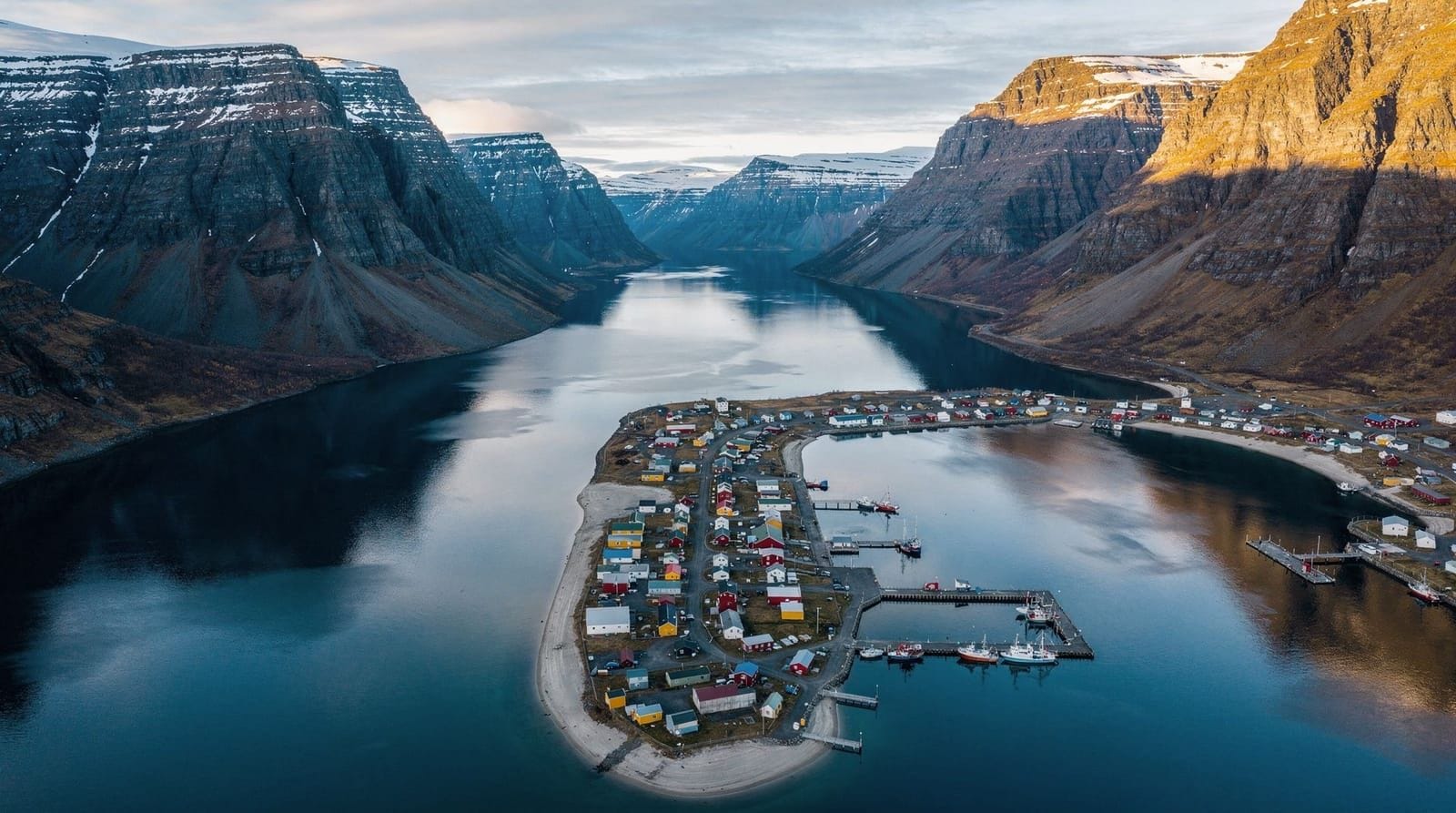
Patreksfjörður is the nearest town, about 60 km east of the cliffs. It has a petrol station, a Samkaup supermarket, a swimming pool (geothermal, around 1,200 ISK / €8), and several guesthouses. The main restaurant (Heimabyggð) is modest but serves standard Icelandic dishes. Accommodation runs 18,000–28,000 ISK for a double room in summer. Book in advance — the town has limited capacity and Látrabjarg visitors fill it quickly in July.
There is no accommodation at the cliffs themselves. Camping is sometimes done in the car park area (no formal site, no facilities) — feasible but basic.
Rauðasandur beach
About 30 km from the Látrabjarg car park, accessible via a rough road north from the Rte 612/614 junction. Rauðasandur is a 10-km red-sand beach on the south coast of the southern Westfjords — the sand is genuinely red/orange, derived from crushed shell material rather than volcanic basalt. It is one of Iceland’s most unusual beaches and sees very few visitors. The beach is exposed to Atlantic swells; not a swimming beach, but a walk along the waterline is worthwhile.
Combining with the Baldur ferry
The logical Westfjords route for visitors arriving via the Snæfellsnes peninsula uses the Baldur ferry from Stykkishólmur to Brjánslækur. From the ferry dock, Route 62 goes west to Patreksfjörður and Látrabjarg, then north via Route 60 to Dynjandi and Ísafjörður. This creates a natural south-to-north Westfjords loop that covers all three major sights without backtracking.
Alternatively, the three-day guided tour from Reykjavík covers the Westfjords including Látrabjarg as a single operated trip with all transport handled.
3-day Westfjords guided tour from Reykjavík — includes Látrabjarg bird cliffsSeasonal guide to Látrabjarg
Mid-May to early June (early season)
Puffins arrive at Látrabjarg from mid-May. Early in the season the birds are establishing territories and pairing — they are present at the cliff edge but less settled into burrow routines. The crowds are also at their lowest. The road to the cliffs (especially the last 15–20 km) may still have soft sections from winter if the spring has been wet. Late May and early June offer a good puffin-to-crowd ratio.
Mid-June to late July (peak puffin season)
Peak breeding activity. Puffins are at the burrow entrances consistently throughout the day, returning from fishing trips with beaks full of sand eels. This is the best window for the classic puffin portrait photograph. July is the busiest period for visitors but Látrabjarg never reaches the crowd density of south Iceland’s popular sites — even in July, a morning visit will see perhaps 20–50 other visitors on the 14-km cliff.
August
Puffins begin preparing to depart. By mid-August many burrows are empty and the birds are spending more time at sea. Early August is still good; late August is marginal. The cliff is accessible and worth visiting but do not plan a Látrabjarg trip specifically for puffins in the last week of August.
After the puffin season (September–April)
The cliffs themselves are accessible year-round and the other seabirds (fulmars, guillemots from the lower nesting ledges) are present outside the puffin season. The cliff landscape in winter and autumn is dramatic. But if Atlantic puffins are the primary motivation, September onwards is not the right timing.
The cliff walk in detail
From the Bjargtangar car park, a faint path follows the cliff edge eastward. There are no distance markers, no formal trail infrastructure, and no facilities beyond the car park. Walk as far as you like in either direction from the lighthouse.
First 500 metres (west of car park, toward the lighthouse): the densest puffin burrow concentration for most of the season. This is where the standard close-encounter puffin photographs happen.
500 metres to 2 km east (back from the lighthouse): razorbill and guillemot colonies on the cliff faces below. Less accessible for photography without leaning over the edge — which is not recommended.
2–4 km east (extended walk): the gannet colony. Gannets are the largest seabird in Iceland; their plunge-diving off the cliff is visible from the path. Getting to the gannet area and back takes 2–3 additional hours. This extension is worthwhile for serious birdwatchers but not necessary for a general visit.
The Bjargtangar lighthouse (westernmost point of Europe): a working lighthouse at the western tip of the cliff system. The building itself is unremarkable; the significance is geographical — this is the westernmost point of mainland Europe. A short walk from the car park.
Practical details for visiting the cliffs
Clothing and gear
Wind is a constant on the Látrabjarg headland. Even in July, gusts of 30–40 km/h are common and are not considered extreme conditions for this location. A windproof outer layer is mandatory regardless of air temperature. Rain gear is advisable — Atlantic weather can arrive quickly without dramatic cloud build-up.
Footwear: the path involves grass, coastal rock, and wet patches near burrow entrances. Trail shoes or walking boots are more practical than trainers. Avoid smooth-soled shoes.
Photography equipment
Puffins at Bjargtangar are approachable enough that a standard kit lens (18–55mm equivalent) fills the frame comfortably when the bird is settled at a burrow entrance. A 70–200mm telephoto gives more flexibility for distant birds and for shooting without disturbing the subject. A low shooting angle (sitting or kneeling to puffin eye level) produces significantly better images than standing height. Bring a spare memory card — the per-shot rate at Látrabjarg is high for any camera user.
Timing within the day
The best light at Látrabjarg is late afternoon and evening (5 p.m. to 9 p.m. in summer), when the Atlantic light is warm and directional and the puffins are most active returning from sea. Morning visits (before 9 a.m.) have lower crowd levels and clear light. The midday window (11 a.m. to 3 p.m.) has the most visitors and the flattest light.
Rauðasandur in more detail
The red-sand beach at Rauðasandur deserves more than a brief mention. It extends for approximately 10 km along the south coast of the southern Westfjords and is one of Iceland’s most unusual beaches — the sand colour ranges from orange to deep red depending on the light, and it is almost always deserted. The Atlantic swell conditions make it unsuitable for swimming, but the beach walk in evening light is excellent.
The access road is a rough gravel descent from the Rte 612/614 junction. In wet conditions it requires 4WD. In dry summer conditions a careful 2WD can make the descent but turning around at the bottom requires space — check the car park area before committing.
The beach has no facilities whatsoever. Bring water and food. A 2–3 km walk along the waterline is the practical visit.
Rauðasandur is sufficiently distinctive that it warrants consideration as the primary south Westfjords destination for visitors who have already seen the more-photographed locations and want something less circulated.
Patreksfjörður: base for the southern Westfjords
Patreksfjörður (population around 660) is the main service town for the southern Westfjords and the practical overnight base for a Látrabjarg visit. The town has:
- Samkaup supermarket (adequate range, open until 7 p.m. in summer)
- N1 petrol station
- Geothermal swimming pool (outdoor, around 1,200 ISK / €8 entry)
- Westfjords Visitor Centre (for road and weather conditions)
- Several guesthouses: expect 18,000–26,000 ISK for a double room in July
The Bræðraborg restaurant is the main dining option. Fish dishes and lamb, main courses 3,500–5,000 ISK (€24–€34). Open for dinner.
There is no accommodation between Patreksfjörður and the cliffs themselves. The 60-km drive each way is not a day-trip from Reykjavík in any practical sense — it requires staying in Patreksfjörður or (with the ferry combination) being already in the Westfjords.
Látrabjarg versus the rest of the Westfjords
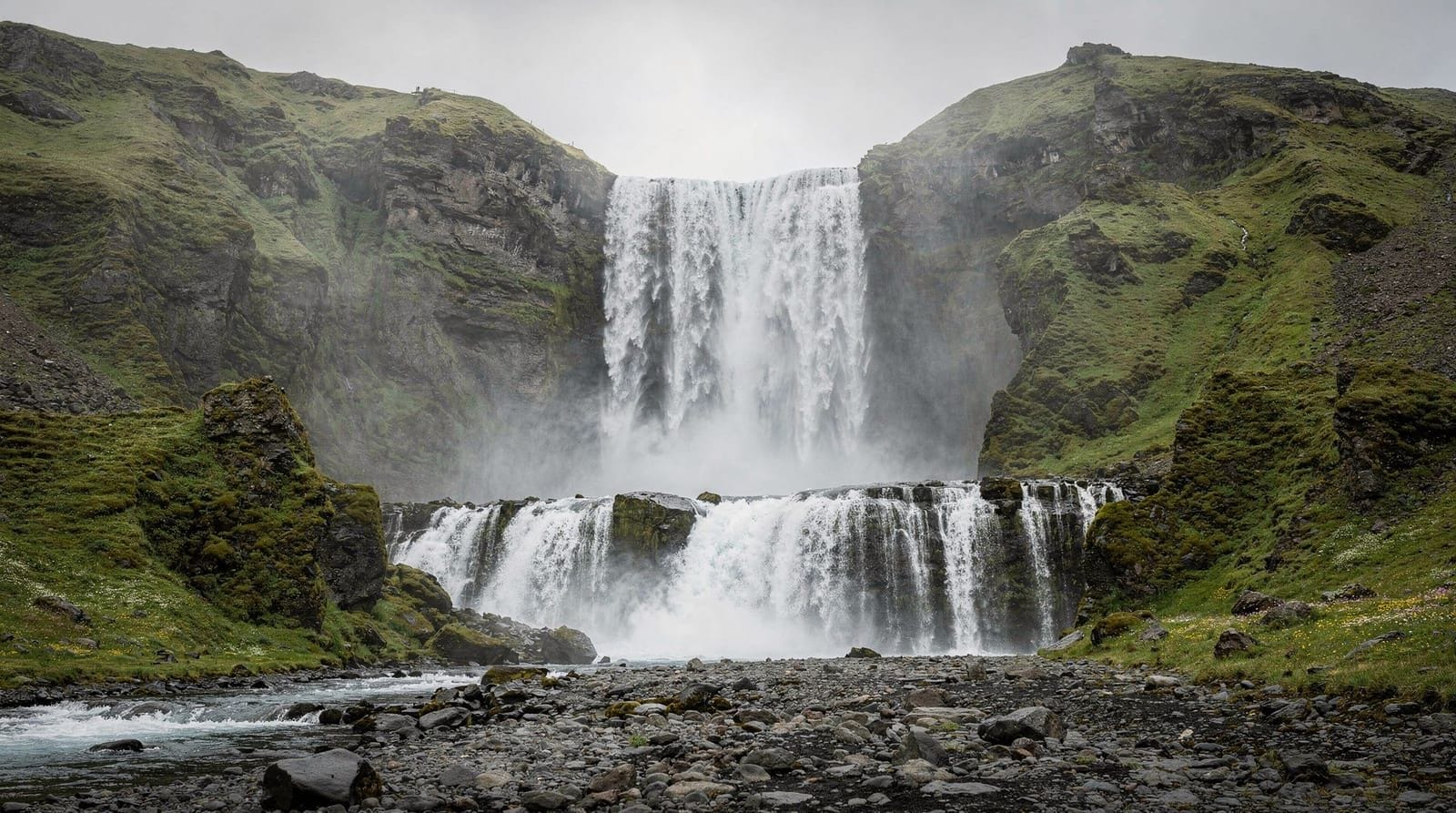
Visitors weighing whether the long drive to Látrabjarg is worth it should see it in context with the rest of the Westfjords region. Dynjandi waterfall, about 2 hours north via Route 60, is the region’s other unmissable stop — a tiered 100-metre cascade that most visitors rate as highly as Látrabjarg itself. Ísafjörður is the practical hub for the northern Westfjords, with the region’s best concentration of restaurants and accommodation. A realistic itinerary treats Látrabjarg, Rauðasandur, Dynjandi, and Ísafjörður as a single southwest-to-north loop rather than isolated day trips — see the Westfjords 5-day itinerary for how the driving times actually fit together.
For visitors deciding between the Westfjords detour and staying on the main Ring Road, the honest comparison is time versus reward: the Westfjords add several driving days that a standard Ring Road loop skips entirely, but no other region delivers this combination of empty roads, dramatic fjords, and close wildlife access. The best day hikes in Iceland guide and birdwatching-iceland guide both rank Látrabjarg among the country’s top outdoor experiences despite the distance.
Frequently asked questions about Látrabjarg
What time of day is best for puffin photography at Látrabjarg?
Puffins are most active at the cliff edge in late afternoon and evening (5 p.m. to 9 p.m. in summer) when they return from fishing trips with beaks full of sand eels. This timing aligns with Iceland’s summer light conditions — long evenings with warm directional light. Morning visits (before 9 a.m.) are also productive and less crowded.
How close can you get to the puffins?
Within 1–2 metres is typical for puffins sitting at burrow entrances. They do not actively approach humans but also do not flee unless you move aggressively toward them. A standard 70–200mm telephoto lens is more than adequate; a 24–70mm standard zoom produces frame-filling shots. Moving slowly and sitting down to their level produces the best results.
What’s the best base if I want to see both Látrabjarg and Dynjandi?
Patreksfjörður works for Látrabjarg, but if you’re covering both sights on the same loop, an overnight further north — near Ísafjörður or along Route 60 — spreads the driving more evenly. A typical two-night pattern is: night one in Patreksfjörður after Látrabjarg and Rauðasandur, then drive north via Dynjandi to Ísafjörður for night two. This avoids the temptation to rush both major sights into a single long day.
Is Látrabjarg accessible in a normal rental car?
The final 15–20 km is on a rough gravel road that 2WD cars handle with care. The road is more comfortable in a 4WD. Normal rental cars (small 2WD hatchbacks) can make the journey in dry summer conditions but may struggle in wet conditions or if the road has recent ruts. Check at the rental agency before going.
How long should I spend at the cliffs?
A minimum of 2 hours to walk from the Bjargtangar car park, see the puffin colonies, and have time to sit and watch. Three hours is more comfortable. If you want to reach the gannet colony at the eastern end, add 2 more hours for the return walk.
Are there other good puffin spots in Iceland?
Yes — Vestmannaeyjar (Westman Islands) has the largest Atlantic puffin colony in the world. Látrabjarg is the best for close-up walking access; Vestmannaeyjar is for sheer numbers. The puffin-watching-iceland guide compares all Iceland’s main puffin sites.
Is it safe to walk near the cliff edge?
The cliffs are unfenced. Walking the path at a normal distance from the edge is safe. Approaching the edge for a closer look at birds below involves risk — the grass is slippery when wet. Several visitors are rescued from the area each season after falls. Do not crawl toward the edge and do not lean over.
Should I visit Látrabjarg on a self-drive trip or a guided tour?
Both work, and the choice mostly comes down to time and driving comfort. Self-driving gives you control over how long you spend at the cliffs and lets you add Rauðasandur, but the round trip from Reykjavík demands at least 2–3 days including an overnight in Patreksfjörður. See the self-drive vs guided tour guide for the trade-offs; the 3-day guided Westfjords tour below handles the driving, timing, and accommodation logistics if you’d rather not manage a gravel-road itinerary yourself.
Is Látrabjarg better than Vestmannaeyjar for puffins?
They serve different priorities. Vestmannaeyjar (the Westman Islands) holds the largest Atlantic puffin colony in the world by sheer numbers, but requires a ferry and the birds are more scattered across the island’s cliffs. Látrabjarg’s advantage is proximity — you walk directly along the burrow line and the birds are consistently within a few metres. If close, easy photography is the priority, Látrabjarg wins; if the trip already includes the south coast, Vestmannaeyjar is the more convenient add-on.
Top experiences
Bookable activities with verified prices and instant confirmation on GetYourGuide.
Top-rated experiences in Látrabjarg bird cliffs
Best-rated activities across GetYourGuide and Viator.

Dynjandi Waterfall & Farm Visit Tour from Isafjordur Port
- Viator

3,5-Hour Sightseeing Tour To Dynjandi Waterfall
- Viator

Westfjords Whale Watching
- Viator

Small Group Tour Ísafjordur Dynjandi Waterfall & Secret Stop
- Viator

Dynjandi Waterfall in a Supertruck
- Viator

4 Hour Isafjordur and Dynjandi Tour With Photo Stops
- Viator