Birdwatching in Iceland — species, sites and seasonal guide
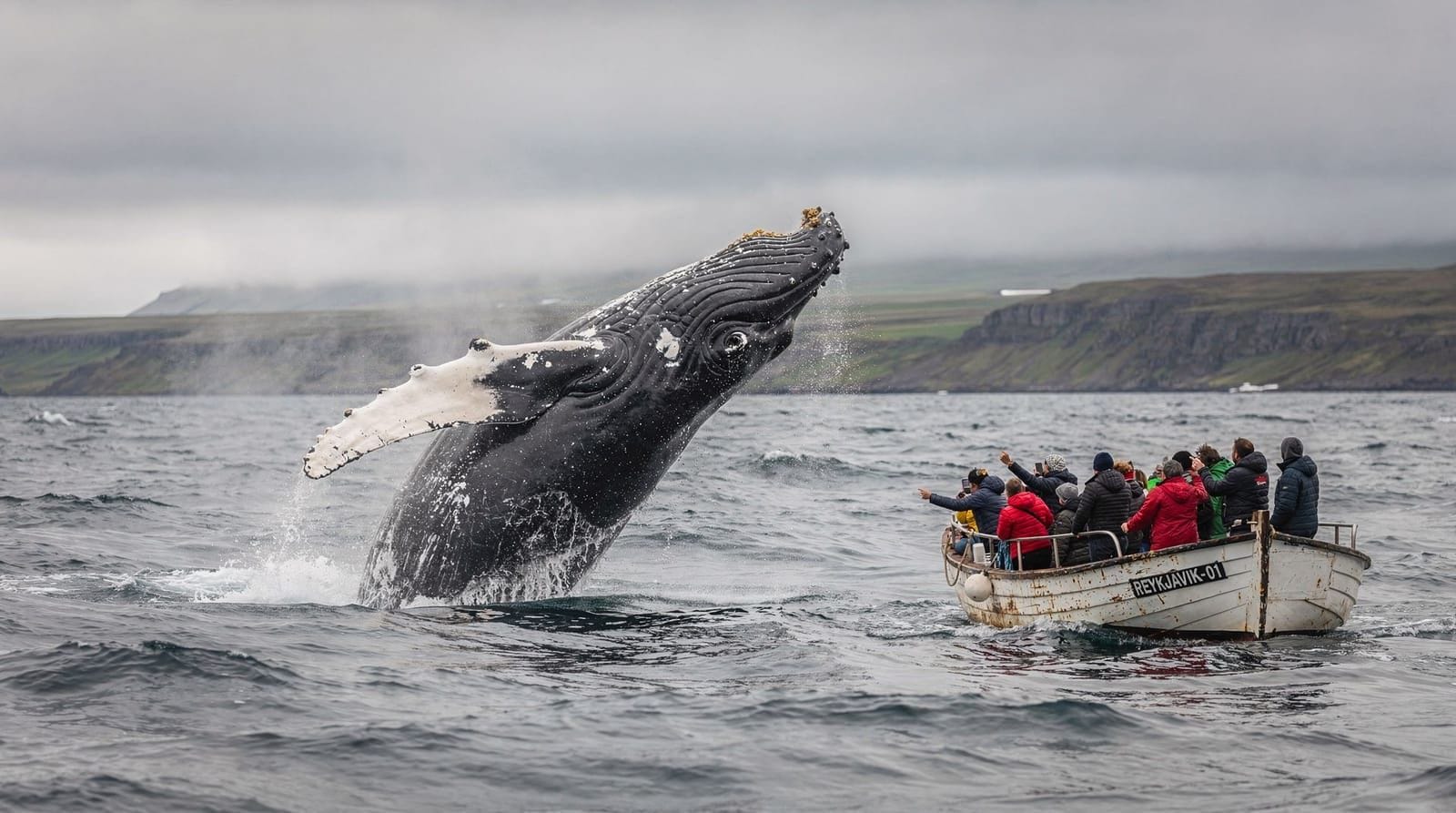
Húsavík: Whale watching cruise and puffins
Duration: 3-3.5 hours, from $134
Is Iceland good for birdwatching?
Iceland is one of the best birdwatching destinations in Europe. Around 80 species breed here, with seabirds especially well represented. Key sites include Látrabjarg (puffins, razorbills, guillemots), Lake Mývatn (ducks and waders), and the Snæfellsnes Peninsula (diverse coastal species). Peak season is May–July.
Iceland’s birding reputation rests on a specific set of superlatives: the world’s largest Atlantic puffin colony, Europe’s biggest great skua population, a Lake Mývatn breeding duck assemblage that has no parallel anywhere on the planet, and some of the most accessible cliff seabird viewing in the North Atlantic. For a country with just 103,000 km², it punches far above its weight for birds.
The lack of native land predators (no foxes, no mustelids, no snakes) has allowed ground-nesting species to evolve with relatively little fear of people. This is why Látrabjarg puffins will sit within arm’s reach and why Arctic terns are aggressive rather than fleeing — they evolved to mob predators, not run from them.
| Where | Lake Mývatn, Látrabjarg, Snæfellsnes, Garðskagi, Þingvellir |
| Cost | Free at most sites; guided boat tours around 12,000–14,000 ISK |
| Best season | May–July for breeding species; Sept–Oct for rare vagrants |
| Equipment | 8x42 or 10x42 binoculars; spotting scope optional |
| Booking | Not required for self-guided sites; book boat tours 1–3 days ahead |
Key species
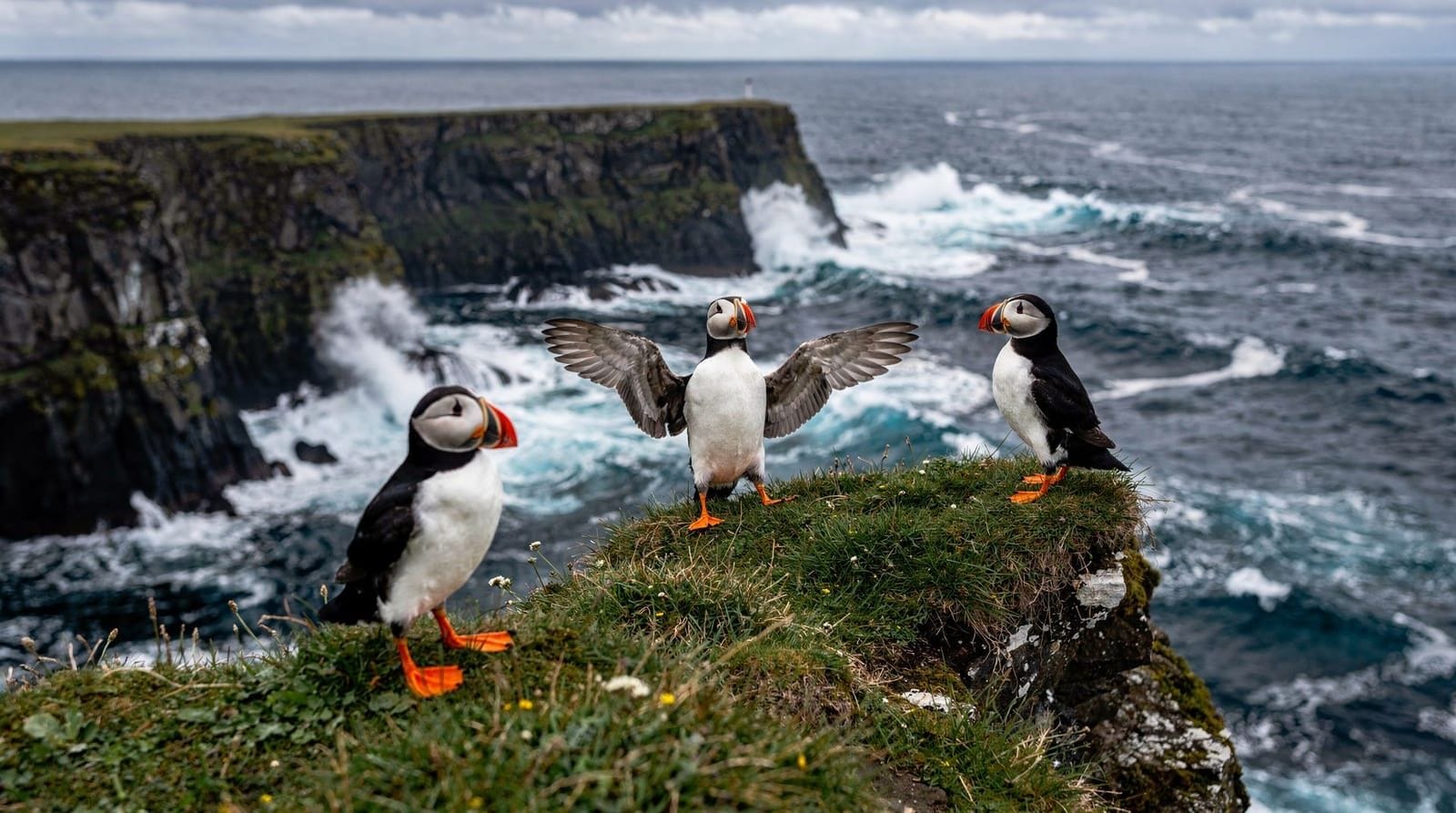
Atlantic puffin (Lundi): Iceland’s best-known bird. Roughly 60% of the world’s 9–12 million breeding pairs return to Iceland each spring. Present April–August. See our puffin watching guide for detail.
Arctic tern (Kría): Iceland has one of the world’s largest Arctic tern breeding populations. These small, elegant birds migrate annually from Iceland to Antarctica and back — a round trip of roughly 90,000 km, the longest migration of any animal. In summer they are everywhere: nesting in car parks, on roadsides, in city parks. Their dive-bombing attacks near nests are vigorous — a stick held above the head prevents them targeting the highest point (your head).
Great skua (Skúmur): Iceland is the European stronghold for this large, piratical seabird. They steal food from other seabirds in flight and occasionally prey on adult puffins. Best seen at Ingólfshöfði cape on the south coast, where dozens of pairs breed on the headland. Like terns, they will dive-bomb intruders — more intimidating given their size (55 cm wingspan of 140 cm).
Whooper swan (Álft): the national bird of Iceland. Large resident populations breed at wetlands throughout the country. Pairs are often seen on roadside ponds and lakes. They winter in Scotland and Ireland and the return migration of large flocks in spring is a significant event.
Harlequin duck (Straumönd): Iceland is one of the few places in Europe where this spectacular duck breeds. Males in breeding plumage — black, blue, white, and chestnut — are among the most colourful European ducks. Best sites: fast-flowing rivers near Mývatn (particularly Laxá river) and Þingvellir.
Gyrfalcon (Fálki): Iceland’s largest falcon and a bird of genuine awe. They breed on remote cliff faces throughout Iceland, hunting ptarmigan and ducks. Sightings require patient watching from high vantage points. The Mývatn area and east fjords produce regular sightings.
White-tailed eagle (Haförn): the largest bird of prey in Europe, with a wingspan up to 2.45 m. Iceland’s population fell to near extinction in the 20th century due to persecution but has recovered to around 100 pairs. Breiðafjörður bay in west Iceland and the Westfjords coast are the most reliable viewing areas.
Barrow’s goldeneye (Hússönd): Iceland is the only European breeding location for this North American duck, which colonised Iceland during the last ice age. Best site: Mývatn and the associated Laxá river system, where up to 1,000 birds breed annually.
Site guide
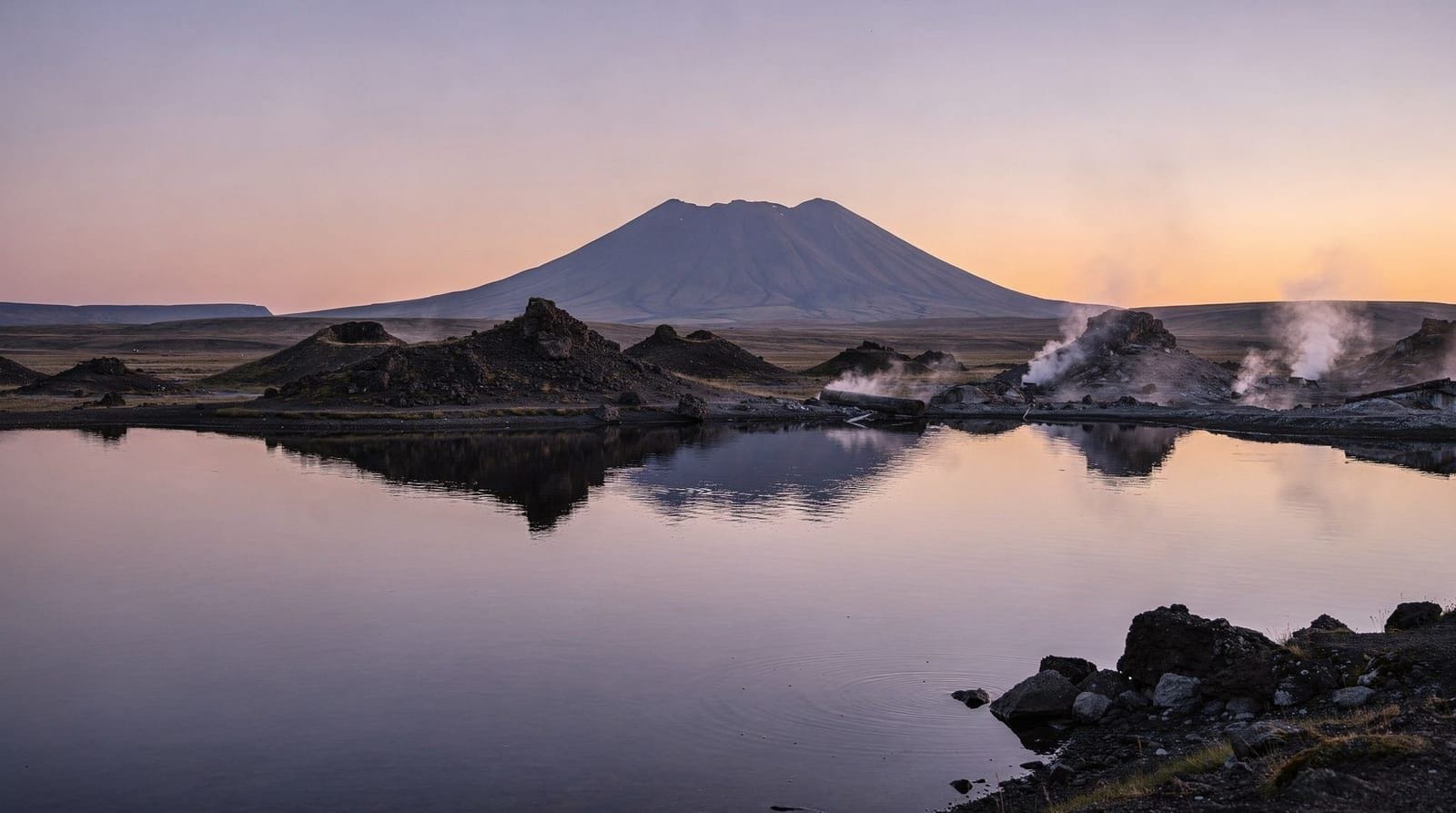
Lake Mývatn — Iceland’s premier birding site
Lake Mývatn in north Iceland is a shallow, geothermally active lake covering 37 km². Its extraordinary productivity — a result of algal and invertebrate abundance — supports 15 breeding duck species simultaneously in late May. This is the highest concentration of breeding duck species of any lake on Earth.
Species to expect in June–July: greater scaup, tufted duck, Barrow’s goldeneye, common goldeneye, long-tailed duck, red-breasted merganser, pintail, wigeon, mallard, teal, gadwall, harlequin duck, Slavonian grebe, and horned grebe. The surrounding wet meadows have snipe, golden plover, whimbrel, and red-necked phalarope.
The lake perimeter road (Route 848) gives access to multiple viewpoints. Early morning birding (06:00–08:00) is substantially better than midday — duck activity peaks in morning hours.
Látrabjarg — the seabird cliff
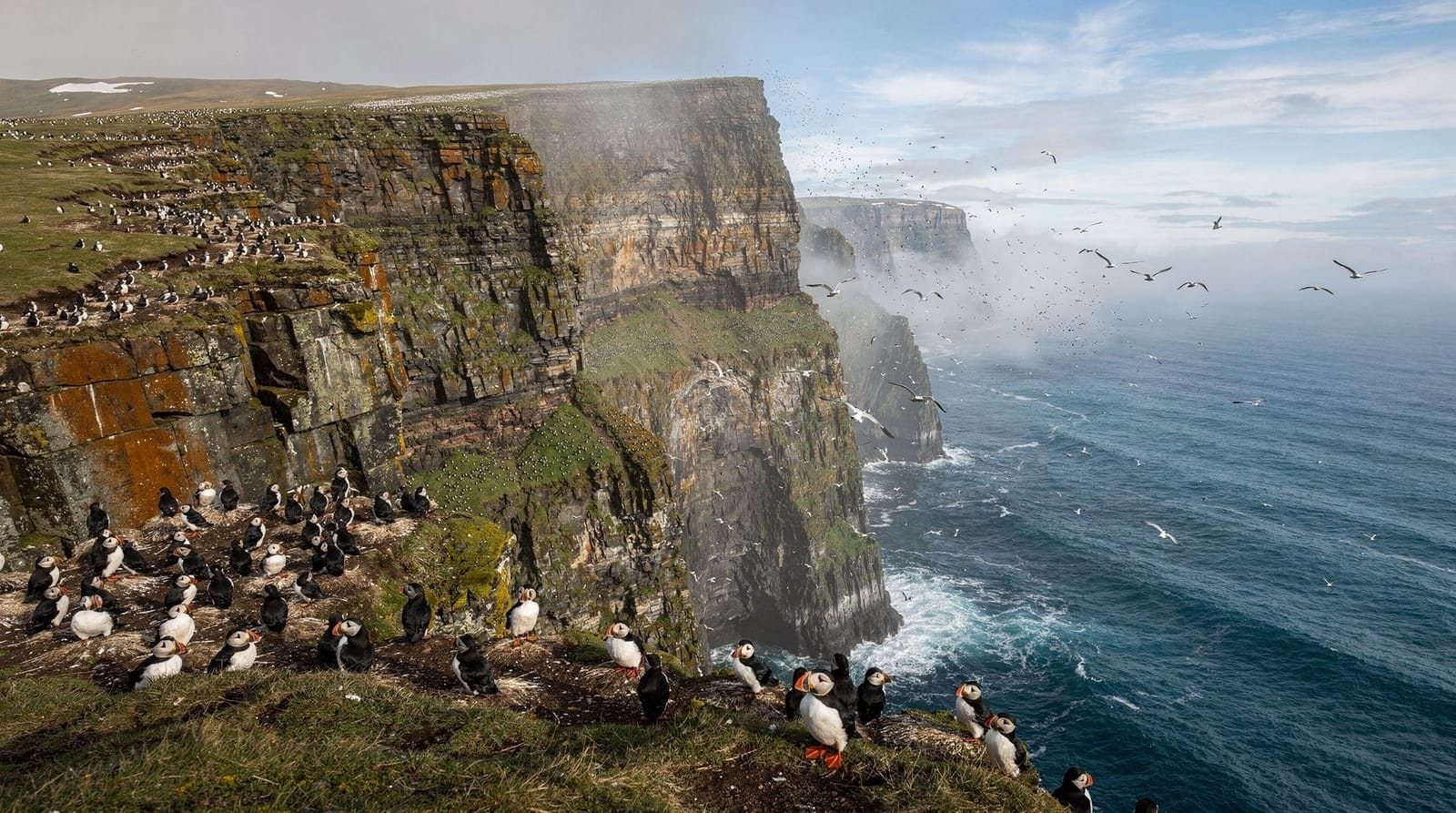
The 14 km cliff at Iceland’s western tip holds one of the great seabird concentrations of the North Atlantic. In June and July, the lower cliff ledges are densely packed with guillemots and razorbills stacked shoulder to shoulder; puffins occupy the turf above; fulmars patrol the thermals; kittiwakes call from every available ledge.
The access road from Brjánslækur ferry landing runs to the lighthouse car park at the cliff tip. The path along the cliff edge is clear but watch your footing — the drop is immediate. See our Látrabjarg guide for full logistics.
Snæfellsnes Peninsula
The Snæfellsnes Peninsula offers diverse coastal birding — seabirds at Arnarstapi and Hellnar, ducks and waders in Staðarsveit wetlands, and regular white-tailed eagle sightings. The glacier cap area hosts snow buntings. The Grundarfjörður area is also one of Iceland’s orca-watching sites (winter months).
Garðskagi (Reykjanes)
The Garðskagi lighthouse at the tip of the Reykjanes Peninsula near Keflavík airport is Iceland’s premier vagrant-watching site. Positioned at the corner where species arriving from North America often first make landfall, it is productive for rare waders and songbirds in autumn (August–October). The lighthouse keepers’ old cottage houses the local birdwatching club’s ringing station.
Þingvellir National Park
Þingvellir is excellent for harlequin duck on the Öxará river, Slavonian grebe on the lake, and raptors above the rift valley walls. The area is underrated for birding compared to its geological fame.
South Coast wetlands
The coastal wetlands between Selfoss and Vík hold large concentrations of breeding waders (golden plover, black-tailed godwit, dunlin, red-necked phalarope) and waterfowl in late May and June. Greylag geese with goslings are ubiquitous.
Seasonal calendar
| Month | Key species and events |
|---|---|
| April | First arrivals: golden plover, wheatear, redwing, Arctic tern, puffin |
| May | Duck breeding at Mývatn peak; pink-footed geese staging; wader activity |
| June–July | All breeding species present; puffin and seabird colonies at peak |
| August | Puffin fledging; vagrant watch begins; juvenile waders move through |
| September–October | Peak rarity season; geese staging; wader migration |
| November–March | Resident species (ptarmigan, raven, redpoll); gyrfalcon hunting |
Practical tips
Optics: binoculars 8x42 or 10x42 are standard. A spotting scope is very useful for Mývatn duck identification and cliff watching at Látrabjarg but not essential.
Resources: The Icelandic Institute of Natural History publishes an excellent annotated checklist (available at icelandicbirds.is). The app eBird (by Cornell Lab) has comprehensive Iceland data and site guides contributed by visiting birders.
Midge protection at Mývatn: the lake takes its name (mý = midge) from the enormous midge swarms that peak in June–early July. A fine mesh head net makes sustained birding far more comfortable. The midges are non-biting but density can be extreme.
Disturbance: Iceland’s nature is relatively undisturbed and bird species are generally more approachable than in heavily visited regions. Maintain normal buffer distances from nesting birds. Do not flush waders from nests. The most sensitive species are white-tailed eagles (stay 200+ m from nest sites) and gyrfalcons (approach no closer than 300 m to cliff nest sites).
Planning a birding itinerary
Iceland’s birding highlights can be accessed on a standard tourist itinerary, but dedicated birding trips require different planning.
For casual birdwatchers on a general Iceland trip: Mývatn (ducks, including Barrow’s goldeneye and harlequin), Þingvellir (harlequin duck on the Öxará river), Dyrhólaey (puffins, great skua), and Ingólfshöfði (skua and puffins) cover the highlights without a special itinerary.
For dedicated birders: a 7–10 day circuit covering Reykjanes (vagrants, September–October), Snæfellsnes (white-tailed eagle, Breiðafjörður seabirds), Látrabjarg (auk cliff), Mývatn (ducks), and the east fjords (Borgarfjörður Eystri puffins, Hengifoss area raptors) gives a complete overview of Icelandic breeding birds.
For the vagrant/rarity experience: Garðskagi lighthouse (October–November) and Snæfellsnes headlands in autumn are the primary vagrant sites. Timing requires flexibility and local intelligence from the Icelandic Birding Pages (ibirding.is) or eBird Iceland.
Bird photography in Iceland
The combination of approachable birds, extraordinary light, and dramatic landscapes makes Iceland one of the world’s best bird photography destinations.
Puffins at Látrabjarg: the gold standard of accessible seabird photography anywhere in Europe. 100mm lens minimum at 1–2 m distance; 300mm for tighter portraits. Golden-hour light (04:00–07:00 and 20:00–23:00 in June) is dramatically better than midday.
Ducks at Mývatn: the lake’s flat, open geography means good light in early morning (07:00–09:00). Long lenses (400–600mm) are useful for identification across the water. The Laxá river outlet on the north shore concentrates harlequin ducks in fast-flowing water — excellent action photography opportunities.
Arctic terns: terns in flight against blue sky or dark lava are one of Iceland’s cleanest wildlife images. Fast shutter speeds (1/2000s minimum) required for sharp wing images. 400–600mm recommended for frame-filling shots.
Whooper swans: large, white birds that tolerate moderate approach. Roadside wetlands with reflecting water and mountain backdrops are common throughout Iceland. Excellent golden-hour subjects.
Gyrfalcon: demanding photography requiring patience and spotting. Cliff nest sites are best approached at dawn before the bird becomes active. A 500–600mm lens with 1.4x teleconverter is the appropriate kit.
Iceland birdwatching resources
eBird Iceland: the Cornell Lab of Ornithology eBird platform has extensive Iceland data, annotated hotspot guides for Mývatn, Garðskagi, Þingvellir, and other key sites. Trip reports from previous visitors give realistic expectations.
Icelandic Institute of Natural History (ni.is): publishes the authoritative annotated checklist of Icelandic birds. Free download.
Icelandic Birding Pages (ibirding.is): the active rare bird reporting site maintained by local birders. Real-time rare bird alerts during autumn migration.
WINGS and Sunbird birding tours: both run specialist Iceland tours with expert guides, typically 10–12 days covering all major sites. These are the most efficient approach for first-time birders wanting to maximise species count.
Rare and unusual sightings in Iceland
Iceland’s position at the intersection of Palearctic and Nearctic faunal regions, and its exposure to both European and North American migrants, creates conditions for rare bird sightings that attract specialist birders from across Europe.
North American vagrants: species like buff-breasted sandpiper, white-rumped sandpiper, lesser yellowlegs, and pectoral sandpiper appear annually in September–October, primarily at Garðskagi and coastal wetlands around the Reykjanes Peninsula. These are the same species that European listers travel to Iceland specifically to see without crossing the Atlantic.
Rare gulls: Iceland is a significant location for unusual gull sightings, particularly at fish processing plants around Reykjavík and Akureyri harbours. Glaucous gull is common in winter; Iceland gull, Ross’s gull, and occasional rare North American gulls appear.
Snowy owl: an irregular winter visitor from the east, most often seen in the highlands and on the northern coast. Sightings are unpredictable and generate significant excitement in the local birding community when reported.
Common crane: appears occasionally as a spring migrant, most often in April. A species not typically associated with Iceland but occurring with increasing frequency as European populations expand.
Identifying regular Icelandic passerines: Iceland has a reduced passerine list compared to Britain — robin, house sparrow, starling, and chaffinch are absent. Regular breeding species include meadow pipit, white wagtail, snow bunting, common redpoll, and Eurasian wren. The redwing (a thrush) is Iceland’s most abundant bird by population estimate.
Choosing a base by priority species
| Priority | Best base | Why |
|---|---|---|
| Ducks (Barrow’s goldeneye, harlequin) | Lake Mývatn | Highest concentration of breeding duck species on Earth |
| Seabird cliffs | Westfjords (Látrabjarg) | Dense, accessible auk and puffin colonies |
| White-tailed eagle | Snæfellsnes Peninsula or Westfjords coast | Breiðafjörður bay holds Iceland’s core population |
| Rarities and vagrants | Garðskagi (Reykjanes) | First landfall point for North American strays |
| Convenience from Reykjavík | Akurey boat trip or Þingvellir | Both under an hour from the capital |
Combining birdwatching with the rest of an Iceland trip
Most visitors are not dedicated birders, and birdwatching in Iceland works well folded into a broader itinerary rather than requiring its own trip. A Golden Circle day trip already passes Þingvellir, so 20–30 minutes at the Öxará river for harlequin duck costs nothing extra in time. A south coast day trip toward Vík or Jökulsárlón passes through great skua territory at Ingólfshöfði. If whales are also on your list, the best time for whales and puffins guide covers the overlapping May–August window in more depth, and a combined whale watching in Iceland boat trip usually passes seabird colonies en route.
For dedicated birders willing to build a route specifically around species, Lake Mývatn and the Snæfellsnes Peninsula are the two stops worth the most detour time outside a standard Ring Road itinerary.
Frequently asked questions about birdwatching in Iceland
Do I need a guide for birding in Iceland?
For common species at well-known sites (puffins at Látrabjarg, ducks at Mývatn), no guide is needed. A guide adds significant value for finding rarer species (gyrfalcon, Barrow’s goldeneye, vagrant waders) and understanding wetland ecology. Several specialist companies run guided birding tours.
What is the best month for birdwatching in Iceland?
June offers the best combination of breeding activity, accessible species, and reasonable weather. May is excellent for arriving migrants and duck courtship at Mývatn. September is best for vagrant-watching.
Can I see ptarmigan in Iceland?
Rock ptarmigan are widespread year-round in Iceland’s interior highlands and coastal heath. In winter they gather in large flocks and are highly visible against snow. In summer the brown breeding plumage is well camouflaged. The Þórsmörk and interior Highland areas are reliable.
Is there anything special about Iceland’s birdsong?
Iceland has relatively few passerines compared to mainland Europe, so the dawn chorus is dominated by Arctic terns, golden plovers (a haunting fluting call), and meadow pipits rather than the woodland species familiar from Britain or Germany. The raven, Hrafn, is ubiquitous and culturally significant — associated with Odin in Norse mythology.
Can I combine birdwatching with a whale watching tour?
Yes. Most whale watching boats from Reykjavík, Húsavík, and Akureyri pass seabird colonies or resting areas en route, and several operators explicitly market combined whale-and-puffin trips. See the best time for whales and puffins guide for the shared seasonal window.
Top experiences
Bookable activities with verified prices and instant confirmation on GetYourGuide.
Top experiences
Best-rated activities across GetYourGuide and Viator.