Best time for whales and puffins in Iceland — month-by-month guide
Húsavík: Whale watching cruise and puffins
Duration: 3-3.5 hours, from $134
When can you see both whales and puffins in Iceland at the same time?
June and July offer the best overlap. Puffins are present and active at colonies from late May to mid-August. Humpback whales peak in June–August at Húsavík. Minke whales and dolphins are available from April through October. Early June is the optimal single month if you can only pick one.
Two questions arise consistently from visitors planning Iceland for wildlife: “When can I see whales?” and “When can I see puffins?” They are related questions because both species follow seasonal migration patterns that intersect most productively in a specific summer window.
This guide lays out the honest month-by-month picture so you can align your dates with your priorities.
| Best single month | June (whales at Húsavík, puffins at peak) |
| Overlap window | Late May to mid-August |
| Top base | Húsavík for whales, Látrabjarg or Westman Islands for puffins |
| Typical tour cost | Around 12,000–14,000 ISK per adult for a 3-hour combo tour |
| Booking lead time | 2–3 days ahead in summer; 2–3 months for Húsavík accommodation in July |
Month-by-month wildlife calendar
April
Whales: Minke whales begin arriving in Icelandic waters from April, though numbers are still building. Whale watching tours are available from Reykjavík year-round and Húsavík usually opens for the season in April. Dolphin activity is picking up. Success rates ~75–80%.
Puffins: Atlantic puffins start arriving at Icelandic colonies from late April. Early arrivals are visible at Látrabjarg and the Westman Islands from approximately the 20th–25th of the month. Numbers are still low and birds may not be active at burrows yet.
Summary: April is early for both. Suitable for travellers who want to overlap with the arrival of the season and have lower expectations.
May
Whales: Minke whale numbers build significantly in May. The humpback vanguard begins arriving in Skjálfandi Bay by mid-to-late May. Dolphin activity is strong throughout Faxaflói and the north coast. Success rates from Húsavík: 85–90%; from Reykjavík: ~80%.
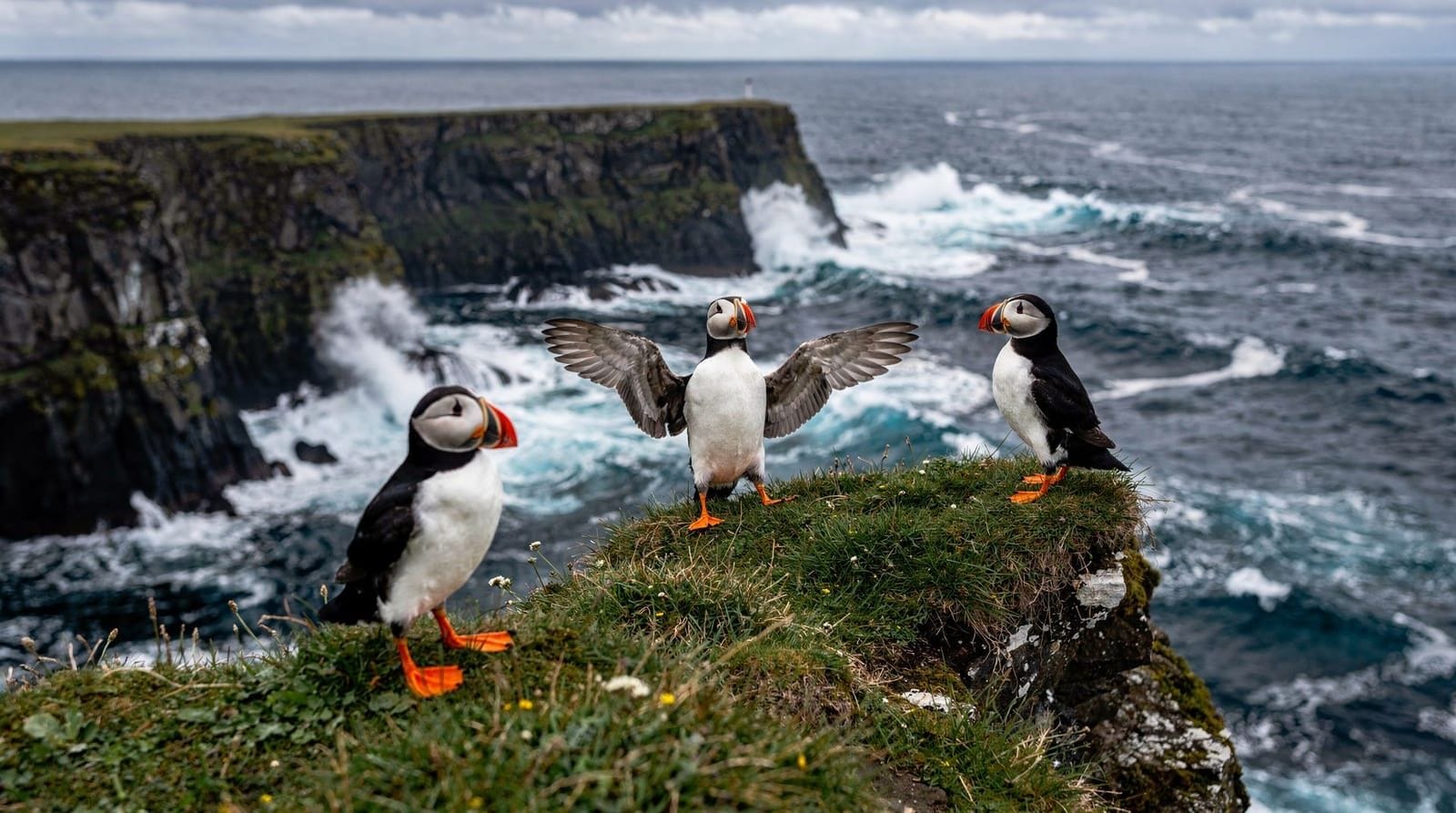
Puffins: Puffin colonies become active and visible throughout May. By late May, birds are at burrows, displaying, and beginning incubation. Látrabjarg, Akurey (Reykjavík), and the Westman Islands all have good numbers.
Summary: May is a good early-season option with both species accessible. Fewer tourists, lower prices, calmer seas on average.
June
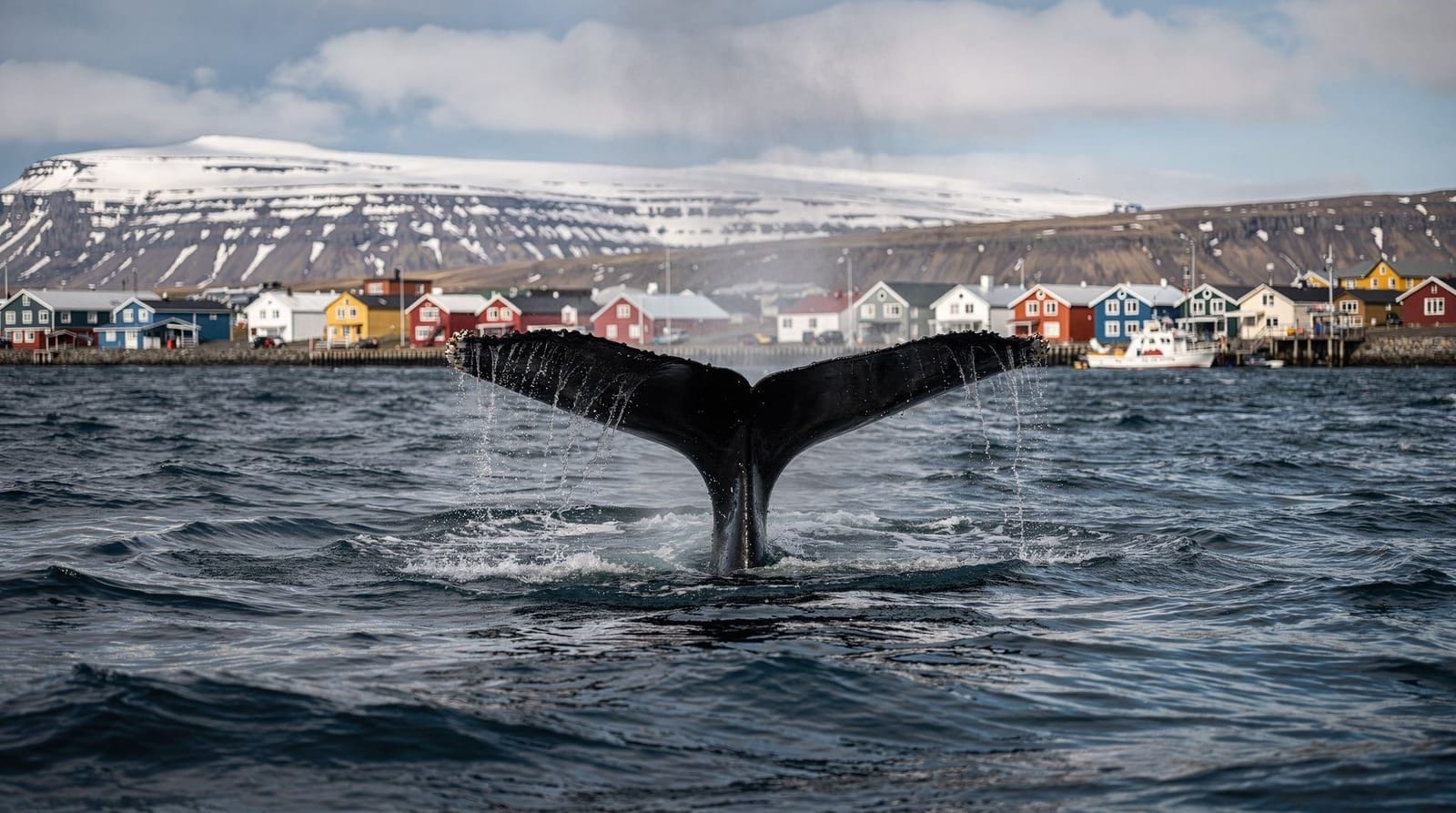
Whales: June is the single best month for whale watching in Iceland. Humpback whales are aggregating in Skjálfandi Bay in large numbers. Success rates from Húsavík: 97–99%. Reykjavík success rates: ~88–90%. Blue whale sightings in the north begin to occur.
Puffins: Peak colony activity. Adults are actively feeding chicks, making multiple fish-carrying flights per day. Colonies at Látrabjarg, Westman Islands, Borgarfjörður Eystri, and Akurey/Lundey (Reykjavík) are at full occupancy.
Summary: June is the optimal month for whale and puffin watching simultaneously. The weather is generally good, daylight is near 24 hours, and both species are at peak abundance.
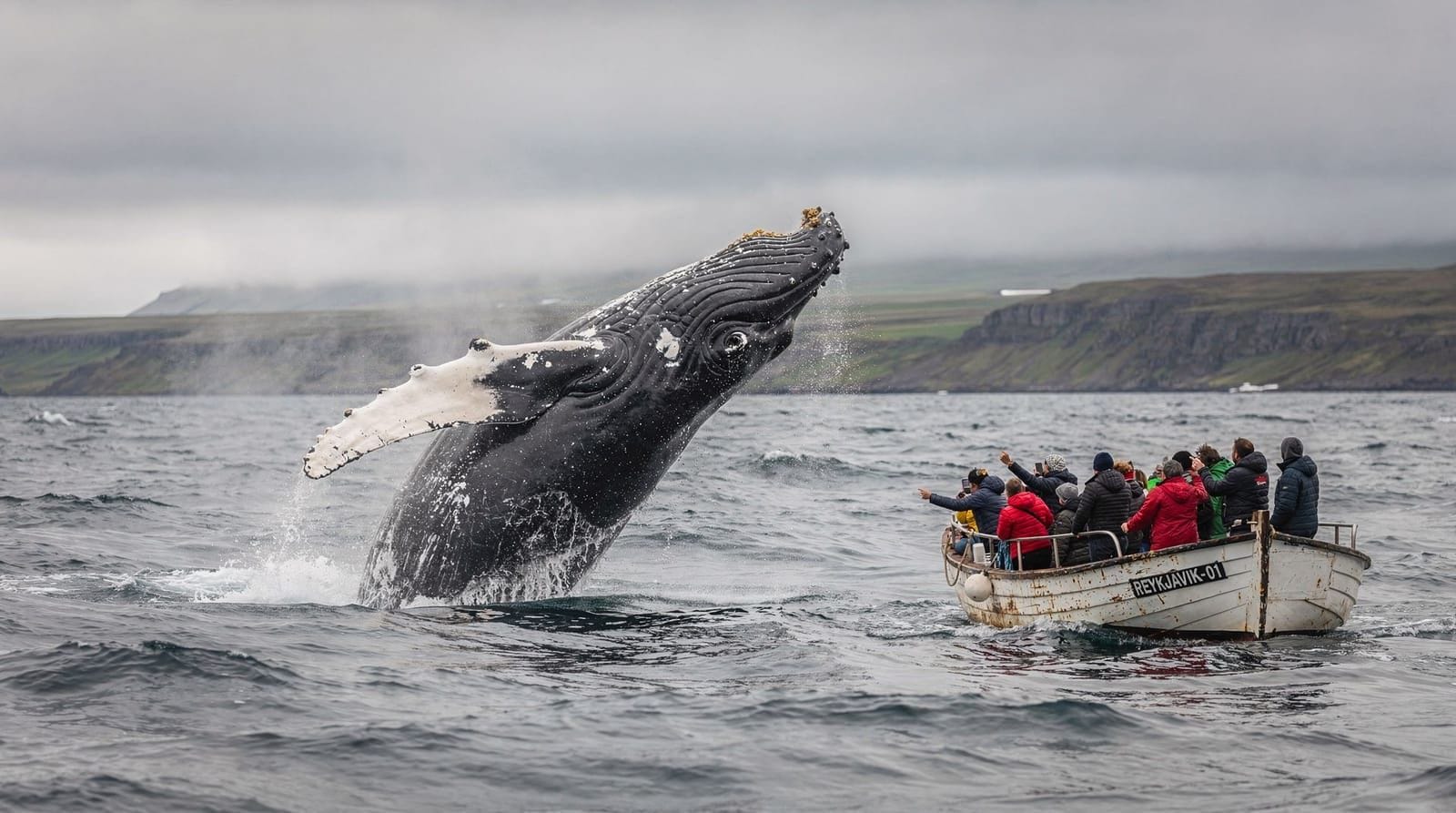
Húsavík whale watching and puffins cruise — best in June–July, humpbacks and puffins on the same trip, 3-hour guided tourA RIB reaches the feeding grounds in a third of the time of a schooner, which matters when the window between weather systems is short: a RIB express whale watching run is the option that still sails on a marginal forecast.
July
Whales: Humpbacks remain concentrated in Skjálfandi Bay through July. Peak humpback season continues. Minke whales and dolphins are abundant throughout Icelandic coastal waters. Success rates remain 95–99% at Húsavík.
Puffins: July is the peak puffin month in terms of feeding activity — adults are making dozens of daily fish deliveries. Chicks are growing and approaching fledging age by late July. Photography is excellent in the long golden evening light.
Summary: July is the busiest tourist month in Iceland, with highest prices and advance booking advisable. Wildlife-wise it equals June, and the longer visitor window means more tour options.
August
Whales: Early August remains strong for humpbacks. By mid-to-late August, humpback numbers at Húsavík begin declining as individuals start dispersing. Minke whales and dolphins continue to be reliably present.
Puffins: The puffin season begins winding down. In early August, colonies are still active but adults are preparing to fledge chicks. By mid-August, many birds have left or are leaving. Late August at Westman Islands still produces sightings, but Reykjavík and Húsavík colonies are substantially quieter.
Summary: Early August is still excellent for both. Late August is for whales (minke/dolphin) rather than puffins.
September
Whales: Whale watching continues with good success rates (minke whales and dolphins). Humpbacks become rare by mid-September. Orca sightings begin increasing in some years as herring schools push into fjords.
Puffins: Essentially finished. Stragglers occasionally remain at the Westman Islands into early September, but puffin watching should not be expected.
Summary: September is the transition month — whale watching is still worthwhile; puffins are gone. Good for aurora hunting overlapped with autumn marine wildlife.
October–March
Whales: Reykjavík whale watching runs year-round. Minke whales and dolphins are the primary sightings; success rates vary 50–70%. In the Snæfellsnes area, orca sightings peak from October to February as herring concentrate in the fjords (particularly Grundarfjörður).
Puffins: Absent from Iceland. They are at sea in the open North Atlantic until the following spring.
Summary: Winter whale watching from Reykjavík is viable but weather-dependent and not the wildlife spectacle that summer offers. Orcas are a specific winter opportunity for those willing to travel to Snæfellsnes.
Practical planning advice
Fixed dates in summer: if you have no flexibility, any date from late May to mid-August will give you access to both species. Prioritise whale watching in June–July for humpback encounters; puffin tours can be added on any day within that window.
Short Iceland stopover (2–3 days): Reykjavík whale and puffin combo tours from the Old Harbour are the most efficient option. One 3-hour combo tour covers both. See our Reykjavík whale watching guide and puffin watching guide.
Trip specifically for humpback whales: arrange your itinerary around Húsavík in June or early July. Build in a buffer of 2–3 days in case of weather delays. Combine with the Diamond Circle and Lake Mývatn.
Cannot visit in summer: winter tours from Reykjavík for minke whales and dolphins are possible and often impressive when conditions cooperate. Orca watching at Grundarfjörður (October–February) is a specialist but potentially spectacular experience.
Reykjavík whale and puffin excursion — 3-hour combo tour, Old Harbour departure, best May–AugustSpecies windows — at a glance
| Species | First arrival | Peak season | Last reliable sighting |
|---|---|---|---|
| Harbour porpoise | Year-round | Year-round | Year-round |
| Minke whale | April | May–September | October |
| White-beaked dolphin | May | June–August | October |
| Humpback whale | Late April | June–August | September |
| Blue whale | May | June–July | August |
| Orca | October | October–February | March |
| Atlantic puffin | Late April | June–July | Mid-August |
| Arctic tern | Late April | May–August | September |
Húsavík versus Reykjavík for the overlap season
If you have to choose one base for whale and puffin watching:
- Húsavík in June–July is dramatically better — humpbacks, puffins on the same trip, a world-class whale museum, and the authentic north Iceland setting
- Reykjavík is the practical choice for travellers on short itineraries who are not building their trip around wildlife specifically
For wildlife-focused travellers who are booking Iceland primarily for the marine life experience, the answer is clear: arrive by late May, base yourself at Húsavík for 2–3 nights in June, and add Reykjavík whale watching as a convenient second encounter.
Frequently asked questions about timing for whales and puffins
What if both whale watching and northern lights are my priorities?
Northern lights require darkness — they are invisible in the midnight sun of June–July. The Aurora season runs roughly September–March. Whale and puffin season is May–August. These do not overlap. You need to choose or make two visits.
Can I book whale and puffin tours with cancellation insurance?
Most operators allow free cancellation up to 24 hours before departure. GetYourGuide and other booking platforms offer cancellation protection. In summer, weather cancellations are rare; in shoulder season, build in flexibility.
Is there a way to see puffins and humpbacks on the same day?
Yes — the Húsavík whale and puffin combo tour naturally passes puffin islands in Skjálfandi Bay on the same trip. Available daily in June and July. See the tour listing above.
How far in advance should I plan for whale and puffin season?
If you want Húsavík in late June or July, book accommodation 2–3 months ahead — the town fills up and options are limited. Whale tour bookings can be made 2–3 days ahead in summer. Flights (especially the Akureyri domestic route) should be booked at least 3–4 weeks ahead.
Can I see puffins without a boat tour?
Yes. Cliff-top viewing at Látrabjarg, Dyrhólaey, Ingólfshöfði, and the Vík clifftop path all give close puffin views from land, free of charge, in season (late April to mid-August). Boat tours mainly add access to offshore colonies like Akurey and Lundey near Reykjavík, which have no land-based viewing option.
Is it better to see orcas than humpbacks?
They’re different experiences rather than one being objectively “better.” Orcas at Snæfellsnes (October–February) are a specialist winter sighting tied to herring migration, often seen from land or small boats in calmer fjord waters. Humpbacks at Húsavík (June–July) are a summer, boat-based experience with far higher encounter rates. Choose based on which season you’re actually travelling in rather than trying to rank the species.
Wildlife trip planning: building a complete itinerary
Visitors who want to see both whales and puffins efficiently benefit from an itinerary built specifically around the wildlife calendar rather than standard tourist routes.
Sample 7-day wildlife-focused Iceland itinerary (June):
Days 1–2: Reykjavík. Morning puffin watching from Old Harbour (1-hour express tour). Afternoon South Coast (Seljalandsfoss, Skógafoss, Reynisfjara). Overnight south coast near Vík.
Day 3: Morning: Ingólfshöfði tractor trailer tour (puffins + great skua, 3 hours). Continue to Jökulsárlón for the afternoon glacier lagoon. Overnight near Höfn.
Day 4: Drive north via Ring Road. Arrival at Lake Mývatn area, afternoon birdwatching circuit.
Day 5: Drive to Húsavík (90 min from Mývatn). Morning whale watching tour. Afternoon Húsavík Whale Museum and town. Overnight Húsavík.
Day 6: Full Diamond Circle (Ásbyrgi, Dettifoss, Mývatn loop). Return to Húsavík. Optional: second whale watching tour.
Day 7: Drive to Akureyri. Domestic flight to Reykjavík. Optional whale and puffin tour from Old Harbour if timing allows.
This itinerary covers: puffins at 3 locations (Akurey island, Ingólfshöfði, and via Húsavík boat), whales at 2 locations (Reykjavík and Húsavík), great skua, Arctic tern, ducks at Mývatn, and numerous other species. It is an active schedule with daily driving, but it covers the full range of Iceland’s accessible wildlife in a single trip.
What to do if you miss the season
Travelling to Iceland outside the May–August window does not mean no wildlife:
September: whale watching still viable (minke, dolphin). Final puffin stragglers at Westman Islands. Autumn seabird migration. Northern lights beginning.
October–November: orca season begins in Snæfellsnes. Migrating geese staging. Best vagrant birding season (Garðskagi). Aurora hunting in full swing.
December–March: winter landscapes. Northern lights peak season. Ice caves in Vatnajökull. Gyrfalcon more visible hunting ptarmigan in open landscape.
April: early arrivals of summer birds. Puffins beginning to arrive late month. Whale tour season opening. Spring light is extraordinary for photography.
The consolation of missing puffin season is typically an Iceland experience of a completely different character — winter light, aurora, ice cave access, and dramatically lower visitor numbers. Some travellers prefer this.
For the best advice on overall trip timing, see our best time to visit Iceland guide and the Iceland seasonal guide.
How weather affects whale and puffin watching
Weather in Iceland is genuinely variable and should be factored into wildlife plans:
Wind: the dominant factor for whale watching conditions. Beaufort 5–6 (21–27 knots) produces choppy conditions that reduce sighting opportunities and increase seasickness risk. Most tours are cancelled at Beaufort 7–8 (28–38 knots). June tends to have calmer average conditions than July or August in the north.
Rain: has minimal effect on whale watching — whales are just as present in the rain. Rain does affect photographer comfort and visibility at distance. For puffin photography, rain produces flat, dull conditions; overcast-but-dry is the best photographic weather.
Fog: can reduce tour effectiveness significantly — if visibility drops below 500 m, guides cannot spot surfacing whales until they are very close. Fog is most common at the Reykjanes Peninsula (around Keflavík airport area) and less common in north Iceland.
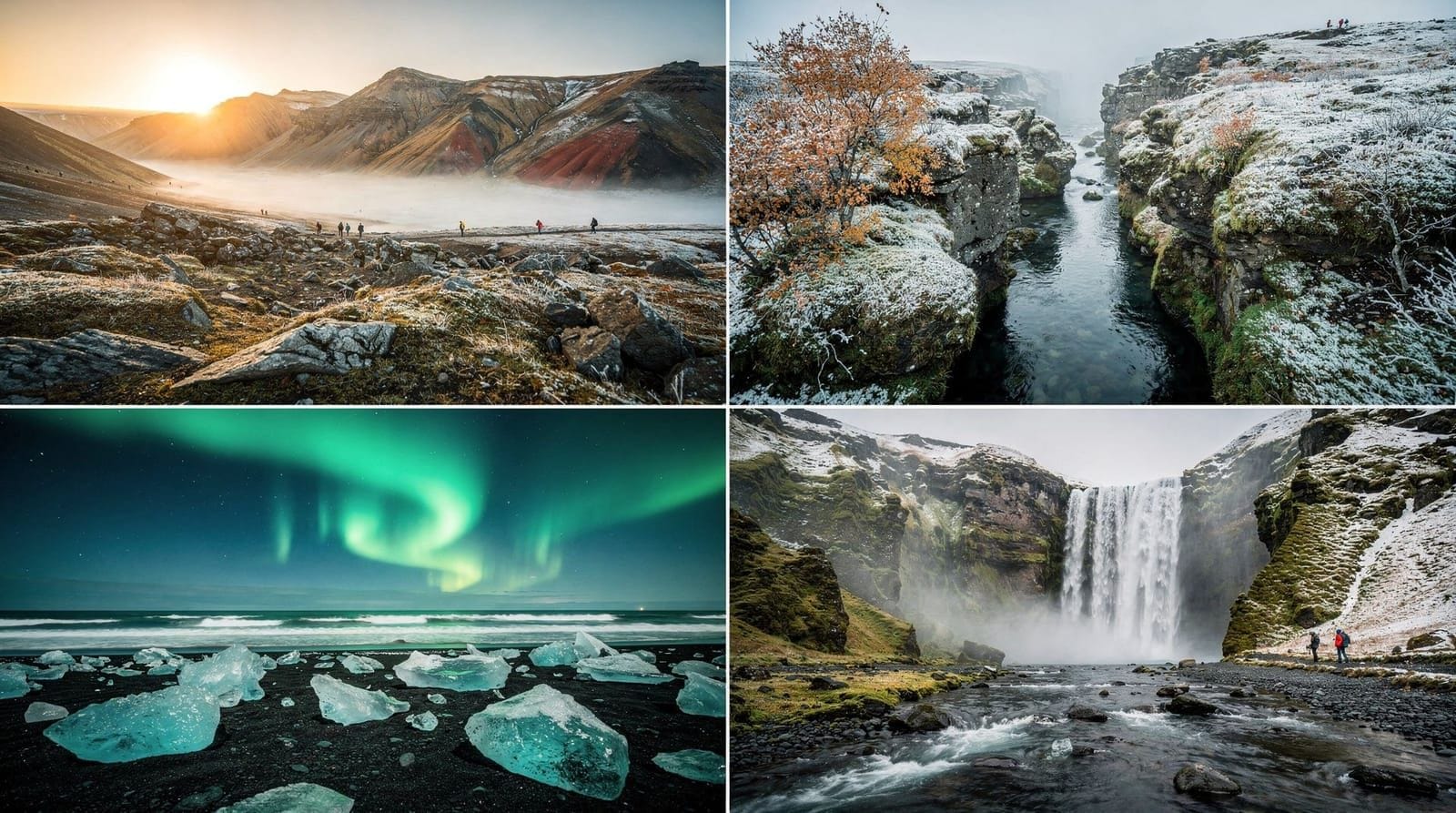
Aurora and wildlife season crossover: in September, there is a brief window where the northern lights begin to appear (after August 20 when nights become dark enough) and the tail end of the marine wildlife season overlaps. Minke whales and dolphins are still present; puffins are largely gone; aurora viewing is beginning. This narrow overlap window (late August to mid-September) is one of Iceland’s most pleasant travel periods — fewer crowds, comfortable temperatures, and the possibility of both wildlife and aurora in the same trip.
Reading cetacean success rate claims
Operator claims of “99% success rate” need context. In whale watching, a “success” is typically defined as at least one cetacean sighting per trip. This includes harbour porpoise sightings — which are recorded on almost every trip year-round from Húsavík.
A more meaningful metric is: “percentage of trips where humpback whales were observed” (for Húsavík in June–July, this is genuinely high — typically 80–90%); and “average number of cetacean encounters per trip” (varies widely by season and conditions).
When an operator says 97% success rate, they mean 97% of trips record at least one cetacean sighting. This is almost certainly true. What it does not tell you is whether that sighting was a brief dorsal fin glimpse of a minke whale or a 3-hour encounter with multiple humpbacks.
For honest calibration: Húsavík in June–July gives a good to excellent humpback encounter on approximately 80–85% of trips (based on operator log data). An excellent encounter means multiple surfacings within 30 m, tail flukes, and potentially surface-active behaviour. This is very high. Reykjavík gives a good dolphin or minke encounter on approximately 80–85% of summer trips; a humpback on approximately 10–20%.
Choosing your base: Reykjavík, Húsavík, Snæfellsnes or the Westfjords
Where you base yourself changes which species you’ll realistically see and how much driving your trip requires.
| Base | Best for | Trade-off |
|---|---|---|
| Reykjavík | Convenience, combo whale/puffin tours from Old Harbour, year-round departures | Fewer humpback encounters than Húsavík |
| Húsavík | Humpback whales June–July, whale museum, small-town atmosphere | 5–6 hour drive from Reykjavík; book accommodation early |
| Snæfellsnes Peninsula | Orca watching October–February, white-tailed eagles, coastal birdlife | Wrong season for puffins/humpbacks |
| Westfjords | Látrabjarg puffin cliffs, Ísafjörður whale watching, dramatic seabird colonies | Long drive or ferry; best May–August only |
If you also care about seabirds beyond puffins — great skua, Arctic tern, gyrfalcon — the birdwatching in Iceland guide and the Látrabjarg bird cliffs guide cover the dedicated sites in more depth. Seal colonies are a separate but complementary sighting opportunity along the same coastlines — see seals in Iceland for where they haul out. For a Húsavík-specific breakdown of tour operators and boat types, the Húsavík whale watching guide goes further than this page can. If your dates fall outside the wildlife window, the Westfjords still reward a visit for scenery and puffin cliffs earlier in the season.
Top experiences
Bookable activities with verified prices and instant confirmation on GetYourGuide.
Top experiences
Best-rated activities across GetYourGuide and Viator.