Whale watching in Húsavík — tours, operators and insider tips
Húsavík: Original whale watching
Duration: 3 hours
Which whale watching operator in Húsavík is best?
North Sailing, Gentle Giants, and Elding-Húsavík are the three main operators. North Sailing is the standout for sustainability — their oak schooners run on green fuel and marine biologists lead every trip. Gentle Giants offers more daily departures. Success rates across all operators in summer are 95–99%.
Húsavík has been called the whale watching capital of Europe, and for a specific, verifiable reason: no other bay in Iceland — or perhaps in all of the North Atlantic — offers the same summer density of humpback whales. The small fishing-turned-tourism town on the south shore of Skjálfandi Bay sits in a location defined by marine biology, and the whale watching industry here is substantially more developed and more honest than almost anywhere else in Iceland.
This guide focuses specifically on Húsavík: the operators, the bay, the logistics, and how to get the most out of a visit.
| Where | Skjálfandi Bay, Húsavík, north Iceland |
| Cost | around ISK 12,000–15,000 (€78–€97) per adult |
| Time needed | 2.5–3.5 hours on the water, plus the museum |
| Getting there | 490 km / 5–6 hrs from Reykjavík, or fly to Akureyri (45 min) + 60 km drive |
| Best time | June–August for peak humpback density |
Why Skjálfandi Bay is exceptional
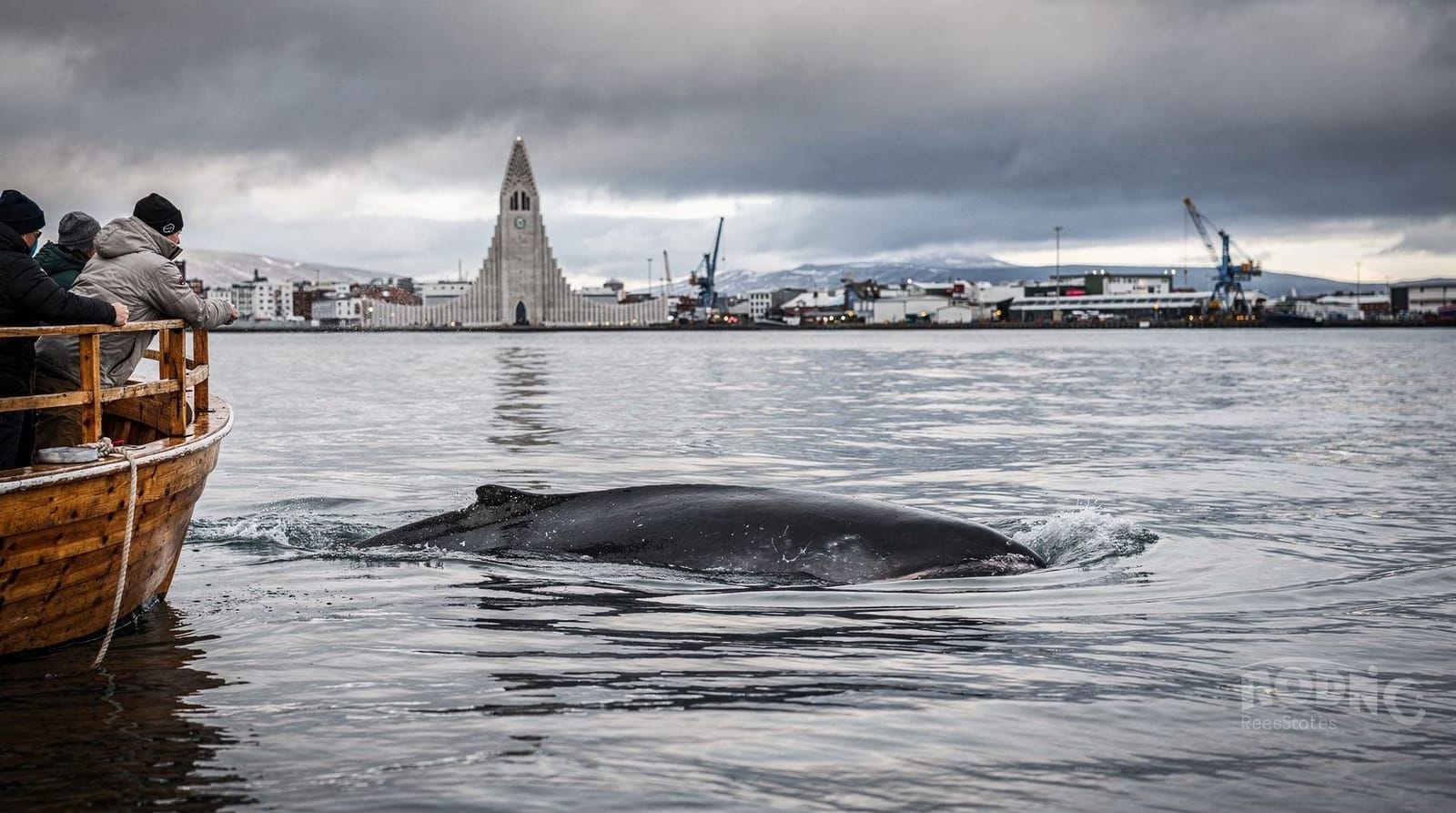
Skjálfandi Bay is shallow — rarely deeper than 80 m — and shaped like a broad horseshoe that catches and concentrates nutrient-rich currents. In early summer, capelin spawn in vast numbers in the bay. From June through August, humpback whales follow the capelin inshore, creating feeding aggregations of 10–30 animals that are accessible within 15–20 minutes of departing the harbour.
The result is success rates that most tour operators cite at 97–99% in June and July. That is not marketing — it is largely substantiated by observation logs. On a bad day you might see only minke whales and dolphins. On a good day you see multiple humpbacks simultaneously, sometimes close enough to hear the exhalation.
This stands in contrast to Reykjavík’s Faxaflói bay, where cetacean density is lower and species composition less dramatic. Húsavík is the right answer for wildlife-focused travellers.
The three main operators
North Sailing is Húsavík’s most distinguished operator and internationally recognised for environmental leadership. They operate four vessels, including two renovated early 20th-century oak schooners (Opal and Knörrinn) that sail on green fuel — a hydrogen fuel cell system and shore-based green electricity for cold storage and lighting. North Sailing was certified carbon neutral in 2019, making them world leaders in sustainable whale watching. Every trip includes a marine biologist. Prices sit slightly above average: around 14,900 ISK (€97) for adults on the schooners. The sailing experience itself is part of the appeal — quieter on the water and more atmospheric than motor vessels.
North Sailing Húsavík — carbon-neutral sailing tour on an oak schooner, marine biologist guide, 3-hour Skjálfandi Bay tripGentle Giants is Húsavík’s largest operator by passenger volume, running traditional motor vessels and RIB speedboats. Their classic tour aboard the wooden Þörungur is 3–3.5 hours, departing several times daily. Gentle Giants was among the first Icelandic operators to commit publicly to no endorsement of whaling. Marine guides (often graduates or postgraduates in marine biology) accompany all tours. Prices: around 13,900 ISK (€91) for the classic tour.
Elding Húsavík (branch of the Reykjavík-based company) offers a more budget-friendly entry point at around 11,900–12,900 ISK (€78–84). The experience is solid, staff are knowledgeable, but the carbon-neutral and guide-quality differentiators are less pronounced.
Húsavík original whale watching — 3-hour tour in Skjálfandi Bay, marine guide on board, money-back guarantee if no cetaceans sightedRIB speedboats versus traditional boats
Húsavík offers both options. The trade-offs are real:
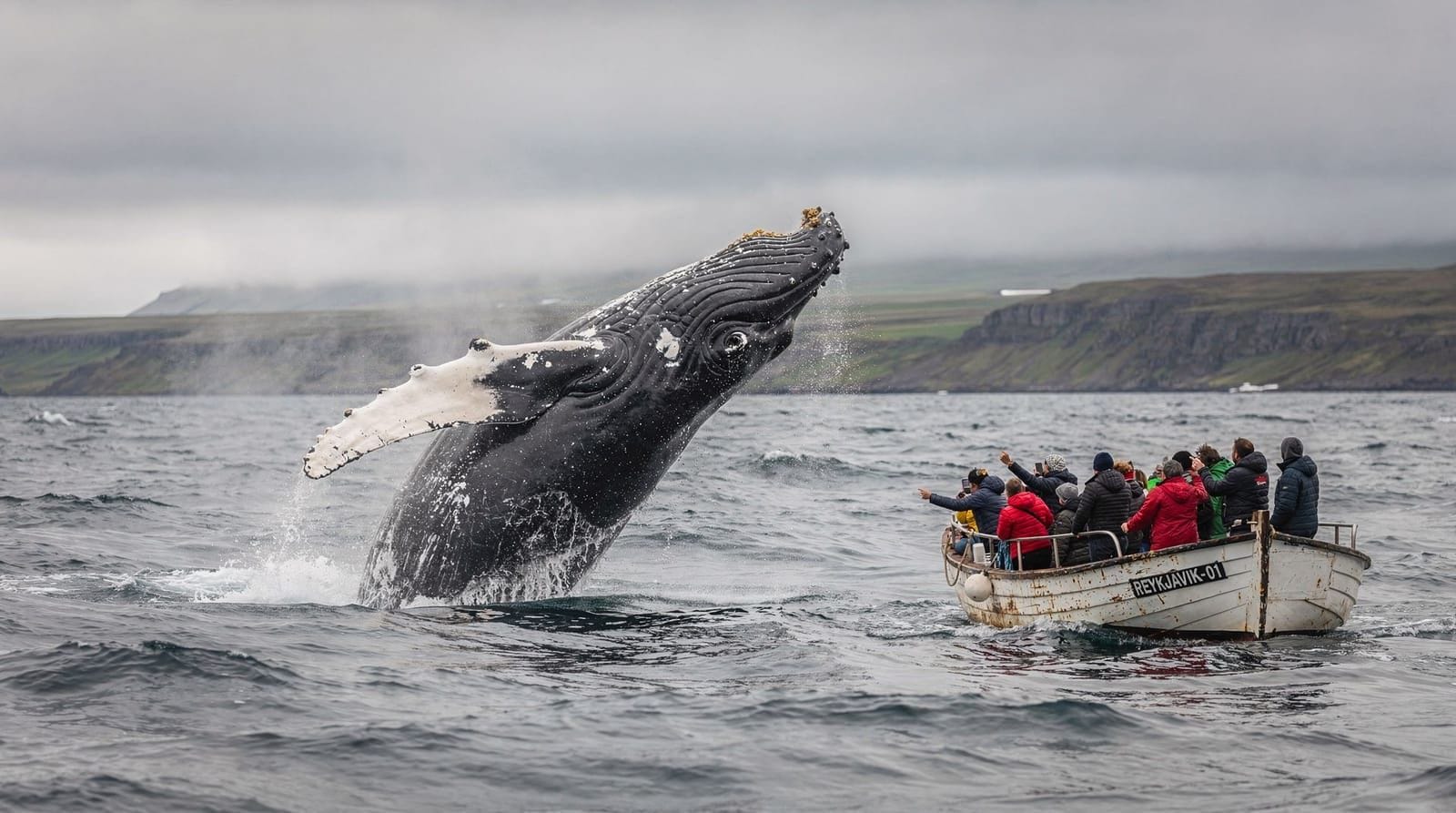
Traditional boats (wooden schooners, motor vessels): 40–70 passengers, enclosed salons with heating, stable in chop, quieter on approach, allow more time watching each individual whale. Better for families, photographers who want a stable platform, and anyone sensitive to cold or motion sickness.
RIB speedboats: 8–12 passengers, no shelter from spray, mandatory full floatation suits, can reach distant animals quickly and provide different perspective at water level. Shorter tour (2–2.5 hours), more physically demanding, genuinely exciting when dolphins are riding the bow. The Húsavík Puffins speedboat combo packs a lot into a short time.
Most first-time visitors will be happier on a traditional boat. The RIB adds novelty and speed; the traditional boat adds comfort and more sustained whale watching.
The whale museum: do not skip it
Húsavíkurhvalasetur (Húsavík Whale Museum) is located 200 m from the harbour in the old abattoir building — a piece of repurposing with its own dark humour. Inside: real skeletons of 10 cetacean species including a 24-m blue whale, mounted in the vaulted space overhead. The natural history displays explain identification, migration patterns, and the behavioural ecology of North Atlantic populations. The conservation section addresses both Icelandic whaling and the global state of cetacean populations.
Entry is around 2,200 ISK (€14) for adults, 1,100 ISK for children. Allow 1–1.5 hours. The museum is the most informative pre-tour or post-tour context available anywhere in Iceland.
Whale watching with puffins
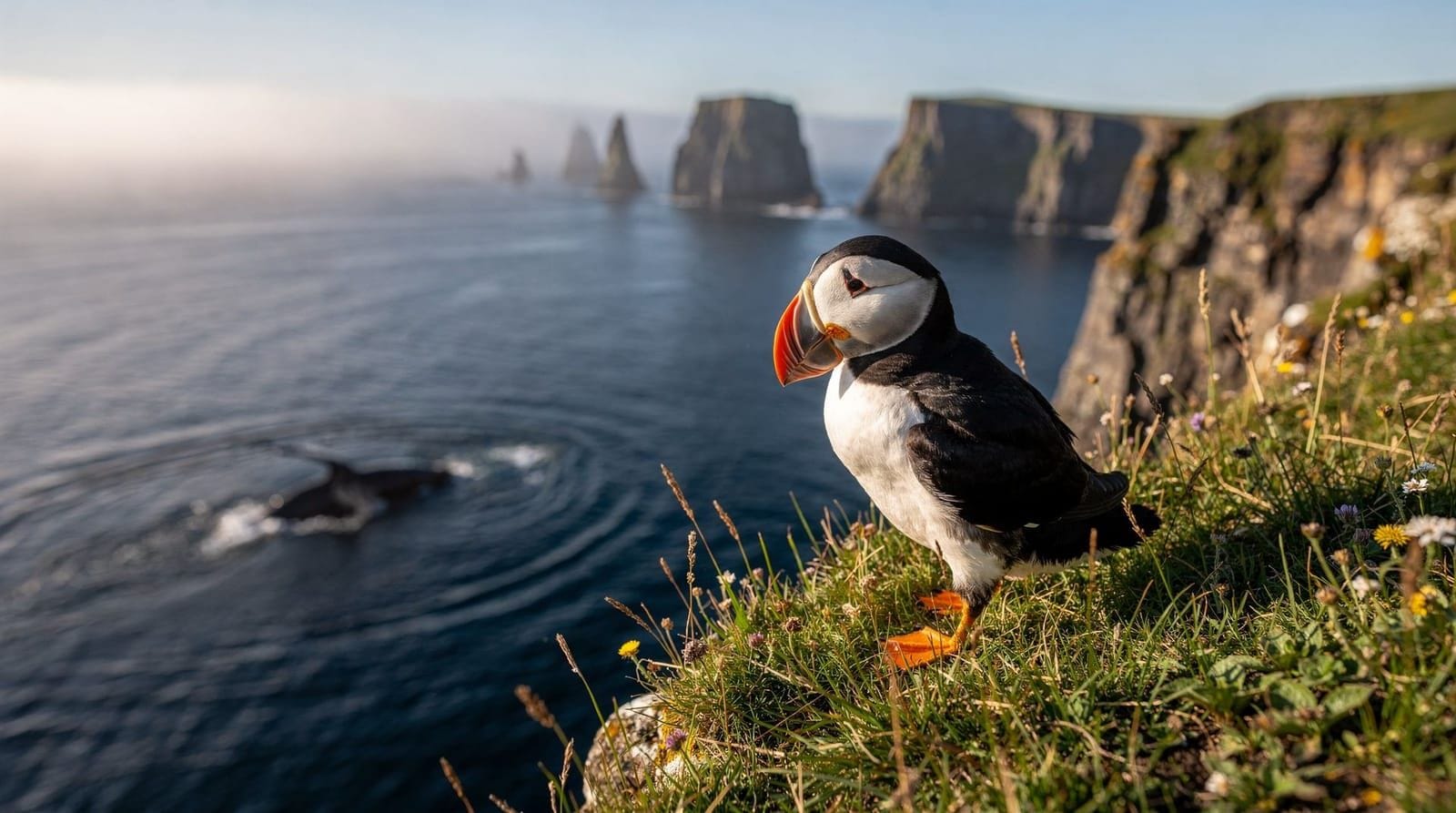
Atlantic puffins nest on Flatey Island and smaller skerries in Skjálfandi Bay from late April to mid-August. Standard whale tours pass close to the puffin colonies as a matter of course. Operators including Gentle Giants run explicit combo trips that build a stop at Flatey into the itinerary.
If you want to see both species, a June departure is optimal — humpbacks are already feeding actively, and puffins are in full nesting activity. By late August, puffin numbers start declining as chicks fledge.
Húsavík whale watching and puffins cruise — 3–3.5 hours, includes puffin island approach, marine guide throughoutPractical logistics
Getting there: Húsavík is 490 km from Reykjavík (5–6 hours by car). The fastest approach is flying to Akureyri (45 min from Reykjavík, from ~15,000 ISK / €98), then driving 60 km to Húsavík. Book the morning tour and return to Akureyri the same afternoon.
Where to eat: Gamli Bærinn (the Old Farmhouse) does generous bowls of lobster bisque for around 2,800 ISK (€18) and is reliably good. Naustið by the harbour serves fish and chips and smaller bites. Saltverk café near the museum is quieter.
Parking: free, plentiful, immediately beside the harbour. No issues.
Season: tours run year-round but June–August are optimal. May and September offer good conditions but lower humpback density. October–April: minke whales and dolphins are still seen, but humpbacks are absent and weather windows are tighter.
Children: most operators accept children aged 3 and up on traditional boats. Age minimum for RIBs is typically 5–6 years.
Photographing whales from Húsavík boats
Skjálfandi Bay’s stable, close-range encounters make it one of the better places in Iceland to photograph cetaceans, but a few practical notes help:
- Lens choice: a mid-range zoom (70–200mm equivalent) covers most encounters; whales in Húsavík often surface within 20–50 metres, closer than many other Iceland departure points, so an extreme telephoto is rarely necessary.
- Shutter speed: keep it fast (1/1000s or quicker) to freeze the spray and motion of a breach or fluke-up dive — these happen quickly and without much warning.
- Deck position: traditional boats let you move between the bow, sides and stern; positioning yourself on the side the guide indicates (whales are often called out by direction) gets you to the action fastest.
- Weatherproofing: sea spray reaches cameras even on calm days — a rain cover or simple plastic bag with a lens hole is cheap insurance, and a microfibre cloth for lens spray is essential.
- Phone photography: modern phones handle this well in daylight; a simple lanyard or wrist strap prevents an expensive drop over the rail during an exciting sighting.
Combining Húsavík with the Diamond Circle
The Diamond Circle route connects Húsavík, Ásbyrgi canyon, Dettifoss, and Lake Mývatn in a day trip or overnight loop from Akureyri. A standard itinerary:
- Morning: whale watching from Húsavík (depart 8:00, return 11:00)
- Midday: drive south to Ásbyrgi canyon (45 min), walk the rim
- Afternoon: continue to Dettifoss waterfall (45 min from Ásbyrgi)
- Evening: arrive Lake Mývatn for overnight, or return to Akureyri
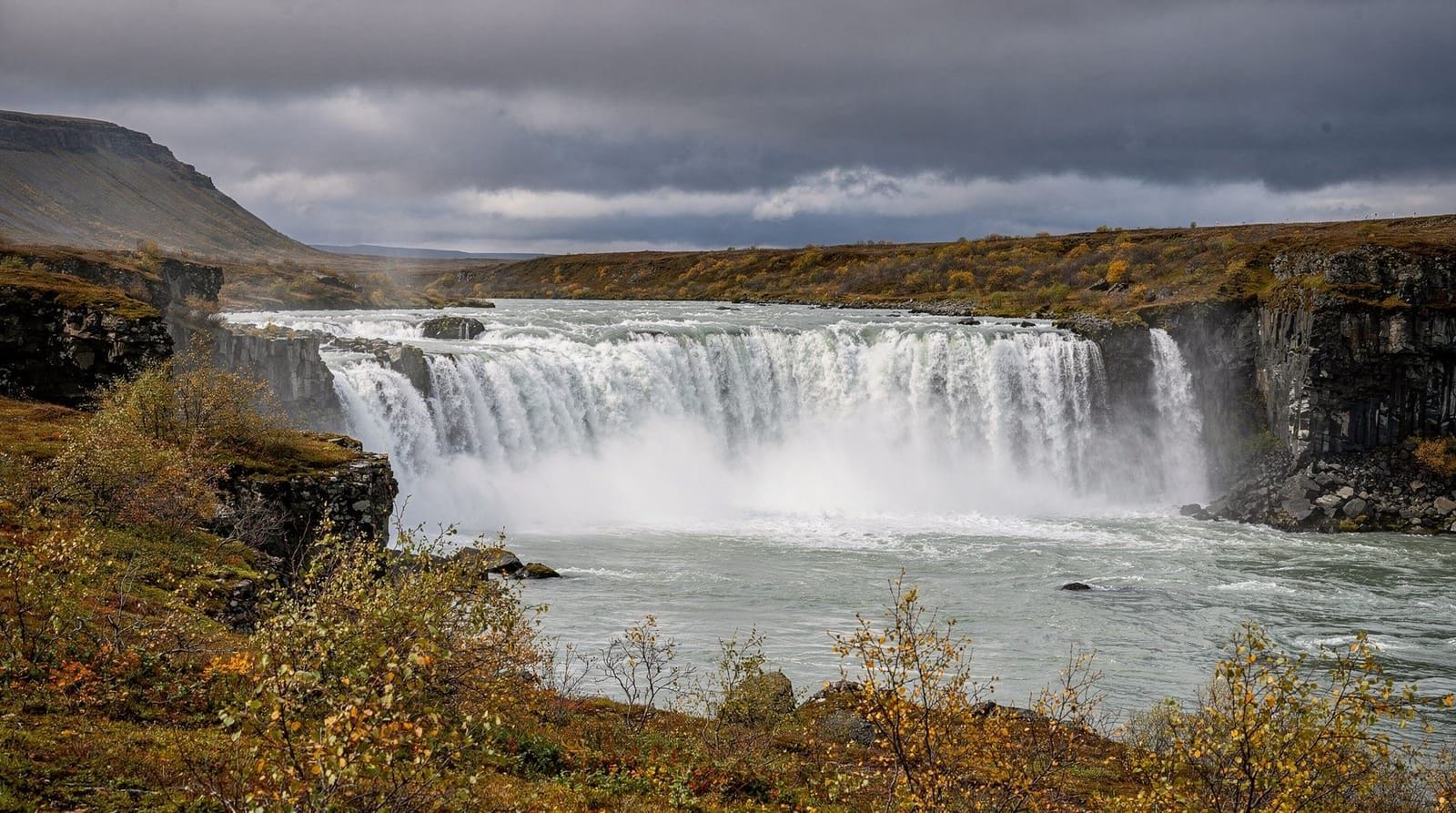
Alternatively, pair Húsavík with Goðafoss and the Forest Lagoon thermal spa in Akureyri for a single long day.
The Húsavík Whale Museum in detail
The Húsavíkurhvalasetur (Whale Museum) deserves its own section because it meaningfully enhances the whale watching experience if visited either before or after a tour. Location: the old abattoir building on the Hafnarstorg harbour square — a 5-minute walk from North Sailing and Gentle Giants departure points.
The main hall contains ten complete whale skeletons, including a 24-metre blue whale mounted overhead. The skeleton was assembled after a whale that beached on the Þórshöfn peninsula in the 1990s. Standing beneath a blue whale skeleton — even experienced cetacean biologists describe this as humbling — provides a scale reference that photographs from the water cannot match.
The permanent exhibitions cover:
- Cetacean natural history (species identification, migration, feeding ecology, social behaviour)
- The natural history of Skjálfandi Bay specifically
- Conservation status and global population trends
- The history of whaling in Iceland, presented with appropriate complexity (no whitewashing of the practice, no demonisation of the people who depended on it)
Entry: approximately 2,200 ISK (€14) adult, 1,100 ISK student, under 7 free. Audio guide available in English, German, and French. The museum café serves decent coffee and small bites.
Allow 1–1.5 hours before a tour for the best pre-trip context. Visiting after the tour, when you have seen live animals and can connect the skeletal anatomy to behaviour observed on the water, is also effective.
Húsavík beyond whale watching
The town itself is worth 2–3 hours beyond the whale tour. It is a well-maintained fishing town of 2,300 people with a charming wooden church (Húsavíkurkirkja, 1907, red-roofed) visible from the harbour, a bakery (Bakari Heimakokt) producing fresh cardamom buns and sourdough, and several seafood restaurants.
Gamli Bærinn (the Old Farmhouse): The landmark restaurant beside the harbour. Lobster bisque (2,800 ISK / €18) and fish dishes are the main draw. The building is atmospheric — an old farmhouse with low ceilings and mounted whale imagery. Busy at lunch; reservations recommended for dinner.
GeoSea: Húsavík also has its own small geothermal sea pool on the headland north of the harbour — GeoSea, a modern infinity pool facility with ocean views. Admission around 4,900 ISK (€32). A pleasant post-tour recovery option.
Petrol and supplies: the N1 station on the main road through town has the best selection of provisions. Stock up here before continuing the Diamond Circle route.
What whale watching operators won’t tell you
A few honest notes that tour marketing consistently underplays:
“Sighting guarantee” terms: most operators offer a free return trip if no cetaceans are sighted. Read the exact terms — “no cetaceans” means no whale, dolphin, OR porpoise. In practice, harbour porpoises are seen on almost every trip year-round, so the guarantee triggers only when conditions are genuinely unusual.
Crowding on peak boats: popular classic boat departures at North Sailing and Gentle Giants in July carry 40–70 passengers. This is not a quiet, intimate experience. If you want a smaller group and more personal guide access, the RIB tours (max 12 passengers) or premium small-group options are significantly different.
The walk from town to the boat: North Sailing and Gentle Giants both depart from the main harbour — a 5–10 minute walk from the town centre. Bags can be left at the boat operators’ offices before boarding.
Cancelled tours and rebooking: in high summer, a cancelled morning tour due to weather will often be rescheduled for the afternoon. If you have transport flexibility, build in a weather day — Húsavík whale watching in calm morning conditions is worth waiting one extra day for.
Frequently asked questions about whale watching in Húsavík
Do I need to book in advance?
In July, the 8:00 and 10:00 departures with North Sailing and Gentle Giants fill 2–3 days out. Book ahead if you have a fixed date. At other times, same-day booking is usually possible. Online booking through operator websites saves a small booking fee versus on-site purchase.
What is the refund policy if I am seasick?
Most operators do not offer refunds for seasickness — it is an inherent risk. If you are susceptible, take medication 30–60 minutes before boarding. Dramamine (dimenhydrinate) is available at the N1 petrol station in Húsavík. The traditional boats are more stable than RIBs.
Is the midnight sun whale watching tour worth it?
Evening tours in June–July (around 17:00–18:00 departure, returning in golden light) are genuinely beautiful for photography. Whale activity does not drop off in the evening — humpbacks feed around the clock in summer. The light is extraordinary between 20:00 and 22:00.
Are the prices negotiable?
No, and discount hunting is not appropriate here — these are small family operators employing local scientists. The 14,900 ISK / €97 North Sailing price reflects real carbon-neutral operating costs. Budget operators at 11,000–12,000 ISK are available, but the quality difference is noticeable.
Can I see blue whales from Húsavík?
Blue whale sightings in Skjálfandi Bay have increased noticeably since 2019. They are not guaranteed and not reliably scheduled, but several operators have reported multiple blue whale encounters per season in recent summers. If a blue whale is seen, it will be announced on VHF radio and multiple boats may reposition to observe — all operators follow the 100 m approach rule for blue whales.
What is the difference between the puffin speedboat tour and the classic boat?
The speedboat puffin combo (typically 2–2.5 hours) is faster, colder, and more physically demanding. It is well suited to keen birdwatchers who specifically want puffin photography and are happy with shorter whale encounter windows. The classic 3-hour tour on a traditional boat is better for sustained whale watching and families.
Húsavík vs. other whale watching bases
If you’re deciding between Húsavík and a departure closer to Reykjavík, the trade-off is straightforward: Húsavík has meaningfully higher humpback density and success rates in summer, but it costs a full day (or overnight) of extra travel from the capital. Reykjavík whale watching is far more convenient for a short stay and still delivers solid minke whale and dolphin sightings, while a dedicated Iceland whale watching comparison across all major departure towns is worth reading if you’re building an itinerary around wildlife specifically. For most travellers doing a north Iceland loop already, Húsavík is worth the detour on its own merits — for a Reykjavík-only stay, it usually isn’t worth the extra two days.
What to wear and bring
Skjálfandi Bay is cold even in July — expect wind chill on the water regardless of the air temperature in town. Traditional boats provide warm overalls, but layering underneath still matters:
- Base and mid layers (avoid cotton, which stays wet and cold if spray reaches you)
- A hat that covers the ears and gloves, even in summer
- Sunglasses — glare off the water is significant on clear days
- A basic camera or phone in a splash-resistant case if photographing from the open deck
- Motion sickness medication if you’re prone to it, taken well before boarding
RIB passengers are issued full flotation suits that cover most of this, but bring a warm hat and gloves to wear underneath regardless.
Top experiences
Bookable activities with verified prices and instant confirmation on GetYourGuide.
Top experiences
Best-rated activities across GetYourGuide and Viator.