Whale watching in Iceland — the complete planning guide
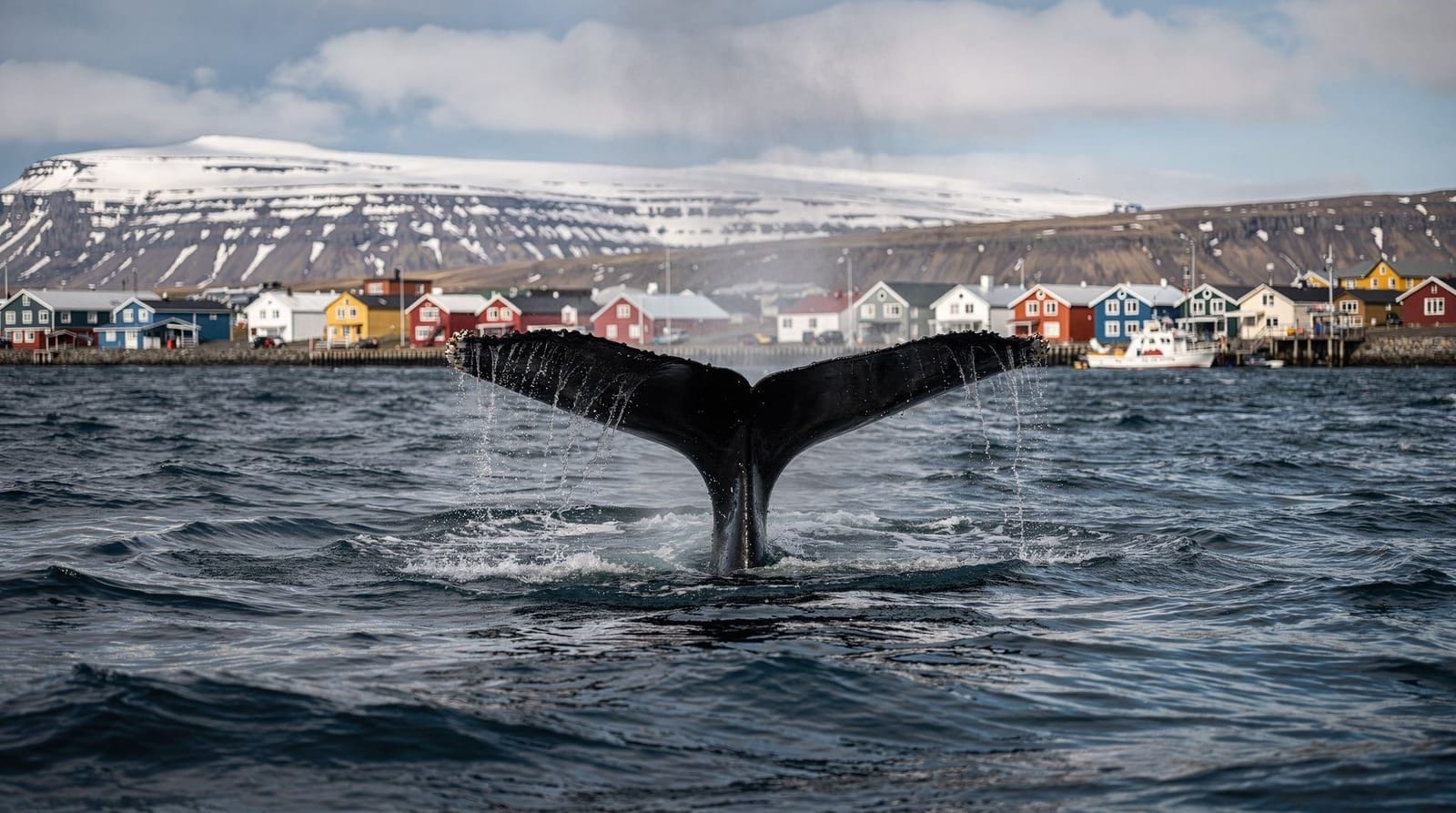
Húsavík: Whale watching carbon neutral oak boat
Duration: 3 hours
When is the best time for whale watching in Iceland?
May to September offers the highest success rates and calmest seas. Húsavík on the north coast is considered Iceland's whale watching capital, with humpback and minke whales seen reliably from June to August. Reykjavík trips run year-round but winter sightings are less predictable.
Iceland sits at the confluence of warm Atlantic and cold Arctic water masses, creating an upwelling of nutrients that supports one of the highest concentrations of cetaceans in the North Atlantic. Around 23 whale species have been recorded in Icelandic waters — from the enormous blue whale to the acrobatic harbour porpoise. For most visitors, whale watching is not a novelty add-on but a central reason to visit.
This guide covers the practical decisions: which port to base yourself from, which operators are genuinely good, what species to expect by season, and what honest success rates look like.
| Best ports | Húsavík (highest density) or Reykjavík (most convenient) |
| Cost | around ISK 12,000–15,000 (€78–97) per adult, 3 hours |
| Best time | May–September; peak humpbacks June–August in Húsavík |
| Success rate | 95–99% Húsavík summer; 85–90% Reykjavík summer |
| Booking | 2–3 days ahead for Húsavík in July/August |
Iceland’s two main whale watching hubs
The vast majority of Iceland’s commercial whale watching departs from two ports: Húsavík in the north and Reykjavík in the southwest. They are very different experiences.
Húsavík has been the country’s whale watching capital since the early 1990s. The town of 2,300 people on the shore of Skjálfandi Bay has built its entire identity around whales — the Húsavík Whale Museum (free entry, excellent) opened in 1997 and the bay itself is famed for its density of humpback whales in summer. The boats leave the compact wooden harbour within walking distance of cafés and the famous Hvítaból for lobster soup. Success rates in June–August run 95–99% according to operator logs.
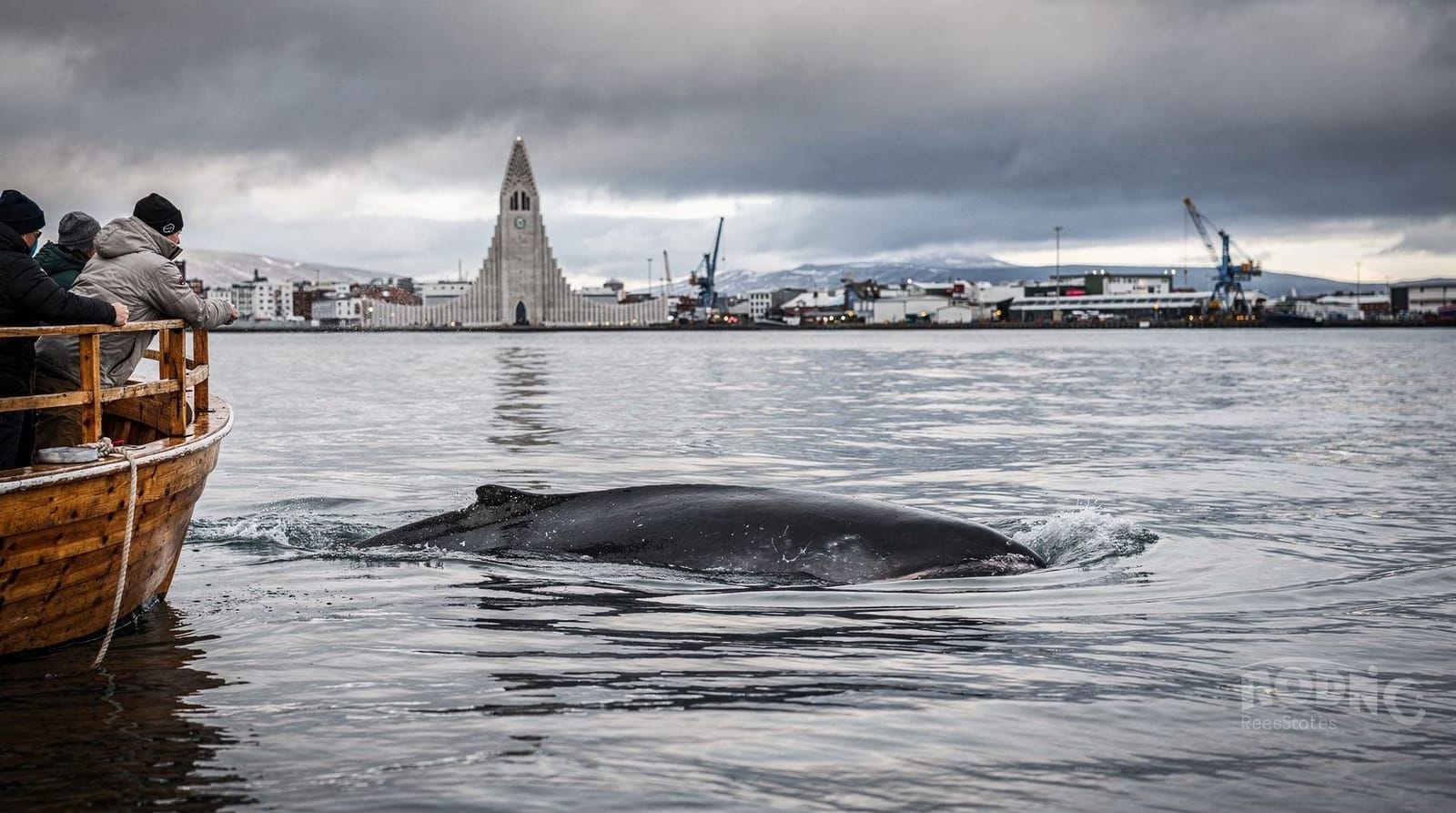
Reykjavík offers convenience rather than superiority. Boats leave from the Old Harbour (Gamli Höfnin), a ten-minute walk from the city centre, and tours can be slotted around a city itinerary without special travel. The bay (Faxaflói) hosts minke whales, harbour porpoises, and white-beaked dolphins reliably in summer. Humpbacks appear but less consistently than in Húsavík. Summer success rates hover around 85–90%; winter trips see cetaceans roughly 50–60% of the time.
Akureyri, on the inner Eyjafjörður fjord, also has operators offering whale watching — primarily minke whales and dolphins. These are a good option if you’re touring the Diamond Circle area and don’t want to backtrack to Húsavík.
Species by season
Minke whales are the backbone of Iceland’s whale watching industry. Small (7–10 m), fast, and curious, they are present in Icelandic waters from late March through October. They are seen at both Reykjavík and Húsavík and across most coastal areas. Minkes often approach boats and will bow-ride or surface alongside vessels.
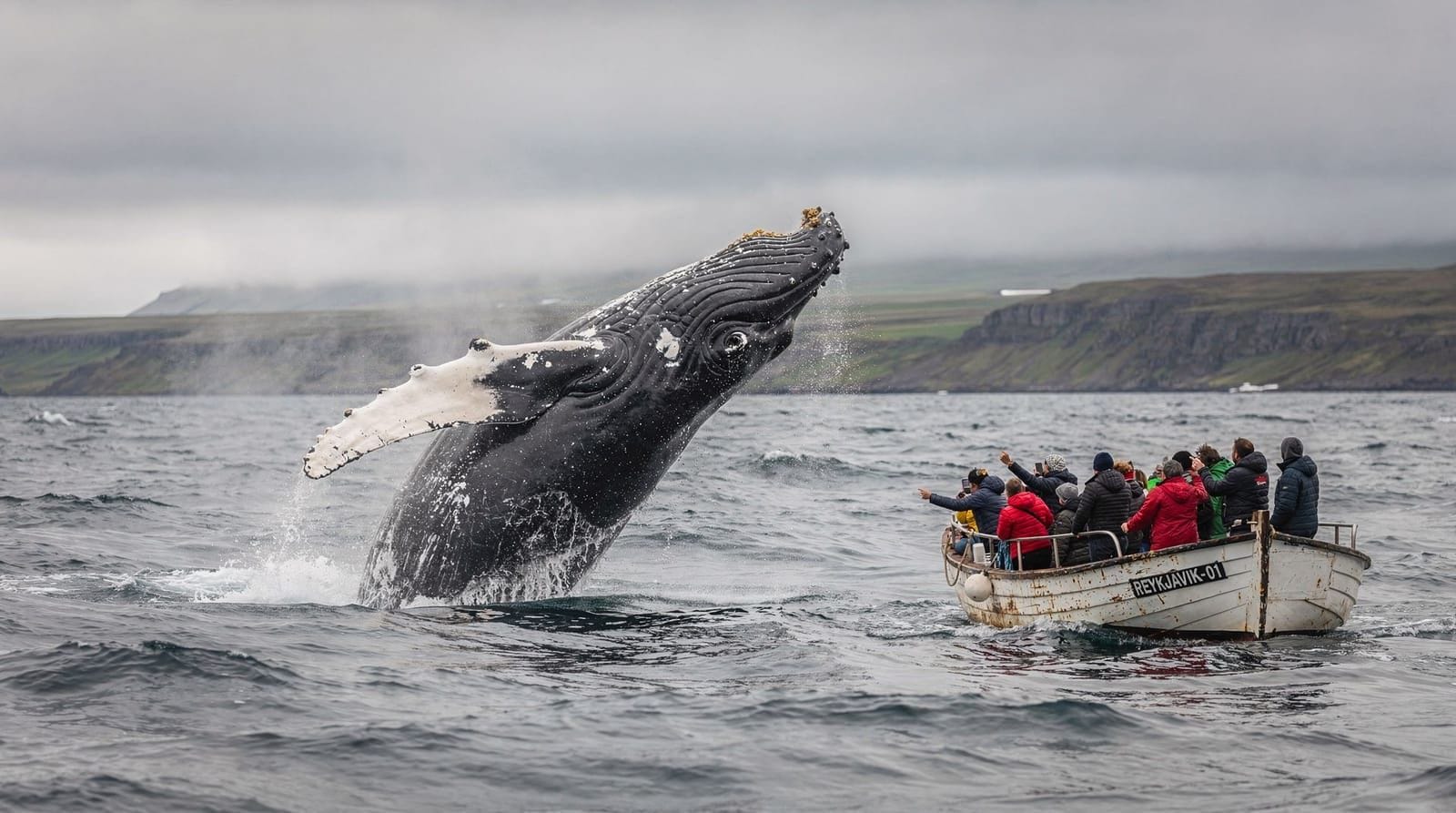
Humpback whales are the showstoppers. Adults reach 15 m and are famous for breaching, lobtailing, and their complex songs. In Skjálfandi Bay around Húsavík, large groups of humpbacks gather to feed on capelin and sand lance from June to mid-August. This is genuinely exceptional whale watching — multiple animals simultaneously, often very close to the boat.
White-beaked dolphins travel in large pods and are particularly visible from Reykjavík throughout summer. Energetic and fast, they will often race alongside boats.
Harbour porpoises are seen on almost every trip year-round but being the smallest cetacean (1.5–2 m) they are easy to miss unless conditions are calm.
Orcas (killer whales) follow herring into Icelandic fjords in winter and autumn, most reliably in the Snæfellsnes and Westfjords areas. Some operators in Grundarfjörður run orca trips from October to February.
Blue whales are rare but increasingly sighted in Skjálfandi Bay and the wider north Iceland coast from late May onward. When blue whales are present, it is one of the most memorable wildlife experiences on the planet — these are the largest animals that have ever existed.
| Month | Húsavík | Reykjavík | Notes |
|---|---|---|---|
| Mar–Apr | Minke returning | Minke, occasional dolphins | Cold, choppier seas |
| May | Minke, first humpbacks | Minke, dolphins | Good value, fewer crowds |
| Jun–Aug | Humpback peak, 95–99% success | Minke, dolphins, some humpback | Book Húsavík 2–3 days ahead |
| Sep | Humpback tapering | Minke, dolphins | Good weather window, quieter |
| Oct–Feb | Minke rare, quiet | Minke rare | Orcas possible near Snæfellsnes/Grundarfjörður instead |
Operators: what separates good from mediocre
Iceland’s whale watching sector ranges from serious, marine-biologist-staffed operations to low-budget tourist-mill boats. A few meaningful differentiators:
Guide knowledge matters enormously. The best operators employ marine biologists or certified naturalists who can identify individual whales by fin shape, explain behaviour in real time, and position the boat respectfully. Ask before booking whether the guide has a marine science background.
Boat type affects experience significantly. Traditional wooden schooners and converted fishing boats provide a more stable platform in choppy conditions and a more atmospheric experience but are slower. RIB speedboats cover more ground quickly, useful for finding dolphins, but the spray and noise are less pleasant for extended viewing.
Sustainability is increasingly relevant. North Sailing in Húsavík became the world’s first carbon-neutral whale watching operator by retrofitting two oak schooners with hydrogen fuel cells and shore-side green charging. Gentle Giants Húsavík uses solar and wind to offset operations. If this matters to you, these are the operators to book.
North Sailing Húsavík — carbon-neutral oak boat whale watching, 3-hour tour of Skjálfandi Bay, marine biologist on boardResponsible approach distances are voluntary in Iceland (IFAW guidelines recommend staying 100 m from whales; closer only if whales approach voluntarily). Most reputable operators follow this. If you see marketing photos with boats metres from surfacing whales, that is not a good sign.
Booking logistics
Tours run daily from May to September without reservation concerns most of the time. In July and August at Húsavík, morning departures (8:00–9:00) fill quickly — book 2–3 days ahead. From Reykjavík, same-day booking is usually possible outside peak dates.
Most operators offer at least two daily departures (morning and afternoon) in peak season. Morning tours typically have calmer sea conditions; evening tours in summer benefit from the midnight sun light for photography.
Prices from Húsavík: classic 3-hour tours cost around 12,900–14,900 ISK (€85–97) for adults. RIB speedboat tours are similar or slightly more. Children typically get a 30–50% discount; under-7s are often free.
Prices from Reykjavík: 3-hour classic tours run 11,900–13,900 ISK (€78–91). Express and RIB options vary.
Combining whale watching with puffins
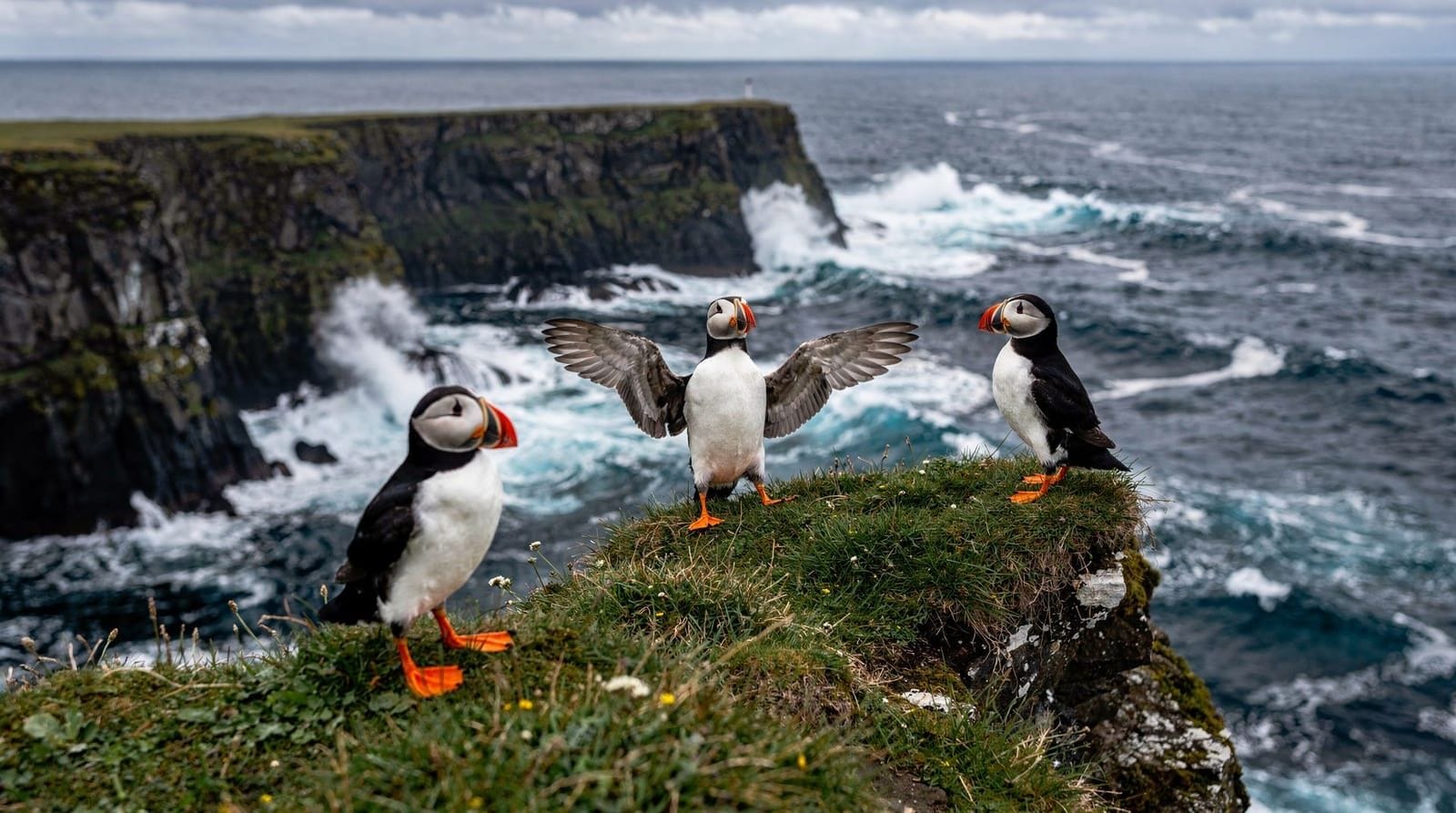
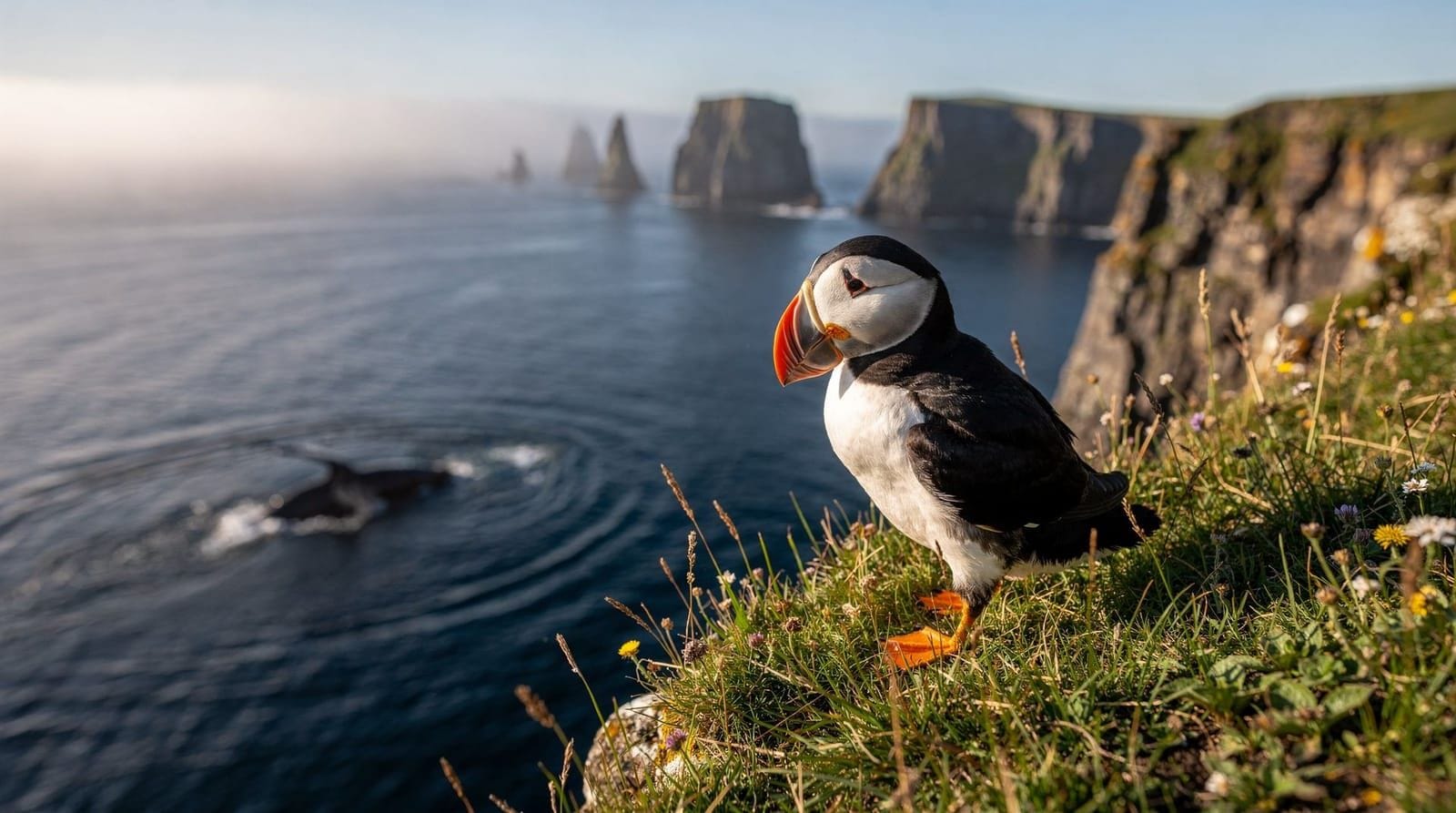
From late April to mid-August, Atlantic puffins nest on the islands in Skjálfandi Bay (visible from Húsavík boats) and on Lundey and Akurey islands in Reykjavík’s Faxaflói. Several operators run combo whale-and-puffin tours — these are genuinely good value since you cover both in one trip during the overlap season.
Dedicated puffin tours from Reykjavík are available if whales are not the priority — see our puffin watching guide for details.
Húsavík whale watching and puffins cruise — 3-hour guided tour with puffin island stop, marine guide includedNorth Iceland logistics: getting to Húsavík
Húsavík is 490 km from Reykjavík by road — a 5–6 hour drive on the Ring Road and then Route 85 north. Most visitors to Húsavík combine it with a North Iceland itinerary incorporating Lake Mývatn, Goðafoss, and the Diamond Circle.
Akureyri is the logical staging point — a 1-hour drive south of Húsavík. Domestic flights from Reykjavík to Akureyri run 6–8 times daily (45 min, from ~15,000 ISK / €98 one way). From Akureyri, a day trip to Húsavík for whale watching is entirely realistic.
If you are on the Ring Road driving east from Akureyri, Húsavík is a 1-hour detour north that almost always justifies the deviation.
Planning your trip around whale watching
If marine wildlife is central to your Iceland trip, structure your itinerary around it rather than adding whale watching as an afterthought.
Best Iceland whale watching itinerary (5 days, based in north Iceland):
Day 1: Fly Reykjavík → Akureyri (45 min domestic, multiple daily). Settle in Akureyri. Evening at the Forest Lagoon spa.
Day 2: Drive to Húsavík (60 min). Morning whale watching tour (08:00 departure). Afternoon: Húsavík Whale Museum and lunch. Drive the first leg of the Diamond Circle to Ásbyrgi canyon. Overnight Húsavík.
Day 3: Dettifoss → Lake Mývatn full circuit. Overnight Mývatn area.
Day 4: Return to Húsavík for afternoon tour if weather was poor Day 2; or continue south to Akureyri and Goðafoss. Evening flight Akureyri → Reykjavík.
Day 5: Reykjavík whale watching from the Old Harbour as a comparison experience.
This itinerary gives two whale watching opportunities (with different species profiles) and covers north Iceland’s greatest highlights in a single efficient route.
For visitors based only in Reykjavík, a full-day South Coast trip and a whale watching morning from the Old Harbour is the natural pairing. See our best day trips from Reykjavík guide for the full picture.
Whale watching and Icelandic whaling: the context
Iceland is one of three countries in the world that continues commercial whaling (along with Norway and Japan). Fin whales (endangered species) and minke whales are hunted in Icelandic waters. This situation creates an obvious tension with the whale watching industry and with visitors’ ethical expectations.
The practical reality is that these industries coexist in Iceland’s waters simultaneously. Whale watching contributes around €23 million annually to the Icelandic economy; the commercial whale meat industry contributes far less and has declining domestic demand. Several polls in recent years have shown that a majority of Icelandic consumers do not eat whale meat and that the market is primarily export-oriented (Japan) or tourist-oriented (restaurants in Reykjavík serving whale steak as a novelty item to foreign visitors).
The “meet us, don’t eat us” campaign run by Elding and other whale watching operators has been effective in reducing tourist demand for whale restaurant menus. If you want to actively support the industry position against commercial whaling, booking with operators who are publicly against whaling and avoiding restaurants that serve whale meat is the most direct consumer action available.
Photography on whale watching tours
Whale photography requires different technique from landscape photography:
Be ready at all times: whales surface unpredictably. A camera set to burst mode at 1/1000s or faster and pointed roughly at the most recent surfacing position gives the best results. Do not spend sighting time fumbling with settings.
Prefocus: if your camera has eye-tracking autofocus, use it. Otherwise, manual zone focus at the average surfacing distance (typically 10–50 m in calm conditions) is faster than tracking from scratch.
Phone tips: modern phones (iPhone 15 Pro, Pixel 8) have effective 5x optical zoom and can produce excellent whale photographs in calm, bright conditions. In choppy conditions or fading light, image stabilisation becomes critical.
What to photograph: a full breach (whale out of water) is the prize but rare and unpredictable. More reliably, aim for: the moment of exhalation (tall white plume before the body surface), the dorsal fin profile (useful for individual identification), and the tail fluke as the whale dives — the classic “whale tail” image.
The lighting factor: the best whale watching photography light is overcast-bright (diffuse light without harsh shadows) or golden-hour sun. Midday flat overhead light is the worst. Morning tours give the most consistent results.
What to expect on the day
Arrive 15–20 minutes before departure. Operators provide overalls (coveralls) — take one even in July, because you will be grateful. Thermal base layers under the overalls are recommended from September to May.
Seasickness: Faxaflói bay can be choppy; Skjálfandi Bay is generally calmer but can be rough in strong northerly winds. If you are prone to motion sickness, take medication 30–60 minutes before boarding. Most operators will briefly postpone or cancel in genuinely dangerous conditions.
Cameras: a 200–400mm lens gives good results. In practice, many people use their phone with good results in flat-calm conditions. The key factor is proximity — good boats get you close enough for phone photography regularly.
Whale watching beyond the main routes
Iceland’s main commercial whale watching hubs (Húsavík and Reykjavík) handle the vast majority of visitors, but other locations offer valid alternatives:
Snæfellsnes Peninsula: the north coast of the peninsula faces Breiðafjörður bay, which has regular minke whale and dolphin activity. Some Arnarstapi-based operators run small-boat tours in summer. The area is also the best Iceland location for orca sightings from October to February.
Westfjords: the sheltered bays of the Westfjords, particularly Ísafjarðardjúp and Arnarfjörður, hold cetaceans but have limited commercial infrastructure. Independent observers on the Baldur ferry (Stykkishólmur–Brjánslækur) often spot minkes and dolphins in Breiðafjörður.
Dalvík: 35 km north of Akureyri, the small fishing village of Dalvík has a growing whale watching operation in Eyjafjörður. Less well-known than Húsavík but an option for visitors based in Akureyri who want to avoid driving to Húsavík.
Akureyri harbour: whale watching from Akureyri itself is possible in Eyjafjörður, primarily for minke whales and dolphins. The fjord is sheltered and conditions are often calmer than open-water tours. Less dramatic than Húsavík but convenient for city-based visitors.
Whale watching with children
Traditional boats are the better choice for families — the enclosed, heated salon gives children (and anxious parents) somewhere to warm up between sightings, and the ride is noticeably more stable than a RIB in any chop. Most operators accept children from age 3–5 upward on traditional boats; RIB speedboats generally set a higher minimum age (5–6, sometimes older) because of the exposed, high-speed ride. A few practical notes for family trips:
- Bring snacks and entertainment for the transit time between sightings — a 3-hour tour can involve stretches without visible activity.
- Dress children in more layers than you think necessary; children get cold faster than adults on an open deck.
- Ask the operator about seasickness in children specifically — some motion-sickness remedies are not suitable for young children, so check with a pharmacist before travelling if this is a concern.
- The whale museums in both Húsavík and Reykjavík are genuinely engaging for children and a good way to build anticipation before the boat trip.
Whale watching and general Iceland trip budgeting
A single 3-hour whale watching tour (ISK 12,000–15,000 per adult) is a meaningful line item for a family or group, so it’s worth deciding early whether it’s a one-off highlight or a repeated activity across multiple ports. Most travellers do one whale watching tour per trip rather than multiple, unless they are specifically pursuing different species (for example, a summer humpback tour in Húsavík plus a winter orca trip near Grundarfjörður on a separate visit). If budget is tight, Reykjavík’s Old Harbour tours are the more affordable entry point and require no additional transport or accommodation costs beyond what a Reykjavík-based trip already includes, especially when combined with other best day trips from Reykjavík on the same visit rather than paying for a dedicated whale-watching day.
Frequently asked questions about whale watching in Iceland
Which is better — Húsavík or Reykjavík?
Húsavík is substantially better for whale watching in isolation. The humpback concentration in Skjálfandi Bay from June to August is exceptional, success rates are higher, and the town itself has excellent whale-themed infrastructure. The trade-off is distance from Reykjavík. If you are already in the north, go to Húsavík. If you have only one or two days in Reykjavík, a Reykjavík tour is still a good experience.
Can I see orcas in Iceland?
Yes, but not on the standard summer routes. Orcas follow herring into Icelandic fjords in autumn and winter — mainly October to February. Operators in Grundarfjörður on the Snæfellsnes Peninsula are the best option, as orcas gather there regularly in herring season. This is a niche, seasonal trip requiring weather windows.
Is whale watching ethical in Iceland?
Iceland is both a whale watching destination and, historically, a whaling nation (minke and fin whales). The two industries coexist uncomfortably. From an individual traveller perspective, booking with an ethical whale watching operator that uses responsible approach distances and employs trained naturalists is the appropriate response. North Sailing and Gentle Giants in Húsavík, and Elding in Reykjavík, are widely regarded as the most responsible operators.
What are the boat options?
Traditional boats (converted fishing vessels and wooden schooners): 40–100 passengers, stable, slower. RIB speedboats: 8–12 passengers, fast, higher spray, more versatile. Sailing vessels: used by North Sailing in Húsavík for the quietest approach to wildlife.
Are tours cancelled in bad weather?
Tours are suspended in gale-force conditions (Beaufort 8+). Light rain and wind are not grounds for cancellation — dress for the weather. In summer, cancellations are uncommon. October through April sees more weather-related delays from Reykjavík.
How far in advance should I book?
For Húsavík in July and August: 2–3 days ahead for the morning tour. For Reykjavík outside peak weeks: same-day booking is often fine. Premium small-group tours and private charters: book 1–2 weeks ahead.
Is there a boat suitable for people with mobility limitations?
Most traditional boats are accessible via a gangplank with moderate steps. RIB boats require stepping down into a low vessel and are less suitable for people with limited mobility. If this is a concern, contact the operator directly before booking — Elding in Reykjavík is generally the most accessible of the major operators.
Choosing the right departure for your itinerary
The single most common planning mistake is treating “whale watching” as interchangeable regardless of port. If wildlife is a primary reason for your trip, base at least one night near Húsavík or Akureyri and build the Diamond Circle around it — the density difference over Reykjavík is not marginal, it’s the difference between a good chance of multiple humpbacks and a solid chance of minke whales and dolphins. If your trip is Reykjavík-based with only a day or two to spare, whale watching from Reykjavík is genuinely worthwhile and requires no extra logistics — just set expectations at minke and dolphin level rather than humpback spectacle.
Reykjavík original 3-hour whale watching tour — Faxaflói Bay, Old Harbour departureTop experiences
Bookable activities with verified prices and instant confirmation on GetYourGuide.
Top experiences
Best-rated activities across GetYourGuide and Viator.