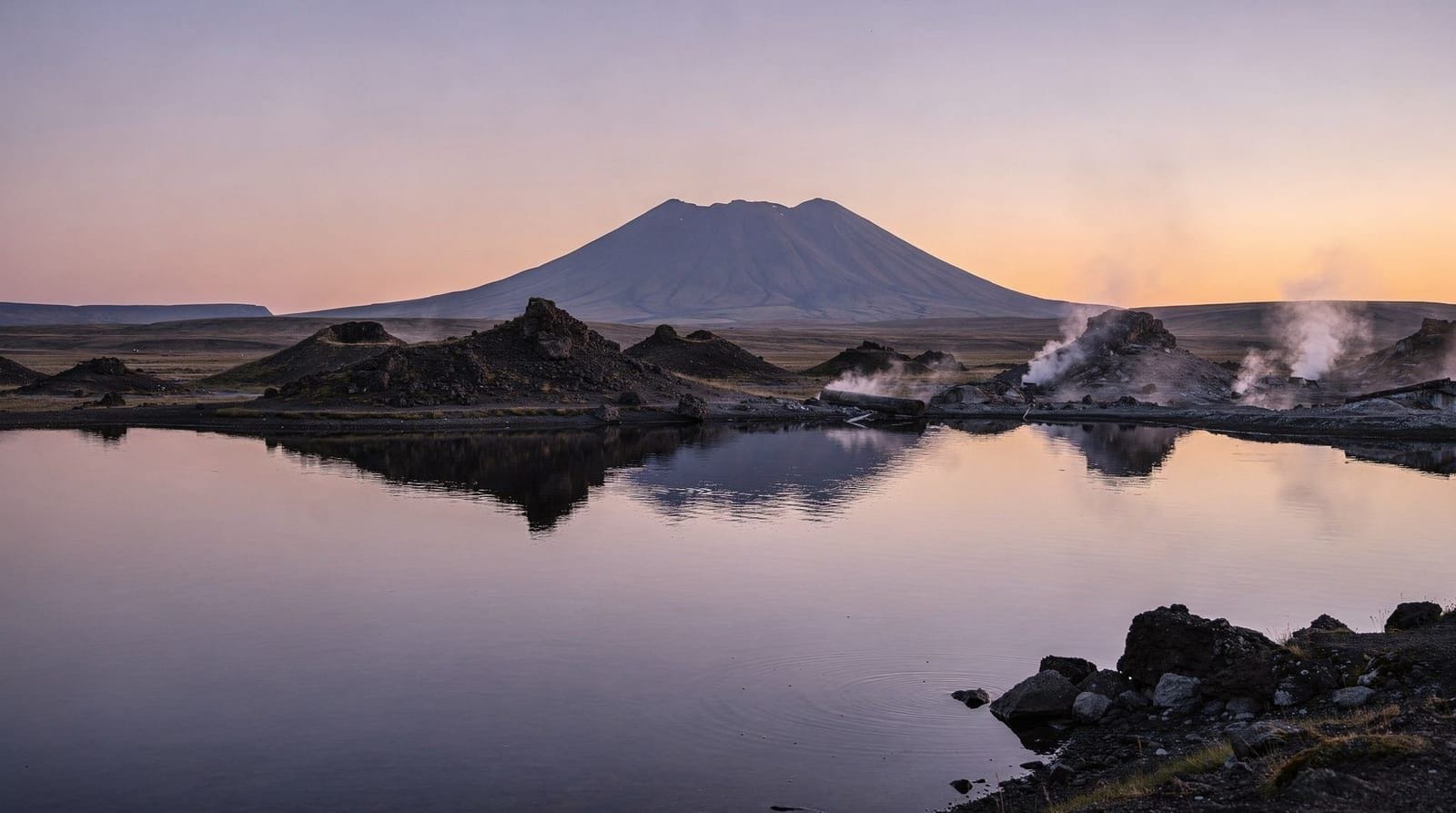
North Iceland 4-day itinerary — Akureyri, Mývatn, and the Diamond Circle
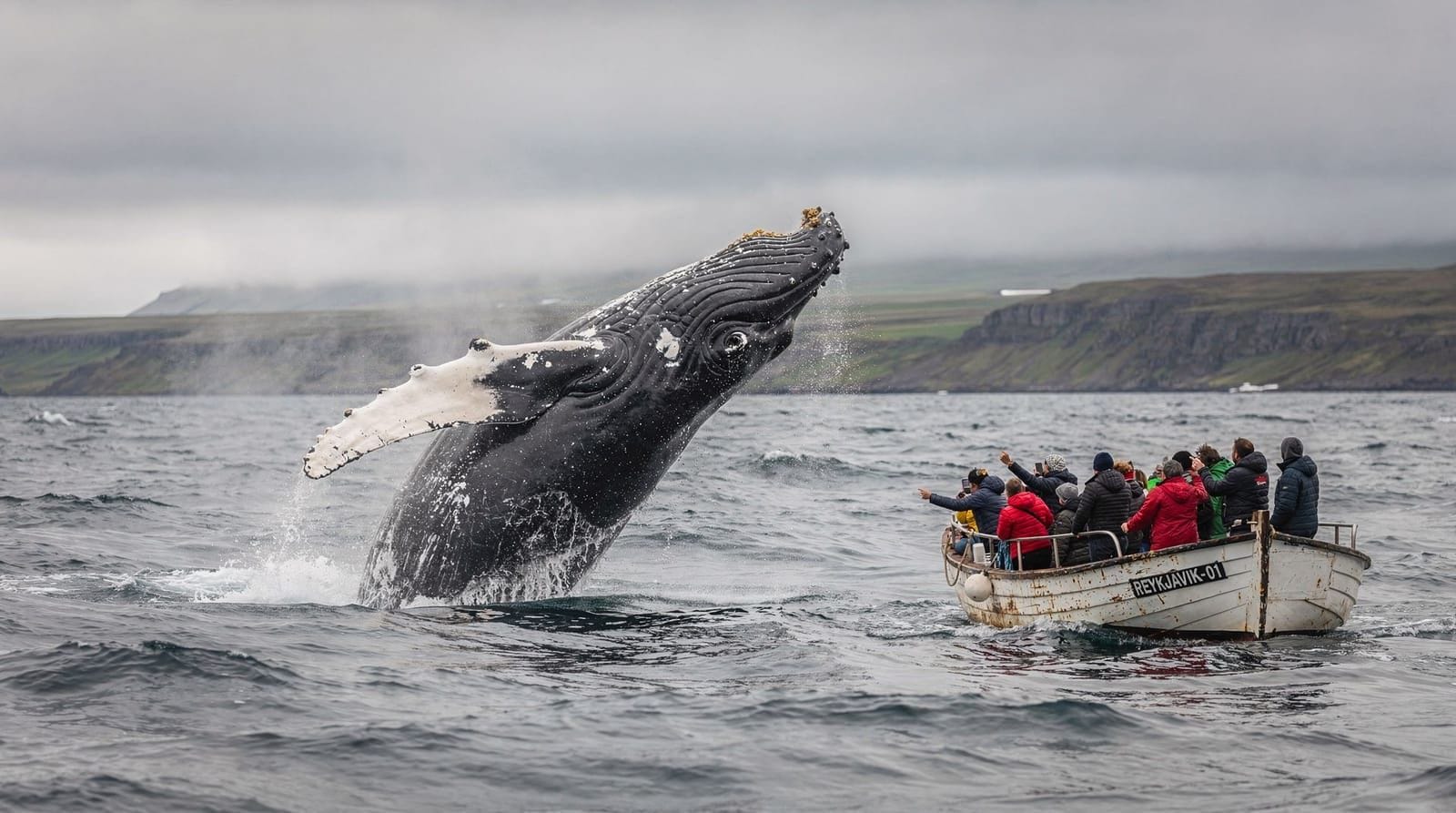
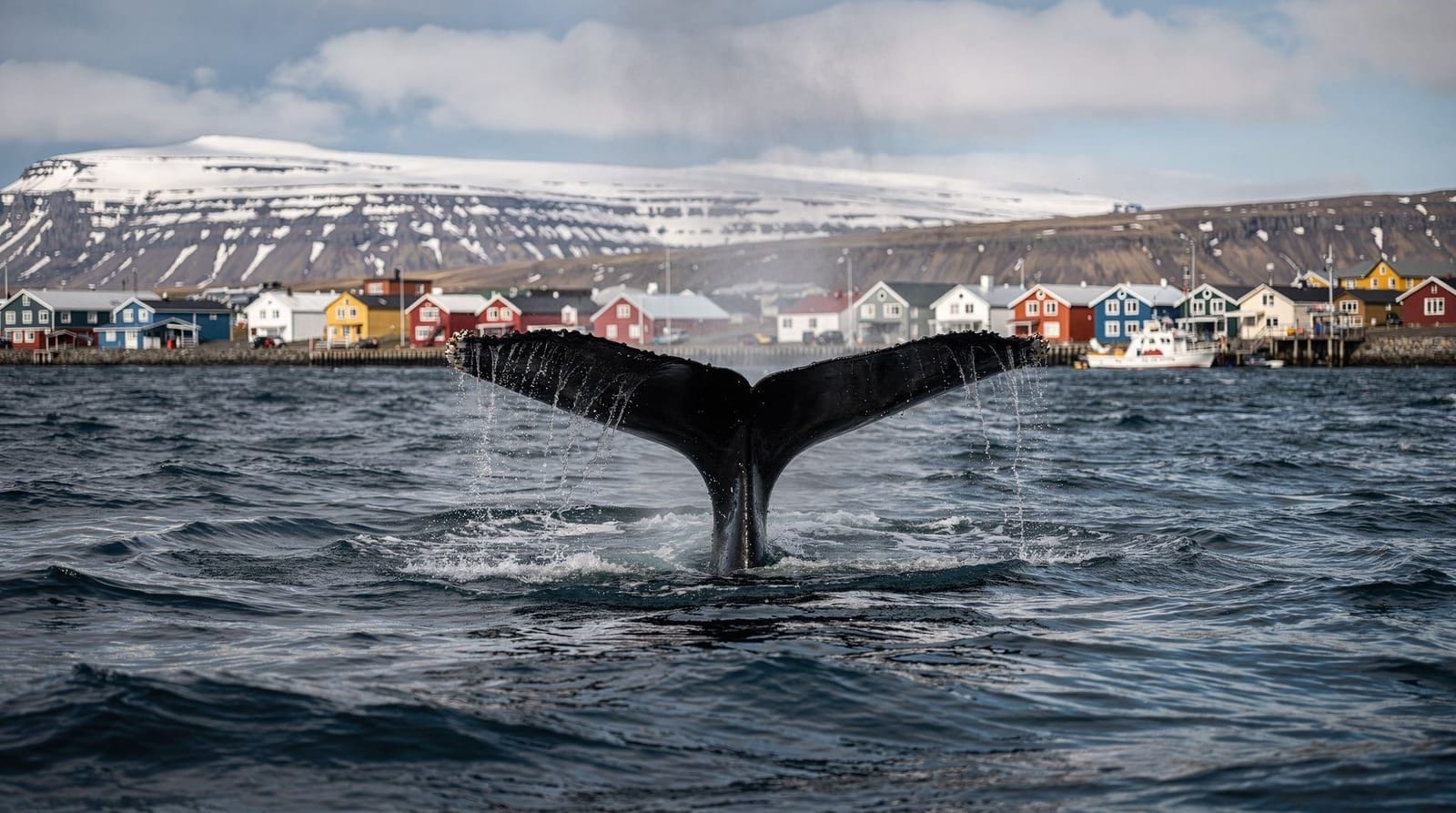
Húsavík: Whale watching carbon neutral oak boat
Duration: 3 hours
North Iceland is Iceland’s most undervisited region by first-time visitors, who tend to concentrate on the South Coast and Golden Circle. That is a mistake: the north has Húsavík — Europe’s most reliable whale watching location — as well as the volcanic surrealism of Lake Mývatn, the raw power of Dettifoss (Europe’s most powerful waterfall), and the horseshoe canyon of Ásbyrgi. The Diamond Circle connects these sites in a logical loop from Akureyri, the regional capital.
Four days allows a thorough circuit without the grinding pace that turns road trips into endurance events. Flying into Akureyri’s domestic airport (AEY) from Reykjavík is about 45 minutes and costs 8,000–14,000 ISK (€55–€95) one way if booked ahead on Icelandair or Eagle Air — significantly faster than the 5.5-hour drive on the Ring Road.
| Where | Akureyri, Mývatn, Húsavík, Dettifoss, Ásbyrgi |
| Cost | Around 8,000–14,000 ISK one-way flight, plus 2WD rental and mid-range stays |
| Time needed | 4 days, paved-road self-drive (except optional Askja) |
| Getting there | Fly Reykjavík–Akureyri (45 min) or drive the Ring Road (~5.5 hrs) |
| Best time | June–August for whale watching and midnight-sun daylight |
Day-by-day summary
| Day | Route | Overnight | Highlight |
|---|---|---|---|
| 1 | Arrive Akureyri, town orientation | Akureyri | Botanical garden, Akureyrarkirkja views |
| 2 | Goðafoss → Mývatn loop | Reykjahlíð | Dimmuborgir, Hverfjall, Nature Baths |
| 3 | Húsavík whale watching → Ásbyrgi | Húsavík or Reykjahlíð | Humpback whales, horseshoe canyon |
| 4 | Dettifoss → return to Akureyri | — | Europe’s most powerful waterfall |
Day 1 — Arrival in Akureyri and orientation
Arriving and settling in
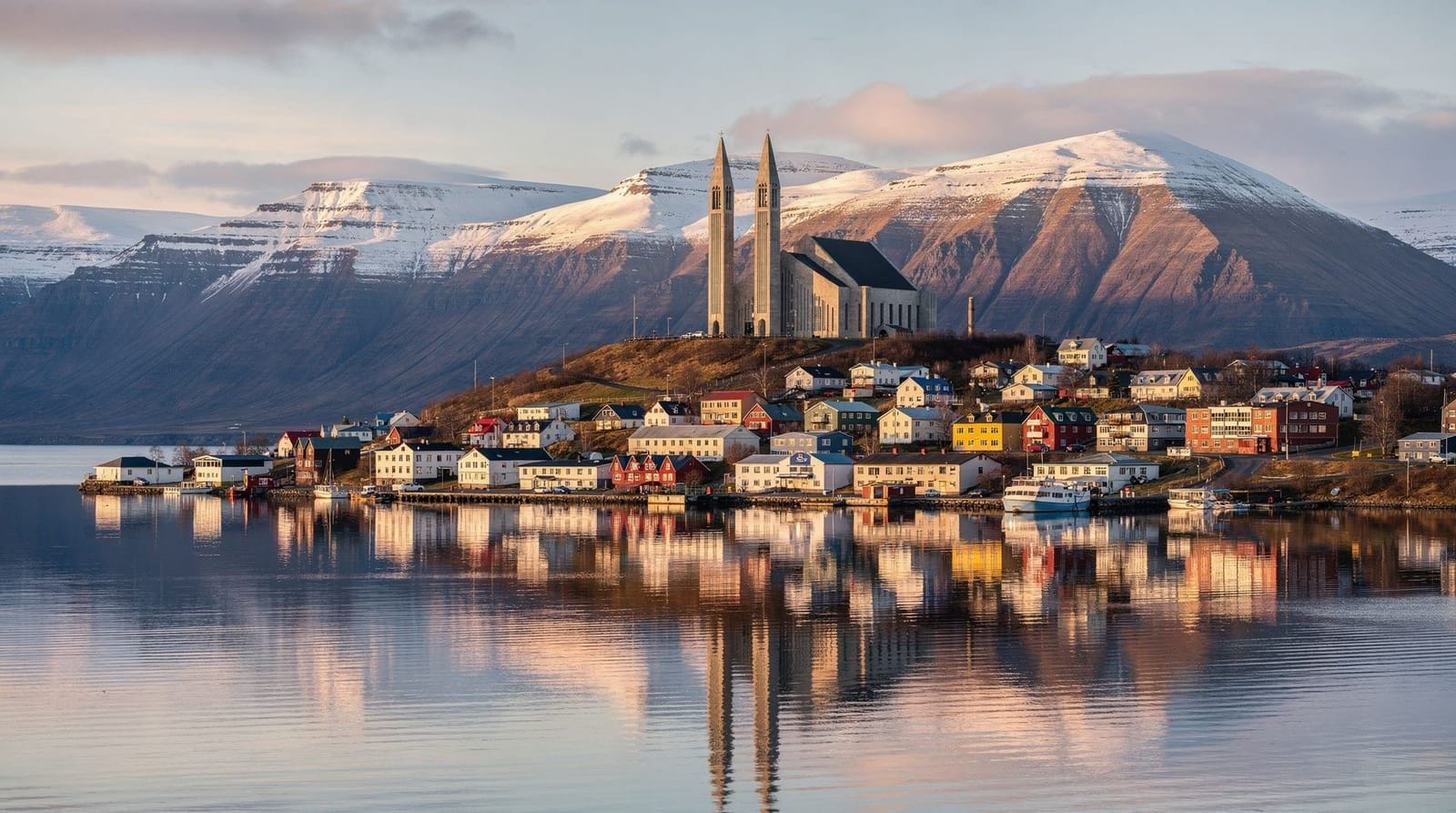
Akureyri (population 20,000) is Iceland’s second city and the north’s main hub. It has a compact, walkable centre along the fjord of Eyjafjörður. Fly in from Reykjavík Domestic Airport (RKV) in 45 minutes, or drive 460 km north on the Ring Road (Route 1) in approximately 5 hours 30 minutes.
Recommended accommodation: Hotel Kea (doubles from 42,000 ISK / €285, includes continental breakfast) sits in the centre and is Akureyri’s most reliable mid-range property. Guesthouse Akureyri (from 24,000 ISK / €165) is a more affordable option 10 minutes’ walk from the main street.
Afternoon: Akureyri town
Akureyri’s compact centre takes about 2 hours to walk at a relaxed pace. The Akureyri Botanical Garden (Lystigarðurinn) is free entry and maintained at a latitude of 65.6°N — among the northernmost botanical gardens in the world — and is worth 30–45 minutes in summer when the beds are full. The Akureyrarkirkja church dominates the hillside and the climb up the 102 steps gives good views across the fjord.
Dinner: Rub23 (Kaupvangsstræti 6) is the best fish restaurant in Akureyri, with mains from 4,200 ISK (€28). The sushi-fusion menu may sound eccentric in Iceland but the local fish sourcing is serious. Booking is advisable in July and August.
Day 2 — Goðafoss, the Mývatn loop, and Reykjahlíð
Morning: Goðafoss
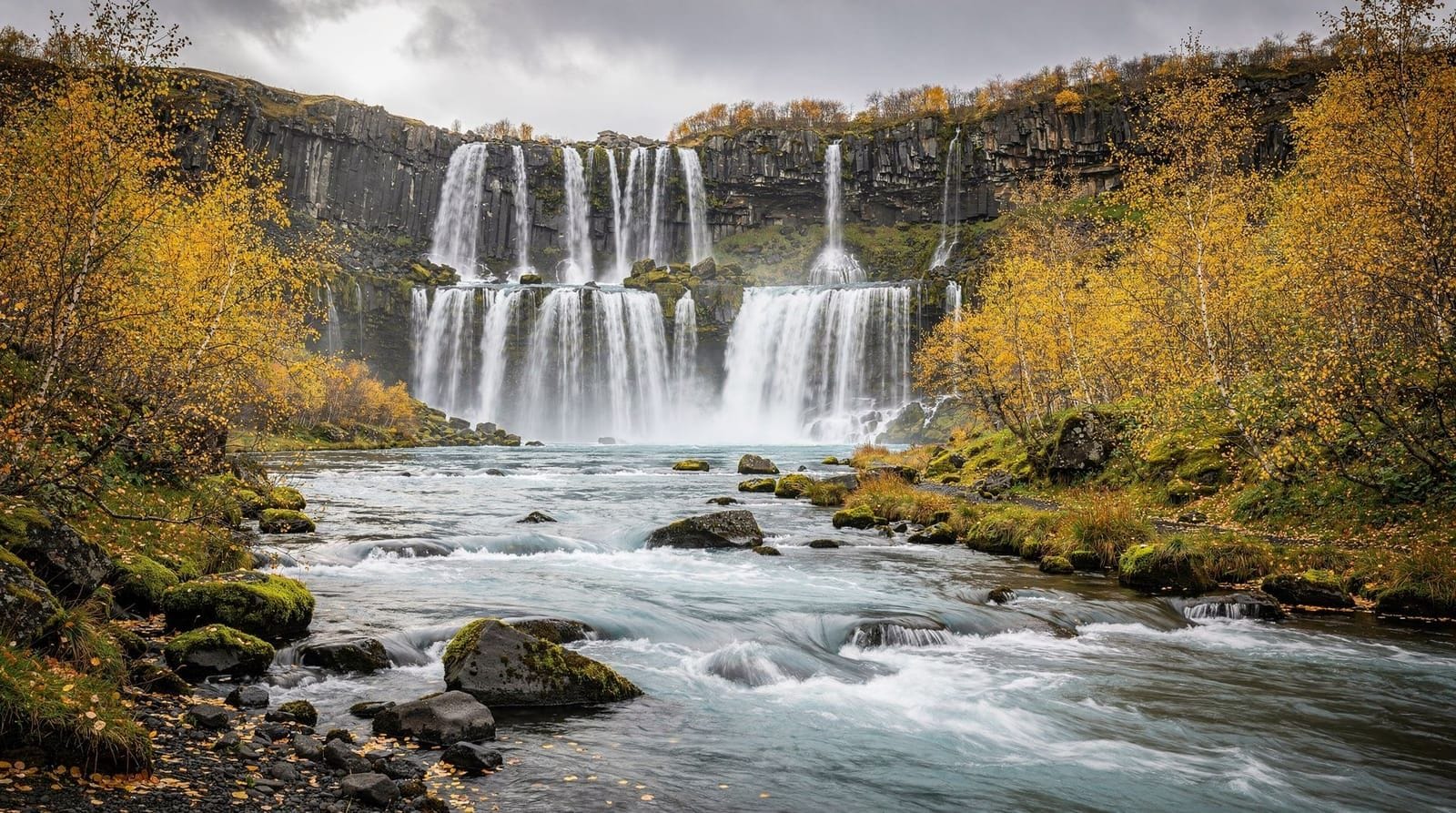
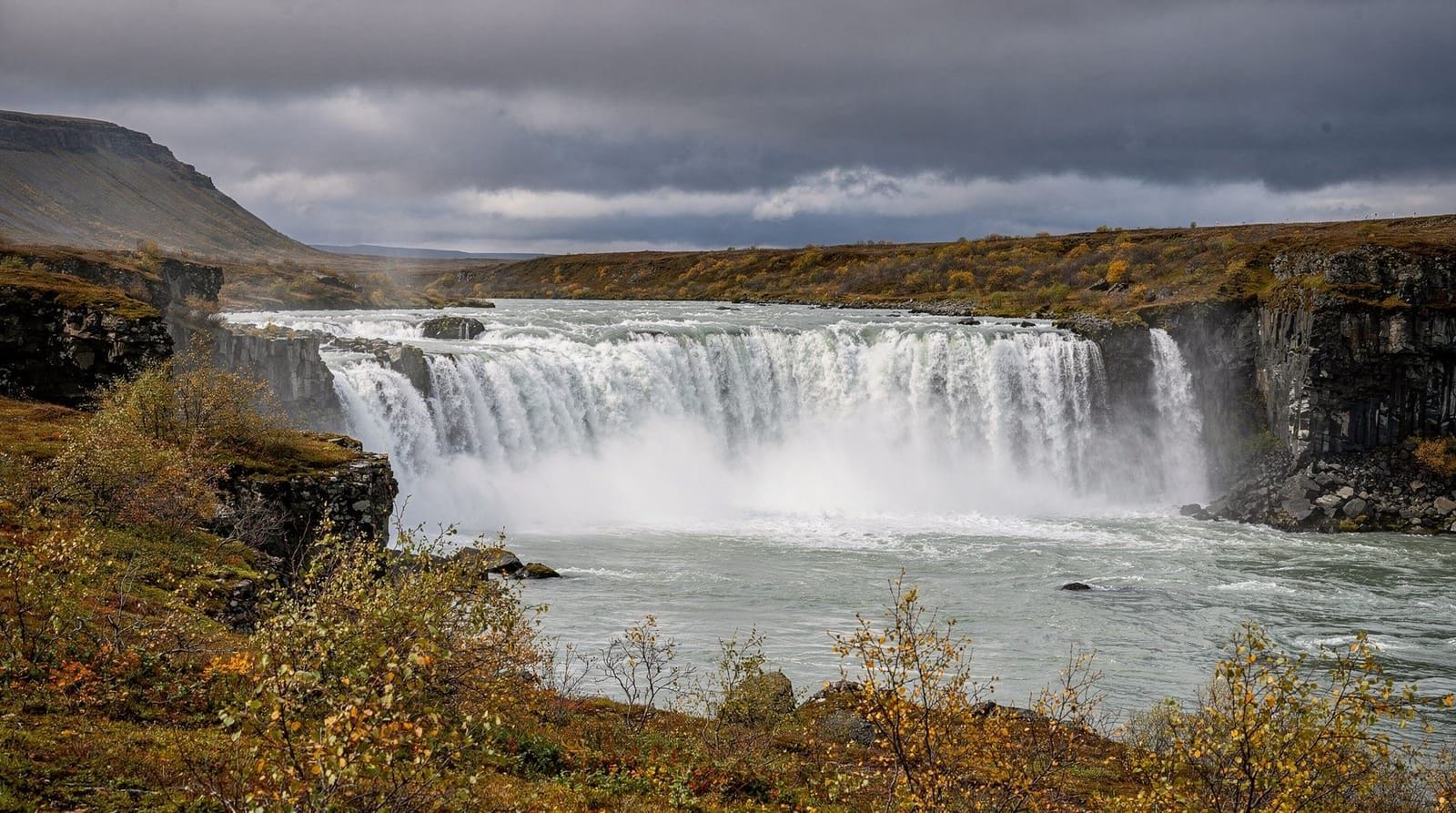
Drive east on the Ring Road (Route 1) from Akureyri. Goðafoss is 50 km and 40 minutes away. The “Waterfall of the Gods” is 12 metres high and 30 metres wide — less dramatic in volume than Dettifoss but visually more accessible and framed by basalt columns on both sides of the Skjálfandafljót river. Allow 45–60 minutes. There are two viewpoints connected by a short path. The western viewpoint requires a 300-metre walk from the eastern car park.
Midday to afternoon: Lake Mývatn
Continue 55 km east to the Mývatn area (50 minutes). Lake Mývatn (area 37 km²) is a shallow, geothermally active lake famous for its pseudocraters, lava formations, and migratory birds. The Mývatn area contains several distinct sites — plan a minimum of 4–5 hours to cover the main ones.
The logical sequence:
- Dimmuborgir (lava labyrinth, free, 1 hour): strange volcanic formations created when lava flowed over a wetland. The Church Cave (Kirkjan) is the highlight. Avoid the main loop road — the inner trails are less crowded and more interesting.
- Hverfjall (tephra crater, 500 ISK entry / €3.5, 1 hour 30 min): a textbook ash-ring crater 2.5 km in diameter. The rim walk is 4 km and moderate — worth it for the views over the lake and Dimmuborgir.
- Skútustaðir pseudocraters (free, 30 min): drive to the southern shore. The gravel path circles the craters formed when lava flowed over shallow water. Low-key but geologically unique.
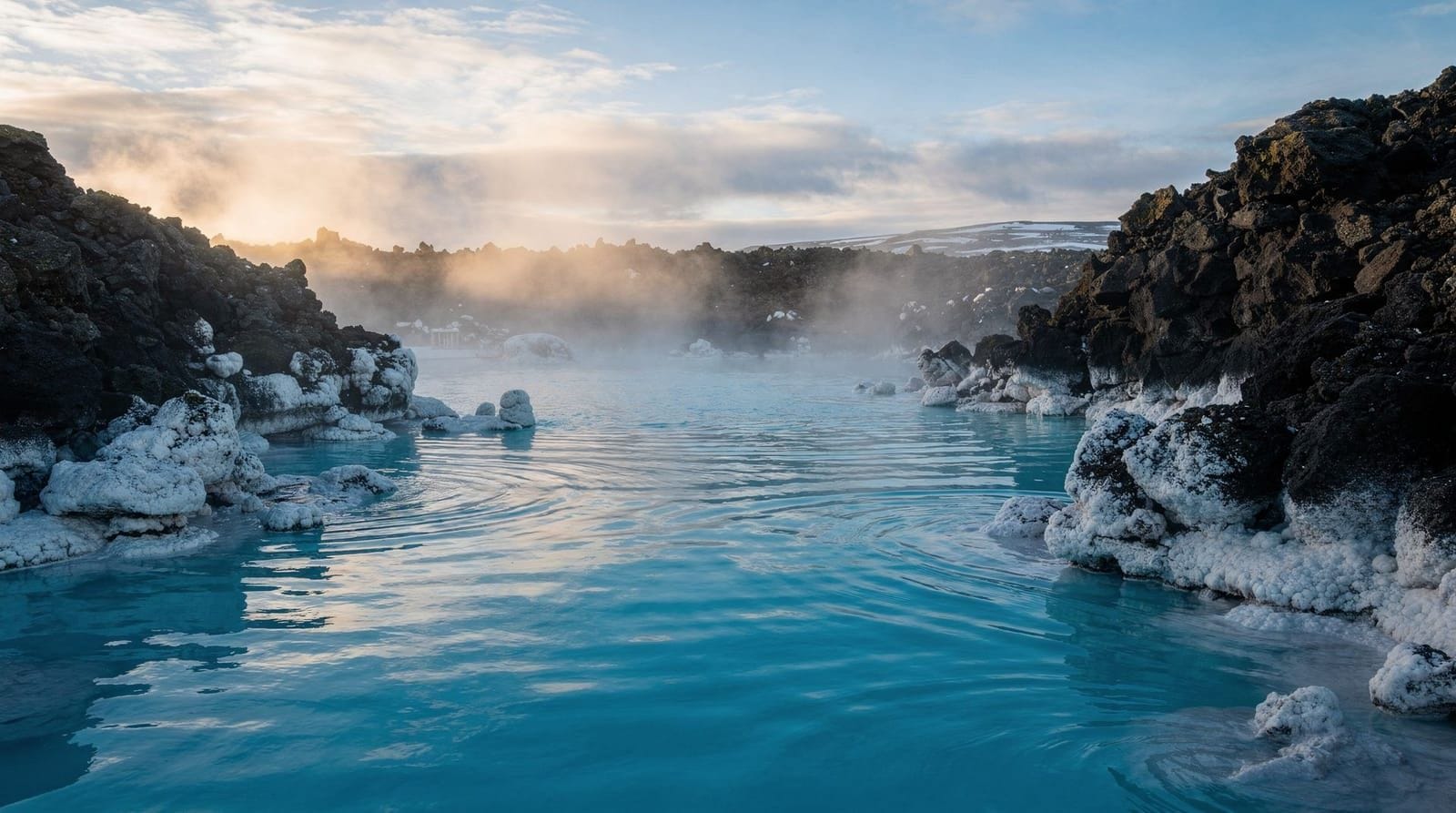
The Mývatn Nature Baths (Jarðböðin) are a geothermal pool complex on the northern lake shore — the north’s equivalent of the Blue Lagoon, but at roughly half the price (around 6,500 ISK / €44) and a fraction of the crowds. Open daily 09:00–midnight in summer.
Overnight in Reykjahlíð village, the main settlement at Mývatn. Hótel Laxá (doubles from 38,000 ISK / €258) is the best-positioned property. Vogafjós Farm Resort (doubles from 32,000 ISK / €217) is a working dairy farm with a well-regarded restaurant — the fresh cheese and homemade skyr are genuinely good. The on-site cowshed is open to guests.
Day 3 — Húsavík whale watching and Ásbyrgi
Morning: Drive to Húsavík and whale watching
From Reykjahlíð to Húsavík is 60 km on Route 87 (55 minutes). Arrive by 09:00 to secure a morning departure on the 09:30 or 10:00 boat.
Húsavík is Iceland’s — and arguably Europe’s — premier whale watching destination. Skjálfandi Bay supports one of the highest densities of humpback whales found anywhere in the North Atlantic between June and August. Success rates from local operators run at 95–99% between June and August. The most reputable boats are North Sailing (carbon-neutral oak schooners, from 12,900 ISK / €88) and Gentle Giants (larger vessels, from 11,500 ISK / €78). Avoid booking from aggregator sites with inflated commissions — both operators have direct booking online.
North Sailing’s restored oak schooners run on green fuel and are among the most environmentally responsible whale-watching operations in the world. The 3-hour tours run multiple times daily from June to October.
After the tour, have lunch at Gamli Baukur restaurant on the Húsavík harbour — the fish soup is 2,200 ISK (€15) and the view across the bay is the best in town.
Afternoon: Ásbyrgi canyon
From Húsavík, drive north and east on Route 85 to Ásbyrgi (65 km, 55 minutes). Ásbyrgi is a horseshoe-shaped canyon 3.5 km long and 1 km wide, created by a catastrophic glacial flood roughly 3,000 years ago. The walls rise 100 metres on three sides. Walk the 1-hour loop path to the viewpoint at the canyon head — the forest floor in the canyon is unexpected and striking.
Return to Húsavík for the night (the town has limited but adequate accommodation), or continue to Reykjahlíð if you prefer the Mývatn base. Fossil Restaurant in Húsavík (Garðarsbraut 16) serves solid lamb and fish for 3,800–5,200 ISK (€26–€35) for a main.
Day 4 — Dettifoss, the Askja road option, and return
Morning: Dettifoss and Selfoss
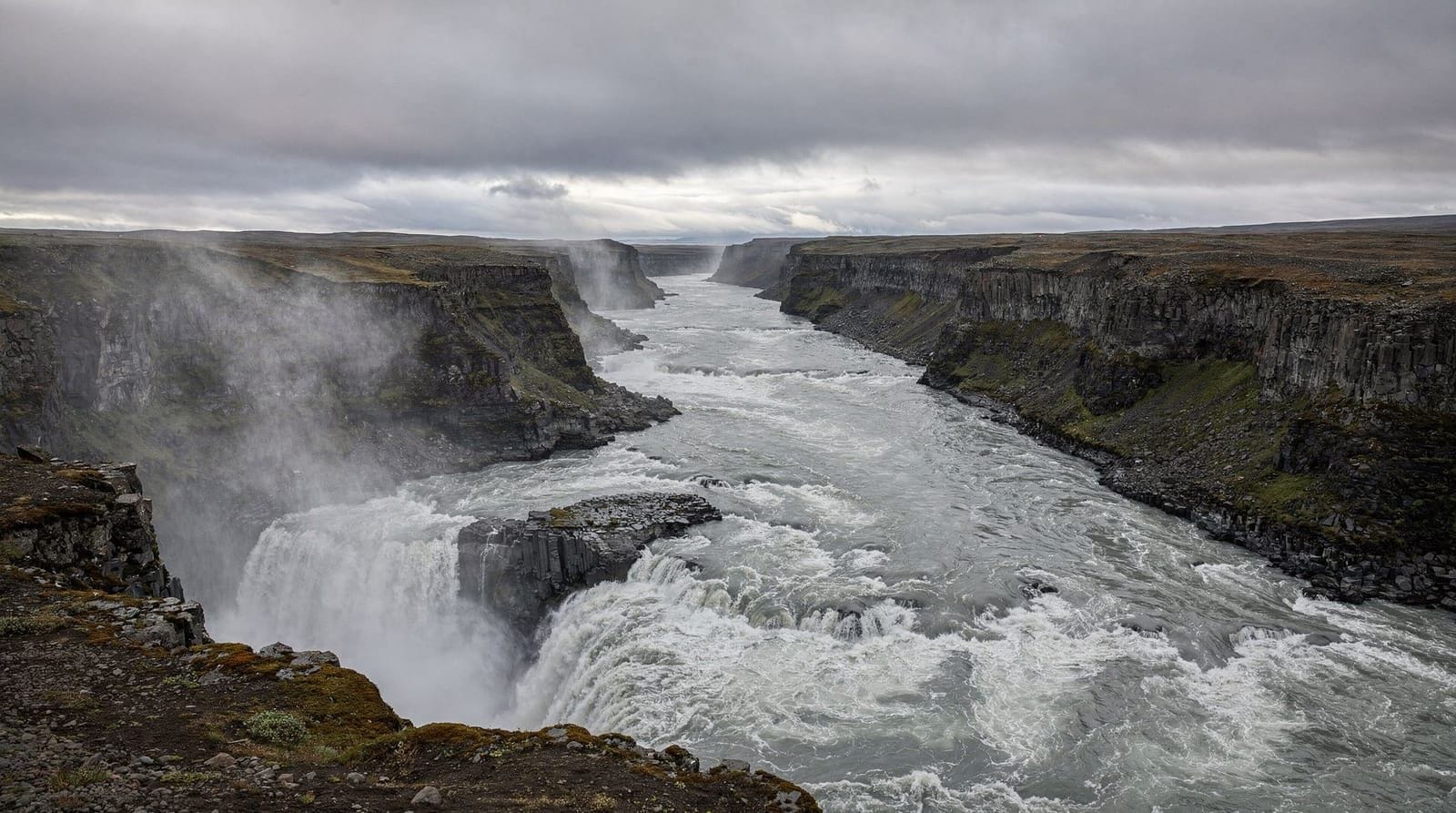
From Húsavík, drive south on Route 85 to the Dettifoss junction (roughly 70 km from Húsavík, 1 hour). Route 862 on the eastern side of the Jökulsá á Fjöllum river is paved and leads to the eastern viewpoint — more dramatic and less visited than the western approach (Route 864, partly unpaved). Allow 45 minutes at Dettifoss: 44 cubic metres of water per second drops 44 metres into the Jökulsárgjúfur canyon. The spray is significant — waterproof jacket recommended.
Walk 2 km upstream to Selfoss, a lower and wider waterfall with a different character. The 4 km round trip takes 1 hour 15 minutes on a well-maintained trail.
Optional extension: Askja and Holuhraun
If you have a 4WD and are driving in July–August, Route F88 from the Ring Road south of Mývatn accesses the Askja volcano (80 km one way, 3 hours of rough driving each way). The interior F-roads cannot be driven in a 2WD under any circumstances. Allow a full day for Askja if you choose this extension.
Super-jeep tours from Mývatn to Askja take the guesswork out of the F-roads, covering the 160-km return in a single 12-hour day. A practical option if you have a 2WD rental.
Afternoon: Return to Akureyri
Without the Askja detour, return west to Akureyri from Dettifoss (via Route 862 south to the Ring Road, then west, about 140 km / 2 hours). Domestic flights to Reykjavík from Akureyri airport depart at various times — Icelandair’s last flight is typically around 20:00. If driving south on the Ring Road, allow 5–6 hours to Reykjavík.
Alternatively, extend the trip by continuing east to Egilsstaðir to begin the East Iceland leg of the Ring Road itinerary.
Practical notes
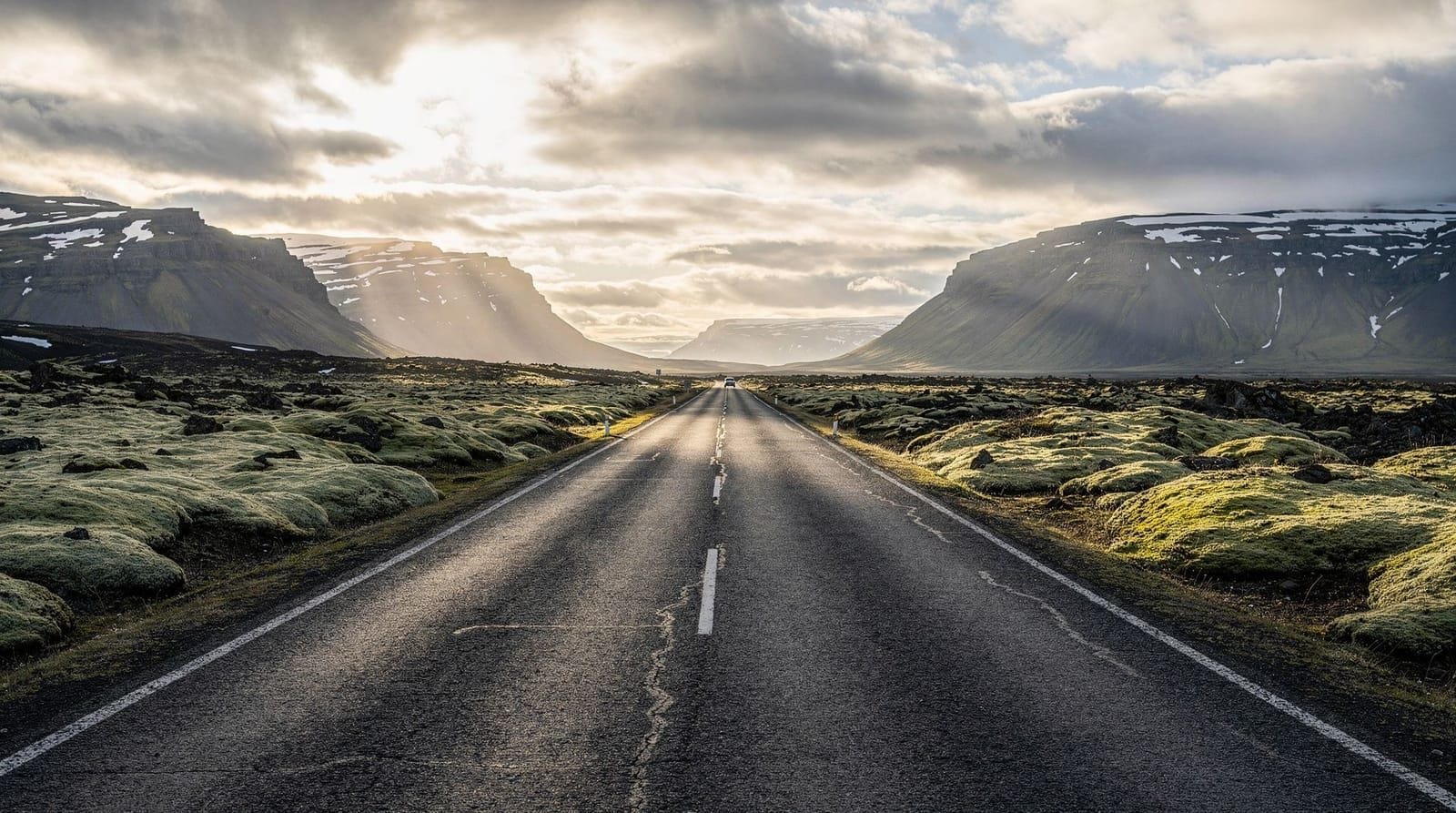
Roads: All roads in this itinerary (except the optional Askja route) are paved. Route 87 between Mývatn and Húsavík has a short gravel section but is passable by any car. Check road.is before departure.
Midges at Mývatn: The lake is named after the midges (mý = midge in Icelandic) that emerge in summer, particularly June. They do not bite, but they swarm densely around the lake shore between June and early August. A head net costs 800–1,200 ISK (€5–€8) from petrol stations and is genuinely useful.
Budget notes: North Iceland is marginally cheaper than the South Coast for accommodation — expect to pay 5–15% less for equivalent quality. The Mývatn Nature Baths is roughly half the price of the Blue Lagoon for a similar experience.
For seasonal detail on visiting north Iceland, see the best time to visit Iceland guide.
The Diamond Circle versus the Golden Circle — a practical comparison
The Golden Circle (Þingvellir–Geysir–Gullfoss) is Iceland’s most visited day-trip route, attracting 1.5–2 million visitors per year. The Diamond Circle has no single accepted definition but typically means the loop connecting Akureyri, Goðafoss, Mývatn, Dettifoss, Ásbyrgi, and Húsavík — covering the north’s main natural highlights in a 300-km circuit.
The practical differences matter for planning:
- The Golden Circle is 2.5–3 hours of driving from Reykjavík; the Diamond Circle requires flying or driving 5+ hours north first
- Golden Circle roads are fully paved and cleared in all seasons; Diamond Circle roads are similar except the Route 864 approach to Dettifoss (partly unpaved)
- Crowd levels: Geysir and Gullfoss see 3,000–5,000 visitors per day in peak summer; Dettifoss and Ásbyrgi see a fraction of that
- Wildlife: the north offers meaningful whale watching (Húsavík) that has no equivalent on the Golden Circle route
The full comparison is in the Diamond Circle vs Golden Circle blog.
What to eat in north Iceland
North Iceland has a stronger fishing tradition than the south, and the restaurant scene in Akureyri and Húsavík reflects this. Specific recommendations:
Akureyri:
- Rub23 (Kaupvangsstræti 6): serious fish and sushi-influenced cooking, best restaurant in the city, mains from 4,200 ISK (€28)
- Bautinn (Hafnarstræti 92): traditional Icelandic meat-heavy menu, reliable and good value, mains from 2,800 ISK (€19)
- Bjarni Fel (Hafnarstræti): excellent burgers and fish and chips for a quick lunch, 2,200–3,200 ISK (€15–€22)
Húsavík:
- Gamli Baukur: harbour-side fish restaurant with the best lobster soup on the north coast, 2,200 ISK (€15) for soup, 4,500–6,500 ISK (€30–€44) for mains
- Naustið: smaller and cheaper, good fried cod and langoustine, 2,800–3,800 ISK (€19–€26)
Mývatn:
- Vogafjós Farm Resort restaurant: working dairy farm food — skyr, fresh cheese, beef and lamb, mains from 3,500 ISK (€24)
- Gígur Restaurant at Hótel Laxá: slightly more polished, mains from 4,200 ISK (€28)
The supermarket in Akureyri (Nettó or Hagkaup) is significantly cheaper than restaurants for breakfast and lunch supplies.
Frequently asked questions about this 4-day Iceland itinerary
Can I fly into Akureyri instead of driving from Reykjavík?
Yes, and it is usually worth it. Icelandair and Eagle Air fly Reykjavík Domestic (RKV) to Akureyri (AEY) in about 45 minutes, with fares from 8,000 ISK (€55) one way if booked in advance. That saves you a 5.5-hour drive each way. You can then hire a car from Akureyri — all major rental companies are represented there.
What is the best base for this itinerary?
Reykjahlíð at Mývatn is the most central, putting you equidistant between the Diamond Circle sites. It has fewer restaurant options than Akureyri but is positioned well for early starts to Dettifoss and Húsavík. Akureyri makes more sense if you want better dining and nightlife options.
Is whale watching guaranteed at Húsavík?
No whale encounter is “guaranteed” in wild waters, but Húsavík success rates are among the highest anywhere — operators report 95–99% sightings between June and August. Most operators offer a free return trip if no cetaceans are seen. Note that “sighting” in operator reports typically means one or more animals seen, not the sustained feeding frenzies that make it onto social media.
Are the Mývatn midges as bad as people say?
They can be. Between late June and late July, midge swarms around the lake shore are genuinely dense — they hover around your face, get in your eyes, and make photography frustrating. They do not bite, but the experience is still unpleasant without a head net. Outside these weeks (early June, August, September) midges are much reduced or absent.
Can I do this loop in a 2WD rental car?
Yes, for the core itinerary. All paved roads between Akureyri, Goðafoss, Mývatn, Húsavík, Ásbyrgi, and Dettifoss (via Route 862) are accessible in a standard 2WD. Only the optional Askja extension via Route F88 requires a 4WD — that route is illegal in a 2WD and your rental insurance will be void.
What should I know about the Diamond Circle versus the Golden Circle?
The Golden Circle — Þingvellir, Geysir, Gullfoss — is more accessible from Reykjavík and considerably more crowded. The Diamond Circle is less marketed and consequently less visited. Both have iconic landscapes; the north’s version involves longer driving distances between sites, which actually reduces congestion at each stop. See the Diamond Circle destination guide for full comparison.
What is the road like to Dettifoss in summer?
Route 862 on the east side is fully paved since 2019 and easily driven in any car. Route 864 on the west side is an unpaved track — bumpier and slower, but reachable in a standard car in dry summer conditions. The eastern approach is preferable for most visitors as it also has the better viewpoint.
What are the best photography spots in north Iceland?
North Iceland’s photography highlights beyond the obvious landmarks: the Goðafoss waterfall at sunrise (the eastern bank path is uncrowded before 08:00), the Mývatn pseudocrater reflections at dusk on calm days, the Húsavík whale watching boats returning to harbour in the midnight sun (available June–July), and Ásbyrgi canyon viewed from the canyon floor looking upward at the birch-covered walls. The northern lights are reliably visible from the Mývatn area in clear-sky windows between September and March — the lake surface provides a natural reflection when not frozen. See the Iceland photography guide for specific settings and timing recommendations.
For those combining photography and hiking, the Dettifoss–Selfoss–Hafragilsfoss sequence on the Jökulsárgljúfur canyon is one of Iceland’s most dramatic riverside trails. The 10-km round trip from Dettifoss south car park takes 3–4 hours and covers three distinct waterfalls plus canyon viewpoints that are rarely crowded even in peak season.
Should I do this loop in winter instead of summer?
Winter changes the itinerary significantly. Whale watching still runs (some operators report good winter sightings with fewer boats out), but daylight drops to 4–6 hours around the solstice, several Mývatn footpaths become icy, and Route 862 to Dettifoss can close after heavy snow. A winter version of this trip should build in flexible days and check Iceland road conditions daily rather than fixing a strict schedule. For the general seasonal trade-offs, see Iceland in winter.
Is Akureyri worth a full extra day beyond this itinerary?
If you enjoy small-city life, yes. Beyond the two hours covered on Day 1, Akureyri has the Forest Lagoon geothermal baths just outside town, a small but respectable art museum scene, and easy access to Hlíðarfjall for summer chairlift rides with fjord views. It’s a reasonable place to add a rest day mid-trip, particularly if flying rather than driving has left you with spare time before a return flight. See day trips from Akureyri for options beyond this core loop.
How does north Iceland compare to the Westfjords for a similar 4-day trip?
Both are less-visited alternatives to the South Coast, but they suit different travellers. North Iceland (this itinerary) has more concentrated, easy-to-reach highlights — whale watching, waterfalls, a real town base — connected by paved roads. The Westfjords are wilder, more remote, and involve more gravel driving and longer distances between sights, rewarding travellers who want genuine isolation over convenience. See the Westfjords 5-day itinerary for the comparison in practice.
What connectivity should I expect on this route?
Mobile coverage is reliable in Akureyri, Húsavík, and along the main paved roads between the sites in this itinerary — noticeably better than in the highlands or Westfjords. Coverage thins out around Ásbyrgi and on the Route 862 approach to Dettifoss, so download offline maps before those legs. An eSIM or local SIM activated on arrival covers this route without gaps in the towns; see eSIM and connectivity in Iceland for setup options.
Combining this loop with the rest of the Ring Road
This itinerary works as a standalone 4-day trip flying in and out of Akureyri, or as the northern segment of a longer counter-clockwise Ring Road trip. If continuing east from Dettifoss instead of returning to Akureyri, the next stretch joins East Iceland toward Egilsstaðir — see the ring road 7-day itinerary for how the segments connect, and the ring road clockwise or counter-clockwise guide for which direction suits your season and priorities.
Top experiences
Bookable activities with verified prices and instant confirmation on GetYourGuide.