Diamond Circle vs Golden Circle — which one actually delivers
The question with a direct answer
I’ve driven both circuits multiple times. I’ll give you the verdict first, then the reasoning.
The Golden Circle is more accessible, more famous, and more efficient for limited time. The Diamond Circle is more impressive, less crowded, and worth the extra travel if you have the days. If I could only do one — and assuming I had at least 5 days in Iceland — I would do the Diamond Circle.
This is a minority opinion among travel writers who prioritise convenience. Here is the case for it.
| Golden Circle distance | Around 300 km loop from Reykjavík |
| Diamond Circle distance | Around 250 km loop from Akureyri |
| Golden Circle time needed | Full day, doable from Reykjavík |
| Diamond Circle time needed | Full day plus a night in Akureyri or Húsavík |
| Both circuits | Realistic only with 7+ days total in Iceland |
What the Golden Circle actually is
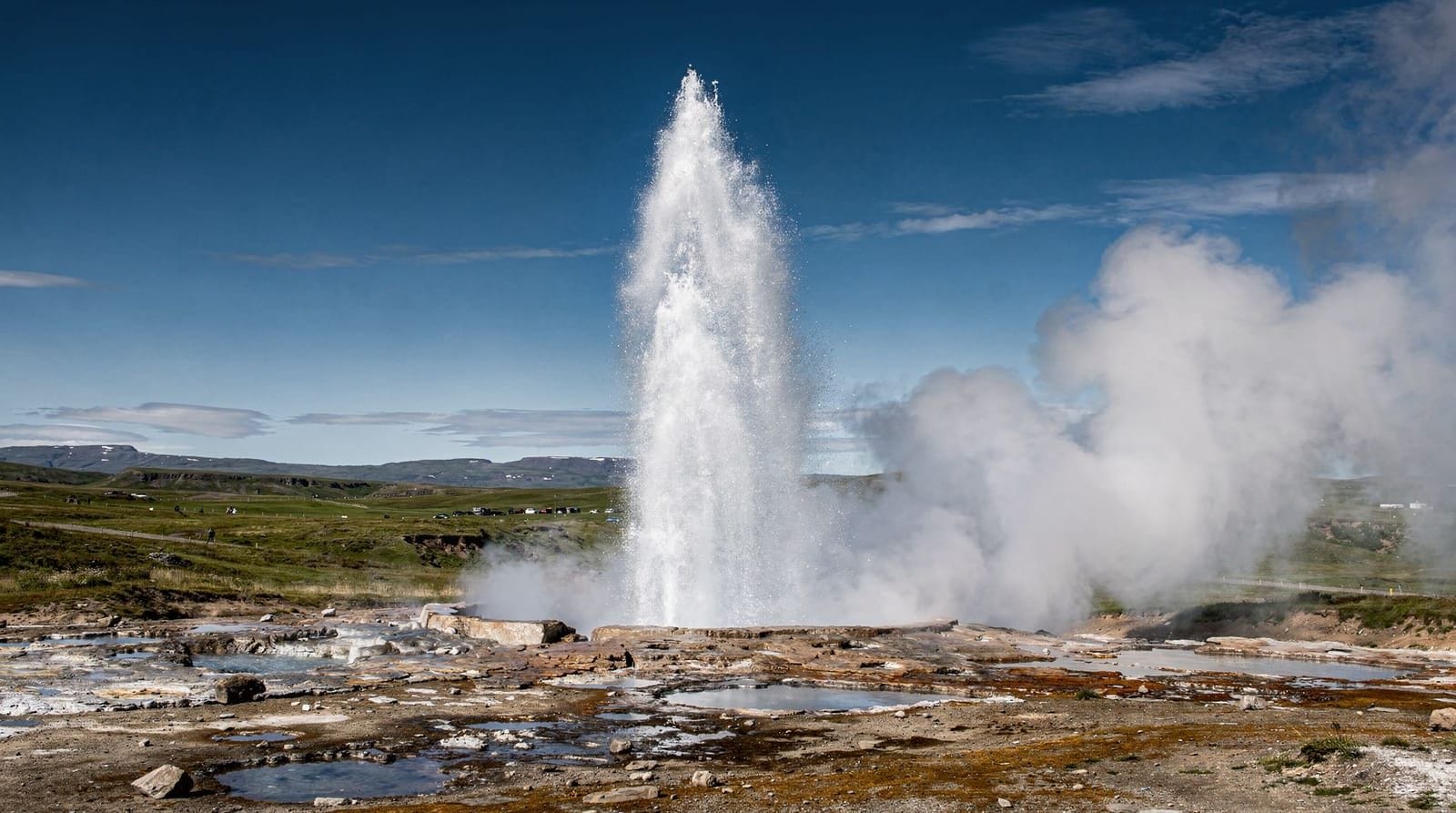
The Golden Circle is a roughly 300-kilometre loop from Reykjavík visiting three main sites: Þingvellir National Park (UNESCO World Heritage Site, site of Iceland’s original parliament and the visible rift between the North American and Eurasian tectonic plates), the Geysir geothermal area (home to Strokkur, which erupts every 5-10 minutes), and Gullfoss waterfall (a powerful two-tiered falls in the Hvítá canyon).
These are genuinely good. Þingvellir has a specific weight — the Alþing parliamentary site, the Öxará river, the continental rift you can stand in — that rewards slow attention. Strokkur erupts reliably and impressively; the eruption column reaches 15-20 metres and the geyser mechanism is visible in the water dome that forms seconds before the eruption. Gullfoss in full flow, with the canyon mist and the old tea room serving waffles nearby, is among the better waterfall experiences in a country full of better waterfall experiences.
The problem is infrastructure. The Golden Circle receives over 2 million visitors annually. Þingvellir in peak season has traffic management. The Geysir area has the full structure of mass tourism: overflow parking, souvenir stalls, a large cafeteria, video screens explaining the geology. Gullfoss has a viewing platform accessible from a large car park with clear visitor management. None of this ruins the sites but it changes them. In July at midday you are sharing Þingvellir with large numbers of organised tour groups moving between the same viewpoints on the same timetable.
The full-day Golden Circle guided trip from Reykjavík covers the three main sites efficiently and includes a guide who can explain the geological and historical context. In summer, having a bus option removes the parking stress at all three locations.
What the Diamond Circle actually is
The Diamond Circle is a roughly 250-kilometre loop in north Iceland from Akureyri, connecting Húsavík, Ásbyrgi canyon, Dettifoss, Lake Mývatn, and Goðafoss waterfall. The name is a relatively recent marketing construction (created around 2015 to promote north Iceland tourism) but the underlying sites predate the branding by a considerable margin.
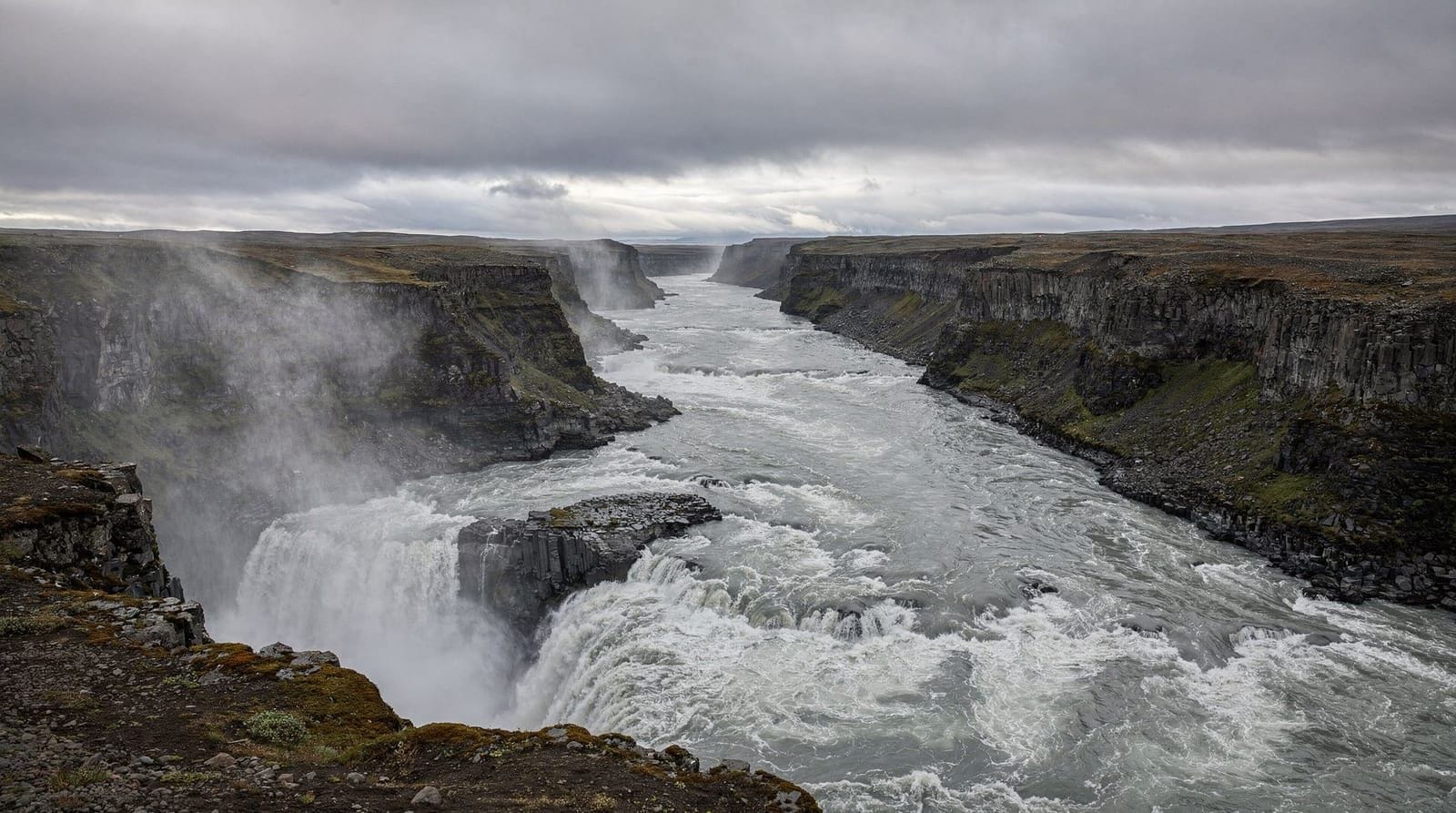
Dettifoss is the most powerful waterfall in Europe. The statistics — 193 cubic metres per second average flow, 44-metre drop — do not prepare you for the physical experience of standing at the rim. The ground vibrates. The spray soaks you within minutes. The canyon below is geological drama of a scale that exceeds most visitors’ expectations. Compared to Gullfoss, which is impressive, Dettifoss is overwhelming. The west bank view (accessible by paved road) is shorter to access; the east bank view (rough gravel road) is more dramatic and less crowded.
Ásbyrgi is a horseshoe-shaped canyon 3.5 kilometres long and 100 metres deep, formed either by a catastrophic glacial flood or (in Norse mythology) by the hoof of Odin’s eight-legged horse Sleipnir striking the earth. The forest at the canyon floor is one of the only natural woodlands in Iceland. It is nearly always uncrowded and is the most physically distinctive landscape feature in north Iceland. The 3-kilometre walking loop from the car park through the forest and around the canyon floor takes about 2 hours and is one of the most peaceful hikes in Iceland.
Lake Mývatn is a volcanic lake system with pseudo-craters, lava pillars rising from the water, Mývatn Nature Baths (a cheaper, less crowded alternative to the Blue Lagoon at around 5,500 ISK versus 90-120 EUR), and in summer a quantity of midges that names the lake — Mý = midge. The midges do not bite; they form clouds that get into your ears and eyes and are slightly maddening. Locals sell midge-net hoods near the car parks; they cost about 1,000 ISK and are worth it. The landscape around the lake is extraordinary in a specific volcanic way: the lava formations at Dimmuborgir, the pseudo-craters at Skútustaðagígar, the hot springs at Námaskarð.
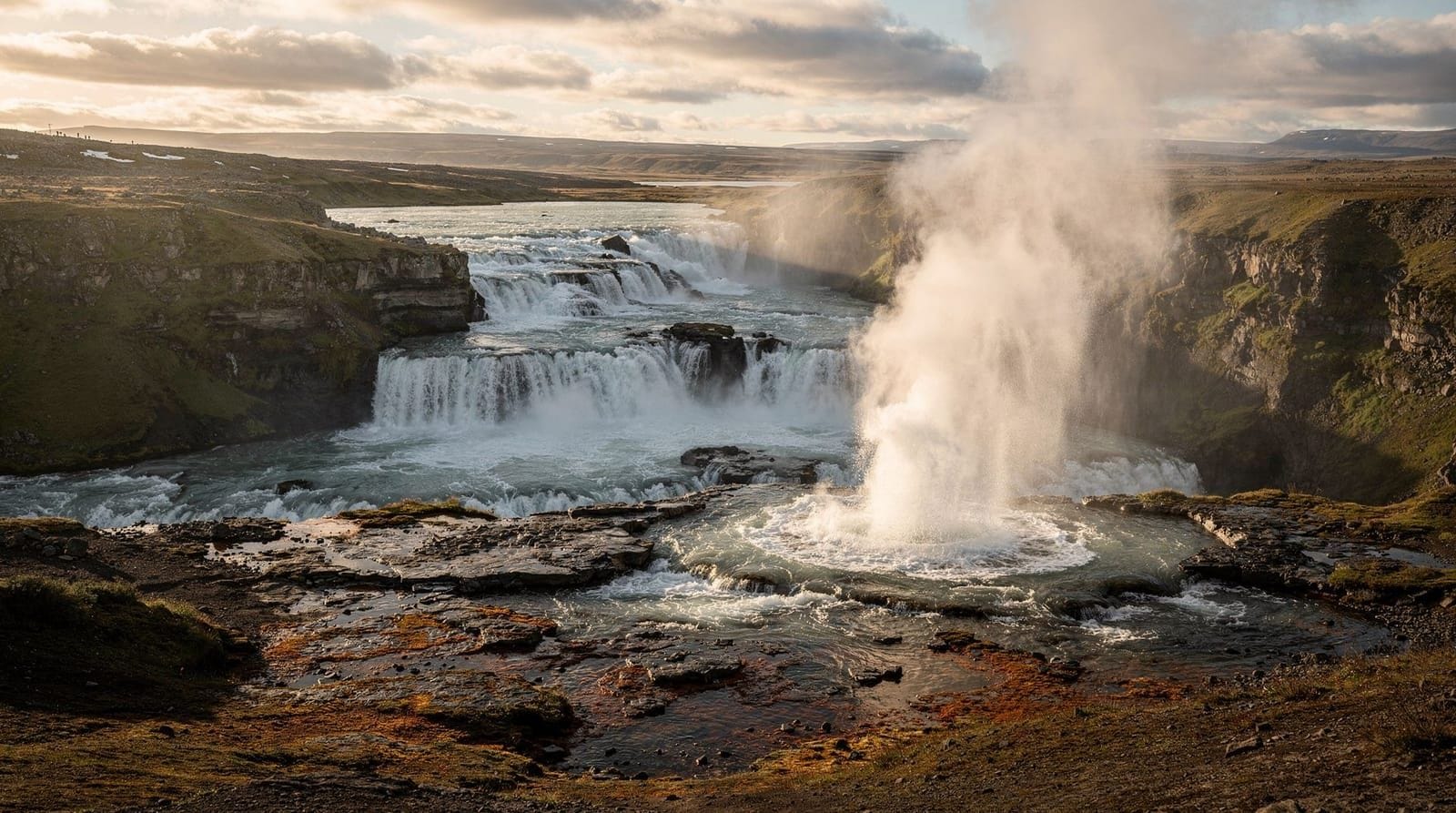
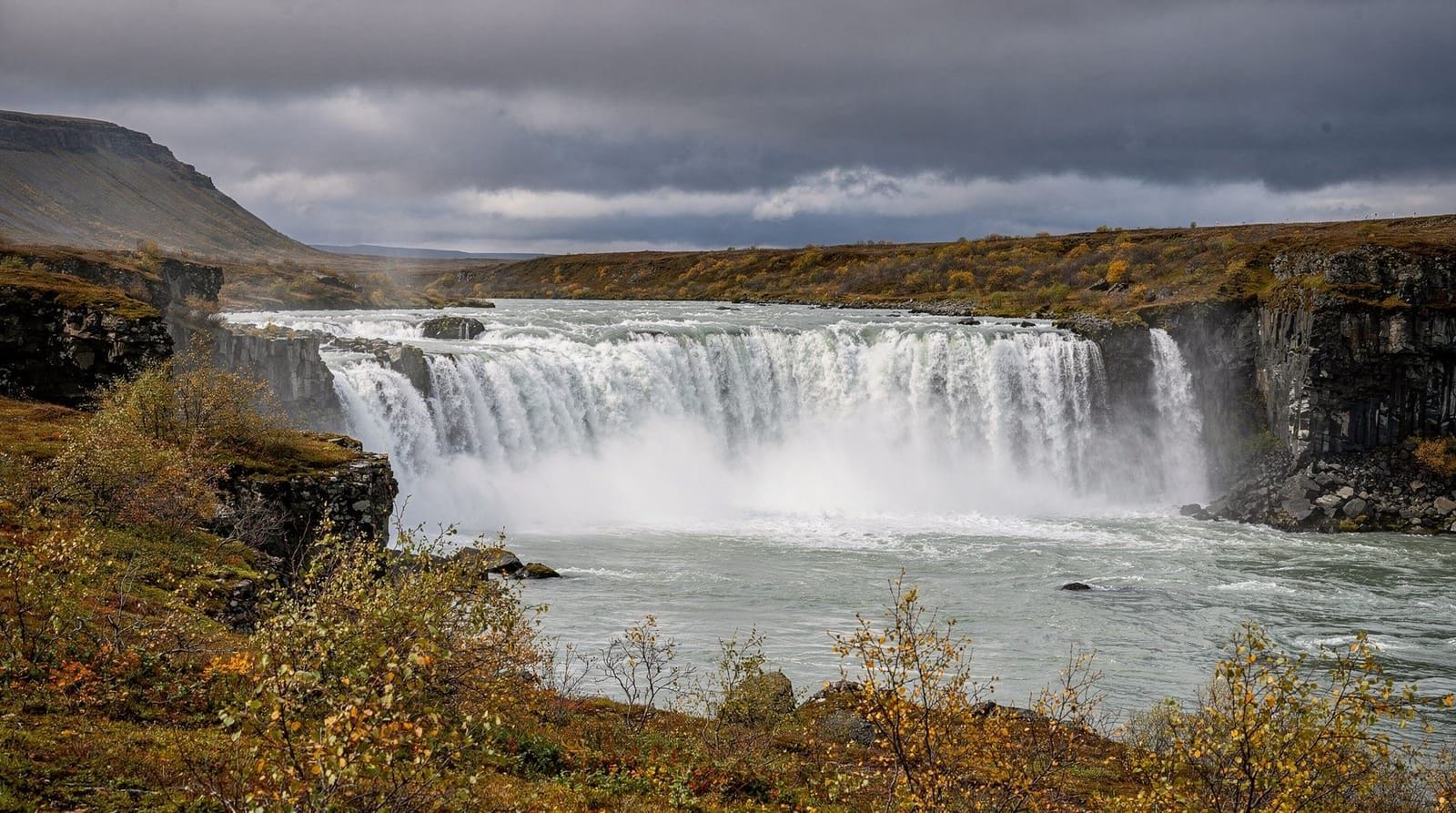
Goðafoss is one of Iceland’s most beautiful waterfalls. Slightly less powerful than Dettifoss but more classically scenic — wide, with an arc of multiple drops — and accessible easily from the ring road. Entry is free. The viewing platform allows you to stand at the waterfall rim on both banks; the western bank in the late afternoon, with the sun behind you, is the best position for photographs.
The full-day Diamond Circle tour from Akureyri covers the circuit with a guide and lunch included, which is useful if you prefer not to navigate the north Iceland roads independently.
The honest comparison
| Golden Circle | Diamond Circle | |
|---|---|---|
| Driving from Reykjavík | 45 min | 5 hours to Akureyri, then the circuit |
| Crowd level in July | Very high | Moderate |
| Headline attraction | Þingvellir + Geysir + Gullfoss | Dettifoss + Ásbyrgi + Mývatn |
| Infrastructure | Extensive | Adequate |
| Wildlife | Limited | Mývatn birdlife, Húsavík whales nearby |
| Hot springs | Secret Lagoon add-on | Mývatn Nature Baths included |
| Season sensitivity | Year-round | Best June-Sept; some roads close in winter |
| Best add-on | Kerid crater, Secret Lagoon | Húsavík whale watching |
Who should do which
Do the Golden Circle if: you have 2-4 days in Iceland centred on Reykjavík, you are visiting in winter when north Iceland roads are uncertain, or you are travelling with people who have limited mobility (all three Golden Circle sites have good accessibility infrastructure). The Golden Circle self-drive guide is the right reference for the self-drive logistics.
Do the Diamond Circle if: you have 5+ days and can spend a night in Akureyri or Húsavík, you are visiting in summer (June-September), you are interested in geology and wildlife at a level above casual, or you have already done the Golden Circle and want to see what north Iceland offers. The north Iceland 4-day itinerary is structured around the Diamond Circle with accommodation recommendations.
Do both if: you have a week or more. The ring road itinerary that goes south coast, east, north, and back through the interior or via the north connects both circuits and is the complete Iceland experience.
The add-ons that matter
For the Golden Circle, the most worthwhile additions are the Kerid volcanic crater (10 minutes off the main route, 600 ISK entry, genuinely striking blue-green crater lake) and the Secret Lagoon at Flúðir (a historic geothermal pool that predates the Blue Lagoon by a century, around 3,000 ISK entry, much more local and authentic in atmosphere). The Kerid detour takes 30 minutes; the Secret Lagoon adds 90 minutes including the soak.
For the Diamond Circle, the essential addition is Húsavík and a whale watching trip. The town is 60 kilometres north of the ring road and adds about 90 minutes of driving; but the whale watching in Skjálfandi Bay, where humpback whales are reliably present from June through September, is among the best wildlife experiences in Iceland. Adding Húsavík turns the circuit into a full two-day experience and is worth every extra hour. See the whale watching guide for Húsavík for operators and pricing.
The Snorkelling at Silfra in Þingvellir is a popular Golden Circle add-on — the visibility in the Silfra fissure is around 100 metres and you can float between the tectonic plates. It requires booking in advance and adds about 3 hours to the day. Worth doing once.
Photography: which circuit rewards the camera more
If photography is a priority, the Diamond Circle has an edge for anyone chasing dramatic, less-photographed compositions — Dettifoss’s scale is genuinely hard to convey without a wide-angle lens and a human figure for scale, and Ásbyrgi’s horseshoe canyon rewards a slower, more considered approach given how few people are usually there to get in the frame. The Golden Circle is more reliable for guaranteed “hero shots” precisely because the infrastructure (viewing platforms, clear sightlines) is built for it, but you’re often composing around other visitors. Strokkur’s eruption is genuinely difficult to time well on a first attempt; budget several eruption cycles if you want the shot.
The winter caveat
The Golden Circle is accessible year-round; all three main sites are on paved roads and the route is well-maintained in winter. The Diamond Circle in winter is more complicated: Dettifoss can be difficult to access (the F-road version of the east bank is closed in winter; the west bank road may be icy), Mývatn roads can be closed by weather, and the overall driving is more challenging. If you are visiting in December-March and want to do the north, base yourself in Akureyri and check road conditions daily.
My verdict stands: the Diamond Circle is more impressive, less visited, and represents a better use of travel time if you have it. The Golden Circle is the right choice if time is the constraint. Both are better with the additions than without.
Eating along each route
This matters more than most comparisons mention. The Golden Circle has the Friðheimar tomato greenhouse restaurant near Reykholt — tomato soup served among the actual tomato plants, around 3,000–4,000 ISK, genuinely worth the stop and popular enough that a short wait is common at lunchtime. Beyond that, options are mostly cafeteria-style near Geysir and Gullfoss, adequate but not memorable.
The Diamond Circle has fewer formal stops but better quality when you find them: Akureyri’s compact downtown has proper restaurants (Greifinn, Rub23) for a pre- or post-circuit meal, and Húsavík’s harbourside Gamli Baukur does an excellent fish chowder if you’re adding the whale watching detour. On the circuit itself, pack food — Ásbyrgi and Dettifoss have no on-site food service, just car parks and toilets.
Guided versus self-drive: which works better for each
For the Golden Circle, self-driving is easy and requires no special vehicle. All three main stops are on excellent paved roads from Reykjavík. The only disadvantage is parking in peak season at Geysir and Gullfoss, which can be slow. The guided option saves the parking stress and provides geological and historical commentary, but you move on the group’s schedule.
For the Diamond Circle, self-driving is also manageable — the main route connects via Route 1 and Route 85 on paved roads. The key variable is the east bank road to Dettifoss: a gravel road that requires a 4x4 and provides the better viewpoint. If you want to do both Dettifoss banks, a 4x4 is required for the east. The guided Diamond Circle tours from Akureyri handle all logistics and typically include both banks and lunch; this is a good option for travellers who are not comfortable with north Iceland navigation.
The day trips from Akureyri guide covers the Diamond Circle and other north Iceland options from the city base. If you are flying into Akureyri — domestic flights from Reykjavík take about 45 minutes and cost 8,000-15,000 ISK depending on timing — you can do the Diamond Circle without a full ring road commitment, which is a useful option for shorter trips focused specifically on north Iceland.