Lake Mývatn travel guide
Lake Mývatn guide — pseudocraters, Dimmuborgir, Hverfjall, Mývatn Nature Baths, and midges. Real prices and driving times from Akureyri.
Mývatn Nature Baths: Entrance ticket
Duration: from $63, 4.5 stars (2002 reviews)
Quick facts
- Best time
- Jun–Aug; winter for aurora baths
- Days needed
- 1–2 days
- Getting there
- 100 km east of Akureyri via Ring Road, ~1h drive
- Budget per day
- 15,000–28,000 ISK (€100–€190)
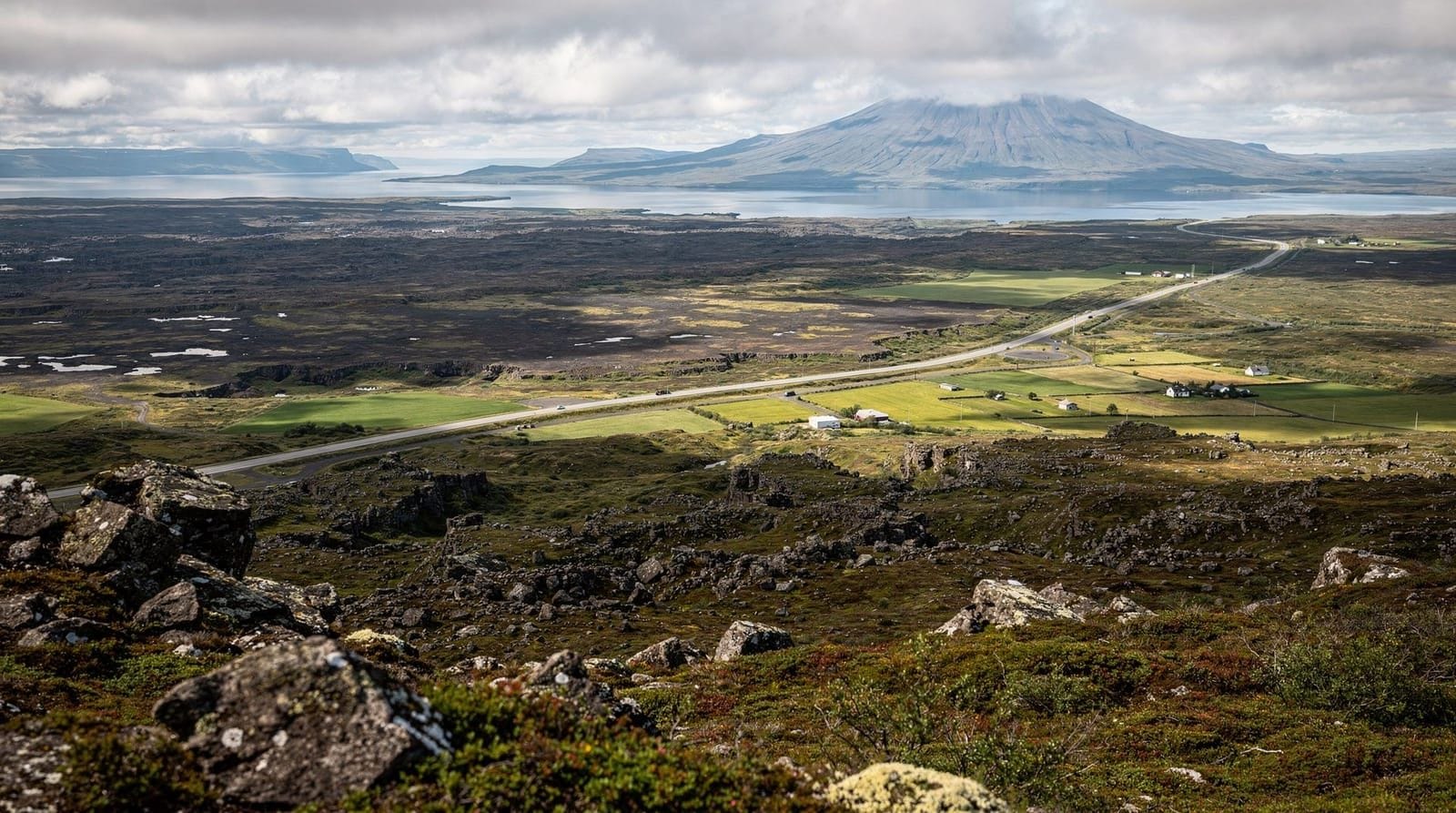
Lake Mývatn (“midge lake”) occupies a shallow basin in one of the most geologically active parts of Iceland. The lake itself covers 37 square kilometres at an altitude of 277 metres, and its shores are littered with the evidence of recent eruptions — pseudocraters formed when lava flowed over wet ground, lava pillars that rose from the lake bed, and fields of contorted lava where Dimmuborgir’s formations cooled into shapes that took on folkloric names. The Mývatn Nature Baths nearby draw visitors year-round for the milky geothermal water; the Hverfjall tephra crater and Krafla volcanic system are accessible by short drives from the lake.
Mývatn is 100 km east of Akureyri along the Ring Road — roughly an hour’s drive. It sits midway on the Diamond Circle route and is often combined with Goðafoss to the west and Dettifoss to the east in a single day.
| Parking | Free car parks at Dimmuborgir, Hverfjall, and Skútustaðir; the Nature Baths has its own paid lot |
| Fuel & supplies | N1 station and Strax supermarket in Reykjahlíð village |
| Mobile signal | Reliable around the lake and in Reykjahlíð; drops out on the Krafla road and toward Askja |
| Wheelchair access | Skútustaðir pseudocrater loop and the Nature Baths deck are the most accessible; Hverfjall and Dimmuborgir involve uneven ground |
| Families | Dimmuborgir and Skútustaðir are easy, short walks; keep small children away from the Hverir mud pools at Námafjall |
What to see around the lake
Dimmuborgir
“Dark castles” is the translation, and the name fits. Dimmuborgir is a 2,300-year-old lava field where a surface crust solidified while liquid lava drained out beneath, leaving a maze of columns, arches, and caves. The most dramatic formation, Kirkjan (the Church), is a natural lava arch about 10 metres tall that you can walk through. The site has marked trails — the longest loop takes around 45 minutes at a comfortable pace. Entry is free. There is a car park and small café; arrive before 10am or after 5pm in summer to avoid bus groups.
Hverfjall crater
Hverfjall is a tephra crater 1 km wide and 140 metres deep, formed in an eruption 2,500 years ago. A marked trail leads to the crater rim (15–20 minute walk from the parking area) and the full circumference takes around 45–60 minutes. Views over Mývatn from the rim are among the best in the area. The trail crosses loose volcanic ash — grippy footwear helps. Entry is free; a small fee was piloted and then discontinued. Check current access rules at visiticeland.com.
Pseudocraters at Skútustaðir
On the south shore of the lake, the Skútustaðir pseudocraters are a protected nature reserve. These small conical hills (10–30 metres high) formed around 2,300 years ago when lava from the Þrengslaborgir eruption flowed over wetlands, vaporising water and creating explosions that built the cones. A marked 45-minute loop trail winds through them; interpretive signs explain the geology. Free to visit. The adjacent café at Hotel Skútustaðir serves simple meals.
Lava pillar area (Kálfaströnd)
On the east shore of the lake, the shoreline near Kálfaströnd has striking lava pillars — tall columns that formed where lava flowed into the lake, with steam creating the pillar shapes. This is a quieter spot than Dimmuborgir and worth a 20-minute stop.
Hverfell
Not to be confused with Hverfjall — Hverfell is an alternative spelling for the same crater, sometimes used on older maps and signs.
Krafla volcanic system
Krafla is an active volcano 8 km northeast of the lake. The Viti explosion crater contains a turquoise geothermal lake and can be walked around in about 20 minutes. The Leirhnjúkur lava field nearby has fumaroles and hot mud pools and is one of the most visually intense volcanic landscapes in the north. The last eruptions here occurred 1975–1984. Entry is free; the road to Krafla (about 7 km from the Ring Road) is sealed.
Mývatn Nature Baths
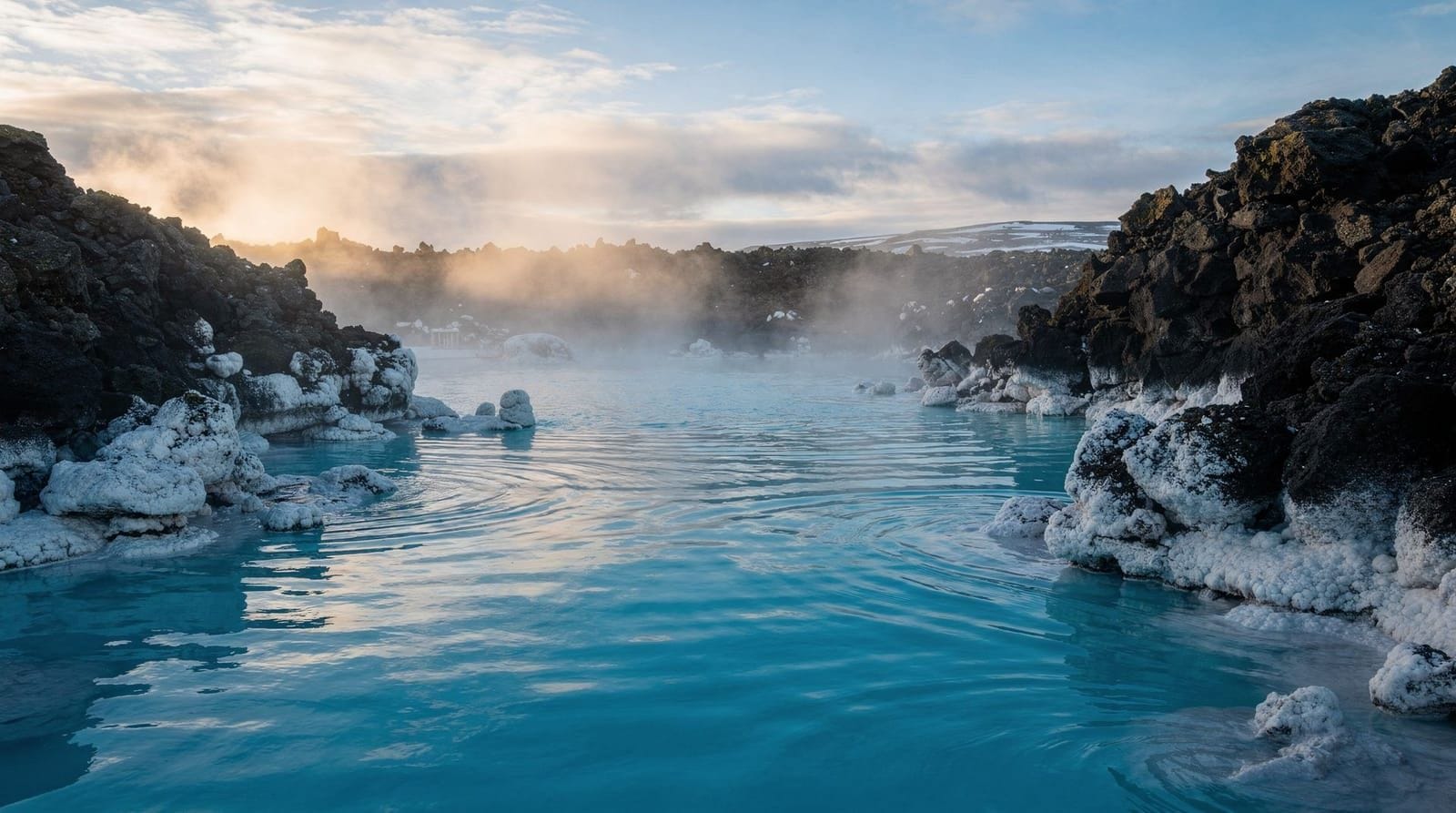
The Mývatn Nature Baths (Jarðboðin við Mývatn) are a geothermal pool complex on the east side of the lake, about 3 km from Reykjahlíð village. The main pool contains alkaline water at 36–40°C, milky blue-green from dissolved silica minerals — similar chemistry to the Blue Lagoon but at a fraction of the price. Adults pay around 5,200 ISK (€35) in 2025 (check current prices; there have been incremental increases). Children under 2 are free; ages 2–12 around 1,800 ISK (€12).
Comparison with the Blue Lagoon: Mývatn Nature Baths are smaller, less polished, less crowded, and significantly cheaper. The setting is more dramatic — surrounded by volcanic hills rather than a lava field. There is no mandatory pre-booking silica mud mask ritual, which some visitors prefer. Facilities include lockers, showers, changing rooms, and a café. Opening hours are roughly 9am–midnight in summer, shorter in winter.
Booking ahead is recommended in July and August — the baths reach capacity and turn visitors away. Book online at jardbodin.is. Morning visits (9–11am) are generally less crowded than afternoons.
Mývatn Nature Baths entrance ticket — geothermal pool at 36–40°C, near the lake.
Getting to Mývatn
By car from Akureyri, take the Ring Road east and follow signs to Reykjahlíð (the main village on the lake’s north shore). The drive is 100 km and takes approximately one hour.
Organised day trips from Akureyri cover Mývatn, usually combined with Goðafoss. These make sense if you are without a car or prefer a guide who knows the geology.
Lake Mývatn classic tour from Akureyri — guided, full day, geology explained.
Birdwatching at Mývatn
The lake is one of Europe’s most important breeding sites for ducks, with 15+ species recorded including the Barrow’s goldeneye (Iceland holds most of the world population), harlequin duck, and tufted duck. The main breeding season runs from May to July. The shallow, warm, nutrient-rich water supports huge insect populations that feed the birds. Bring binoculars; the south shore road offers the best general views.
Where to stay
Reykjahlíð village (northeast shore) has most of the accommodation:
Hótel Gigur: On the lake shore, good facilities, rooms from 30,000 ISK (€200) in summer. The geothermal-fed pool at the hotel is worth knowing about.
Vogafjos Farm Resort: A working dairy farm with guestrooms and a well-regarded cowshed restaurant where you eat metres from the cows. Atmospheric and popular — book far ahead. Doubles from 25,000 ISK (€170).
Hótel Reykjahlíð: Smaller, family-run. Budget-friendlier than Gigur. Doubles from 20,000 ISK (€135).
Camping is available at Hótel Reykjahlíð campsite (around 2,200 ISK / €15 per person).
Where to eat
Options are limited outside the hotels. The Vogafjos cowshed restaurant is the most distinctive — the lamb soup and the homemade dairy products are the things to order. Otherwise, the guesthouses and hotels all serve evening meals. The small Strax supermarket in Reykjahlíð is essential for self-catering.
For a full dinner out without cooking, the drive to Akureyri (one hour) is worth it for more choice.
About the midges
Mývatn translates as “midge lake,” and the midges are real. Two species breed here: the non-biting lake midge (Chironomus islandicus), which forms the spectacular swarms visible from May to August, and a biting midge (Simulium vittatum) that is most active near streams in June and July. The non-biting midges are the dominant nuisance — they get into your nose, eyes, and food at their peak. A fine-mesh head net is genuinely useful in July; most petrol stations in the area sell them for around 1,500–2,000 ISK (€10–€13). Windy days are midge-free; calm sunny days in July are the worst.
Combining Mývatn with the rest of the Diamond Circle
If you are driving the Diamond Circle in a single day from Akureyri, a suggested order is: drive east on the Ring Road, stop at Goðafoss (30 minutes), continue to Mývatn (Dimmuborgir, Hverfjall — 2–3 hours), then drive to Dettifoss via Route 862 or 864 (45 minutes, check road conditions), then north to Ásbyrgi (40 minutes), then west to Húsavík (45 minutes). Return to Akureyri via Route 85 and the Ring Road — around a 10-hour round trip.
For a more comfortable two-day version, overnight near Mývatn, then do the Dettifoss–Ásbyrgi–Húsavík portion the following day. See the north Iceland 4-day itinerary for a full schedule.
Frequently asked questions about Lake Mývatn
Is Mývatn Nature Baths better than the Blue Lagoon?
They offer different experiences. The Blue Lagoon is more polished, has better facilities, and is conveniently near Keflavík Airport. Mývatn Nature Baths are more natural in feel, significantly cheaper, set in a more dramatic volcanic landscape, and much less crowded. If your itinerary takes you through North Iceland, the Mývatn Nature Baths are the better choice. If you are only in the Reykjavík area, the Blue Lagoon or Sky Lagoon are the practical alternatives.
How long do you need at Mývatn?
A minimum of half a day covers Dimmuborgir, Skútustaðir pseudocraters, and the Nature Baths. A full day allows you to add Hverfjall, Krafla, and the lava pillars. Overnight gives the bonus of quieter morning access to the main sights before tour groups arrive.
Can you swim in Lake Mývatn itself?
No — the lake is protected as a nature reserve and swimming is not permitted. The Mývatn Nature Baths are the designated geothermal swimming option.
Is the road to Krafla suitable for a regular car?
Yes, the road to Krafla (Route F877 is not required — it is a sealed regional road) is fine for standard 2WD. The drive from Reykjahlíð takes about 20 minutes. Parking at Viti crater is free.
What is the best time of day to visit Dimmuborgir?
Early morning (before 9am) or late evening (after 6pm) in summer. The site is open 24 hours and bus tours typically arrive between 10am and 4pm. Early morning light (golden hour from around 5am in summer) is also excellent for photography.
How cold is it at Mývatn?
Summer temperatures (June–August) average 10–15°C in the day, dropping to 5–8°C at night. Rain is less frequent than the south coast but wind can be strong. Winters are cold (-5 to -15°C common) but the area is drier than Reykjavík.
Are there guided hikes around Mývatn?
Yes — several operators based in Reykjahlíð and Akureyri offer guided geology walks around the lava formations. Some include the Nature Baths as an end-of-hike reward. These are worthwhile if you want the geological context explained properly.
Do I need a rental car to see Mývatn properly?
A car makes the difference between seeing two sights and seeing all of them. Dimmuborgir, Hverfjall, and Skútustaðir are close enough together to combine easily, but Krafla, Námafjall, and the lava pillars at Kálfaströnd are spread around the lake’s full circumference and are impractical on foot. A standard 2WD manages every road mentioned here in summer; only the seasonal F-roads further into the highlands require 4WD. Guided day tours from Akureyri are a reasonable substitute if you’re travelling without a car.
Is Mývatn worth visiting if I’m short on time in North Iceland?
Yes, more than almost anywhere else in the region. Within a 10 km radius you get pseudocraters, a lava-arch cave field, a walkable tephra crater, an active volcanic system, and a geothermal bath — a concentration of sights the rest of Iceland can’t match in the same footprint. If forced to choose one North Iceland stop beyond Akureyri itself, Mývatn is the honest answer over Húsavík or the Westfjords detour.
Can I do Mývatn as a day trip from Reykjavík?
Not comfortably. Mývatn is roughly 480 km from Reykjavík — a 5–6 hour drive one-way via the Ring Road, or a 45-minute flight to Akureyri followed by an hour’s drive. Treat it as part of a North Iceland or full ring-road itinerary rather than a Reykjavík day trip; see the ring road 10-day itinerary for how it fits into a longer loop.
Geology primer for Mývatn visitors
Understanding a bit of the geology makes Mývatn more interesting. The lake sits on the Mid-Atlantic Ridge — the boundary between the North American and Eurasian tectonic plates. The rift pulls the plates apart at about 2 cm per year, creating a zone of volcanic and geothermal activity. The lake itself formed about 3,800 years ago when a large lava flow (the Þrengslaborgir eruption) dammed a river valley.
The Mývatn Fires eruption sequence of 1724–1729 was one of the largest lava eruptions in Iceland in historical times, producing about 2 km³ of lava over five years. The eruptions came from the Krafla system to the northeast of the lake and buried much of the surrounding farmland. A second eruption series — the Krafla Fires — ran from 1975 to 1984, with nine eruptions totalling about 0.3 km³ of lava. The Leirhnjúkur lava field from these events is still cooling; it will remain warm underfoot for decades.
Leirhnjúkur and Námafjall
Two additional geological sites within 10 km of Reykjahlíð are worth adding to a Mývatn visit:
Námafjall: A ridge of orange and yellow sulfur-stained rock beside the Ring Road east of Mývatn. The Hverir geothermal area at its base has boiling mud pools, fumaroles, and steam vents accessible on a free 30-minute walk. One of the more visually striking and smelly landscapes in Iceland. The hydrogen sulfide smell (rotten eggs) is harmless but intense. The car park on Route 1 is signed.
Leirhnjúkur: At the Krafla volcanic area, a trail from the Viti crater car park leads through the 1984 lava field to active fumarole areas. The ground is warm in places; stick to marked paths. The trail takes 45–60 minutes for the full loop. Bring hiking boots — the lava is hard on soft soles.
When not to visit Mývatn
Late July in a calm, sunny week: This is when the midges peak. The non-biting lake midges form dense clouds that make any outdoor activity unpleasant. Wind disperses them; check the forecast before timing your visit. If the forecast shows 4+ m/s wind, midges are manageable.
Winter without checking road conditions: Route 862 (to Dettifoss) and some local roads around Mývatn can close temporarily in winter blizzards. The lake area itself stays open, and Mývatn Nature Baths operate year-round, but confirm conditions at road.is before a winter trip.
Mývatn sustainability notes
The Mývatn Nature Baths operate under strict environmental regulations — the geothermal water cannot be artificially heated or chemically treated, which is why the pool temperature varies slightly by season. The Nature Baths also limit visitor numbers; the cap is enforced by the booking system, which is why advance booking is important.
Within the lake’s nature reserve, collecting any natural material — rocks, minerals, vegetation — is prohibited. Drones require a permit in most of the protected area. The birch forest around the lake is fragile and slow-growing; stay on paths.
Mývatn compared with other North Iceland stops
Visitors planning a limited North Iceland itinerary often ask how to prioritise. Goðafoss is a 30-minute stop — spectacular but quick. Dettifoss demands a detour off the Ring Road and rewards with raw power rather than variety. Ásbyrgi is a quiet horseshoe canyon, good for an hour’s walk. Mývatn is the one stop worth building a full day, or two, around: it has the geology, the wildlife, and the bathing in one place, and unlike Húsavík it doesn’t depend on a weather-sensitive boat trip to deliver its highlight.
For visitors comparing North Iceland with a South Coast-only trip, Mývatn is the single strongest argument for making the extra drive or flight north — see the north Iceland destination overview for how it fits alongside Akureyri in a longer stay.
Suggested Mývatn 2-day schedule
Day 1 (afternoon arrival from Akureyri):
- Drive east on Ring Road, stop at Goðafoss (45 min)
- Check in at Mývatn accommodation (Reykjahlíð)
- Late afternoon: Dimmuborgir and Hverfjall (2 hours)
- Evening: Mývatn Nature Baths (2 hours)
Day 2:
- Morning: Krafla — Viti crater and Leirhnjúkur lava field (1.5 hours)
- Mid-morning: Skútustaðir pseudocraters (45 min)
- Lunch at Vogafjos
- Afternoon: Drive to Dettifoss via Route 862 (1.5 hours there and back, plus 1 hour at falls)
- Evening: Continue to Húsavík or return to Akureyri
For the full 4-day itinerary covering all of North Iceland, see the north Iceland 4-day itinerary.
Top experiences
Bookable activities with verified prices and instant confirmation on GetYourGuide.
Top-rated experiences in Lake Mývatn travel guide
Best-rated activities across GetYourGuide and Viator.

Whale Watching from Downtown Akureyri
- Viator

Big Whales & Puffins RIB boat tour from Húsavík
- Viator

East Glacial River – Grade 4 Rafting with Drysuits, North Iceland
- Viator

Top-Rated Family Rafting – Drysuits & Geothermal Hot Cocoa
- Viator

Original Big Whale Safari & Puffins Speedboat Tour from Húsavík
- Viator

Lake Myvatn Day Tour and Godafoss Waterfall for Cruise Ships from Akureyri Port
- Viator