Diamond Circle travel guide
Diamond Circle guide — Goðafoss, Mývatn, Dettifoss, Ásbyrgi, and Húsavík in one north Iceland loop. Distances, timing, self-drive vs guided tours.
Akureyri: From Akureyri Diamond Circle tour with waterfalls
Quick facts
- Best time
- Jun–Aug for full access; Sep–Oct quieter
- Days needed
- 1 long day or 2 comfortable days
- Getting there
- Loop based on Akureyri; ~250 km total circuit
- Budget per day
- 20,000–40,000 ISK (€135–€270) including fuel and food
The Diamond Circle is a 250 km self-drive or tour route in North Iceland connecting five landmark destinations: Goðafoss, Lake Mývatn, Dettifoss, Ásbyrgi canyon, and Húsavík. It was established as a marketing route around 2010 and has since become a recognised circuit for visitors based in or passing through Akureyri. The name mirrors the Golden Circle in the south, and the comparison is intentional — North Iceland tourism authorities were clear they wanted a direct counterpart.
Unlike the Golden Circle (which rarely takes more than a day), the Diamond Circle rewards slower travel. Each of the five main stops merits 1–3 hours. Done properly in a single day it is achievable but rushed; two days is better.
| Where | North Iceland, loop based on Akureyri |
| Cost | ~20,000–40,000 ISK/day (€135–€270) incl. fuel and food |
| Time needed | 1 long day or 2 comfortable days |
| Getting there | Self-drive loop or guided tour from Akureyri |
| Best time | Jun–Aug for full access; Sep–Oct for quieter roads |
The route
The standard loop departs Akureyri heading east on the Ring Road and returns from the northwest via Route 85. Clockwise is most common:
Akureyri → Goðafoss (50 km east on Ring Road, 45 min)
Goðafoss → Lake Mývatn (50 km east on Ring Road, 45 min)
Lake Mývatn → Dettifoss (Route 1 east 25 km, then Route 862 north 24 km, ~55 min)
Dettifoss → Ásbyrgi (Route 864 north to Route 85, ~30–40 min from east bank; or return via 862 and head north on 85, ~50 min from west bank)
Ásbyrgi → Húsavík (35 km north on Route 85, 30 min)
Húsavík → Akureyri (90 km on Route 85 and Ring Road, ~75 min)
Total driving: approximately 4.5–5 hours with no stops. Adding reasonable visit time at each stop brings the total to 10–12 hours for a single-day circuit.
Stop-by-stop guide
Goðafoss — 30–45 minutes
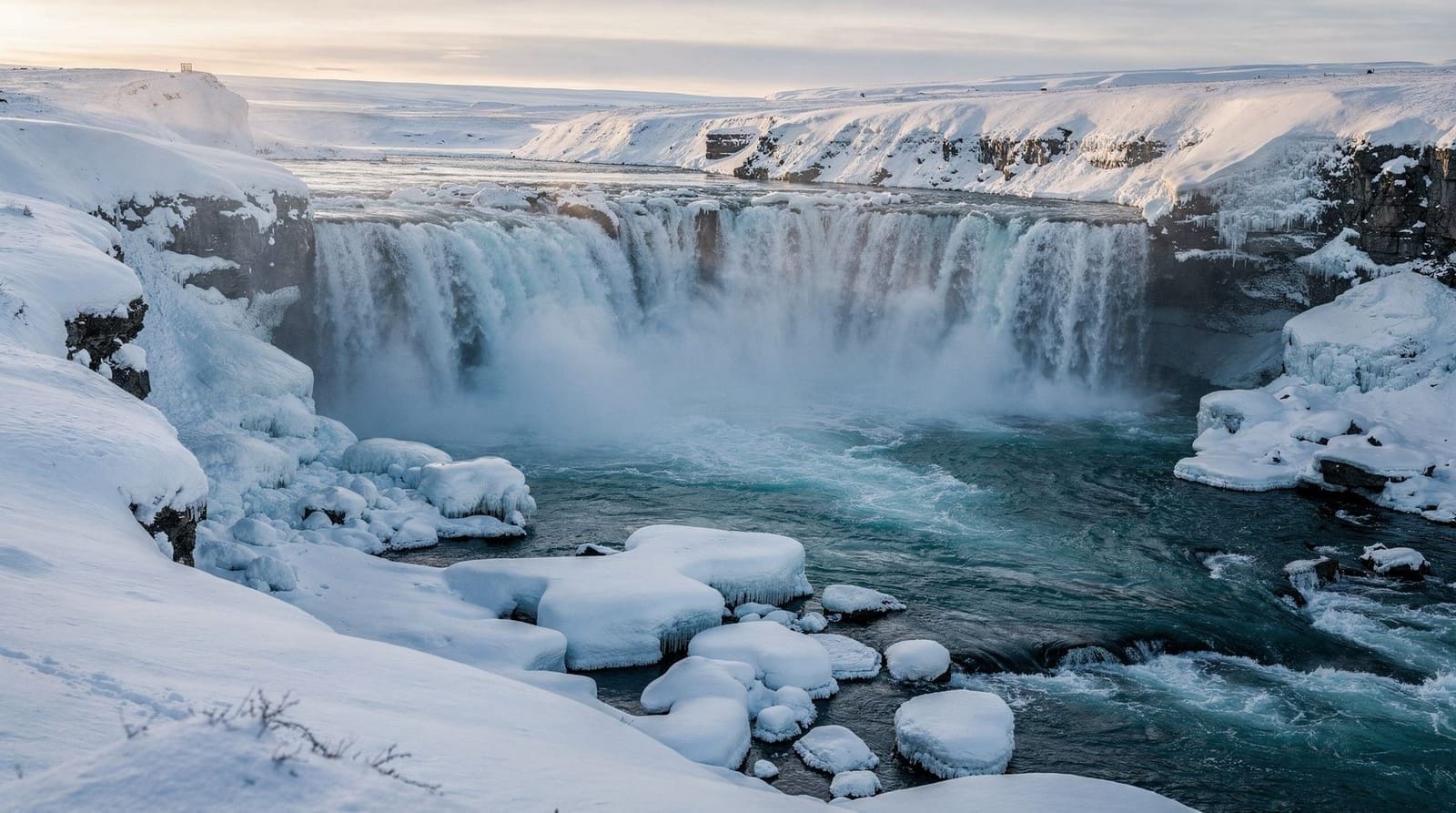
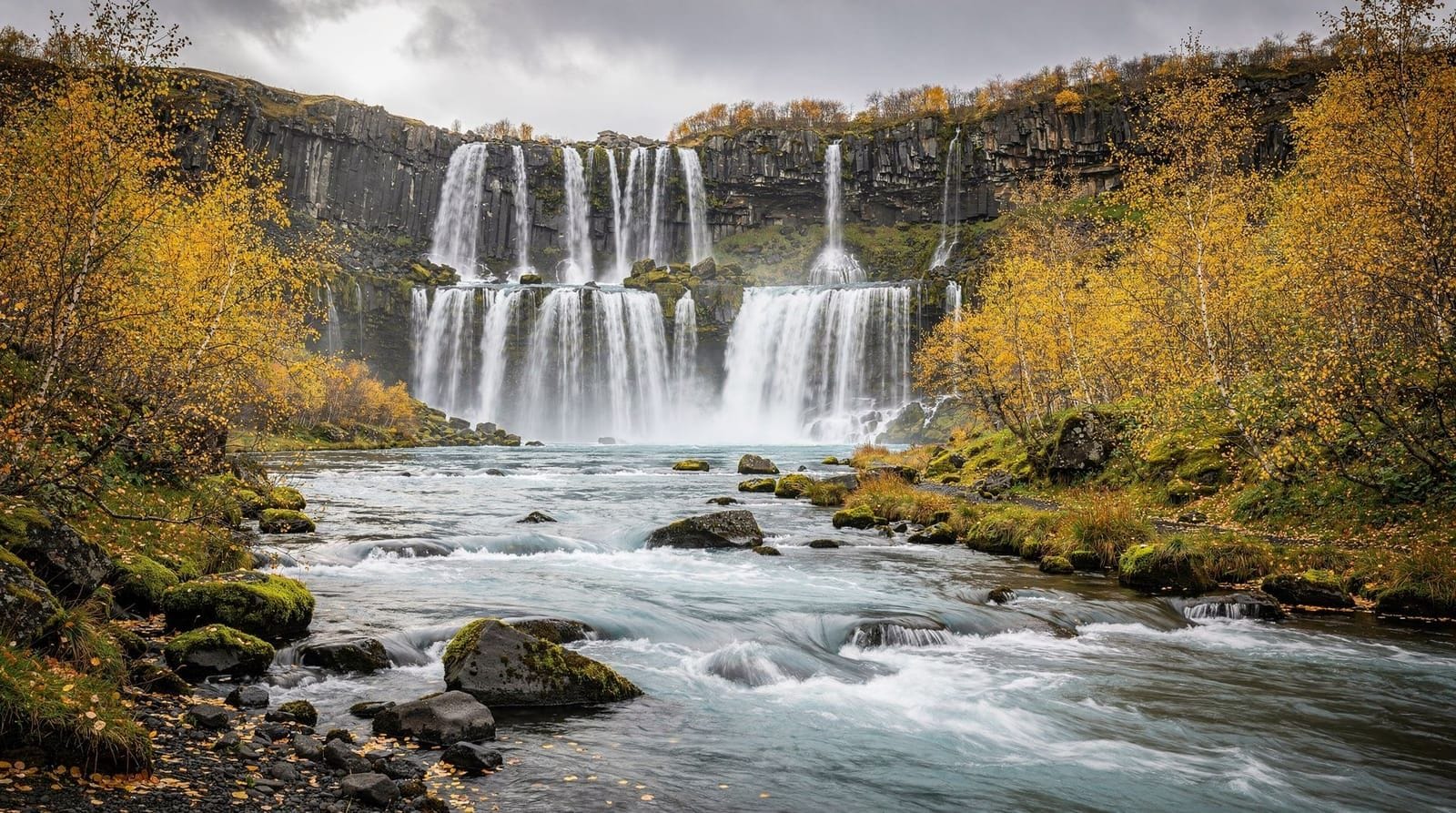
The “Waterfall of the Gods” is the westernmost stop on the circuit and usually the first. The Ring Road passes within 500 metres; both the east and west banks have car parks and short paths to the falls. Allow 30 minutes for the east bank viewpoint and the short walk along the rim. Adding the west bank requires a 5-minute drive and another 20–30 minutes. See the Goðafoss destination page for detail.
Lake Mývatn — 2–4 hours
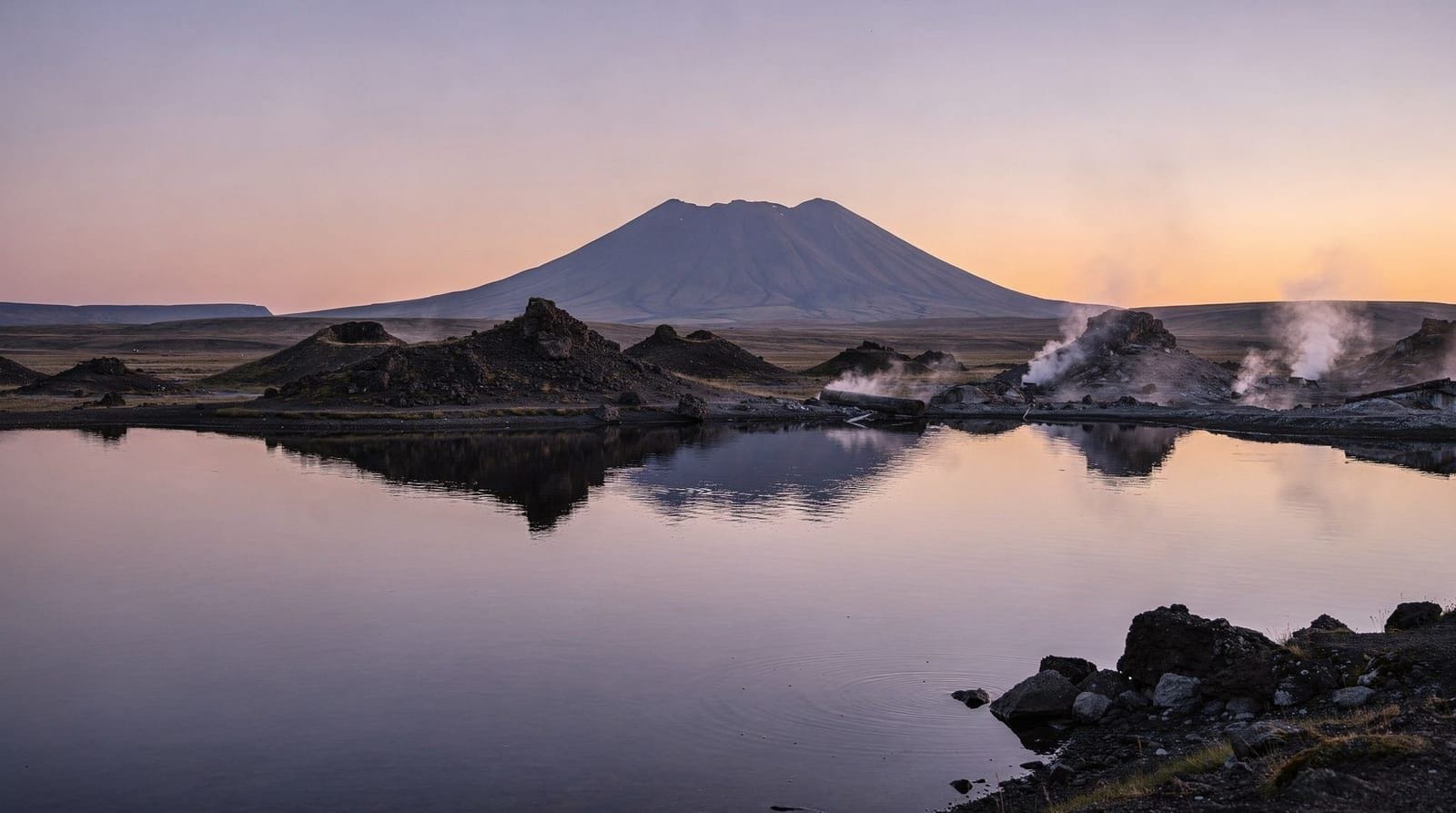
The most complex stop on the Diamond Circle. The lake is 37 km² and ringed by geological features that each deserve time: Dimmuborgir lava formations (45 min), Hverfjall tephra crater rim walk (45 min), Skútustaðir pseudocraters (30 min), Krafla volcano and Viti crater (30 min drive each way plus 20 min walking). The Mývatn Nature Baths are a natural end to a Mývatn visit — allow 1.5–2 hours for the pool plus the drive. A minimum of 2 hours at Mývatn covers the key highlights; 4 hours covers everything. See the Lake Mývatn guide.
Dettifoss — 1–2 hours
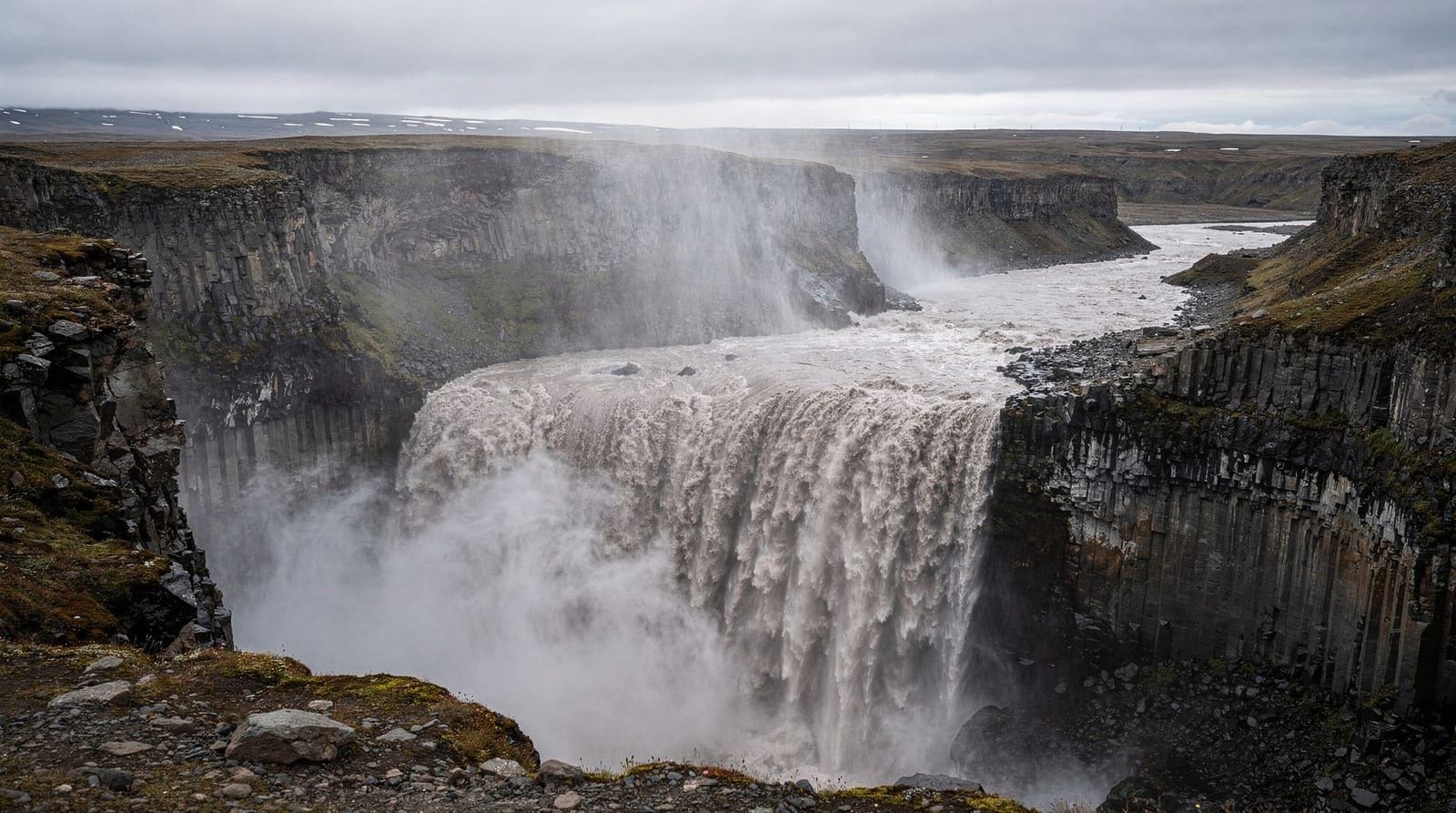
Europe’s most powerful waterfall is 49 km southeast of Mývatn via Route 862. The west bank (Route 862, sealed road) is the main access point; the east bank (Route 864, gravel) is quieter. Both banks have car parks. The walk from the west bank car park to the main viewpoint is 10 minutes; adding the Selfoss waterfall upstream extends the visit by 45 minutes. Budget a minimum of 1 hour at the falls. See the Dettifoss destination page.
Ásbyrgi — 1–2 hours
The horseshoe canyon 30 km north of Dettifoss via Route 85 is a different character from the waterfalls — green, sheltered, quiet. The main trails (Botnstjörn pond, Eyjan island circuit) take 1–2 hours. The National Park visitor centre is here with toilets and information. See the Ásbyrgi destination page.
Húsavík — 1–3 hours
Húsavík is the whale-watching capital of Iceland. In summer, a 3-hour whale-watching trip fits naturally into a Diamond Circle that is done over two days. For a one-day circuit, a stop in Húsavík for lunch and a walk along the harbour is realistic. The GeoSea Geothermal Sea Baths on the cliff above town and the Whale Museum both add time.
Tours or self-drive?
Self-drive gives flexibility — you control timing and can spend more time at stops you prefer. It requires a hire car and confidence driving on gravel sections (Route 864 if you want the Dettifoss east bank). Route 862 (west bank) is sealed and fine for any car.
Guided tour from Akureyri handles all logistics, includes a knowledgeable guide, and takes around 8–10 hours. These make sense if you have no car, prefer not to navigate, or want geological and historical context explained. Prices from around 18,000–25,000 ISK (€120–€170) per person.
Full Diamond Circle guided tour from Akureyri — Goðafoss, Mývatn, Dettifoss included.
Diamond Circle full-day tour from Akureyri — 8 hours, lunch included, small group.
For those arriving by cruise ship at Akureyri port, shore excursion versions of the Diamond Circle are available:
Diamond Circle shore excursion from Akureyri port — Dettifoss, Goðafoss, and Mývatn.
One-day vs two-day logistics
One day (from Akureyri)
Depart Akureyri at 7–8am. Goðafoss (1 hour), Mývatn (2.5–3 hours including Dimmuborgir and Nature Baths), Dettifoss via Route 862 (1.5 hours), Ásbyrgi (1–1.5 hours), Húsavík lunch and harbour walk (1 hour), return to Akureyri. Back by 7–8pm. A whale-watching trip in Húsavík is not possible on a one-day itinerary unless you skip one of the earlier stops.
Two days
Day 1: Akureyri → Goðafoss → Mývatn (full afternoon and evening at the lake). Overnight near Mývatn.
Day 2: Mývatn → Dettifoss → Ásbyrgi → Húsavík (morning whale watching) → Akureyri. Much more relaxed, whale watching possible.
See the north Iceland 4-day itinerary for a full schedule.
Extension: the Highlands and Askja
Experienced drivers with 4WD vehicles can extend the Diamond Circle to include Askja volcano in the interior. The approach via Route F88 from the Ring Road (turn south approximately 30 km east of Mývatn) takes 2–3 hours each way on a rough F-road and requires a high-clearance 4WD. Askja’s caldera lake (Öskjuvatn) and Viti explosion crater are extraordinary and see far fewer visitors than the Diamond Circle stops. This extension adds a full day to the itinerary.
For the Askja option from Mývatn, a guided Super Jeep tour is the standard option for those without a suitable personal vehicle.
Getting to Akureyri as the base
See the Akureyri destination page for transport options. Summary: fly 45 minutes from Reykjavík Domestic Airport (from ~12,000 ISK / €80), or drive 460 km (~5 hours) via the Ring Road.
Comparing Diamond Circle and Golden Circle
The Golden Circle covers Þingvellir, Geysir, and Gullfoss and can be done as a day trip from Reykjavík. It is well-developed, heavily visited, and highly efficient. The Diamond Circle is larger, more varied, less crowded, and better suited to travellers who want to spend real time in the landscapes rather than moving between car parks. The blog post Diamond Circle vs Golden Circle compares them in detail.
Practical notes
Fuel: Fill up in Akureyri before departure and again in Húsavík or Mývatn. The section between Mývatn and Ásbyrgi has no fuel.
Accommodation near the route: Mývatn (Hótel Gigur, Vogafjos, Hótel Reykjahlíð), Húsavík (Fosshotel, North Sailing Guesthouse), and Ásbyrgi campsite.
Weather: North Iceland is generally drier than the south. Wind is the main variable on exposed sections. Route 862 and Route 85 are maintained year-round.
Frequently asked questions about the Diamond Circle
How long does the Diamond Circle take?
A single day from Akureyri with a 7–8am departure and a 7–8pm return covers all five stops at a reasonable pace — approximately 10–12 hours total including driving. Two days is more comfortable and allows whale watching in Húsavík and more time at Mývatn.
Can I do the Diamond Circle without a car?
Guided tours from Akureyri cover the circuit in a single day; prices are around 18,000–25,000 ISK (€120–€170). Public bus connections between the stops do not exist in a usable form. If you have no car, an organised tour is the only realistic option for a single-day Diamond Circle.
Is the Diamond Circle better than the Golden Circle?
Different, not better. The Golden Circle is compact, efficient, and easy from Reykjavík. The Diamond Circle is longer, more varied, less polished, and more rewarding for those who prefer less-visited landscapes. Both are worth doing if your itinerary allows — they are in different parts of the country with no overlap.
What is the best time of year for the Diamond Circle?
June to August offers maximum daylight, access to all roads (including Route 864 to Dettifoss east bank), whale watching in Húsavík, and swimming in Mývatn Nature Baths. September and October are quieter with autumn colours and the first northern lights opportunities. Winter is possible but requires checking road conditions carefully, and some options (whale watching, Route 864) are unavailable.
Are the roads on the Diamond Circle paved?
The main Ring Road (Route 1), Route 85 (to Húsavík and Ásbyrgi), and Route 862 (to Dettifoss west bank) are all sealed. Route 864 (Dettifoss east bank) is gravel and can be rough. All other approach roads to the main stops are sealed. A standard 2WD is sufficient for the standard Diamond Circle using Route 862.
Can I see the northern lights on the Diamond Circle?
The Diamond Circle area is well within the auroral zone. Mývatn is particularly good for northern lights viewing — the dark landscape gives minimal light pollution. Northern lights are visible from September to mid-April; the Diamond Circle is typically done in summer (June–August) for practical reasons, so aurora hunting is a winter or shoulder-season activity.
Is the Diamond Circle worth doing if I’ve already done the Golden Circle?
Yes — they’re different enough that doing both is not repetitive. The Golden Circle is compact and can be rushed in half a day; the Diamond Circle is more spread out, involves more driving, and rewards a genuine two-day pace. If you only have one week and are staying entirely in the south, skip it; if you’re spending any time in North Iceland, it’s a clear priority over a generic day trip.
Should I do the Diamond Circle self-drive or with a guided tour?
Self-drive gives flexibility on timing at each stop and is straightforward in summer on the sealed sections (Route 862 west bank to Dettifoss, all of Route 85). A guided tour is worth considering if you don’t want to drive Route 864’s gravel section, want commentary on the geology and mythology, or are visiting in shoulder season when road conditions are less predictable.
Budgeting the Diamond Circle
Costs for a self-drive Diamond Circle day from Akureyri:
| Item | Cost (ISK) | Cost (EUR approx) |
|---|---|---|
| Hire car (1 day, compact) | 12,000–16,000 | €80–€110 |
| Petrol (approx 250 km) | 8,000–10,000 | €53–€67 |
| Mývatn Nature Baths entry | 5,200 | €35 |
| Lunch at Mývatn (Vogafjos or similar) | 3,500–5,000 | €23–€33 |
| Total | 28,700–36,200 | €191–€245 |
Guided tours from Akureyri at 18,000–25,000 ISK (€120–€170) per person can be cheaper than self-drive for solo travellers or couples once hire car and fuel are included.
Whale watching add-on in Húsavík
If you want to include whale watching as part of a two-day Diamond Circle, book the Húsavík tour in advance. July and August slots at popular operators can fill a week or more ahead. Morning departures (8–9am) work best for a two-day itinerary — you arrive in Húsavík on the afternoon of Day 1, do the whale watching in the morning of Day 2, then drive back toward Akureyri.
Options from Húsavík range from classic 3-hour traditional boat trips to RIB speedboats and carbon-neutral vessels. Prices 13,000–16,000 ISK (€87–€107). See the Húsavík destination page for operator details.
What to know about each season
Summer (June–August)
The default Diamond Circle season. All roads open, maximum daylight (including midnight sun June 21 ± 3 weeks), whale watching in Húsavík, Mývatn Nature Baths at full capacity, midge season at Mývatn (bring a head net). Accommodation must be booked well in advance.
Autumn (September–October)
Quieter, cheaper, northern lights emerging. Whale watching tails off in late September. Mývatn has spectacular autumn colour in the birch forests. First frosts possible in late September. Most roads still passable but check conditions after mid-October.
Winter (November–March)
Northern lights season. Mývatn Nature Baths are particularly atmospheric. Dettifoss partly frozen. Route 864 (Dettifoss east bank) likely closed; Route 862 generally passable. Whale watching not available. Accommodation prices significantly lower, rooms easily available.
Spring (April–May)
Snowmelt fills rivers to maximum flow — Dettifoss and Goðafoss at their most powerful. Roads reopening progressively. Whale watching not yet in season. Weather unpredictable.
Environmental considerations
The Diamond Circle’s popularity has created measurable impacts at the main sites. Car parks at Dettifoss, Dimmuborgir, and Ásbyrgi reach capacity on busy summer days. Some erosion has occurred near viewpoints where visitors leave marked trails. Vatnajökull National Park has introduced path improvements and additional parking at Dettifoss to manage flow.
Responsible visitors stay on marked trails, do not collect rocks or plants from protected areas, use the designated car parks rather than roadside parking, and book accommodation at local family-run guesthouses rather than large chains where possible.
Planning resources
- Road conditions: road.is (English available)
- Aurora forecast: vedur.is/english
- Accommodation availability: booking.com or guesthouses.is
- North Iceland 4-day itinerary — full schedule with hotel recommendations
- Ring Road guide — where the Diamond Circle fits in a full circle of Iceland
- Day trips from Akureyri guide — comparison of day-trip options from the northern capital
Photography on the Diamond Circle
Each stop on the Diamond Circle has distinct photographic strengths:
Goðafoss: Best in evening light (west-facing). The horseshoe shape needs wide angle (16–24mm equivalent). Polariser helps on sunny afternoons. Both banks offer different compositions.
Mývatn: Dimmuborgir is best in diffuse cloudy light — harsh sun creates contrast problems in the lava formations. Hverfjall crater rim gives open landscapes; use a zoom lens for distant Mývatn views. The Nature Baths at dusk, with mist rising, is a strong atmospheric shot.
Dettifoss: Spray creates challenges (see the Dettifoss page for camera protection advice). Mid-morning on the west bank gives the spray rainbow. Midnight sun late June gives warm low-angle light.
Ásbyrgi: The east rim walk gives the best compositional view of the horseshoe. Morning light hits the west-facing cliff. The Botnstjörn pond is a classic reflection shot on calm days.
Húsavík: The church above the harbour and the whale-watching boats in the morning. The GeoSea baths at sunset with the bay behind them. Whale photography requires 300mm+ lens and patience.
Self-driving the Diamond Circle: route tips
Fuel stops: Fill at Akureyri before departure. Next reliable options: Reykjahlíð (Mývatn area) for the east section; Húsavík for the return leg. Do not assume every small settlement has fuel — several do not.
Speed limits: 90 km/h on Route 1 (Ring Road), 80 km/h on Route 85, 60 km/h on gravel roads. Speed cameras are present on Route 1 north of Akureyri.
Route 864 (Dettifoss east bank): The gravel is manageable in a standard car in dry summer conditions. If it has rained in the previous 24 hours, the gravel can hold deep puddles. Reduce speed significantly on gravel; car rental damage clauses typically exclude gravel road damage on non-4WD vehicles at speed.
Distances between fuel: Akureyri → Reykjahlíð = 100 km. Reykjahlíð → Dettifoss via Route 862 = 49 km. Dettifoss → Ásbyrgi via 864/85 = 60 km. Ásbyrgi → Húsavík = 35 km. Húsavík → Akureyri via 85/Ring Road = 90 km. Total circuit approximately 334 km — well within the range of a standard tank fill.
Diamond Circle in shoulder season (September–October)
September offers arguably the best balance of conditions for the Diamond Circle: fewer visitors than July–August, aurora forecast improving from mid-September, birch trees at Ásbyrgi and Mývatn in autumn gold, and whale watching still operating (through September at least). Accommodation rates drop by 20–30%.
October is quieter still, with more weather risk. Whale watching typically ends in October. The Nature Baths remain open. Route 864 may have early snow by late October.
For autumn-specific advice, see the Iceland in autumn guide.
Full-day Diamond Circle from Akureyri — waterfalls and craters, guided, transport includedTop experiences
Bookable activities with verified prices and instant confirmation on GetYourGuide.
Top-rated experiences in Diamond Circle travel guide
Best-rated activities across GetYourGuide and Viator.

Whale Watching from Downtown Akureyri
- Viator

Big Whales & Puffins RIB boat tour from Húsavík
- Viator

East Glacial River – Grade 4 Rafting with Drysuits, North Iceland
- Viator

Top-Rated Family Rafting – Drysuits & Geothermal Hot Cocoa
- Viator

Original Big Whale Safari & Puffins Speedboat Tour from Húsavík
- Viator

Lake Myvatn Day Tour and Godafoss Waterfall for Cruise Ships from Akureyri Port
- Viator