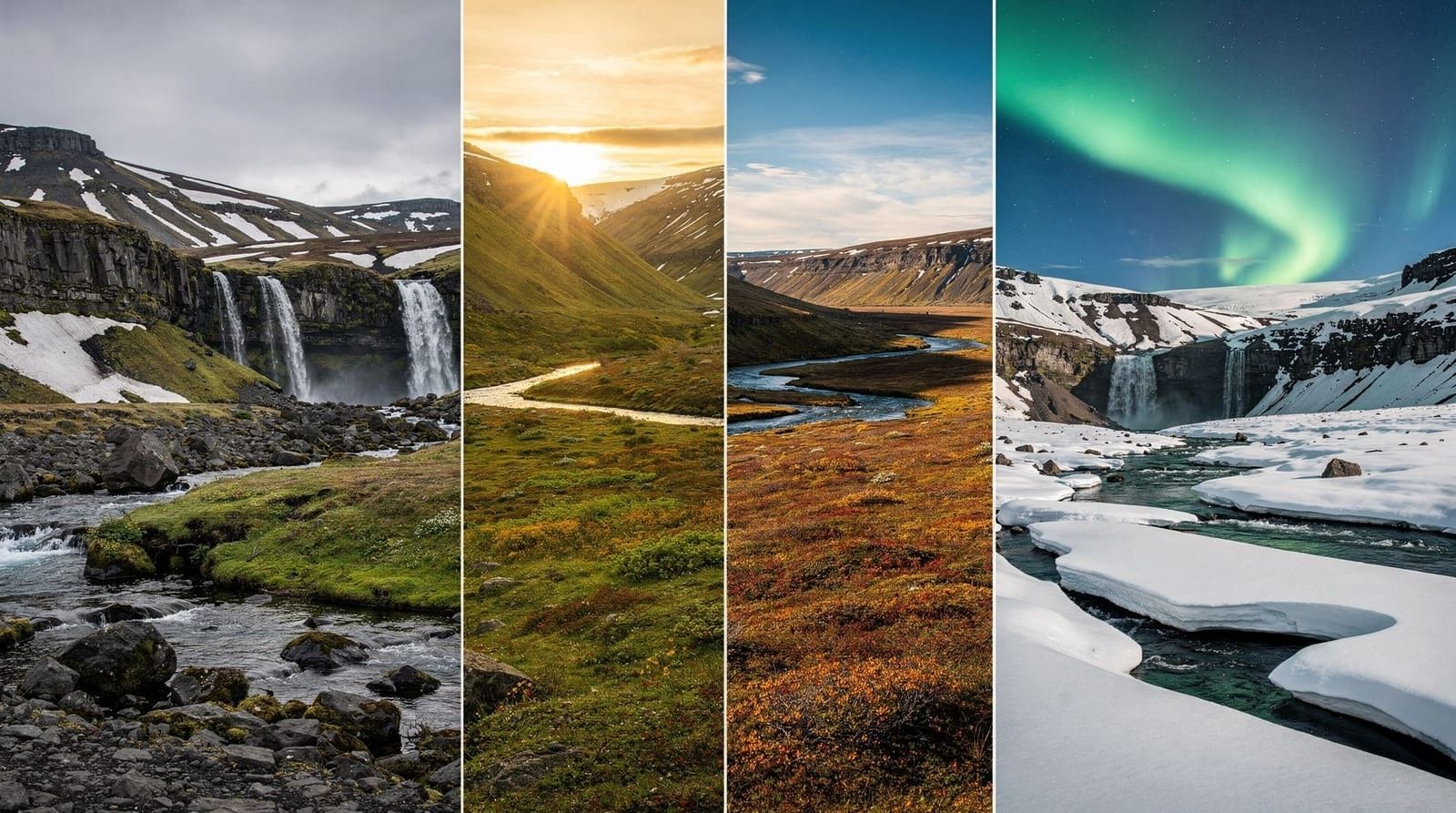
Iceland in autumn — September and October guide
Reykjavik: Northern Lights lifetime guarantee
Is autumn a good time to visit Iceland?
September is widely considered the best all-round month in Iceland — F-roads are still open, northern lights return, crowds drop sharply after the first weekend, and prices fall. October is darker and wilder but still excellent for aurora and quieter travel.
Why September is many travellers’ favourite month
Iceland guides and long-term visitors often cite September as the month that hits the most optimal combination of factors. Summer has ended but F-roads to the highlands are typically still open through September 10–20. Northern lights become visible again as darkness returns by mid-month. Summer crowds evaporate after Verslunarmannahelgi (the first weekend of August) — and by September the roads, campsites, and major attractions are measurably quieter.
Prices drop. Car rental rates fall. Accommodation becomes easier to book on short notice. The dramatic south coast waterfalls and glacier lagoon can be visited without the peak-season shuffle.
The tradeoff: autumn weather is more unpredictable than summer’s, puffins have left by mid-August, and F-road windows are narrowing toward closure.
| Where | Iceland-wide, F-roads open into early September |
| Cost | 20–30% below peak summer prices |
| Time needed | 7–10 days for a full Ring Road circuit |
| Getting there | self-drive or guided day tours from Reykjavík |
| Best time | September for F-roads; October for aurora and quiet |
| Month | Daylight | Reykjavík temp | Crowds | F-roads | Aurora chance |
|---|---|---|---|---|---|
| Early Sept | ~14 hrs | 8–12°C | Low, dropping fast | Open | Returning |
| Late Sept | ~12 hrs | 8–12°C | Low | Closing | Good |
| October | 8–11 hrs | 4–8°C | Very low | Closed | Good |
Daylight in September and October
Autumn’s daylight reduction is rapid:
- Early September: ~14 hours of daylight — still enough for full day trips with time to spare
- Late September: ~12 hours (equinox, September 22–23) — transitional
- October: 10–11 hours dropping to 8–9 hours by month’s end
- November: Around 6–7 hours — winter darkness setting in
The return of real darkness in September is what makes northern lights viable again. After months of midnight sun, a dark night sky by 9–10pm is notable.
Northern lights in autumn
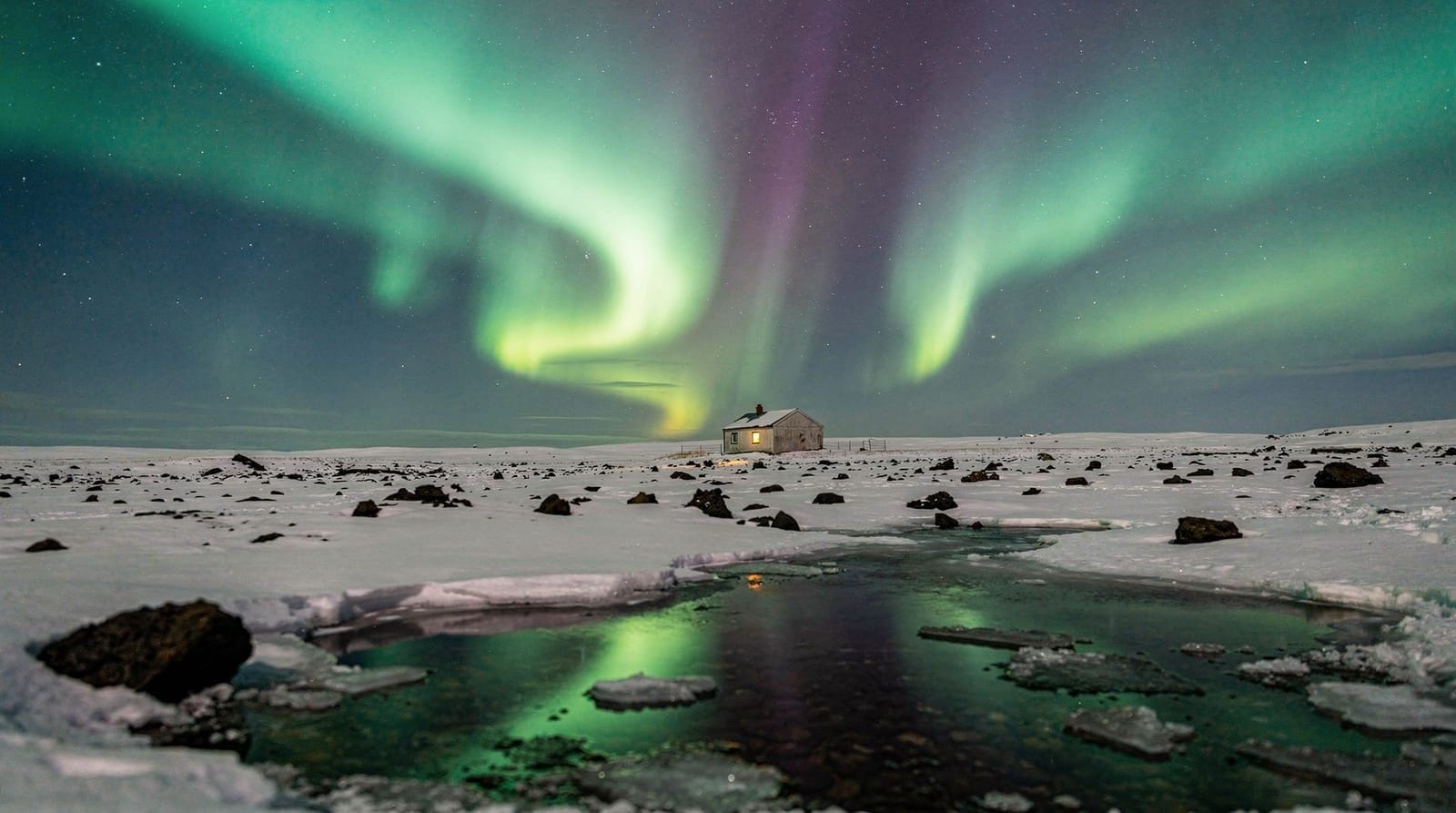
Aurora viewing season in Iceland runs roughly late August through mid-April. September is an early but productive aurora month — the Kp (geomagnetic activity) index follows a pattern related to the equinox that makes September and March statistically strong aurora months.
For details on forecasting and logistics, see best time to see northern lights.
Northern lights tours from Reykjavík operate September through March. The lifetime guarantee option is useful in autumn when weather can be volatile — cloud cover in September can be frustrating.
F-roads still open in early autumn
This is September’s most significant advantage over any other aurora season month: the highland F-roads are still open in early September. This means you can potentially see northern lights on a clear night and hike in Landmannalaugar or Þórsmörk in the same week.
Most main F-roads close around September 10–20, though this varies year to year. Check road.is for current status throughout September.
After October 1, assume all F-roads are closed and plan accordingly.
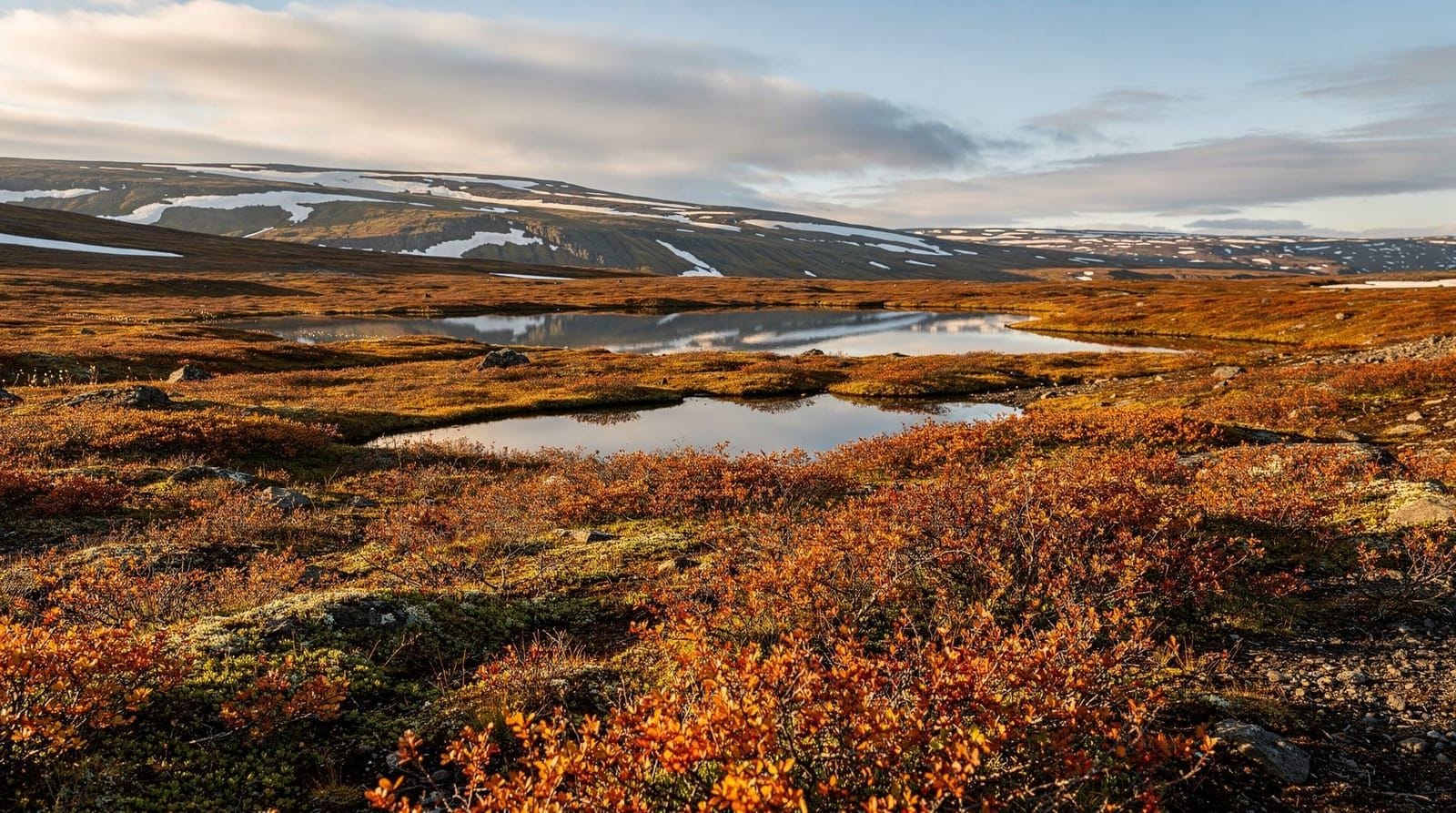
Autumn colours in Iceland
Iceland does not have forests, so autumn foliage is not what you find in North America or Europe. What you do see:
- Moorland and heath turning red, bronze, and yellow as crowberry, bilberry, and dwarf birch change colour
- Glacial rivers at lower levels than spring/summer, revealing more shoreline
- The Snæfellsnes Peninsula and Westfjords at their most dramatic with low Atlantic light
- Highland landscapes at Landmannalaugar in golden hour light
The colour change in the lowlands is subtle but real, particularly on the heathered hillsides of the Westfjords and around Lake Mývatn.
Weather in September and October
September temperatures in Reykjavík average 8–12°C (46–54°F). October drops to 4–8°C (39–46°F). Rain and wind increase through the season, with October bringing the first serious Atlantic storms.
The east and north of Iceland typically have slightly drier autumn weather than the south and west. However, all of Iceland gets autumn weather in October — assume wind, rain, and cold will happen at some point.
Packing essentials: waterproof shell, warm mid-layers, hat and gloves from late September, hiking boots. Same as winter, but slightly more likely to have warm spells.
Golden Circle and south coast in autumn
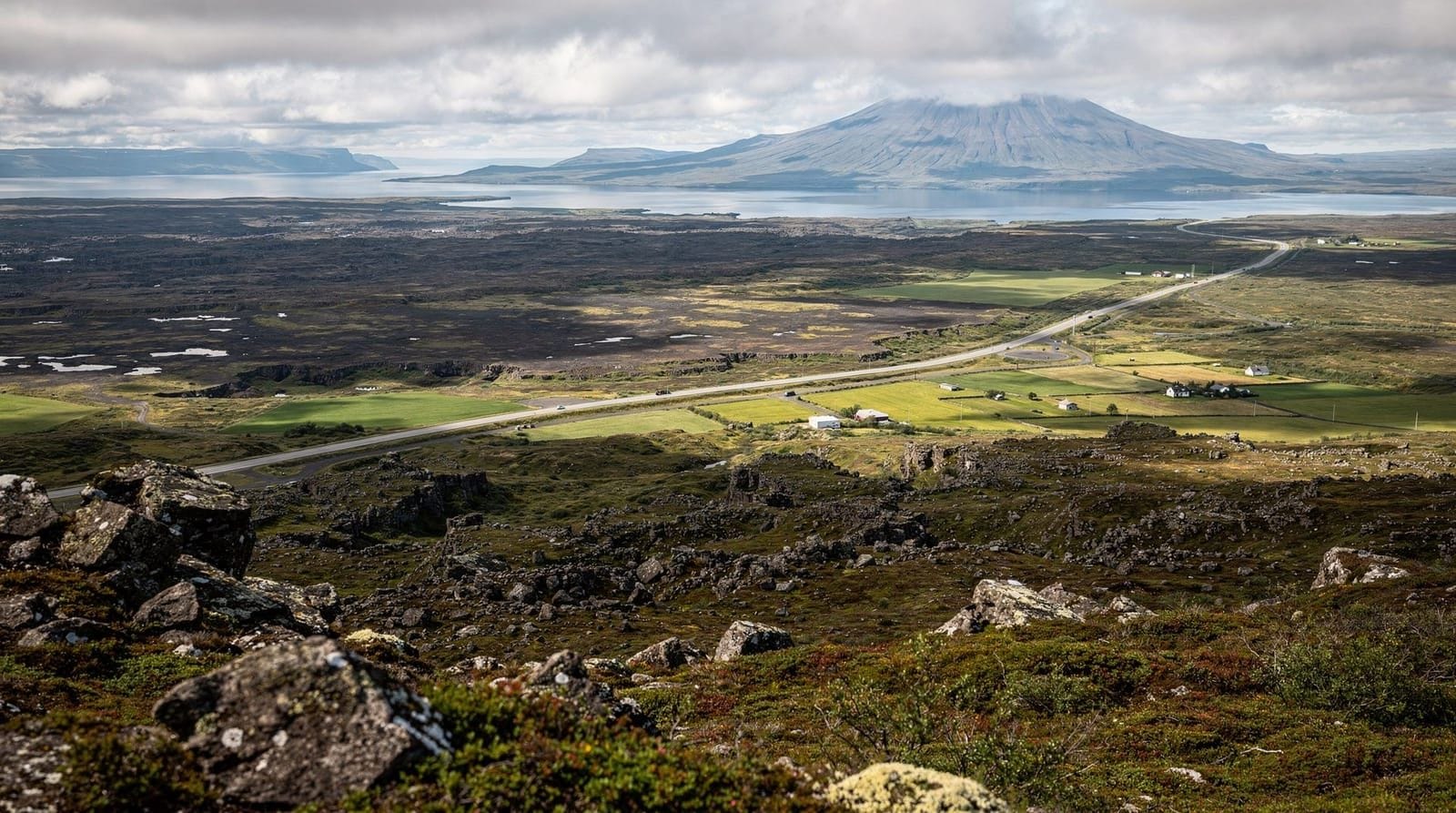
The Golden Circle in September and October sees significantly fewer visitors than summer. Geysir-Haukadalur without summer crowds is a calmer experience, and Þingvellir National Park in autumn light has a different quality to the July green.
Golden Circle tours in September and October run smaller groups and offer more time at each site — a noticeably different experience than the peak-season version.
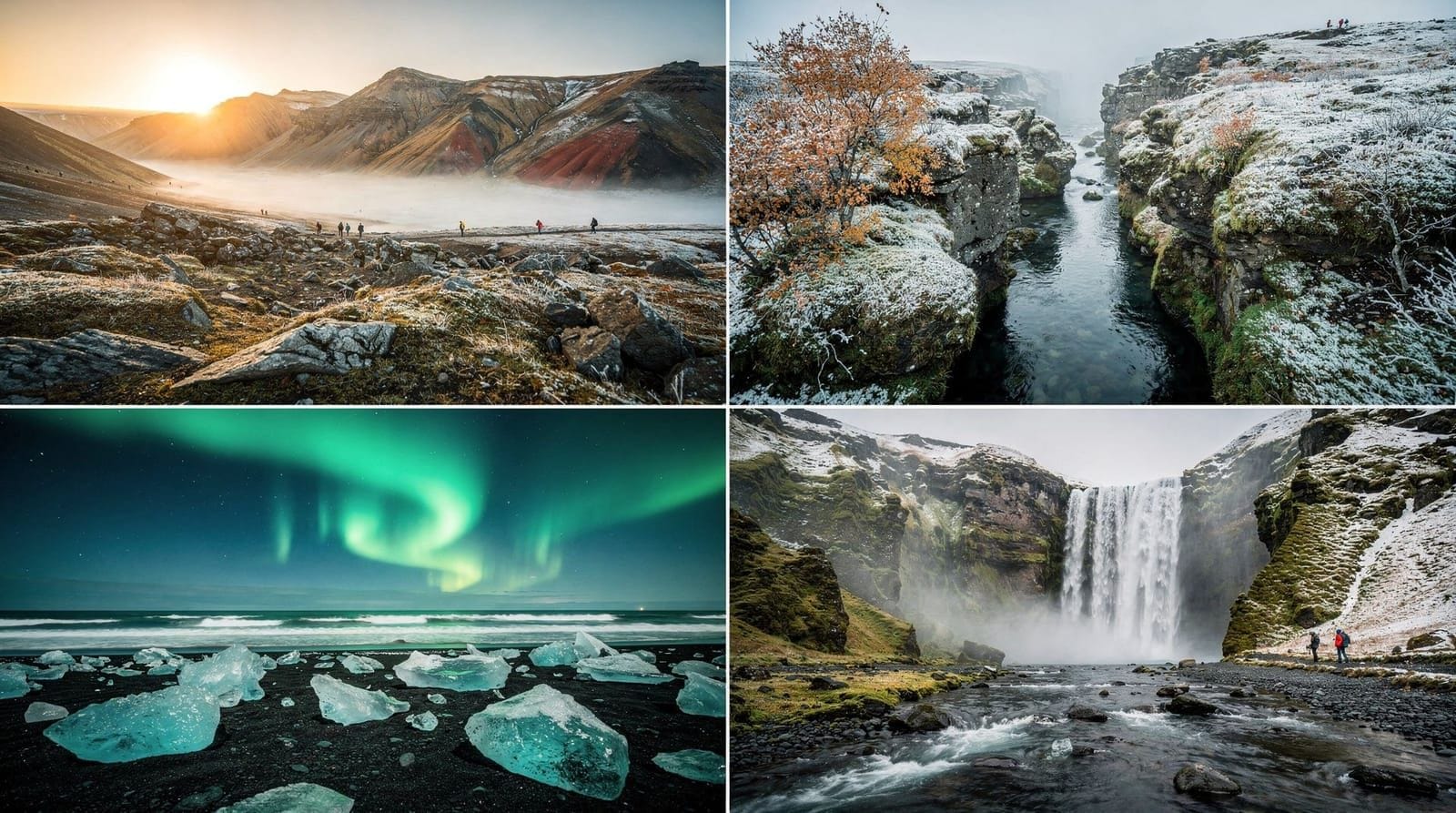
The south coast — Seljalandsfoss, Skógafoss, Reynisfjara black beach, Jökulsárlón — is best photographed in September and October when the light is lower and dramatic.
Whale watching in autumn
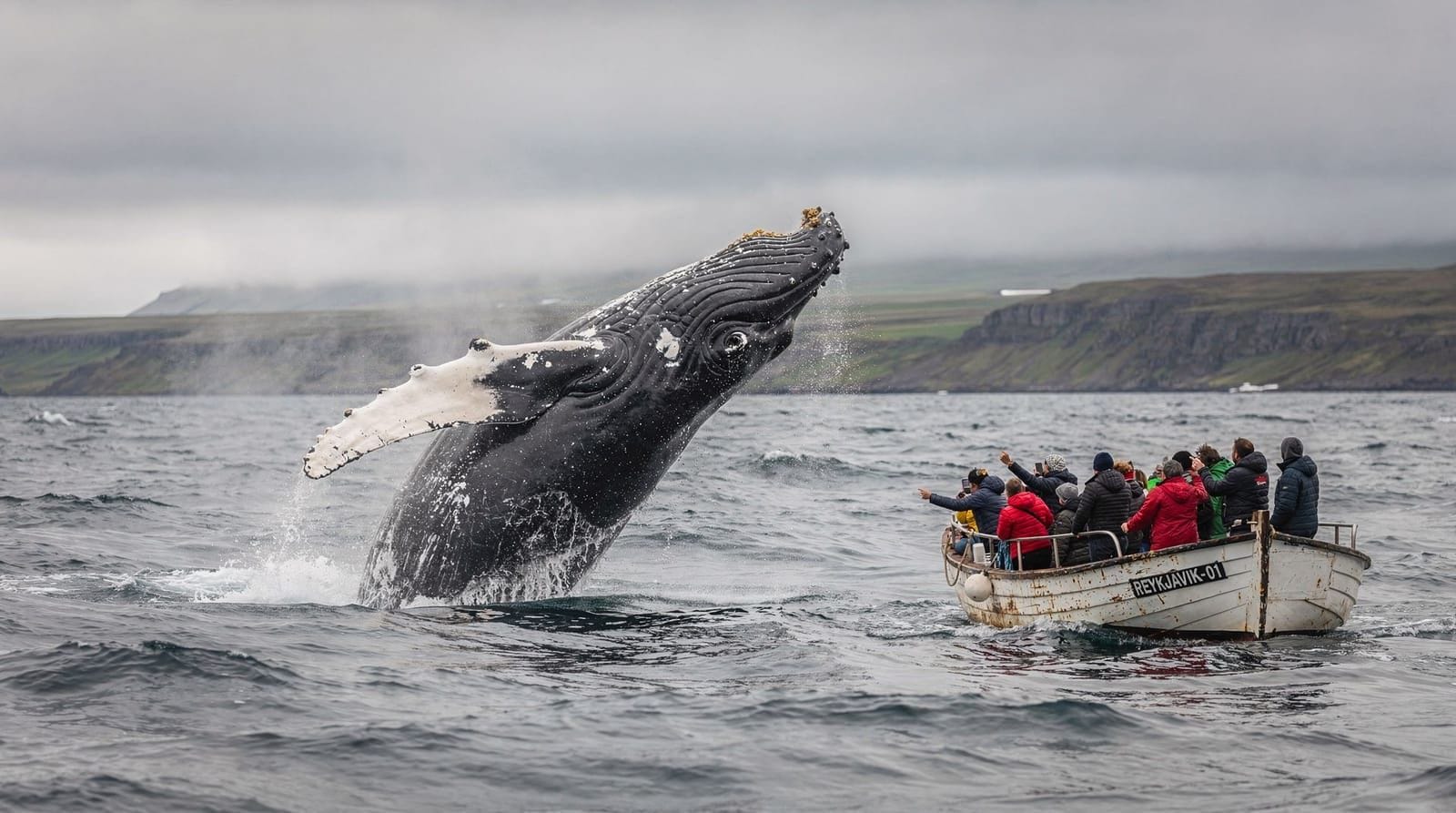
Whale watching from Húsavík and Reykjavík operates into October, though September is the stronger month. Humpback whales remain in Icelandic waters through September before migrating south. By October, sightings are less consistent.
Húsavík whale watching operates through September with strong sighting rates for humpback and minke whales. October tours run but success rates are lower as migration begins.
Costs in autumn
September and October represent genuine value compared to July. Accommodation prices typically drop 20–30% from peak summer. Car rental rates fall, and last-minute bookings become feasible again. Flights from North America and Europe are also lower.
The exception: Reykjavík autumn festivals and events can cause local price spikes on specific weekends. Check Menningarnótt (Culture Night, typically late August) and other festival dates when booking.
Driving in autumn
September driving is fine with a standard 2WD for main roads. October starts to see the first ice on elevated roads and in northern regions — by late October, 4WD is advisable for travel outside the south and capital area.
Check road.is daily in October. The first autumn snowstorms in the north can close roads unexpectedly. The Iceland road conditions guide covers what to monitor and how to respond to closures.
Northern Iceland in autumn — the Diamond Circle
The Diamond Circle in north Iceland — covering Húsavík, Lake Mývatn, Ásbyrgi canyon, Dettifoss waterfall, and Godafoss — is excellent in autumn. Visitor numbers in September are a fraction of summer levels, the light is dramatically better for photography, and the aurora begins to return.
Specific autumn advantages in north Iceland:
- Dettifoss in September: Europe’s most powerful waterfall by volume has different light in autumn. The spray creates rainbows in afternoon autumn sun.
- Ásbyrgi canyon: The horseshoe-shaped canyon in October has birch forest turning yellow and orange — one of Iceland’s few deciduous colour changes.
- Lake Mývatn in aurora season: Geothermal steam rising from the lake’s surface against aurora displays is a specifically north Iceland autumn image.
- Húsavík whale watching: September is the last strong month before the humpbacks migrate south.
Getting to north Iceland in autumn: flying Reykjavík-Akureyri (40 minutes) is the most practical approach if time is limited.
Adventure activities in autumn
Some activities are specifically good or exclusively possible in autumn:
Glacier hiking: All year-round, but September glacier tours at Sólheimajökull have dramatic early-autumn light and no summer crowds. The glacier surface in September has different texture from summer’s meltwater-smoothed ice.
Snorkelling at Silfra (Silfra snorkelling guide): The fissure between tectonic plates at Þingvellir is open year-round. The water temperature is a constant 2–4°C — cold regardless of season. September and October have excellent visibility.
ATV and super-jeep tours: The highland F-roads accessible in early September allow super-jeep tours to Askja and other remote volcanic areas. October sees most super-jeep highland tours ending for the season as F-roads close.
Reykjavík in autumn
Reykjavík’s cultural season is at its most active in September and October. The summer tourist infrastructure has wound down, but the city’s own cultural activity begins.
Specific autumn Reykjavík events:
- Menningarnótt (Culture Night): Typically the last Saturday of August or first of September. Free museum entry, outdoor performances, and the city centre closes to traffic. One of Reykjavík’s most genuinely local events.
- Reykjavík International Film Festival (Riff): 10 days in late September/early October. Substantial international programme with Icelandic shorts and features.
- Iceland Airwaves (November): The music festival that spills into late October planning season.
The restaurant scene in Reykjavík is most interesting in autumn, when seasonal ingredients appear (cod season from February, but autumn brings different fish and game availability). The Reykjavík Restaurant Week typically runs in autumn with participating restaurants offering prix-fixe menus.
Snæfellsnes in September
September is an excellent time for the Snæfellsnes Peninsula. The peninsula in late September sees almost no other visitors compared to July, the light is dramatically lower and more photogenic, and the autumn colours on the moorland contrast with the snow cap on Snæfellsjökull.
The whale watching from Arnarstapi operates into September. The birdlife on the north coast cliffs transitions from summer puffins to autumn seabird gatherings.
The Kirkjufell mountain photography shot — the waterfall in the foreground, the distinctive mountain behind — is best in September when autumn light hits the mountain from lower angles and the tourist volume drops.
Ring Road in autumn
September is the best month for a full Ring Road circuit that combines summer accessibility (F-roads open) with autumn conditions (aurora possible, smaller crowds).
Key autumn Ring Road notes:
- The east Iceland roads are excellent in September — the Eastfjords are less visited than the south coast but the drives between fjords are among Iceland’s most scenic.
- The north Iceland highlands (Askja, Kerlingarfjöll) are accessible in early September, closing progressively through the month.
- Dettifoss and Ásbyrgi in north Iceland receive excellent autumn light and far fewer visitors than in July.
Allow 7–10 days for a September Ring Road circuit with meaningful stops.
Sheep round-up — Réttir
One of Iceland’s most distinctive autumn traditions is the annual sheep round-up (réttir), which happens throughout September and October. Icelandic sheep roam free in the highlands and coastal areas through summer. In autumn, farmers, their families, and volunteers spend days on horseback and on foot gathering them from the mountain pastures.
The round-up culminates in community sorting days at designated sheep pens (réttir), where flocks from multiple farms are separated by ownership. These are genuine community events — not tourist experiences — but visitors who encounter one are welcome to watch.
If you are driving rural areas in September–October, encountering sheep being herded along roads is common. Slow down and let them move. Some farms and rural areas welcome visitors to observe the réttir, particularly in the north and the East Iceland region, though it’s worth checking with a local guesthouse or tourist information point rather than turning up uninvited, since these are working farm events rather than staged tourist attractions.
Driving in September versus October
The practical driving difference between the two months is significant:
September: Comparable to summer driving in most respects. Main roads dry, F-roads open early in the month. Occasional early storms possible in north Iceland from mid-September.
October: Conditions change noticeably. Ice on elevated roads from early October in the north. The Öxnadalsheiði pass north of Akureyri and the Vatnajökulsvegur roads in east Iceland can get early snow. A 4WD becomes increasingly advisable for any travel outside the south coast and capital area. Check road.is daily in October.
Waterfalls in autumn
Iceland’s waterfalls are in a different state in autumn than summer. Summer snowmelt swells them to maximum volume. Autumn rains also bring high water, but the overall flow character changes.
Gullfoss in October has a specific quality — the tourist buses are gone, the light is lower and more dramatic, and the mist from the falls catches the angled sun differently. Skógafoss with autumn cloud moving through the valley behind it is one of Iceland’s better landscape photography windows.
The south coast waterfalls are completely accessible in autumn without summer’s crowds — a significant improvement in the overall experience.
Hot springs in autumn
The geothermal pools are particularly good in September–October as temperatures cool but water stays at 38–44°C. The contrast between cool autumn air and steaming hot water is more pronounced than in summer.
Mývatn Nature Baths in north Iceland is significantly less crowded than the Blue Lagoon and set in a more dramatic volcanic landscape. In September, you can combine a Mývatn visit with northern lights viewing if skies clear.
Hvammsvík Hot Springs on the north shore of Hvalfjörður (about an hour from Reykjavík) opened recently and has not yet achieved Blue Lagoon-level crowds. The oceanside setting in autumn is striking.
Autumn photography — the specific advantages
Autumn light in Iceland has a character that professional landscape photographers specifically seek out. From September onward:
Lower sun angles all day: In September, the sun at noon is around 30° above the horizon in Reykjavík (versus 49° in June). This gives dramatic sidelight throughout the day rather than only at sunrise and sunset. The difference in landscape photography quality between noon in June and noon in September is significant.
Mist and atmospheric conditions: Autumn temperature contrasts between warm days and cold nights create ground mist in valleys and above rivers. Þingvellir in morning September mist with low sun breaking through the rift valley is a specific photographic situation.
Snow on higher peaks: From mid-September, the highland peaks and glaciers get their first seasonal snow cover. The contrast of autumn-toned moorland and fresh snow on peaks is a specifically September visual.
No midnight sun confusion: The exposure and white balance challenges of mid-night sun are absent. Actual golden hours at actual sunrise and sunset are predictable and bookable.
For specific photography techniques and locations, see Iceland photography guide and best photo spots in Iceland.
Packing for Iceland in autumn
September and October require a complete outdoor kit. The temperature range — 4–12°C depending on location and time of day — is wide enough that layering is essential:
- Base layer: Merino wool or synthetic moisture-wicking fabric. Not cotton.
- Mid-layer: Fleece or light down jacket — the main warmth provider.
- Outer layer: Waterproof and windproof shell jacket and trousers. Both needed in Iceland — rain and wind arrive together.
- Boots: Waterproof, ankle-supporting hiking boots. Trails in September can be muddy from rain; October trails in north Iceland may have the first snow.
- Hat and gloves: From early September in north Iceland, late September everywhere.
- Neck gaiter: More useful than a scarf for outdoor activities.
October adds: insulated inner gloves, heavier hat, and down gilet/vest for cold evenings.
For the full seasonal packing list, see what to pack for Iceland.
Self-drive vs tours in autumn
Autumn is a particularly good time for self-drive in Iceland compared to winter. September conditions are close to summer — roads are clear, weather is generally manageable, and the dramatic conditions that make winter self-drive challenging have not arrived.
October transitions toward winter conditions. For visitors not comfortable with ice roads and unpredictable closures, guided tours from Reykjavík remain entirely viable — south coast tours, northern lights tours, and Golden Circle tours all operate regularly.
For those committed to self-drive, the Ring Road in September is the most complete version of the circuit — summer’s highland access meets autumn’s aurora and lower crowds. Read Iceland self-drive guide for the full planning framework.
A sample 7-day early-September route
For travellers wanting a concrete framework rather than an abstract “September is good” recommendation, this loop uses the F-road window and returning aurora deliberately:
| Day | Route | Focus |
|---|---|---|
| 1 | Reykjavík → Golden Circle | Þingvellir, Geysir, Gullfoss, first aurora check |
| 2 | Golden Circle → South Coast (Vík) | Seljalandsfoss, Skógafoss, Reynisfjara |
| 3 | Vík → Jökulsárlón | Diamond Beach, glacier lagoon, autumn light |
| 4 | Jökulsárlón → Landmannalaugar (F-road, weather permitting) | Highland day trip while F-roads remain open |
| 5 | Return to Ring Road → Akureyri or Mývatn | North Iceland transition |
| 6 | Mývatn / Diamond Circle | Dettifoss, Ásbyrgi, geothermal baths |
| 7 | Return to Reykjavík (fly or drive) | Buffer day for weather or aurora |
Day 4 is the day most dependent on that year’s specific F-road closure dates — build in flexibility to swap it for a lower-elevation alternative if roads have already closed by the time you travel.
Frequently asked questions about Iceland in autumn
Is September the best month to visit Iceland?
For a combination of factors — F-road access, returning northern lights, lower crowds, and reasonable prices — September is hard to beat. Whether it is “best” depends on priorities: it lacks summer’s midnight sun and puffins, but gains aurora and quiet.
Can you see northern lights in September?
Yes. Northern lights are visible from mid-September on clear dark nights. The aurora season runs through March, with September and March historically having strong geomagnetic activity around the equinox.
Are F-roads open in September?
Most F-roads are open in early September and close progressively through the month. Specific closures depend on weather. Check road.is for current status — do not assume any F-road is open without checking.
Is Iceland cold in October?
October temperatures average 4–8°C (39–46°F) in Reykjavík. Wind chill makes exposed areas feel much colder. Waterproof and warm layers are essential. See what to pack for Iceland for a specific list.
Are there festivals in Iceland in autumn?
The Reykjavík International Film Festival (Riff) runs in late September. Menningarnótt (Culture Night) is typically in late August and spills into September programming. Check local listings for specific dates.
How does autumn compare to spring in Iceland?
Both are shoulder seasons. Autumn (September–October) has the advantage of F-road access in September and stronger aurora months. Spring (April–May) has lupine wildflowers and puffin arrivals. Neither is objectively better — choose based on whether aurora and highlands (autumn) or wildlife and flowers (spring) matter more to you. See Iceland in spring for the full comparison.
Is it worth visiting Iceland in late October specifically?
Late October is a genuine transition point rather than a clean “yes or no.” Aurora chances are good and crowds are at their lowest of the shoulder season, but F-roads are closed, daylight has dropped to 8–9 hours, and the first winter storms can disrupt driving plans with little warning. It suits travellers prioritising aurora and solitude over highland access or long daylight — those wanting F-roads should come in early September instead, and those wanting deep winter conditions (ice caves, snowmobiling) are better served waiting for Iceland in winter.
Which autumn week should you actually book?
If forced to pick a single week, early-to-mid September (roughly the 5th to the 20th) offers the best combination covered in this guide: F-roads typically still passable, aurora beginning to return, and crowds already well below August peak. Travellers whose priority is aurora specifically and who don’t need highland access should instead lean toward late September or October, when nights are longer and darker sooner in the evening — useful if you don’t want to stay up until 1am waiting for a display.
For a Ring Road trip specifically, early September lets you combine the highlands with the rest of the loop in a way that’s impossible from October onward, when the F-roads have closed for the season regardless of weather on the day.
Top experiences
Bookable activities with verified prices and instant confirmation on GetYourGuide.