Iceland in spring — what to expect in April and May
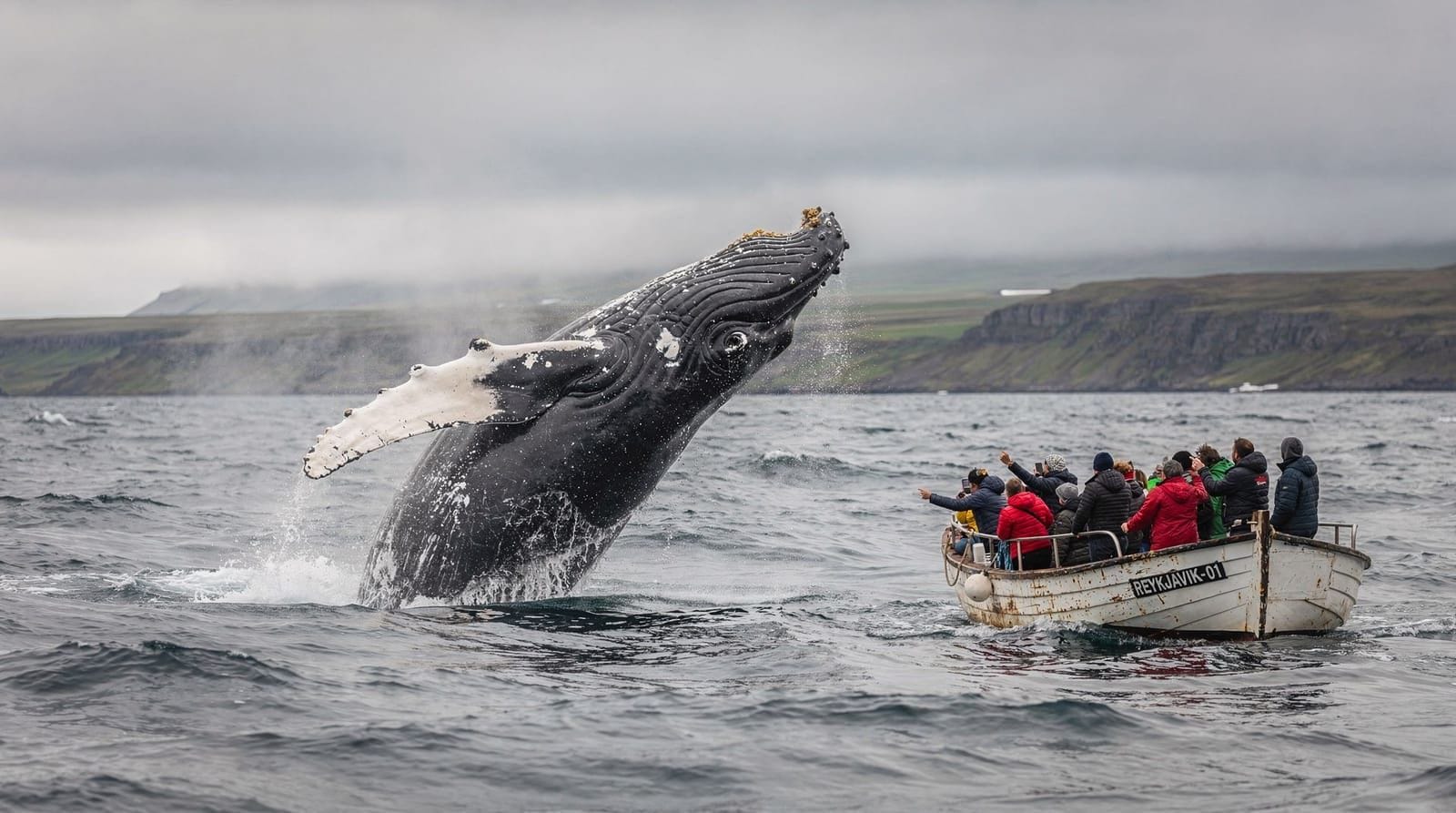
Húsavík: Whale watching cruise and puffins
Duration: 3-3.5 hours, from $134
Is spring a good time to visit Iceland?
Spring (April–May) is one of the best-value windows. Daylight grows rapidly, puffins arrive in late April, and crowds are well below summer levels. F-roads remain closed until mid-June, so highland access is not possible, but the Ring Road and south coast are fully accessible.
Spring arrives slowly in Iceland
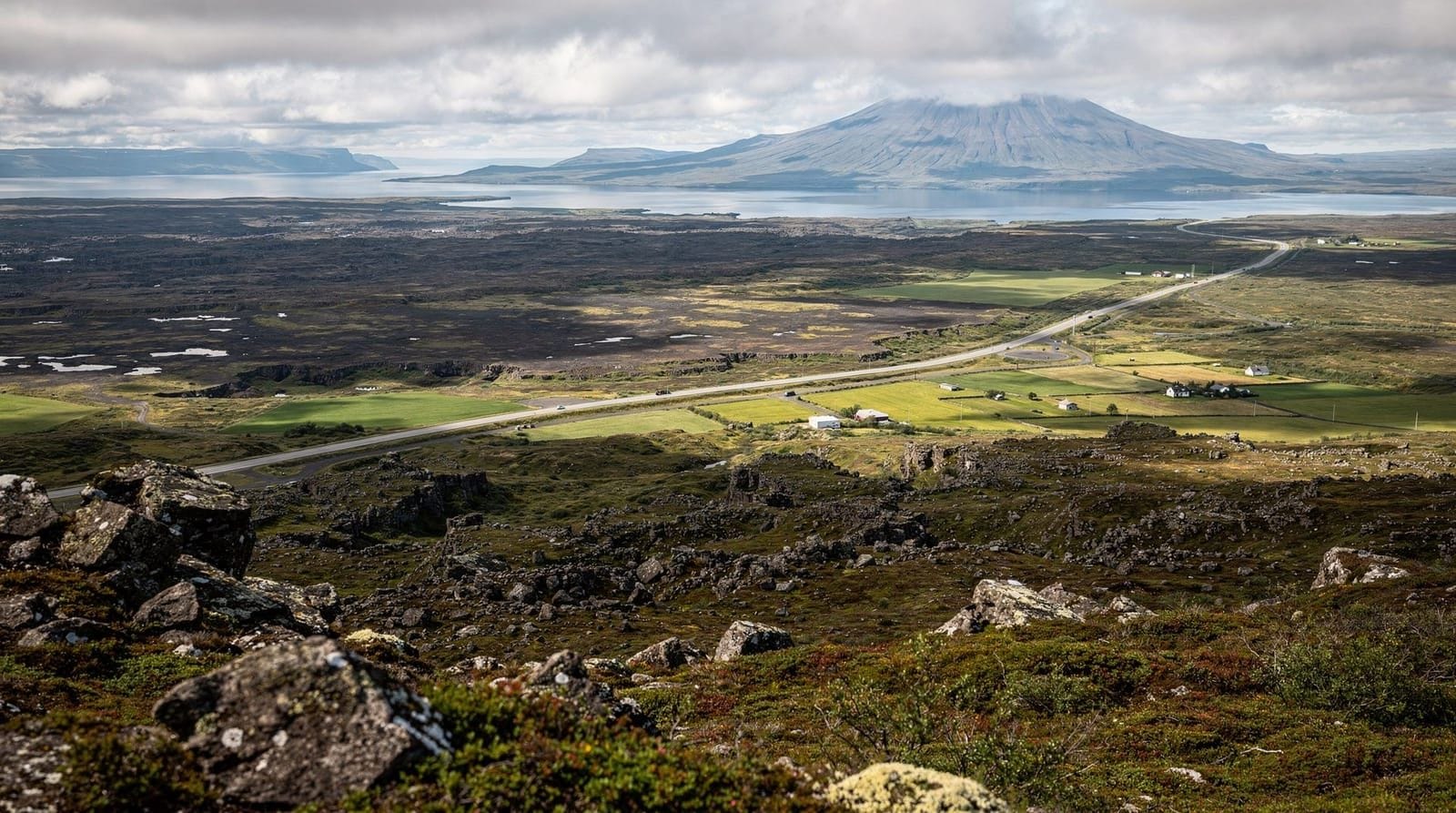
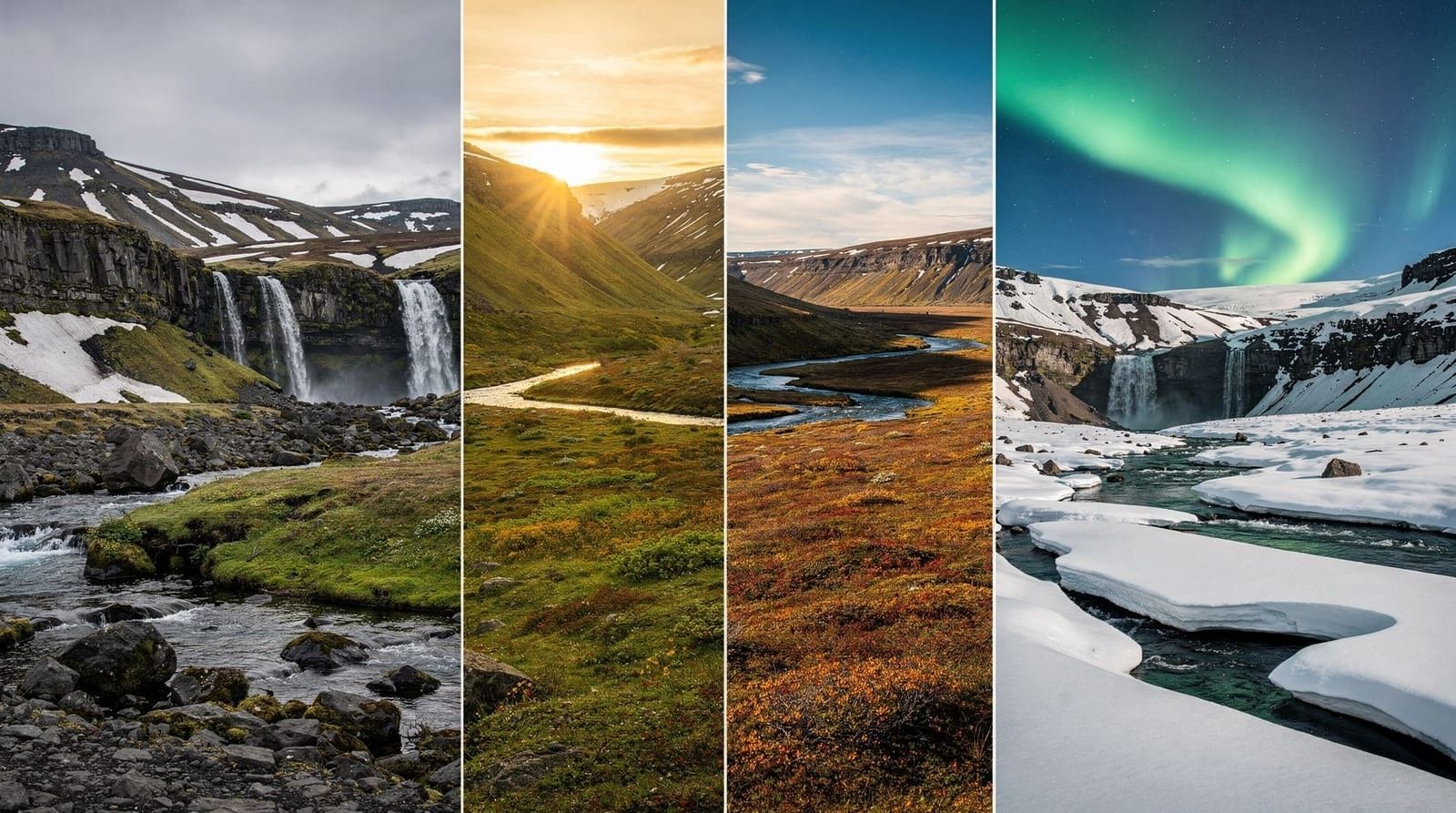
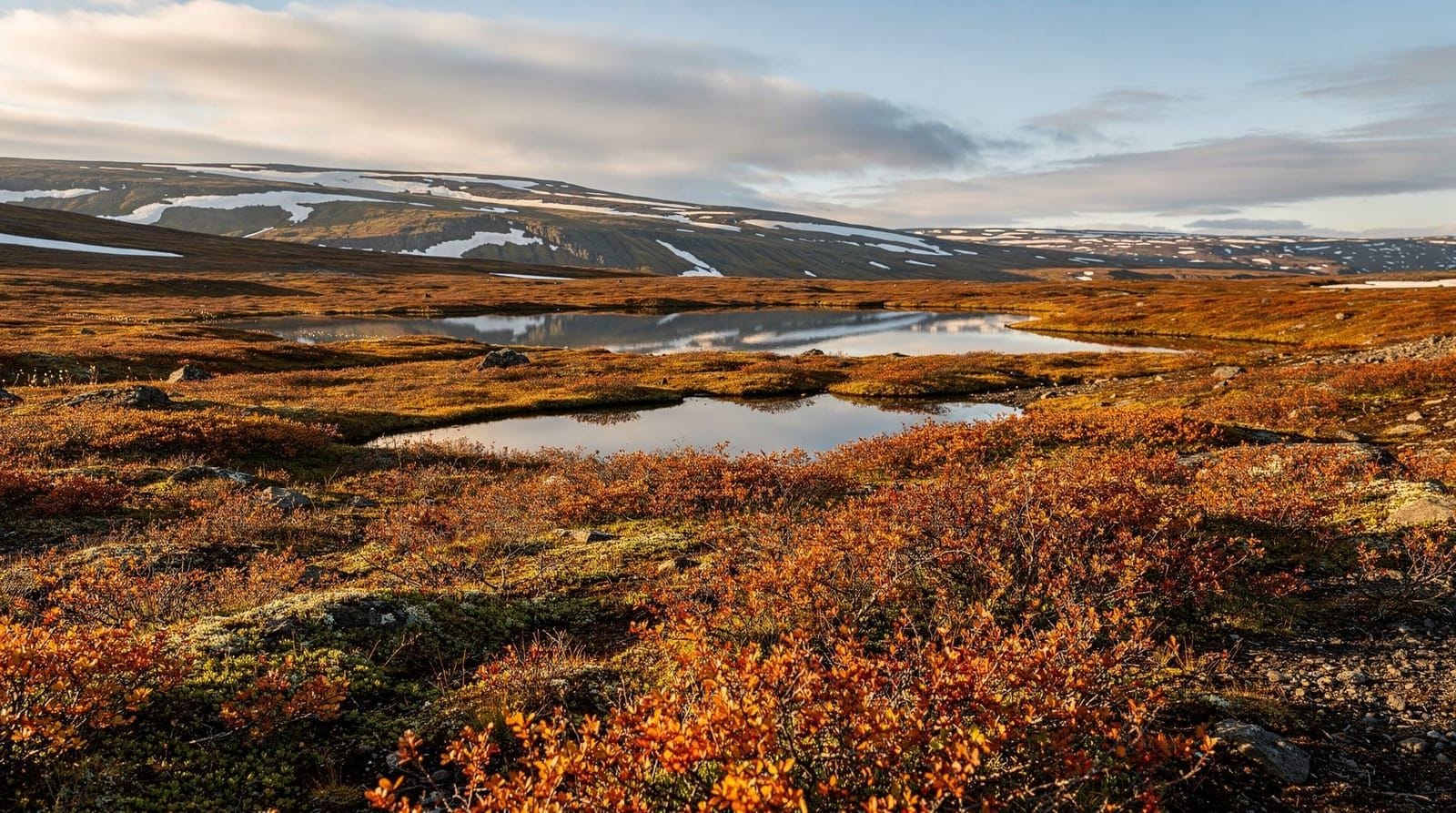
Iceland’s spring is not a dramatic seasonal transition. Snow may still cover highlands in early April, lupine blooms do not peak until late May and early June, and temperatures in April average just 4–7°C (39–45°F). What spring offers instead is a gentler version of Iceland — daylight growing at a pace of 5–7 minutes per day through April and May, waterfalls swollen with snowmelt, and visitor numbers that have not yet reached summer’s intensity.
April and May are genuine shoulder months with real advantages: lower accommodation prices, shorter queues at popular sites, and wildlife milestones that are specific to spring. The tradeoffs are real too: highland F-roads stay closed, the aurora viewing season is ending, and weather remains unpredictable.
| Where | Iceland-wide; Ring Road and south coast fully open |
| Cost | 20–35% below peak July prices |
| Time needed | 7 days for south coast + Golden Circle; 10+ for a fuller loop |
| Getting there | self-drive (2WD fine on paved roads) |
| Best for | puffins (late April+), wildflowers (late May), value |
| Month | Daylight | Reykjavík temp | Puffins | Aurora | F-roads |
|---|---|---|---|---|---|
| April | ~14–16 hrs | 3–8°C | Arriving late April | Fading, gone by May | Closed |
| May | ~18–19 hrs | 6–10°C | Established | Essentially none | Closed until mid-June |
Daylight in April and May
Daylight expands rapidly in spring. Reykjavík gains around 5–7 minutes of daylight per day through April and May, going from roughly 14 hours in April to nearly 19 hours in May. This is enough light for full day trips without timing constraints — a meaningful improvement over winter’s 4–5 hour windows.
By late May, you start seeing the first hints of the midnight sun effect — lingering twilight that never fully darkens. True midnight sun begins around June 5.
Weather in Icelandic spring
April is cold and often windy, with temperatures in Reykjavík between 3–8°C (37–46°F). Snow remains on the ground in highland areas and at altitude. May warms slightly to 6–10°C (43–50°F) on average, though warmer days above 15°C are possible.
Precipitation is moderate in both months. The south and west tend to be wetter; the north and east slightly drier. Wind is a constant in spring — not the storm-force gusts of winter, but enough to make an exposed headland genuinely cold.
Rain gear remains non-negotiable. Spring in Iceland does not mean mild weather by most European or North American standards — it means winter with longer days.
What opens in spring
Most of Iceland’s main attractions are accessible year-round, and by May the full tourist infrastructure is open:
- Blue Lagoon: open year-round
- Sky Lagoon: open year-round
- Golden Circle — Þingvellir, Geysir, Gullfoss: all accessible
- South coast waterfalls: fully open
- Jökulsárlón glacier lagoon: accessible
- Ring Road: open end to end
What is still closed in April and May:
- F-roads to the highlands (opening typically mid-June)
- Highland huts and camping at Landmannalaugar and Þórsmörk
- Some smaller guesthouses in remote rural areas that open only June 1
Puffins arrive in spring
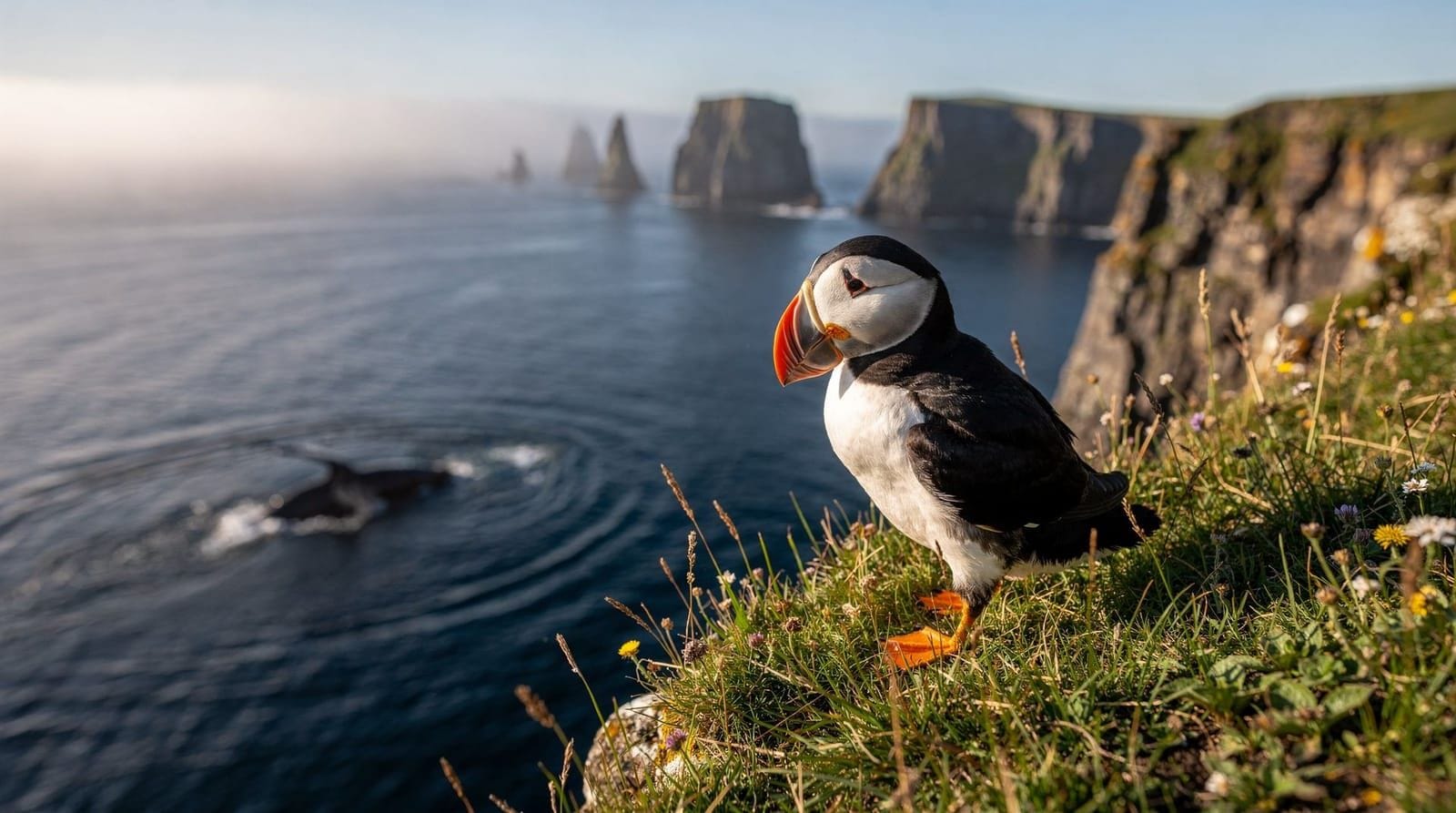
Atlantic puffins return to Icelandic cliffs in late April. This is one of spring’s genuine highlights — the birds are back but the summer crowds have not arrived. Puffin colonies on Látrabjarg in the Westfjords and around Dyrhólaey on the south coast are active from late April through mid-August.
Whale watching also begins in earnest in May. Minke whales are often the first to appear, with humpbacks arriving in numbers by June. Húsavík and Reykjavík both offer tours from May.
Húsavík whale watching and puffin tours run from May through August — May offers the combination of early-season whale arrivals and newly returned puffin colonies before summer crowds peak.
Lupine blooms and wildflowers
The purple Alaskan lupine that covers roadsides and lava fields across Iceland peaks in late May and early June. These are not native — lupine was introduced in the 1940s to combat soil erosion and has spread across the country since, crowding out native plants in some areas. The debate about their ecological impact is ongoing among Icelandic conservationists, but the visual effect in late May is striking regardless.
Other wildflowers — moss campion, mountain avens, and crowberry blossoms — appear in May as snow retreats from lower elevations.
Aurora in spring
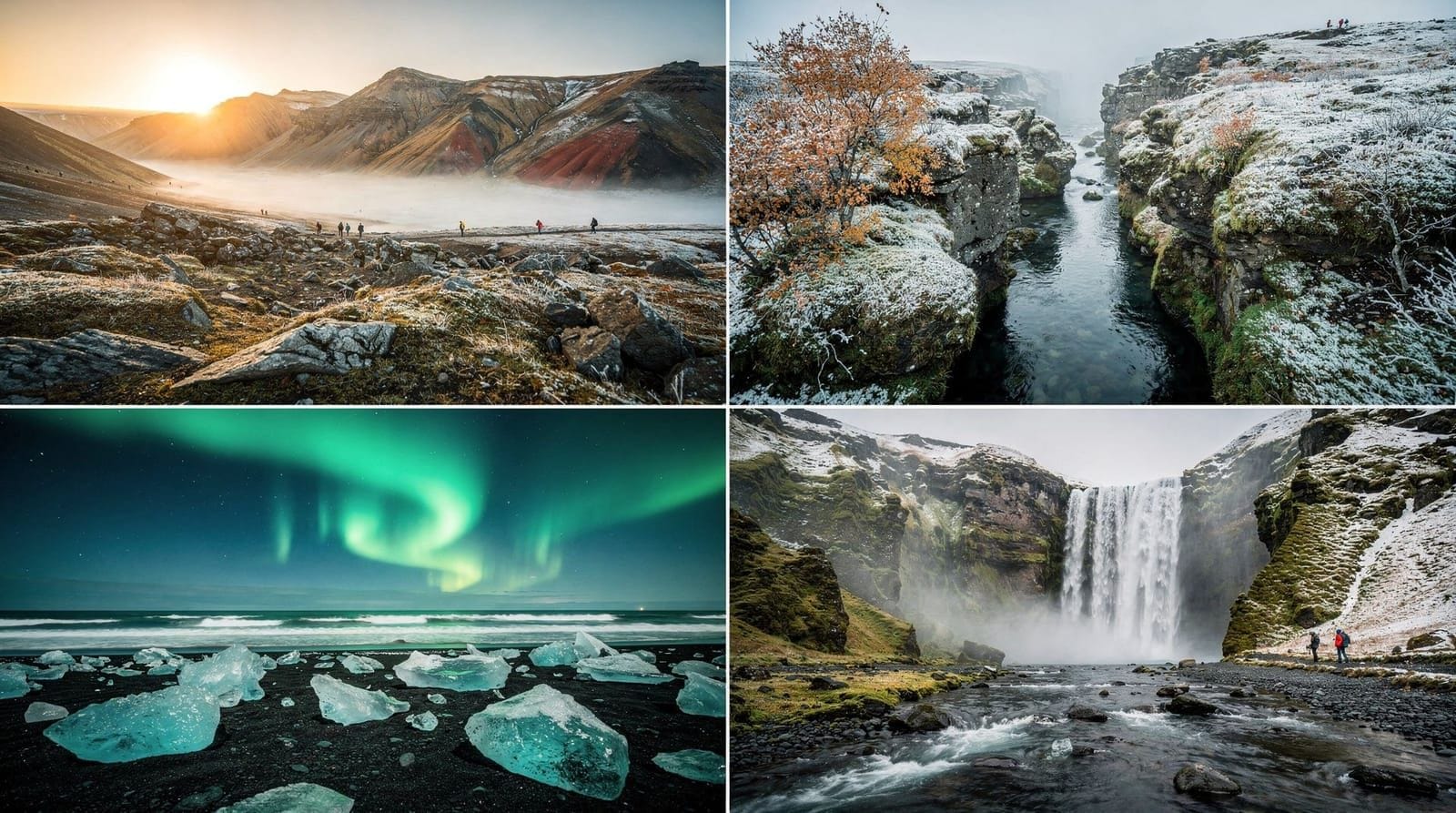
The northern lights season officially runs until mid-April in Iceland. April still offers aurora viewing opportunities on dark nights, though daylight is long enough by mid-April that fully dark skies require late nights. By May, the sky barely darkens sufficiently for aurora — the northern lights viewing season is essentially over by early May.
If aurora is a priority, plan to arrive by mid-April at the latest for spring aurora viewing, or consider Iceland in autumn instead.
Golden Circle in spring
The Golden Circle is fully accessible in spring with a 2WD car. Without summer’s crowds, you can often park easily at Geysir and spend time at Þingvellir National Park without feeling rushed by other visitors.
Golden Circle guided day trips operate year-round and are particularly relaxed in April and May when group sizes are smaller and key sites are less crowded.
Costs and accommodation in spring
Spring offers meaningful savings over summer. Car rentals are typically 20–30% cheaper in April and May than July. Accommodation prices are lower, and many properties offer early-booking discounts for spring dates. By mid-May, prices start rising as demand picks up — book April dates more freely, May requires more forward planning.
The Iceland on a budget guide covers specific strategies, but spring is genuinely one of the better-value windows.
Driving in spring
By April, the main roads are clear of winter ice in low-elevation areas. However, late April snowfalls are not unusual — check road.is before longer drives. The Ring Road is fully open but isolated sections in the north may still see snowfall in April.
A 2WD car handles spring conditions on paved roads well. For gravel tracks (not F-roads, but some secondary roads), a compact 4WD adds comfort. The 2WD vs 4WD Iceland guide covers when each is appropriate.
Horse riding in spring
Icelandic horse riding tours operate year-round, but spring is a particularly good season. The horses’ winter coats are being shed through April and May, giving them a scruffier appearance than their summer sleek look, but they are fresh and energetic after winter.
Spring horse riding tours near Reykjavík and in the south coast area start from late April. The terrain is firm enough for comfortable riding, the views of snow-capped mountains against green valley floors are dramatic, and tour groups are small compared to summer.
The Icelandic horse (Íslenskur hestur) is a distinct breed — smaller than most European horses, developed in isolation since the settlement period, and uniquely five-gaited. The extra gaits include the tölt (a smooth, fast walk) and the flying pace (a lateral two-beat gait for speed). Both are unusual in horse breeds globally. A spring riding tour demonstrates these gaits on terrain they are adapted for. See Icelandic horses riding guide for operator recommendations.
Spring swimming — outdoor pools and natural hot springs
Iceland’s outdoor geothermal pool culture is fully operational in spring. The combination of cold spring air and 38–44°C pool water is a year-round experience — but in April and May, the contrast of warm water and crisp spring air is particularly pleasant.
For hot spring swimming beyond the municipal pools:
Reykjadalur hot spring river (45 min drive from Reykjavík, 45 min walk each way): A river warmed by geothermal activity where you can swim for free. Accessible in late April once the trail dries out. See Reykjadalur hot spring guide.
Secret Lagoon at Flúðir (Secret Lagoon): Small naturally heated pool in a rural village on the Golden Circle route. Quiet in spring, with good availability and lower prices than the Blue Lagoon.
Hvammsvik Hot Springs: Ocean-side geothermal pools on Hvalfjörður, about 1 hour from Reykjavík. Open year-round.
What opens in May that is closed in April
May is a significant improvement on April for access and availability. Specific openings:
- Most highland F-road access points are still gated, but the Þórsmörk access road sometimes opens in late May (conditions-dependent)
- Campervans become viable from mid-May as temperatures allow and more campsites open
- Many smaller rural guesthouses that close October–April reopen May 1
- Whale watching tours begin in earnest from May, with minke whales arriving first
- Snorkelling and diving in Silfra fissure runs year-round but May brings improving visibility as winter sediment settles
The transition from April to May is particularly meaningful for wildlife — puffins typically arrive around April 20–28 on specific breeding cliffs. By May 15 they are well established.
Reykjavík in spring
Reykjavík in April and May has a specific character. The city wakes up from winter without the overwhelming tourism of summer. Coffee shop culture is at its most local. The Laugardalslaug outdoor pool is open year-round, and spring swimming in a 44°C hot pot with the city emerging from snow is a specific experience.
Things happening specifically in spring:
- Film festivals: The Reykjavík International Food and Fun Festival runs in late February/March; the Reykjavík Art Festival is typically May
- The first street terrace season: Cafés in Reykjavík put outdoor seating out from May onward — local Icelanders treat even 8°C as terrace weather
- Cycling: Reykjavík has a reasonable cycle path network and May is a good cycling month — the hills behind the city have cleared snow but the busy summer cycle rental crowds have not arrived
Spring museum access: All major Reykjavík museums operate year-round, and spring has shorter queues at popular institutions. The Settlement Exhibition and National Museum in May are noticeably less crowded than in July.
South coast in spring
The south coast road from Reykjavík to Jökulsárlón is fully accessible in April and May. Snow has typically cleared from the main road by mid-April, though weather can bring late snowfalls. The highlights are the same year-round — Seljalandsfoss, Skógafoss, Reynisfjara, Jökulsárlón — but in spring you experience them without summer crowds.
A practical spring south coast itinerary:
- Day 1: Reykjavík to Vík (via Seljalandsfoss, Skógafoss, Dyrhólaey). Stay in Vík or surrounding area.
- Day 2: Vík east to Jökulsárlón and Diamond Beach. Glacier views from the road.
- Day 3: Return via inland route through Hveragerdi (geothermal area, hot spring river) and Selfoss.
The hot spring river at Reykjadalur is a 45-minute walk from Hveragerdi — one of the best low-effort natural hot spring experiences in Iceland, and very quiet in April.
Spring birdwatching
Beyond puffins, spring brings other migrating and returning seabirds to Iceland’s coasts. Iceland is among the world’s most important breeding grounds for:
- Arctic tern (kría): Aggressive defenders of nests from June onward; their dive-bombing behaviour is distinctive. Arrive in May.
- Northern gannet: Spectacular divers visible from coastal viewpoints.
- Arctic skua: Piratical seabird that pursues other birds for their catches.
- Whooper swan: Iceland’s breeding population is significant. Look for them on lowland lakes from April.
- White-tailed eagle: Reintroduced to Iceland in the 1970s and now established. Visible in the Westfjords and west Iceland.
For serious birdwatching, the Westfjords and the Snæfellsnes Peninsula are the strongest spring locations. See birdwatching in Iceland for the full guide.
Spring birdwatching rewards patience and a decent pair of binoculars more than any single “best spot” — the whooper swans on lowland lakes near Selfoss are visible even to casual observers from the roadside, while the more dramatic gannet colonies require a coastal viewpoint and calm weather to appreciate fully. Serious birders often combine a spring Iceland trip with the Westfjords specifically because the density of nesting cliffs there rewards a multi-day stay in a way a single day trip cannot.
The Golden Circle in spring
The Golden Circle in April and May is one of the most pleasant versions of this classic route. Þingvellir National Park in spring has snowmelt streams and the first green growth appearing. Geysir without July crowds allows you to stand close to Strokkur and watch the geyser erupt properly.
A dedicated spring morning on the Golden Circle — leaving Reykjavík by 8am and returning by 6pm — gives unhurried time at each site.
Easter in Iceland
Iceland is a Lutheran country with a four-day Easter weekend (Thursday–Sunday). Many Icelanders use Easter as a ski holiday weekend — Akureyri and the ski areas around it see domestic tourism spike. Reykjavík itself is quiet. Some supermarkets and smaller shops close Good Friday. Restaurants and main tourist facilities stay open.
Easter can also see the last of the season’s reasonable aurora viewing. If you are visiting in April specifically for northern lights, the Easter period can have good conditions early in the month.
Snæfellsnes in spring
The Snæfellsnes Peninsula is at its most accessible and least crowded in May. The road circuit around the peninsula (about 200 km) takes a full day and gives the full contrast of north-facing cliffs, volcanic craters, lava fields, Kirkjufell mountain, and the snow-capped Snæfellsjökull glacier.
In May, the light is long enough to complete the circuit comfortably in a day from Reykjavík. The first lupine sprouts appear along roadsides by late May. Puffins nest on the peninsula’s cliffs by the end of the month.
Budget options in spring
Spring is one of the most budget-friendly windows in Iceland. Specific money-saving opportunities:
- Car rental: April rates are 25–35% lower than July. A mid-range 4WD that costs $180/day in July is often $120–130/day in April. Book 3–4 weeks ahead rather than months.
- Accommodation: Guesthouses with rooms at 22,000 ISK ($160 USD) in July may be 14,000–16,000 ISK ($100–115 USD) in April. Many have spring promotions.
- Tours: Tour group sizes are smaller; some operators offer early-season discounts.
- Activities: Entry fees at sites like Þingvellir National Park are the same year-round, but ancillary spending is lower when you are not competing for tables or parking.
A realistic mid-range spring Iceland budget for two people (7 days): approximately $2,800–3,500 total ($400–500/day for two including all accommodation, food, transport, and one or two activities daily). The same trip in July would cost roughly $4,500–5,500.
For specific strategies, see Iceland on a budget.
Spring camping
The Icelandic camping season officially opens June 1 at most campsites. April and May camping outside of designated sites is restricted in most areas. However:
- Some campsites open early (May 1 or May 15) depending on the site operator
- Wild camping in remote areas away from designated zones is legally possible with appropriate leave-no-trace practice
- The Iceland Camping Card (campingcard.is) becomes active at participating sites when they open
Campervans in April are not impractical but involve cold nights (temperatures dropping to 0–3°C overnight) and limited campsite availability. May camping is significantly more comfortable and site options expand.
For travellers weighing a campervan against a rental car and guesthouses in spring, the calculation shifts compared with summer: fewer open campsites means more driving between viable stops, which can offset some of the cost savings a campervan usually offers. A hybrid approach — campervan with occasional guesthouse nights on the coldest forecast nights — is a common compromise among spring self-drivers, and one worth budgeting for rather than assuming a pure-campervan trip will be as flexible as it is in July.
Frequently asked questions about Iceland in spring
Is April a good time to visit Iceland?
April is one of the best budget options — lower prices than summer, growing daylight, and reasonable road conditions. You lose highland access and aurora is ending, but you gain puffins returning, fewer crowds, and real value for money.
Is it cold in Iceland in May?
May in Reykjavík averages 6–10°C (43–50°F). Warm days above 15°C are possible but not guaranteed. Highlands are colder. Waterproof layers remain essential throughout the month.
Can you see puffins in Iceland in April?
Puffins typically arrive on Icelandic cliffs in late April. Early in the month numbers are low; by May they are well established. Full puffin season runs late April through mid-August.
Are northern lights visible in spring?
April still offers aurora chances on dark nights. By early May, nights are no longer dark enough for reliable aurora viewing. If the northern lights are a priority, go by mid-April or plan a winter trip instead.
Are F-roads open in spring?
No. F-roads open in mid-June at the earliest. Any visit in April or May excludes the highland interior entirely.
How does spring compare to autumn in Iceland?
Both are shoulder seasons with similar advantages. Spring has lupine wildflowers, returning wildlife, and Easter week activity. Autumn (September–October) has the returning aurora, open F-roads through September, and autumn colours on the moorland. Neither is objectively better — see Iceland in shoulder season for a direct comparison.
Is early April or late May the better spring choice?
It depends on your priority. Early April is colder and greyer but noticeably cheaper, with a last realistic chance at the northern lights. Late May is warmer, has established puffin colonies and the first lupine blooms, and daylight approaching the near-24-hour light of June — but prices and crowds are both climbing back toward summer levels by then. Travellers on a strict budget should lean April; those prioritising wildlife and colour should lean late May.
Is a spring trip to Iceland good for photography?
Yes, for different reasons than summer. Snowmelt keeps waterfalls at high flow, the low spring sun angle gives dramatic sidelight much of the day (rather than only at a brief golden hour), and landscapes carry the visual contrast of retreating snow against emerging green. What spring lacks compared to autumn is the aurora as a subject — plan around waterfalls, coastline, and wildlife rather than night photography.
Sample 7-day spring itinerary combining value and wildlife
| Day | Route | Focus |
|---|---|---|
| 1 | Reykjavík → Golden Circle | Þingvellir, Geysir, Gullfoss without July crowds |
| 2 | Golden Circle → South Coast | Seljalandsfoss, Skógafoss, Reykjadalur hot river |
| 3 | South Coast → Vík | Reynisfjara, Dyrhólaey puffin cliffs (late April+) |
| 4 | Vík → Jökulsárlón | Glacier lagoon, Diamond Beach |
| 5 | Return west via Skaftafell | Glacier views, quieter trails than summer |
| 6 | Reykjavík → Snæfellsnes day trip | Kirkjufell, coastal cliffs, early lupine (late May) |
| 7 | Reykjavík | Museums, hot pots, departure buffer |
This route keeps the highland-dependent stops out entirely, since F-roads remain closed throughout spring, and instead sequences the season’s genuine strengths: value, snowmelt waterfalls, and early wildlife.
Top experiences
Bookable activities with verified prices and instant confirmation on GetYourGuide.