Icelandic horse riding — what to know before you book a tour
Reykjavik: From Reykjavik Icelandic horse riding tour in lava fields
Duration: 1.5-2 hours riding
Can beginners ride Icelandic horses in Iceland?
Yes. Icelandic horses are famously calm, sturdy, and tolerant — most farms cater to complete beginners and experienced riders alike. A 1.5–2 hour lava field ride near Reykjavík costs around 8,900–11,900 ISK (€58–78). Children aged 6 and up can usually ride on a guided tour.
| Where | Near Reykjavik (most farms), Skagafjörður (equestrian heartland) |
| Cost | Around ISK 8,900–12,500 for a standard 1.5–2 hour ride |
| Minimum age | Usually 6 for independent riding; led walks for younger children |
| Weight limit | Typically 100 kg, some farms up to 110 kg |
| Best for beginners | Yes — the tölt gait is easier to ride than a trot |
The Icelandic horse is one of the oldest and most isolated horse breeds in the world. Brought to Iceland by Norse settlers in the 9th century, it has evolved over 1,100 years in the harsh Icelandic environment — sturdy, self-sufficient, thickly double-coated, and possessed of a genetic repertoire that includes the famously smooth tölt gait. No other breed has been introduced to Iceland in modern times, giving the Icelandic horse a genetic purity matched by very few domesticated animals anywhere.
For visitors, riding an Icelandic horse through lava fields, river valleys, or highland tracks is one of the more distinctively Icelandic experiences on offer. It is accessible to beginners, genuinely enjoyable for experienced riders, and deeply connected to the country’s history.
The five gaits
Horses normally have three gaits: walk, trot, and canter. Icelandic horses have five. The additional gaits are the tölt and the flying pace, though not all individuals are naturally gifted at the latter.
Tölt is the gait that makes Icelandic horses exceptional for trail riding. It is a four-beat lateral ambling movement — the horse always has at least one foot on the ground, which eliminates the bouncing of a trot. For the rider, it feels remarkably smooth even at speed (the tölt can reach 15–20 km/h comfortably, and up to 30 km/h for short bursts). The traditional demonstration is a rider holding a full glass of beer while tölting without spilling a drop. For beginners, the tölt is significantly easier to ride than a trot.
Flying pace is a two-beat lateral gait used in racing. Both legs on one side move together, giving the horse a rocking-horse motion at high speed (up to 45–50 km/h). Not all Icelandic horses have the flying pace in their repertoire; those that do are called “five-gaited” (fimmgæður) and are highly valued.
Riding near Reykjavík
Most visitors to Iceland ride near Reykjavík, where a cluster of farms within 30–60 minutes offers tours into the lava fields, river valleys, and coastal headlands.
Standard tours run 1.5–2 hours on horseback, typically costing 8,900–12,500 ISK (€58–82) for adults. These cover easy terrain in the lava fields south of Reykjavík, with riding at walk and tölt. No prior experience needed.
Reykjavík lava field horse riding tour — 1.5–2 hours on Icelandic horses, beginners welcome, hotel pickup availableHalf-day tours (3–4 hours including farm visit and riding) cost around 14,900–19,900 ISK (€97–130). These allow more terrain and typically include time at tölt.
Full-day combo tours combine horse riding with the Golden Circle — you ride in the morning and tour Geysir, Gullfoss, and Þingvellir in the afternoon. These are efficient if you want to pack maximum content into a limited Iceland schedule.
Horse riding and Golden Circle full day — morning on Icelandic horses, afternoon Golden Circle tour, from ReykjavíkKey farms and operators
Íshestar (near Hafnarfjörður, 15 km south of Reykjavík): one of Iceland’s largest and most professional riding tour companies. Multiple daily departures, wide range of trip lengths from 1-hour introductions to multi-day treks. Staff speak English fluently. Their lava field rides depart from the Hafnarfjörður farm.
Laxnes Horse Farm (Mosfellsdalur, 20 km north of Reykjavík): smaller, more personal family operation in a valley with river views. Known for attentive beginner instruction. Their 2-hour Mosfellsdalur valley ride is well reviewed.
Eldhestar (Hveragerði, 45 min east): larger farm with glacier views from the riding tracks. Positioned on the south coast near Hveragerði hot springs. Particularly good for riders wanting more terrain variety.
Hestasport (Varmahlíð, north Iceland): specialist in multi-day trekking tours in the north Iceland highlands. Not for beginners, but one of the top operators for experienced riders wanting the authentic long-distance experience.
What to wear and expect
Clothing: the farms provide helmets and sometimes riding boots (check in advance). Wear long trousers — jeans work fine, riding trousers are ideal. Bring layers: even in summer, winds can be cold. Avoid loose scarves or baggy clothing that might spook a horse.
Weight limit: most Icelandic horse tours have a maximum rider weight of 100 kg (220 lbs). Some farms can accommodate up to 110 kg on their larger horses — ask directly when booking.
Children: most farms accept children aged 6 and up for independent riding, and younger children (3–5) for led pony walks. Confirm the minimum age with the specific operator.
No prior experience required: Icelandic horses are genuinely well-suited to beginners — they are calm, responsive, and forgiving. You will not be expected to gallop on a first visit. The tölt will be introduced gradually.
Horse riding further afield
If you are travelling beyond Reykjavík, horse riding opportunities exist throughout Iceland:
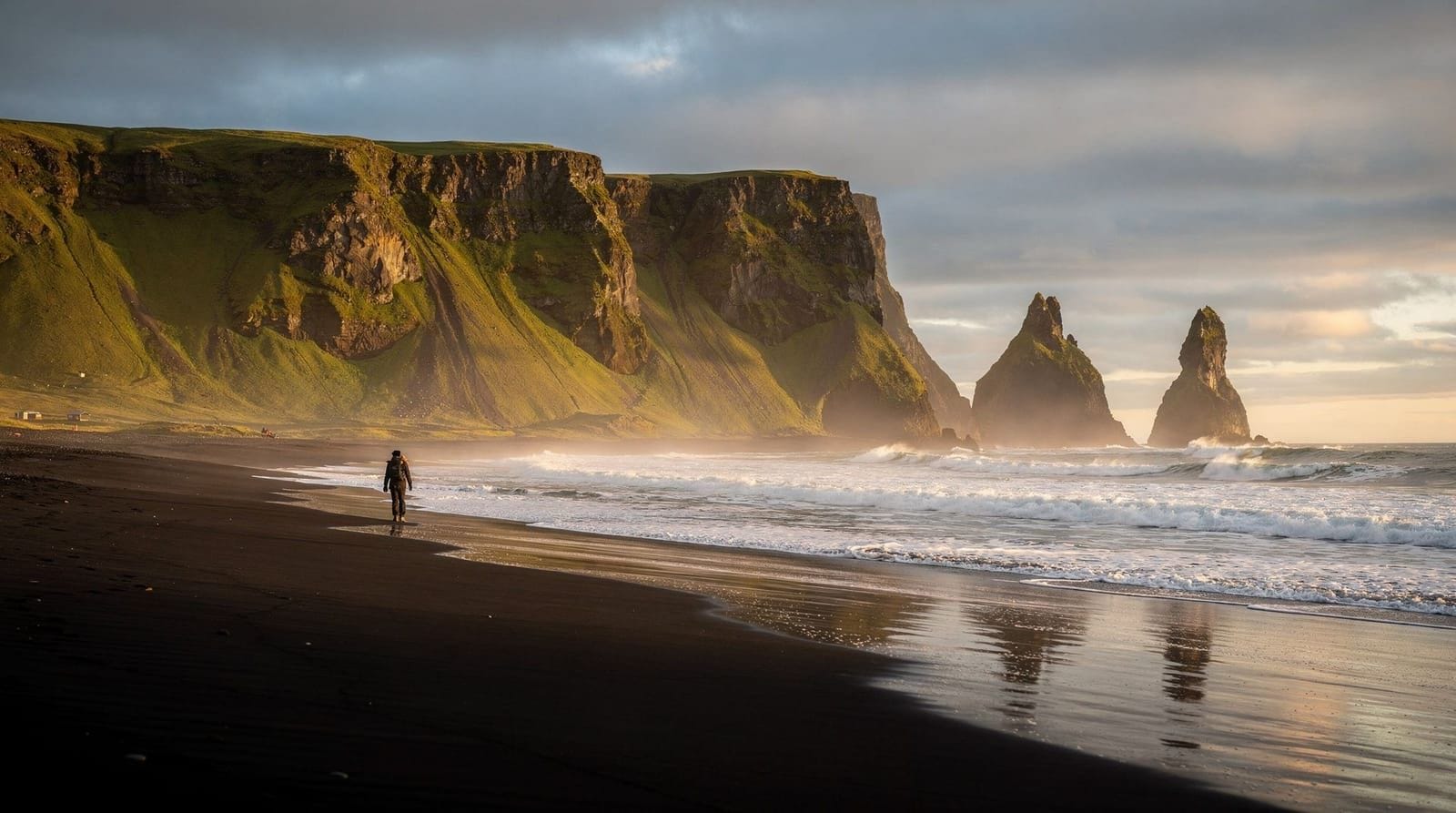
- South coast: Reynisfjara black sand beach area has at least one operator offering beach rides near the basalt formations
- North Iceland: farms around Akureyri and the Skagafjörður valley (Iceland’s horse breeding heartland) offer rides with views of fjords and mountains
- East Iceland: smaller operators around Egilsstaðir for quieter, less commercialised rides
The Skagafjörður valley in north Iceland is considered Iceland’s equestrian heartland — more horses live there per square kilometre than anywhere else in the country. The annual Skagafjörður horse festival (Hestadagar) in late July is a significant cultural event.
The horse in Icelandic culture
Horses were essential to Icelandic survival for over a millennium — transportation across a roadless landscape, farming work, and a source of meat in hard winters. The word for horse in Old Norse (hestur) appears throughout Iceland’s placenames, sagas, and folk vocabulary.
The Eddic poem Völuspá mentions Odin’s eight-legged horse Sleipnir, and the Icelandic horse breed shares the genetic lineage of ancient Nordic horses depicted in Bronze Age rock carvings. Modern Icelandic horses retain the same chromosome count and blood markers as archaeological specimens from Viking-age Iceland.
The breed’s isolation has also made it exceptionally disease-resistant compared to mainland European breeds, which is why Iceland’s import ban is so strictly enforced.
Multi-day highland treks
The most demanding and most rewarding form of Icelandic horse riding is the multi-day Highland trek — a tradition rooted in the annual sheep round-up (réttir) that has occurred every autumn for centuries. Modern trek operators follow historic routes through the interior, crossing rivers, camping in highland huts, and covering 25–40 km per day on horseback.
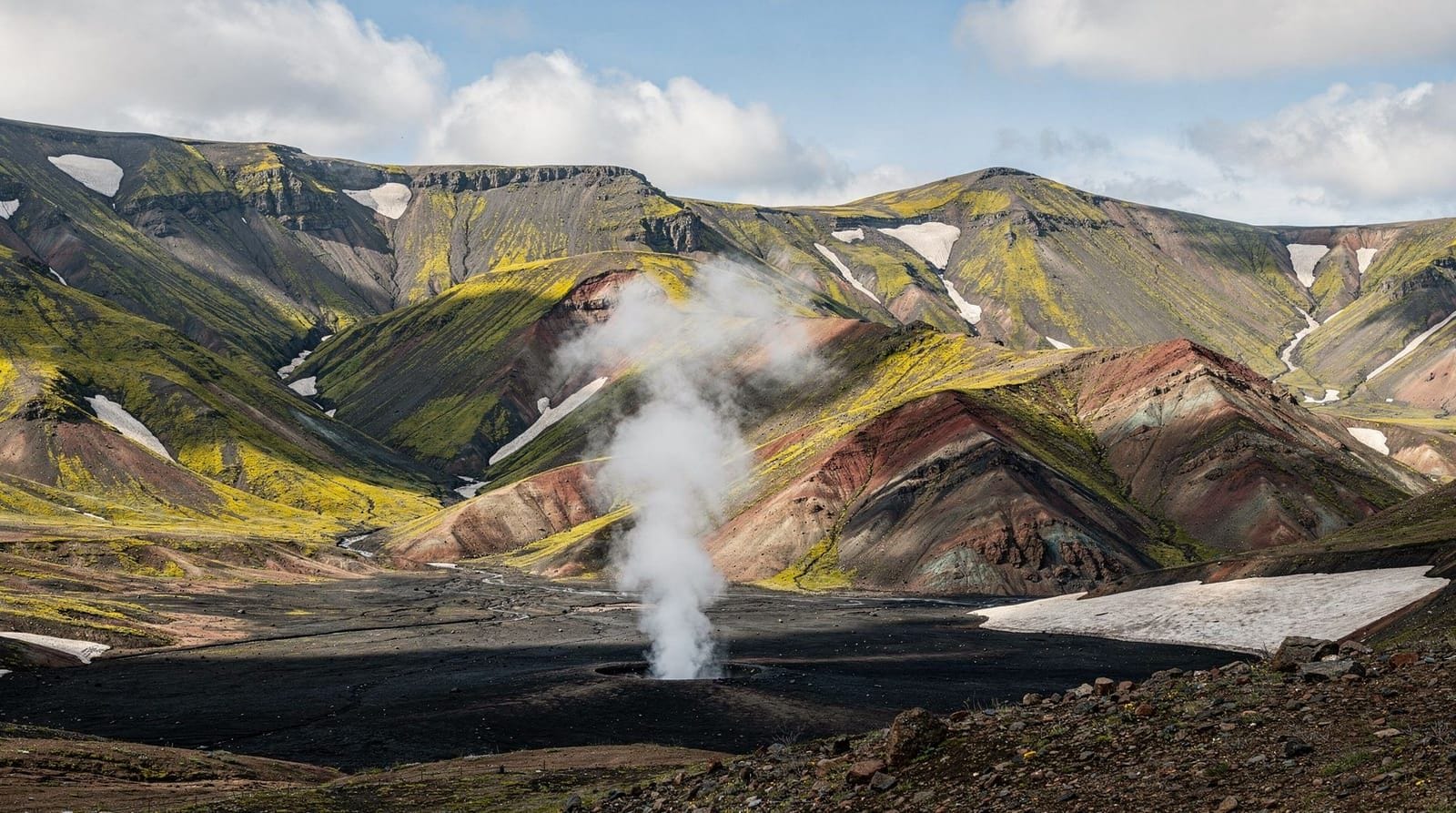
Laugavegur Horse Trek: the Laugavegur trail route (between Landmannalaugar and Þórsmörk) is rideable on horseback with specialist operators. The volcanic rhyolite mountains, natural hot springs, and glacier river crossings make this one of the most dramatic horse trek environments on Earth.
Kjölur Route: the historic interior route (F35) between north and south Iceland, crossing the highland plateau past Hvítárvatn glacial lake and the Kerlingarfjöll rhyolite mountains. This is a serious multi-day undertaking requiring good physical fitness, riding experience, and appropriate equipment.
Skagafjörður festival treks: the annual Skagafjörður horse gathering in late July (Hestadagar) involves thousands of horses and hundreds of riders in a staged event that includes demonstration riding, racing, and social events. Some operators offer participation packages.
Multi-day trek prerequisites: you must be a competent rider who can handle tölting at extended pace, be physically fit, and be comfortable in basic hut accommodation. Most operators specify minimum riding experience requirements. Contact directly to discuss suitability.
Icelandic horses and the annual autumn round-up
The réttir (autumn round-up) is one of Iceland’s most distinctive rural traditions. In September, horses and sheep that have ranged freely in the highland summer pastures are driven back to farms by farmers on horseback — often over multiple days and covering rough terrain.
Some farms offer participation experiences for visitors — joining the réttir on horseback is physically demanding and culturally immersive. It is not a tourist production; it is real agricultural work that foreign participants assist with. Farm stays and réttir participation are typically arranged through personal contacts or specialist operators.
The sheep sorting (réttir) at the end of the drive — where sheep from different farms are separated into individual farm pens in a large communal enclosure — is a major social event in rural Iceland. If you are travelling in late September, asking at farms in the north and west whether you can observe is generally met warmly.
Horse-riding itinerary combinations
Horse riding from Reykjavík pairs naturally with other half-day or full-day activities:
Horse riding in the morning + Golden Circle in the afternoon: this is an explicit tour product — see the viking horse and Golden Circle combination tour, which includes a horse riding session and the full Golden Circle circuit in one day. Departure from Reykjavík at ~08:00, return by 21:00.
Horse riding in the morning + whale watching in the afternoon: both activities depart from or near Reykjavík. A lava field ride finishing by 12:00 and an afternoon whale watching tour (13:00 departure) is a possible combination day. Check with your horse farm about morning availability.
Horse riding in combination with Snæfellsnes: several farms on the Snæfellsnes Peninsula offer riding on the lava fields around Búðir or along the coast near Arnarstapi. These can be built into a Snæfellsnes day trip or overnight.
The Íshestar and Laxnes farm experience in detail
The two most visited horse farms near Reykjavík are Íshestar and Laxnes — understanding what makes them different helps with the booking decision.
Íshestar (15 km south of Reykjavík, near Hafnarfjörður) is the largest and most commercial operation, with over 100 horses and a well-developed infrastructure. The advantage: professional organisation, reliable scheduling, experienced guides, and multiple daily departures. The lava field rides depart from the farm and cover volcanic landscape south of the city. The experience is smoothly run and appropriate for all levels. The slight trade-off: with larger groups, the personal connection to individual horses and guides can be reduced.
Laxnes Horse Farm (20 km north in Mosfellsdalur valley) is a smaller, family-run operation with a more personal atmosphere. The riding area is in the valley with views of mountains and the Mosfellsá river. Known for patient beginner instruction and smaller group sizes. The route passes through birch woodland and open meadow — a different character from Íshestar’s lava field.
Eldhestar (45 km east, near Hveragerði): the largest facility after Íshestar, with glacier views on clear days. Located 5 km from the Ring Road, it is a natural stop on a South Coast day trip. Their 2-hour lava and glacier view ride is the most popular tour.
Choosing between them at a glance:
| Íshestar | Laxnes | Eldhestar | |
|---|---|---|---|
| Distance from Reykjavik | 15 km south | 20 km north | 45 km east |
| Group size | Larger, more departures | Smaller, more personal | Medium |
| Terrain | Lava fields | River valley, birch woodland | Lava with glacier views |
| Best for | Reliability, scheduling flexibility | Nervous beginners, families | South Coast day-trip stopover |
The tölt in practice
Visitors who have ridden before often report that the tölt is unlike any gait they have experienced on other breeds. The immediate difference: no posting. In a trot, riders must rise rhythmically with the horse to absorb the two-beat diagonal movement. In the tölt, the four-beat pattern eliminates this bouncing entirely — at walking speed, you cannot tell you are moving; at tölt gallop speed, you remain seated smoothly.
For beginners, this means learning to ride is significantly easier on an Icelandic horse than on a trotting breed — the tölt is introduced in the first lesson and most beginners achieve it comfortably within 30 minutes.
For experienced riders from mainland European traditions (who are trained exclusively in walk-trot-canter), the tölt requires adjustment — it can feel initially like the horse is about to break into a canter, but the gait is distinct and stable once understood. Good guides will coach you through the transition.
Frequently asked questions about Icelandic horse riding
Do the horses have names?
Yes. Icelandic horse names are traditionally related to colour, personality, or mythology. Common names include Ljómi (gleam/radiance), Sóley (buttercup), Bleikur (pale/pinkish), and Stormur (storm). Farm staff will usually introduce you to your horse by name.
How do I stop the horse?
Guide instructions will cover this before you mount. Standard pressure on both reins (pulling back gently) signals the horse to slow or stop. Icelandic horses respond to light aids and are not hard-mouthed. Do not pull sharply.
Is it possible to ride in winter?
Yes. Many farms offer winter rides, which can be magical in snow — the horses are bred for Icelandic winters and are entirely comfortable. The terrain is more limited, and short daylight hours mean tours are shorter. Horse treks to see the Northern Lights on horseback are offered by some operators.
Are these tours suitable for people who are afraid of horses?
Some people discover a comfort with Icelandic horses specifically that they have never felt around larger breeds. The horses are shorter (approximately chest height for most adults), visually less intimidating, and temperamentally patient. A quiet word with the guide before mounting is appropriate if you have concerns.
What is the price range for horse riding tours?
Short 1-hour introductory rides: ~7,900–9,900 ISK (€52–65). Standard 1.5–2 hour tours: ~8,900–12,500 ISK (€58–82). Half-day tours: ~14,900–19,900 ISK (€97–130). Multi-day trekking: ~80,000–150,000 ISK (€520–975) for 5-day packages with accommodation.
Is horse riding better on its own or combined with another activity?
Both work well, and the choice depends on your schedule. A standalone 1.5–2 hour ride is enough to experience the tölt and the breed’s character without eating into a full day. Combining it with the Golden Circle in a single day works if you’re short on time, but it makes for a long day (typically 08:00–21:00) — fine for an efficient trip, less relaxed than splitting the two across separate days.
Do I need to book horse riding in advance?
Yes, especially in summer (June–August) when the popular Reykjavík-area farms fill their morning slots days ahead. Winter tours have more last-minute availability but shorter daylight limits the time slots on offer each day.
What actually differs between a cheap intro ride and a premium tour
The gap between the least and most expensive Reykjavík-area rides is genuinely felt, not just a pricing gimmick. A budget 1-hour intro ride typically covers a fixed, well-worn loop close to the farm, in a larger group, with minimal individual coaching. A premium half-day or full-day tour covers more varied terrain (river crossings, coastal views, or a genuine sense of the lava field’s scale), usually caps group size lower, and gives guides more time to coach the tölt properly rather than just keeping the group moving.
For a first-time rider who mainly wants to say they rode an Icelandic horse, the cheap option is entirely sufficient. For anyone who wants to actually feel the tölt develop and enjoy a slower, more scenic ride, the extra cost of a half-day tour is worth it — the difference in terrain and pacing is more noticeable than the price gap suggests.
Top experiences
Bookable activities with verified prices and instant confirmation on GetYourGuide.
Top experiences
Best-rated activities across GetYourGuide and Viator.