Hveragerði — geothermal town, greenhouse gardens, and hot river hiking
Hveragerði: Iceland's geothermal greenhouse town 45 km from Reykjavík. Hot spring hiking in Reykjadalur valley, geothermal greenhouses, and lava tunnels
Reykjavik: Hiking day tour hengill and reykjadalur hot springs
Quick facts
- Best time to visit
- Year-round; Reykjadalur hike best June to September; greenhouses open year-round
- Days needed
- Half day to full day (including the Reykjadalur hot river hike)
- Getting there
- 45 km east of Reykjavík on Ring Road 1; about 40 minutes by car or Strætó bus
- Budget per day
- ISK 0–500 / EUR 0–3 for hiking; guided hot springs hike ISK 10,000–14,000 / EUR 65–92
Iceland’s greenhouse capital
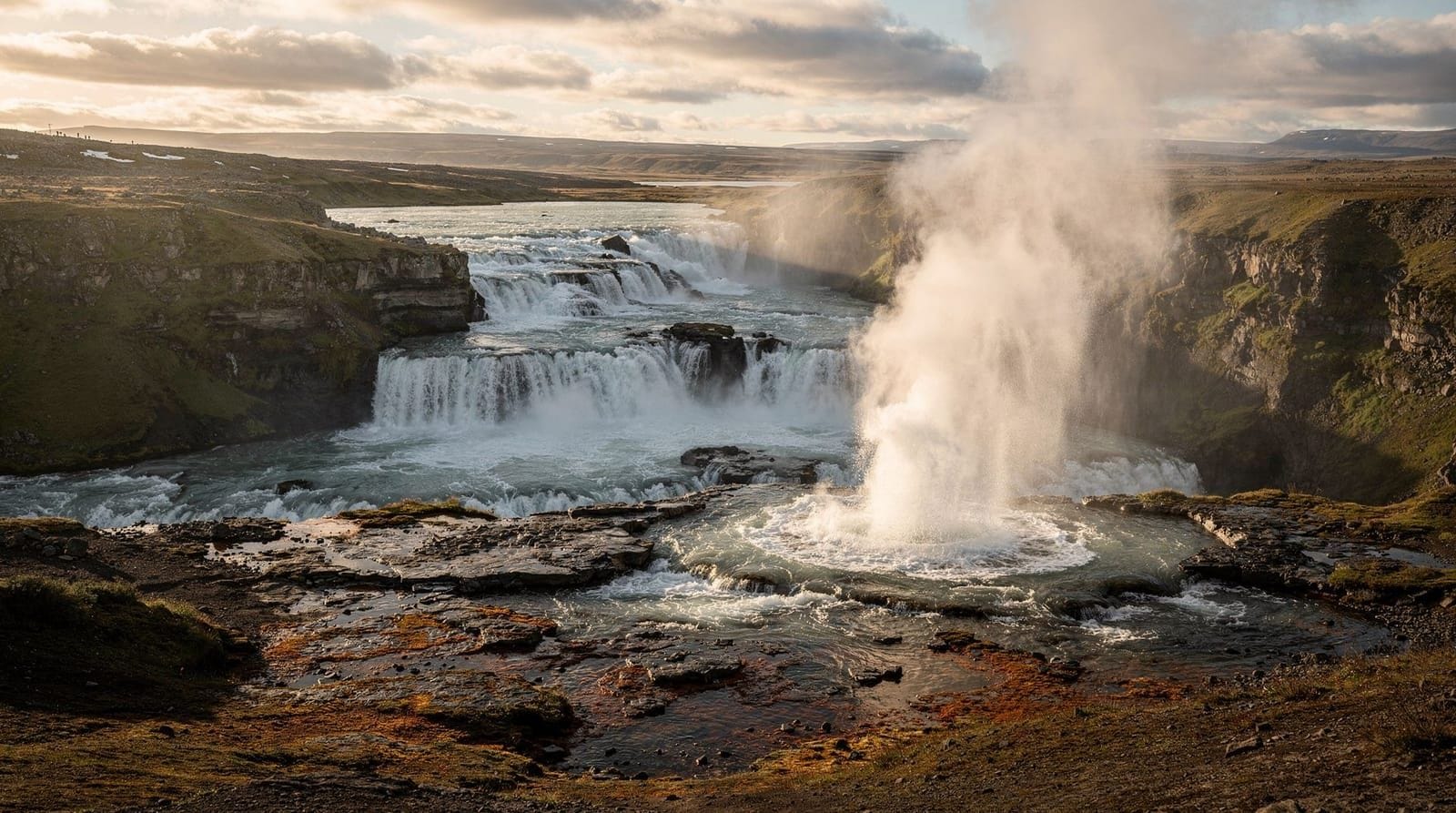
Hveragerði (population ~2,300) sits on one of Iceland’s most active geothermal zones, 45 km east of Reykjavík on Ring Road 1. The town’s name translates loosely as “hot spring gardens,” and that describes it accurately. Thermal energy from the ground heats homes, warms swimming pools, and — most visibly — drives an unlikely agricultural sector: greenhouses producing tomatoes, cucumbers, peppers, herbs, cut flowers, and even bananas in a country that barely sustains grassland.
The town was hit by a 6.1-magnitude earthquake in May 2008, which caused significant structural damage (residents still refer to it casually). Some buildings were repaired; others were rebuilt. The earthquake also opened new hot spring vents in gardens and backyards — Hveragerðians have a pragmatic attitude toward geothermal activity.
For travellers, Hveragerði is most useful as: a relatively uncrowded stop on the way to the Golden Circle or eastern South Coast; the starting point for the Reykjadalur hot river hike; and a base for the Raufarholshellir lava tunnel.
The Reykjadalur hot spring river
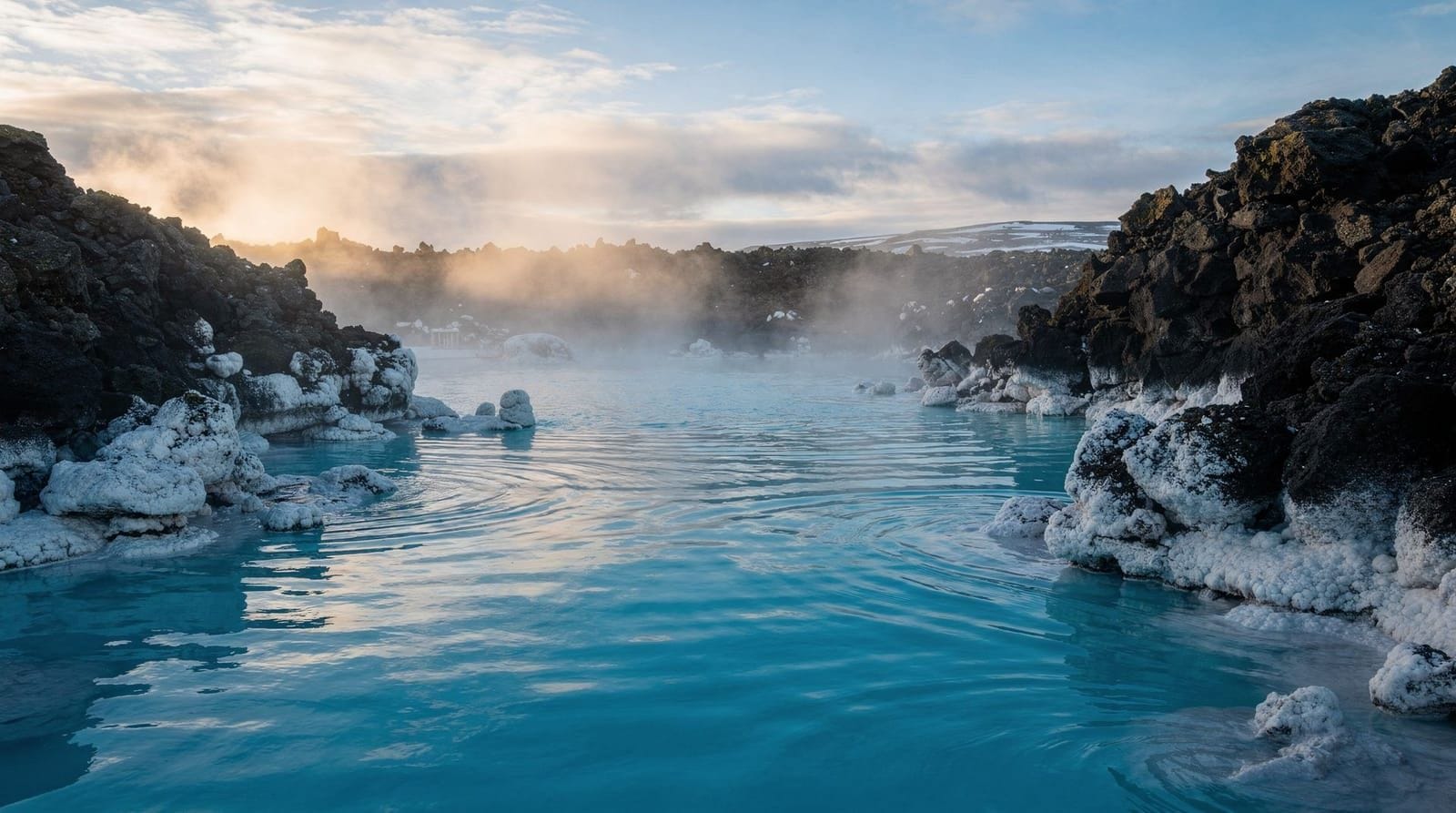
The Reykjadalur valley, accessible via a trail starting at the north end of Hveragerði, contains a naturally hot river that bathers wade or lie in. This is one of the most popular free wild-hot-spring experiences in Iceland and is considerably less crowded than the Blue Lagoon, though more crowded than it was five years ago.
The trail from the car park to the bathing section is approximately 3 km with 200 metres of elevation gain, taking 45–60 minutes uphill on a good-quality gravel path. The hot river section begins where a wooden boardwalk crosses the stream; hot springs feed in from both banks, raising the temperature to 30–40°C depending on the section. There are basic wooden changing screens (but no full facilities). The water is comfortably warm in the main bathing stretch.
The trail is free; the car park at the trailhead charges ISK 500 (EUR 3). You need hiking boots (the trail is wet and uneven in sections) and a towel/swimwear. The upper valley beyond the bathing stretch is worth exploring for the steaming vents and colourful sulphur deposits, though you should stay well clear of the hotter vents (water approaching 100°C in places).
The hike down is faster (25–35 minutes). Total time from car park to bathing and back: 2–3 hours.
Reykjadalur hot springs hike from Reykjavík — guided hike from Reykjavík including transport, guide, and the Reykjadalur trail with bathing. ISK 10,000–13,000 (EUR 65–85). Useful for those without a car; the 40-minute drive each way is included in a half-day format.
Full day Hengill mountain and Reykjadalur hot springs hike — an extended version covering the Hengill geothermal area above Reykjadalur, with greater elevation and more remote geothermal scenery, ending with the hot river bathe. ISK 13,000–16,000 (EUR 85–105). Suitable for fit hikers; 5–6 hours of walking total.
Geothermal greenhouses
Several greenhouse operations in and around Hveragerði offer tours. The Friðheimar farm on the Golden Circle route (30 km northwest, near Selfoss) is the most visited and combines a tomato greenhouse with a café serving tomato soup, pizza, and Bloody Marys — it requires reservations. More modest greenhouse visits within Hveragerði itself are less touristic and provide a more authentic look at how geothermal energy transforms what can be grown in a sub-Arctic climate.
The geothermal greenhouse concept is genuinely interesting: year-round production of cucumbers and tomatoes at 64°N latitude, using hot water piped from the ground to maintain temperatures of 18–22°C inside while the outside hovers near freezing for months. Several operations also produce strawberries, peppers, herbs, and cut flowers.
The Iceland GeoSurvey (ÍSOR) research centre in Hveragerði is involved in geothermal energy research; their work has made Iceland a global reference point for geothermal power generation. The Hellisheiði Power Plant, 15 km west of town toward Reykjavík, is the largest geothermal power plant in Iceland and offers public tours.
Hellisheiði Geothermal Plant exhibition and audio tour — a self-guided audio tour through the exhibition at the plant (ISK 1,800 / EUR 12 admission). Interesting for anyone curious about how geothermal energy is extracted and used; the plant generates both electricity and hot water for Reykjavík’s heating system.
Raufarholshellir lava tunnel
Raufarholshellir, approximately 20 km south of Hveragerði on Route 39 toward Þorlákshöfn, is one of Iceland’s most accessible lava tunnels. The tube was formed when a lava flow cooled on the outside and drained from the inside roughly 5,000 years ago, leaving a hollow passage about 1,360 metres long.
The main public section (guided tours only, approximately 45 minutes) covers the most visually interesting part of the tunnel — chambers with ice formations, lava stalactites (“lavacicles”), and coloured mineral deposits on the walls. A steeper “adventure” variant covers a longer section requiring crawling and scrambling.
Raufarholshellir lava tunnel underground expedition — guided tour of the main passage, approximately 45 minutes underground. ISK 6,500–8,000 (EUR 42–52). Headlamp and helmet provided; suitable for most visitors. The “Lava Falls Adventure” variant extends to a full hour with more challenging terrain (ISK 9,500 / EUR 62).
The 2008 earthquake and geothermal activity
The May 2008 earthquake (magnitude 6.1, with a 6.0 aftershock the same day) is still discussed in Hveragerði. New hot spring vents opened in gardens, some houses were condemned, and the main road had to be repaired. The geothermal activity that makes the town productive also makes it geologically risky.
The town sits within the South Iceland Seismic Zone, a well-studied earthquake belt that produces significant events roughly every few decades. The 2008 quake was not unusual by geological standards; the previous comparable event was in 2000. Geological information boards in the town explain the seismic and geothermal context in English.
The physical effects of the quake were immediately visible in the town’s geothermal landscape: ground fractures opened new vents within hours, and the steam from these new openings was visible from Ring Road 1 for days after the event. Some of the vents that opened in 2008 are still active today, concentrated in the eastern part of the town near the Varmá river.
Hveragerði’s ÍSOR research centre and geothermal science
Iceland GeoSurvey (ÍSOR) — the Icelandic Geosurvey — has a significant research presence in Hveragerði. The organisation provides scientific research, consultancy, and data collection on geothermal resources, geology, and related fields. Iceland has become a global reference point for geothermal energy development, and ÍSOR’s work in places like Hveragerði has directly contributed to geothermal projects in Kenya, Ethiopia, the Philippines, and other volcanically active countries.
Visitors with a serious interest in geothermal science can book consultations or visit the Hellisheiði Power Plant 15 km west, where an exhibition explains the CarbFix project — a pioneering carbon mineralisation scheme that injects CO₂ into basalt, turning it into stone within two years. This is one of the most significant carbon capture experiments in the world and operates at industrial scale at the Hellisheiði plant.
Hveragerði and the Golden Circle route
Hveragerði sits on Ring Road 1, 45 km east of Reykjavík, making it a logical first stop on a Golden Circle day. From Hveragerði, Route 35 branches north toward Selfoss and then toward Geysir and Gullfoss. The Secret Lagoon at Flúðir is 45 km north of Hveragerði via Route 35 and Route 30.
Many visitors stop in Hveragerði for a morning coffee before continuing north to Þingvellir or east toward Selfoss. The town centre has a bakery (Hveragerðisbakari) that makes excellent pastries and the characteristic Icelandic hot spring bread — rye bread cooked in the ground using geothermal heat, dense, dark, and slightly sweet. This bread (called hverabrauð or “hot spring bread”) is specific to geothermal areas and worth trying.
The Reykjadalur valley hot spring hike is the main active experience in the area and works as either a standalone morning activity before heading north to the Golden Circle, or as an afternoon activity after returning from the Golden Circle loop.
Practical information
Getting there: Ring Road 1 east from Reykjavík. The drive takes about 40 minutes. Strætó bus service 51 (Reykjavík–Selfoss via Hveragerði) stops in town; about 50 minutes from Reykjavík’s BSÍ bus terminal, ISK 1,940 (EUR 13) single.
Accommodation: Hveragerði has several guesthouses and the Frost and Fire Hotel (Frosti og Funi), which sits on a river with small private hot pot tubs fed by geothermal water. Prices are lower than Reykjavík: doubles ISK 18,000–28,000 (EUR 118–185) in summer.
Eating: The Varma restaurant at the Frost and Fire Hotel is a good option (ISK 3,500–5,500 / EUR 23–36 for mains). Café Freyja and Kaffi Lyklarnir are the main town centre options for lighter meals.
Hiking season: Reykjadalur is hikeable year-round in theory but most enjoyable May–October. In winter, the lower trail can be icy; the upper section has challenging conditions. Summer heat (20°C on good days) and midges are the main discomforts in high summer.
Hveragerði as an overnight base
Because it is only 40–45 minutes from Reykjavík and sits at the junction of multiple South Iceland routes, Hveragerði works well as an overnight base for travellers wanting to avoid Reykjavík accommodation prices while keeping easy access to the capital.
Accommodation in Hveragerði typically runs 15–30% cheaper than equivalent options in Reykjavík. The Frost and Fire Hotel (Frosti og Funi) is the most appealing option — it sits alongside the Varmá river on the edge of town, with direct access to small geothermal pools fed from the river’s natural heat. Doubles run ISK 22,000–35,000 (EUR 145–230) in summer, including use of the riverside hot pools.
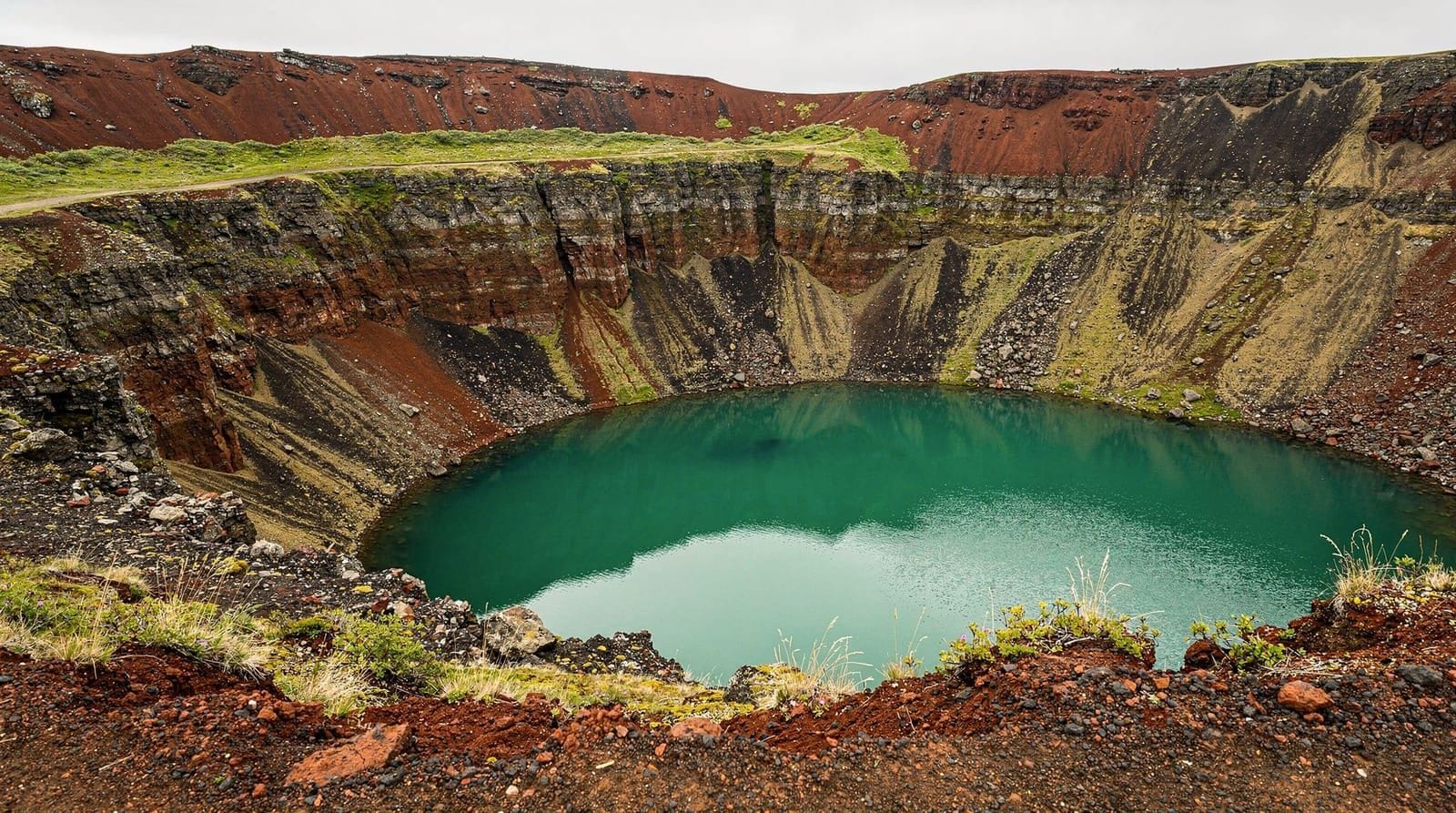
From Hveragerði as a base, the following are within an hour’s drive: Þingvellir (35 km), Geysir (65 km), Gullfoss (70 km), Seljalandsfoss (80 km), the Secret Lagoon at Flúðir (45 km), and Kerið crater (25 km). This makes it more central for Golden Circle and South Coast exploration than staying in Reykjavík itself, depending on your itinerary.
Reykjadalur vs the Blue Lagoon: a cost comparison
| Reykjadalur | Blue Lagoon | |
|---|---|---|
| Entry cost | Free (car park ISK 500) | ISK 12,000–20,000 (€79–132) |
| Character | Wild river, hiking required | Man-made lagoon, no walk |
| Time needed | 2–3 hours including hike | 2–4 hours, no exertion |
| Crowds | Growing but moderate | Very high, booked slots |
| Best for | Budget travellers, hikers | Comfort, no hiking wanted |
Day hikes from Hveragerði
Beyond Reykjadalur, Hveragerði serves as the starting point for several other walking routes in the Ölfusvirkjun and Hengill geothermal areas. The Hengill massif — a major geothermal volcanic complex 5 km north of town — has an extensive trail network. The summit of Hengill (803 m) is reachable on a full-day hike from Hveragerði, with geothermal steam vents and fumaroles visible across the route. Expect 5–7 hours of walking for the summit return.
The Nesjavellir geothermal power station, 12 km north of Hveragerði via a paved road, is visible from several hiking routes above the town. The plant sits beside Þingvallavatn lake and extracts geothermal energy from the Hengill volcanic system. Combined road and trail access makes it a possible destination for strong hikers.
For those who want a shorter walk than Reykjadalur, the Graendalur valley (Green Valley) runs parallel to Reykjadalur and has smaller geothermal features and a quiet hiking environment. The trailhead is accessible from the same general area. Fewer visitors, similar geothermal scenery; 2–3 hours return.
Frequently asked questions about Hveragerði
Is Reykjadalur really free?
The hike itself is free. The car park at the trailhead charges ISK 500 (EUR 3). The bathing river has no admission. This makes it one of the most cost-effective geothermal experiences in Iceland by a significant margin — compare to the Blue Lagoon (ISK 12,000–20,000 / EUR 79–132 for entry alone).
How hard is the Reykjadalur hike?
Moderate. The 3-km trail gains about 200 metres in elevation over a well-maintained gravel path. Suitable for most adults with reasonable fitness; not suitable for young children as a short walk. Allow 2–3 hours for the full return trip including bathing time.
Can I visit Hveragerði without a car?
Yes. Strætó bus 51 runs from Reykjavík to Hveragerði regularly throughout the day. The lava tunnel and the Hellisheiði power plant require a car. The Reykjadalur trailhead is walkable from town (about 10 minutes).
How does Hveragerði fit into a South Coast trip?
It is on Ring Road 1 between Reykjavík and Selfoss — a natural stop when driving east. Combine it with the Golden Circle for a full day loop, or use it as the first night’s accommodation on a multi-day South Coast drive. The Reykjadalur hike is a logical morning or late-afternoon activity before continuing east.
Is the Reykjadalur river private or public land?
The trail crosses private farmland by arrangement. Please stay on the marked trail and do not stray onto adjacent farmland.
What temperature is the Reykjadalur river?
The bathing section ranges from approximately 30–42°C depending on the mixing of hot spring inflows with the cold stream. The hottest sections are near the spring inlets (too hot to sit in for long). Most bathers find the middle sections of the bathing stretch the most comfortable. The temperature varies with season and weather.
Top experiences
Bookable activities with verified prices and instant confirmation on GetYourGuide.
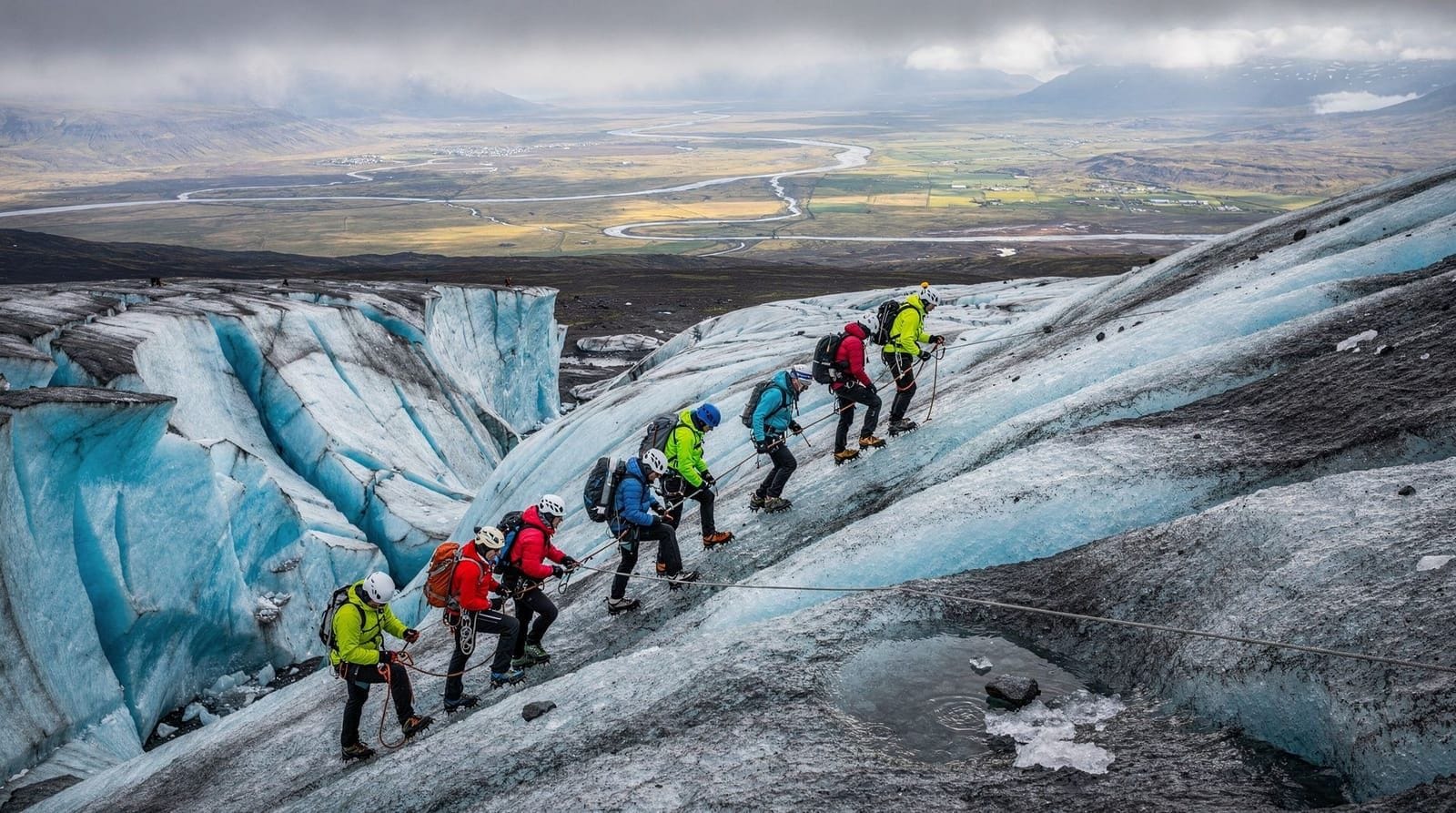
Top-rated experiences in Hveragerði — geothermal town, greenhouse gardens, and hot river hiking
Best-rated activities across GetYourGuide and Viator.