Reykjadalur — hike to Iceland's hot spring river
Guide to the Reykjadalur hot spring river hike near Hveragerði: trail details, water temperature, changing facilities, what to expect, and how to get
Reykjavik: Hiking in reykjadalur hot springs
Quick facts
- Best time to visit
- May–September; doable year-round but trail can be icy in winter
- Days needed
- Half-day; 3–4 hours including the hike and bathing
- Getting there
- 30 min from Reykjavík via Route 1; trailhead at Hveragerði
- Budget per day
- Free to hike; changing shelter only; bring own towel
What Reykjadalur is
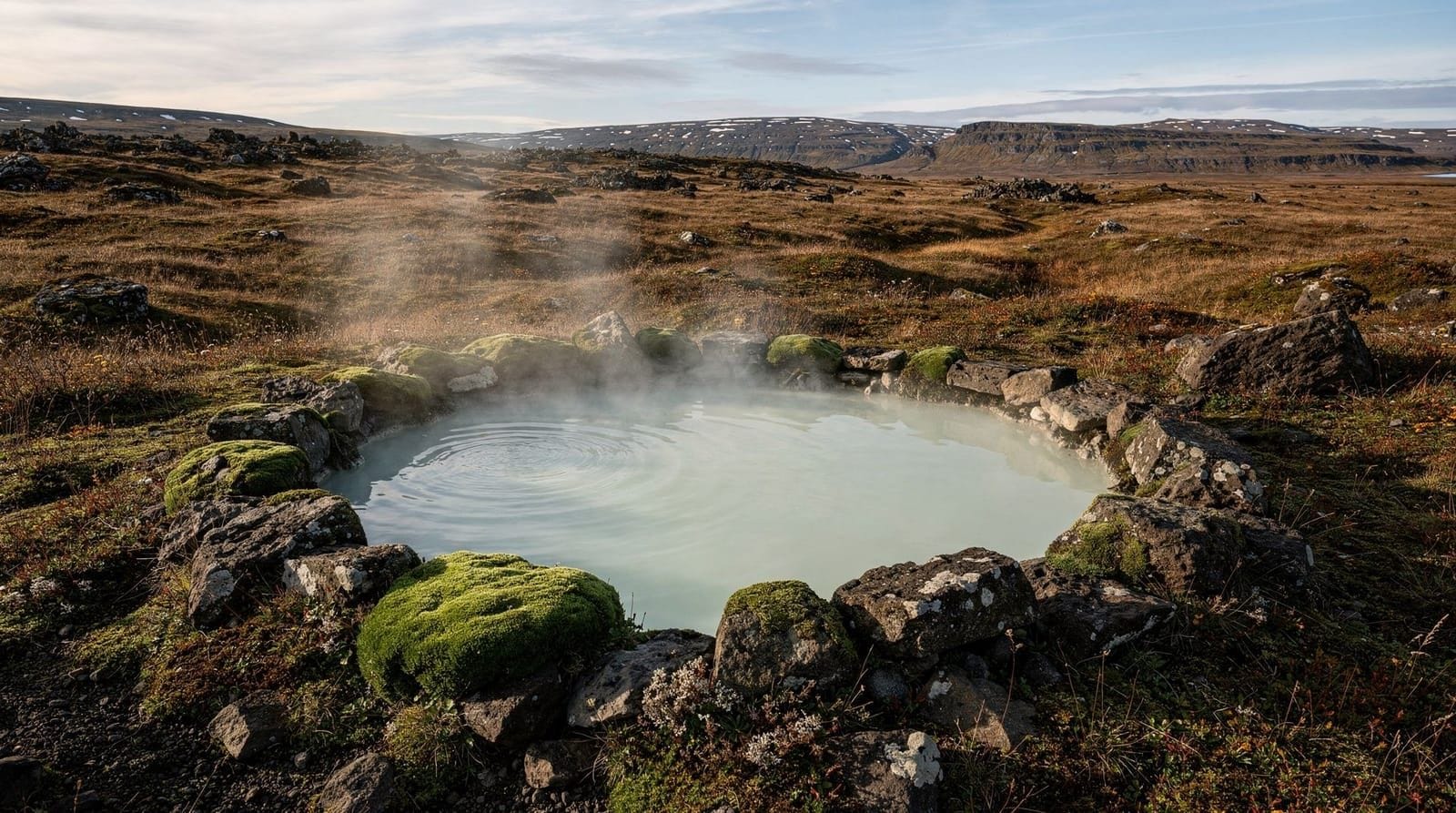
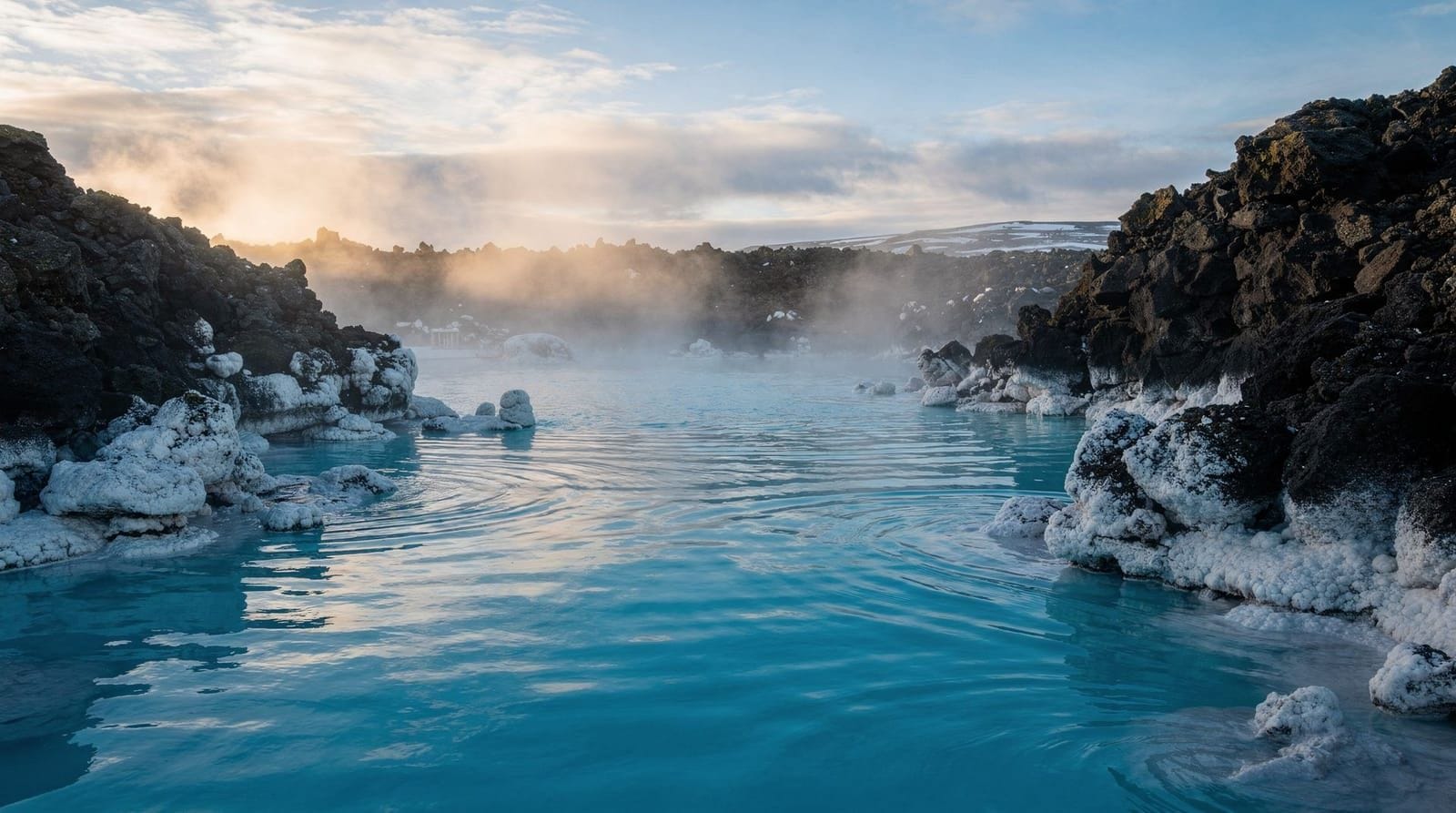
Reykjadalur (Steam Valley) is a geothermal valley in the Hengill volcanic system, approximately 7 kilometres north of Hveragerði town and 45 kilometres east of Reykjavík via Route 1. The valley’s principal feature is a small river — Reykjadalsá — that is naturally heated by geothermal vents to temperatures ranging from 30°C to 50°C depending on location and season, creating stretches of river warm enough to bathe in comfortably.
Bathing in Reykjadalur is free. There is a small car park at the trailhead (free or minimal fee), a basic changing facility with wooden benches and screens near the bathing area (not lockers, not showers), and no infrastructure beyond a marked trail. This is a genuinely natural hot spring experience — not a spa, not a resort, not a ticketed attraction.
It is also the most accessible wild hot spring in Iceland relative to Reykjavík. The trailhead is in Hveragerði, which sits directly on Route 1 and is 45–50 minutes by car from central Reykjavík, or accessible by bus from the BSÍ bus terminal. This proximity makes Reykjadalur a realistic half-day trip even for visitors based in Reykjavík without a car.
| Facilities | Toilet at the trailhead car park; a basic wooden changing screen at the bathing area — no lockers, showers, or food |
| Mobile signal | Reliable at the trailhead and in Hveragerði; patchy along the upper trail |
| Parking | Free or minimal fee at the Reykjadalur car park |
| Fuel & supplies | Kronan supermarket and petrol in Hveragerði, 1.2 km from the trailhead |
| Families | Doable with children able to walk 45 minutes each way unassisted; not suitable for pushchairs |
The hike
Trailhead: The marked trail begins at the Reykjadalur car park at the northern end of Hveragerðisfjall road, beyond the Hveragerði geothermal greenhouse area. The start is clearly signed.
Distance: Approximately 3.5 kilometres one-way (7 kilometres round-trip) from the car park to the main bathing section of the river.
Elevation gain: About 200 metres total — the valley rises gradually. Not a steep climb; accessible to regular walkers.
Trail time: 45–60 minutes to reach the bathing area walking at a comfortable pace. Total round-trip including bathing: 3–4 hours.
Surface: The lower section of trail is a wide, well-maintained path with some boardwalk sections near the geothermal steam vents. The upper section narrows and becomes a normal mountain path — firmer in dry weather, muddy in wet conditions. The area around the riverbanks can be slippery.
The trail passes through geothermally active terrain: steam vents, hot mud pots (small, clearly visible, stay on the path), and areas where the ground emits heat. The landscape is dramatic and biologically unusual — Iceland moss, cottongrass, and low-growing vegetation that thrives in the geothermally warmed soil.
The bathing area
The bathing section of Reykjadalsá begins roughly 3.5 kilometres from the trailhead. The warmest water (approximately 38–45°C) is found in the upper reaches where geothermal input is highest; further downstream the river temperature drops as cold water mixes in from tributary streams.
The practical approach: walk upstream past the wooden changing screen area, test the temperature with your hand, and find a section that suits you. Cooler sections closer to the changing area are around 30–35°C; hotter sections are upstream. Most bathers sit in the river with backs against the bank where natural basalt and gravel form a shallow pool.
Important safety note: The temperature varies significantly in different sections and can change after rainfall or seismic events. Never lower yourself into water you haven’t tested — geothermal water can scald. Start from the downstream end and work upstream as temperatures increase.
The river is typically 30–60 centimetres deep at the bathing sections — you sit or lie in the water rather than swimming. The current is gentle.
Changing facilities: A simple wooden screen shelter near the main bathing area provides basic privacy for changing. There are no lockers, no showers, no toilets at the bathing site (a toilet facility exists at the trailhead car park). Bring a towel, a waterproof bag for wet swimwear, and footwear suitable for crossing the river (river sandals or just the hiking boots you walked in — the crossings are shallow).
Guided hiking tour to Reykjadalur hot springs from ReykjavíkWhen to visit
Summer (June–August): Best conditions. The trail is dry, the valley is green, and long daylight hours allow flexible timing. The area has become popular and can be busy on summer weekends and holidays — arrive early (before 10:00) to find the bathing area less crowded.
Autumn (September–October): Good conditions but deteriorating trail surface as weather changes. Autumn colours in the valley can be striking. Fewer crowds than summer.
Winter (November–April): The hike is possible but significantly more demanding. Snow and ice on the trail require traction devices (crampons or microspikes). The hot spring temperature contrast in cold weather is dramatic and some visitors prefer winter visits for this reason. Check trail conditions before going in winter — the hillside can become dangerously icy.
After heavy rain: The Reykjadalsá river can rise significantly and the trail near the river becomes muddy and difficult. Wait 24–48 hours after significant rainfall for conditions to stabilise. There have been trail closures after flash flooding events.
Crowd management
Reykjadalur’s popularity has grown considerably since 2015 and the bathing area now accommodates a meaningful number of visitors on summer weekends. The river is not particularly large — a section that works well for 5–6 people bathing simultaneously becomes crowded with 20. At the most popular times (July–August weekends, midday–15:00), the bathing area can feel genuinely busy.
If crowd levels are a concern:
- Visit on a weekday
- Start hiking at 08:00–09:00 to arrive before the main wave
- Consider September rather than July/August
The trail itself is wide enough to accommodate counter-traffic comfortably.
Cost comparison with geothermal spas
This is the primary reason many visitors choose Reykjadalur:
- Reykjadalur: free (car park fee ~500 ISK / €3.40 if applicable)
- Municipal pools (Hveragerðislaug, Laugardalslaug): ~1,100 ISK (€7.50)
- Secret Lagoon in Flúðir: ~3,200 ISK (€22)
- Sky Lagoon: ~9,500–12,000 ISK (€65–€82)
- Blue Lagoon: ~13,000–24,000 ISK (€90–€165)
The trade-off for free: no changing rooms with lockers, no shower facilities, a 45-minute hike each way, and a bathing experience that is genuinely outdoor and variable rather than controlled. For visitors who want a comfortable, amenity-supported spa experience, the Blue Lagoon or Sky Lagoon is more appropriate. For those who want a natural, free, physically engaging geothermal experience, Reykjadalur is one of the best options in Iceland. See the wild-hot-springs-iceland guide for similar options around the country.
Private guided hike to Reykjadalur from ReykjavíkHveragerði town
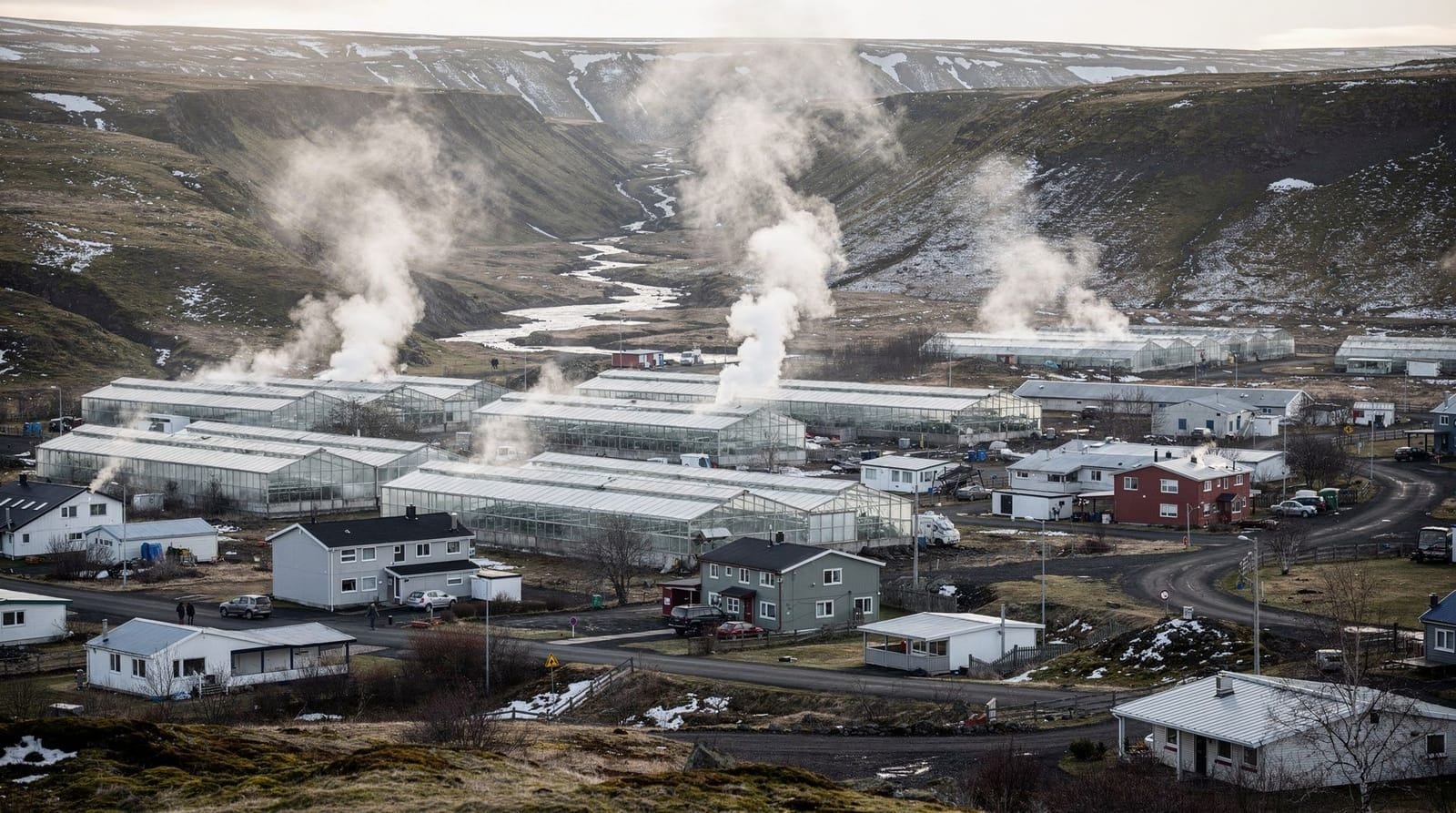
The trailhead is within walking distance of Hveragerði town — approximately 1.2 kilometres from the town centre to the car park. Hveragerði (population ~2,400) sits on an active geothermal zone; the town has greenhouses heated by geothermal energy producing flowers, cucumbers, and tomatoes year-round, and several hot springs visible within the town limits. The Eden geothermal park in town offers a brief walk-through of hot springs and bubbling pools without the hike (small admission fee).
For food in Hveragerði:
- Ölverk Pizza & Brewery on the main street brews its own craft beer using geothermal energy and serves pizza. Unusual and decent; a pizza runs 3,500–5,000 ISK (€24–€34).
- Kjöt og Kúnst (Meat and Art) is a small deli/café serving sandwiches and local products.
- A Kronan supermarket on Breiðumörk provides standard supplies.
Hveragerði is on the Golden Circle day-trip route and the south-coast-day-trip route — it can be combined with either, or visited as a dedicated Reykjadalur half-day. The reykjadalur-hot-spring-hike guide has the detailed step-by-step hike description.
What makes Reykjadalur different from spa bathing
The practical differences between Reykjadalur and the developed geothermal spas (Blue Lagoon, Sky Lagoon) are worth being explicit about:
Temperature control: In a spa, the water temperature is precisely managed. At Reykjadalur, it varies naturally across the river’s length and changes seasonally. The search for the right temperature section is part of the experience, not a problem to solve.
Environment: You are outdoors, in a mountain valley, with steam rising from the hillside around you, birds overhead, and no infrastructure beyond a wooden changing screen. The sensory experience — the smell of geothermal steam, the sound of the river, the open sky — is entirely different from a spa facility.
Social dynamic: Municipal pools and spas have their own social cultures, but Reykjadalur attracts a mix of Icelanders (particularly from Hveragerði area) and tourists in a genuinely informal setting. People sit in the river and have conversations. There is no background music, no cocktail menu, no branded experience.
Physical element: You have to earn it. The 45-minute hike is moderate, but it is real exercise over genuine terrain. Arriving at the hot spring after the walk feels different than walking 50 metres from a car park to a spa entrance.
For visitors who want controlled, amenity-supported geothermal bathing, the spas are the better choice. For those who want to understand Iceland’s geothermal geography through direct, unmediated experience, Reykjadalur is more honest.
Nearby natural features on the hike
The trail to Reykjadalur passes through an actively geothermal hillside in the Hengill volcanic system. Points of interest along the way:
Hot mud pots (hverir): Small bubbling mud pools visible from the path in several locations. The mud is grey-white from the silica content. Do not approach closely — the surrounding ground crust can be thin and the mud itself is near boiling temperature.
Steam vents (fumaroles): Holes in the hillside emitting steam and occasional sulphur gases. The SO₂ smell is noticeable but not dangerous at the concentrations present on the open hillside. If the smell is very strong, move upwind.
Geothermally heated soil: In several places along the trail, the ground is warm to the touch. The vegetation changes around these warm zones — different plant species colonise geothermally warmed soil, creating a patchwork of regular and heat-adapted vegetation.
The Reykjadalsá river headwaters: Further upstream from the main bathing section, the river narrows and the temperature increases. This area is not appropriate for bathing but demonstrates the geothermal source directly — the water is clearly too hot for human contact within a few hundred metres of where people bathe comfortably downstream.
Hveragerði as a destination
Hveragerði deserves more attention than it typically receives as a “gateway” to Reykjadalur. The town itself sits directly on the Hengill geothermal field and has hot springs visible within the town limits — steam vents along the main street, a geothermal greenhouse district visible from the ring road, and the Edenrásarsetur geothermal exhibition park.
The town’s geothermal greenhouses produce flowers, cucumbers, and tomatoes year-round and can be visited (some are open to the public or sell directly). The use of geothermal energy for year-round food production in a country at 64° north latitude is worth understanding as part of Iceland’s unusual energy economy.
Hveragerðislaug is the town’s municipal swimming pool — geothermally heated, outdoor hot tubs, entry around 1,100 ISK (€7.50). If the Reykjadalur hike has made you want hot water but in more controlled conditions, this is 2 kilometres from the trailhead.
The hveragerdi destination page covers the town in detail for visitors planning time there beyond a trailhead pass-through.
Combining Reykjadalur with other South Iceland stops
Because Hveragerði sits directly on Route 1, Reykjadalur combines naturally with a wider South Iceland day. Visitors heading toward the Golden Circle or a South Coast day trip can add the hike as a morning or afternoon stop without a significant detour — the trailhead is essentially on the way. Doing the hike first thing (arriving by 8am) and continuing east afterward avoids the crowd build-up described above and still leaves a full day for Seljalandsfoss or Þingvellir.
For visitors without a car, the practical alternative is a dedicated half-day from Reykjavík — either the Strætó bus described below or a guided hiking tour that handles transport. Trying to combine Reykjadalur with a full South Coast day using public transport alone is not realistic; the bus network doesn’t connect efficiently between the two.
Getting there
By car: Route 1 east from Reykjavík; take the Hveragerði exit (clearly signed). In town, follow signs north toward Reykjadalur valley. Journey time approximately 45–50 minutes from central Reykjavík.
By bus: Strætó line 51 connects BSÍ bus terminal in Reykjavík to Hveragerði, with multiple daily departures (approximately 1,000 ISK / €6.80 one-way, 60 minutes). From Hveragerði bus stop, the trailhead car park is a 20-minute walk north through town.
By tour: Multiple Reykjavík-based tour operators offer guided Reykjadalur hikes with minibus transport from Reykjavík. This is a reasonable option if you want company, context from a guide, and don’t have a car.
Frequently asked questions about Reykjadalur
Is Reykjadalur free to visit?
Hiking the trail and bathing in the river is free. A small car park fee may apply at the trailhead (approximately 500 ISK / €3.40). There are no admission charges. This is a public outdoor area managed by the municipality.
How difficult is the hike to Reykjadalur?
Moderate-easy. The elevation gain is about 200 metres and the trail is well-marked. Anyone who can walk comfortably for 90 minutes round-trip will manage it. The main difficulty is the uneven terrain near the river, which requires some care.
Can I visit Reykjadalur without a car?
Yes. Bus line 51 from BSÍ terminal in Reykjavík runs to Hveragerði; from the bus stop the trailhead is about 20 minutes on foot through town. Check the Strætó app for current schedules. Guided tours from Reykjavík also include transport.
What should I bring to Reykjadalur?
Swimwear, a towel, and a waterproof bag for wet things. Sturdy footwear for the trail (water sandals are useful for the river sections). Water and snacks for the hike. Weather-appropriate clothing — the valley can be windy and cool at the top even in summer. Sunscreen in summer.
Can I combine Reykjadalur with the Golden Circle in one day?
Yes, and this is a common and efficient combination. Doing the hike early — arriving at the trailhead by 8am — leaves time to continue north via Route 1 and Route 35 to Þingvellir, Geysir, and Gullfoss afterward. The total driving added by the Reykjadalur detour is minimal since Hveragerði is already on the way east from Reykjavík. Budget the full day: roughly 3 hours for the hike and soak, then 6–8 hours for the Golden Circle loop.
What are the alternatives to Reykjadalur for natural hot springs?
Other wild hot springs accessible without major expedition include the Hrunalaug pool (small, north of Flúðir), Gjábakkahellir cave pools near Þingvellir, and Hvammsvík (a slightly developed natural pool by the sea). See wild-hot-springs-iceland guide for a complete list. None are as easily accessible from Reykjavík as Reykjadalur.
Is the water safe to bathe in?
Yes, provided you test the temperature carefully. Geothermal water can range from pleasantly warm to scalding within a short distance. Always test with your hand before entering. The main bathing sections near the changing area have been used safely by visitors for years at temperatures of 35–42°C. Stay out of the hottest upstream sections unless you have experience reading geothermal water behaviour.
Is it possible to see northern lights at Reykjadalur?
In theory, yes — the valley is far enough from Reykjavík to have darker skies on clear nights. In practice, planning a northern lights visit to Reykjadalur specifically is not recommended; the trail involves crossing uneven terrain in the dark, and the cold water bathing adds risk in winter conditions. The northern-lights-from-reykjavik guide has more practical options for aurora viewing.
How does Reykjadalur compare to the Secret Lagoon or Sky Lagoon?
They’re different categories of experience rather than direct competitors. Secret Lagoon and Sky Lagoon are managed pools with lockers, showers, and controlled temperatures for a fixed admission fee; Reykjadalur is a free, unmediated river that requires a 45-minute hike each way and offers no facilities beyond a changing screen. Choose Reykjadalur if the hike and the natural setting are part of the appeal; choose a managed lagoon if comfort and convenience matter more than the walk.
What time of day has the warmest water at Reykjadalur?
Water temperature depends on location in the river rather than time of day — it’s driven by geothermal input and recent rainfall, not the sun. Heavy rain in the previous 24–48 hours cools and raises the river, diluting the warm sections; a dry stretch of weather produces more consistently warm bathing water throughout the accessible stretch.
Top experiences
Bookable activities with verified prices and instant confirmation on GetYourGuide.
Top-rated experiences in Reykjadalur — hike to Iceland's hot spring river
Best-rated activities across GetYourGuide and Viator.