Reykjadalur hot spring hike — the free natural river bath near Reykjavík
Reykjavik: Hiking in reykjadalur hot springs
What is the Reykjadalur hike and how do I get there?
Reykjadalur is a geothermal valley near Hveragerði, about 45 minutes from Reykjavík by car. A 3 km uphill hike from the trailhead reaches a hot spring river where you can bathe for free. The trail gains 200 m elevation and takes about 1.5 hours one way.
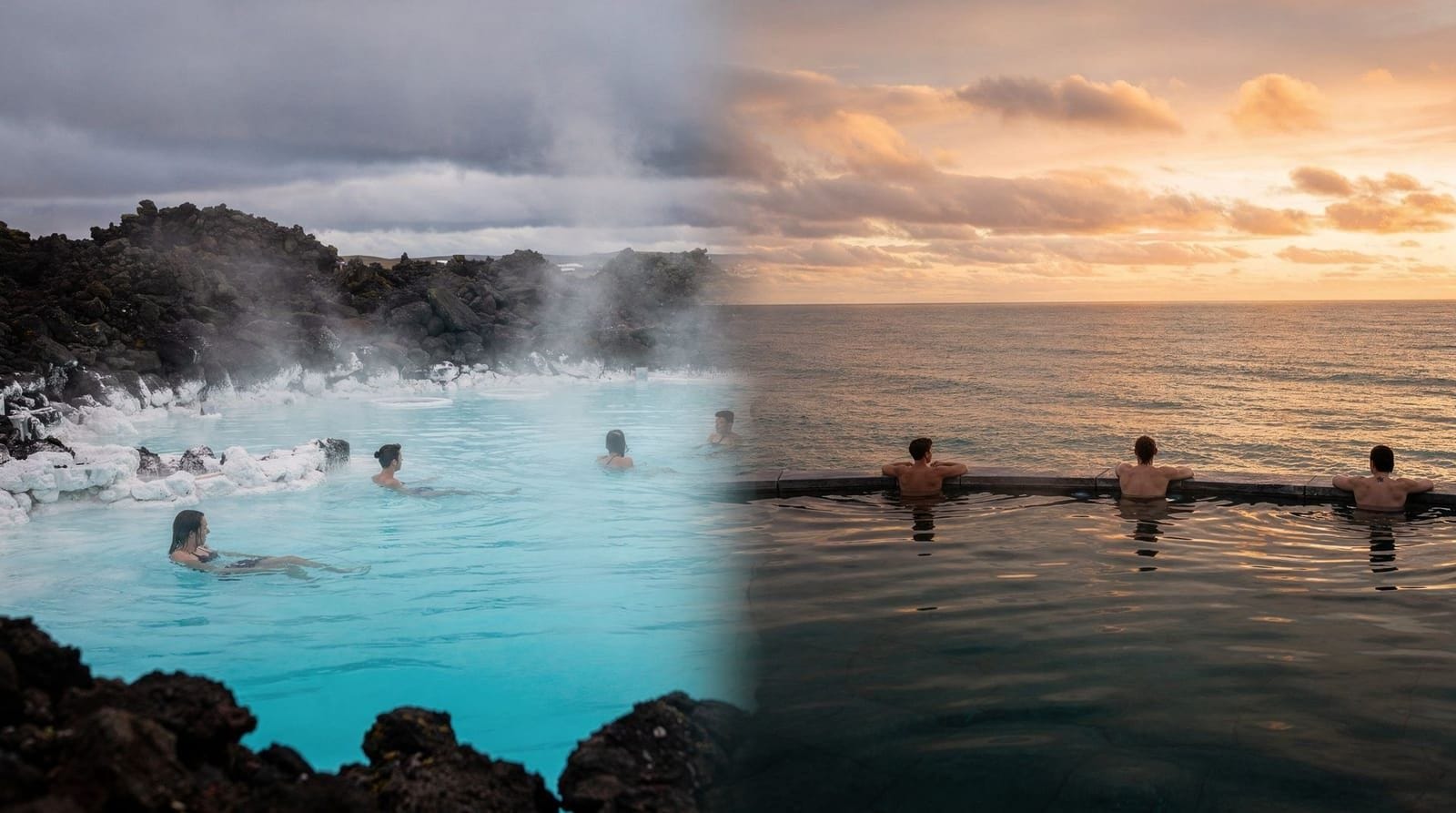
Reykjadalur offers what the Blue Lagoon charges EUR 70+ for — the chance to sit in naturally heated geothermal water — but the experience here is free, the bathing spot is a wild mountain river rather than a purpose-built facility, and getting there requires a 3 km uphill hike that filters out the visitors who cannot be bothered to earn it.
| Where | Reykjadalur valley, above Hveragerði |
| Cost | Free; parking around 800–1,000 ISK |
| Time needed | 1–1.5 hrs each way, plus bathing time — allow 4–5 hours total |
| Getting there | Self-drive (45–50 min from Reykjavík), Strætó bus 51, or guided tour |
| Best avoided | Midday July–August (busiest); after heavy rain (flash flood risk) |
The valley sits just outside the small town of Hveragerði, 45 minutes from Reykjavík by car or bus. The trail climbs gently through open heath and along a geothermal stream that releases steam as it descends from the hills. The hot spring bathing area is not a pool — it is a section of the actual Reykjadalsá river where geothermal heat raises the water temperature to bathing comfort. You sit in the stream on sand or smooth river stone, with cold mountains above you and steam rising around you.
The trail in detail
Trailhead. The official trailhead parking area is on Route 35, approximately 1.5 km north of Hveragerði town centre. Parking costs ISK 800–1,000 per car. The trail begins at the information boards near the parking area.
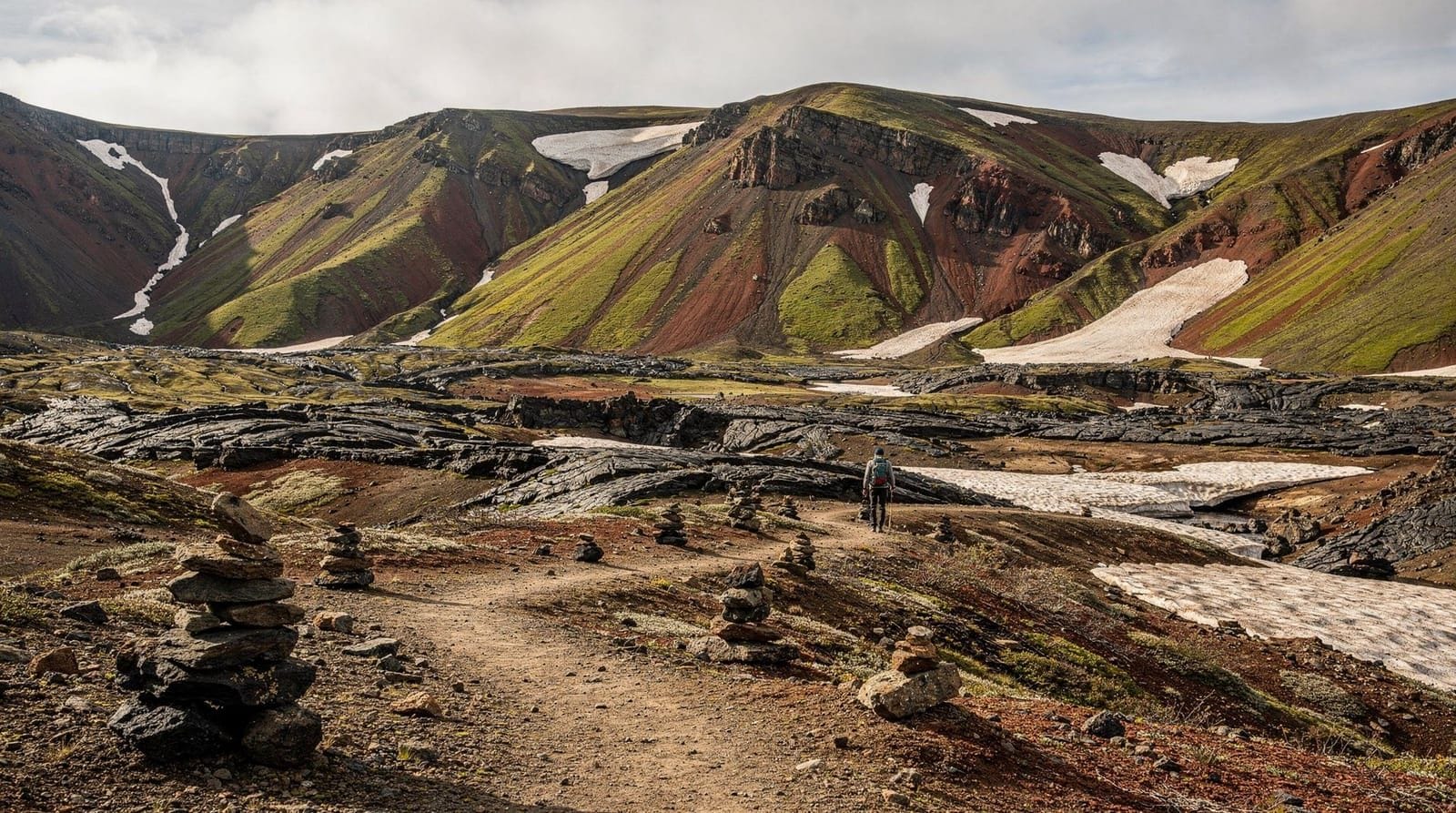
Lower section (0–1.5 km, easy). The first half of the trail follows the valley floor alongside the Varmá geothermal stream. Steam rises from the river in cooler weather. The path is wide and relatively flat, passing patches of brightly coloured algae in the geothermal inflow areas (these mark the spots where the water is too hot to approach — do not touch them). Small wooden walkways cross the wettest ground.
Upper section (1.5–3 km, moderate). The trail steepens after crossing the main stream. The path becomes a single-track dirt trail climbing through heath and occasional patches of snow in spring. Views open over the Hveragerði valley and toward the coast. Several steam vents are visible on the hillside above — this is a genuinely active geothermal area. At the top of the main climb, the hot spring bathing area comes into view.
The bathing area (3 km mark). The popular bathing section is where the hot spring water mixes with the cold river at a comfortable temperature. Basic wooden changing screens provide minimal privacy. A wooden boardwalk approach keeps visitors off the fragile riverbank.
Return. The same trail back, downhill. Most people find the return takes 30–45 minutes less than the ascent.
What to know about the hot spring itself
The Reykjadalsá river collects hot water from dozens of small geothermal vents in the upper valley and carries it downhill. The temperature at the main bathing area ranges from around 35°C on the cool side (where cold water mixes in) to 44°C close to the inlet. The optimal temperature for comfortable bathing is somewhere in the 38–42°C range — most people find a spot that suits them naturally.
Important: the inlet channels where geothermal water enters the river are significantly hotter than the bathing area — up to 70–80°C in places. The boardwalk keeps you away from these. Do not wade upstream beyond the marked bathing area.
The water has a mild sulphur smell typical of Icelandic geothermal sources. It is not treated but is not used as a drinking water source. Avoid swallowing the water; keep it away from open wounds.
Getting there without a car
By bus: Strætó bus 51 (Reykjavík–Selfoss–Hveragerði) stops at Hveragerði. Departure from Reykjavík BSÍ or Hlemmur; journey time approximately 40 minutes; frequency every 1–2 hours. Current adult fare: around ISK 500–700 (EUR 3–4.50). Check stræto.is for timetables.
From Hveragerði bus stop, the trailhead is a 15-minute walk following the road north from the town centre. The route is signposted.
By car: Route 1 south from Reykjavík to Hveragerði, then Route 35 north about 1.5 km. Parking at the trailhead. Journey time from Reykjavík: 45–50 minutes.
By organised tour: Several operators offer guided day trips from Reykjavík that include transport to the trailhead, the guided hike, and bathing time.
A guided Reykjadalur hiking tour from Reykjavík includes transport, a guided walk to the hot spring, and bathing time — useful if you want to understand the geology and geology while you walk.
Comparing Reykjadalur to other hot spring options
Reykjadalur sits in a different category from Iceland’s commercial geothermal spas:
Blue Lagoon — EUR 70–120 per person, modern facility with restaurant, silica mud masks, steam rooms. Very different experience from Reykjadalur. Not interchangeable.
Sky Lagoon — EUR 50–85 per person, purpose-built infinity lagoon with ocean views, 7-step spa ritual. Also very different.
Secret Lagoon at Flúðir — ISK 2,800 (EUR 18) per person, simple heated pool in a historic geothermal pool site. More basic than Blue Lagoon but staffed and maintained.
Reykjadalur — Free. Wild setting. Requires a hike. No facilities except changing screens and a toilet. The most “natural” experience.
The Blue Lagoon and Sky Lagoon are easier and more comfortable. Reykjadalur is more adventurous and considerably cheaper. Many visitors to Iceland do both — the commercial spas for comfort, Reykjadalur for the authentic geothermal hiking experience.
A combined Hengill volcano and Reykjadalur tour extends the day with a longer hike through the geothermal Hengill area before descending to Reykjadalur — good value for active visitors.
Combining Reykjadalur with other south Iceland stops
Hveragerði is on Route 1, making Reykjadalur easy to combine with a Golden Circle day trip or south coast drive. Practical combinations:
- Golden Circle (Þingvellir, Geysir, Gullfoss) + Reykjadalur afternoon: leaves Reykjavík at 08:00, does Golden Circle by 14:00, Reykjadalur by 15:30, back to Reykjavík by 19:00.
- Kerid crater + Reykjadalur: the Kerid crater is 20 minutes from Hveragerði. Spend an hour at Kerid then hike Reykjadalur.
- Self-drive south coast + Reykjadalur detour: the trailhead is 2 km off Route 1 and easy to fold into a Ring Road drive.
Fitness level and who should think twice
Reykjadalur is often described as an “easy” hike in marketing copy, and for a reasonably active adult it is — but it is a genuine 6 km round trip with 200 m of elevation gain, not a flat stroll. Anyone with significant mobility limitations, uncontrolled cardiac or respiratory conditions, or very young children in a carrier should factor in the sustained uphill effort of the first half and the fact that there is no vehicle access or rescue shortcut partway up. For most visitors in normal health, the hike is comfortably achievable without training, but it is worth being honest with your group about fitness before committing, particularly if the plan is to combine it with a full Golden Circle day on the same schedule.
What to bring
- Swimwear (essential — the bathing area is communal)
- Quick-dry towel
- Change of clothes for after
- Waterproof bag for wet swimwear
- Hiking boots or sturdy shoes (trainers manage the lower section but boots are better for the upper trail)
- Water — the hike takes 2–3 hours and the steaming environment increases dehydration
- Snacks — no food sold at the trail
- ISK coins for parking
Frequently asked questions about the Reykjadalur hike
Can I visit Reykjadalur in winter?
Yes, but the trail becomes icy and sometimes snow-covered. Micro-crampons (yaktrax type) are strongly advisable November through March. The hot spring is even more dramatic when surrounded by snow, and winter visitor numbers are lower. The trail can be officially closed after significant snowfall — check with Hveragerði visitor centre before going.
Is there a toilet at Reykjadalur?
A basic toilet is available near the bathing area. There are no indoor facilities, no lockers, and no showers.
Can I bring children to Reykjadalur?
The lower section of the trail is manageable for children over 5. The upper section is steeper but not dangerous. The hot spring temperature requires parental supervision — some zones are hotter than comfortable for children. The trail and river bank are not enclosed.
Is the water clean enough to bathe in?
It is a natural geothermal spring, not treated water. Most visitors bathe without issue. Avoid bathing if you have open wounds or are immunocompromised. Do not drink the water.
Can I see steam vents on the trail?
Yes — several geothermal steam vents are visible from the trail and make for interesting photographs. Do not walk across the coloured soil around steam vents; the ground can be thin over very hot water.
How does Reykjadalur compare to the Reykjanes hot springs?
The Reykjanes Peninsula has several geothermal areas (Krýsuvík, Seltún) with dramatic mud pools and steam vents, but most do not have safe bathing options. Reykjadalur is the best accessible bathing hot spring near Reykjavík.
History of Hveragerði and the geothermal valley
Hveragerði has been a geothermal settlement for over a century. The town’s name means “the garden of hot springs” and the commercial use of geothermal energy here — for greenhouse horticulture, bathing, and heating — predates the development of Iceland’s larger geothermal power infrastructure.
The valley above Hveragerði was used for informal bathing by local residents long before international visitors discovered it. The Reykjadalsá river has been geothermally heated at this section for as long as records exist. The trail that now carries thousands of visitors per year was a local hiking path before the area was included in tourist itineraries.
The 2008 earthquake that struck the Olfus area (magnitude 6.3, centred near Hveragerði) changed the geothermal activity in Reykjadalur noticeably — new steam vents appeared on the trail in the weeks following the earthquake, and the temperature of some sections of the river shifted temporarily. This is normal behaviour for active geothermal systems; the valley floor geology is dynamic on a human timescale.
What the Hveragerði area offers beyond Reykjadalur
Hveragerði is a useful base for south Iceland day trips beyond Reykjadalur:
Hellisheiðarvirkjun geothermal power station: Iceland’s largest geothermal power plant, visible from Route 1, has a visitor centre explaining how geothermal electricity and hot water heating works. Free entry; 20 minutes from Hveragerði.
Hveragerði town centre: the small town has a modest geothermal park in the centre (free entry) with hot springs visible among the buildings, and the Ölkelda natural carbonated spring (rare in Iceland — most spring water is flat).
Þórufoss waterfall: a 15 m waterfall accessible by a 15-minute walk from Route 36, easy and largely unknown to international tourists.
Secret Lagoon at Flúðir: 45 minutes from Hveragerði. The historic Gamla Laugin geothermal pool charges ISK 2,800 per adult and offers a more structured bathing experience than Reykjadalur, with changing rooms, showers, and consistent temperature control.
The Golden Circle route starts 20 minutes from Hveragerði (at Þingvellir) and connects easily with a Reykjadalur morning as the first stop on a Golden Circle day.
How the trail has changed in recent years
Reykjadalur has seen significant infrastructure improvement over the past decade in response to growing visitor numbers. The wooden boardwalks across the wet sections of the lower trail, the improved changing screens at the bathing area, and the paid parking area with ticket machines are all recent additions.
The main bathing area was extended and the access path improved after erosion damage from visitor numbers in the 2018–2019 peak years. Management has since installed entry point signs and capacity monitors at the trailhead, and local authorities have discussed trail timing management (timed entry slots) for future implementation if crowds continue to grow.
The trail surface in the upper section from 1.5 km to 3 km remains unpaved and becomes muddy in wet conditions. Plans to extend the boardwalk system to this section have been discussed but not implemented.
What’s nearby for a longer stay
For visitors spending 2–3 nights in the Hveragerði area to explore the south Iceland interior:
- Reykjadalur hot spring: the bathing hike, described in full above
- Ingólfsfjall mountain: a 550 m peak immediately south of Hveragerði with Ring Road views; 2–3 hour return hike
- Hveragerði geothermal town centre walks
- The Þingvellir National Park tectonic rift: 35 minutes by car
- Geysir area: 45 minutes from Hveragerði
The combination of Reykjadalur morning, Geysir afternoon, and overnight near Gullfoss makes a compact two-day circuit from Reykjavík that avoids the long Golden Circle coach tour if you prefer to self-drive and control your own timing.
The bathing etiquette guide
The Reykjadalur hot spring is a communal, unmanaged bathing space. Some behavioural context helps:
Changing: there are wooden screens for privacy but they are minimal and the changing area is visible from the trail approach. Most visitors change quickly and without ceremony. Wearing swimwear under hiking clothes and removing trousers/top layers at the riverside is the most practical approach.
Noise levels: the valley carries sound well. Keep noise to a level appropriate for a shared outdoor space. Large group behaviour — loud music, shouting — is universally unpopular with other bathers.
Photography: the proximity of other bathers means photographs of people in the water requires their implicit consent. Wide landscape shots are fine; close-range photography of other individuals is not appropriate without explicit agreement.
Group sizes: organised tour groups can arrive at the bathing area with 20–30 people simultaneously. If this happens while you are there, the bathing area becomes crowded for 45–90 minutes. The tour group window (11:00–15:00) is the busiest period. Independent visitors arriving before 09:30 or after 17:00 encounter significantly fewer people.
Duration: there is no official time limit. In practice, 45–60 minutes of bathing is enough for most visitors, plus time to change and prepare for the return. Staying for 2+ hours is fine if the pool is not overcrowded.
The Hengill geothermal area context
Reykjadalur is one of many geothermal expressions of the Hengill volcanic system, which sits beneath this section of the Hengilsver volcanic zone. The Hengill system covers approximately 110 km2 and includes the Hveragerði geothermal field, the Nesjavellir geothermal power plant (visible from Route 360), and numerous hot springs across the hillsides between Hveragerði and Þingvellir.
The Nesjavellir plant generates electricity and hot water for Reykjavík — the water arriving in Reykjavík’s radiators and taps has been heated by the same geothermal system that warms the Reykjadalsá river above Hveragerði. Iceland uses geothermal energy for approximately 90% of its space heating and around 30% of its electricity generation; Hengill is one of the two major systems (the other being Svartsengi near the Blue Lagoon) that make this possible.
Understanding this context changes how the hike feels underfoot. The steam vents you pass, the warm patches of ground, and the hot river itself are all visible surface expressions of the same infrastructure quietly heating homes 45 minutes away in Reykjavík. Few natural hikes anywhere let you see this connection between geology and everyday domestic life so directly.
The Hengill area is monitored by the Icelandic Meteorological Office for seismic activity. Minor earthquakes in the range of 2–3 magnitude occur regularly in the area and may occasionally be felt during a Reykjadalur hike. These are normal and expected; the mountain rescue line is not appropriate for routine seismic events.
Parking and access practicalities
The trailhead parking area underwent expansion in 2022 to accommodate growing visitor numbers. Current capacity is approximately 80–100 vehicles. On peak July and August weekends, the parking area fills by 10:00–10:30. Options if the main lot is full:
- Park on the wide road shoulder for approximately 500 m back from the main lot (informal but tolerated in peak season)
- Arrive before 08:30 to guarantee a space
- Use public transport from Reykjavík (Strætó bus 51 to Hveragerði, then walk 15 minutes to the trailhead)
The parking payment machine accepts Visa/Mastercard and ISK coins. The cost (ISK 800–1,000) is paid on arrival. An ICE-SAR rescue donation box is also located at the trailhead.
There are basic toilet facilities at the trailhead parking area and at the bathing area (pit toilet, maintained but basic).
Seasonal use data and crowd patterns
Reykjadalur visitor numbers have grown significantly over the past decade. Estimated visitor counts:
- 2015: approximately 80,000 visitors per year
- 2019: approximately 200,000 visitors per year (pre-pandemic peak)
- 2023–2026: approximately 170,000–190,000 visitors per year (post-pandemic stabilisation)
Peak day visitor counts in July can reach 1,500–2,000 people. On such days, the bathing area at the main pool can have 60–80 people at once.
The quietest conditions occur in:
- Pre-09:00 arrivals any day in July
- Weekday mornings in June
- Any day in September or October
- Immediately after rain (tourists avoid rain; locals hike in it)
The experience at low occupancy (under 15 people in the bathing area) is qualitatively different from the midday peak. The steam, silence, mountain views, and the simple pleasure of hot water in a wild setting are fully accessible before the tour bus window opens.
Is a guided tour worth it here?
Given the trail is well-marked, free, and reachable by public bus, many independent travellers question whether a guided tour adds real value. It generally does in two specific cases: if you have no rental car and want the convenience of hotel pickup rather than managing bus timetables, or if you want a guide who can explain the Hengill volcanic system’s geology and the visible steam vents along the way rather than walking past them unremarked. For fit, independent travellers with a car or comfortable using Strætó, self-guiding costs nothing beyond the parking fee and loses little except the geological commentary.
Top experiences
Bookable activities with verified prices and instant confirmation on GetYourGuide.
Top experiences
Best-rated activities across GetYourGuide and Viator.

Sólheimajökull Glacier Hike – Adventure in a Small Group
- Viator

Blue Ice Discovery – Guided Glacier Hike from Skaftafell
- Viator

Glacier Hike from Skaftafell - Extra Small Group
- Viator

Sólheimajökull Glacier Hike - Small Group Blue Ice Adventure
- Viator

Skaftafell Glacier Hike 3-Hour Small Group Tour
- Viator

Solheimajokull Glacier 3-Hour Small-Group Hike
- Viator