Wild hot springs in Iceland — free natural pools off the beaten path
Reykjavik: Hiking in reykjadalur hot springs
Are there free wild hot springs in Iceland?
Yes. Iceland has dozens of natural geothermal pools accessible without entry fees, ranging from the popular Reykjadalur hot river (3 km hike) to remote highland pools near Landmannalaugar and the Westfjords. Most require a car, some require a 4WD, and many are seasonal. The experience is raw and genuine — no changing rooms, no bars, no guaranteed conditions.
| Easiest option | Reykjadalur — 45 min from Reykjavík, 3 km hike, free |
| Cost | free (no entry fee at genuinely wild springs) |
| Vehicle needed | 2WD fine for Reykjadalur/Reykholt; 4WD required for highland springs |
| Best time | June–September for highland access; Reykjadalur year-round with traction aids in winter |
| What’s provided | usually nothing — no changing rooms, no towels, no staff |
The real hot spring Iceland
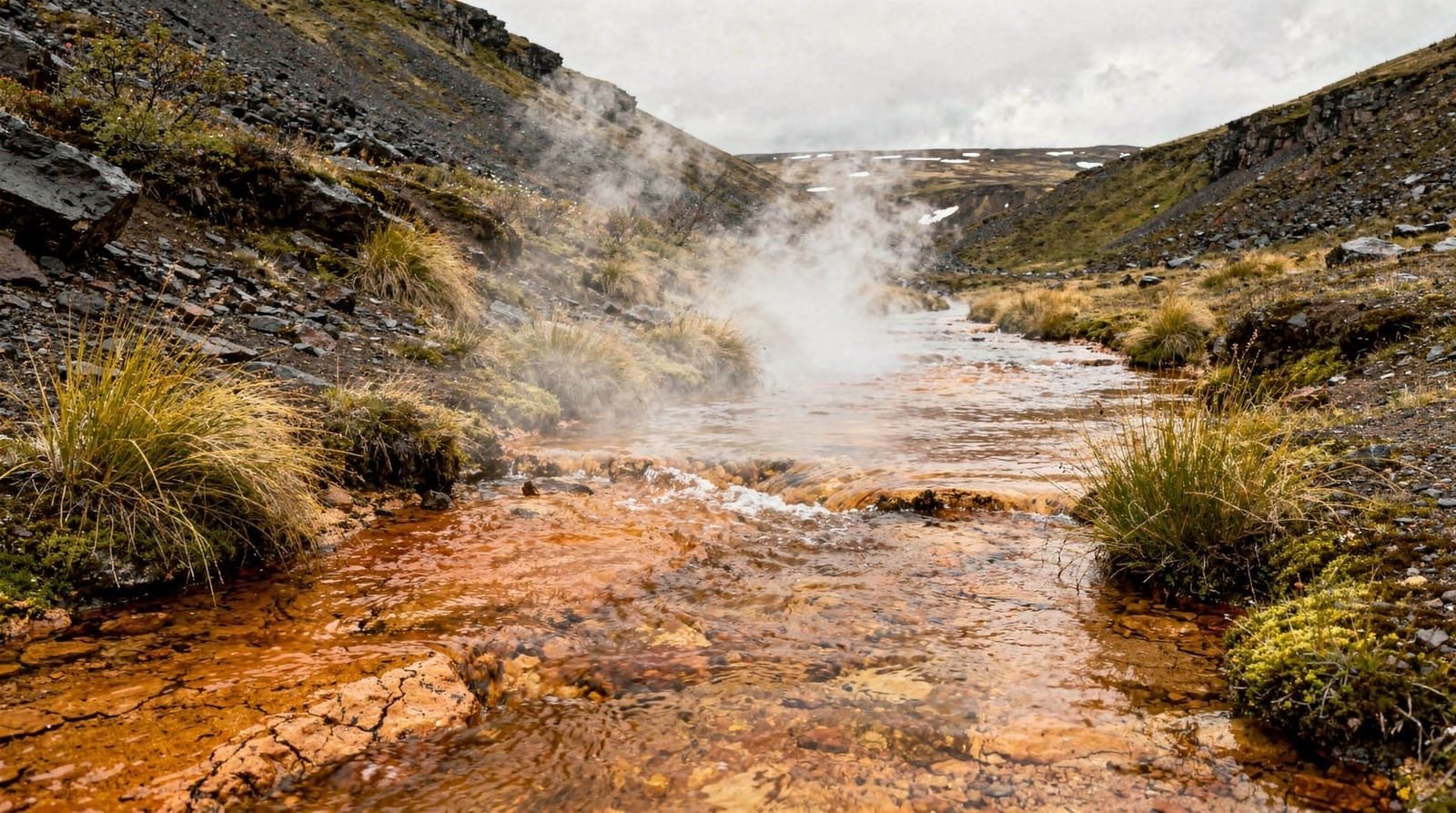
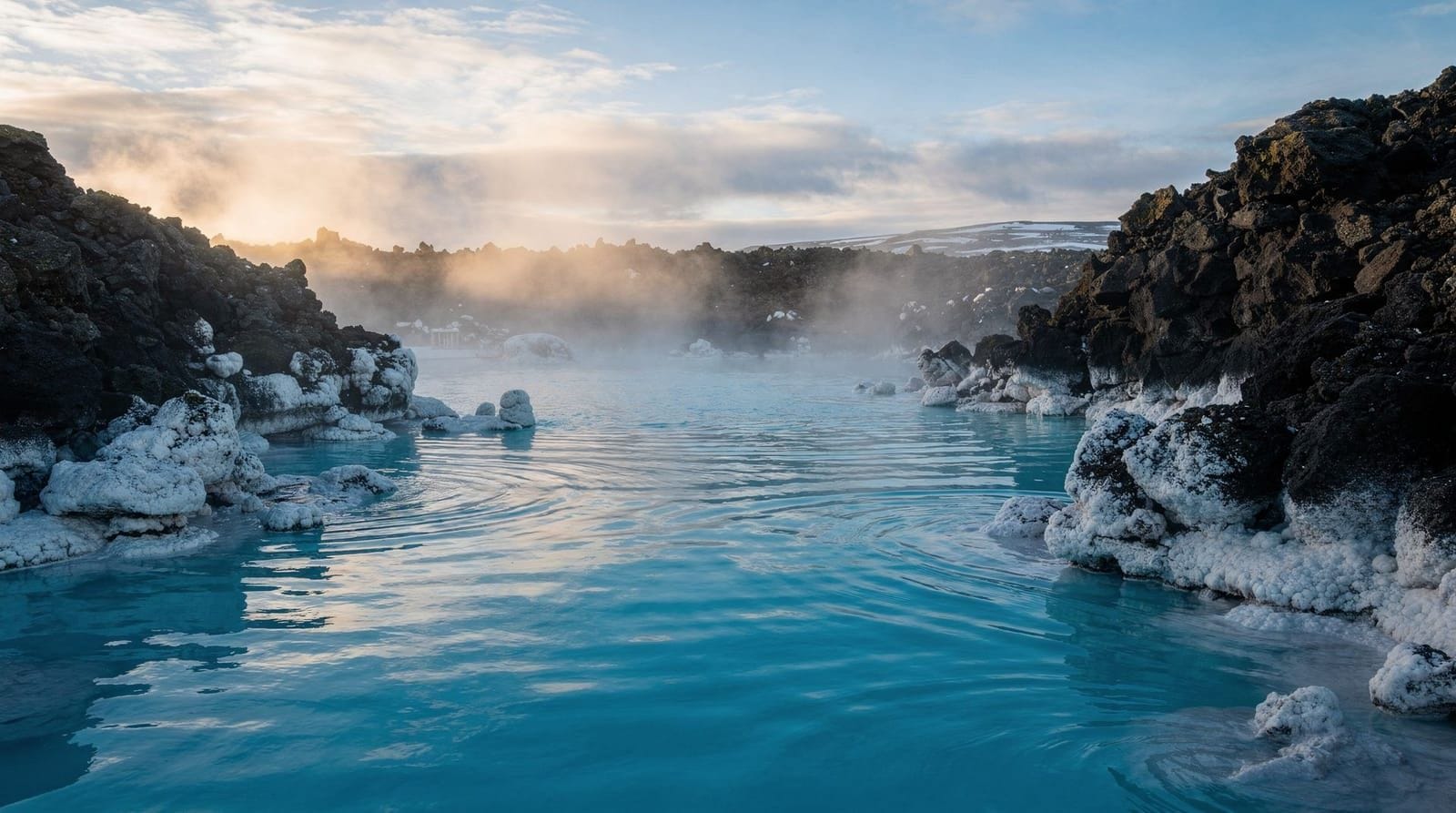
The Blue Lagoon and Sky Lagoon are polished experiences built for tourists. Iceland’s wild geothermal pools are the other thing: raw geological features in remote landscapes where there are no changing rooms, no face masks, no swim-up bars, and in many cases, no other people.
These places exist across Iceland in significant numbers. The challenge is that accessing many of them requires planning, a suitable vehicle, sometimes long hikes, and an honest assessment of your comfort with improvised conditions. This guide covers the main options from most accessible to most remote.
A note on “hidden gems”: most sites in this guide are mentioned in Icelandic hiking communities and on the Safetravel.is database. None are genuinely secret. But visitor numbers remain a fraction of the commercial spas, which is the point.
Reykjadalur — the accessible starting point
Reykjadalur (Steam Valley) near Hveragerði is the most accessible wild hot spring in Iceland. The trailhead is off Route 1, about 45 minutes southeast of Reykjavík by car. A 3 km hike with 200 m of elevation gain takes about 1–1.5 hours and reaches a geothermal river running at 38–42°C in its main bathing section.
No entry fee. Basic wooden changing screens are provided near the main bathing area. No building, no locker, no towel.
The hike is clearly marked and busy in summer. Arriving before 09:30 or after 17:00 significantly reduces the crowd. In winter, the trail can be icy — micro-crampons are advisable from November through March.
For the full practical guide including parking, transport from Reykjavík, and seasonal conditions, see Reykjadalur hot river.
Guided hiking tour to Reykjadalur hot springs from ReykjavíkLandmannalaugar — highland centre
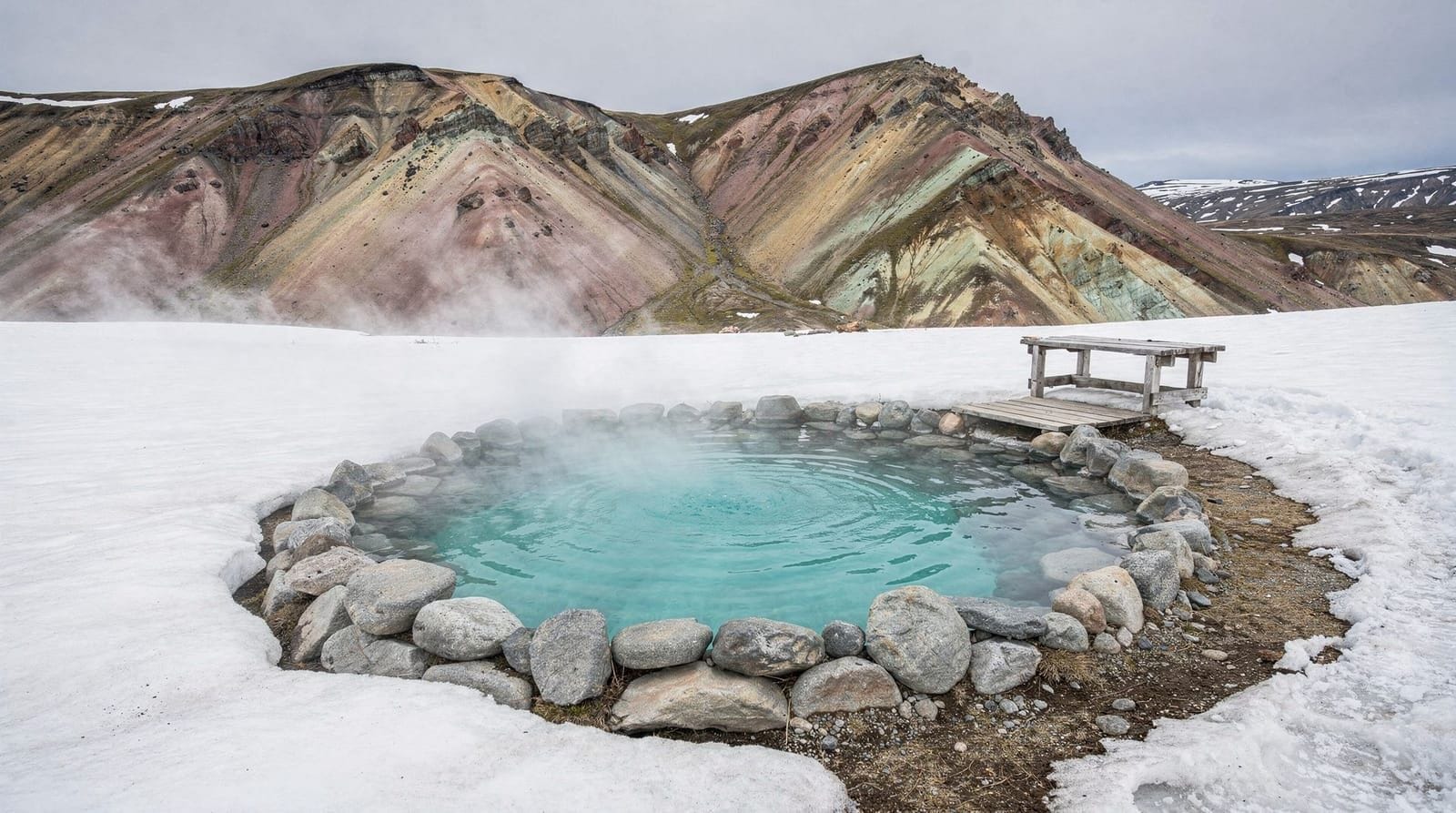
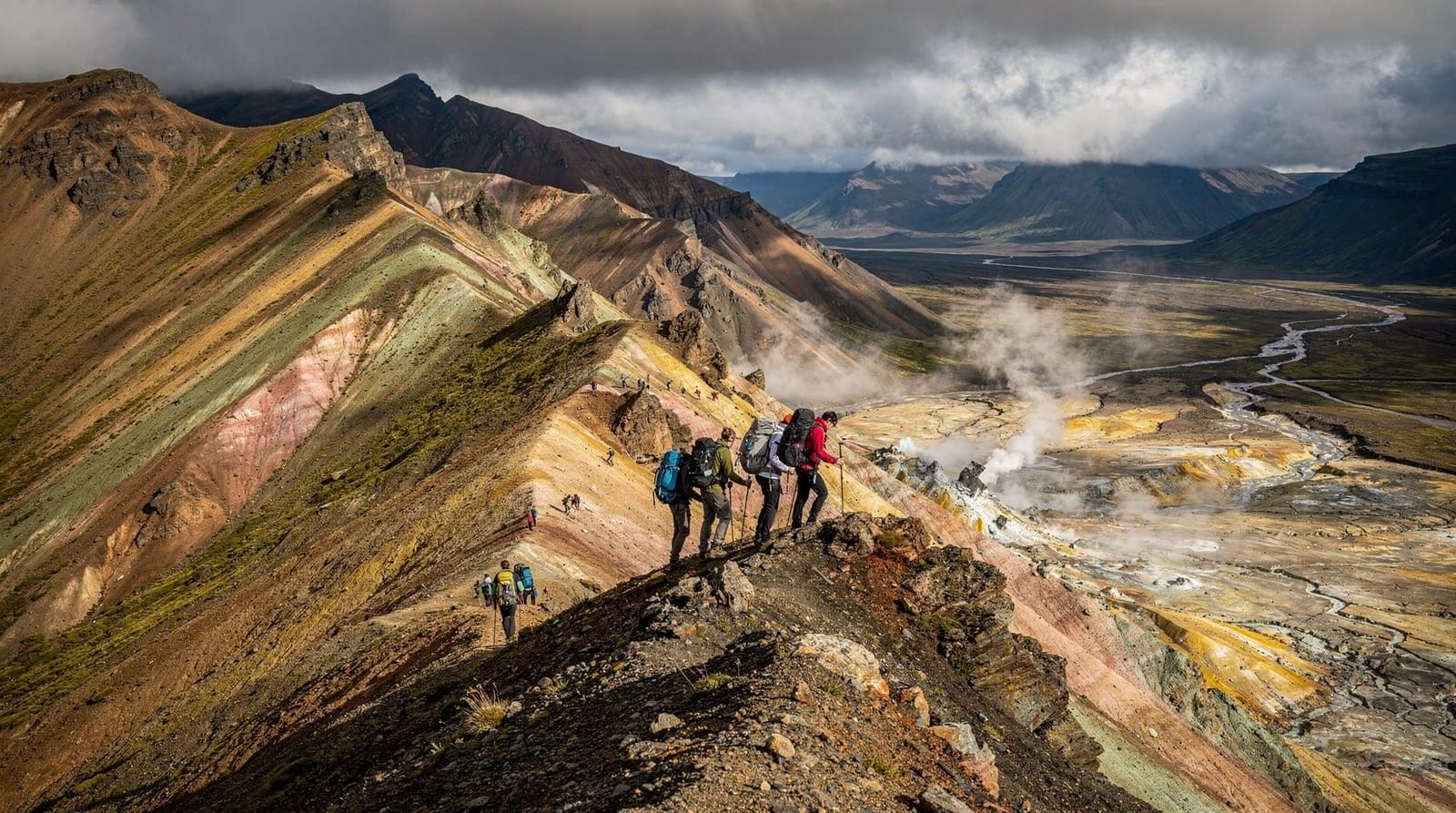
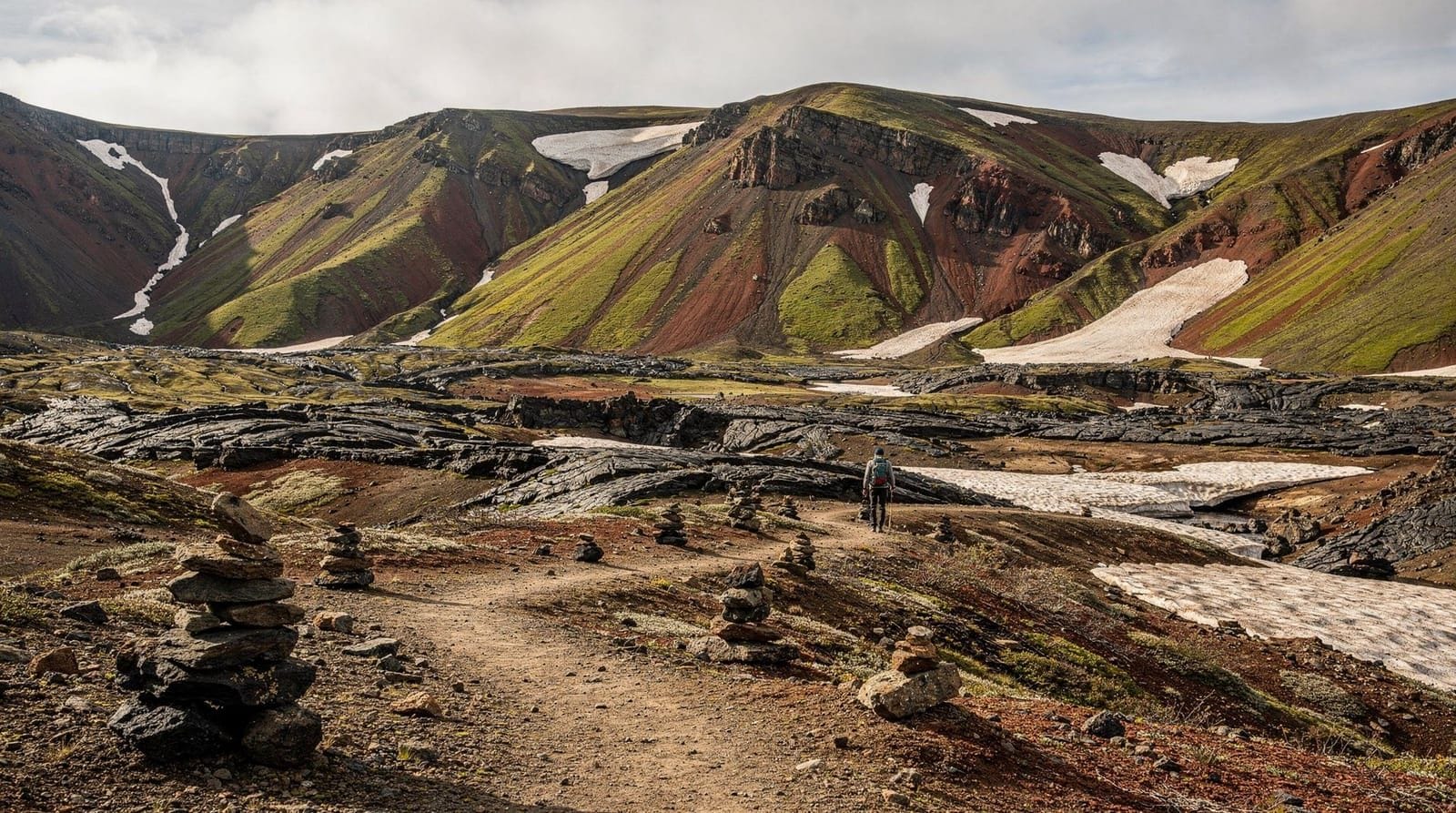
Landmannalaugar in the Fjallabak Nature Reserve is a geothermal hot spot in the highland interior. A natural hot spring mixes with a cold river here, creating a large, shallow bathing area at a comfortable 38–40°C. The spring is surrounded by coloured rhyolite mountains — streaked with green, orange, yellow, and red — and lava fields from a 1477 eruption.
Bathing is free. A mountain hut run by Ferðafélag Íslands (the Icelandic Touring Association) is nearby, with paid overnight accommodation for Laugavegur trek hikers.
Access is critical information: the route into Landmannalaugar requires an F-road-capable vehicle. Route F208 and F224 are highland roads with river crossings that are impassable for 2WD cars. Typically accessible from late June through mid-September, depending on conditions.
A highland bus runs from Reykjavík in summer (usually mid-June through September). Journey time is about 4.5 hours. Check Strætó and Reykjavik Excursions schedules for current departures.
The Landmannalaugar hiking guide covers the full area including the F-road situation and bus options.
Laugafell — remote highland pools with hut
Laugafell is a mountain in the central highlands with two small natural hot pools (roughly 8 metres across each) near the Laugafell mountain hut. Water temperature sits around 38–40°C. The hut offers accommodation and there is a small changing area.
Getting here requires a 4WD vehicle on highland roads — F752 from the north or F821 from the east. This is remote highland travel: limited phone signal, no rescue infrastructure nearby. Not suitable as a casual day trip.
The pools are small and rarely busy. The highland landscape is at its most open and otherworldly here — flat tundra in all directions, no trees, no buildings beyond the hut. In summer, this can be mid-afternoon twilight bathing territory; in autumn, northern lights are frequently visible on clear nights.
Strútur — natural pool in the Westfjords
The Westfjords region contains wild geothermal springs that see very few visitors by Iceland standards. Strútur is a natural pool on the Snæfjallaströnd coast of the Arnarfjörður fjord. The pool fills via a geothermal spring and is positioned at the edge of the sea — at high tide, saltwater mixes in and changes both temperature and taste.
Access is via an unmaintained track off Route 60 requiring a high-clearance 4WD. The last stretch is rough. The pool itself is a concrete basin built into the rock, not entirely wild, but the setting — cliffs dropping to the fjord, Westfjords silence — is extraordinary.
The Westfjords are logistically challenging. Road distances are long, surfaces can be rough, and services are sparse. The tradeoff is that visitor numbers are among the lowest of any region in Iceland.
Grjótagjá and other Mývatn-area geothermal features
Near Lake Mývatn in north Iceland, a small lava cave called Grjótagjá contains a geothermal pool that gained fame from television appearances, but it is important to know it is currently too hot for bathing — water temperatures have fluctuated with volcanic activity in the area since the 1970s and have periodically reached dangerous levels. Check current temperature reports before assuming it’s swimmable; several past visitors have been badly burned by trusting outdated information. The nearby Mývatn Nature Baths is the safe, commercial alternative in the same area if a geothermal soak in north Iceland is the goal.
Reykir hot pool — Snæfellsnes
Near the town of Reykholt on the Snæfellsnes Peninsula, a small outdoor geothermal pool is available for free use, maintained by the local municipality. No admission charged. A basic shelter and changing area are provided.
This is a genuine local pool rather than a tourist attraction — a small hot pot set in a field, used by residents and passing travellers alike. Near enough to Kirkjufell and Snæfellsnes to combine with a Snæfellsnes day trip.
Comparing the main wild springs at a glance
| Spring | Access | Vehicle | Best for |
|---|---|---|---|
| Reykjadalur | 45 min from Reykjavík + 3 km hike | 2WD | First-timers, day-trippers |
| Landmannalaugar | 4.5 hrs / highland bus | 4WD (F-road) | Combining with the Laugavegur trek |
| Laugafell | Remote highland roads | 4WD (F-road) | Solitude, autumn aurora |
| Strútur (Westfjords) | Unmaintained track off Route 60 | High-clearance 4WD | Westfjords itineraries, sea views |
| Reykir (Snæfellsnes) | Roadside near Reykholt | 2WD | Combining with a Snæfellsnes day trip |
Hvammsvik — between wild and commercial
Hvammsvik is a good example of a facility on the boundary between wild spring and commercial spa. Eight natural pools on the shore of Hvalfjörður fjord, tidal influence on some pools, opened commercially in 2021. It feels more natural than Blue Lagoon but has ticket pricing and facilities. See the Hvammsvik hot springs guide for details.
General rules for wild hot spring bathing
Temperature testing: Wild pools vary in temperature. Always test with a hand before entering. Springs can be dangerously hot at the source — do not step directly onto or near steam vents.
No infrastructure means no services: If something goes wrong, there is no staff to call. For popular sites like Reykjadalur, other hikers are usually present. For remote pools, you may be alone. Inform someone of your plans and carry a charged phone with the 112 Iceland emergency app.
Leave no trace: No soap, shampoo, or sunscreen in natural pools. Iceland’s geothermal areas are environmentally sensitive. Changing screens at Reykjadalur are provided precisely to prevent sunscreen runoff entering the hot spring.
Respect private land: Some hot springs on maps are on private farmland. Look for signage. If a gate or fence is closed, do not enter without permission.
Iceland’s F-roads and access: Driving F-roads without a 4WD vehicle is illegal and can result in a large fine. For any spring requiring F-road access, rent an appropriate vehicle. See the F-roads in Iceland guide for the rules.
Hot springs to avoid
Námaskarð (Hverir) near Mývatn: These are boiling mud pots and steam vents at the Mývatn caldera. The temperature is lethal. Do not enter. They are for viewing only and clearly signed as dangerous.
Reykir springs near geothermal power infrastructure: Many visible steam vents near roads are power generation by-products, not bathing pools. The heat can be extreme.
Any pool without visible temperature mixing or established use: If you find a pool you cannot verify the temperature of and there is no evidence of prior use (cleared rocks, a rudimentary changing area), assume it may be dangerously hot.
Guided day hike to Hengill area and Reykjadalur hot springsFrequently asked questions about wild hot springs in Iceland
Is it legal to bathe in natural hot springs in Iceland?
For springs on public land or Ferðafélag Íslands land, yes. Iceland’s general right of access (similar to other Nordic countries) permits access to uncultivated land. However, this does not override private property — springs on farmland or within fenced areas require permission. The geothermal features around active volcanoes and geothermal power plants are off-limits.
How do I find reliable information about wild hot springs in Iceland?
The Ferðafélag Íslands website (fi.is) lists mountain huts and accessible areas. The 1:50,000 Landmælingar Íslands topographic maps show geothermal features. Icelandic hiking forums and the Safetravel.is site contain updated user reports. Avoid relying solely on general travel blogs, which sometimes describe springs that no longer exist, are on private land, or have changed temperature.
What should I do if a hot spring looks abandoned or overgrown?
Test the temperature carefully before entering. Natural hot springs change over time — the geothermal source can strengthen or weaken, and a pool that was safely used 5 years ago may now be too hot. Overgrown vegetation near a spring is a normal sign; lack of visible prior use by others is a caution flag.
Are there wild hot springs on the Ring Road without a long detour?
Yes. Reykjadalur is 5 km off Route 1 at Hveragerði. Some roadside hot pots along the Ring Road route north (particularly in the Skagafjörður area and near Húsavík) are accessible with minimal detour. These are less advertised and worth researching with local tourist information offices.
How do I get to remote highland hot springs without a 4WD?
The highland bus service runs to Landmannalaugar from Reykjavík in summer. For other highland areas, options are limited. Some mountain hut stays near remote pools include transport. Joining a guided highland tour is the most practical approach for anyone without a suitable vehicle.
Can I camp near wild hot springs?
Yes at designated campsite areas, including the Landmannalaugar campsite managed by Ferðafélag Íslands. Wild camping (off designated sites) is increasingly restricted near popular geothermal areas. Check current regulations on the Environment Agency of Iceland website.
The geology behind Iceland’s wild hot springs
Understanding why Iceland has so many natural hot springs requires a basic understanding of what makes the country geologically unusual. Iceland straddles the Mid-Atlantic Ridge — the boundary where the Eurasian and North American tectonic plates slowly pull apart at roughly 2 cm per year. This spreading creates a zone of volcanic activity across the entire country, from the Reykjanes Peninsula in the southwest to the Öræfajökull volcano in the southeast.
Rainwater and snowmelt percolate through the porous basalt, descend to depth, and are heated by magmatic intrusions before rising again. Where this heated water reaches the surface without encountering permeable rock that disperses it horizontally, it emerges as a spring. Where it cools enough before surfacing, it creates a natural warm pool. Where it does not cool enough, it boils or steams.
The distribution is not random. Three geothermal zones cross Iceland:
- The Western Volcanic Zone (Reykjanes Peninsula to Þingvellir)
- The Eastern Volcanic Zone (south central Iceland through the highlands)
- The Northern Volcanic Zone (Vatnajökull north to Tjörnes)
Wild hot springs cluster along these zones. Reykjadalur is in the Western Zone (Hengill system). Landmannalaugar is in the Eastern Zone (Torfajökull system). Mývatn and Grjótagjá are in the Northern Zone. Knowing this helps with planning: wherever you are on a Ring Road circuit, you are likely within reasonable distance of at least one geothermal feature.
Finding wild hot springs responsibly
Several online communities and apps track wild hot spring locations in Iceland. The quality of information varies considerably:
Reliable sources:
- Ferðafélag Íslands (fi.is): Lists all managed mountain huts and associated geothermal features.
- 1:50,000 Landmælingar Íslands maps: Mark geothermal areas with standard symbols.
- Safetravel.is: Reports on access conditions and any temporary closures.
Less reliable sources:
- General travel blogs: Often repeat outdated information about pools that have dried up, changed temperature, or been closed due to land management decisions.
- Social media posts: Frequently show specific GPS coordinates without any information on current conditions or landowner permissions.
When in doubt, contact the nearest tourist information centre or the Icelandic Farm Holidays network (icelandicfarmholidays.is) for current guidance on specific locations.
The experience comparison: wild spring vs. commercial spa
The difference between a wild hot spring like Reykjadalur and a commercial spa like the Blue Lagoon is not just about price. They are fundamentally different experiences.
Commercial spa: Controlled temperature, consistent quality, changing rooms, a bar, staff, and certainty that the experience will meet a defined standard. You know what you are paying for.
Wild hot spring: Variable temperature, potentially shared with no one or with 50 people, no facilities, no staff, the possibility that the water level has changed since the last report. The landscape context is raw — steam rising, volcanic geology visible, no architecture to mediate the experience.
The wild spring experience involves more personal agency and accepts more variability. This appeals strongly to some visitors and deters others. Both preferences are valid — the choice should be based on honest assessment of what you want, not on a general cultural assertion that “wilder is more authentic.”
If budget is the primary driver, see the Iceland on a budget guide for cost-effective strategies that include free thermal bathing without pretending the trade-offs are not real.
Seasonal access and conditions by area
Reykjanes Peninsula (Blue Lagoon area, Reykjadalur): Year-round accessible. Winter hiking at Reykjadalur requires traction aids. Volcanic activity near Grindavík may affect access to some areas — check Safetravel.is before visiting.
South Iceland highlands (Landmannalaugar area): F-road accessible typically late June through mid-September. Highland buses run summer schedule only. Winter access requires a snowcat or helicopter.
North Iceland (Mývatn area): Geothermal features (Námaskarð, Grjótagjá) accessible year-round by car. Hverfjall crater hike accessible year-round but may require ice equipment in winter.
Westfjords: Year-round accessible by main roads, but secondary roads to remote locations may be closed in winter. The Westfjords are the least-visited region and conditions are the least predictable.
Snæfellsnes Peninsula: Year-round accessible. Small natural pool near Reykholt available year-round.
For driving conditions on any of these routes, check the Icelandic Road Administration (road.is) website before departing. F-roads specifically: see the F-roads in Iceland guide for what vehicle is needed and what the access rules are.
What to do when a pool has dried up or is not as described
This happens. Geothermal activity changes over time. A pool that had a regular reliable spring feeding it in 2018 may have reduced to a trickle by 2026. Online reviews and blog posts describing a specific wild spring may be years out of date.
If you arrive at a described wild spring and find it dry, too hot to use, or significantly changed:
- Do not improvise a substitute by entering unmarked pools — temperature is unpredictable.
- Check with a local tourism office or Safetravel.is for current alternatives in the area.
- Adjust expectations — a day trip that does not deliver the planned swimming experience is still a day in Icelandic landscape.
The flexibility to accept variable conditions is part of the wild spring experience. If you need certainty, a commercial spa is the right choice.
What to actually bring
A wild hot spring trip has a different packing list from a Blue Lagoon visit:
- Old swimsuit: mineral content and rocky pool edges are harder on fabric than a commercial spa’s controlled pool.
- A dry bag or two plastic bags: one for your wet swimsuit and towel afterward, one to keep your dry clothes protected if it’s raining during the change.
- A quick-dry towel: packs smaller than a cotton towel and dries faster in a car.
- Water shoes or old trainers: the walk to many springs crosses wet ground, loose rock, or a stream; bare feet are impractical for most approaches.
- A headlamp with a red-light mode: useful for evening or early-morning visits, especially at Reykjadalur outside peak summer daylight.
- Basic first-aid supplies: uneven terrain around geothermal areas means slips happen; a small kit from any pharmacy covers minor cuts and blisters.
Full guidance on cold-weather layers for the hike in and out is in our what to pack for Iceland guide.
Combining wild hot springs with a wider itinerary
Most visitors don’t build a trip around wild hot springs alone — they slot into a broader Ring Road or highland itinerary. Reykjadalur pairs naturally with a South Coast day or as a standalone half-day from Reykjavík. Landmannalaugar fits best as either the start or end point of the Laugavegur trek, or as a highland day trip if you already have 4WD access. Strútur in the Westfjords only makes sense if you’re already dedicating several days to that region given the driving involved. Treating a wild spring as one stop among several, rather than a dedicated round trip on its own, generally produces a better use of time — particularly for the highland and Westfjords options where the access itself is the larger commitment.
Top experiences
Bookable activities with verified prices and instant confirmation on GetYourGuide.
Top experiences
Best-rated activities across GetYourGuide and Viator.

Top-Rated Family Rafting – Drysuits & Geothermal Hot Cocoa
- Viator

Skip the Line: Secret Lagoon Entrance Ticket
- Viator

Landmannalaugar Guided Hike & Hot Springs - From Reykjavík
- Viator

Goðafoss Waterfall & Forest Lagoon from Akureyri Port
- Viator

Vök Baths Admission Ticket
- Viator

Day Trip to Lake Mývatn And The Nature Baths from Akureyri
- Viator