Best geothermal pools in Iceland — from free wild springs to resort spas
Reykjavik: Iceland Secret Lagoon admission ticket
What are the best geothermal pools in Iceland?
Iceland has over 150 public swimming pools using geothermal heat, plus several commercial thermal spas. The best depend on your budget and location. Blue Lagoon and Sky Lagoon are premium resort experiences; Mývatn Nature Baths and Secret Lagoon offer quality at lower cost; Reykjadalur hot river is free after a hike. Municipal hot pots in towns are often the best value of all.
| Free options | Reykjadalur hot river, Seljavallalaug, Landmannalaugar (summer only) |
| Budget (ISK 1,000–4,500) | Municipal pools, Secret Lagoon |
| Mid-range (ISK 6,000–7,500) | Mývatn Nature Baths, Forest Lagoon, Hvammsvík |
| Premium (ISK 9,500–30,000) | Sky Lagoon, Blue Lagoon |
| Booking | Premium tier: book ahead in summer. Municipal pools and Secret Lagoon: walk in |
Iceland’s geothermal bathing culture
Iceland sits on the Mid-Atlantic Ridge, where the Eurasian and North American tectonic plates pull apart at about 2 cm per year. The resulting volcanic activity heats groundwater naturally across much of the country, and Icelanders have been using this heat for bathing for over a thousand years.
The municipal swimming pool — the sundlaug — is the backbone of Icelandic social life. Nearly every town has one, typically with an outdoor pool heated to 28–30°C, several hot pots (small circular tubs at 36–44°C), a cold pool, and sometimes a steam bath. Entry costs ISK 1,000–1,200 for adults, and locals use these year-round, in all weather.
Commercial geothermal spas — the Blue Lagoon, Sky Lagoon, Mývatn Nature Baths, Forest Lagoon, Secret Lagoon — are built on top of this culture and charge a premium for better aesthetics, branded rituals, and tourist-oriented services. Whether that premium is worth paying depends entirely on what you want from a visit.
This guide covers the full spectrum, from free wild pools to expensive resort spas.
Tier 1: Free and wild hot springs
Reykjadalur hot spring river
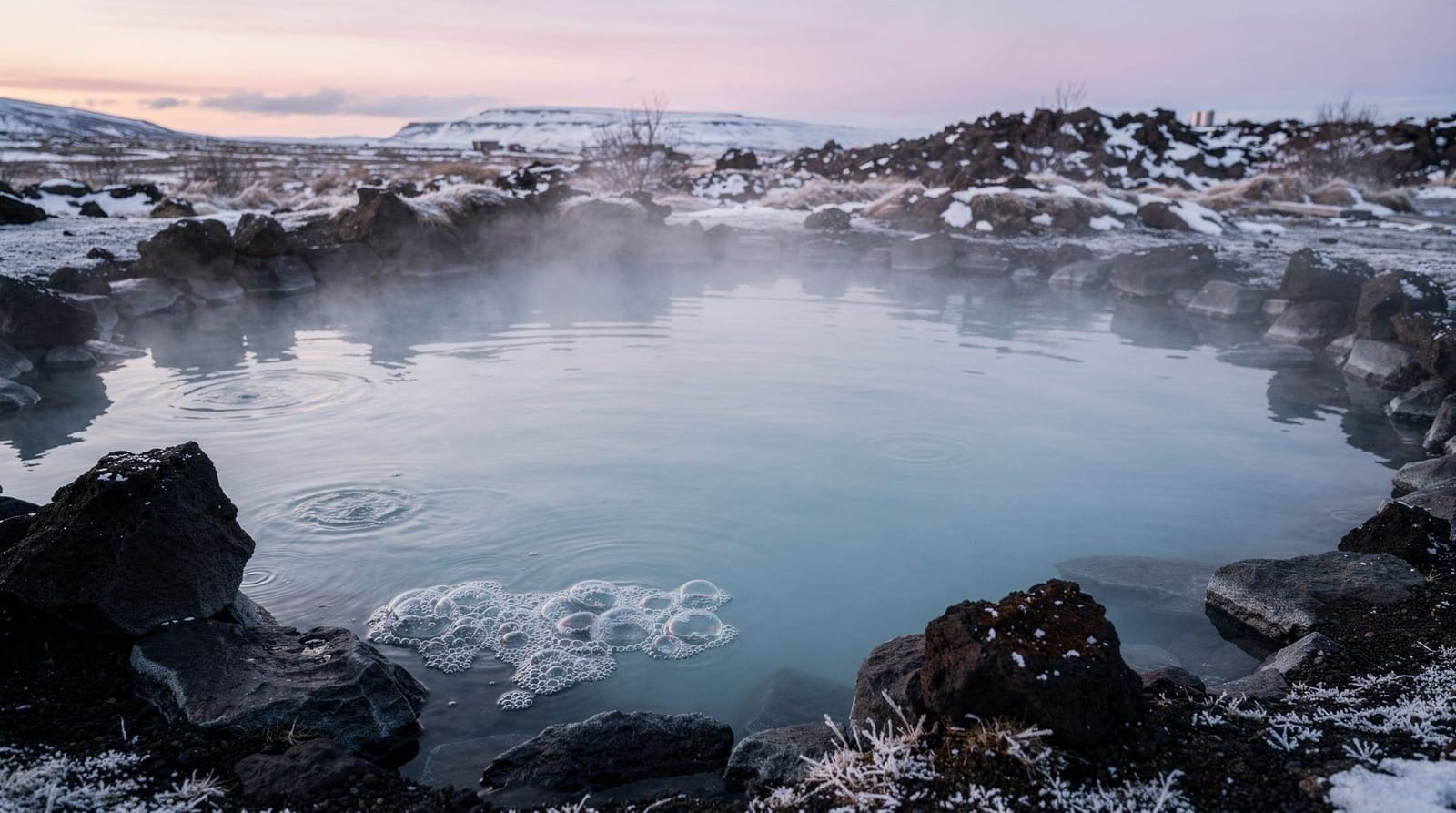
A free geothermally heated river in a valley near Hveragerði, 45 minutes southeast of Reykjavík by car. Reached by a 3 km hike each way with about 200 m of elevation gain. The river runs at 38–42°C in the main bathing section.
No facilities at the bathing area. Basic changing screens are provided. This is the closest thing to a genuine wild hot spring experience within day-trip range of Reykjavík. Crowds in midsummer can be heavy midday; arriving before 09:30 or after 17:00 helps. See the Reykjadalur hot river guide for hiking details.
Landmannalaugar hot spring
In the highlands, the Landmannalaugar area has a natural hot spring that mixes with a cold river to create a large, shallow, completely free bathing zone. The setting — coloured rhyolite mountains, steam vents, lava fields — is one of Iceland’s most striking. Getting there requires an F-road-capable vehicle (or a highland bus from Reykjavík in summer) and is not possible from June through October for most visitors. See the Landmannalaugar hiking guide for access details.
Grjótagjá cave
Once a famous bathing site near Lake Mývatn, Grjótagjá is a lava cave with a crystal-clear geothermal pool. It gained international attention as a filming location for Game of Thrones. The bad news: bathing is no longer permitted, and the water temperature has risen to 50°C+ due to recent volcanic activity. Worth visiting to look, but no bathing.
Remote highland pools
The highlands and Westfjords contain numerous unmarked geothermal pools — some on foot-accessible trails, some requiring a 4WD and significant navigation. See the wild hot springs in Iceland guide for specific locations, access conditions, and honest assessments of what you actually find when you get there.
Tier 2: Affordable community and natural pools (ISK 1,000–4,500)
Secret Lagoon, Flúðir — ISK 3,500
Iceland’s oldest operating pool, working since 1891. Simple infrastructure, genuine geothermal water at 38–40°C, active small hot springs around the pool’s edge that bubble and occasionally erupt. No swim-up bar, no face masks, no Instagram setup. Walk-in entry, no advance booking required.
Location is on the southern Golden Circle route, 115 km from Reykjavík. The best low-cost option for visitors doing the Golden Circle day trip. Full guide: Secret Lagoon.
Secret Lagoon admission — ISK 3,500, no advance booking neededReykjavík municipal pools
Laugardalslaug is the largest pool complex in Reykjavík: an Olympic-size outdoor pool, several hot pots at different temperatures, a waterslide, and changing rooms. Entry ISK 1,250. Sundhöllin in central Reykjavík is a listed Art Deco building with a rooftop pool — a genuine local experience for ISK 1,250. There are a dozen other municipal pools around greater Reykjavík.
These are where Icelanders actually go. Touristy they are not. The experience of sitting in a 44°C hot pot alongside locals is more authentic than any commercial spa.
Seljavallalaug pool
A remote outdoor pool in South Iceland, reached by a 40-minute walk through a gorge near Seljalandsfoss. The pool was built in 1923 and is maintained by volunteers. Entry is free; bring your own towel. The changing rooms are minimal. The pool itself is not maintained to the standard of municipal pools, and algae can be present. But the setting — a narrow mountain valley — is beautiful. Closes periodically for maintenance.
Tier 3: Mid-range natural baths (ISK 6,000–7,500)
Mývatn Nature Baths — ISK 6,900
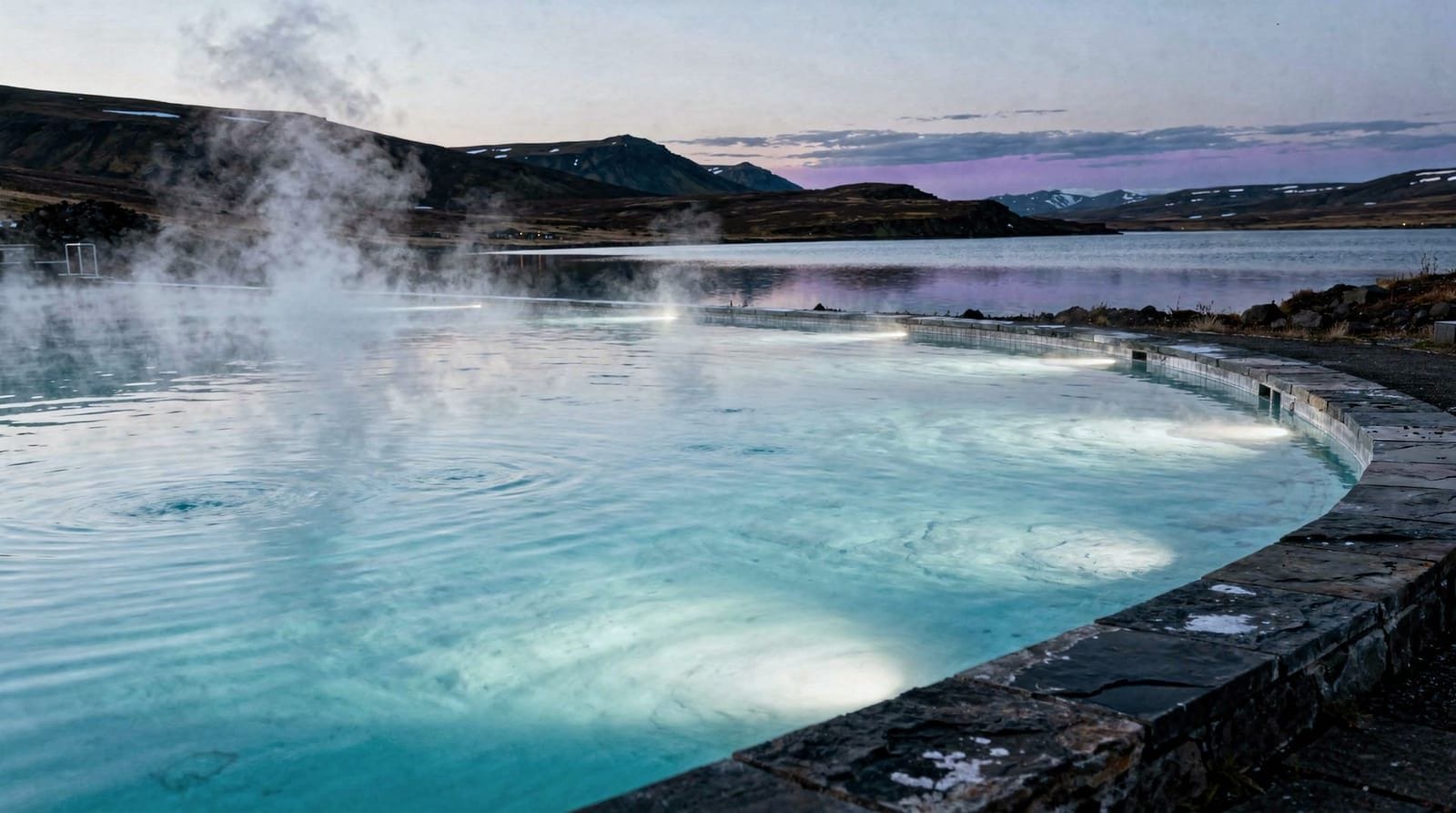
Northern Iceland’s best commercial thermal bath, set in a volcanic landscape overlooking the Mývatn area. Larger than the Secret Lagoon, more polished, with a café and steam rooms. The sulphur content is higher than other pools — expect a faint egg smell. Advance booking recommended in summer.
The key factor is location: Mývatn is only worth visiting if you are already in northern Iceland. It is not a reason to drive 5 hours from Reykjavík by itself. But as part of a Ring Road circuit or a dedicated north Iceland itinerary, it is one of the best value thermal experiences in the country. Full guide: Mývatn Nature Baths.
Mývatn Nature Baths entrance ticket — adult ISK 6,900Forest Lagoon, Akureyri — ISK 6,500–9,500
A new facility (2022) in the hills above Akureyri with fjord and mountain views. Smaller than Mývatn, newer infrastructure, and well-positioned for cruise ship port visitors. The optional Skógarbad ritual is comparable in structure to Sky Lagoon’s Skjól. See the Forest Lagoon guide for full details.
Hvammsvik Hot Springs
A cluster of eight outdoor natural hot pools on the shore of Hvalfjörður fjord, 45 km north of Reykjavík via the tunnel. Opened commercially in 2021. The pools are at varying temperatures and some are tidal — the sea comes in and mixes with the geothermal spring at high tide, changing both the temperature and the salinity. This is a genuinely unusual experience. See the Hvammsvik hot springs guide for details and current prices.
Tier 4: Premium resort spas (ISK 9,500–30,000+)
Sky Lagoon, Reykjavík — ISK 9,490–13,490
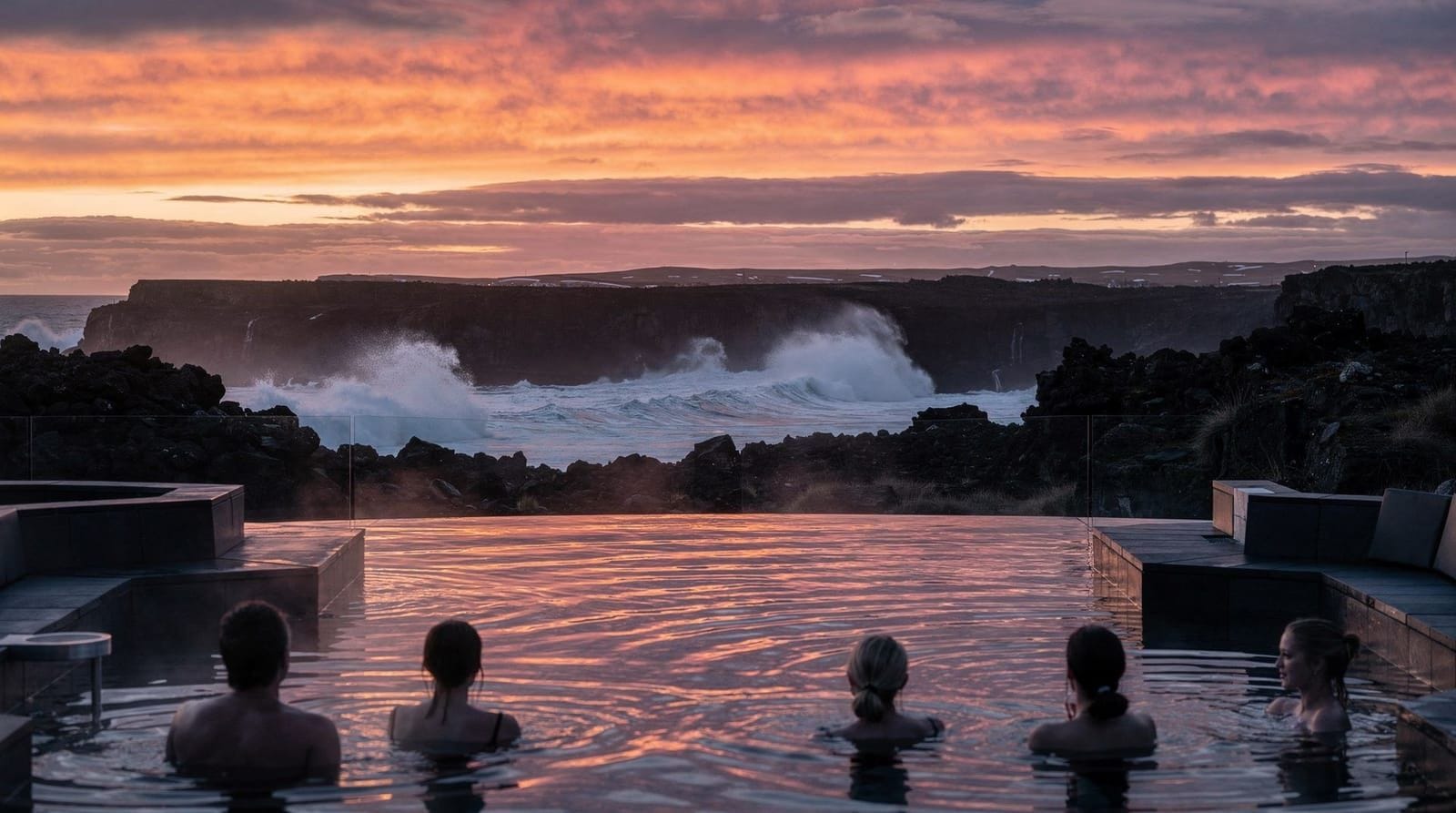
The best value of the premium tier. Five kilometres from central Reykjavík, with an ocean infinity edge, a structured 7-step wellness ritual, adult-only policy, and genuine quality in the facility. Noticeably less crowded than Blue Lagoon.
Full guide: Sky Lagoon.
Sky Lagoon Pure Lite Pass — includes the 7-step Skjól ritualBlue Lagoon — ISK 14,990–29,990
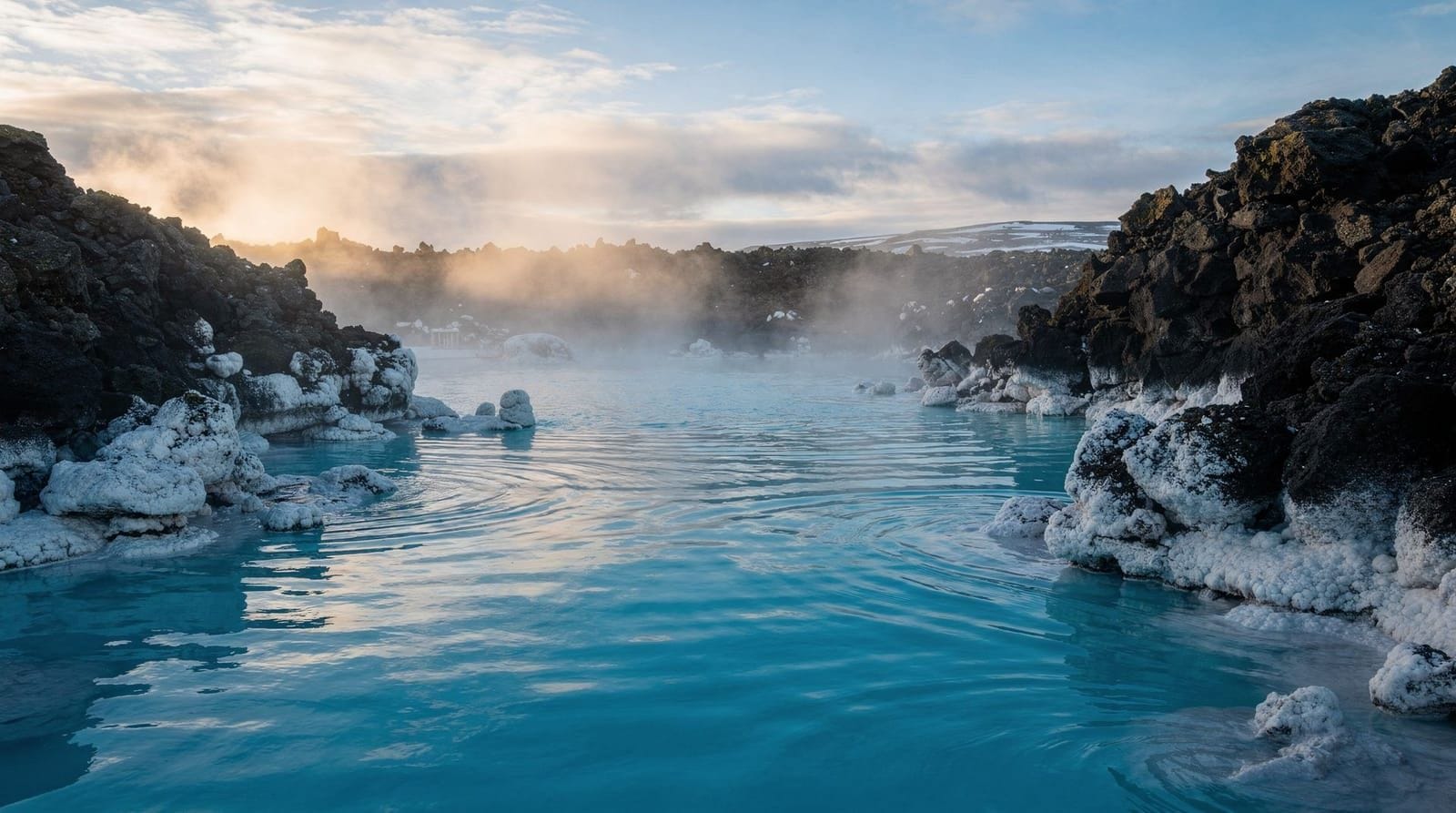
The most famous thermal spa in Iceland and one of the most recognised tourist attractions in the world. The milky-blue silica water in a volcanic lava field is visually spectacular. The cost is also spectacular. Valid if you have budget and want the iconic experience, or if you are passing Keflavík airport.
Full guide: Blue Lagoon.
How to choose
Under ISK 2,000: Municipal pool in the nearest town. Authentic, cheap, effective.
ISK 3,500–4,500 and on the Golden Circle: Secret Lagoon. No advance booking required.
ISK 6,500–7,500 and in northern Iceland: Mývatn Nature Baths or Forest Lagoon depending on your location.
ISK 9,500–14,000 and staying in Reykjavík: Sky Lagoon. Better value, closer, and less crowded than Blue Lagoon.
ISK 14,990–30,000 and want the iconic experience: Blue Lagoon. Accept the price and crowds as the cost of the spectacle.
Free and willing to hike: Reykjadalur hot river, accessible from Hveragerði year-round.
What to pack for any geothermal pool
- Swimsuit (essential; some municipal pools rent them but this is uncommon)
- Flip-flops or sandals
- Waterproof bag for phone
- Hair tie if you have long hair
- Towel (provided at paid facilities; bring your own at free pools)
- Midge net if visiting Mývatn area in June–July
The water at all geothermal pools is warm enough that air temperature barely matters once you are in. Getting out on cold, windy days is the uncomfortable part — have dry clothes accessible and move quickly.
Frequently asked questions about geothermal pools in Iceland
How many geothermal swimming pools are there in Iceland?
Iceland has approximately 170 public swimming pools and hot pots that use geothermal heating. Many are municipal facilities in small towns. The number is remarkable given Iceland’s population of about 370,000 people.
Are there any free geothermal pools near Reykjavík?
Yes. The Reykjadalur hot river near Hveragerði (45 km from Reykjavík) is free to use after a 3 km hike. Seljavallalaug (near Seljalandsfoss, 140 km) is also free. Municipal pools charge ISK 1,000–1,250, which is effectively free by tourist attraction standards.
Is it true that Icelanders shower before entering pools?
Yes, and this is strictly enforced. All Icelandic pools require a full shower — swimsuit off — before entering the water. Attendants enforce this at municipal pools. It is a hygiene norm, not optional. At commercial spas the enforcement is slightly more relaxed, but signage asks the same.
What temperature are Icelandic hot pots?
Municipal hot pots (small round tubs) are usually offered at multiple temperatures: 36°C, 38°C, 40°C, and sometimes 42–44°C. Commercial spas target 38–40°C in main pools. Geothermal rivers and wild pools vary considerably.
Can I visit geothermal pools in winter?
All the major commercial spas operate year-round. Municipal pools are open year-round. Wild hot springs and hiking-access pools are accessible year-round but may require care on icy trails. Winter conditions, when steam rises and there is snow or frost, are often the most atmospheric time to visit.
What is the difference between a hot pot and a hot spring?
In Icelandic usage, a “hot pot” (heitur pottur) refers to a small round or oval geothermally heated tub at a municipal pool. A “hot spring” typically refers to a natural geological feature. A commercial facility like the Blue Lagoon is neither — it is an engineered spa fed by geothermal water.
The municipal pool experience — a practical guide
For visitors who want to understand how Icelanders actually use geothermal water, a visit to a municipal sundlaug is more revealing than any commercial spa. Entry costs ISK 1,000–1,250. Locals use these pools multiple times per week.
The structure is consistent across the country:
The main outdoor pool: Typically 25 metres or 50 metres long, heated to 28–30°C. Lap swimmers and recreational bathers coexist. Goggles are normal; swimcaps are not always required.
The hot pots (heitir pottar): Circular or oval tubs seating 6–20 people, at temperatures ranging from 36°C to 44°C. These are the social centre of Icelandic pool culture. People sit in hot pots and talk — about weather, politics, fishing, the week. Engaging a local in conversation in a hot pot is one of the genuinely authentic experiences Iceland offers that costs ISK 1,250.
The cold pool: A small pool at 10–15°C. Traditional contrast bathing.
The steam bath or sauna: Present at most larger pools.
Recommended municipal pools:
- Laugardalslaug (Reykjavík): The largest, with waterslide, multiple hot pots, and an Olympic pool.
- Sundhöllin (central Reykjavík): 1930s Art Deco building with a rooftop pool added in 2017.
- Ársalir (Selfoss): Good regional pool on the South Iceland Ring Road route.
- Sundlaug Egilsstaðir (Egilsstaðir): Useful Ring Road stop in the east.
- Laugarbakki (north Iceland): Small community pool on the west Ring Road approach to Akureyri.
Geothermal pools along the Ring Road
The Ring Road (Ring Road guide) passes within reasonable distance of several geothermal bathing options. This matters if you are driving the full ring and want to include soaking as part of the journey:
South coast: Reykjadalur hot river is off the Ring Road at Hveragerði. Secret Lagoon is a 40-minute detour via Flúðir.
East Iceland: Smaller municipal pools in Egilsstaðir and Höfn. The road into the Eastfjords has limited thermal options.
North Iceland: Mývatn Nature Baths are the main stop, plus Forest Lagoon at Akureyri.
West and Snæfellsnes: Reykholt (Borgarfjörður) has a small free community pool. Ólafsvík on Snæfellsnes has a good municipal pool.
Planning your Ring Road with at least one thermal bathing stop per 2 days keeps morale high on a longer circuit. The total cost of municipal pool entry across a 10-day Ring Road trip (8–10 pool visits) is ISK 10,000–12,500 — less than one Blue Lagoon Comfort ticket.
When to visit which type of pool
The type of pool that makes sense depends heavily on season and conditions:
Summer peak (July–August): Commercial spas at their worst for crowds. Municipal pools busy but manageable. Wild hot springs like Reykjadalur busy midday but quiet early morning.
Shoulder season (May–June, September–October): Best all-around conditions. Commercial spas quieter, wild springs accessible, municipal pools at their most comfortable.
Winter (November–March): Wild springs potentially icy or snow-covered — check access before attempting. Commercial spas fully operational with shorter queues. Municipal pools entirely normal — Icelanders swim outdoors in winter without pause, and the steam rising from open-air pools in sub-zero temperatures creates dramatic photography.
Northern lights season: The Mývatn area, northern Reykjanes Peninsula, and anywhere away from Reykjavík’s light pollution offer aurora viewing potential from thermal pools November–March. This combines two quintessential Iceland experiences in a single evening. See the northern lights guide for optimal conditions.
Timing a pool visit around the rest of your day
Geothermal bathing works best when treated as a deliberate stop rather than a rushed add-on:
Morning bathing: fewer crowds at commercial spas, and a good way to ease into a driving day — particularly useful after a long travel day or before a demanding hike.
Late afternoon/evening bathing: the classic “reward at the end of the day” slot, especially after a Golden Circle or south coast circuit. Municipal pools in small Ring Road towns are usually open until 20:00–21:00, making them a practical way to unwind before dinner.
Pre-flight bathing: Blue Lagoon’s location near Keflavík makes it a natural final or first stop; book the earliest available slot on a departure day to leave a comfortable margin for the flight.
Avoid bathing immediately before a long hike: while pleasant, hot water bathing before strenuous activity leaves some people feeling more fatigued than refreshed; save the soak for after the hike, not before.
Rest days: on a longer Ring Road trip, scheduling a pool stop on the day with the least driving gives the visit the unhurried feel it deserves, rather than squeezing in a rushed 20-minute dip between two long drives.
Responsible bathing in natural pools
Iceland’s geothermal areas are ecologically sensitive. A few principles apply across all natural and semi-natural bathing sites:
No soap, shampoo, or sunscreen in natural pools. These chemicals do not belong in geothermal water and accumulate in the soil and rock over time.
Stay on marked paths around geothermal features. The ground near hot springs can be unstable — thin crusts over scalding water. At Námaskarð and similar sites, walking off the marked path can result in ground collapse.
Take nothing, leave nothing. Iceland’s Responsible Travel rules explicitly cover geothermal sites. Removing minerals, rocks, or biological material is prohibited.
Report overcrowding. If a popular wild spring becomes degraded due to visitor impact, Safetravel.is and local tourism offices collect feedback that informs access management decisions.
Respect closures at wild sites. Some previously popular wild pools (Grjótagjá being the clearest example) have closed to bathing due to changed conditions or overuse. Closures are not bureaucratic overreach — they usually reflect a genuine safety or environmental issue, and ignoring posted closures at geothermal sites carries real risk given how unstable the ground near hot water can be.
The sustainable travel in Iceland guide covers broader responsible travel principles if this is a priority for your trip.
Blue Lagoon vs Sky Lagoon: the comparison everyone asks about
The two most-booked premium spas invite an obvious comparison:
| Blue Lagoon | Sky Lagoon | |
|---|---|---|
| Distance from Reykjavík | 45 min (near Keflavík) | 5 min |
| Price | ISK 14,990–29,990 | ISK 9,490–13,490 |
| Setting | Lava field, milky-blue water | Ocean infinity edge |
| Ritual | Silica/algae mask included | 7-step Skjól ritual |
| Crowds | Higher, especially midday | Noticeably lower |
| Best for | Iconic bucket-list stop, pre/post flight | Better value, closer to the city |
Neither is objectively “better” — see the full Blue Lagoon vs Sky Lagoon comparison for a longer breakdown if you’re deciding between the two rather than skipping to a cheaper municipal or mid-range option.
Top experiences
Bookable activities with verified prices and instant confirmation on GetYourGuide.
Top experiences
Best-rated activities across GetYourGuide and Viator.

Top-Rated Family Rafting – Drysuits & Geothermal Hot Cocoa
- Viator

Skip the Line: Secret Lagoon Entrance Ticket
- Viator

Landmannalaugar Guided Hike & Hot Springs - From Reykjavík
- Viator

Goðafoss Waterfall & Forest Lagoon from Akureyri Port
- Viator

Vök Baths Admission Ticket
- Viator

Day Trip to Lake Mývatn And The Nature Baths from Akureyri
- Viator