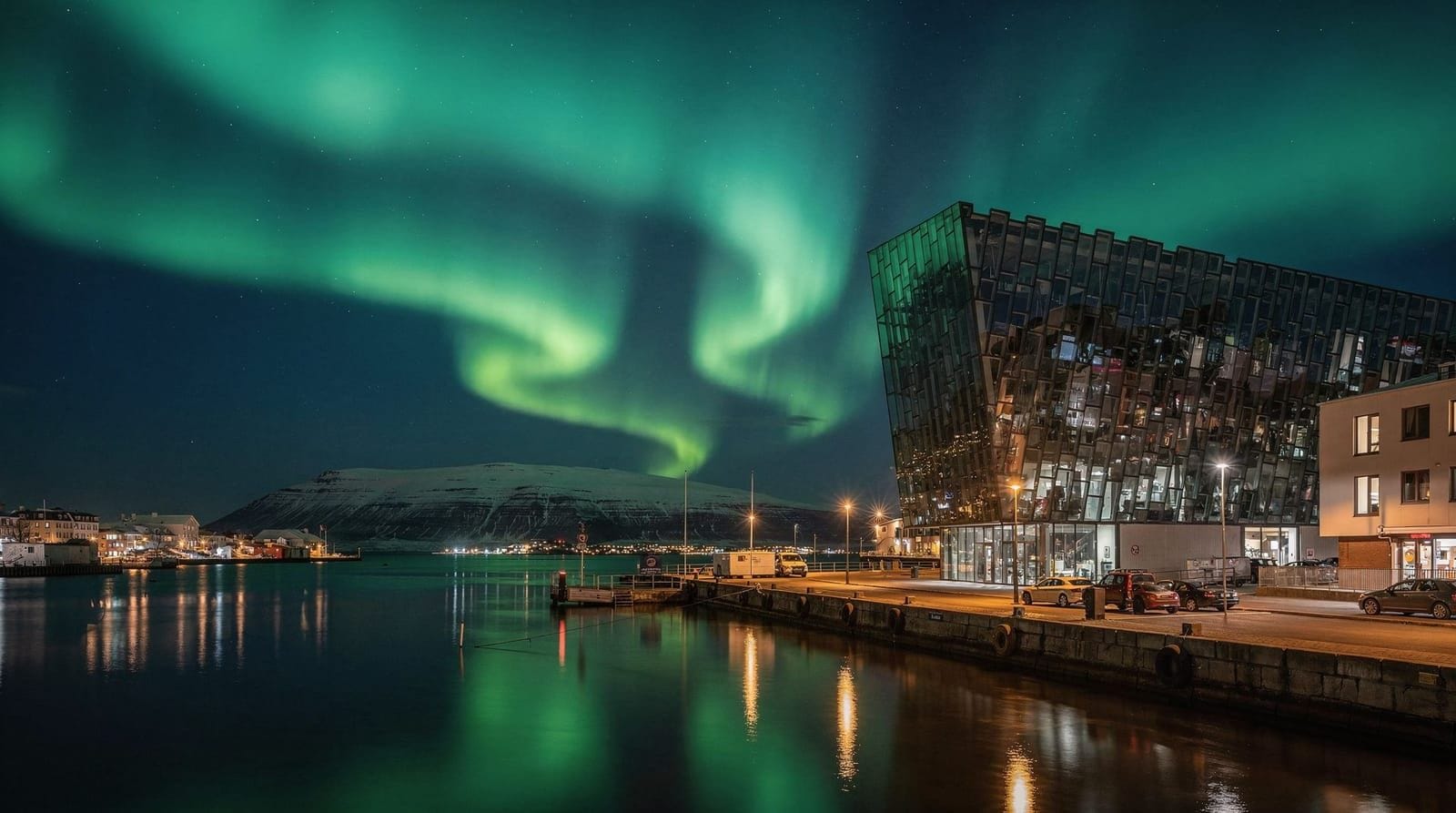
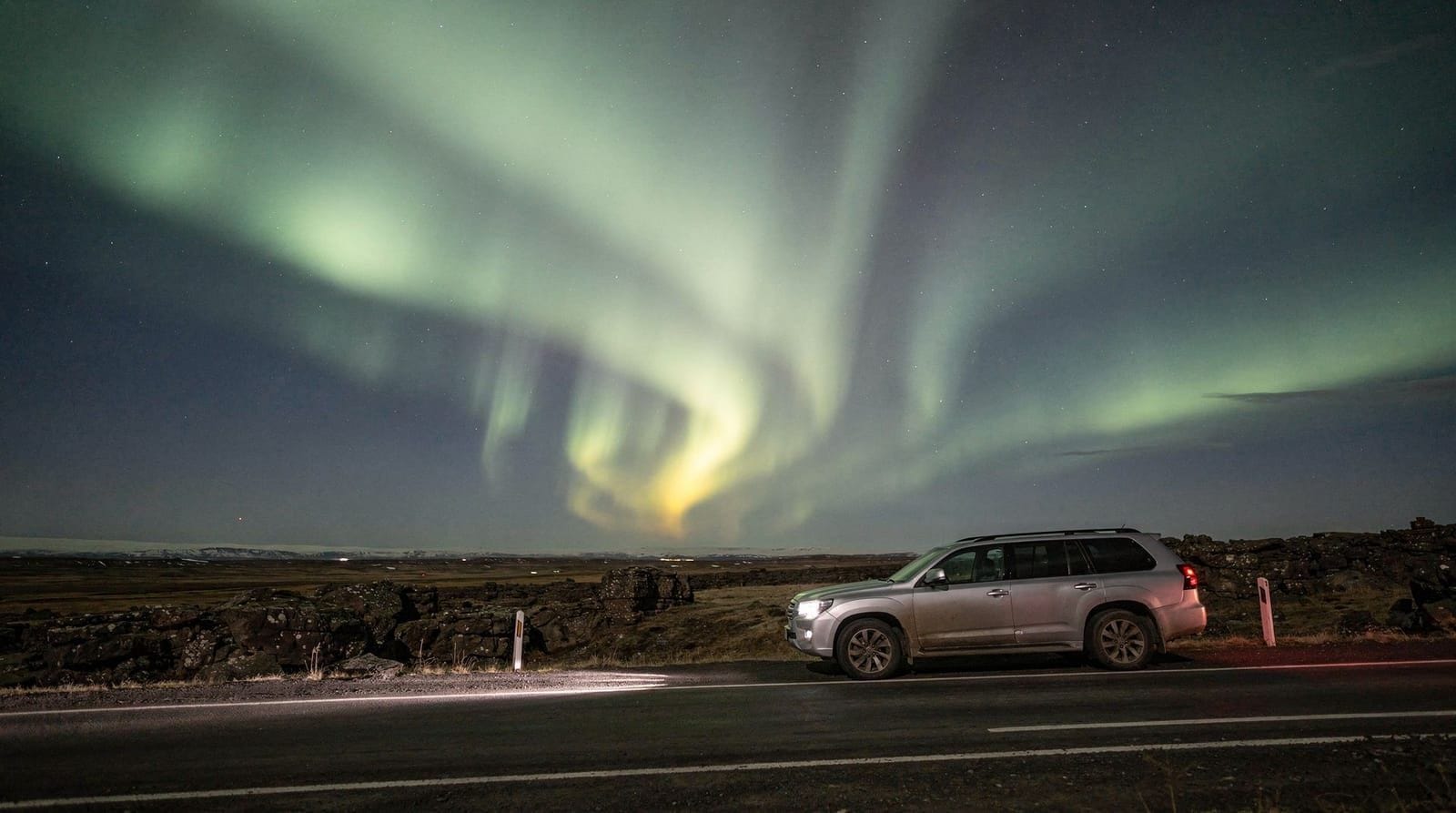
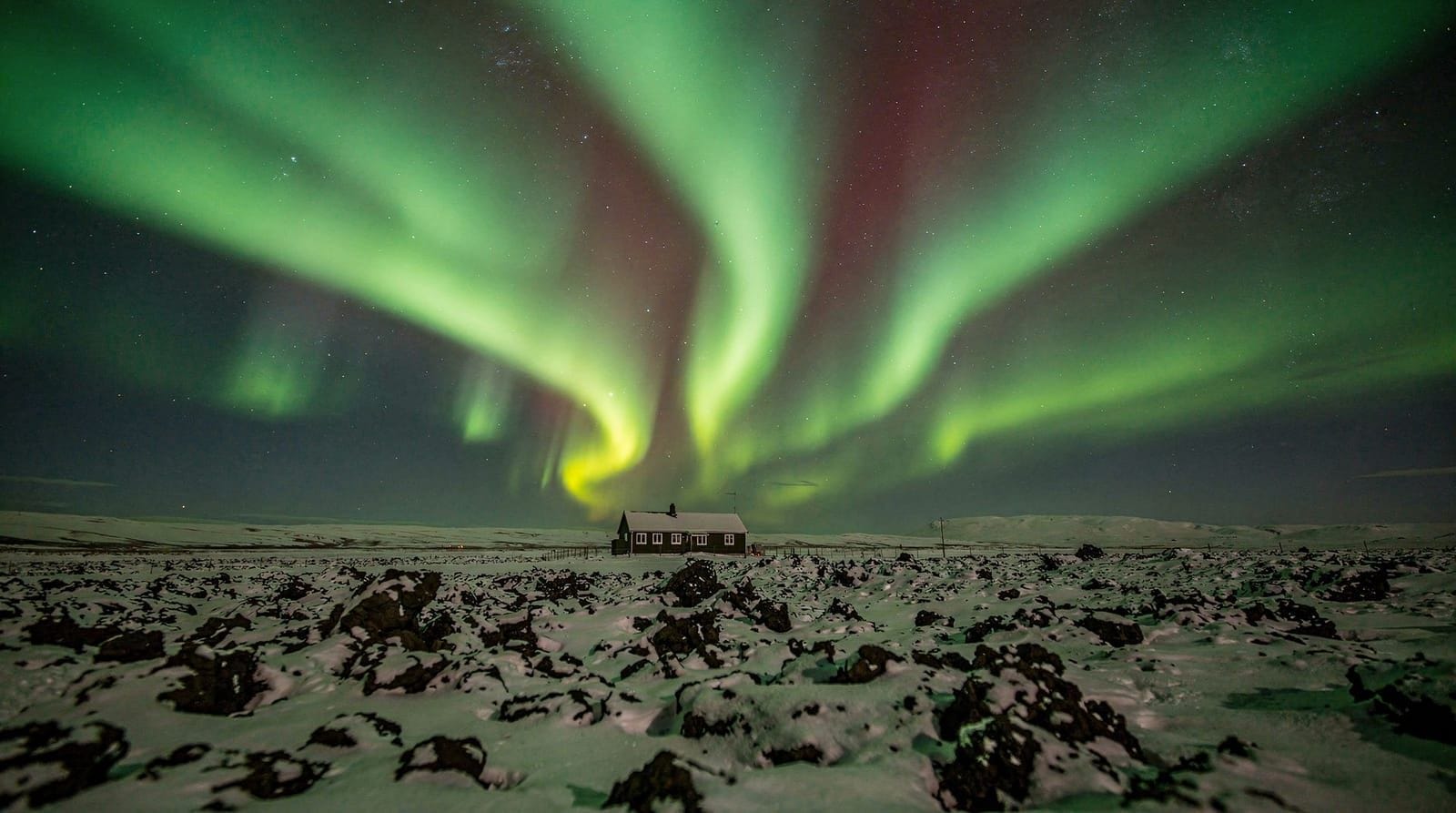
Where to see the northern lights in Iceland
Reykjavik: Small group Northern Lights tour
Where is the best place to see the northern lights in Iceland?
Any location away from city light pollution and under a clear sky works. Near Reykjavík, Grótta lighthouse (5 km from the centre) is the most accessible dark-sky site. Farther afield, the South Coast near Vík, Jökulsárlón glacier lagoon, and Lake Mývatn in the north all offer excellent conditions with minimal light pollution.
Choosing where to stand for the northern lights matters far less than most articles suggest — a dark sky with clear cloud cover beats any famous landmark. This guide walks through the practical dark-sky spots near Reykjavík, along the South Coast and Ring Road, and in the quieter regions few visitors think to check, plus the actual decision process for picking a spot on any given night.
| Nearest dark site to Reykjavík | Grótta lighthouse, 5 km, free, no facilities |
| Best overall region | wherever the forecast shows clear skies that night — not a fixed spot |
| Season | late August–mid-April, when nights are dark enough |
| Check | vedur.is cloud forecast + Kp index, not just one or the other |
| On a tour | operators reroute based on live cloud cover, worth the fee if you can’t self-drive |
The single most important location rule
Auroras happen in the sky, not on the ground. The single variable that determines whether a given location is good for aurora viewing is how much artificial light it throws upward — and nothing else. No mountain, no volcano, no famous landmark improves your aurora viewing if you are standing next to a lit carpark or a hotel with floodlights. Conversely, a flat gravel field with no features whatsoever becomes an excellent aurora spot if it is ten kilometres from any settlement.
This is important because a lot of content online attaches aurora viewing to scenic spots — implying that Jökulsárlón is better than an unnamed roadside pull-off because it is more photogenic. The glacier lagoon is beautiful, yes. But the anonymous dark field 2 km before it will give you exactly the same aurora view, with no crowds.
Near Reykjavík: the best accessible spots
Grótta lighthouse (Seltjarnarnes)
Distance from Reykjavík city centre: 5 km. Grótta sits on a small peninsula at the western tip of the Seltjarnarnes headland. The lighthouse is surrounded by water on three sides, blocking most city light from the north and west. On evenings with Kp 2–3 activity, this is where Reykjavík residents come without joining a tour. Free parking, no facilities. Accessible by bus (line 11 to Seltjarnarnes) but the walk from the bus stop in the dark is not ideal.
Þingvellir National Park
Distance from Reykjavík: 45 km (40 min via Route 36). Þingvellir sits in a rift valley with the wide Þingvallavatn lake to the south. The UNESCO World Heritage Site has large parking areas, and the lake provides a reflecting surface that can enhance aurora photographs. Cloud cover here can differ from the city — check the vedur.is cloud forecast specifically for Þingvellir, not just Reykjavík.
Reykjanes Peninsula coast
Distance from Reykjavík: 30–45 km. The Reykjanes Peninsula coastline southwest of Reykjavík has several unlit parking areas facing the open North Atlantic. Light pollution from Reykjavík is behind you to the northeast. The lava fields provide an otherworldly foreground for photographs.
Hveragerdi and the Hellisheiði plateau
The E1 expressway (Route 1 east) climbs to the Hellisheiði lava plateau about 25 km from Reykjavík. Several lay-bys on the plateau are dark and elevated, with views toward the south. Hveragerdi itself is small enough not to cause significant light pollution.
South Coast: best dark-sky access on Iceland’s most-visited road
The South Coast road (Route 1 between Selfoss and Höfn) runs through one of Iceland’s most sparsely populated areas. From Vík eastward, you can pull off the main road at countless gravel lay-bys and see a largely unobstructed sky.
Vík and Reynisfjara
Vik is a small town of around 300 people — its own lights are minimal. Reynisfjara black sand beach, 4 km from Vík, is fully dark at night. The dramatic basalt columns provide an excellent foreground, and the sea horizon is unobstructed to the south.
Skogafoss and Seljalandsfoss after dark
Both Skógafoss and Seljalandsfoss waterfalls are unlit at night. An aurora display above a waterfall is one of the signature Iceland photography setups. The downside: the spray and moisture near the falls affects camera equipment. Keep a dry cloth ready.
Jökulsárlón glacier lagoon
Jökulsárlón is 375 km from Reykjavík — too far for a same-night aurora chase from the city, but ideal if you are already spending time on the South Coast or on the Ring Road. The lagoon is completely dark, and icebergs floating in the water create a unique reflecting surface. At Kp 2+ on a clear night, this is one of the most photographed aurora locations in the world. Diamond Beach immediately across the road offers a similar dark-sky experience with ice on black sand.
Small group northern lights tour from Reykjavík — 8–12 people, flexible routing based on cloud coverNorth Iceland: Mývatn and Akureyri area
Lake Mývatn
Lake Mývatn is 500 km from Reykjavík but only 100 km from Akureyri, North Iceland’s main city. The lake and surrounding geothermal landscape are virtually light-pollution-free. The wide flat surface of the lake reflects aurora beautifully. A dedicated northern lights tour from Akureyri typically incorporates Mývatn.
Akureyri outskirts
Akureyri is Iceland’s second-largest city — but its population is only around 19,000. Driving 10 minutes north or south of town along the fjord puts you in darkness. The Eyjafjörður fjord area is known for clear, cold nights in February and March.
Húsavík and Asbyrgi
Húsavík, famous for whale watching, also sits in near-complete darkness. The Ásbyrgi canyon, 65 km east of Húsavík, is particularly remote and dark. The horseshoe-shaped canyon walls provide wind shelter in winter, making it a comfortable place to stand and watch.
Northern lights tour from Akureyri — operates September to March, small groupWest Iceland and the Snæfellsnes Peninsula
The Snæfellsnes Peninsula points west into the North Atlantic, away from all population centres. Kirkjufell mountain is the most-photographed foreground for auroras on Snæfellsnes, though the mountain itself is not visible from the aurora; you are photographing the mountain with aurora above it. Roads on the peninsula are generally open through winter, and the drive from Reykjavík takes approximately 2 hours.
On the water: boat tours
Reykjavík whale-watching companies adapt their vessels for night tours when aurora activity is forecast. Getting offshore eliminates all light pollution from the city instantly. The horizon is unobstructed at 360 degrees. Downside: if it is cloudy, you are cold and wet with no view. See northern lights tours: bus vs. boat for a full comparison.
How to choose your spot on a given night
The decision process should be:
- Check vedur.is aurora forecast at noon (1–3 day outlook) and again at 18:00 (short-range cloud map).
- Identify which direction the clearest skies are — north, south, east, or west of Reykjavík.
- Choose the dark-sky spot in that direction that is within your comfort zone for driving.
- Set a reminder for the 1-hour Kp forecast on SpaceWeatherLive.com at 20:00.
- Leave when Kp forecast is 2+ and skies are clear in your chosen direction.
This simple process outperforms standing in one location and hoping. For more detail on using aurora apps and forecasts, see aurora forecast explained.
The Westfjords: Iceland’s darkest accessible region
The Westfjords deserve a dedicated section because they represent the most extreme dark-sky environment reachable by road in Iceland. The entire Westfjords peninsula has a population of approximately 7,000 people spread across 22,000 square kilometres — a population density lower than most wilderness areas in Europe.
Light pollution in the Westfjords is effectively zero outside the town of Ísafjörður (population 3,000). The Ísafjörður town centre produces a small, well-localised glow that disappears within 5 km of driving into the surrounding fjords. The rest of the peninsula is dark by any measure — darker than most locations in Norway and northern Sweden that market themselves as aurora destinations.
The main practical limitation is access. The Westfjords are connected to the rest of Iceland by Route 60, which runs through mountain passes that are sometimes closed in severe weather. The Dynjandi waterfall area, about halfway up the Westfjords peninsula, is accessible in all but the worst winter conditions. The northern tip, near Látrabjarg, is a 3.5–4 hour drive from Ísafjörður and impractical as an aurora-specific day trip in winter.
For a combined Westfjords travel and aurora viewing trip, base yourself in Ísafjörður, where several guesthouses provide genuine dark-sky access within a 15-minute drive. The fjord arms around Ísafjörður face north and provide long, narrow sky views across the open water that are ideal for aurora viewing with fjord reflections.
The weather in the Westfjords is independent of the Reykjavík region — clear nights in the Westfjords coincide with overcast conditions in the south with some frequency, and vice versa. For aurora hunters who have had repeated overcast nights on the South Coast, the Westfjords provide a genuinely different weather exposure.
East Iceland dark-sky spots
East Iceland — the Eastfjords and the area around Egilsstaðir — is consistently underused for aurora hunting despite having some of the country’s darkest skies and a distinct weather pattern that sometimes delivers clear conditions when the south and west are overcast.
The Eastfjords receive weather systems from a different direction than the Reykjavík area. Atlantic low-pressure systems sweep in from the southwest, bringing cloud to the south coast and capital region first. The East often stays clear for longer during these events, particularly when a high-pressure ridge sits over Scandinavia and pushes cold, clear arctic air over Northeast Iceland.
Egilsstaðir and Seyðisfjörður: Egilsstaðir is the main hub of East Iceland and a small enough town (population 2,500) to generate minimal sky glow. Driving 10 km in any direction from the town centre puts you in near-complete darkness. The valley road toward Seyðisfjörður (Route 93) has several pull-offs facing north and east with no light pollution whatsoever.
Hengifoss area: The Lagarfljót lake valley, running north of Egilsstaðir, is a broad, flat landscape with minimal habitation. The lake itself is a reflecting surface comparable to Þingvallavatn. On a clear October or February night, this valley is among the darkest accessible areas in Iceland.
Stafafell area (near Höfn): The southeastern coast between Jökulsárlón and Höfn is extremely dark. Höfn is a small fishing town (population 2,200) that causes minimal sky glow. The surrounding coastline, with the Vatnajökull glacier visible in daylight, is one of the most dramatically framed aurora locations in the country. The glacier acts as a white reflector on strong aurora nights, amplifying the ambient light.
Getting to East Iceland from Reykjavík is a 5–6 hour drive or a short domestic flight to Egilsstaðir. The distance makes a dedicated aurora chasing night trip impractical — but if you are travelling the Ring Road or spending time in the east, build in aurora-watching nights as a standard part of the itinerary.
Using dark-sky apps for Iceland
The aurora forecast and dark-sky app landscape has improved significantly. The following tools are practical for Iceland-specific planning:
vedur.is (Icelandic Met Office): The definitive source for cloud cover maps specific to Iceland. The aurora forecast page (en.vedur.is/weather/forecasts/aurora-forecast) combines Kp forecast with cloud cover as an animated 48-hour map. This is the tool that tour operators use to decide where to drive. Learn to read it before arrival — the percentage values represent cloud cover fraction, and values below 30% indicate useful clear-sky windows.
SpaceWeatherLive: Excellent for real-time Kp tracking and Bz monitoring. The notification system lets you set a Kp threshold alert. Set the threshold at Kp 3 for Iceland — lower settings produce too many alerts for weak displays. The app also shows the aurora oval map, which shows the predicted southern extent of the auroral band in real time.
Light Pollution Map (lightpollutionmap.info): A web-based tool showing light pollution levels by location. The Iceland overlay is instructive — you can see the light domes of Reykjavík, Akureyri, and other towns, and identify which drive directions minimise light pollution exposure. Useful for pre-planning specific viewing spots before you arrive.
Clear Outside: A weather app used by astronomers that shows cloud cover, transparency, seeing, humidity, and temperature for a specific location. More detail than vedur.is for the immediate sky conditions. Useful for confirming a specific viewing spot before driving there.
Photo Pills / The Photographer’s Ephemeris: For photographers, these apps show the aurora window (when the sky is dark enough), moon rise/set, and sun angle. Photo Pills also has an AR mode that previews moon position for planning reflections in specific lakes.
The workflow: use vedur.is for large-scale cloud movement planning (which direction to drive), SpaceWeatherLive for solar activity monitoring, and Clear Outside for local sky quality confirmation once you are near your target.
Optimal viewing setup at a dark location
Arriving at a dark spot and simply looking up is often not enough, particularly on nights with Kp 2–3 activity. A few minutes of setup make the difference between a productive viewing session and returning to the car convinced nothing was happening.
Allow 15–20 minutes for dark adaptation. The human eye’s rod photoreceptors need time to become sensitive to low light levels. During this period, avoid all white light sources — your phone screen, the car interior light, torches. Use a red-light headlamp for any tasks. After 15 minutes, faint aurora that was invisible becomes apparent.
Face north to north-northeast. In Iceland, aurora activity originates from the magnetic north, which is approximately 15–20° west of geographic north depending on your location. The magnetic north from Reykjavík is roughly toward the northwest. A compass (or your phone’s compass app) helps orient correctly. Many aurora hunters face the wrong direction for the first 20 minutes.
Look for faint colour near the horizon first. A Kp 2 aurora often presents as a pale green haze near the northern horizon rather than the dancing curtains in photographs. It can be mistaken for light pollution from a distant town. If the green tinge is on the north horizon and there are no towns in that direction, you are looking at aurora. Photograph it — your camera’s sensor is more sensitive than your eyes and will confirm the colour.
Photograph before concluding it is not worth it. At ISO 3200, f/2.8, 15 seconds, a camera will reveal aurora that is genuinely invisible to the naked eye. Experienced aurora hunters take a test shot before declaring conditions poor. Sometimes the display is there — just faint.
Use the horizon as a composition anchor. Even before a display begins, set up your tripod and compose a shot you like. When the aurora does appear, you are ready. Fumbling with equipment during a 5-minute display window is the most common source of missed shots.
Frequently asked questions about northern lights locations in Iceland
What is the darkest area reachable from Reykjavík in under an hour?
The highlands approach road near Þórsmörk (Route 249) goes dark almost immediately after the last farmstead. However, it is a gravel road and not always safe in winter. Þingvellir remains the most accessible dark-sky site within 45 minutes.
Do northern lights tours guarantee they take you to the best location?
Tour operators monitor forecasts and adapt their routes — this is a genuine advantage of guided tours. But “best location” changes nightly. A good operator will adjust on the fly; cheaper operators run a fixed route regardless of conditions.
Is the west or east side of Iceland better for northern lights?
Neither is consistently better. Cloud systems move from west to east, meaning the east (Egilsstaðir, East Iceland) sometimes has clear skies when the west is overcast, and vice versa. Chasing the clearest region is more important than any specific compass direction.
How many nights should I plan for aurora hunting?
If seeing the northern lights is a genuine trip priority, allow at least 3–4 nights within the viewing season (late August to mid-April). A single-night attempt is essentially a coin flip dependent on both solar activity and local cloud cover being favourable simultaneously. Spreading attempts across multiple nights, ideally in different weather systems, meaningfully improves your odds — and lets you skip a night entirely if the forecast is clearly poor rather than standing out in futile cold.
Do I need a guided tour, or can I self-drive to a good spot?
Both work. A guided tour’s main advantage is the operator’s ability to reroute in real time based on live cloud cover across a wider area than you’d likely check yourself, plus not needing to drive at night in unfamiliar conditions. Self-driving gives you full control over timing and location and is cheaper over multiple nights, provided you’re comfortable navigating Icelandic roads after dark and know how to read vedur.is yourself. See our self-drive aurora hunting guide for the independent approach in detail, and aurora forecast explained for how to interpret the Kp index and cloud maps together rather than in isolation.
Can I see auroras from the Blue Lagoon?
The Blue Lagoon is a lit outdoor pool — the illumination affects viewing conditions. Some tour operators combine a Blue Lagoon visit with a northern lights stop elsewhere on the same evening. The lagoon itself is not a dark-sky viewing site.
Ranking the regions by realistic access from Reykjavík
If you’re based in Reykjavík without a car, or with only a couple of nights to try, it helps to rank locations by genuine accessibility rather than by how dark they are in theory:
| Region | Distance from Reykjavík | Realistic without a car? |
|---|---|---|
| Grótta / Seltjarnarnes | 5 km | Yes — bus + short walk |
| Þingvellir / Reykjanes | 30–45 km | Only with a tour or rental car |
| South Coast (Vík, Jökulsárlón) | 180–375 km | Tour or multi-day self-drive only |
| North Iceland (Mývatn, Akureyri) | ~500 km | Flight + local tour, or Ring Road trip |
| Westfjords / East Iceland | 400–600+ km | Dedicated regional trip only |
For most visitors on a short Reykjavík-based stay, Grótta or a guided small group northern lights tour covers the realistic options — the more remote regions are worth targeting only if you’re already travelling that way for other reasons.
Reykjavík aurora borealis northern lights tour — small group, route adjusted nightly to cloud coverTop experiences
Bookable activities with verified prices and instant confirmation on GetYourGuide.
Top experiences
Best-rated activities across GetYourGuide and Viator.

Private 2-Day Glacier Lagoon, Ice Cave and Northern Lights
- Viator

Reykjavik Private Northern Lights Tour with Pro Photographer
- Viator

Private Aurora Hunt in Iceland with Professional Photos
- Viator

Northern Lights Classic MiniBus Tour from Akureyri
- Viator

Northern Lights Jeep Tour - Icelandic Guide | Photos | Cocoa
- Viator
Akureyri: From Akureyri Northern Lights tour
- GetYourGuide