Northern lights tour from Reykjavik: honest review
Reykjavik: Northern Lights lifetime guarantee
Northern lights tours are sold on hope, and no honest review can promise otherwise. What this one can do is explain exactly what you’re paying for, which tour format suits which traveler, and when doing it yourself is genuinely the smarter option.
| Where | 20–50 km outside Reykjavik, away from city light pollution |
| Cost | ISK 8,000–18,000/person; DIY self-drive roughly ISK 5,000–8,500 for the vehicle |
| Time needed | 3–4 hours, departing 9–10:30 PM, returning by 1–2 AM |
| Getting there | Coach/minibus pickup, Old Harbour boat departure, or self-drive |
| Best time | September–March, on clear nights with a KP3+ forecast |
The honest situation with northern lights tours
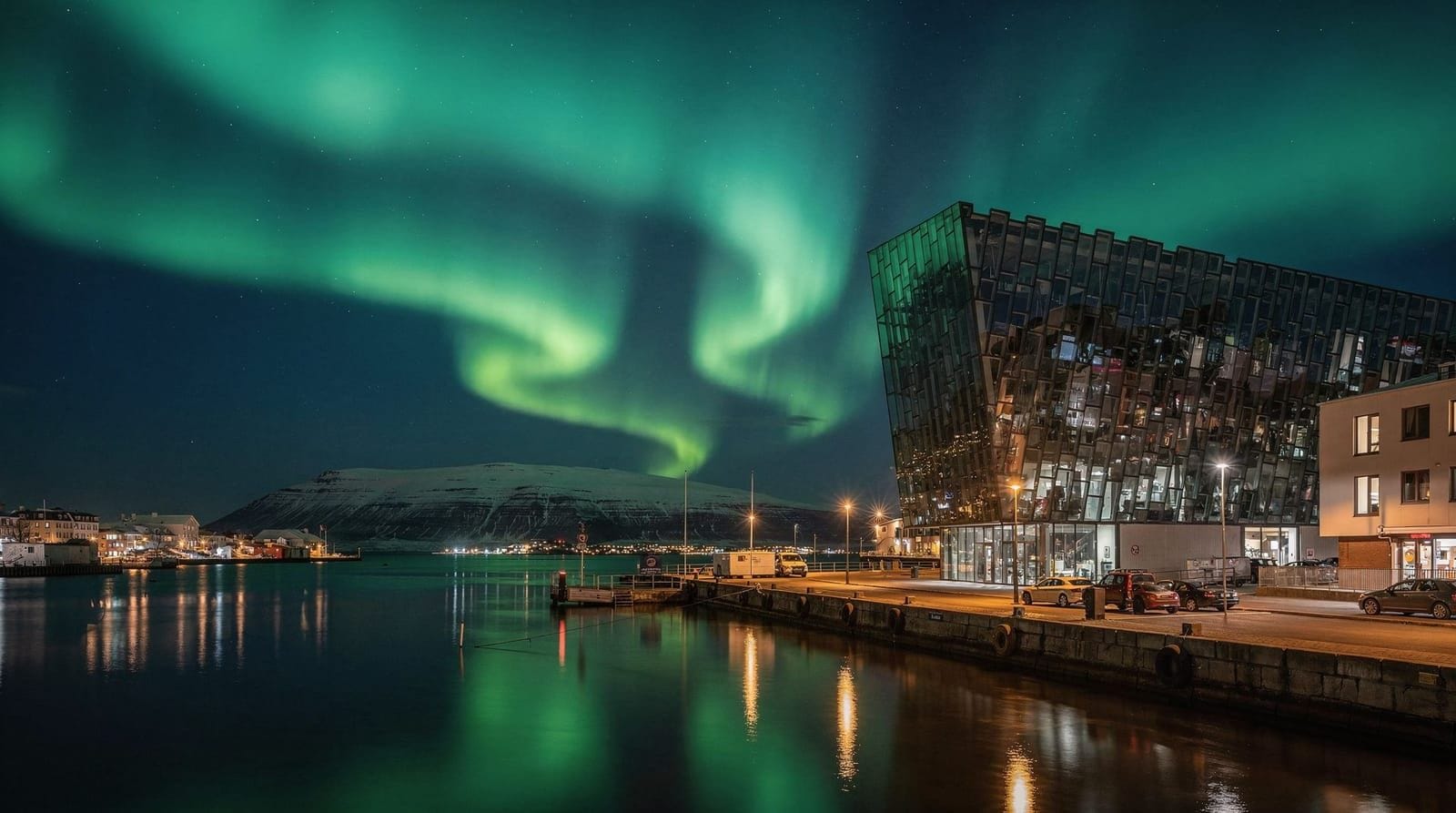
No tour can guarantee northern lights. The aurora is caused by solar wind interacting with Earth’s upper atmosphere — it happens on its own schedule. What northern lights tours can do is improve your odds by:
- Driving you 20–40 km from Reykjavik’s light pollution to a darker location
- Monitoring aurora forecasts and selecting the best available direction
- Staying out for 3–4 hours so you have multiple observation windows
- Providing a guide who knows how to photograph the lights (important — they are often invisible to the naked eye but show up clearly in long-exposure photos)
What tours cannot do: create clear skies, produce solar activity, or guarantee any specific experience.
The key question when booking: Does the operator offer a free return night if you do not see the aurora? Without this, you are taking a complete gamble on a single night. Operators who offer a lifetime guarantee or free-repeat policy carry significantly less risk.
Types of northern lights tours from Reykjavik
Bus/minibus tours (most common) Depart around 9–10 PM, drive to a predetermined location 20–50 km from the city, wait for 2–3 hours, and return. Group sizes range from 8 (premium minibus) to 50 (coach). Smaller groups allow guides to provide better photography assistance and move locations faster if clouds roll in.
Cost: ISK 8,000–16,000 (~€52–105) per person.
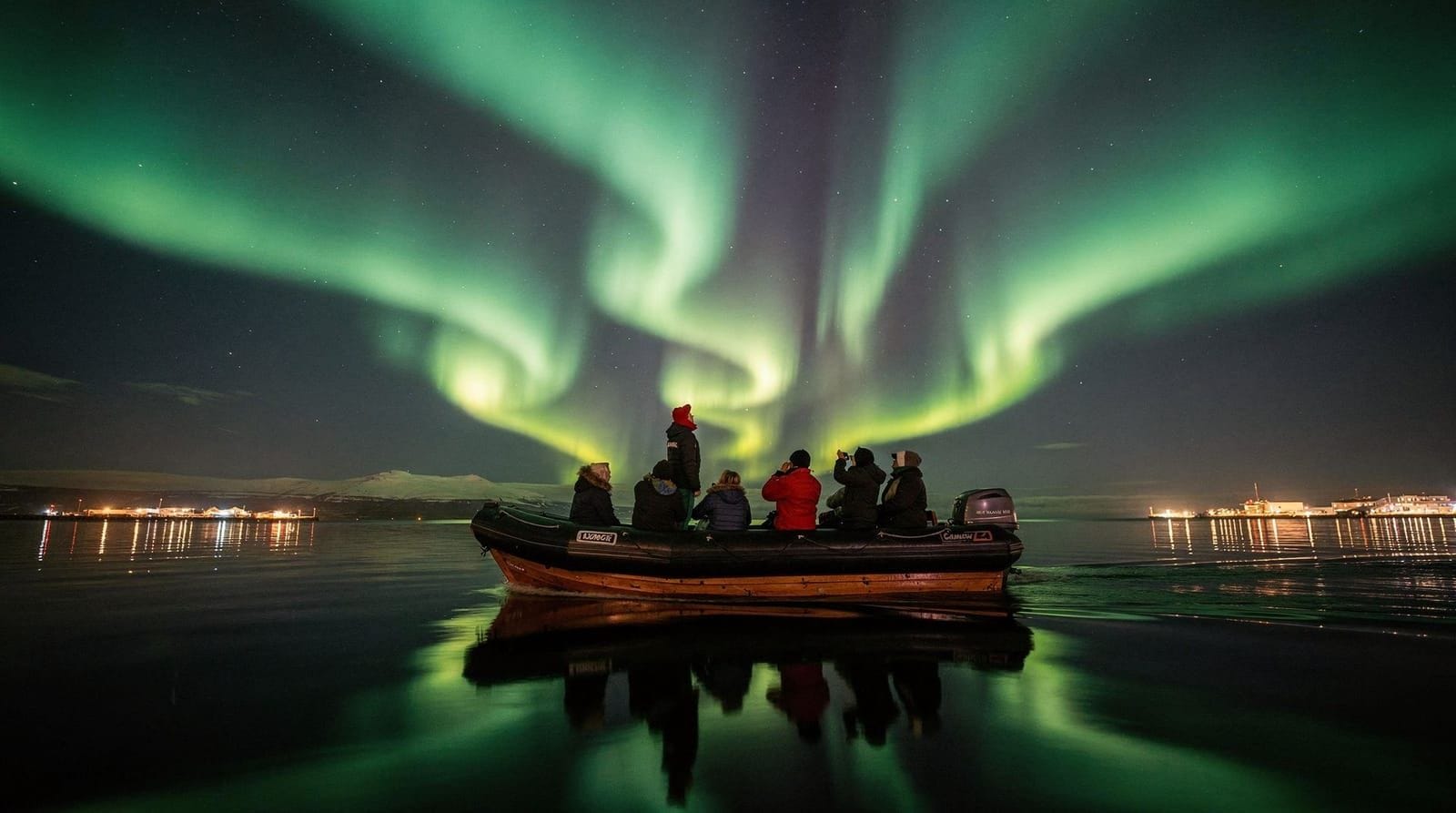
Boat tours Leave from the Old Harbour in Reykjavik and sail into Faxaflói Bay, away from city lights. Benefits: no cloud cover interference from the land (the bay often has clearer skies than surrounding highland), total darkness on the water, and reflections in the sea. Drawbacks: seasickness risk, colder, less control over direction.
Cost: ISK 10,000–15,000 (~€66–99) per person.
Kayaking tours (summer-adjacent) Kayaking in Iceland at night under aurora is a niche premium experience. Offered by a handful of specialist operators. Prices start around ISK 25,000 (~€165).
Photography-focus tours Small groups (6–8 people) with a dedicated photographer-guide who sets up tripods and assists with settings. Worth it for serious photographers; unnecessary for phone snappers.
What you actually get on a bus tour night
You board a warm coach at a central Reykjavik pickup point (usually the BSÍ terminal or your hotel). The guide monitors forecast apps and road.is for cloud cover as you drive. A typical route: out Route 35 toward the Golden Circle area, stopping when the guide identifies a location with good sky conditions.
On a good night (KP4+, clear sky): you will see the aurora within 30–60 minutes of leaving the city. Guides set up tripods and help you take photos — most modern smartphones can capture aurora on night mode, but a camera with manual settings produces dramatically better results.
On an average night (KP2–3, partial cloud): you wait, move locations, wait again. You may see a faint greenish glow. Some guests are satisfied; others feel cheated.
On a no-show night (heavy cloud, low KP): you see nothing and return. This happens regularly. Without a free-return guarantee, this is a complete loss.
Guide quality matters: The best guides know which road offers which horizon, can read forecast data, and keep the group warm and engaged during waits. Budget operators with large coaches often have guides who are more drivers than naturalists.
DIY northern lights without a tour
Renting a car for the evening costs ISK 3,000–6,000 (~€20–39). The cost of fuel from Reykjavik to a dark spot and back adds another ISK 1,500–2,500. Total: ISK 5,000–8,500 for the vehicle — potentially split between multiple people.
How to plan a DIY aurora night:
- Download the Vedur Aurora Forecast app (Icelandic Met Office) — free, accurate
- Check the KP index forecast for the next 24–72 hours. KP3+ over Iceland = viable
- Check cloud cover at vedur.is. Clear sky is the non-negotiable variable
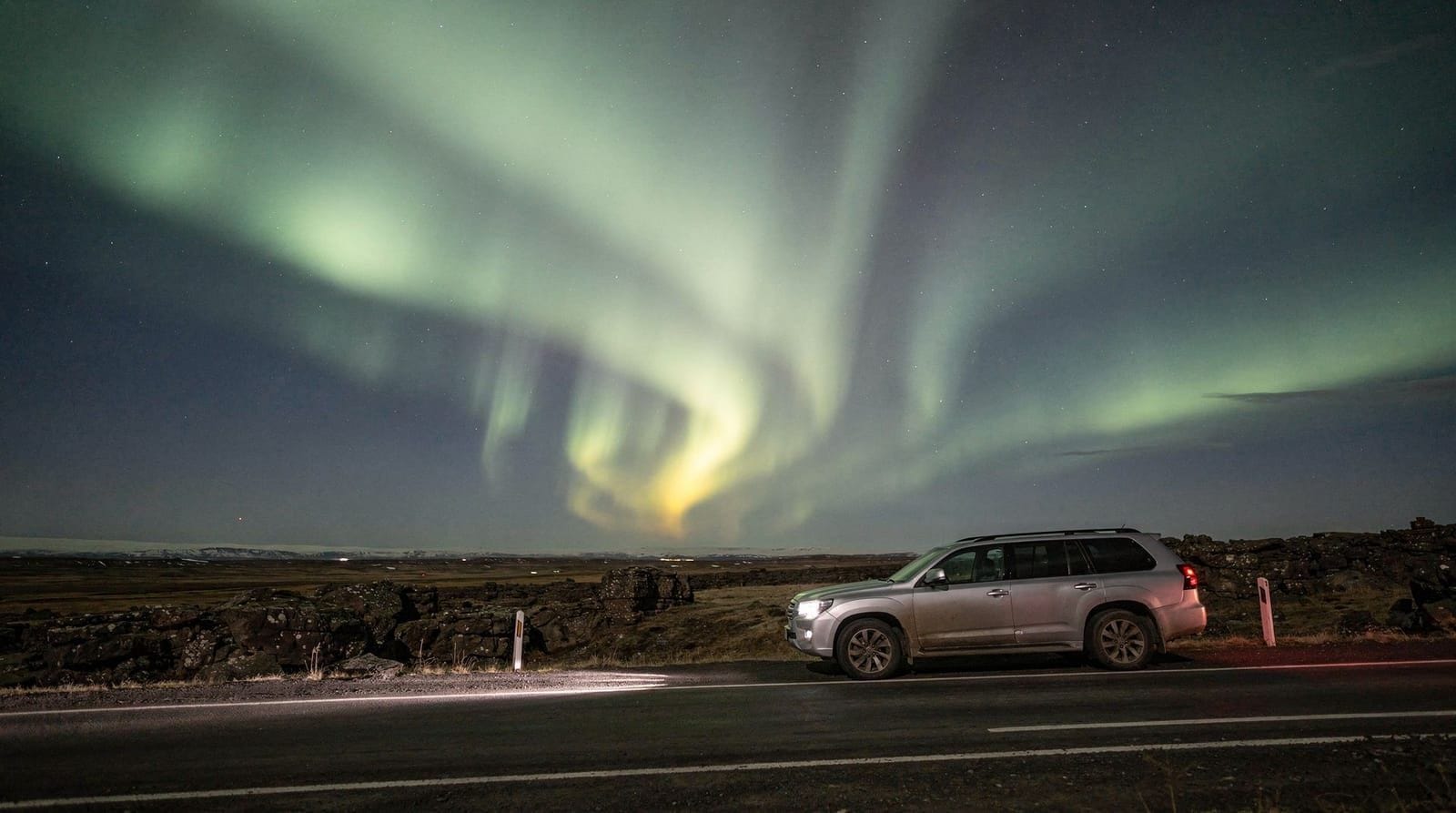
- Drive out of the city on any route away from lit highways — Routes 41, 36, or 1 south all work
- Pull off at a dark layby with a clear northern or eastern horizon
The self-drive aurora hunting guide covers this in full detail. The northern lights from Reykjavik guide lists specific viewpoints within 30 km of the city.
Honest comparison: If you have a car and are willing to do a bit of preparation, DIY aurora hunting gives you more flexibility (you can go back multiple nights) and costs less. If you do not have a car, booking a tour with a free-return guarantee is the sensible choice.
When to book: seasonal realities
Best months for northern lights in Iceland:
- September–October: Long nights return, weather often stable, relatively fewer tourists
- November–February: Longest nights, highest display frequency, but more cloud cover and storms
- March: Still good darkness levels with improving weather
- August: Possible from mid-August onward as nights darken; less reliable
The aurora forecast varies on a daily basis and is influenced by the 11-year solar cycle. 2025–2026 is expected to be near solar maximum, which increases display frequency — this is actually a favorable period.
Iceland in winter context: Northern lights are the primary reason many visitors choose winter, but they are a bonus, not a guarantee. Build an itinerary that works without them.
What to wear
Northern lights waits can be cold, static, and long. Even in autumn:
- Thermal base layer
- Insulating mid-layer
- Waterproof outer layer
- Warm hat and gloves (NOT just thin gloves — full winter gloves)
- Warm waterproof boots
Tour operators often provide warm blankets and hot cocoa. Standing in a field at midnight in October without proper gear is the most common complaint on tour reviews.
Practical booking notes
Free cancellation: Most reputable northern lights tours allow free cancellation up to 24 hours before departure, so you can monitor the forecast and cancel if cloud cover is near-certain. This is worth more than the price difference between operators.
Tour timing: Departures are typically 9 PM–10:30 PM and return by 1–2 AM. Build in enough time for breakfast the following morning.
Combination tours: Some operators offer northern lights plus Golden Circle in a single day — leaving at 8 AM, returning from the north lights tour at 1 AM. These are excessively long days. Not recommended unless you have no flexibility.
Northern lights in context: what the aurora actually is
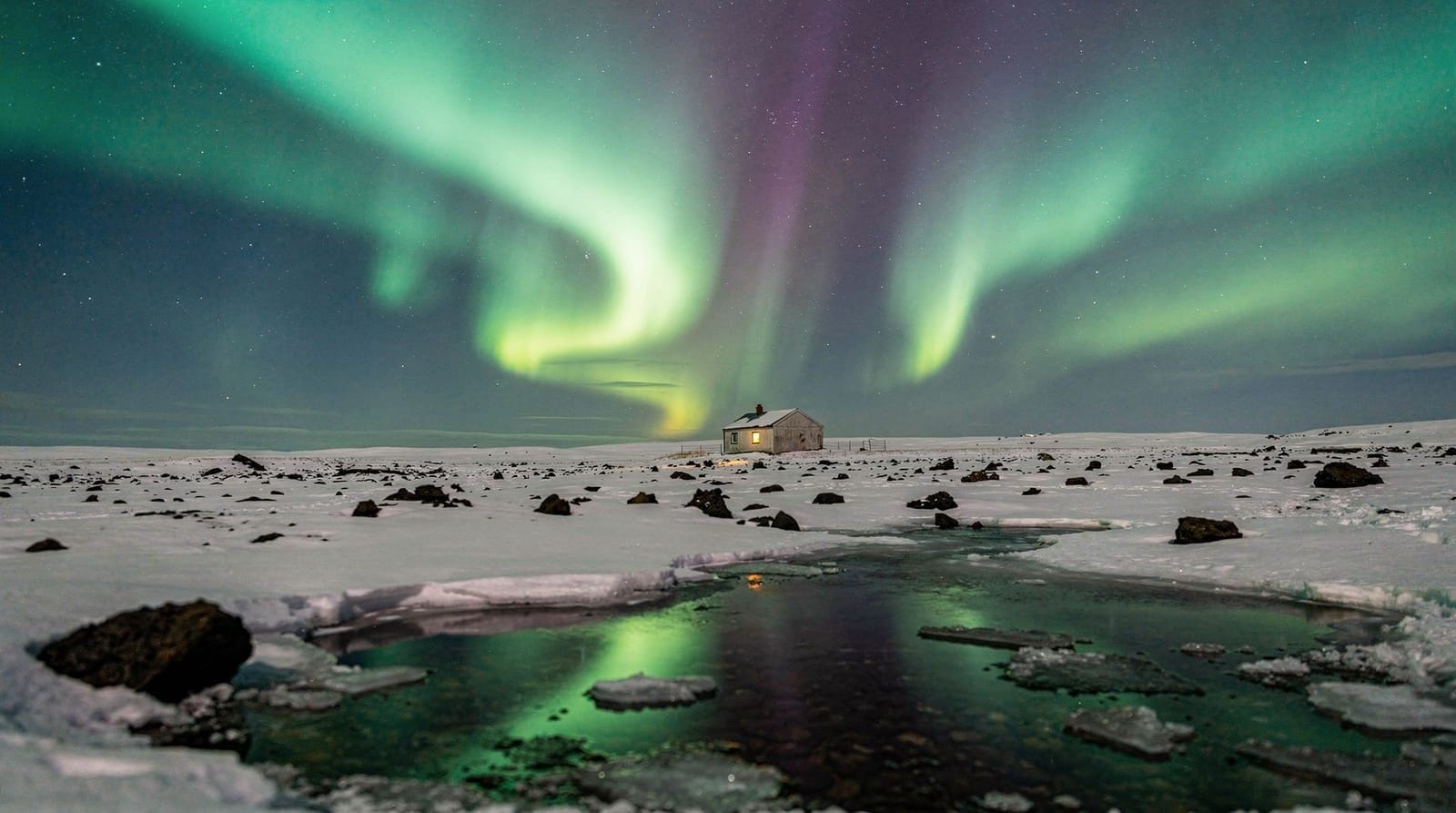
The aurora borealis occurs when charged particles from solar wind collide with gases in Earth’s upper atmosphere (80–300 km altitude). The collisions excite the gas molecules, which release energy as light. Green aurora (most common) comes from oxygen at around 100–120 km altitude. Red aurora (rare, appears above green bands) comes from oxygen at higher altitudes. Blue and purple aurora come from nitrogen molecules.
The intensity is driven by solar activity — measured by the KP index (0–9 scale). Iceland typically sits under the auroral oval (the ring around the magnetic pole where aurora is most frequent) at KP values of 3–4. At KP5+, the aurora moves further south and may be visible in Scotland, Scandinavia, and northern Germany.
What “strong aurora” looks like: At KP4+ on a clear night in Iceland, the aurora can fill the sky — wide bands of green that shift and dance visibly to the naked eye within minutes. At KP7+, coronal displays wrap overhead. These are genuinely extraordinary. Photographs typically show more color saturation than the naked eye, because cameras accumulate light over several seconds.
What “weak aurora” looks like: At KP2–3, the aurora may appear as a faint greenish glow on the northern horizon. Some visitors find this underwhelming; experienced aurora chasers consider it a partial success. Phone cameras on night mode often capture this as a clear green band even when the naked eye barely detects it.
The aurora forecast guide explains how to read Icelandic Met Office data and what the various forecast indicators mean. Reading this before your trip dramatically improves your chances of being in the right place at the right time.
Tour format comparison
| Format | Price (ISK) | Best for | Trade-off |
|---|---|---|---|
| Bus/minibus | 8,000–16,000 | Most travelers; flexible relocation if clouds roll in | Group sizes up to 50 on budget coaches |
| Boat | 10,000–15,000 | Clearer skies over water, no light pollution from land | Seasickness risk, less control over direction |
| Photography-focus | Premium tier | Serious photographers wanting tripod/settings help | Higher price for a small group |
| DIY self-drive | ~5,000–8,500 (car) | Travelers with a license who want repeat attempts | No guide, all navigation and forecast-reading on you |
How many nights should you budget for a sighting?
A single night’s tour is a gamble, however good the forecast looks — cloud cover can change within hours. Experienced Iceland travelers treat the northern lights as a bonus activity across a multi-night stay rather than a single booked event. If your trip includes at least three nights in the September–March window, your odds of at least one clear, active night improve substantially compared to a single attempt. This is exactly why the free-return guarantee offered by some operators matters more than the ticket price difference — it effectively converts a one-shot gamble into multiple attempts at no extra cost.
For travelers without a fixed guarantee, checking the forecast each afternoon and deciding whether to go out that specific night (rather than committing to a pre-booked date regardless of conditions) meaningfully improves results. The aurora forecast guide explains how to read the daily KP and cloud-cover data before deciding.
Frequently asked questions about northern lights tours from Reykjavik
What KP index is needed to see the northern lights in Iceland?
In Iceland’s low-light-pollution areas, KP2–3 can produce visible aurora on a fully clear night. KP4+ ensures a clear display. The Icelandic Met Office forecast gives a useful 3-day prediction.
What is the difference between a bus tour and a boat tour for northern lights?
Bus tours drive to a dark land location, which gives more flexibility to move if clouds move in. Boat tours get further from city light but cannot change location easily. The boat experience is more dramatic (reflections on water) but carries more seasickness risk.
Can I photograph northern lights with a smartphone?
Yes, modern smartphones (iPhone 14+, recent Samsung flagships) can capture aurora on night mode or pro mode. Long exposure of 3–8 seconds at ISO 800–3200 works on most camera apps. A tripod or stable surface is essential. Guides on photography tours will help configure settings.
How often are tours cancelled due to weather?
In Reykjavik, tours almost never cancel — operators go out regardless and try to find a clear spot. If no lights are visible and you chose a reputable operator with a lifetime guarantee, you can rebook. Poor-quality operators without such policies have no incentive to ensure you see anything.
Are northern lights tours safe?
Yes. Licensed Icelandic tour operators carry full insurance and experienced drivers. The risk level is comparable to any normal evening road trip.
Should I book a northern lights tour on my first night in Iceland?
Generally no, unless it’s your only available night. Jet lag and a long travel day make for a poor first-night experience regardless of how good the aurora display is. If your trip includes several nights, booking mid-stay gives you a better chance of checking the forecast a day or two ahead and picking the clearest night.
Is September–October or February–March better for northern lights?
Both are considered shoulder-season sweet spots: nights are long enough for good viewing, and weather is typically more stable than the deep winter months of December and January, which bring more storms and cloud cover. See the northern lights September vs March guide for a detailed comparison.