Northern lights in September vs. March — which month should you visit?
Reykjavik: Aurora borealis Northern Lights tour
Is September or March better for northern lights in Iceland?
Both months sit at the spring and autumn equinoxes, which historically produce elevated geomagnetic activity. September has shorter dark windows (8–12 hours) but milder weather and better road access. March has longer darkness (10–14 hours) and benefits from post-winter price drops, but can have more unpredictable road conditions in early March. If you can only choose one, March offers more darkness at comparable or lower cost.
The practical traveller’s overview
September and March are the two months that consistently appear in “best time to see northern lights” recommendations — but for different traveller profiles, each month’s specific advantages matter differently. Before the detailed comparison, a brief summary of who each month suits best:
| Darkness | September: 8–12 hrs; March: 10–14 hrs |
| Weather | September: milder, some moisture; March: colder, clearer on good days |
| Cost | March typically 15–30% cheaper on accommodation, 20–35% on flights |
| Best paired with | September: hiking, puffins; March: ice caves, glacier hikes |
| Road access | September: fully open, including some F-roads; March: main roads clear, secondary roads can ice |
September is ideal for travellers who: want to combine hiking with aurora hunting, prefer mild temperatures for outdoor activity, are on a first visit and want accessible road conditions, or plan to reach remote locations including the Highlands before winter closures. The weather is less extreme, the landscape is at its seasonal peak of colour, and the aurora season is just beginning — tour operators are eager and prices have not yet reached winter peaks.
March is ideal for travellers who: want the most darkness per night, are travelling on a budget and want to take advantage of winter off-season pricing, plan to include ice cave tours or snowmobiling as daytime activities, or want the dramatic white winter landscape as aurora photography context. The aurora season is mature in March — operators have optimised their routes, and cloud-chasing patterns are well understood by the local guide community from months of winter practice.
There is no wrong choice between these two months. The detailed comparison below helps calibrate which factors matter most for your specific trip.
The equinox effect: real but modest
The Russell-McPherron effect is the scientific basis for the “equinox months are better for aurora” claim you will encounter across Iceland travel content. During the equinoxes, the geometry between Earth’s magnetic field and the interplanetary magnetic field favours coupling — in practical terms, more solar energy reaches the polar atmosphere and triggers more frequent aurora events.
The key word is “modestly.” Statistical analysis of Kp data over multiple solar cycles shows that March and September produce Kp 5+ events about 10–15% more often than December or June. This is a real signal in the data, not invented marketing. But it is not transformative — a trip in December or January still provides plenty of aurora opportunities.
The comparison of September versus March is less about the equinox effect (both months have it, roughly equally) and more about the practical factors that determine the quality of your trip overall.
Darkness comparison
At the latitude of Reykjavík (64° N):
| Date | Sunset | Full dark (astro. twilight) | Dawn |
|---|---|---|---|
| 1 September | ~20:30 | ~22:00 | ~04:00 |
| 21 September | ~19:50 | ~21:30 | ~05:00 |
| 1 March | ~18:30 | ~20:30 | ~07:00 |
| 21 March | ~19:30 | ~21:30 | ~05:30 |
Early September provides only about 6 usable hours of darkness. By the equinox, this has expanded to around 8–10 hours. March, especially early March, can provide 10–12 hours of darkness — a meaningful advantage for hunting aurora across multiple clear windows in the same night.
This matters practically: if cloud clears at 02:00 in September, you have barely 2 hours before twilight. In early March, you have 4–5 hours.
Weather comparison
September: Iceland’s most reliable weather month. Atlantic storms are less frequent and less severe than winter months. Rain is more common than snow. Temperature ranges from 5°C to 12°C across Iceland. The absence of ice on roads is a practical safety advantage.
Disadvantage: some aurora hunters find September’s weather “too warm” — the cold, crisp arctic air masses of winter produce the clearest skies in Iceland. September’s milder conditions come with more atmospheric moisture and slightly higher cloud cover compared to February and March.
March: Cold — temperatures typically -2°C to 5°C. Snow possible at any time. The month has a split character: early March can produce fierce late-winter storms, while late March often brings the first hints of spring with high-pressure systems and crystal-clear blue-sky days.
The clearest nights in Iceland — the achingly cold, calm, star-filled nights that produce the best aurora conditions — occur most frequently in March. March’s cold dry air masses from the north produce lower cloud cover than September’s maritime air.
Statistical averages give neither month a decisive edge on cloud cover. Individual weeks in March can be outstanding; individual weeks in September can be persistently overcast.
Road access and activity options
September advantages:
- F-roads (highland gravel tracks) may still be open in early September — last chance to visit the Highlands before winter closure
- Puffins are still present at Látrabjarg and Westman Islands until mid-September
- Hiking trails are fully open — Laugavegur Trek and Fimmvörðuháls hike at their best
- No ice-related road restrictions
- Waterfalls at their fullest from summer glacial melt
March advantages:
- Ice caving is fully operational — Vatnajökull ice cave tours run through late March
- Snowmobiling on Mýrdalsjökull and Langjökull glaciers
- Glacier hiking conditions on Sólheimajökull at their most accessible
- Whale watching begins — humpbacks arrive near Húsavík and Reykjavík from March
- The Ring Road is fully accessible but some secondary roads may be icy in early March
Cost comparison
Flights and accommodation to Iceland are generally priced lower in March than September. September is positioned at the end of the peak summer season and captures both summer travellers extending their trip and autumn aurora hunters, creating sustained demand.
March sits in the trough between the Christmas holiday premium and the summer peak. Expect to save 15–30% on accommodation and 10–20% on flights compared to the same trip in September.
The cost advantage extends to tour pricing — some operators offer winter discounts on multi-day packages in March.
Photography perspective
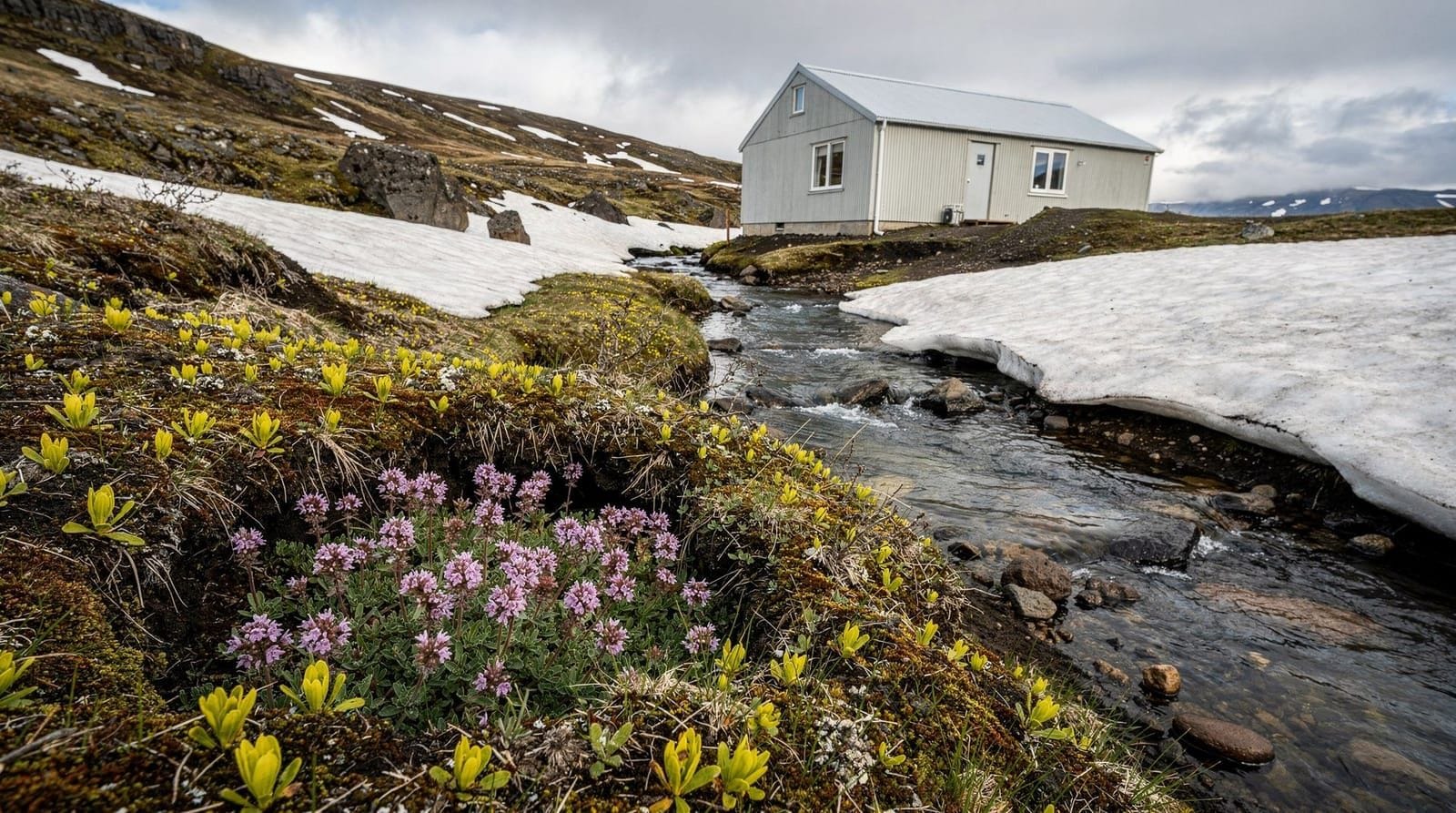
September offers one visual advantage that March does not: colour in the landscape. September’s green hills, yellow-flowering fields, and first yellow-orange larch foliage create a context for aurora photographs that differs from February’s white and grey winter palette. An aurora over a green hillside with a partially snow-capped mountain is a compelling September composition.
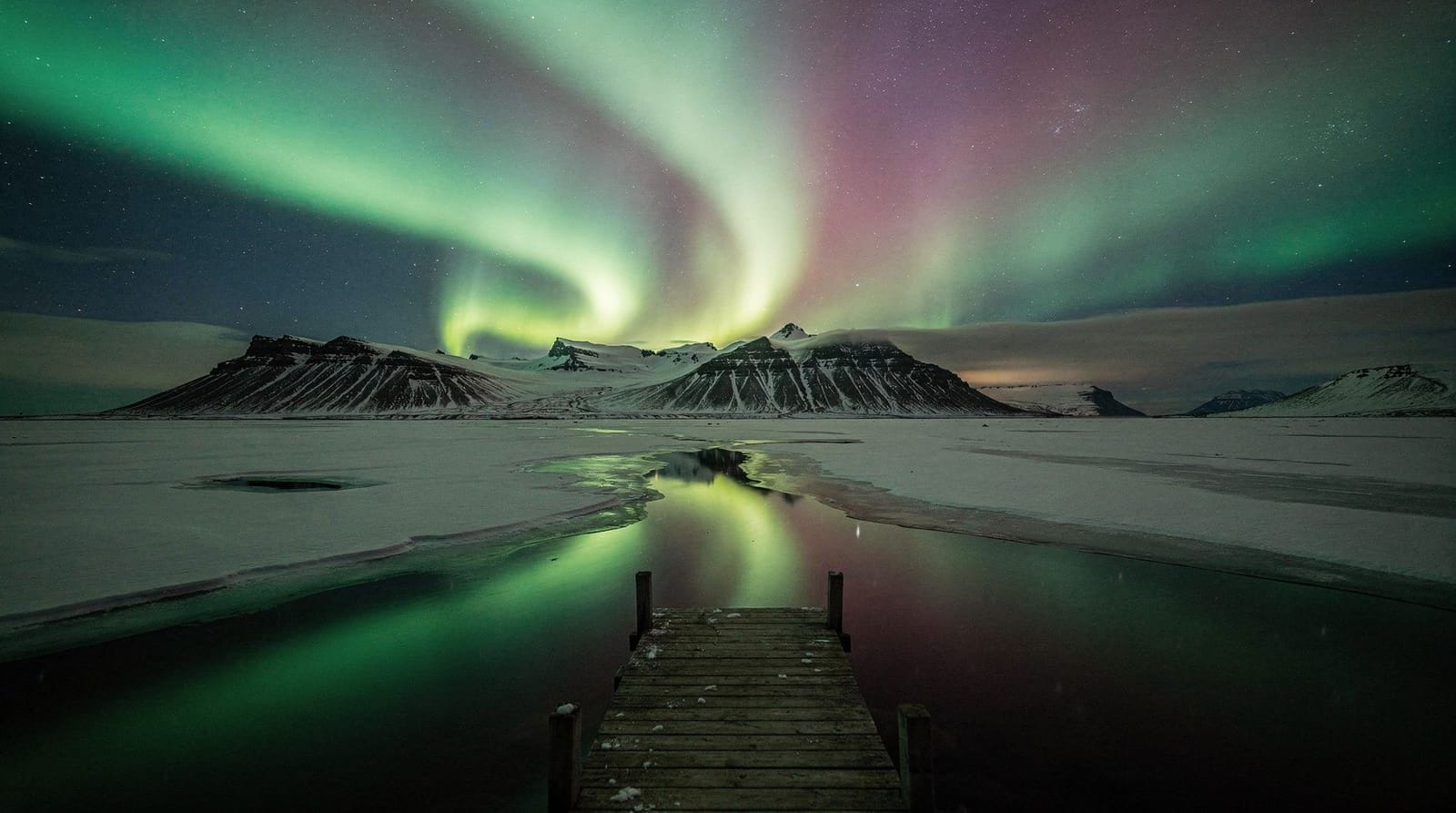
March’s photography strengths: potential for snow-covered landscapes as foreground (dramatically enhancing aurora reflections), crystal-clear skies with very low atmospheric moisture, and the combination of aurora with glacier-capped mountains in full winter dress.
For Kirkjufell photography — Iceland’s most-photographed aurora foreground — March provides the mountain in full snow cover, which many photographers prefer. September provides the mountain without snow but in dramatic autumn light.
Recommended itinerary approaches
September 5-day northern lights trip: Base in Reykjavík for 2 nights (aurora tours), then self-drive the South Coast for 3 nights (combination of hiking, waterfalls, and dark-sky viewing from guesthouses). Take a guided tour for the first night; self-drive subsequent evenings.
March 5-day northern lights trip: Base at a rural guesthouse on the South Coast or Snæfellsnes for 3 nights, then return to Reykjavík for 2 nights. In March, consider adding an ice cave tour (Vatnajökull ice cave) for daytime activity. The northern lights winter 5-day itinerary is designed specifically for this pattern.
What locals say about the two months
Icelandic tour guides who work both seasons tend to have a consistent view when asked directly: March is the more “professional” aurora month because the guide community has had a full winter to learn cloud patterns and back-road shortcuts, while September is the more forgiving month for visitors who are still nervous about driving or want a gentler introduction to the country. Neither view contradicts the data above — it simply reflects that guides spend more nights per week hunting aurora in March than in September, when demand is lighter and daylight hours still fill much of the evening.
A related, less-discussed point: hostel and guesthouse staff in rural areas often note that September guests ask fewer questions about road conditions and more about hiking trail status, while March guests ask almost exclusively about road closures and studded tyres. This reflects the genuinely different character of the two trips more than any difference in how good the aurora itself is.
Getting your timing right within each month
The choice between September and March is useful for initial planning, but within each month, the best specific dates for aurora viewing depend on factors that only become clear closer to the trip.
Within September, the second half outperforms the first. Early September (1st–10th) has limited darkness — typically 6–8 hours — that restricts both the viewing window and the statistical probability of catching a display. By mid-September (15th–30th), darkness has expanded to 10–12 hours and aurora activity is meaningfully easier to catch. If your September trip has flexibility, position it in the third or fourth week of the month.
Within March, the first two weeks are the darkest — the sun rises late and sets early, producing 12+ hours of darkness. By the final week of March, daylight has increased noticeably and the aurora window is shorter, though the equinox aurora enhancement peaks around March 20–22. The first two weeks of March represent the best combination of darkness and equinox effect.
For specific date optimisation: align your trip with a new moon period in your chosen month. In any given year, the new moon in September and the new moon in March represent the darkest possible viewing conditions for that season. Planning 3–4 days centred on the new moon maximises the dark-sky window for faint aurora events.
For both months, the weekend of the Russell-McPherron equinox effect (within 5 days of the equinox itself) has historically produced elevated aurora probability. While this is a statistical tendency rather than a guarantee, positioning at least part of your trip within a week of the equinox is reasonable planning.
Making the final choice
If you can only choose one: March. The combination of more darkness, lower cost, and winter-exclusive activities (ice caves, snowmobiling) makes it the stronger overall option for a dedicated northern lights trip. The road conditions are manageable on main routes, and late March can be surprisingly pleasant.
If you are combining aurora with hiking and want the best weather predictability: September. The autumn landscape is beautiful, roads are fully accessible, and the equinox effect is identical to March.
If flexibility is possible: book March with free cancellation and monitor the 2-week weather forecast before confirming.
Combining aurora with other Iceland activities
One of the strongest reasons to choose March or September over the deep winter months is the range of complementary activities available alongside aurora hunting. Planning a trip around both the northern lights and daytime activity substantially improves overall satisfaction regardless of aurora outcomes on any given night.
September combinations:
Hiking is at its absolute peak in September. The Laugavegur Trek — Iceland’s famous multi-day highland route — has its final days of operation in early September before highland conditions deteriorate. The Fimmvörðuháls hike connecting Þórsmörk to Skógar via the route through lava fields is also at its best. Both routes require overnight huts that close in October.
Day hiking on South Iceland is fully accessible in September without the ice management that complicates winter visits. Skaftafell in the Vatnajökull National Park has extensive day hiking routes. The landscape after a good summer still shows lush vegetation against glacier backgrounds.
Puffin watching extends to mid-September at Látrabjarg in the Westfjords and near Dyrholaey on the South Coast. September visitors can combine wildlife watching by day with aurora hunting at night — a combination not available any other time of year.
March combinations:
Ice caving is March’s strongest exclusive activity. The ice caves inside Vatnajökull typically operate from November through March, with guided tours available at Skaftafell. The Vatnajökull ice cave tour visits blue ice formations that form annually inside the glacier — the season ends in late March or early April as temperatures rise. This is a completely different Iceland experience from anything available in September.
Glacier hiking on Sólheimajökull is accessible year-round, but in March the glacier has full winter ice coverage with the best crevasse scenery. Solheimajokull glacier hike operates throughout March. The combination of a glacier hike in the morning, a coastal landscape drive in the afternoon, and aurora hunting at night makes March days feel genuinely full.
Whale watching from Húsavík begins in March as humpback whales return to feeding grounds near Iceland’s north coast. Early March sightings are less reliable than May-June, but the season has started. From Reykjavík, minke whale watching operates year-round with reasonable success rates.
Photography differences between September and March
The visual character of Iceland changes dramatically between the two months, producing entirely different photographic opportunities.
September landscape palette: Green hills with autumn tints, yellow-orange larch and birch foliage near Þingvellir and Borgarfjörður, waterfalls at high volume from summer glacial melt, and colourful Arctic heather and berries at lower elevations. Aurora photographs in September have a distinctive warmth in the foreground that March’s snow-white landscape cannot replicate.
September also produces interesting sky conditions: autumn storm fronts bring dramatic cloud formations, and the transition lighting between summer and winter creates warmer-toned golden hours than February and March. The combination of autumn colour and aurora has become one of Iceland’s most recognisable photographic signatures.
March landscape palette: White, grey, and blue. Snow-covered peaks in full winter dress. The Kirkjufell mountain with a full snow cap against aurora is one of the classic Iceland images. The reflective white landscape amplifies aurora light — a Kp 3 event visible in September against a dark hillside can produce a dramatically brighter image in March reflected off snow.
March also has one technical advantage for photographers: the cold, dry arctic air masses that arrive from the north produce exceptionally clear skies with high atmospheric transparency. Stars appear sharper, and the aurora’s colour is more vivid in crystal-clear air than through September’s slightly more humid maritime atmosphere.
Timing of golden hour: In September, golden hour occurs at a reasonable time — 18:00–19:00 in early September. In March, golden hour arrives earlier (17:00–18:00 in early March) and the day transition to darkness happens faster. For photography day trips, September allows more flexibility because you have longer daytime light.
The two months suit different photography styles: September rewards warmth and colour work; March rewards contrast, clarity, and the dramatic intersection of winter landscape with aurora light.
Cost and availability comparison
The financial reality of September versus March travel to Iceland is significant enough to affect decision-making, particularly for longer trips.
Flights: The biggest variable. Flights from major European hubs to Reykjavík (Keflavík) are typically 20–35% cheaper in March compared to September. September captures end-of-summer demand — travellers extending summer itineraries, school holiday traffic from some countries, and the first wave of aurora hunters. March occupies Iceland’s lowest-demand window before Easter, making it the cheapest month of the aurora season for flights.
For North American travellers, the differential is similar: March transatlantic fares are markedly lower than September, which benefits from lingering summer peak pricing.
Accommodation: Rural aurora-focused properties are typically 20–30% less expensive in March than September. Reykjavík city hotels follow a similar pattern. The exception: properties near ice caves may have elevated pricing in their final weeks of March as the season’s end approaches.
Tour pricing: Most tour operators maintain consistent pricing year-round (aurora tours are priced by the experience, not by demand). However, some operators run early-season and end-of-season discounts in September and March, respectively. Multi-day packages occasionally include free inclusions (glacier hike, extra night) that are not available at peak pricing.
Availability: September has better availability than March because there is simply more accommodation in operation — some rural properties close for winter after October. By March, all properties that were open for winter are still open, but availability has been partially consumed by the January-February peak demand. Booking 6–8 weeks ahead in March secures good options; 3–4 weeks ahead in September is generally adequate.
The net conclusion: for budget-conscious travellers, March is demonstrably cheaper for the same experience. For travellers who want maximum activity options and the most flexible road conditions, September’s cost premium may be justified. Both months deliver comparable aurora probability with different surrounding experiences.
A hybrid option: late September or early March
If your travel dates have some flexibility, the transition weeks at the edges of each month often deliver the best of both worlds. Late September (the last ten days) combines meaningfully expanded darkness with weather that hasn’t yet turned properly wintry — you get 10+ hours of dark sky without the icy secondary roads that can complicate an early-March trip. Similarly, the first half of March offers the year’s darkest skies while accommodation and flight pricing haven’t yet climbed toward the pre-Easter uptick that begins in late March. Travellers planning around a single fixed date should treat “late September” and “early-to-mid March” as the two sweet spots worth prioritising over the exact calendar month.
Frequently asked questions about September and March northern lights
Is the Kp level higher in September or March?
The long-term average Kp levels in September and March are statistically similar, both slightly elevated compared to other months due to the equinox effect. Day-to-day variation is far larger than the average difference between the two months.
Do tour operators in Iceland run in both September and March?
Yes. Aurora tours run from late August (when enough darkness returns) through April. All major operators in Reykjavík run tours in both September and March. The northern lights tour overview covers the main operators.
Are hotel prices much lower in March than September?
Generally 15–25% lower for the same property, depending on location and room type. The biggest savings are on flights, which can be 20–35% lower compared to September on popular routes from Europe and North America.
What happens if it snows during my trip in March?
Snowfall in March affects road conditions and can close secondary roads. Route 1 (Ring Road) is kept clear with snow ploughs as a priority. Rural guesthouses are prepared for snow; accommodation itself is rarely disrupted. Road.is shows real-time road conditions and closures.
Which month is better for a first-time visitor with no aurora experience?
September, on balance. The gentler weather, fully open roads, and daylight activity options (hiking, puffins, waterfalls at their fullest) make it a more forgiving month if you’re also adjusting to driving in Iceland for the first time. March rewards travellers comfortable with occasional icy roads and shorter daylight windows, in exchange for more darkness and lower prices. Either month works for aurora hunting itself — the choice mainly comes down to what you want your daytime hours to look like.
Booking a tour for either month
Whichever month you choose, a guided aurora tour from Reykjavík removes the forecasting workload on your first night or two, while you get a feel for how Icelandic weather and the Kp index actually behave.
Reykjavík Aurora Borealis northern lights tourFor a policy that protects you if clouds roll in on your one attempt, a lifetime-guarantee style tour lets you rejoin a future departure at no extra cost.
Northern Lights tour with lifetime guarantee — rebook if you don’t see themTop experiences
Best-rated activities across GetYourGuide and Viator.

Private 2-Day Glacier Lagoon, Ice Cave and Northern Lights
- Viator

Reykjavik Private Northern Lights Tour with Pro Photographer
- Viator

Private Aurora Hunt in Iceland with Professional Photos
- Viator

Northern Lights Classic MiniBus Tour from Akureyri
- Viator

Northern Lights Jeep Tour - Icelandic Guide | Photos | Cocoa
- Viator
Akureyri: From Akureyri Northern Lights tour
- GetYourGuide