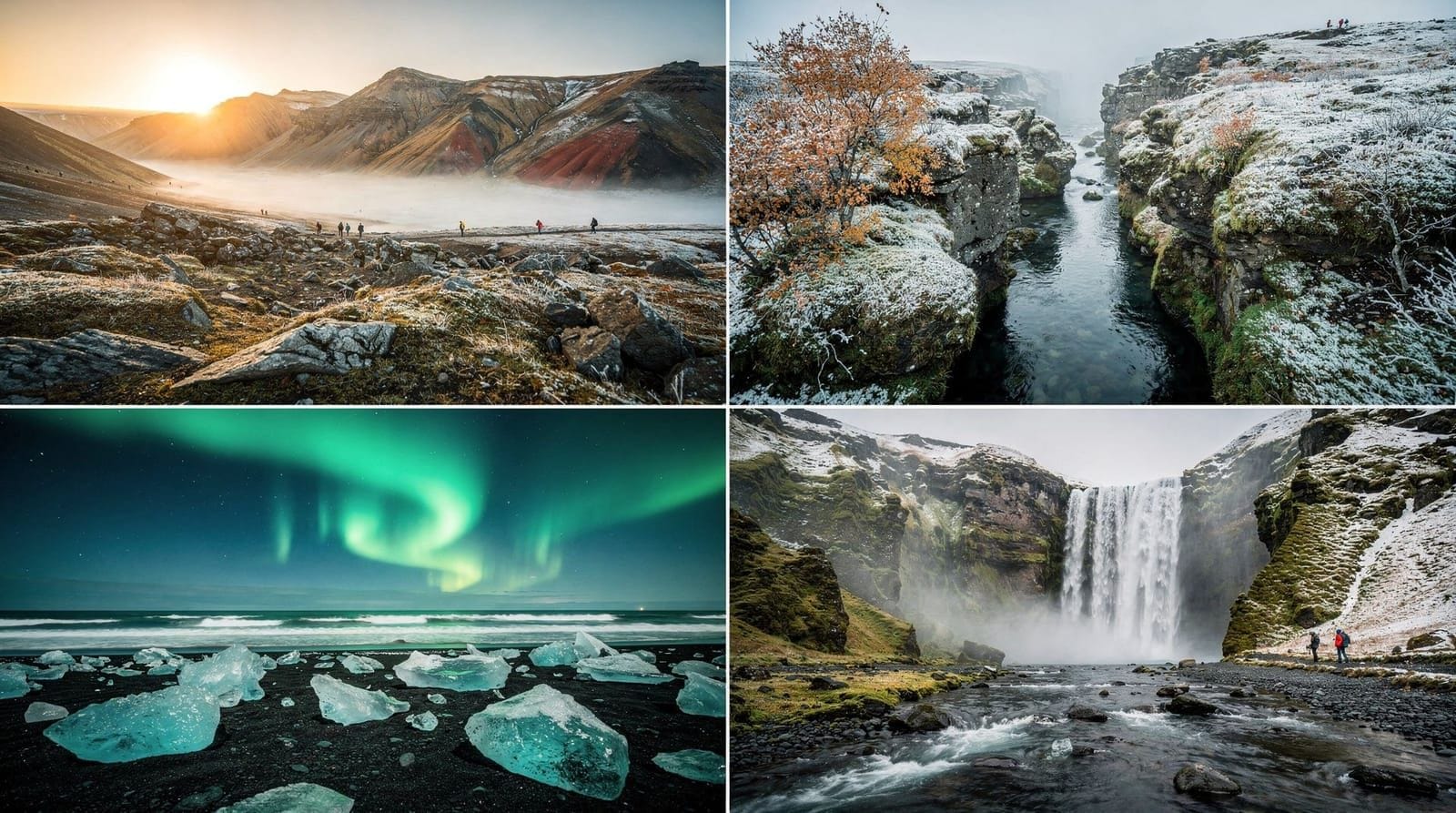
Iceland summer vs winter: which season should you visit?
Reykjavik: From Reykjavik 6 day small group tour of Iceland
Duration: 6 days
Is Iceland better to visit in summer or winter?
Summer (June–August) offers 20–24 hours of daylight, all roads open, F-roads accessible, and lower driving difficulty. Winter (November–March) offers northern lights, lower prices (30–50% cheaper), ice caves, and dramatic snow landscapes — but 4–5 hours of daylight and real driving challenges. Neither is objectively better; they offer fundamentally different experiences.
The core trade-off
Iceland in summer and Iceland in winter are not versions of the same trip — they are fundamentally different experiences. Summer Iceland is accessible, bright, and green; winter Iceland is dark, expensive-if-poorly-planned, and uniquely atmospheric. The right choice depends on what you actually want.
This guide works through the practical differences so you can make a clear decision.
| Best for daylight | Summer (June solstice: near-24 hours) |
| Best for northern lights | Winter (September–April, dark skies required) |
| Cheapest | Winter — roughly 30–50% lower than July peak |
| Best road access | Summer — all Ring Road and F-roads open |
| Best overall value | Shoulder season (May or September) |
Daylight
Summer
June solstice: Iceland at 64°N latitude experiences near-24-hour daylight in mid-June. The sun does not fully set; twilight around midnight is as dark as it gets. You can photograph waterfalls at midnight, hike until 22:00, and drive cross-country without headlights.
Practical impact: This is genuinely transformative. You can fit 16–18 hours of active travel into a summer day without feeling rushed. The midnight sun also creates extraordinary photography light — golden hour lasts 4–5 hours.
July–August: Still 17–20+ hours of daylight. Usable for all activities.
Winter
December: 4–5 hours of usable daylight. Sunrise around 11:00, sunset around 15:30. The remaining 19 hours are darkness or blue-hour twilight.
Practical impact: Winter driving is compressed. Realistic driving days are 4–6 hours maximum — plan shorter distances and fewer stops per day. Winter photography requires working with artificial light or exceptional blue-hour/golden-hour windows that last 1–2 hours.
February: Improving quickly — 8 hours of daylight by mid-February.
Northern lights vs midnight sun
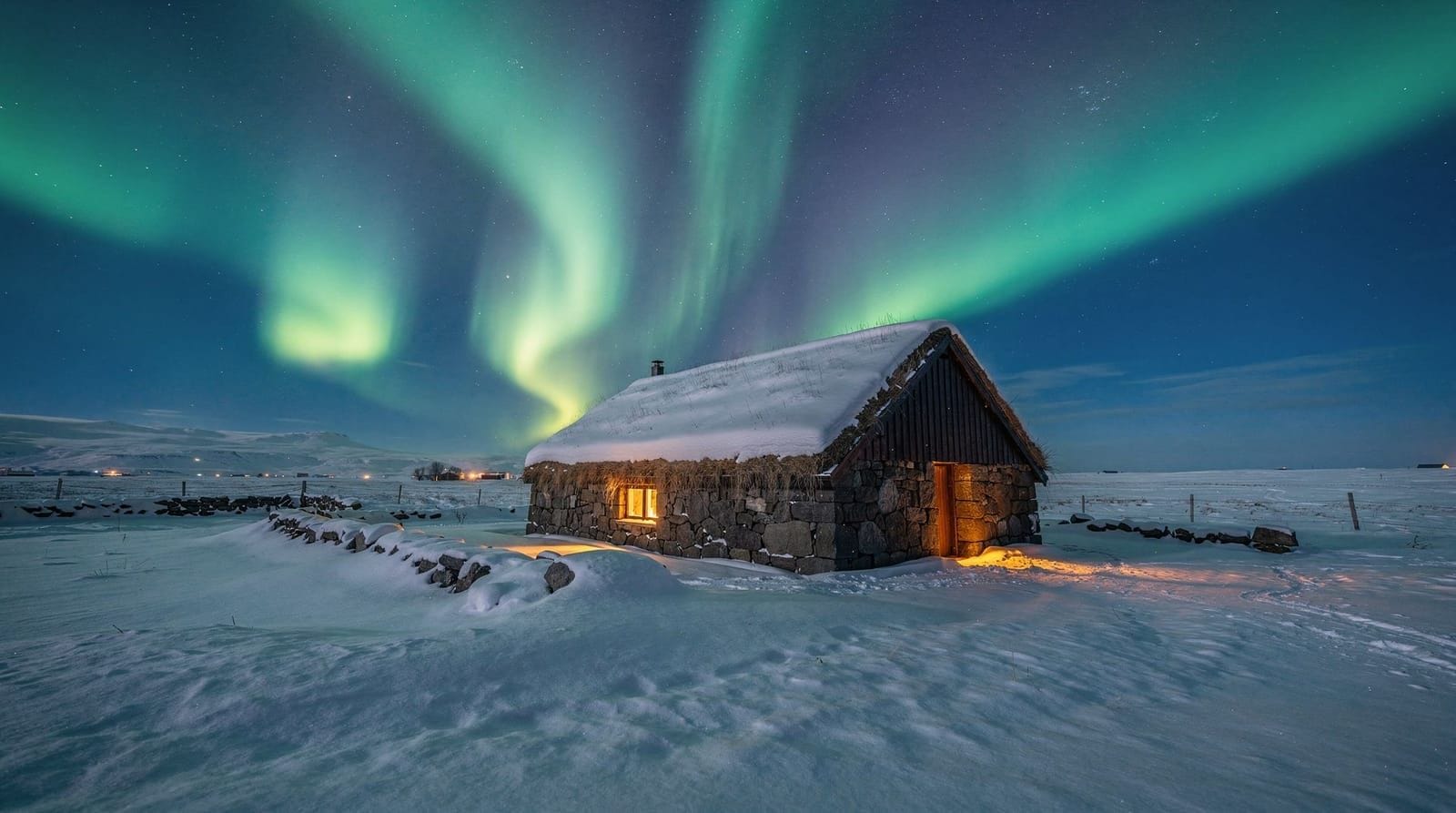
Northern lights (September–April)
The aurora borealis is only visible when there is darkness, a clear sky, and sufficient solar wind activity. This rules out late May through July when Iceland has near-24-hour daylight.
Peak northern lights months: September, October, February, March. These combine decent darkness hours with statistically higher aurora frequency.
The aurora is not guaranteed. Clear skies are needed, and Iceland’s cloud cover makes clear nights unpredictable in winter. Average winter: 3–5 aurora-visible nights per week in rural Iceland. In Reykjavik light pollution reduces this significantly. More in our northern lights guide.
Midnight sun (May–July)
The midnight sun is visible in Iceland from mid-May through late July. The sunlit midnight creates surreal photography opportunities and allows hiking, glacier walks, and driving at times when other destinations would be dark.
Experiential impact: Many visitors describe the midnight sun as one of the most disorienting but memorable things they experience in Iceland — waking at 02:00 to bright sunshine. It also disrupts sleep for those without blackout curtains.
Prices
Summer is significantly more expensive than winter:
| Category | Summer (July) | Winter (January) |
|---|---|---|
| Rental car (small 4x4) | ISK 20,000–35,000/day | ISK 10,000–18,000/day |
| Flights from London | €200–450 return | €80–200 return |
| Guesthouse double room | ISK 25,000–45,000/night | ISK 15,000–28,000/night |
| Blue Lagoon entry | From ISK 10,000 (€68) | Same, but easier to book |
Winter savings: Roughly 30–50% cheaper across accommodation, flights, and car rental compared to peak July. For a 10-day trip, the cost difference can be ISK 200,000–500,000 (€1,360–3,400) per couple.
Access and roads
Summer
- All Ring Road (Route 1) sections open
- F-roads open late June to mid-September
- No mandatory winter tyres
- No weather-related driving closures (rare exceptions)
- All campsites open
- Snæfellsnes, Westfjords, Highland interior all accessible
Winter
- Ring Road open year-round but with temporary closures during storms (10–30 days total per winter)
- F-roads closed October–June
- Mandatory winter/studded tyres (all rental cars equipped)
- Regular road condition checking required (road.is)
- Most campsites closed November–March
- Westfjords passes can close October–April
Driving difficulty: Winter requires more experience and vigilance. First-time Iceland drivers are better off in summer; confident winter drivers handle it well. See our winter driving guide.
Activities by season
| Activity | Summer | Winter |
|---|---|---|
| Northern lights | Not possible | Yes (Sep–Apr peak) |
| Midnight sun | Yes (May–Jul) | Not possible |
| F-roads and highlands | Yes (Jul–Sep) | Closed |
| Ice cave tours | Summer (artificial caves only) | Yes (natural ice caves Oct–Mar) |
| Glacier hiking | Year-round | Year-round |
| Puffin watching | May–August only | Not possible |
| Whale watching | May–September best | Lower success rate |
| Swimming outdoors | Year-round (geothermal) | Year-round |
| Highland trekking (Laugavegur) | Jul–Sep | Closed |
Exclusive to winter: Natural blue ice caves beneath Vatnajökull and Mýrdalsjökull are only safely accessible October–March, when cold temperatures stabilise the ice ceiling. Summer substitutes (artificial/man-made ice caves) exist but are a different experience. See our ice cave guide.
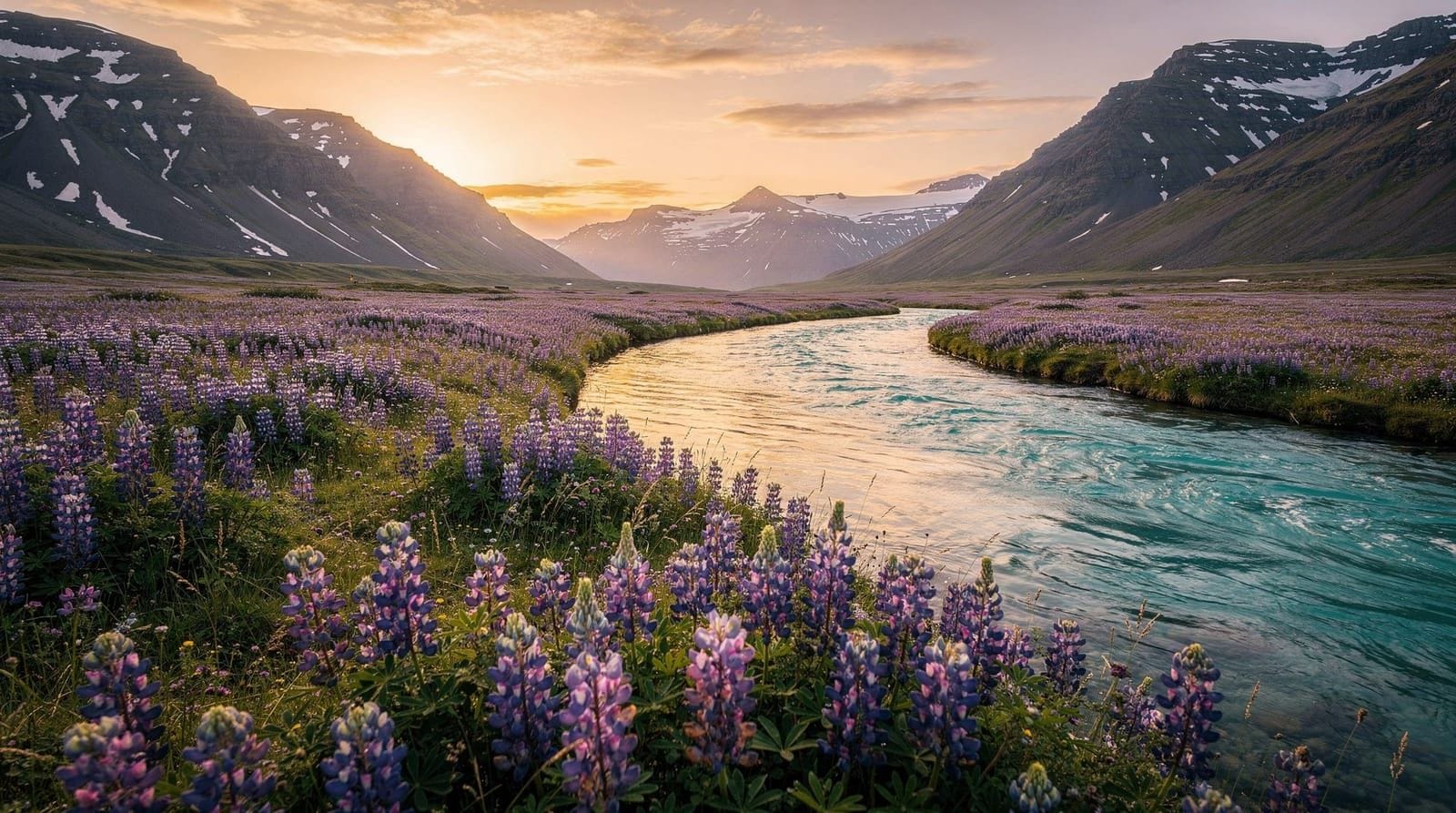
Exclusive to summer: Puffins (April–August, peak May–July), midnight sun photography, highland F-roads, Laugavegur Trek, and the green landscapes that feature in most Iceland photography.
Crowds
Summer is Iceland’s peak tourist season. July–August sees:
- Geysir and Gullfoss car parks full by 10:00
- Reynisfjara beach crowded all day
- Ring Road campsite bookings required weeks ahead
- Jökulsárlón can have 200+ visitors at peak hours
Winter is significantly quieter. December–February tourist numbers drop 50–60% compared to July. You can have Skógafoss largely to yourself in February morning light.
Weather
Iceland’s weather is famously variable regardless of season. Summer is warmer (10–15°C coastal lowlands) but not reliably sunny — the South Coast and Westfjords receive significant rainfall year-round. Winter is colder (-2 to +5°C coastal) and stormier.
The main weather risk in summer is wind, rain, and fog limiting visibility at viewpoints. The main risk in winter is driving-affecting storms and road closures. Both require flexibility in your plan.
Shoulder seasons: the honest answer
If you can travel in May or September–October, you get:
- May: Increasing daylight (16+ hours), no midnight sun yet, low crowds, all Ring Road open, F-roads about to open. Green starting to return. Prices lower than summer.
- September–October: Northern lights from mid-September, golden autumn colours on highland vegetation, reduced crowds from late September, still 12–14 hours daylight in September. Ring Road open; F-roads closing in October.
Many experienced Iceland travelers consider September the best month overall — northern lights possibility, post-summer crowd reduction, autumn light, and most activities still available.
Specific things that are better in summer
Midnight sun photography: The 22:00–01:00 golden hour window in June–July is Iceland’s most distinctive photography opportunity. Waterfalls illuminated by the midnight sun, the Ring Road empty, and the quality of light that professional photographers come specifically to chase. No amount of HDR processing recreates what the midnight sun delivers in real time.
Puffin colonies: Atlantic puffins arrive in Iceland in April and depart by mid-August. The colonies at Dyrhólaey, Látrabjarg, Vestmannaeyjar, and various offshore islands are only accessible in the breeding season. Iceland holds approximately 60% of the world’s Atlantic puffin population. See our puffin watching guide.
Highland treks: The Laugavegur Trek from Landmannalaugar to Þórsmörk is a 55 km, 4–5 day hike through the most dramatic highland scenery in Iceland. It is only open July–September. The huts fill 8–10 weeks ahead; book in February–March for summer dates.
Whale watching: While whales are present year-round, success rates peak from May to September when minke and humpback whales feed in Faxaflói bay near Reykjavik and in Skjálfandi bay near Húsavík. Winter whale watching trips have lower (30–50%) sighting success rates compared to summer (80–90%). See whale watching guide.
Specific things that are better in winter
Natural ice caves: The blue ice caves beneath Vatnajökull and Mýrdalsjökull glaciers are only safely accessible in winter. The ceiling ice is too unstable in summer for public access — meltwater can cause collapse. In October–March, guided ice cave tours (Crystal Cave and Sapphire Cave at Vatnajökull, Katla Ice Cave at Mýrdalsjökull) allow access to chambers of extraordinary blue glacier ice. Booking opens in October for the season; popular dates sell out within days. See our ice cave guide.
Dog sledding: Iceland offers dog sled tours near Mývatn and the highlands when snow is sufficient — typically January–March. This requires specific snow conditions and is not available every winter.
Christmas markets: Reykjavik’s Austurvöllur square hosts a Christmas market from late November, and Iceland’s Advent season has distinct cultural character (the 13 Yule Lads, candle-making traditions, light-heavy home culture that emerges in the darkness).
Value: Winter flight prices from most European cities are 40–60% lower than July peak. The savings on a winter trip often fund one or two additional nights.
The transition months in detail
May
May is arguably the most underrated Iceland month. Specifics:
- Daylight hours: 15–18 hours, increasing quickly
- Northern lights: Still possible on dark nights in early May (sunset before 22:00 early in month)
- F-roads: Still closed (open typically late June), so no highland access
- Crowds: 30–40% lower than July; major sites manageable
- Puffins: Arrive in late April/early May — can see them at Dyrhólaey from early May
- Price: 25–35% below July peak
- Weather: Unpredictable but spring green starting on lower elevations
- Snow: Still present in highlands and on mountain roads above 500 m
May is particularly good for the Ring Road without highland detours and for northern lights hunting earlier in the month when nights are still reasonably dark.
September
September might be Iceland’s single best travel month for most independent travelers:
- Daylight: 14–16 hours declining, but enough for full travel days
- Northern lights: Real aurora possibility from mid-September onwards
- F-roads: Still open for most of September (close by mid-October)
- Crowds: Dramatically reduced from August peaks; sites manageable
- Autumn colours: Highland rhyolite areas, birch trees, and heather turn golden and red
- Weather: Similar to summer — storms possible but not dominant
- Price: 20–30% below July peak
- Whales and puffins: Puffins still present until mid-August; whales still good in September
The combination of northern lights possibility plus decent daylight, open F-roads, and reduced crowds makes September the month that experienced Iceland travelers repeatedly return to.
Itineraries designed for each season
Summer planning: See our Iceland in summer guide and the Ring Road 10-day itinerary which uses summer light and road access.
Winter planning: The winter self-drive 5-day itinerary and northern lights winter 5-night itinerary are built for winter-specific conditions.
Month-by-month detail: Our Iceland month-by-month guide breaks down conditions, prices, and access for every calendar month.
Planning for the unpredictable: both seasons need buffer
Iceland’s weather is famously variable in both seasons. The planning approach needs to account for this regardless of when you go.
Summer buffer days: In June–August, most Ring Road driving is reliable. Build buffer for:
- Waiting for fog to clear at a key photography location
- A Reynisfjara visit that’s genuinely too windy to approach (happens 3–5 days/month on average)
- A Þórsmörk F-road access that’s temporarily difficult after heavy rainfall
In a 10-day summer trip, 1 buffer day is generally sufficient unless you have tightly booked non-refundable accommodation throughout.
Winter buffer days: In November–March, plan 2 buffer days in a 7-day trip or 3 in a 10-day trip. Ring Road closures happen; weather can ground you. The buffer days often become your best moments — unexpected access to a site when others are stuck, or a morning in a guesthouse watching the storm from inside with coffee, which is its own Iceland experience.
Health considerations by season
Sun exposure
Summer midnight sun: The psychological effect of sustained daylight is real. Melatonin disruption is common — some visitors experience difficulty sleeping for the first 2–3 nights. Bring a good sleep mask and blackout blinds if you are sensitive to light during sleep. The long-term jetlag-like effect typically resolves within 3 days.
Sunburn: Iceland’s summer sun at low angles is deceptive. Midday UV is lower than Mediterranean levels but sustained afternoon and evening sun exposure (possible until midnight) can cause sunburn in pale-skinned visitors. Apply SPF 30+ for extended outdoor activities.
Cold exposure in winter
Hypothermia risk: More of a consideration for those doing winter hiking or standing still in exposed conditions than for driving. Road walking in a storm or being stranded in cold conditions are the scenarios to prepare for. The emergency kit items listed in our Iceland self-drive guide are directly relevant.
Ice slip injuries: More common than dramatic weather-related incidents. Ice on campsite paths, viewpoint walkways, and car park surfaces causes ankle and wrist injuries annually. Ice cleats (microspikes) that slip over regular boots cost ISK 2,000–4,000 and prevent the majority of slip injuries.
The cost impact of choosing summer vs shoulder season
Concrete cost comparison for a couple doing 10 days, mid-range travel:
| Category | July peak | September shoulder | January off-peak |
|---|---|---|---|
| Flights (London return) | €400–600 | €200–350 | €100–180 |
| Rental car (4x4) | ISK 350,000 | ISK 230,000 | ISK 150,000 |
| Accommodation (10 nights) | ISK 350,000 | ISK 240,000 | ISK 170,000 |
| Total per couple | ~ISK 1,500,000 | ~ISK 1,000,000 | ~ISK 680,000 |
July vs September: approximately 50% higher cost. July vs January: approximately 120% higher cost.
The shoulder season (September) offers the best value-to-experience ratio for most visitors: significantly lower cost, real aurora possibility, reduced crowds, open F-roads (early September), and exceptional autumn light.
Frequently asked questions about summer vs winter Iceland
Is Iceland worth visiting in winter?
Yes, for the right traveler. Winter Iceland has the northern lights, natural ice caves, dramatically reduced crowds, and lower costs. The difficulties — limited daylight, more driving risk, F-roads closed — are real but manageable. More in our Iceland in winter guide.
Can I see the northern lights in summer?
No. The midnight sun prevents aurora visibility from late May through mid-July. Northern lights require darkness. The transition periods (late August, early September, late April) have brief darkness windows but aurora probability is lower.
Which season is better for hiking?
Summer. The Laugavegur Trek, Fimmvörðuháls, and highland trails are open July–September only. Day hikes at sea level (Þórsmörk, Snæfellsnes, Westfjords) are doable year-round with appropriate gear.
Which is better for photography?
Both have excellent and distinct photographic potential. Summer: midnight sun, green landscapes, waterfalls with full flow, puffins. Winter: aurora, ice caves, snow-covered landscapes, blue-hour light that lasts 4 hours, dramatic storm skies. Serious photographers often visit twice — one summer, one winter.
Is the Blue Lagoon open in both seasons?
Yes. The Blue Lagoon operates year-round except for occasional temporary closures related to volcanic activity. Advance booking is required regardless of season. See our Blue Lagoon guide.
What should I pack differently for summer vs winter Iceland?
Summer additions: Sunscreen (sustained low-angle UV), insect repellent (midges at Mývatn in July–August are genuine pests), sleep mask for midnight sun, lighter layers you can strip off as temperatures rise.
Winter additions: Heavy waterproof insulated jacket, wool base layers, thermal gloves and hat, neck gaiter, ice cleats (microspikes) for slippery paths, head torch, hand warmers. The layering principle applies in both seasons — Iceland weather changes rapidly.
Both seasons share the need for waterproof jacket and trousers (Iceland rains horizontally year-round) and solid waterproof hiking boots.
How cold does Iceland get in winter?
Coastal Iceland in winter: typically -2°C to +5°C. The Gulf Stream moderates temperatures significantly — Reykjavik is rarely below -10°C. The highlands are colder (down to -20°C in January). Inland conditions are harsher than coastal ones; the Ring Road East and North sections get colder than the South Coast.
Which season is better for a first-time visitor?
Summer, generally, if choosing between the two extremes rather than a shoulder month. First-time visitors benefit from the easier driving, full road access including the Ring Road and F-roads, and the lower stress of not needing to monitor storm forecasts. That said, plenty of first-timers choose winter specifically for the northern lights and have a great trip — the key is packing and planning for the season you choose, not avoiding winter out of caution alone.
Do I need a 4x4 in both seasons?
Not strictly in summer — a 2WD handles the paved Ring Road and most day trips fine, though F-roads always require 4x4. In winter, a 4x4 with winter tyres is strongly recommended rather than mandatory; see the 2WD vs 4x4 guide for the specific trade-offs by season and itinerary.
Choosing by trip type
Rather than picking a season in the abstract, it often helps to work backward from the kind of trip you actually want.
Photography-focused trip: Both seasons deliver, but for different reasons — decide based on whether you want green landscapes and midnight golden hour (summer) or aurora and stark snow contrast (winter). Serious photographers frequently make two separate trips rather than compromise.
Family trip with young children: Summer is meaningfully easier — longer daylight means less pressure on the daily schedule, warmer temperatures reduce gear complexity, and outdoor activities aren’t constrained by short daylight windows. See the Iceland with kids guide for season-specific family advice.
Budget-driven trip: Winter, without much competition — flights, cars, and accommodation are routinely 30–50% cheaper than July, and the Iceland on a budget guide leans heavily on off-peak timing as a cost lever.
Active/hiking-focused trip: Summer is close to mandatory if the Laugavegur Trek or other highland routes are the goal, since these are only open July–September. Sea-level day hikes remain viable in winter with appropriate gear.
Northern lights as the primary goal: Winter, specifically September through April, with February and March offering a good balance of improving daylight and still-strong aurora statistics.
Couples’ trip or honeymoon: Either season works well, and the choice often comes down to atmosphere preference — summer’s endless golden light suits a relaxed, scenic-drive style of trip, while winter’s darkness, hot springs, and aurora hunting suit a cosier, slower-paced itinerary built around fewer but more deliberate stops.
Booking a guided tour by season
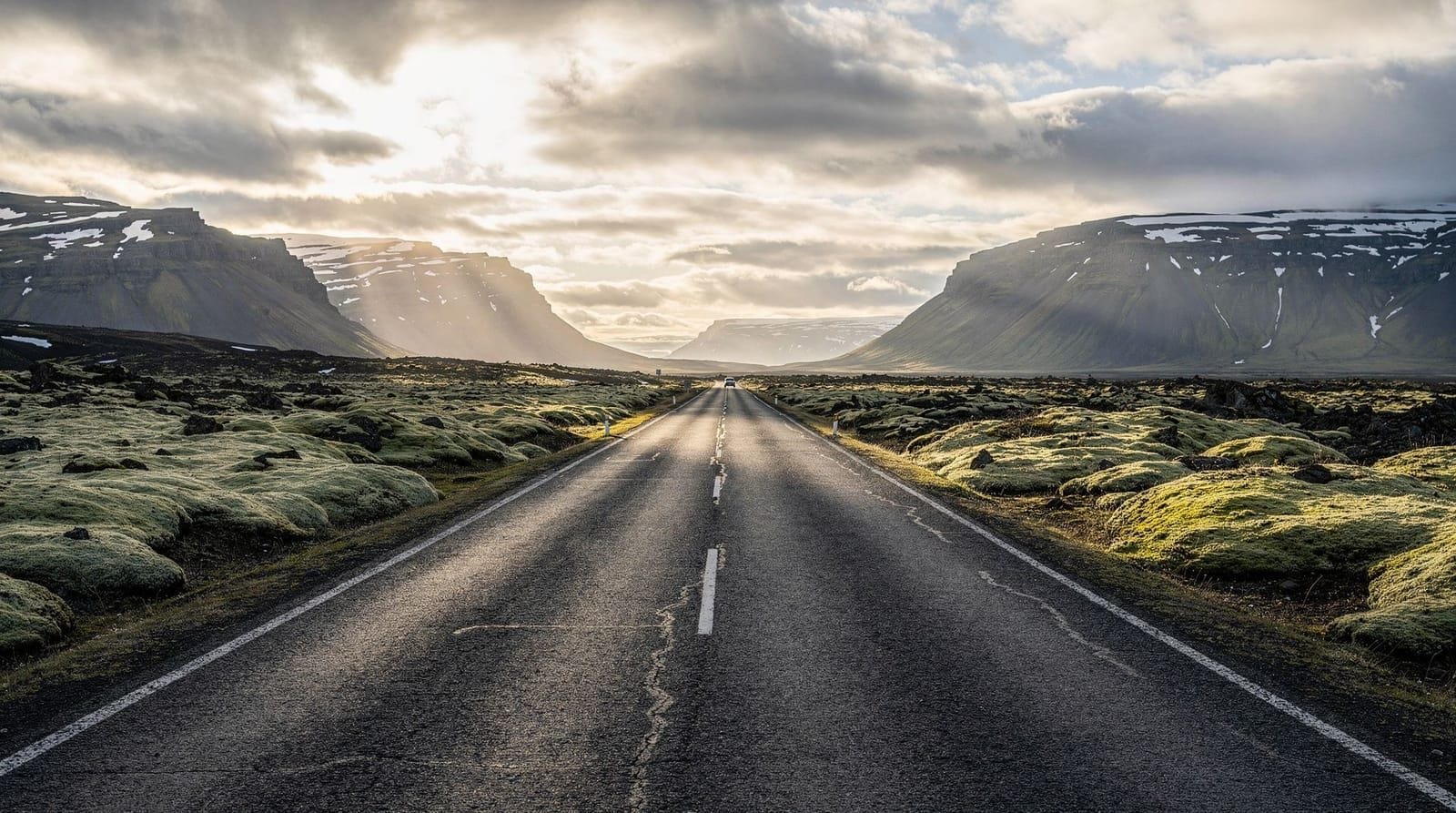
For visitors who’d rather not self-drive in either season, guided tours adapt their focus accordingly. Summer group tours emphasise the Ring Road circuit, highland access, and wildlife-watching windows that only exist in the warmer months.
6-day small-group Ring Road tour from Reykjavík — summer highlights, waterfalls, and glacier stopsWinter tours pivot toward the aurora and ice-specific activities that define the season, often built around multiple nights with dedicated aurora-hunting excursions rather than a single evening add-on.
Reykjavík northern lights tour — guided aurora hunting with expert commentary