South Coast winter self-drive — 5-day Iceland itinerary
Reykjavik: Solheimajokull Glacier hike Reykjavik
The South Coast is Iceland’s most popular road-trip corridor in summer — and it is arguably at its best in winter. Visitor numbers drop by 60–70%, the frozen waterfalls and icy basalt beaches look nothing like their summer selves, and the long dark nights give you legitimate chances at the northern lights after day hikes and waterfall visits.
This 5-day itinerary is designed specifically for winter (November through March), with day-by-day structure that respects the limited daylight hours, builds in flexibility for road closures, and slots in the ice cave visit that is only available in this season.
The honest winter reality
Daylight: In December, you have approximately 4–5 hours of daylight in the Reykjavík area. By early March, this extends to 11–12 hours. The itinerary is written for December–January worst case, with notes on how more daylight in February–March changes the pacing. If visiting in November–March, buy a head torch and use it.
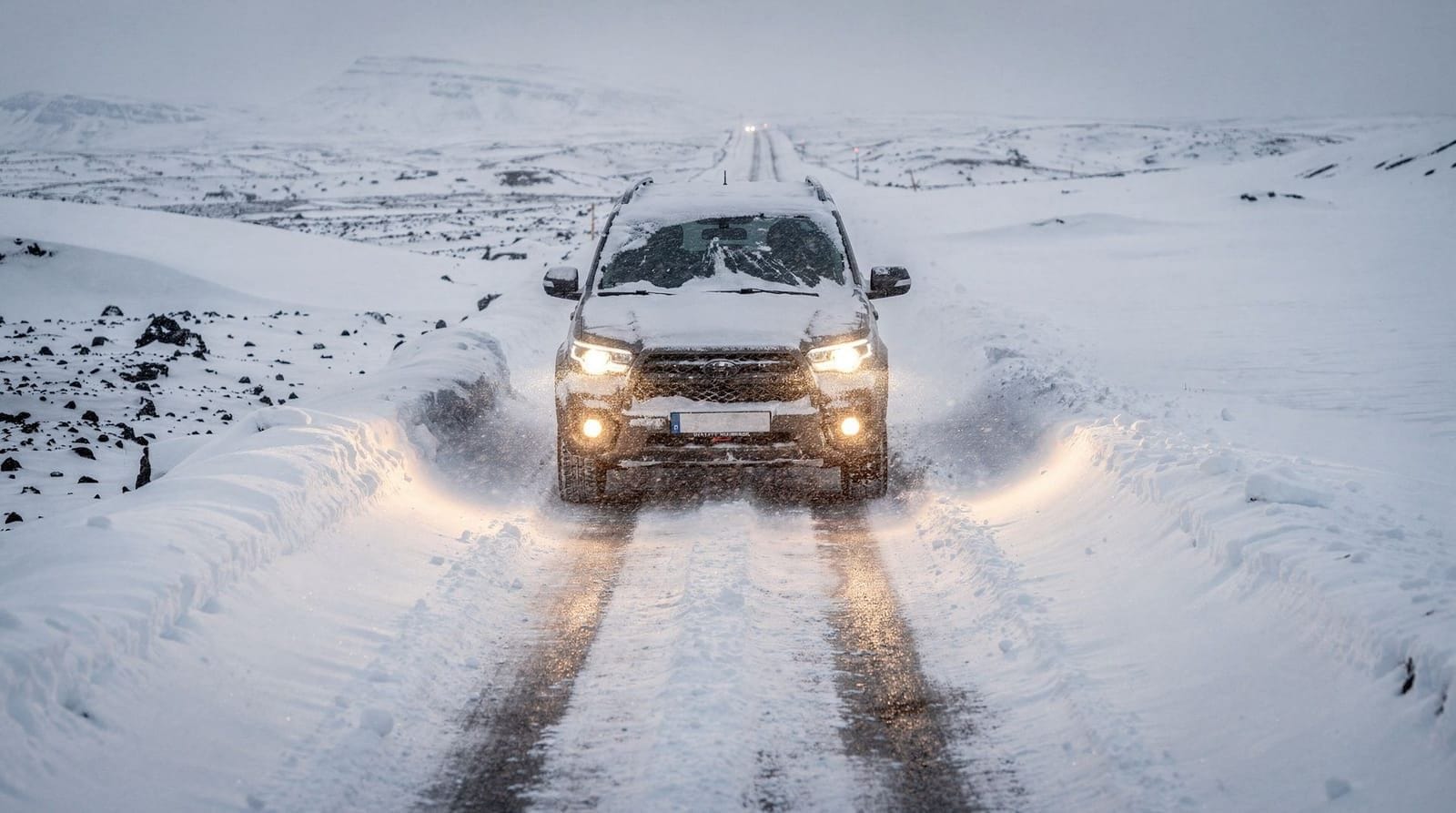
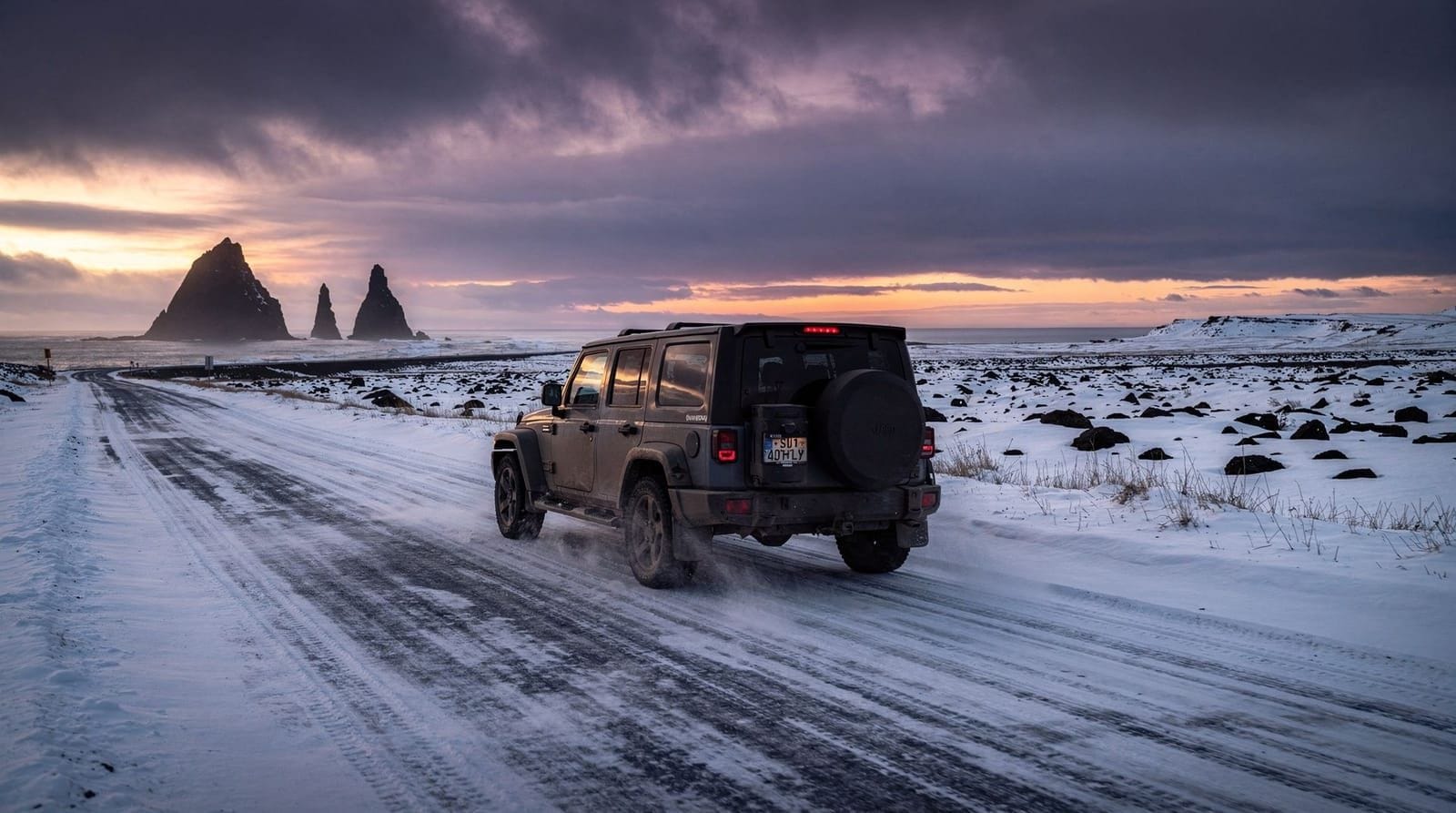
Road closures: Route 1 (the Ring Road) between Vík and the East Fjords can close for hours or days after heavy snowfall. The mountain sections, particularly around Öxnadalsheiði and Fúlaskarðsheiði, close with some regularity. Check road.is or call 1777 (Icelandic road information line) before each day’s driving. Have a backup plan for each day.
Vehicle: A 4WD with winter tyres is legally required in Iceland November 1 to April 15. Confirm winter tyres are fitted when collecting your rental. Studded tyres (not normally provided by rental companies) are better on black ice; standard winter tyres are legally sufficient.
See the driving in Iceland in winter guide before arrival.
Day 1 — Reykjavík arrival and Sky Lagoon
Arriving
Fly into Keflavík (KEF). Collect your rental car at the airport. Check-in at a Reykjavík hotel — mid-range options include Hotel Óðinsvé (doubles from 32,000 ISK / €217) and the Canopy by Hilton Reykjavík City Centre (doubles from 45,000 ISK / €306). If arriving late afternoon or evening, you may be close to or in darkness by check-in.
Afternoon/evening: Sky Lagoon
The Sky Lagoon is 15 minutes west of central Reykjavík on the Kársnes headland (Reykjanesbær municipality). It is Iceland’s most architecturally considered geothermal spa — an infinity-edge outdoor pool that faces west over the Atlantic, with an indoor section and a 7-step ritual including cold plunge and steam room. Prices: Ser Pass (pool + ritual) 11,990 ISK (€81), Sky Pass (pool + ritual + towel + changing room amenities) 14,990 ISK (€101). Open until 23:00.
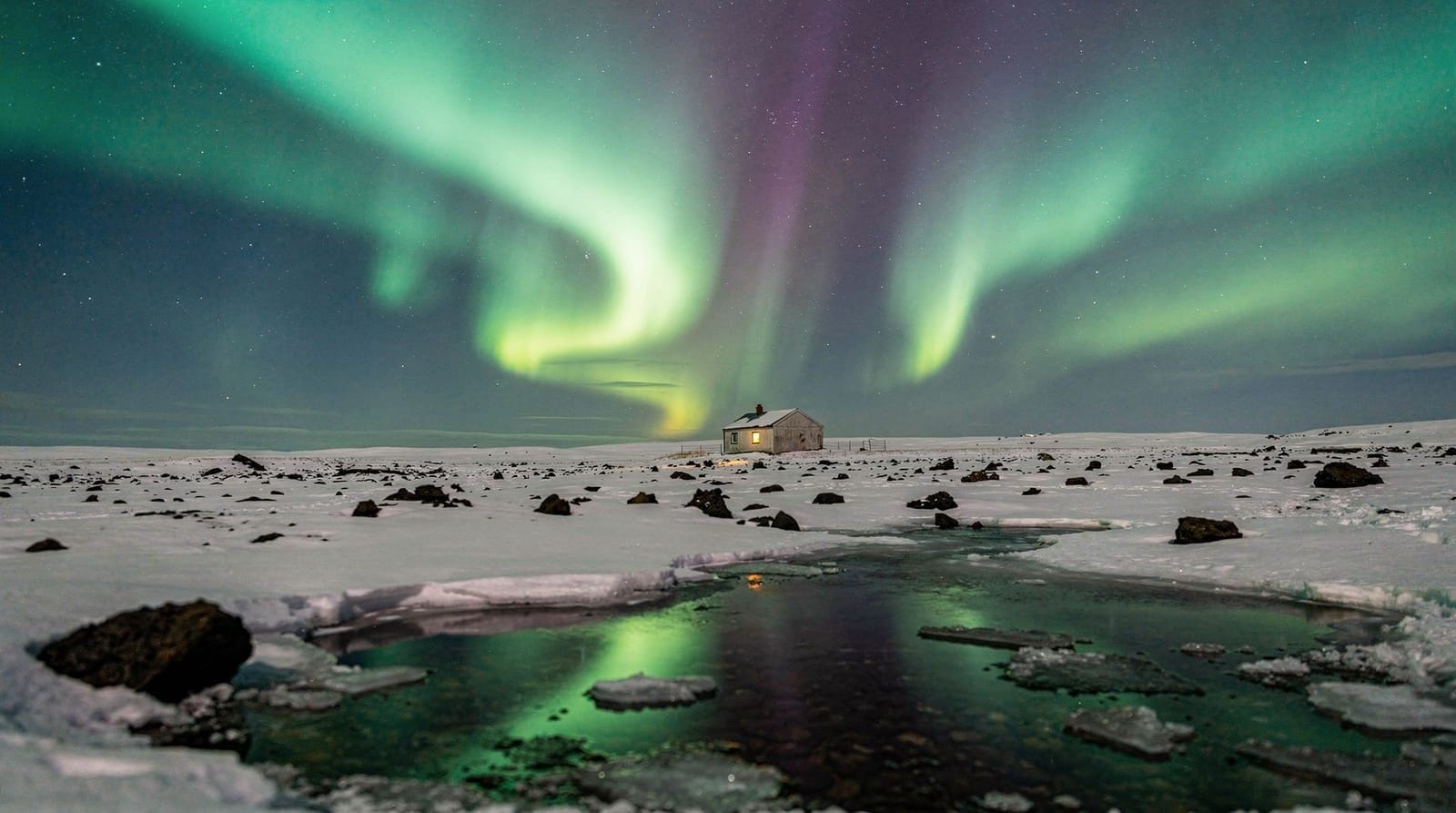
The Sky Lagoon is genuinely excellent in winter — the contrast between the warm water (38–40°C), the cold air, and the dark sky provides the best conditions for aurora viewing from a pool if the night is clear. It does not require advance booking in winter (unlike the Blue Lagoon), but weekends can be busy.
Dinner: Snaps Bistro (Þórsgata 1) for classic French-Icelandic bistro food (lamb, fish, duck), mains 4,500–7,200 ISK (€30–€49).
Day 2 — Golden Circle and Kerið crater
This day uses the Golden Circle loop — fully paved, road-cleared as a priority route, and accessible in essentially any winter condition short of a complete blizzard.
In winter light the priority is timing. In December/January, you have roughly 11:00–15:00 as your usable daylight window. The hour before sunset (around 15:30) produces golden light on snow and ice that is exceptional photographically.
- Depart Reykjavík by 09:30 even in darkness
- Þingvellir: 48 km (40 minutes). The gorge walk along Almannagjá in winter snow is worth the early start. 45 minutes.
- Geysir and Strokkur: 60 km (55 minutes). Strokkur erupts every 6–10 minutes in all weather. 45 minutes.
- Gullfoss: 10 km (10 minutes). The falls partially freeze in January — the ice curtains on the canyon walls can be extraordinary. Allow 45 minutes. Dress warmly: this viewpoint is exposed.
- Kerið crater: return route via Route 35 south. Entry 700 ISK (€5). The crater lake may be frozen — photogenic from the rim path. 30 minutes.
Return to Reykjavík by 17:30. Consider a northern lights attempt from Grótta lighthouse (10 minutes northwest of central Reykjavík) if the forecast shows clear skies.
Day 3 — South Coast: waterfalls and black beaches
Drive east along Route 1. This is the corridor that can close after heavy snowfall — check road.is before leaving. In good conditions, it is a 3.5-hour drive to Vík from Reykjavík without stops.
Key stops:
Seljalandsfoss (117 km from Reykjavík, 1 hour 30 minutes): the path behind the waterfall is closed in winter due to ice (the waterfall partially freezes and creates dangerous conditions). The frozen curtains visible from outside are striking. Also stop at Gljúfrabúi, 500 metres north, where the falls are framed inside a narrow gorge — accessible through a stream crossing, often frozen in winter. 30 minutes total.
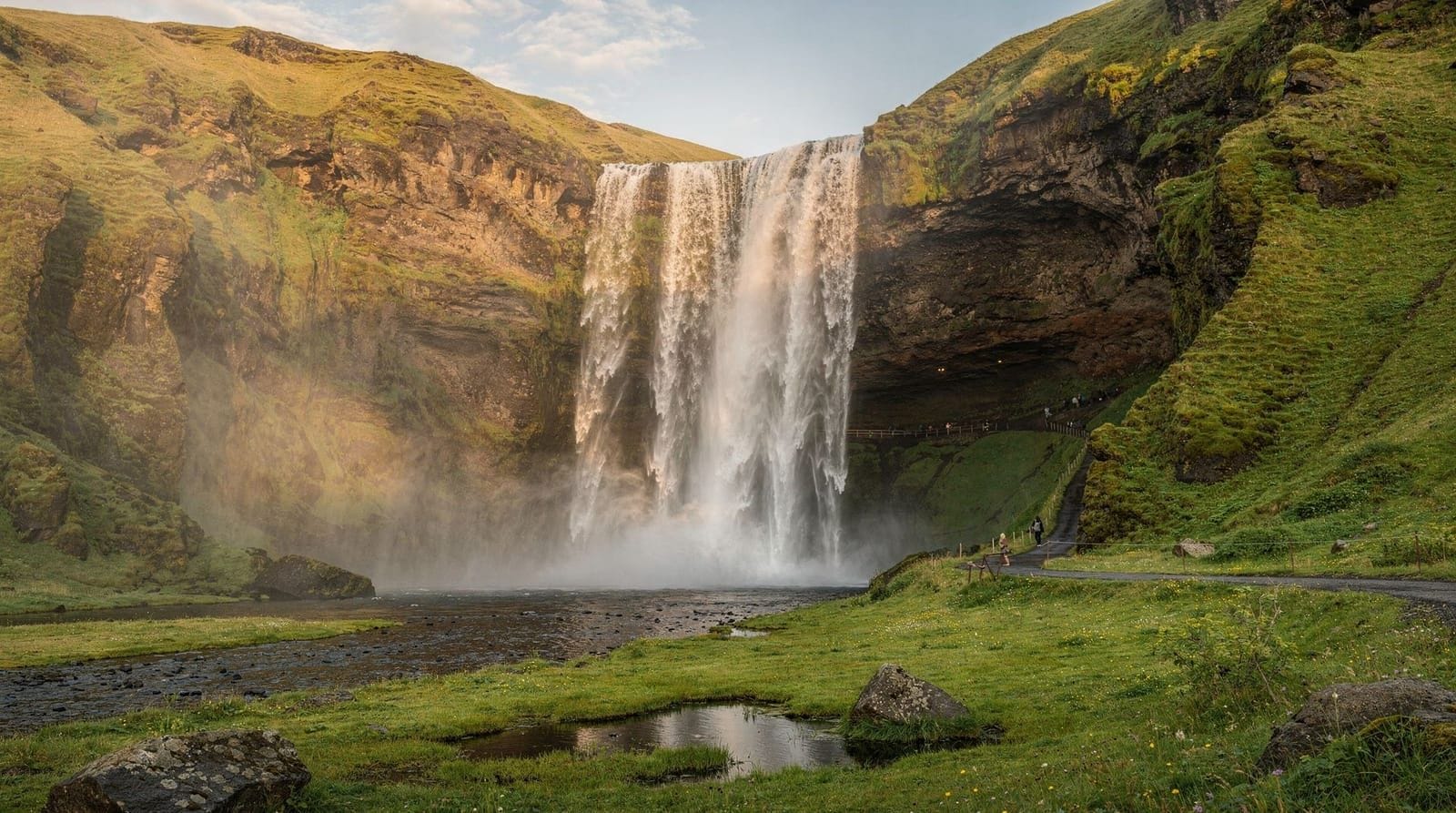
Skógafoss (26 km further, 25 minutes): in January, the spray creates ice formations 10–20 metres high on either side of the falls. The staircase to the top may be closed due to ice (check signage). The base viewpoint is still excellent. 30 minutes.
Reynisfjara black sand beach: 28 km east (25 minutes). The sneaker wave warning is year-round — do not approach the shoreline within the marked danger zone. In winter, the beach is often empty, the basalt columns more visible against grey sky, and the puffin burrows in the cliff face are empty (puffins winter at sea). 30 minutes.
Overnight in Vík: Hótel Vík (doubles from 38,000 ISK / €258) or Guesthouse Carina (doubles from 22,000 ISK / €150). Dinner at the hotel restaurant or Strondin Bistro.
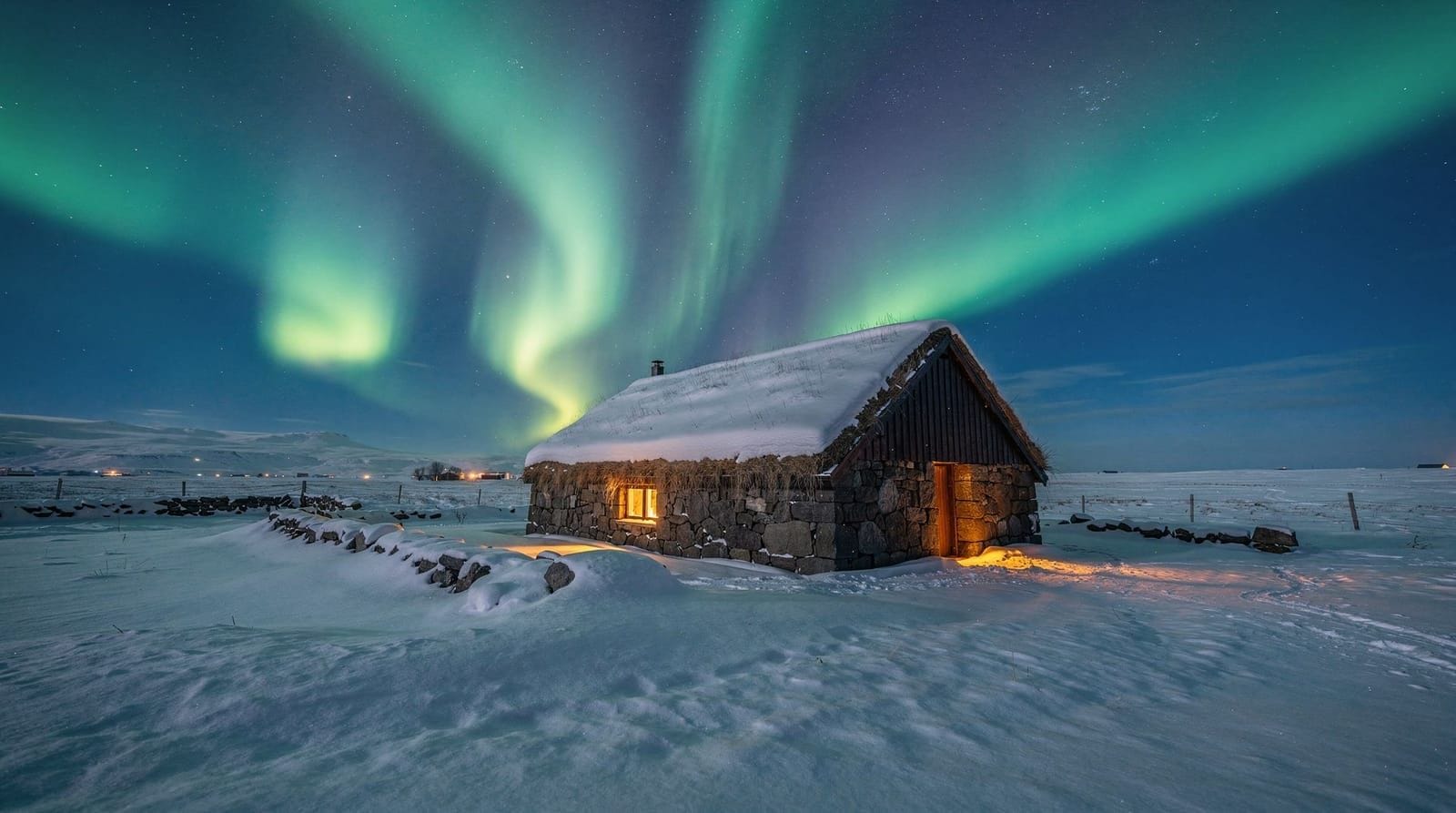
Evening northern lights check: Drive 3 km east of Vík toward Dyrhólaey on a clear night — the low horizon and absence of light pollution make this one of the better South Coast aurora positions.
Day 4 — Glacier hiking and Jökulsárlón ice caves
This is the logistically heaviest day. The Jökulsárlón ice cave tours operate November through March and need to be booked well in advance — in January and February they sell out weeks ahead.
Morning: Sólheimajökull glacier hike
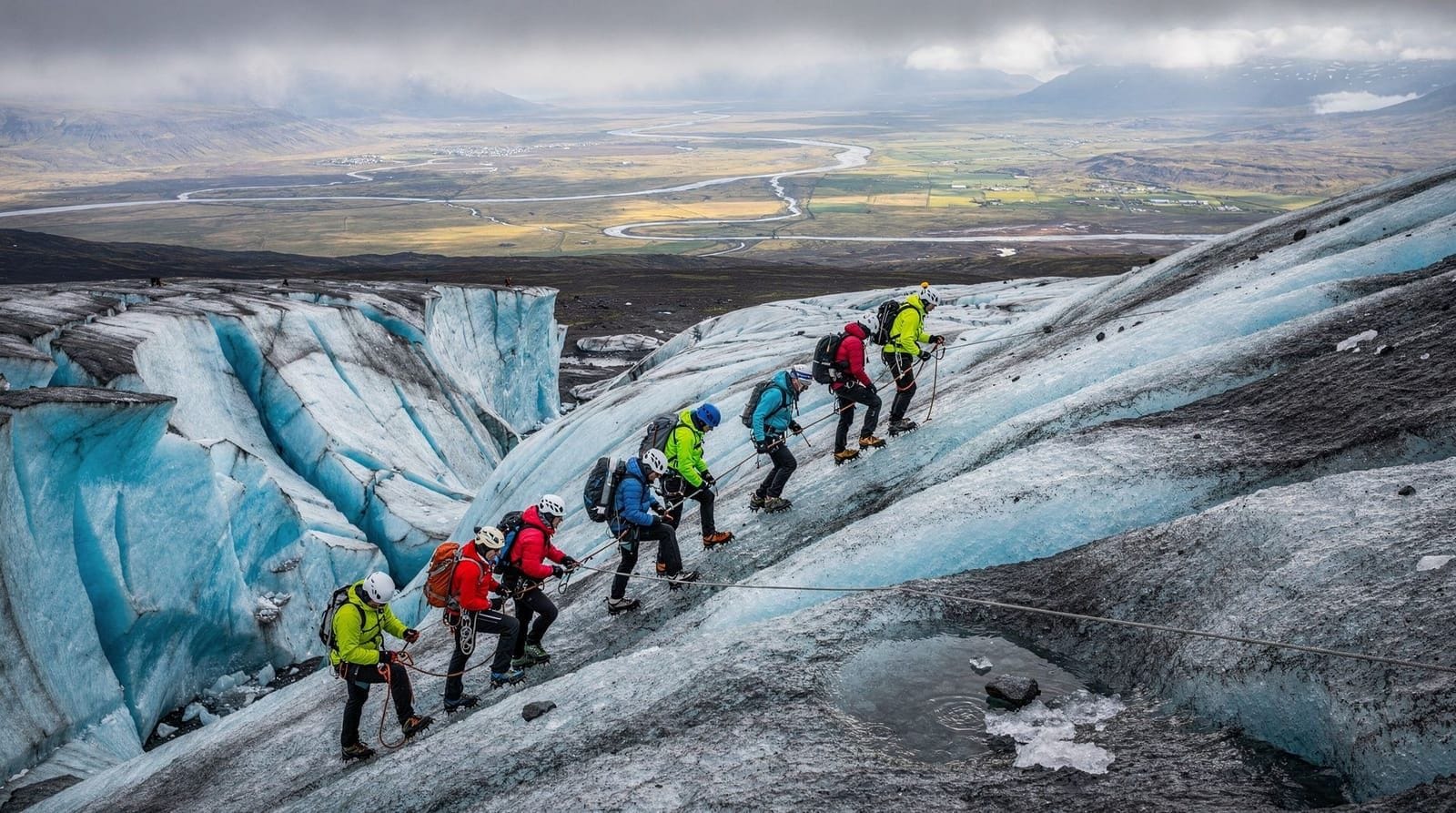
Sólheimajökull is a glacier outlet of Mýrdalsjökull, accessible from a car park 30 km east of Vík (25 minutes). It is the most accessible glacier in Iceland for a guided ice hike. The equipment (crampons, ice axe, helmet) is provided by guides, and the walk takes 2–3 hours on the glacier surface.
Guided glacier hike tours from Reykjavík include transfer and equipment, making them accessible even without your own vehicle. Self-driving visitors can also book glacier hike operators directly at the Sólheimajökull car park — Arcanum Glacier Tours and Troll Expeditions both operate here.
Minimum age for glacier hiking is typically 8–10 years. Book in advance, especially in December–February.
Afternoon: Jökulsárlón glacier lagoon and ice cave
From Sólheimajökull to Jökulsárlón is 145 km (1 hour 45 minutes). Arrive by 13:30 to allow time at the lagoon before the ice cave tour (if booked for 15:00 departure, typical for afternoon sessions).
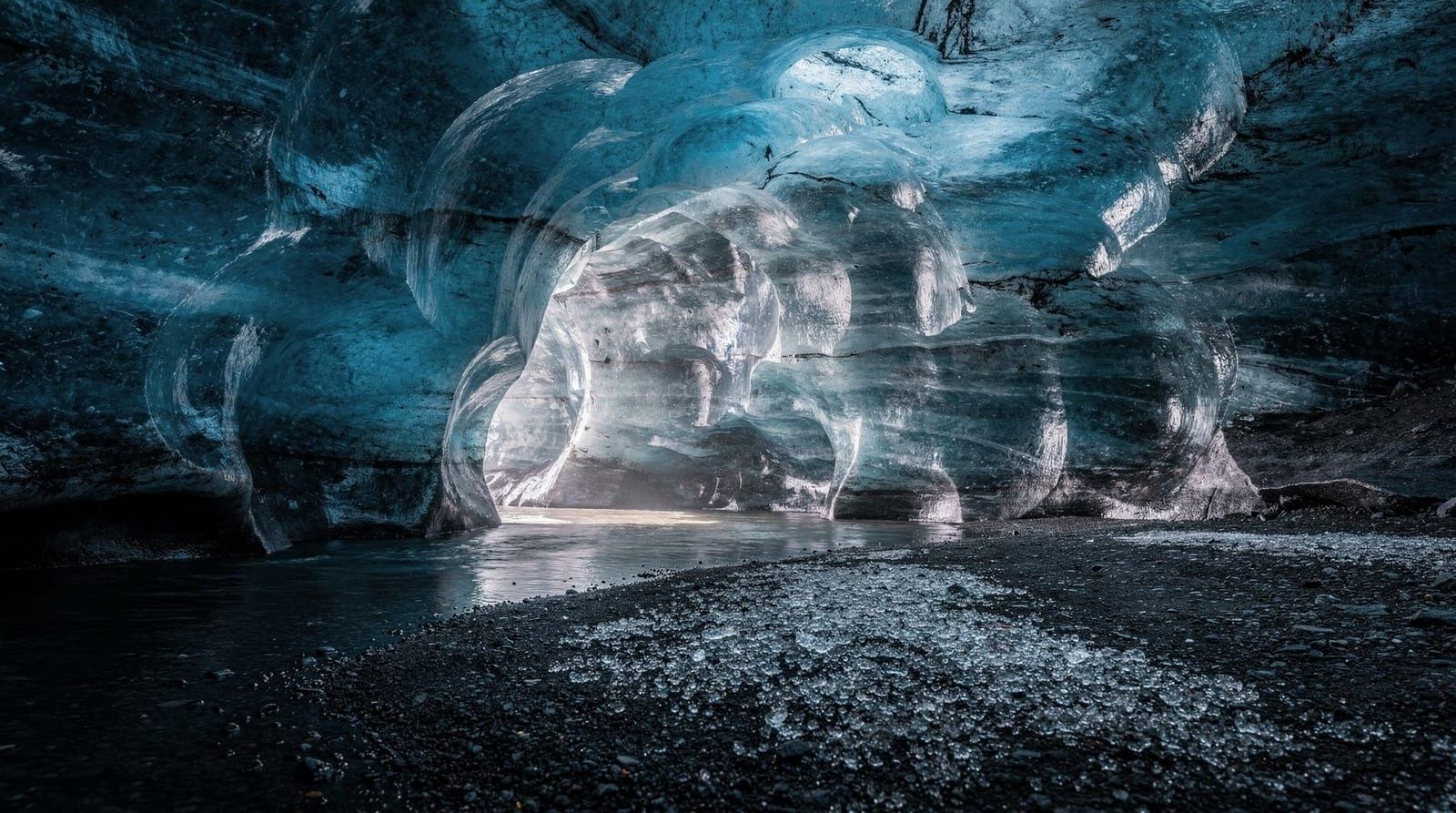
The natural blue ice cave tours inside Vatnajökull glacier run from the Jökulsárlón area and take approximately 2.5–3 hours including transfer. The caves are safe — certified guides assess conditions daily and cancel if structural integrity is in question.
The ice cave interior has a blue luminescence created by millennia of compressed glacier ice — the air bubbles are squeezed out over time, leaving ice that appears vivid blue rather than white. Photography is best in the 12:00–15:00 window when winter light penetrates the entrance.
Diamond Beach is directly across Route 1 from the lagoon. Spend 30 minutes here if the tide has brought beached ice ashore.
Overnight near Jökulsárlón: Fosshotel Glacier Lagoon (doubles from 45,000 ISK / €306) is the closest hotel. Alternatively, backtrack 80 km to Kirkjubæjarklaustur for budget options.
Day 5 — Return to Reykjavík via Skaftafell
Drive west on Route 1. Plan for 3–4 hours to Reykjavík depending on road conditions. Leave by 10:00.
Stop at Skaftafell (30 minutes): The Skaftafell visitor centre is on the route and worth a brief stop for the exhibitions on Vatnajökull geology and the impact of glacier retreat. The 20-minute walk to the Skaftafell car park viewpoint facing the glacier tongue requires no special equipment in winter.
Stop at Fjaðrárgljúfur canyon (20 minutes): Fjaðrárgljúfur is 6 km north of Kirkjubæjarklaustur on Route 206 — a short detour from Route 1. The 100-metre deep canyon with its winding canyon floor is one of Iceland’s most striking geological formations. The path to the main viewpoint is 800 metres from the car park on a maintained trail. The canyon is often snow-covered and quiet in winter.
Arrive in Reykjavík by 15:30–16:00 if leaving Jökulsárlón area at 10:00. This allows time for the Reykjavík airport connection (Keflavík is 45 minutes further, or 1 hour in light traffic).
Final evening option: If your flight is the following day, a last-night aurora tour from Reykjavík gives one final attempt at the northern lights before departure.
Premium northern lights tours by minibus include a knowledgeable guide who monitors conditions and drives to the best clear-sky locations within reach of Reykjavík — useful if you do not want to navigate icy roads at night independently.
Winter driving checklist
Before departing each morning on this itinerary:
- Check road.is for Route 1 status east of Vík
- Check the aurora forecast at vedur.is if it’s an evening driving day
- Fill up at every petrol station if below half tank (closures can leave you stranded)
- Download the 112 Iceland app (Safetravel emergency registration)
- Bring a shovel and traction mats in the boot (rental companies sometimes provide these — ask)
The Iceland road conditions guide and safetravel.is emergency info are essential pre-trip reading.
Frequently asked questions about this 5-day Iceland itinerary
Is the South Coast safe to drive in winter?
Route 1 between Reykjavík and Vík is well-maintained and usually clear. The section east of Vík toward Jökulsárlón is more likely to close after heavy snowfall — the mountain plateau section near Eldhraun lava field and the approach to Skaftafell can see serious conditions. Drive carefully, check road.is, and be prepared to spend an extra night if roads close.
Can I do glacier hiking in winter without prior experience?
Yes. All certified glacier hike operators provide equipment and guides — no prior experience or fitness test is required. The hikes are graded: beginner tours at Sólheimajökull take you 1–2 km onto the glacier on relatively flat terrain. The cold and crampons are the main adjustment, not the fitness requirement. Children from age 8–10 upward can participate.
Are the waterfalls better in winter?
They look different, not necessarily better or worse. Seljalandsfoss in winter has dramatic frozen spray formations that do not exist in summer. Skógafoss develops enormous ice pillars on its banks. Gullfoss has partial frozen sections on the canyon walls. You lose the ability to walk behind Seljalandsfoss and the top of Skógafoss may be closed. Whether “different” means “better” depends on what you value.
How early should I book ice cave tours?
Book 4–8 weeks ahead for January and February. These are Iceland’s most in-demand winter-specific experiences and the capacity is limited per tour. If you have not booked before departure, check cancellation slots (operators often release last-minute spots when bookings change). Ice cave season runs approximately November 1 to March 31 depending on conditions.
What happens if my planned ice cave tour is cancelled?
Operators cancel tours when conditions are deemed unsafe — typically after warmer-than-usual temperatures or after rain. This is not refundable in the traditional sense; reputable operators rebook you on the next available tour at no extra charge. If no slot is available before your departure, you should receive a full refund. Get travel insurance that covers activity cancellations.
Is the Blue Lagoon worth visiting on this itinerary?
The Blue Lagoon is in the Grindavík area, convenient for a Keflavík arrival or departure day. It is a significant experience but also a significant expense — from €80 per adult for basic entry, with advance booking essentially mandatory. In winter, crowds are lower than summer but not negligible. As a transit-day activity (arriving from or departing to Keflavík), it makes good logistical sense. The Blue Lagoon guide has current pricing and booking advice.
What about the Reykjanes Peninsula beyond the Blue Lagoon?
The Reykjanes Peninsula around the Blue Lagoon and Keflavík has become significantly more interesting since the Fagradalsfjall and Sundhnjúkar volcanic systems began erupting in 2021. The Fagradalsfjall volcano eruption sites are accessible on foot from the main parking areas when activity has paused — typically a 3–5 km return walk over lava fields. Check for current eruption status before visiting. During active eruption phases, the glowing lava at night is extraordinary and visible from safe viewing distances.
The Reykjanes Peninsula is also home to the Bridge Between Continents — a metal footbridge spanning a rift between the Eurasian and North American tectonic plates at Miðlína. It is free to walk, takes 10 minutes, and is conveniently on the route from Keflavík airport toward Reykjavík. The context is genuinely interesting even if the bridge itself is modest.
What is the best way to combine glacier hiking with ice cave on the same trip?
The most efficient sequence is: glacier hike at Sólheimajökull (morning, 2–3 hours on ice), then drive 145 km east to Jökulsárlón for an afternoon ice cave tour (13:00–16:00). This is Day 4 of the itinerary. The ice cave tours into Vatnajökull from the Jökulsárlón side are in a different glacier system to Sólheimajökull, so you are getting two genuinely different experiences. Sólheimajökull is a debris-covered outlet glacier with black ash from the Eyjafjallajökull system mixed into the surface ice — visually striking and different to the blue-white of Vatnajökull. Vatnajökull ice caves show the compressed ancient ice that gives them their distinctive blue colour.
Book both activities before departure in January and February — morning glacier hike slots at Sólheimajökull and afternoon ice cave tours at Jökulsárlón both sell out weeks in advance. If you can only book one, the ice cave is the rarer experience (only available November–March) while glacier hiking is year-round.
How does the South Coast compare to the Ring Road for a winter trip?
The South Coast (Reykjavík to Jökulsárlón) represents the single best winter driving corridor in Iceland for weather reliability, road priority, and concentration of highlights. The Ring Road east of Jökulsárlón continues to the East Fjords — scenic but the road maintenance is less intensive and weather more variable. For a 5-day winter trip, the South Coast corridor maximises time at landmarks versus time spent managing road uncertainty.
Top experiences
Bookable activities with verified prices and instant confirmation on GetYourGuide.