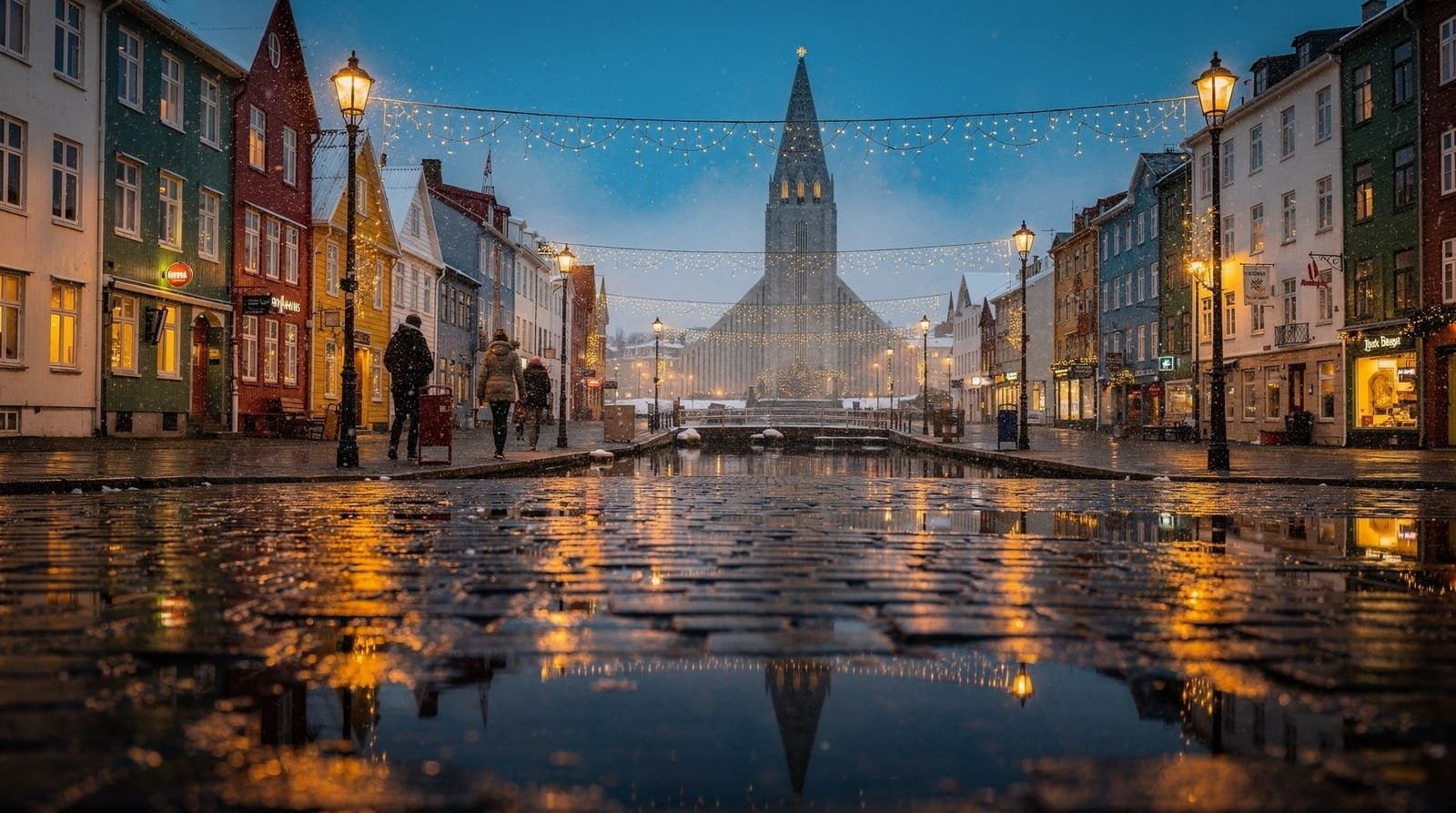
Iceland in winter — northern lights, ice caves, and honest advice
Reykjavik: Northern Lights lifetime guarantee
Is Iceland good to visit in winter?
Yes, but it demands preparation. Winter offers northern lights, ice caves, dramatic landscapes, and lower prices. It also brings very short days, potential road closures, and genuine cold. A 4WD is essential for travel outside Reykjavík.
What winter in Iceland actually looks like
Iceland in winter is striking in the way that stark, dark, occasionally brutal landscapes can be. The interior highlands are entirely off-limits under snow and ice. Many waterfalls partially freeze into surreal curtains of ice. The Ring Road stays open most of the time — but “most of the time” is not the same as always, and stretches through the north and east can close for two or three days during heavy storms.
What winter delivers that no other season can: natural ice caves in Vatnajökull glacier, a genuine chance at northern lights on any clear night, dramatically lower prices outside December, and a version of Iceland that the majority of tourists never see.
| Where | Iceland-wide; F-roads and highlands closed |
| Cost | 30–40% below July prices outside Christmas week |
| Time needed | 4–5 days for south coast; 10+ for a winter Ring Road |
| Getting there | 4WD strongly recommended outside Reykjavík |
| Best for | northern lights, ice caves, dramatically lower prices |
| Month | Daylight | Reykjavík temp | Aurora chance | Ice caves | Closures |
|---|---|---|---|---|---|
| Nov | 6–7 hrs | 1–5°C | Good | Opening Nov 1 | Occasional |
| Dec–Jan | 4–5 hrs | -1–3°C | Best (longest dark) | Peak season | Most frequent |
| Feb | 7–8 hrs | 0–4°C | Good | Good | Easing |
| March | ~12 hrs | 1–6°C | Good | Closing mid-Mar | Rare |
Daylight in winter
Short days are not a myth. Reykjavík in December and January averages 4–5 hours of useful daylight, with the sun rising around 11am and setting around 3:30pm. In January that daylight is flat and low, giving beautiful blue-hour light for photography but leaving very little time for outdoor sightseeing.
January and February are the darkest months. By March, daylight climbs back toward 12 hours and the pace of change accelerates through April.
Key daylight hours:
- November: 6–7 hours
- December: 4–5 hours (shortest around December 21)
- January: 4–5 hours
- February: 7–8 hours
- March: 12 hours (equinox)
Plan your driving accordingly. If you are heading to Jökulsárlón (5 hours east of Reykjavík), leaving at 8am means arriving in darkness and having 3–4 hours of light before it goes dark again in winter.
Northern lights
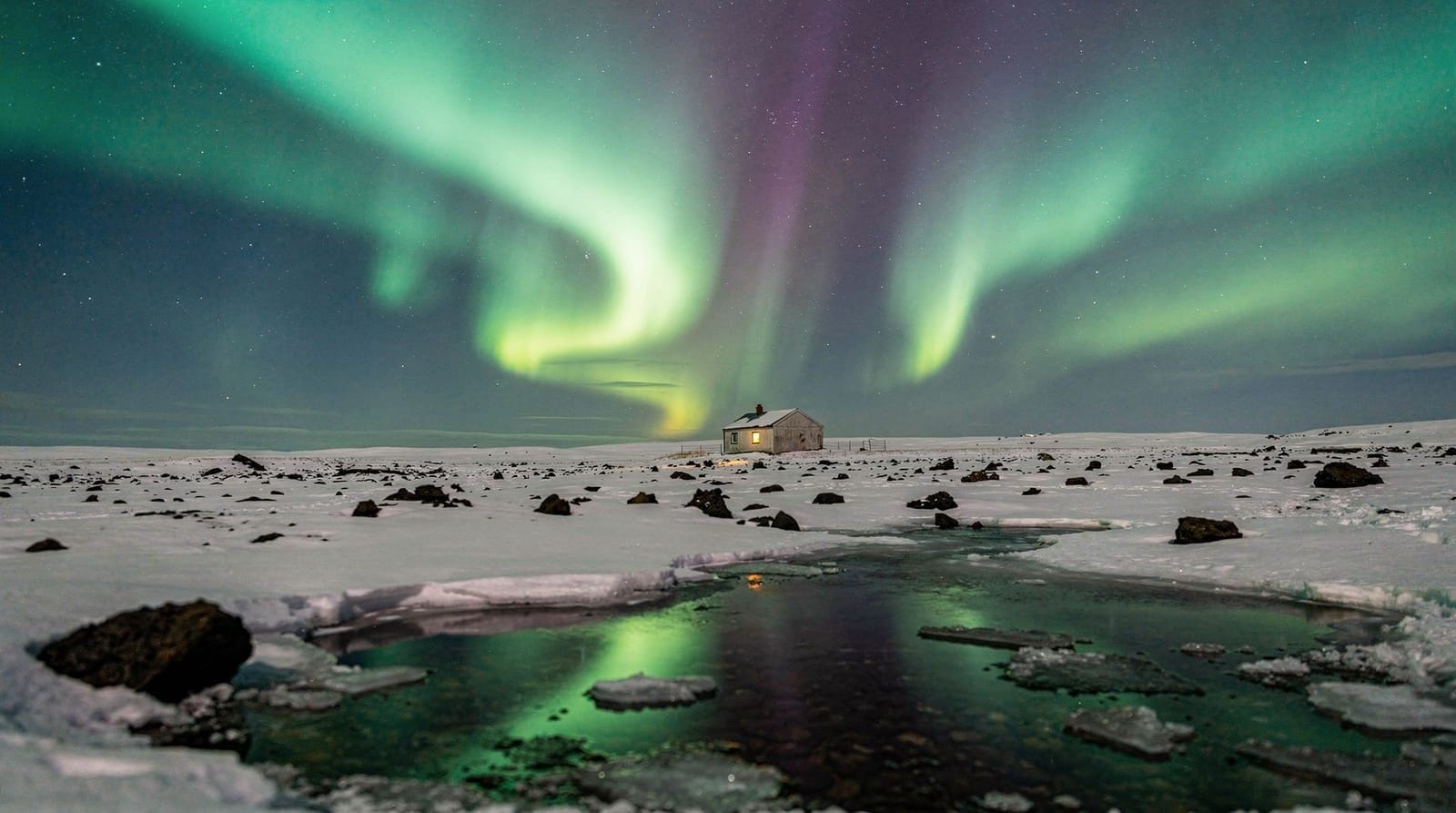
The aurora borealis is visible in Iceland whenever it is dark, skies are clear, and solar activity is high enough. Winter — particularly January through March — combines the longest dark periods with statistically more clear nights than autumn’s shoulder season.
Northern lights viewing is fundamentally weather-dependent. Iceland is an island in the North Atlantic; it gets cloud cover frequently. On a given trip, you may see spectacular displays on two nights and cloud on five. That variability is honest and unavoidable.
Tips that genuinely help:
- Stay at least 5–7 nights to improve odds across multiple clear windows
- Get away from Reykjavík’s light pollution — even 30–40 km outside the city makes a difference
- Check the Icelandic Met Office aurora forecast (vedur.is) and the 112 Iceland app
- Northern lights tours typically monitor the forecast and will sometimes cancel if conditions are poor — this protects your time
This northern lights tour offers a lifetime guarantee — if you do not see the lights on your tour, you can return free on any future trip. It is a practical way to hedge against Iceland’s unpredictable cloud cover.
For detailed aurora planning, see best time to see northern lights and northern lights tours: bus vs boat.
Ice caves in Vatnajökull
Natural ice caves inside Vatnajökull glacier are the defining winter-exclusive experience in Iceland. These blue and crystal ice chambers form when meltwater carves tunnels inside the glacier and then re-freezes in autumn. They are only safe to enter from approximately November 1 to March 15 — summer meltwater makes them structurally unstable.
Caves vary in size and colour each year depending on ice movement. The most famous are accessed from Jökulsárlón on the south coast, about 4.5–5 hours from Reykjavík.
A guided ice cave tour from Jökulsárlón takes 2.5–3 hours inside the glacier. Only access with a certified guide — the terrain requires spiked crampons and route knowledge to navigate safely.
The Katla ice cave near Vík is a different option — accessible year-round because it is formed by geothermal activity, not seasonal meltwater. It is darker and more black-ice in character than the blue Vatnajökull caves.
Driving in winter
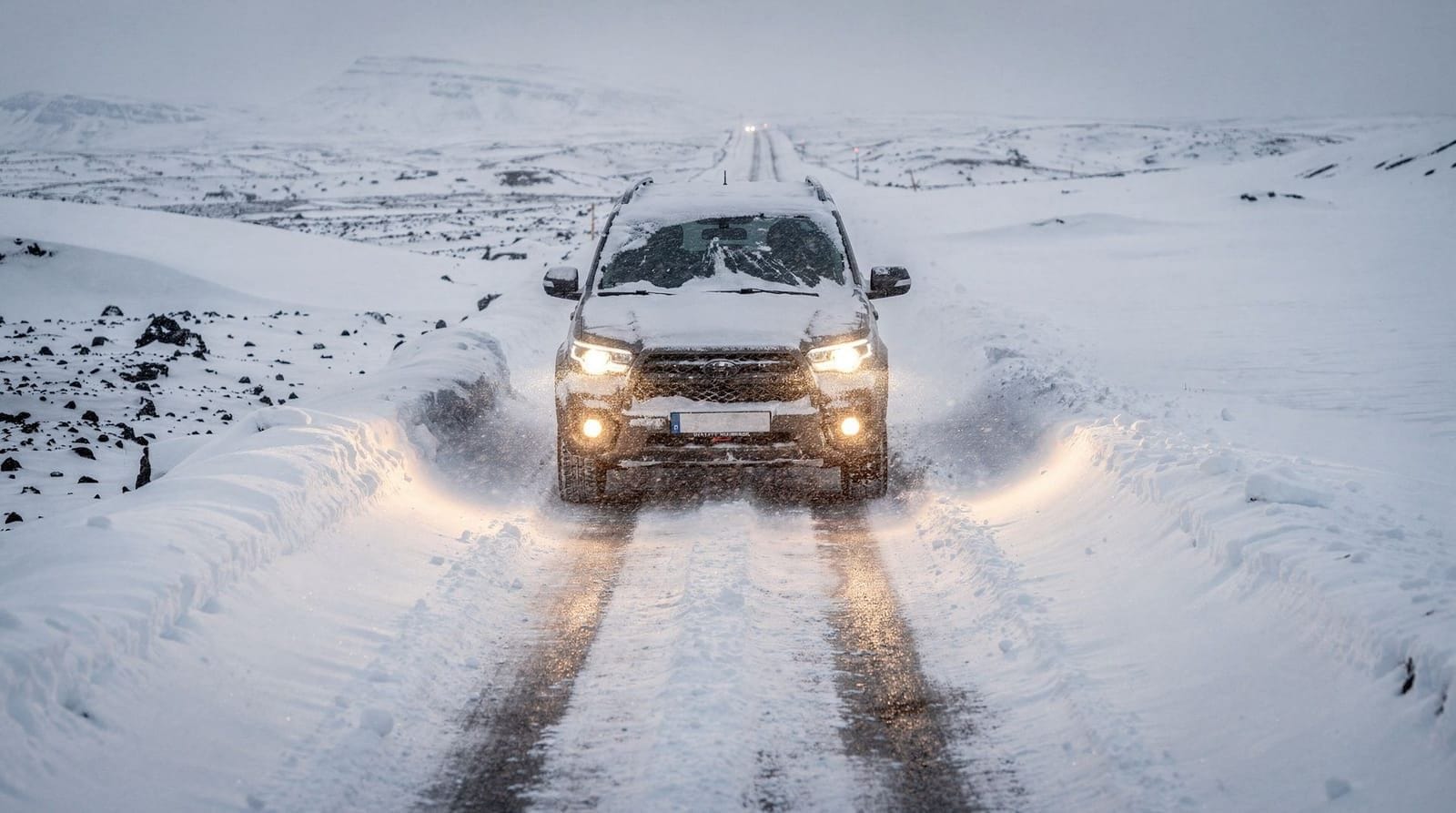
The most common mistake winter visitors make is underestimating road conditions. Iceland’s winter driving is not like driving in a city that gets occasional snow — it involves:
- Black ice on roads with no warning
- Drifting snow that reduces visibility to metres in minutes
- Wind that can physically push a car across a road
- Sections of the Ring Road in the east and north that close under storm warnings
What you need for winter Iceland:
- A 4WD vehicle — mandatory for most winter travel outside the capital area
- Winter tyres (included in all rental cars by law in Iceland)
- Studded tyres optional but advisable for January–February
- The Safetravel 112 app downloaded and registration submitted
The F-roads are completely closed in winter. Do not attempt any F-road between October and June.
Read the full Iceland in winter driving guide before booking a self-drive winter trip. If you are not comfortable with ice roads, consider guided tours from Reykjavík.
What stays open in winter
More than people expect. The Ring Road is open, the Golden Circle is accessible, and most major waterfalls are reachable. Key attractions that operate in winter:
- Blue Lagoon — open year-round (pre-booking mandatory)
- Sky Lagoon — open year-round
- Geysir — the geyser erupts regardless of weather
- Gullfoss — partially frozen in January, spectacular
- Seljalandsfoss — path behind the falls closes when icy
- Jökulsárlón glacier lagoon — open, fewer icebergs than summer but no crowds
- Hallgrímskirkja and Reykjavík museums — fully operational
What closes or is significantly limited:
- F-roads: completely closed
- Puffin watching: not possible (birds are at sea)
- Highland hiking: unsafe
- Some smaller guesthouses in remote areas: closed November–March
Reykjavík in winter
Reykjavík is a genuine winter city with a strong café culture, museums, and an active restaurant scene. The Settlement Exhibition — the excavated Viking-age farmhouse under Aðalstræti — is one of the best rainy-day museum experiences in the country. Perlan with its artificial ice cave exhibit and panoramic views is fully open year-round.
Christmas and New Year in Reykjavík are a specific draw — see Christmas and New Year in Iceland for that window’s particular character.
Winter costs
January and February are typically Iceland’s cheapest months. Accommodation discounts of 30–40% compared to July are common outside the Christmas week. Rental car prices drop significantly. Flights from Europe and North America are often at annual lows.
If budget is a priority, February hits the sweet spot of lowest prices plus reasonable daylight recovery (7–8 hours by month’s end) plus still-good aurora and ice cave windows. Iceland on a budget covers strategies for cutting costs across both seasons.
The one clear exception to winter’s lower prices is the week spanning Christmas and New Year, when demand spikes sharply and Reykjavík accommodation can approach or exceed July rates. Travellers specifically chasing winter’s value proposition are better served targeting early-to-mid January or February, after the festive surge has passed, rather than the Christmas week itself — see how much does Iceland cost for the fuller seasonal price comparison.
Packing for winter
For a January week in Iceland:
- Base layer: merino wool, not cotton
- Mid layer: fleece or down jacket
- Outer layer: waterproof and windproof shell
- Trousers: waterproof over thermal leggings
- Boots: waterproof with ankle support and warm insulation
- Gloves and hat: non-negotiable
- Neck gaiter/balaclava: useful in the north or highlands
The wind chill in Iceland is the real issue, not air temperature alone. A -3°C day with 60 km/h winds feels close to -15°C exposed.
Glacier hiking in winter
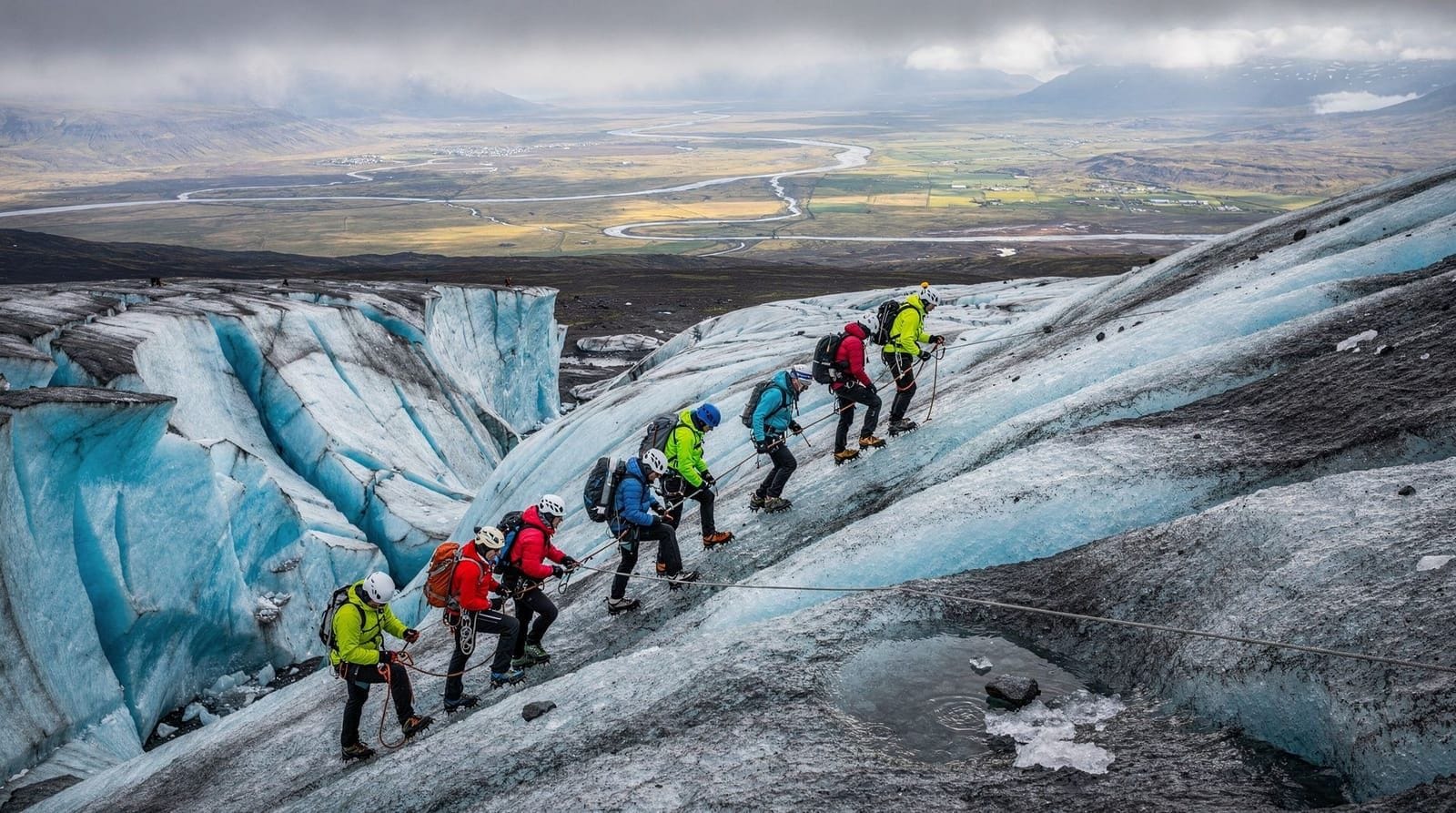
Several glaciers offer tours year-round, including winter. Sólheimajökull on the south coast is accessible in all seasons — winter glacier hikes have a specific character with ice formations that do not occur in summer. All glacier hiking requires a guide and crampons year-round; solo glacier walking is prohibited.
The Into the Glacier Langjökull tunnel tour operates year-round via snowcat — a heated tunnel bored into the Langjökull ice cap. This is accessible even in winter storms because the snowcat handles the highland terrain.
Snowmobiling on Langjökull is popular in winter — the highland plateau is open specifically for this purpose when the ice cap road is too treacherous for vehicles. Tours typically depart from a base camp accessed by specialised vehicle, since the approach road itself is not driveable by rental cars in winter, and full protective gear (thermal suits, helmets, goggles) is provided given wind chill on an exposed ice cap can be severe even on an otherwise calm day at lower elevation.
Snowshoeing and winter activities beyond aurora
Northern lights tours and ice caves are the most marketed winter activities, but Iceland has other winter-specific options:
Snowshoeing: Several operators near Reykjavík offer snowshoe hikes when snow conditions allow, particularly in the hills above the city and on the Reykjanes Peninsula.
Horse riding in winter: Icelandic horse riding tours operate year-round. In snow conditions, the horses’ natural tolerance for cold and their sure-footedness on ice make winter riding a specific experience. Tours from farms around Reykjavík and the south.
Ice fishing: Lake fishing through the ice is a traditional activity in north Iceland in winter. Some farms near Lake Mývatn offer guided ice fishing with equipment provided.
Cross-country skiing: In years with sufficient snow cover (not guaranteed but possible), the hills above Reykjavík and the ski areas at Bláfjöll (south of Reykjavík) offer skiing. Downhill skiing at Hlíðarfjall near Akureyri is more reliable.
Iceland’s Reykjavik winter cultural scene
Reykjavík in winter is a genuine city with indoor cultural life, not just a northern lights departure point. Key options:
Iceland Airwaves (typically November): Four-day music festival across 20+ venues simultaneously. A combination of touring international acts and Icelandic artists across every genre. Many “off-venue” shows in cafes and shops are free. The festival is specifically designed to showcase Icelandic music, making it unusually culturally specific for an international music event.
Winter Lights Festival (Ljósanótt, typically late January/early February): A week of illuminated buildings, outdoor installations, and museum open nights across Reykjavík. Free entry to participating museums on designated evenings.
New Year celebrations: Covered in detail in Christmas and New Year in Iceland, but worth noting here — Reykjavík’s December 31 bonfire and fireworks tradition is one of the most spectacular seasonal experiences in Europe.
Theatre and classical music: The Harpa Concert Hall has its heaviest programme season September through April. The Iceland Symphony Orchestra performs regularly. The National Theatre (Þjóðleikhúsið) runs Icelandic-language performances.
Swimming: Reykjavík’s outdoor geothermal pools are at their most atmospheric in winter. Snow falling while you sit in a 44°C hot pot is a specifically Icelandic winter experience.
Planning a south coast winter trip
The south coast from Reykjavík to Jökulsárlón is the most practical and most rewarding winter itinerary. It avoids the more challenging north Iceland roads and concentrates the most photogenic winter landscapes.
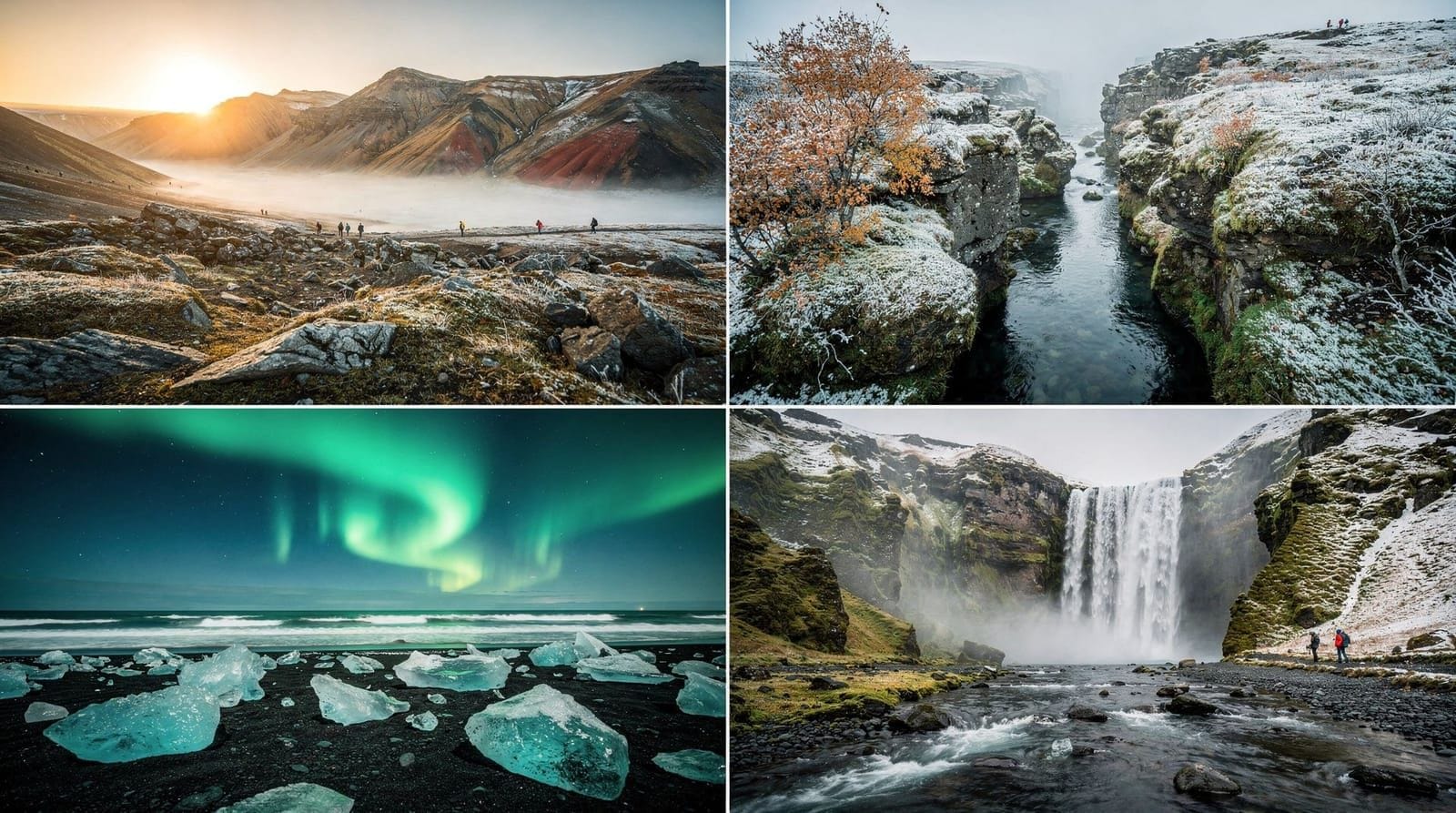
Day 1: Reykjavík to Vík — Seljalandsfoss (note: the path behind the falls may be closed on ice), Skógafoss, Dyrhólaey headland, Reynisfjara black beach. Stop in Vík or continue east.
Day 2: Vík toward Jökulsárlón — glacier views, Skaftafell (viewpoint only; glacier hiking tours run year-round from the ranger station), Jökulsárlón glacier lagoon and Diamond Beach.
Day 3: Ice cave tour from Jökulsárlón (book in advance), then return toward Reykjavík or continue the Ring Road circuit if time allows.
This 3-day circuit is achievable from Reykjavík without a flight, gives you the south coast highlights in winter light, and positions you for an ice cave tour. Allow 4–5 days to do it without rushing.
South Coast 3-day winter tour with glacier from Reykjavík — a guided version of this same routeFor travellers not confident in winter self-driving, this exact route is available as a multi-day guided tour, removing the road-condition decision-making entirely while covering the same south coast highlights and an ice cave or glacier stop.
North Iceland in winter
Akureyri in winter is accessible by domestic flights from Reykjavík (45 minutes on Air Iceland Connect) or by driving the Ring Road north. The drive in winter requires a 4WD and weather monitoring — the stretch through the highland passes north of Reykjavík can be challenging in storms.
North Iceland winter highlights:
- Lake Mývatn under snow: geothermal steam rising from frozen ground, extraordinary atmospheric conditions
- Northern lights above the Godafoss waterfall — one of Iceland’s most photographed aurora locations
- Mývatn Nature Baths — the north’s equivalent of the Blue Lagoon, at 38–40°C in sub-zero air temperatures
Diamond Circle (Akureyri, Mývatn, Ásbyrgi, Dettifoss, Húsavík) is theoretically completable in winter with a 4WD and favourable conditions, but Dettifoss road can close. Plan 3–4 days for the north Iceland circuit.
Hot springs in winter
Iceland’s geothermal pools are most viscerally pleasurable in winter — the contrast between cold air and 38–44°C water, sometimes with snow falling, is a specifically Icelandic experience.
Options from south to north:
- Blue Lagoon: Reykjanes Peninsula, 45 minutes from Reykjavík. Heated to 37–39°C. Requires advance booking.
- Sky Lagoon: Reykjavík outskirts. Infinity-edge pool facing the ocean. More architectural than the Blue Lagoon.
- Secret Lagoon (Flúðir): Smaller, quieter, naturally heated geothermal pool in a small village on the Golden Circle route.
- Mývatn Nature Baths: North Iceland. Milky blue-green water from geothermal runoff. Less crowded than the Blue Lagoon.
Self-drive vs guided tours in winter
The decision between a self-drive winter trip and joining organised tours is more significant in winter than summer.
Self-drive winter: Requires genuine 4WD experience, comfort with ice road driving, knowledge of the road condition checking systems, and confidence navigating potential weather delays. The reward is flexibility and the remote atmosphere of an Iceland largely free of other tourist vehicles.
Guided winter tours: Tour operators handle the logistics and driving. Northern lights tours, ice cave tours, and south coast day tours all run daily from Reykjavík. For visitors who are not experienced winter drivers or who have limited time, guided tours from a Reykjavík base are a rational choice. See self-drive vs guided tour for the detailed comparison.
Packing for Iceland in winter
A realistic winter Iceland kit:
Clothing:
- Merino wool base layer top and bottom (not cotton — cotton kills in wet cold)
- Fleece or down mid-layer
- Waterproof windproof shell jacket with hood
- Waterproof over-trousers
- Wool or fleece hat covering ears
- Warm waterproof gloves (inner thin liner + outer waterproof shell works well)
- Wool or thermal socks — multiple pairs
- Waterproof insulated boots with ankle support
Accessories:
- Neck gaiter or balaclava for windy conditions
- Sunglasses (winter sun is low and can be blinding especially on snow)
- Hand warmers (disposable chemical or reusable electric) for extended outdoor time
- Headlamp for early morning or late afternoon activity
Practical kit:
- 112 Iceland app downloaded
- Travel insurance documentation accessible
- Local SIM card or Iceland eSIM for connectivity
- Cash (some rural petrol stations and older establishments prefer cash)
Vehicle kit (if self-driving):
- Confirm 4WD rental with winter tyres confirmed
- De-icer spray (usually provided by rental company)
- Shovel (often in rental vehicle boot — check on pickup)
- Emergency blanket as a backup (inexpensive, lightweight)
See what to pack for Iceland for the comprehensive list.
Frequently asked questions about Iceland in winter
Can you drive Iceland’s Ring Road in winter?
Most of it, most of the time. The Ring Road is kept open as a priority by Icelandic road authorities. However, sections in north Iceland (around Akureyri) and east Iceland regularly close during heavy storms. Always check road.is and safetravel.is before setting off.
Is Iceland too cold in winter?
Reykjavík winters are surprisingly mild for the latitude — January averages around -1°C to 3°C (30–37°F). North Iceland and the highlands are significantly colder, regularly dropping to -10°C to -15°C. Wind makes exposed areas feel much colder.
When is the ice cave season in Iceland?
Natural blue ice caves in Vatnajökull are accessible approximately November 1 to March 15. Tours book out 2–4 weeks ahead in peak winter months. The Katla ice cave near Vík is open year-round.
What are the best northern lights months?
September to March all offer good aurora potential. The darkest months — December, January, February — give the longest dark windows. However, March and September often have clearer skies than the cloudier mid-winter period.
Do you need a visa to visit Iceland in winter?
Iceland is in the Schengen Area. EU/EEA nationals have free movement. Non-EU nationals check the Iceland visa guide for current ETIAS requirements.
Are there any Iceland festivals in winter?
Þorrablót (February) is an Icelandic mid-winter festival involving traditional food. Winter Lights Festival (Reykjavík, late January) features illuminated streets and museum open nights. The New Year celebrations in Reykjavík include community bonfires and one of Europe’s most dramatic fireworks displays — see Christmas and New Year in Iceland.
Is the Golden Circle accessible in winter?
Yes. The Golden Circle is fully accessible in winter with a normal car on good days, though a 4WD is more comfortable in snow. Þingvellir, Geysir, and Gullfoss all operate year-round.
Is January or February the better winter month to visit?
Both offer similarly strong aurora and ice cave conditions, but February has a real edge: daylight has recovered to 7–8 hours by month’s end (versus January’s 4–5), giving meaningfully more time for sightseeing between drives, while prices remain close to January’s lows. January’s main advantage is being slightly quieter for accommodation, since some travellers specifically target February for the extra daylight.
Do I need to book ice cave and northern lights tours before arriving?
Yes, for anything in peak December–February demand. Ice cave tours in particular have limited daily capacity due to safety-driven group size restrictions, and popular slots (weekends, school holiday periods) can sell out 2–4 weeks ahead. Northern lights tours have more capacity but still benefit from advance booking, particularly for a specific evening.
Winter Iceland for first-time vs repeat visitors
Winter suits different travellers differently depending on what they’ve already seen. First-time visitors chasing the classic Iceland highlight reel — Golden Circle, south coast waterfalls, Jökulsárlón, Blue Lagoon — will find all of it fully accessible in winter, just compressed into shorter daylight windows and occasionally disrupted by road closures. Repeat visitors who’ve already done the summer highland circuit often find winter a genuinely different and complementary trip, built around aurora, ice caves, and the specific atmosphere of Iceland’s dark season rather than repeating the same sights under snow.
Top experiences
Bookable activities with verified prices and instant confirmation on GetYourGuide.