Christmas and New Year in Iceland — what to expect
Reykjavik: Northern Lights lifetime guarantee
Is Iceland worth visiting at Christmas and New Year?
Yes, but prices spike significantly during December 22–January 2. Reykjavík's New Year bonfire and fireworks tradition is genuine and spectacular. Northern lights are possible on clear nights. Book accommodation and car rental months ahead if visiting the Christmas-New Year window.
Iceland’s Christmas-New Year window is genuinely special — real local traditions, not a tourist show — but it comes with the year’s steepest prices and tightest booking windows. Here’s what’s real, what it costs, and how to plan around the New Year surge specifically.
| Peak pricing window | December 22–January 2 |
| Book accommodation by | October for New Year’s Eve |
| Cheapest window | December 1–20 |
| Signature event | Midnight fireworks, Reykjavík, Dec 31 |
| Daylight | around 4–5 hours around solstice |
Why Iceland at Christmas is a different kind of trip
Iceland’s Christmas season has genuine local traditions that are not invented for tourists. The country celebrates 13 Yule Lads — mischievous trolls who visit children’s shoes from December 12 onward (the 13 nights before Christmas), leaving sweets for well-behaved children and rotting potatoes for difficult ones. Jólakötturinn (the Yule Cat) allegedly eats anyone who does not receive new clothing before Christmas. These are actual folklore traditions, not reconstructed for export.
New Year’s Eve in Reykjavík involves a tradition that genuinely is spectacular: the entire city sets off fireworks simultaneously at midnight in what is, per capita, one of the most intense fireworks displays in Europe. Community bonfire events happen across the country earlier in the evening. Standing outside in Reykjavík at midnight on December 31 while rockets go off from every rooftop and hillside for 20 continuous minutes is an unusual experience — memorable even by the standards of people who have seen professional displays elsewhere.
Northern Iceland at Christmas
While most Christmas visitors concentrate in Reykjavík, Akureyri in north Iceland offers a distinct version of Christmas Iceland. The city decorates heavily — streets are lined with red Christmas lights, and the Christmas tree in Ráðhústorg square is a community centrepiece.
Akureyri Christmas specifics:
- The Santa Claus House (Jólagarðurinn) near Akureyri is the most commercially developed Christmas attraction in Iceland — year-round Christmas shop and decorated house
- Domestic flights from Reykjavík to Akureyri take 40 minutes (Air Iceland Connect) and operate daily through Christmas week
- The Forest Lagoon opened near Akureyri in 2022 — geothermal pools in a forest setting, significantly less crowded than the Blue Lagoon and striking in winter snow conditions
Christmas week in Akureyri costs substantially less than the equivalent in Reykjavík. It is a practical alternative for visitors who want Christmas atmosphere with northern Iceland’s landscapes rather than the capital’s urban concentration.
The geothermal landscape in winter — what is different
Iceland’s geothermal activity looks different in winter. The steam and vapour from hot springs and geothermal areas is far more visible in cold, still winter air than in summer. Driving through south Iceland in January, you see white plumes rising from multiple geothermal sources across the landscape simultaneously — an effect largely invisible in warm summer air.
Key winter geothermal experiences:
- Geysir at dawn: Strokkur erupting in -5°C air creates a column of steam visible from kilometres away in still winter conditions
- Haukadalur valley with frost on the ground and boiling pools beside it — a specific thermal-vs-cold visual
- Driving through Hveragerdi and seeing steam rising from greenhouses heated by geothermal water alongside frost-covered fields
These are not advertised as “must-do experiences” because they happen automatically — they are part of the winter landscape rather than scheduled activities.
Iceland’s advent season
Iceland’s run-up to Christmas has a specific character distinct from the main event:
Late November: Christmas lights appear across Reykjavík. The main shopping street, Laugavegur, is decorated from late November. The Ingólfstorg square in central Reykjavík has an outdoor ice rink from approximately November 20.
December 1–12: The period before the 13 Yule Lads begin arriving. Quieter tourist season with genuine local Christmas atmosphere. The Christmas market at Hafnarfjörður runs on specific weekends in early December.
The advent tradition (December 4 “rolling” dates): Icelanders open their advent calendars following the traditional structure. Icelandic advent calendars (jóladagatal) often feature daily Yule Lad arrivals incorporated into the countdown.
December 12–23: The 13 Yule Lads arrive one by one. Children place shoes on windowsills. The cultural activity around this tradition is most visible in homes and local communities, but Reykjavík’s Old Town has displays.
The pre-Christmas season in Iceland is substantially less commercial than in mainland European capitals — there is no equivalent of the massive Christmas markets of Nuremberg, Strasbourg, or London. What exists is smaller scale and more local in character. This is either a disappointment or a relief, depending on what you are looking for.
The Christmas-New Year price reality
The honest note first: December 22 through January 2 is peak pricing in Reykjavík. Accommodation that costs 20,000 ISK ($145 USD) per night in October may run 40,000–60,000 ISK ($290–435 USD) over New Year’s Eve. Some hotels charge 3–4 night minimum stays for December 31. Car rentals spike. Flights from Europe are at near-summer pricing in the last week of December.
If this window is your target, book months ahead — November at the latest for New Year’s week. Reykjavík’s most central hotels sell out before October for December 31.
Early December (December 1–20) is genuinely quiet and cheap. Many people use it as a way to experience Iceland’s Christmas atmosphere without the New Year pricing. Christmas lights in Reykjavík go up in late November, the Christmas markets (smaller than mainland European versions but genuine) run from late November through December 23.
Christmas traditions in Iceland
Advent: Reykjavík’s Ingólfstorg square and the Laugardalur area both have Christmas market activity from late November. The Hafnarfjörður Christmas Village (a short drive from the capital) is more elaborate, with Viking-age themed stalls and characters.
The 13 Yule Lads: Starting December 12, a new Yule Lad arrives each night until Christmas Day. Placing a shoe in your window is the tradition. The 13 are: Sheep-Cote Clod, Gully Gawk, Stubby, Spoon Licker, Pot Scraper, Bowl Licker, Door Slammer, Skyr Gobbler, Sausage Swiper, Window Peeper, Door Sniffer, Meat Hook, and Candle Beggar. Each has a specific mischief associated.
Christmas Eve (December 24): The main Icelandic Christmas celebration. Families exchange presents at midnight after a traditional meal (often ptarmigan or smoked lamb). Most restaurants are closed.
Christmas Day: Quiet family day. Many services closed.
December 26–30: Relatively quiet in Reykjavík. Good days for driving, as road conditions are managed and crowds are low before New Year arrivals.
New Year’s Eve in Reykjavík
The Reykjavík New Year celebration involves two distinct phases:
Community bonfires (Áramótabrennur): On the evening of December 31, communities across Iceland hold large outdoor bonfires. The Reykjavík bonfires include music and entertainment — typically starting around 8–9pm. Families bring the Christmas tree, which gets thrown on the fire. This is a genuine community event, not a tourist attraction.
Midnight fireworks: At midnight, the population of Iceland collectively fires off fireworks. This is not a professional municipal display — it is every household, bar, and group of friends all launching fireworks simultaneously. The legal window for private fireworks is December 28–January 1. Standing at Öskjuhlíð hill (Perlan), Hallgrímskirkja, or anywhere with a view of the city gives you a 360-degree fireworks experience at midnight that lasts 15–20 minutes.
Practical notes:
- Dress very warmly (hat, gloves, proper winter boots essential)
- Central Reykjavík fills up after 11pm — find your viewpoint early
- Roads are slippery post-midnight with smoke and celebration chaos; walk if possible
- Restaurants and bars are open but fill early — reservations essential
Northern lights at Christmas
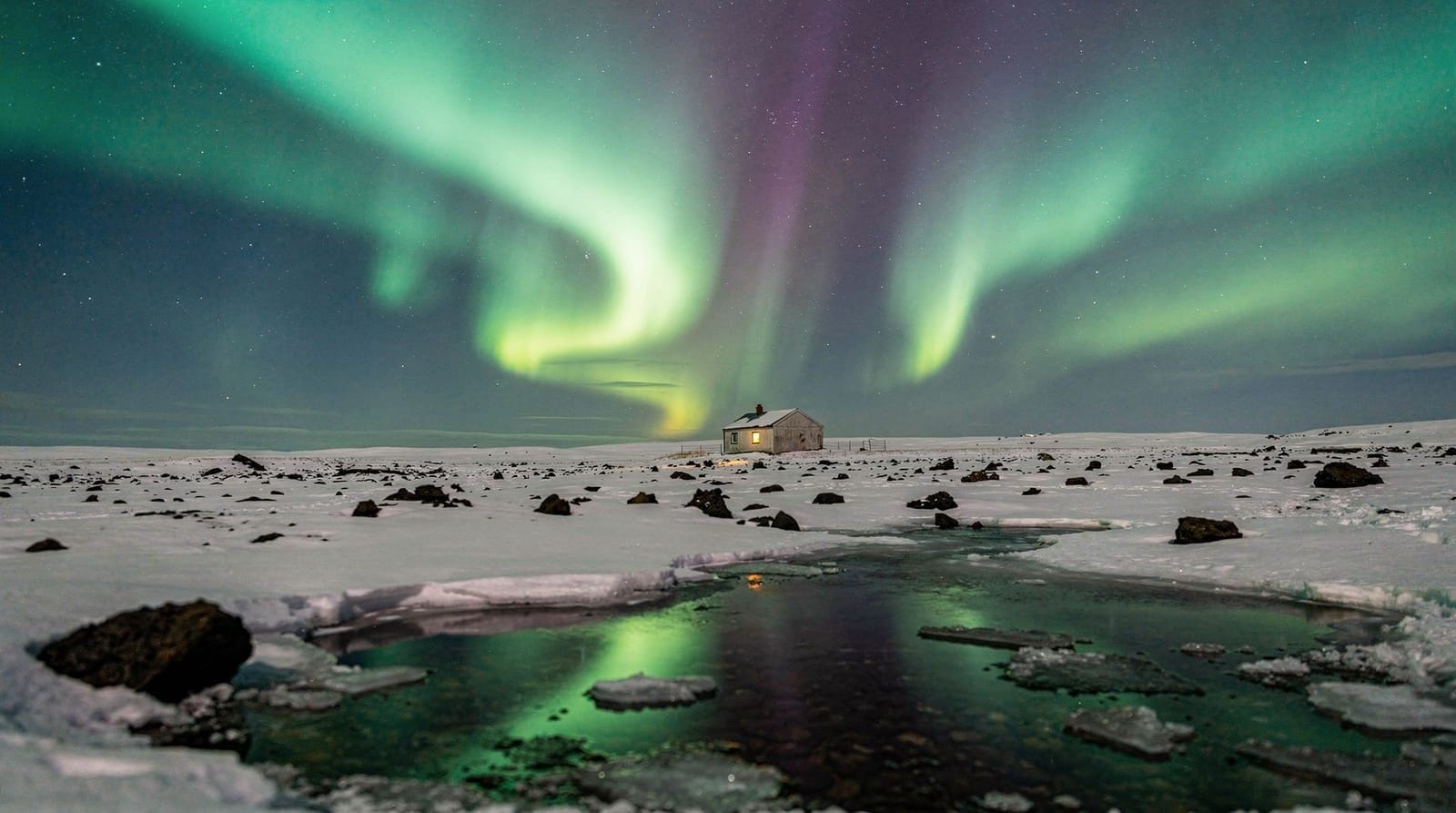
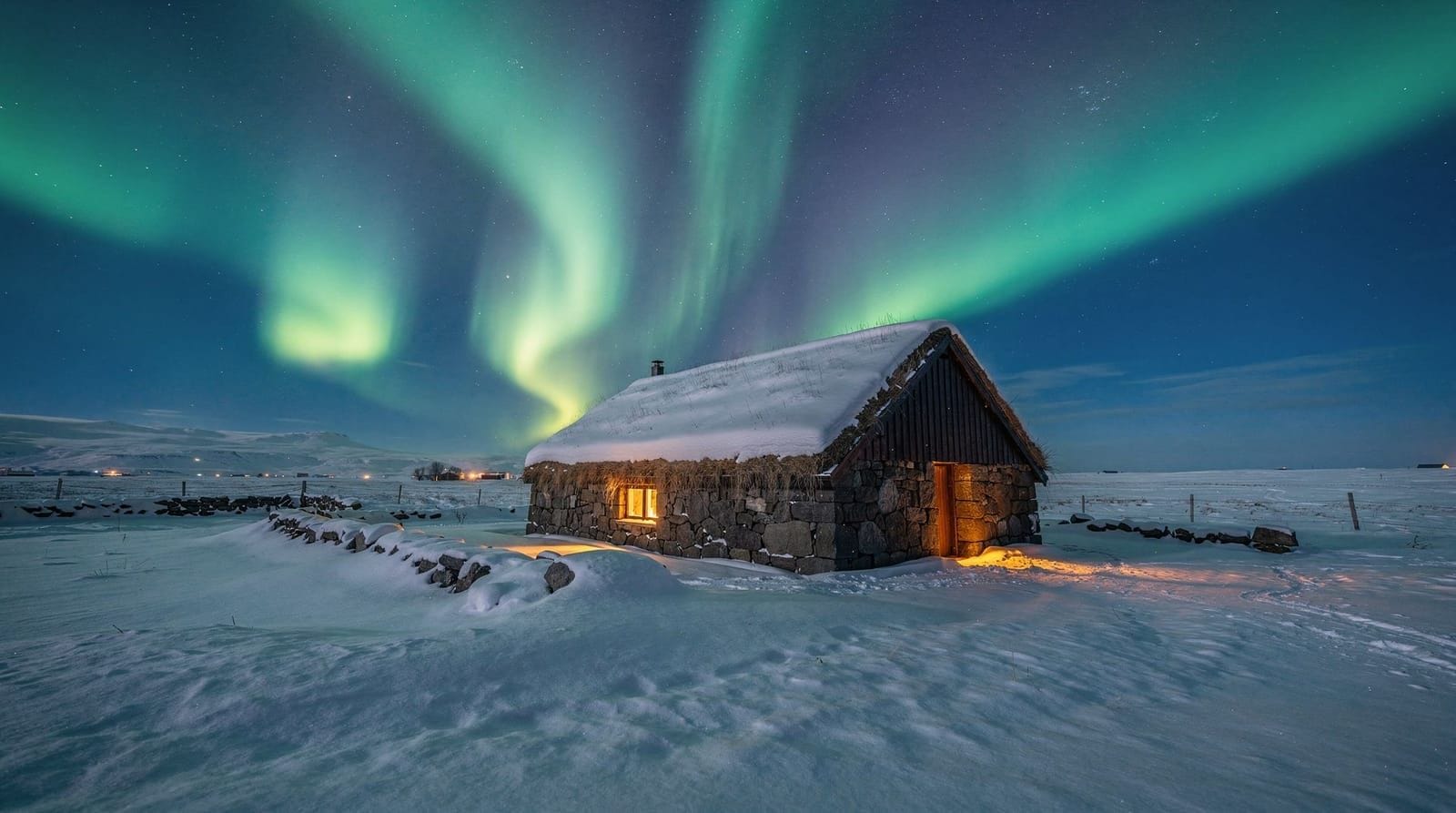
Northern lights are possible on clear nights throughout December and January. The long dark period gives ample viewing windows, but cloud cover is the persistent obstacle. December tends to be cloudier than January or February, though clear spells happen.
A northern lights tour with a lifetime guarantee is particularly sensible during Christmas week — if cloud covers your viewing nights, you can return on a future trip without rebooking.
For those with more flexibility in timing, boat tours offer a different perspective:
A northern lights boat tour from Reykjavík harbour gets you away from city light pollution on the water — effective for clear-night aurora viewing during the December dark window.
Ice caves in winter
December is peak ice cave season. Vatnajökull ice caves — the natural blue ice chambers accessible from Jökulsárlón — are fully operational and among the best conditions of the year.
Ice cave tours from Jökulsárlón sell out over Christmas and New Year — if this is part of your trip, book the ice cave tour at the same time you book flights and accommodation.
Getting around over Christmas
Roads are managed as a priority through the holiday period. The Ring Road is kept open. However, be aware:
- Some smaller guesthouses along the Ring Road close December 24–26
- Fuel stations may have reduced hours on Christmas Day and December 31
- The Keflavík airport area sees high traffic December 27–January 2 as post-Christmas arrivals surge
- December 31 driving post-midnight is best avoided
A 4WD is advisable for any winter driving — Christmas conditions are no different from regular winter Iceland in that respect.
What to do during Christmas week (December 26–30)
This window between Christmas and New Year is one of the most underrated periods to be in Iceland. Prices are below New Year levels, roads are manageable, and the Christmas lights are still up. Options:
- Golden Circle day trip — uncrowded and accessible
- Blue Lagoon or Sky Lagoon — book ahead, operating with Christmas-week hours
- Reykjavík cultural sites: National Museum, Settlement Exhibition, Hallgrímskirkja
- Northern lights tour if conditions allow
Costs and booking summary
| Period | Character | Booking lead time |
|---|---|---|
| December 1–20 | Quiet, cheap, Christmas markets | 2–4 weeks for most dates |
| December 21–27 | Christmas atmosphere, moderate crowds | 2–3 months ahead |
| December 28–31 | New Year surge, peak prices | Book in October at latest |
| January 1–5 | Post-New Year drop, still elevated | 4–6 weeks ahead |
Practical itinerary for Christmas week
For visitors arriving December 22–27 specifically:
December 22: Arrive Keflavík, pick up rental car, drive toward Reykjavík via the Blue Lagoon (book the Blue Lagoon months ahead for Christmas dates — it sells out). Check into Reykjavík.
December 23: Reykjavík — Christmas markets (last day typically), Hallgrímskirkja tower for city views, Settlement Exhibition or National Museum for indoor time. Christmas Eve dinner reservation essential.
December 24: Christmas Eve is a family day; most of Iceland closes. Hotel restaurants serve Christmas dinner. A northern lights tour if skies clear in the evening.
December 25: Christmas Day quiet in Reykjavík. The Golden Circle is accessible and nearly empty. Gullfoss in winter light with snow is impressive.
December 26–27: South coast — Seljalandsfoss, Skógafoss, potentially east toward Jökulsárlón if road conditions allow. Roads are actively managed over Christmas.
New Year’s Eve survival guide
The New Year celebration in Reykjavík rewards preparation:
Position: Find a high point before 11:30pm. Öskjuhlíð hill (Perlan) gives 360-degree coverage. Hallgrímskirkja forecourt or the surrounding streets. The harbour area gives views over the water with rockets from multiple directions.
Dress: Outdoor-level winter clothing mandatory. Hat, gloves, waterproof jacket. You will be standing outside for 30–45 minutes minimum.
Transport: Walking is the safest option after midnight. Roads are congested and celebration-chaotic. Taxis are hard to find at 12:30am. Book accommodation within walking distance of the city centre for New Year’s Eve.
Restaurants: Dinner reservations at most Reykjavík restaurants need to be made weeks ahead for December 31. Many offer a fixed New Year’s menu at premium pricing. Budget $100–200/person for a New Year’s Eve dinner.
The bonfires (Áramótabrennur): These happen across Iceland — Reykjavík’s main bonfire events start around 8–9pm in various neighbourhoods. Family-oriented, free, community events. Check local Reykjavík sources for specific locations each year.
Where to stay over Christmas-New Year
Central Reykjavík is the obvious base — walkable to celebrations and cultural sites. However, prices in the 101 postal district are highest. Practical alternatives:
- Laugardalur area (104 Reykjavík): 20-minute walk from centre, significantly lower prices than 101.
- Hafnarfjörður (20 minutes south): Lower prices still. Has its own Christmas market. Bus connections to Reykjavík.
- Keflavík (45 minutes): Only practical if arriving very late or departing very early New Year’s Day. Otherwise too far.
For the Christmas week mid-trip circuit (December 26–30), the south coast guesthouses and Ring Road accommodation are fully operational and significantly less expensive than Reykjavík over Christmas.
What to pack for a Christmas Iceland trip
Winter Iceland packing is the same regardless of Christmas: base layers (merino wool), warm mid-layer, waterproof shell, thermal trousers, waterproof over-trousers, waterproof insulated boots, hat, gloves, neck gaiter, sleep mask (hotel rooms may not have blackout curtains, and even winter darkness is relative).
For New Year’s specifically: hand warmers for the midnight outdoor wait. The 15–20 minutes of fireworks is cold if inadequately dressed. Chemical hand warmers cost very little and make the experience significantly more pleasant.
See what to pack for Iceland for the comprehensive seasonal packing list.
January 6 — Þrettándinn (Icelandic Twelfth Night)
In Iceland, Christmas does not end on December 26 or January 1 — the traditional Icelandic Christmas period runs through January 6, called Þrettándinn (the Thirteenth). This is Icelandic Twelfth Night, the day the last Yule Lad returns to the mountains and the holiday period formally closes.
Þrettándinn is celebrated with:
- Bonfires: Community bonfires across Iceland on the evening of January 5 (Þrettándaginn evening). Less spectacular than the New Year bonfires but a genuine tradition.
- Elves dancing: Traditional belief holds that elves and hidden people dance around the Þrettándinn bonfires on their last night of visibility for the year.
- End of Christmas decorations: Icelanders traditionally take down Christmas decorations on January 6 or just before.
If your trip extends into early January, Þrettándinn is worth knowing about — it explains why Christmas lights may still be up when you expect them to be gone.
Emergency and practical information for the Christmas period
A few practical notes specific to the Christmas-New Year window:
Medical services: Reykjavík has a 24-hour emergency room (Landspítalinn, Iceland’s main hospital). The holiday period does not close medical services, but non-emergency clinics may have reduced hours December 24–26.
Pharmacies: Lyfja pharmacies in Reykjavík maintain emergency rotas over Christmas. Hours on December 24–25 are reduced but not entirely closed.
Banks and currency: Iceland uses the Icelandic krona (ISK). ATMs are available 24/7 including Christmas day. Currency exchange offices at Keflavík airport and central Reykjavík banks operate holiday hours — carry sufficient cash for December 24–25 when most card-only businesses are closed.
Transportation: Strætó buses in Reykjavík operate on a reduced holiday schedule December 24–26 and December 31–January 1. Taxis and ride apps operate normally. Renting a car over New Year’s is expensive — factor in the premium before deciding whether to pick up before or after the New Year period.
Frequently asked questions about Christmas and New Year in Iceland
Is Iceland crowded at Christmas?
New Year’s Eve (December 31) and the days around it are the most crowded period outside July in Reykjavík. Main Iceland attractions outside the capital remain relatively quiet. Early December is genuinely uncrowded.
Can you see northern lights at Christmas in Iceland?
Yes, if skies clear. December has some of the longest dark windows of the year. Cloud cover is the variable — on clear nights, aurora activity is possible. The northern lights guide covers forecasting.
Is New Year’s Eve in Reykjavík safe?
Generally yes, though fireworks injuries do occur in the general population — Iceland has high rates of fireworks use. Keep a safe distance from private fireworks launch areas. The community bonfires and main public celebrations are managed events.
How much does Christmas/New Year in Iceland cost?
December 31 accommodation in Reykjavík: from 40,000–80,000+ ISK ($290–580+ USD) per night for a mid-range hotel. Christmas week (December 24–26): slightly lower. Early December: 15,000–25,000 ISK ($110–180 USD) per night is typical. Add car rental ($80–150/day 2WD, $120–200/day 4WD), meals ($25–50/person at mid-range restaurants), and tour costs.
What time is the New Year countdown in Reykjavík?
Midnight local time (GMT, same as London in winter — GMT/UTC+0). Iceland does not observe Daylight Saving Time, so it is always on UTC+0.
Are restaurants open on Christmas Day in Iceland?
Most restaurants close on December 24 (Christmas Eve) and December 25. Hotel restaurants typically serve Christmas dinner. By December 26 most normal restaurant hours resume. New Year’s Eve restaurants are open but fully booked — reserve weeks ahead.
Top experiences
Bookable activities with verified prices and instant confirmation on GetYourGuide.