Iceland museums guide — the best museums in Reykjavík and beyond
Reykjavik: Hop on hop off plus Perlan entry
What are the best museums in Iceland?
The Settlement Exhibition (excavated Viking farmhouse under Reykjavík) and the National Museum of Iceland are the strongest Reykjavík options. Perlan is best for geology and northern lights context. Outside Reykjavík, the Saga Center in Hvolsvöllur and the Herring Era Museum in Siglufjörður stand out.
Museum-going in Iceland — practical framing
Iceland’s museum sector is better than its size would suggest. The country has approximately 170 museums for a population of 380,000 — a higher per-capita density than almost any country in Europe. Many of these are small local history museums in rural communities; several are genuinely excellent.
Reykjavík has the concentration of nationally significant institutions. Regional museums — particularly in north Iceland and along the south coast — are specific to particular aspects of Icelandic history that the capital museums cover only in summary.
Admission prices range from 1,200 ISK to 5,900 ISK ($9–43 USD) for the main institutions. A combined museum pass, the Reykjavík City Card, covers most municipal museums plus unlimited bus travel — worth calculating whether it pays off based on your specific itinerary.
| Where | Reykjavík (main cluster), plus regional museums nationwide |
| Cost | Around 1,200–5,900 ISK per museum; City Card 3,300–6,100 ISK |
| Time needed | 1–2hrs each; a full “museum day” covers 2–3 |
| Best time | Rainy days, evenings (several open late), winter afternoons |
| Booking | Walk-in for almost all; no advance booking needed |
Reykjavík museums
The Settlement Exhibition — Landnámssýningin
Address: Aðalstræti 16, Reykjavík Hours: Daily 9am–6pm Admission: ~2,200 ISK ($16 USD) adult; children under 18 free
The Settlement Exhibition is the single strongest museum experience in Reykjavík. During construction work in 2001, excavators uncovered a Viking-age longhouse under the city centre — one of the oldest buildings discovered in Iceland, dated to approximately 870–930 CE. Rather than remove or relocate it, the museum was designed around the site.
You walk among the excavated foundations, which are protected under glass and presented with careful lighting. The surrounding exhibits explain Iceland’s settlement period — who came from where (primarily Norway and the British Isles), how land was allocated under the landnám (land-taking) system, and how the farm economy was structured.
The interpretation is clear and well-translated into English. The space manages to be both archaeologically serious and visitor-accessible. Allow 90 minutes.
Assessment: The best museum in Iceland for genuine historical substance. Do not miss if you are in Reykjavík for more than 2 hours.
National Museum of Iceland — Þjóðminjasafn Íslands
Address: Suðurgata 41, Reykjavík Hours: Tuesday–Sunday 10am–5pm; closed Mondays Admission: ~2,800 ISK ($20 USD) adult; free on first Thursday of each month
The National Museum covers Icelandic history from the Viking settlement through the 20th century across two main floors. The ground floor covers the medieval and early modern period: Viking-age artefacts, saga-era objects, ecclesiastical metalwork and carvings, and material from the Alþing legal tradition.
Highlights:
- The Valur sword — an early medieval weapon found in a burial mound
- Medieval carved church doors from Valþjófsstaðir
- The Þingvellir legislative objects documenting 1,000 years of Icelandic self-governance
- 20th-century exhibit covering independence (1944) and industrialisation
The museum’s strength is the medieval period; the 20th-century section is less compelling. Combined tickets with the Settlement Exhibition save money. For deeper background before your visit, our Icelandic history overview covers the same timeline in narrative form.
Perlan — Wonders of Iceland
Address: Öskjuhlíð hill, Reykjavík Hours: Daily 9am–9pm Admission: From ~3,900 ISK ($28 USD) standard; full package ~5,900 ISK ($43 USD)
Perlan covers four main themes: northern lights, glaciers, volcanoes, and the sea. The artificially created ice cave (real ice) is the most visited exhibit — a genuine walk-through ice tunnel that provides a reasonable sense of the natural ice cave experience for visitors not reaching Vatnajökull in winter.
The aurora planetarium show runs hourly. It is better than most such shows but not equivalent to the real thing. The geology exhibits are strong and well-designed for non-specialist visitors.
The hop-on hop-off bus with Perlan entry combo covers the city orientation plus the museum — a practical combination for visitors with limited time in Reykjavík.
Reykjavík Art Museum — Listasafn Reykjavíkur
Three venues: Hafnarhús (harbour), Kjarvalsstaðir, Ásmundarsafn Admission: ~2,200 ISK ($16 USD) per venue; combined ~3,300 ISK ($24 USD)
Hafnarhús (the Harbour House) is the main contemporary gallery, housed in a converted warehouse at the old harbour. It runs rotating exhibitions and has a permanent collection including significant Icelandic contemporary art. The work of Erró (Guðmundur Guðmundsson), an Icelandic pop artist who worked internationally, is on permanent display — colourful, politically conscious, and specific to the 20th century context.
Kjarvalsstaðir covers Jóhannes Sveinsson Kjarval’s work — landscape paintings that blend Icelandic scenery with folkloric and mythic elements. He is Iceland’s most beloved visual artist.
Ásmundarsafn in Laugardalur shows sculptural work in Ásmundur Sveinsson’s original studio. The outdoor sculpture garden is free. These three venues pair naturally with a broader walk through the city — see our Reykjavík culture guide for a fuller day plan that weaves galleries between cafés and landmarks.
Whales of Iceland
Address: Fiskislóð 23–25, Grandi harbour area Hours: Daily 10am–5pm (winter), 10am–7pm (summer) Admission: ~4,300 ISK ($31 USD) adult
Life-size models of all 23 whale species that appear in Icelandic waters, suspended or displayed in a large warehouse space. The largest is a blue whale at 24 metres. The experience is primarily visual and works well for children and for visitors who will not be doing whale watching.
For adults planning an actual whale watching trip, the exhibit is redundant. For families with young children or visitors who want whale context without going to sea, it is worthwhile.
Reykjavík Maritime Museum
Address: Grandagarður 8, harbour area Hours: Tuesday–Sunday 10am–5pm Admission: ~1,900 ISK ($14 USD) adult
Covers Reykjavík’s harbour history and the Icelandic fishing industry. The ICEBREAKER/Óðinn, a retired Icelandic coast guard vessel, is moored outside and included in the ticket — a hands-on exhibit where you explore the actual ship.
The cod wars with Britain (1958–1976), in which Iceland extended its fishing limit from 4 to 200 nautical miles against British protest, are covered in detail. This diplomatic and economic conflict is central to how modern Icelanders understand their national identity and economic sovereignty.
Worthwhile, especially if you are interested in maritime history or Iceland’s relationship with the sea.
Museums outside Reykjavík
Saga Center — Njáls Saga Center, Hvolsvöllur
Location: Hvolsvöllur, south Iceland (about 100km from Reykjavík on the south coast road) Hours: Daily 9am–6pm (summer) Admission: ~1,500 ISK ($11 USD)
The Saga Center covers the landscape and events of Njáls saga — Iceland’s longest and most complex saga — through maps, artefacts, and reconstructed objects. The surrounding landscape of south Iceland is itself the setting for the saga.
Combine with a drive past Hlíðarendi farm (mentioned in the saga) and through the landscape described in the text. Contextualises the south coast road trip in a way that significantly deepens the experience.
Herring Era Museum — Síldarminjasafnið, Siglufjörður
Location: Siglufjörður, north Iceland (Siglufjörður destination) Hours: June–August daily 10am–6pm; limited hours in winter Admission: ~1,800 ISK ($13 USD)
Iceland’s largest museum outside Reykjavík, occupying three restored buildings from the 1930s–50s herring industry. Siglufjörður was the centre of Iceland’s herring fishing boom — at its peak, the town had a population several times larger than today, with dozens of herring factories and processing plants.
The museum is unusual in that it preserves actual working machinery and structures from the herring era rather than just artefacts behind glass. The salt fish factory building is particularly impressive. One of the strongest regional museums in northern Europe.
Worth the 40-minute drive from Akureyri specifically for this museum.
Snæfellsnes — Shark Museum, Bjarnarhöfn
Location: Bjarnarhöfn, Snæfellsnes Peninsula Admission: Around 1,000 ISK ($7 USD) including tasting
The Bjarnarhöfn Shark Museum covers the traditional process of making hákarl — fermented Greenlandic shark that has been a part of Icelandic diet for centuries. The shark is buried in gravel for several months to remove the ammonia (fresh Greenlandic shark is toxic), then dried for 4–5 months.
The museum is on a working farm that has been making hákarl for generations. The tasting is available and should be attempted once. Most visitors describe the smell as significantly worse than the taste. Small, honest, specific. Worth the detour on a Snæfellsnes circuit.
Akureyri
Akureyri, Iceland’s second city, has several worthwhile museums:
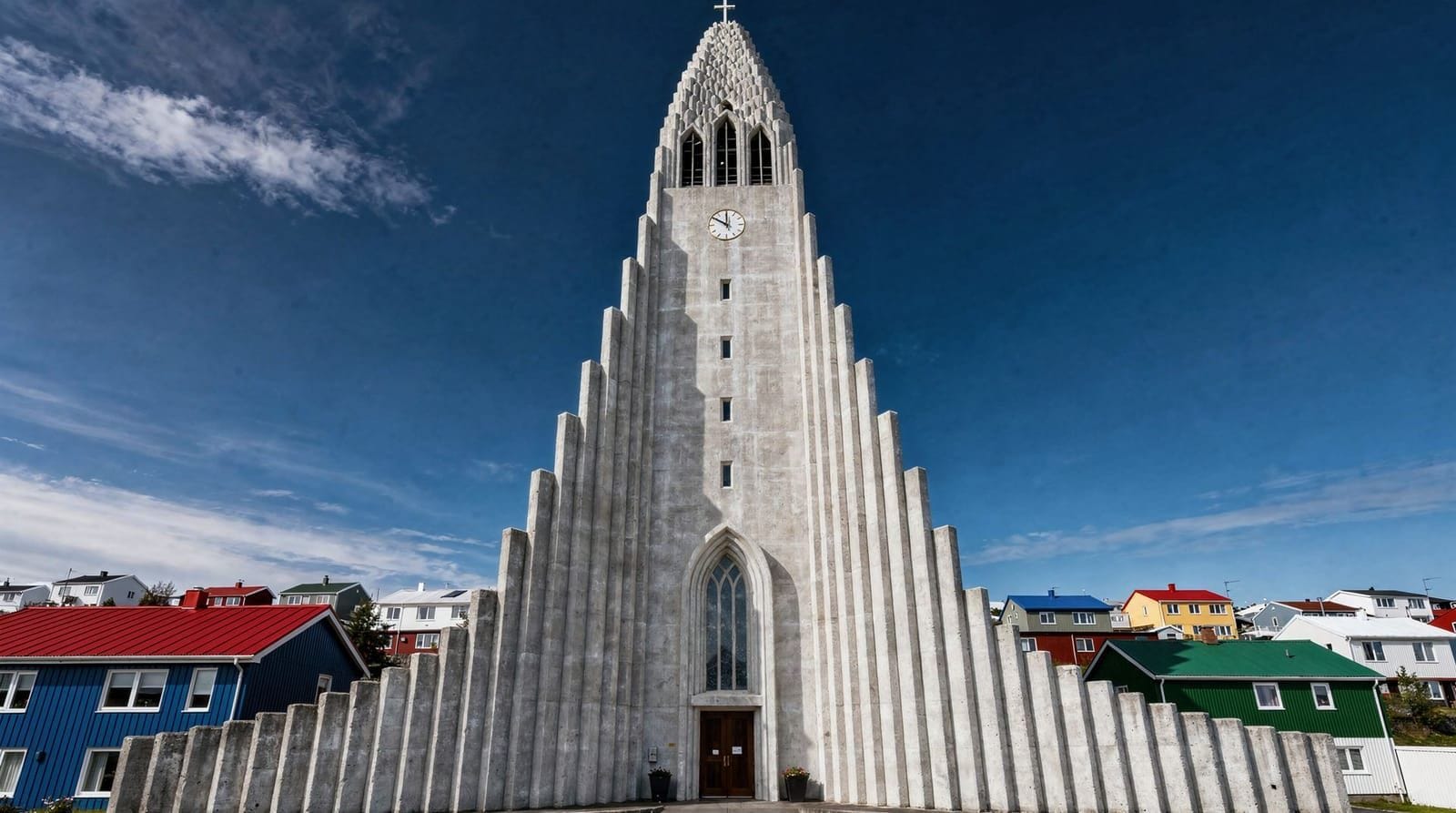
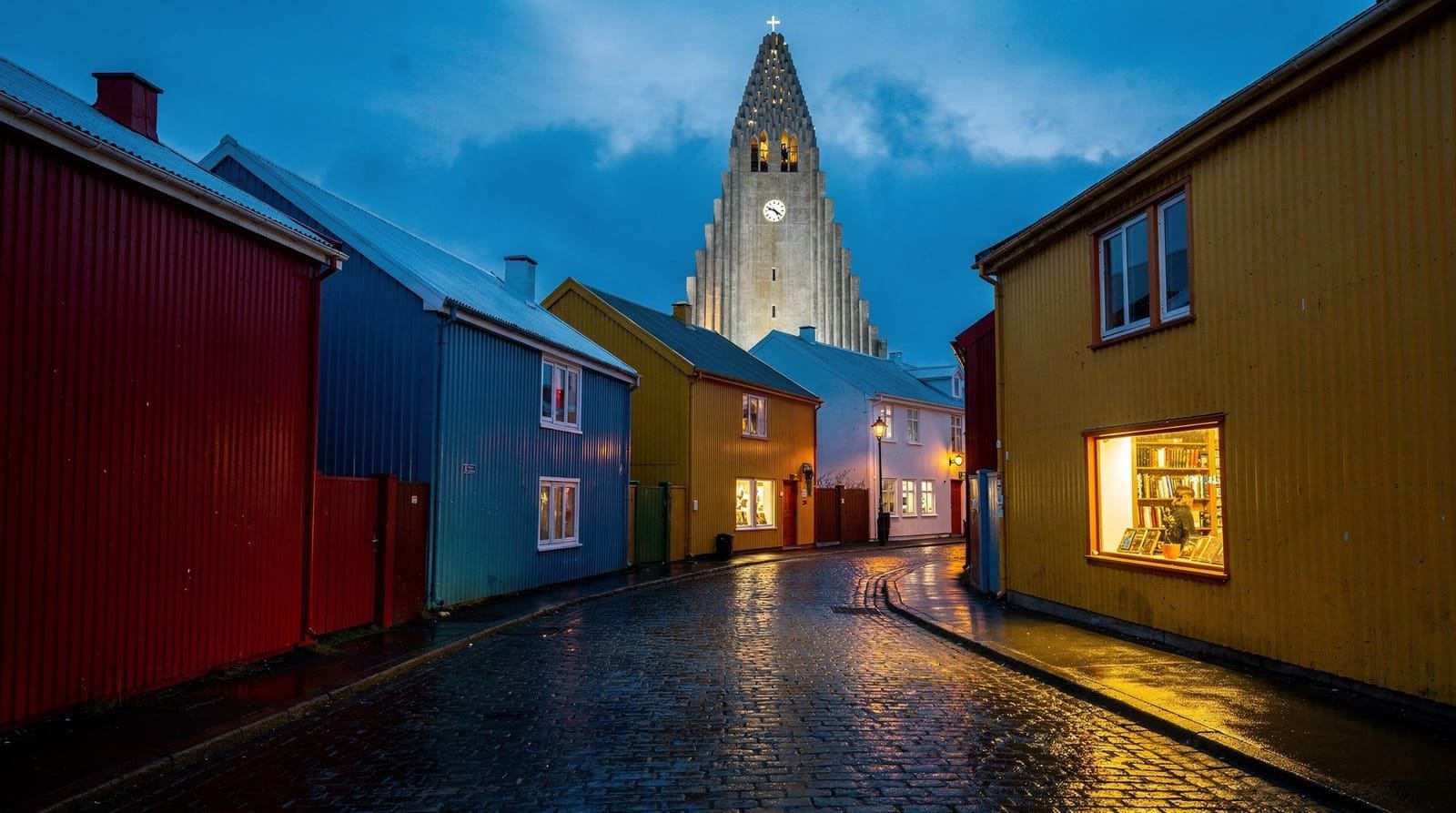
Akureyrarkirkja: The clifftop Lutheran church overlooking the fjord. Its design echoes Hallgrímskirkja but in a smaller scale. The stained glass windows include an unusual rose window from Coventry Cathedral (donated post-WWII, where Coventry’s original was destroyed).
Akureyri Art Museum: Small but active contemporary programme with regularly changing exhibitions. Free admission.
Botanical Garden (Lystigarðurinn): The world’s northernmost botanical garden, surprisingly warm in summer thanks to Akureyri’s sheltered fjord location. Free. Over 6,000 plant species.
These pair well with a broader look at Akureyri itself, and with the wider day trips from Akureyri if you have a full day in the north.
The Reykjavík Museum of Photography — Ljósmyndasafn Reykjavíkur
Address: Tryggvagata 15 (Grófarhús), harbour area Admission: Free Hours: Weekdays 12–7pm, Weekends 1–5pm
The photography museum occupies a single floor in a building near the harbour. It runs rotating exhibitions of Icelandic and international photography — typically 2–3 concurrent shows. The permanent collection includes the Sigríður Sigurðardóttir archive of 20th-century Icelandic documentary photography.
The permanent archive is not typically on display, but when shown, it provides invaluable visual context for Icelandic history — fishing village life, highland farming, pre-development Reykjavík.
This is the most overlooked museum in central Reykjavík. Free entry and rotating quality exhibitions make it worth checking current programming before visiting.
Numismatic and philatelic museums
Iceland has small but genuine specialist museums for coins and stamps:
Listasafn Íslands (National Gallery of Iceland), Þórbergssetur (on the south coast near Kirkjubæjarklaustur) — specialist collection related to a specific Icelandic writer.
These niche institutions tell specific stories that the big museums do not have space for. The philatelic collection at the main post office in Reykjavík documents Iceland’s stamp history, which is unusually strong in design quality for a small island nation.
None of these require more than 30–45 minutes and none charge more than a token admission fee. They suit travellers who have already covered the major Reykjavík institutions and want something more specific, or who have a genuine personal interest in the subject matter — they are not a good use of limited time on a first, short visit to the capital.
How the museums connect to sites
One of the virtues of visiting Iceland’s museums before touring is that they provide geographic and historical context that the sites themselves often lack.
Sequence suggestion:
- Settlement Exhibition first — establishes the human timeline from 870 CE
- National Museum second — carries that timeline to the present
- Then physical sites: Þingvellir, south coast, north Iceland
Alternatively, for geologically focused visitors:
- Perlan first — establishes the volcanic and glacial framework
- Lava Centre (Hvolsvöllur) before driving the south coast
- Then Vatnajökull National Park and the volcanic landscapes with working mental models
For saga readers specifically:
- Njáls Saga Center before driving the south coast
- Settlement Exhibition in Reykjavík
- Snorrastofa (Reykholt) before or after the west Iceland circuit
This sequencing makes the physical sites richer rather than viewing museums and sites as alternative activities.
Museum passes and practical tips
Reykjavík City Card: Available in 24, 48, and 72-hour versions (3,300–6,100 ISK / $24–44 USD). Includes entry to most municipal museums, Reykjavík Zoo and Garden, and unlimited bus travel. Calculate whether your planned museum visits justify the cost.
First Thursday: The National Museum and some others offer free entry on the first Thursday of each month.
Photography: Most museums allow photography without flash. Some archaeological exhibits prohibit it — check signage.
A city walking tour provides the orientation context that makes subsequent museum visits more meaningful — understanding the city’s geography and history before entering the Settlement Exhibition or National Museum significantly enhances both.
Specialist and niche museums
Iceland’s museum density means there are genuinely excellent specialist museums that most visitors skip entirely:
Húsavík Whale Museum (Hvalasafnið, Húsavík): One of Europe’s most comprehensive whale biology museums, directly connected to Húsavík’s whale watching operations. The skeletal mounts of full-size whales are genuinely impressive. Free with most Húsavík whale watching bookings.
Lava Centre (Lava Center, Hvolsvöllur): Interactive exhibit on Iceland’s volcanic geology. Opened 2017. The 4D cinema simulation of a volcanic eruption is the strongest exhibit. Admission around 2,900 ISK ($21 USD). Most useful before a south coast drive that passes the Eyjafjallajökull eruption zone.
Þingvellir Visitor Centre: The centre at Þingvellir National Park has exhibits on the geological rift and the parliamentary history. Free with park entry. Not a standalone museum but good contextual preparation before walking the park.
Skógar Folk Museum (Byggðasafn Skógar): At the base of Skógafoss waterfall on the south coast. Collection of 19th-century Icelandic farm buildings and artefacts. One of the better folk museum collections in Iceland.
Textile Museum (Textílsafnið, Blönduós): In north Iceland. Specialises in Icelandic textile traditions, including the lopapeysa wool sweater pattern tradition. Niche but excellent for its subject.
The museum experience in Reykjavík vs regional
A pattern worth understanding: Reykjavík museums tend to be broader and more interpretation-heavy. Regional museums tend to be more specific and more object-rich. Both have value; they are different experiences.
The Settlement Exhibition is exceptional precisely because it is both site-specific (the actual excavated farmhouse) and well-interpreted. Perlan is broad-coverage with theatrical presentation. The National Museum is comprehensive but requires more visitor engagement to get value from.
Regional museums — the Herring Era Museum in Siglufjörður, the Lava Centre in Hvolsvöllur, the Húsavík Whale Museum — are focused on one thing and do that one thing very well. If your itinerary passes near them, they are worth the 1–2 hour stop.
The Icelandic language and museum interpretation
Most Icelandic museums now provide English interpretation alongside Icelandic at primary exhibits. Smaller or more recent facilities are sometimes Icelandic-only at secondary labels. A few larger museums (Perlan, Settlement Exhibition) are effectively bilingual throughout.
The quality of English translation varies significantly. At the Settlement Exhibition, the English text is clear and well-edited. At smaller regional museums, some translation may be mechanical. This is not a reason to skip a museum but to calibrate expectations.
Audio guides are available at the Settlement Exhibition and a few other larger institutions. At Perlan, the exhibits are designed with interactive elements that provide their own interpretation.
Museum gift shops
Iceland’s museum gift shops range from genuinely useful to tourist-trap generic. The National Museum shop has a good selection of academically credible books on Icelandic history, archaeology, and natural history in English. The Settlement Exhibition shop is smaller but focused. Perlan’s gift shop leans commercial.
The best purchases at Icelandic museum shops are typically:
- Scholarly books on specific subjects (sagas in translation, natural history, architectural history)
- Reproductions of significant objects (settlement-era jewellery replicas)
- Maps with historical overlays
Woolly sweater replicas and Viking helmet magnets are available everywhere else — no need to buy them at a museum premium.
Rainy-day and winter museum strategy
Museums are the single best answer to Iceland’s most common trip-planning problem: a day of driving rain or a short winter daylight window. A realistic rainy-day plan in Reykjavík looks like this: Settlement Exhibition in the morning (90 minutes), lunch nearby, National Museum or Perlan in the early afternoon, then the free Reykjavík Museum of Photography or Hafnarhús before dinner. All of this is walkable or a short bus ride within the city, so no car is needed.
Outside the capital, the calculation is different — regional museums are spread out and best treated as stops along a route rather than a destination in themselves. On a south coast day, the Lava Centre and Skógar Folk Museum both sit directly on Route 1 and add under an hour each to a driving day already planned around waterfalls and black-sand beaches.
How museums compare for different trip priorities
| If you care most about… | Start here |
|---|---|
| Viking and settlement history | Settlement Exhibition, then National Museum |
| Volcanoes and geology | Perlan, then Lava Centre (Hvolsvöllur) |
| A specific region’s identity | Herring Era Museum (Siglufjörður), Saga Center (Hvolsvöllur) |
| Art | Reykjavík Art Museum (three venues), Akureyri Art Museum |
| Wildlife context | Whales of Iceland, Húsavík Whale Museum |
| Free options only | Reykjavík Museum of Photography, Akureyri Botanical Garden, Ásmundarsafn garden |
Frequently asked questions about Iceland museums
Is Iceland’s Settlement Exhibition the same as the National Museum?
No — they are separate institutions. The Settlement Exhibition (Aðalstræti 16) focuses on the Viking-age archaeological site found under Reykjavík. The National Museum (Suðurgata 41) covers Icelandic history from settlement through the 20th century in a broader survey format.
Are Iceland museums open year-round?
The major Reykjavík museums (Settlement Exhibition, National Museum, Perlan, Reykjavík Art Museum) are open year-round with adjusted winter hours. Regional museums, particularly smaller rural institutions, may close October–May.
What is the best museum for children in Iceland?
Perlan’s ice cave and hands-on geology exhibits work well for children from about age 6. Whales of Iceland works for younger children. The Settlement Exhibition has limited child appeal under age 8.
Can you photograph inside Iceland’s museums?
Generally yes, without flash. Archaeological and manuscript exhibits sometimes prohibit photography. Signage at individual exhibits will specify.
Are there any free museums in Iceland?
The Reykjavík Art Museum (Ásmundarsafn outdoor sculpture garden), Akureyri Art Museum, and the Akureyri Botanical Garden are free. The National Museum is free on the first Thursday of each month.
How many museums can you realistically fit into one day in Reykjavík?
Two to three, comfortably, with breaks for food and walking between them. The Settlement Exhibition and National Museum pair well as a half-day; add Perlan or the Reykjavík Art Museum for a fuller day. Trying to fit more turns the visit into a checklist rather than an experience.
Do Iceland’s museums accept credit cards?
Yes — nearly all museums, including small regional ones, are card-only or card-preferred. Iceland is a heavily cashless society, and carrying cash specifically for museum admission is unnecessary.
Top experiences
Bookable activities with verified prices and instant confirmation on GetYourGuide.
Top experiences
Best-rated activities across GetYourGuide and Viator.

Airport Transfer: Keflavik Airport to Reykjavik Center in Iceland
- Viator

From Reykjavik: Snaefellsness Peninsula small group day tour
- Viator

Ice Cave and Glacier Walk into Blue Glacier Canyon
- Viator

Small-Group South Coast & Glacier Hike Tour from Reykjavik
- Viator

Sólheimajökull Ice Climbing and Glacier Walk
- Viator

From Reykjavik: Katla Ice Cave and South Coast Day Tour
- Viator