Icelandic sagas explained — what they are and why they matter
What are the Icelandic sagas?
The Icelandic sagas are prose narratives written in Old Norse during the 13th and 14th centuries, describing events from the settlement era (9th–11th centuries). They are among the most sophisticated works of medieval literature — realistic, psychologically complex, and set in the landscapes of Iceland, Greenland, and North America.
| What they are | 13th–14th century prose narratives about 9th–11th century settlers |
| Best starting saga | Njáls saga (the longest and most complete) |
| Where the landscape matches | South Iceland (Njáls saga), Borgarfjörður (Egils saga), Westfjords (Gísla saga) |
| Reading time investment | A single saga (150–300 pages) is enough to transform a trip |
| Key site | Þingvellir — the shared setting across most major sagas |
Literature born from landscape
Iceland produced, in the 13th and 14th centuries, a body of prose literature that has no close parallel in medieval Europe. The sagas — the word simply means “sayings” or “what was said” — are realistic prose narratives dealing with the first generations of Icelandic settlers, their feuds, marriages, travels, and legal disputes. They are written in a spare, restrained style that influenced everyone from Hemingway to J.R.R. Tolkien.
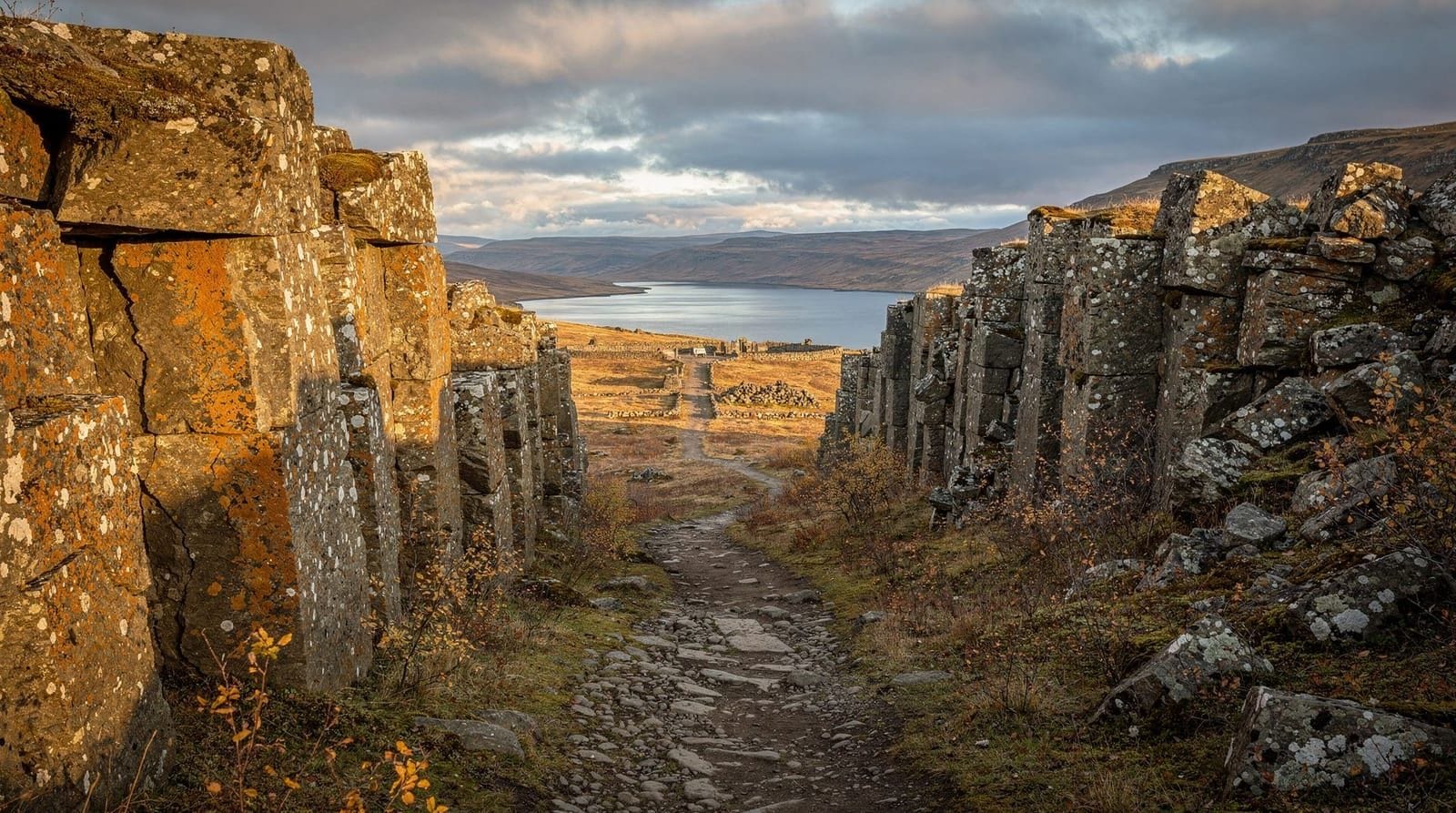
The connection between the sagas and Iceland’s landscape is direct and specific. Njáls saga is set around the farms and rivers of south Iceland — places you drive through today on the south coast road. Egils saga begins in Norway but centres on Borgarfjörður in west Iceland. Laxdæla saga takes place in the Dalir district of west Iceland. These are not mythological settings — they are real farms with real names, most of which still exist.
How the sagas were preserved and passed down
Before they were written down, saga material circulated orally for generations — genealogies, notable feuds, and memorable speeches were the kind of material a community would retell at gatherings. When Icelandic scribes began committing these narratives to vellum in the 1200s, they were working from a combination of oral tradition, existing genealogical records, and, in some cases, direct family memory only a handful of generations removed from the events described. This is part of why scholars treat the sagas as neither pure fiction nor strict history: they sit in a middle register, shaped by centuries of retelling before being fixed in the form we read today.
What the sagas are, and are not
A common confusion: the sagas are not mythology or legend in the way Norse mythology is. They contain almost no supernatural elements. When a character has a premonitory dream or sees a “fetch” (a ghost-like projection of a living person), it is treated with psychological realism, not fantasy register.
The sagas deal with:
- Feuds and honour culture: A wrong done to one member of a family demands either legal compensation or physical revenge. The logic of feud — who owes what to whom, when violence is justified, when settlement is possible — drives most saga narratives.
- Legal proceedings: The Alþing at Þingvellir (the world’s oldest parliament) was where major disputes were settled. Several sagas hinge on Alþing scenes and the procedural drama of Icelandic law.
- Exploration: Several sagas describe the discovery of Greenland and North America (called Vínland). Eiríks saga and Grænlendinga saga describe Leifr Eiríksson reaching North America around 1000 CE — accounts that were confirmed archaeologically at L’Anse aux Meadows in Newfoundland.
- Ordinary people: Unlike much medieval European literature, sagas describe farmers, seafarers, and their families. They are not exclusively about kings and nobles.
The main saga categories
The Sagas of Icelanders (Íslendingasögur)
The most important category — about 40 texts describing events in Iceland from roughly 870 to 1030 CE, written in the 1200s and 1300s. The most significant:
Njáls saga (Brennu-Njáls saga): The longest and most complex. A story of friendship, honour, and catastrophic escalation over several generations in south Iceland. The burning of Njáll and his family at their farm Bergþórshvoll (near Hvolsvöllur) is the emotional centrepiece. Often called the greatest work of Icelandic literature.
Egils saga: The life of Egill Skallagrímsson — poet, Viking, difficult personality, possibly with Paget’s disease. Set partly in Borgarfjörður in west Iceland. Notable for Egill’s poetry, which survives and is technically sophisticated.
Laxdæla saga: A story of love, marriage, and fatal decisions in west Iceland’s Dalir district. The character of Guðrún Ósvífrsdóttir is one of the most memorable women in medieval literature.
Eyrbyggja saga: Covering the settlement of the Snæfellsnes Peninsula and the character of Snorri goði, a pragmatic and effective chieftain.
Gísla saga: An outlawry narrative set in the Westfjords — Gísli Súrsson spends 13 years in hiding after killing his brother-in-law, visited only by his wife.
The Vinland sagas
Eiríks saga rauða and Grænlendinga saga: Two partially overlapping accounts of Norse exploration of North America around 1000 CE. Eiríkr the Red’s colonisation of Greenland and his son Leifr’s exploration further west. Confirmed factually by the L’Anse aux Meadows excavations.
The Kings’ Sagas (Konungasögur)
Most famously, Snorri Sturluson’s Heimskringla — a history of Norwegian kings from mythological origins through the 12th century. Snorri (1179–1241) was an Icelandic chieftain, politician, and the most important Scandinavian writer of the Middle Ages. He also wrote the Prose Edda, the principal source for Norse mythology.
The Mythological Sagas (Fornaldarsögur)
Earlier and more fantastic in character than the Sagas of Icelanders — stories about heroes, monsters, and ancient Scandinavia. Less realistic but more action-oriented.
Where to encounter the sagas in Iceland
The Settlement Exhibition (Aðalstræti, Reykjavík): The excavated Viking farmhouse and its contextual displays directly reference the saga accounts of Reykjavík’s founding. See the Reykjavík culture guide for details.
Þingvellir National Park: The site of the Alþing, which appears as a central setting in many sagas. The law rock (Lögberg) where the Law Speaker recited the law from memory is marked. Walking the site after reading Njáls saga is a specific historical experience. Full details in the Þingvellir destination guide.
Hvolsvöllur and the Njáls Saga Center: The Saga Center in Hvolsvöllur (on the south coast) covers the geography of Njáls saga with detailed maps and recreated objects. The farms mentioned in the saga — Hlíðarendi, Bergþórshvoll — are identifiable from the surrounding landscape.
Borgarfjörður and the Snorrastofa: Snorri Sturluson’s farm at Reykholt in Borgarfjörður contains a museum dedicated to his work. The medieval hot spring bath (Snorralaug) is original and preserved.
The Westfjords: The outlawry routes of Gísla saga and the Laxdæla saga landscape are in west Iceland and the Westfjords — a travel destination that offers Dynjandi waterfall, Látrabjarg cliffs, and an uncrowded version of Iceland.
Reading the sagas before you go
Several sagas are available in good modern English translations. Recommended starting points:
- Njáls saga (trans. Robert Cook, Penguin Classics): The accessible starting point. Long but readable.
- Egils saga (trans. Bernard Scudder, Penguin Classics): Shorter and more action-focused.
- The Vinland sagas (trans. Keneva Kunz, Penguin Classics): Short and directly relevant to North American history.
- The Complete Sagas of Icelanders (Leifur Eiríksson Publishing): The scholarly complete edition in 5 volumes.
Reading even a single saga before visiting connects the landscape to specific events in a way that transforms how you see the south coast or Þingvellir.
Which saga to start with, matched to your itinerary:
| If your trip covers… | Read… | Why |
|---|---|---|
| South Coast, Golden Circle | Njáls saga | Its landscape is exactly the route most first-time visitors drive |
| West Iceland, Snæfellsnes | Egils saga or Eyrbyggja saga | Both are set directly along that route |
| Westfjords | Gísla saga | The outlawry narrative follows the fjords you’ll drive |
| A short trip, limited reading time | The Vinland sagas | Short, self-contained, and historically confirmed |
If you can only read one before a first Iceland trip, Njáls saga matches the itinerary most visitors actually drive.
The saga landscape connection
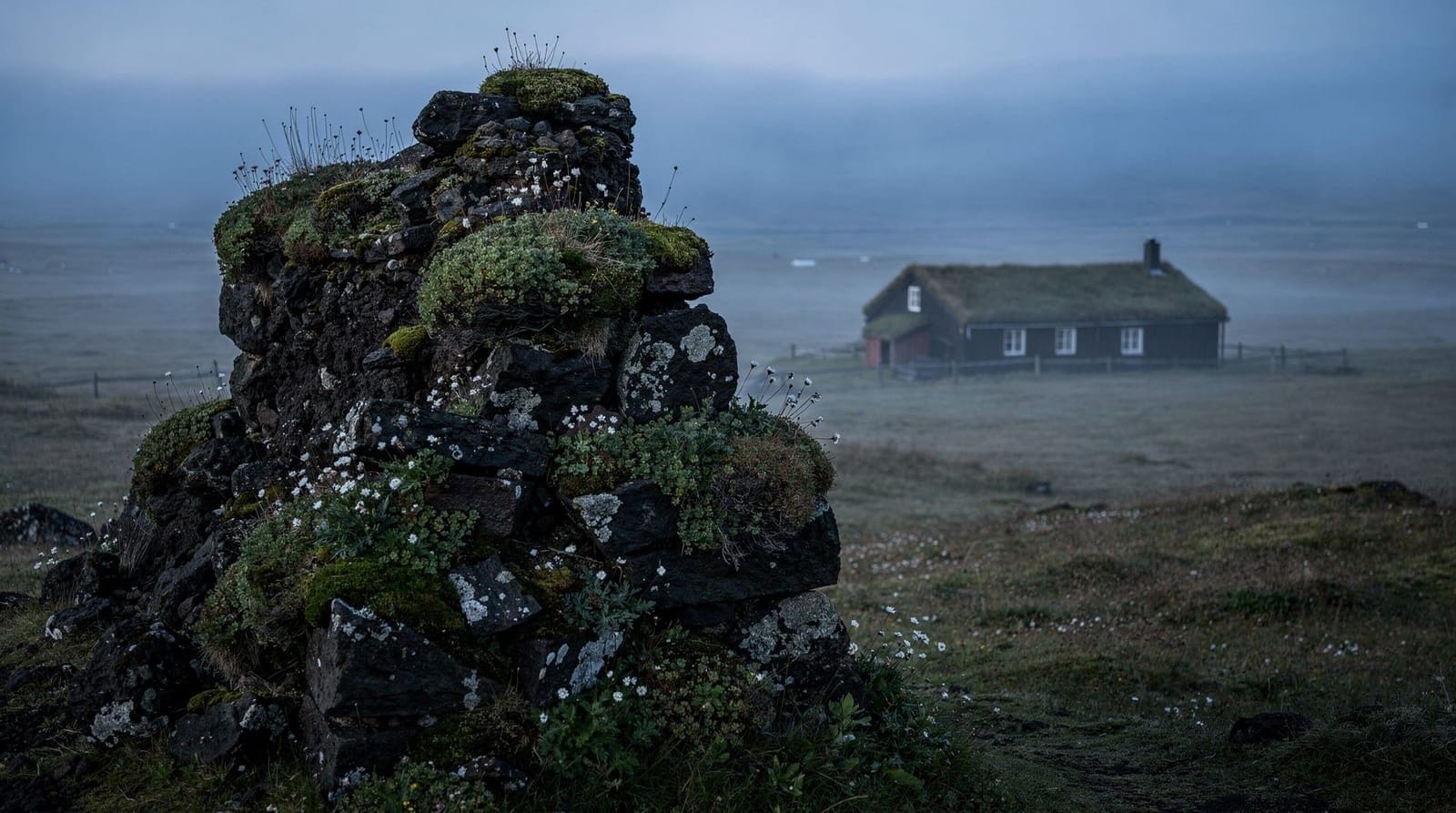
One of Iceland’s specific travel pleasures is that the saga landscape is essentially unchanged. Farms with the same names mentioned in 13th-century texts exist today as working farms. Rivers appear in saga accounts under the same names you see on maps. Þingvellir is the same valley where the medieval parliament convened. The mountains visible from the south coast road are the same mountains behind which characters in Njáls saga made their rides.
This continuity — literature and landscape in direct correspondence — is unusual in Europe where urbanisation and agriculture have transformed most medieval settings. Iceland’s low population density and slow land use change means you can read a saga and then stand in the place where the event occurred.
The sagas and Icelandic identity
The sagas were rediscovered as central to Icelandic national identity during the 19th century nationalist period, when Iceland was working toward independence from Denmark (achieved 1944). The scholarly and popular revival of saga literature was part of this cultural programme — the texts were positioned as evidence of Icelandic civilisation and literary achievement independent of European influence.
This political reading has faded, but the sagas retain genuine cultural importance. Icelanders learn them in school. Place names and personal names from the sagas remain common. The National Museum treats them as primary historical sources. They are a living part of the culture rather than an academic curiosity.
Why the sagas matter for travellers specifically
The connection between reading the sagas and visiting Iceland is not academic. It transforms how you experience specific landscapes.
Þingvellir and Njáls saga: The Alþing scenes in Njáls saga describe legal proceedings at the same valley where you walk. Reading about Gunnar of Hlíðarendi riding to the Alþing and then walking the path between the tectonic plates creates a specific temporal layering.
Skógafoss and the hidden treasure legend: The first settler of Þórsmörk is said in local saga tradition to have buried his treasure in a barrel behind Skógafoss. A ring was apparently found there in the early 20th century and is now in a Skógar museum. Whether true or not, the legend changes how you look at the falls.
Borgarfjörður and Egils saga: Driving the Snæfellsnes and west Iceland route through Borgarnes passes the landscape where Egill Skallagrímsson grew up and where his farm Borg á Mýrum still exists as a working farm. A small monument marks the approximate site.
Laxárdalur (Dalir district): The river valley where Laxdæla saga takes place, in the northwest of Iceland between the Snæfellsnes Peninsula and the Westfjords. Driving this route while knowing Guðrún Ósvífrsdóttir’s story changes the fields and farms into a narrative landscape.
The point is not to visit Iceland as a literary pilgrimage. It is that the sagas add a layer of human meaning to landscapes that are otherwise dramatic but impersonal. Iceland’s low population and unchanged land use mean the literary landscape is also the real landscape — an unusual situation in the modern world.
The saga legacy in modern Icelandic culture
The sagas are not merely historical texts — they remain actively present in contemporary Icelandic culture:
Personal names: Many Icelanders carry saga names. Gunnar, Njáll, Bergþóra, Guðrún, Egill, Skarpheðinn — all from the sagas, all still used. The patronymic naming system that Iceland uses means these names recur across generations.
Legal language: Some Icelandic legal terminology preserves Old Norse roots. The Alþingi (parliament) has the same name as the medieval assembly.
Literature: Contemporary Icelandic writers engage directly with saga tradition. Sjón’s novels frequently reference Icelandic mythological and saga material. The crime fiction tradition (Arnaldur Indriðason, Yrsa Sigurðardóttir) is often set against a backdrop of Icelandic historical trauma and saga-inflected landscape.
Naming places: Iceland’s landscape is saturated with names derived from saga tradition. Farm names, valley names, mountain names — many are traceable directly to 13th-century texts. The specificity is unusual: you can identify the farm a saga character rode past from a description written 700 years ago.
The Prose Edda and Norse mythology
Snorri Sturluson’s Prose Edda (written around 1220 CE) is the primary source for Norse mythology — the stories of Óðinn, Þórr, Loki, the creation of the world, and Ragnarök. It was written as a guide for poets who wanted to understand the mythological metaphors embedded in skaldic (court) poetry.
The Prose Edda is distinct from the sagas but was written by the same author as Heimskringla and is part of the same 13th-century Icelandic literary explosion. Without Snorri’s Edda, most of what is known about Norse mythology would be fragmentary.
The Poetic Edda (separate collection) contains older poems in various metres, including the Völuspá (prophecy of the seeress, which describes the creation and destruction of the world) and the Hávamál (the sayings of Óðinn, which includes practical wisdom about hospitality, friendship, and conduct).
Both Eddas are available in English translation (Carolyne Larrington’s Poetic Edda, Penguin Classics, is the current standard). The connection to Icelandic folklore and elf tradition is through the same cultural substrate that the Eddas document.
Saga manuscripts and the Árni Magnússon Institute
The original saga manuscripts are vellum (calf skin) documents, most written in Iceland in the 13th–15th centuries. The majority are held in the Árni Magnússon Institute for Icelandic Studies (Stofnun Árna Magnússonar) at the University of Iceland in Reykjavík.
The manuscripts’ journey to Iceland is its own saga. Árni Magnússon (1663–1730) spent decades collecting manuscripts from Iceland and took them to Copenhagen when he was a professor there. A major fire in Copenhagen in 1728 destroyed approximately half the collection. The surviving manuscripts were held in Denmark until the 1970s, when they were repatriated to Iceland in a diplomatic and cultural process that took years.
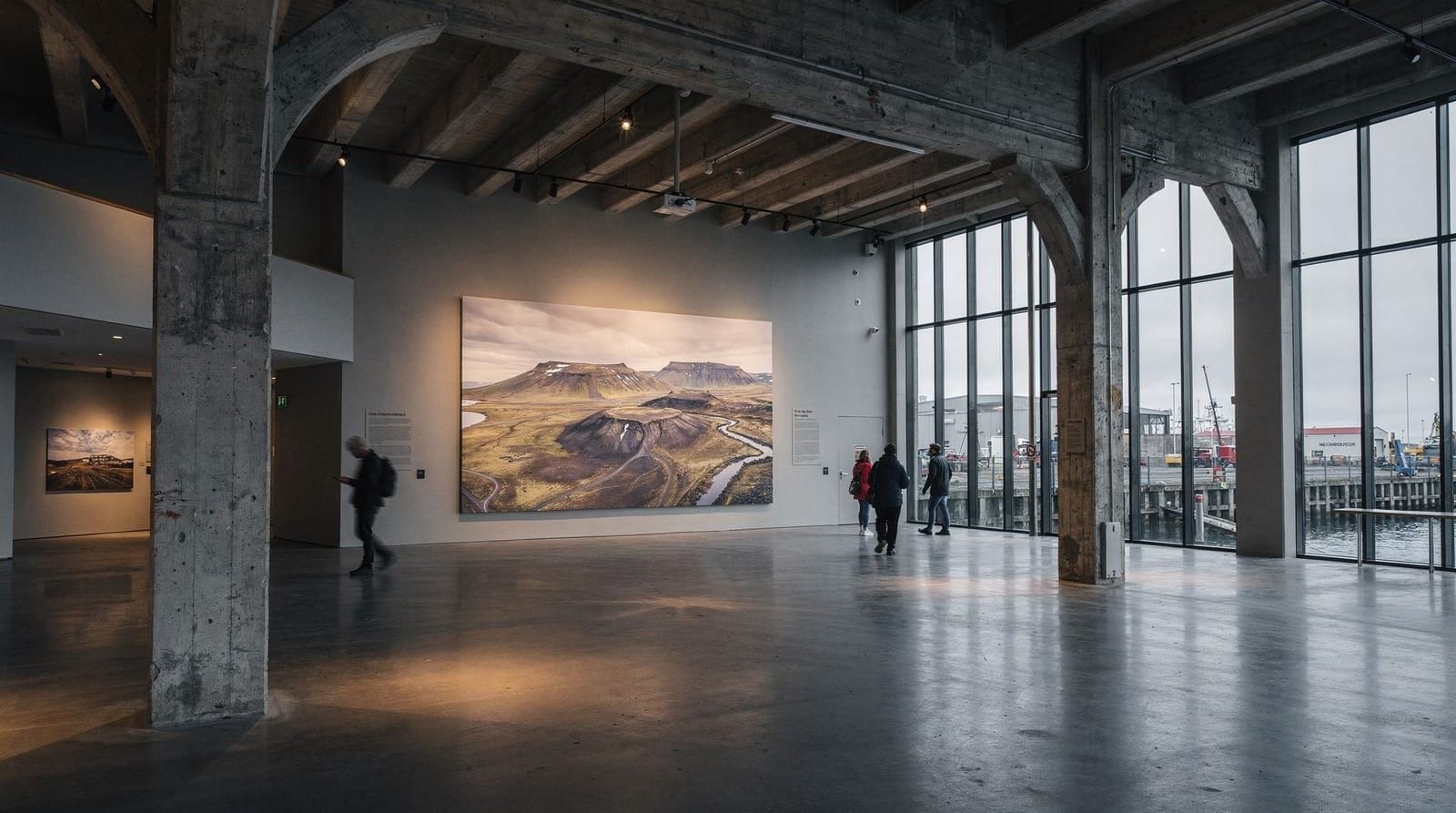
The institute is open to researchers; public exhibitions are limited but occasionally mounted at the National Museum.
Þingvellir — the saga parliament site
Þingvellir National Park is one of the few places in Iceland where a specific saga setting is both well-documented and visually unchanged from the medieval period. The Alþing met here from 930 CE to 1798.
The Law Rock (Lögberg) — where the Law Speaker stood to recite the law and where major announcements were made — is marked in the park. The rifted valley setting, with cliffs on both sides providing natural acoustics, was not an accident of geography but the deliberate choice of the settler assembly seeking a site accessible from all corners of Iceland.
Walking Þingvellir after reading Njáls saga or Egils saga — both of which include Alþing scenes — connects the literary and physical in a specific way. The rifts themselves, along which you can walk between the North American and Eurasian tectonic plates, give the site a deeper geological drama.
Saga tourism and specific sites
Iceland has developed some infrastructure around saga tourism:
Borgarfjörður (west Iceland): The region of Egils saga. Snorri Sturluson’s farm at Reykholt — the Snorrastofa museum and the preserved medieval bath pool — is here. The area around Borgarnes has good saga interpretation with an interactive centre.
Laxárdalur (Dalir district, west Iceland): The Laxdæla saga landscape. The farm Hjarðarholt, associated with the story’s tragic love triangle, is in this valley.
South Iceland (Hvolsvöllur area): Njáls saga landscape. The Njáls Saga Center in Hvolsvöllur provides maps of saga-related farms. Visible from the main road are the approximate locations of several key saga farms.
Westfjords (Gísla saga): The outlawry narrative of Gísla Súrsson takes place in the Westfjords landscape. Connecting specific fjords and headlands to the saga while driving the Westfjords is a specific experience for saga readers.
Frequently asked questions about the Icelandic sagas
Are the sagas true?
They are based on real people and real events but were written 200–400 years after the events they describe. They are not reliable history in the strict sense but are the best available accounts of the settlement period. Archaeological evidence increasingly confirms specific saga details — the farmhouses, the legal procedures, the geography.
How long are the sagas?
They vary significantly. Njáls saga is a substantial novel-length text. Some sagas are 20–30 pages. The Vinland sagas are short enough to read in an afternoon.
What language were the sagas written in?
Old Norse, specifically the Icelandic dialect. Modern Icelandic is closely related to Old Norse — Icelanders can read the original texts with some difficulty, similar to how English speakers can read Chaucer.
Can I read the sagas in Icelandic?
If you read modern Icelandic, yes — with some accommodation for archaic vocabulary. Original manuscripts are held in the Árni Magnússon Institute in Reykjavík. See the Iceland museums guide for visiting details.
Who wrote the sagas?
Most sagas are anonymous. Snorri Sturluson is the only major saga author whose identity is certain — he wrote Heimskringla and the Prose Edda. Egils saga is sometimes attributed to Snorri based on internal evidence but this is debated.
Are the sagas connected to Norse mythology?
Norse mythology is in the Eddas (Snorri’s Prose Edda and the earlier Poetic Edda). The Sagas of Icelanders are distinct from mythology — they deal with historical or pseudo-historical events rather than gods and cosmology. The mythological sagas (Fornaldarsögur) occupy a middle ground. Read Icelandic history overview for the broader context.
Do I need to read a saga before visiting Iceland, or is it just a nice-to-have?
It’s genuinely optional — Iceland’s landscapes are dramatic on their own terms, and most visitors enjoy the trip without any saga background. But for anyone who reads even one saga first, specific stops (Þingvellir, the south coast farms, Snæfellsnes) shift from scenic to meaningful, which is a difference many travellers report as one of the more memorable aspects of a well-prepared trip.
Are there saga-themed tours or museums worth visiting in person?
Yes. The Njáls Saga Center in Hvolsvöllur, the Settlement Exhibition in Reykjavík, and the Snorrastofa museum at Reykholt in Borgarfjörður are the three most accessible saga-focused stops, and all three sit on or near routes most visitors already drive (south coast, Reykjavík, west Iceland respectively).
The sagas as psychological literature, not just history
What distinguishes the sagas from most medieval European writing is their psychological realism. Characters make morally ambiguous decisions, hold grudges for decades, and face consequences that ripple across generations — closer in register to a modern literary novel than to a heroic epic. Njáls saga in particular has been read by literary scholars as an early example of sustained, multi-generational narrative structure, something not seen again in Western literature until much later centuries.
This matters for travellers because it explains why the sagas still resonate rather than reading as dusty historical curiosities. The feuds, the impossible choices between honour and mercy, and the vivid individual characters (Hallgerður’s pride, Njáll’s foresight, Skarphéðinn’s temper) are the reason Icelanders still name children after saga figures and still argue, good-naturedly, about which character was in the right.
Top experiences
Best-rated activities across GetYourGuide and Viator.

Airport Transfer: Keflavik Airport to Reykjavik Center in Iceland
- Viator

From Reykjavik: Snaefellsness Peninsula small group day tour
- Viator

Ice Cave and Glacier Walk into Blue Glacier Canyon
- Viator

Small-Group South Coast & Glacier Hike Tour from Reykjavik
- Viator

Sólheimajökull Ice Climbing and Glacier Walk
- Viator

From Reykjavik: Katla Ice Cave and South Coast Day Tour
- Viator